
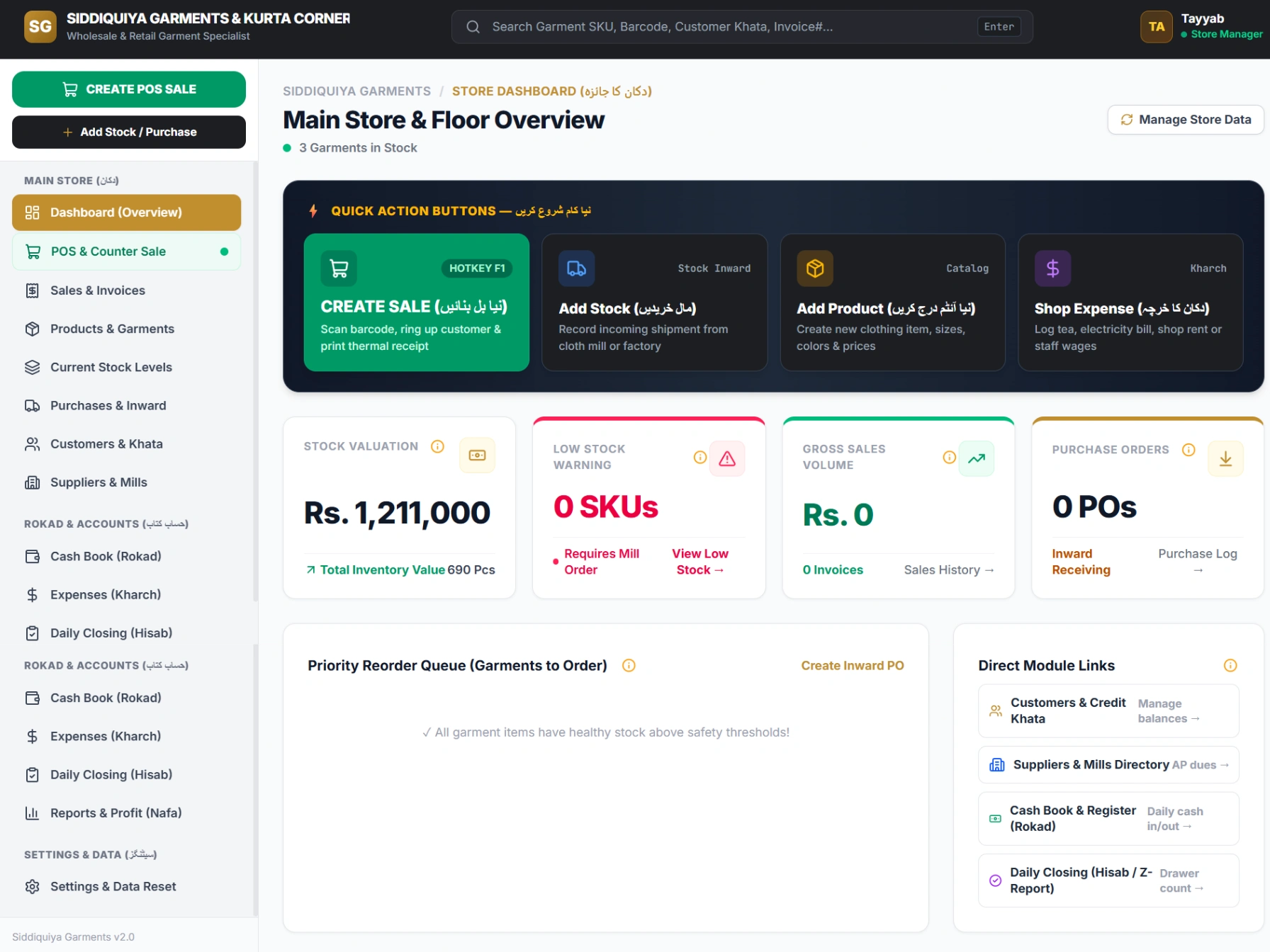
Small garment shops in Pakistan usually run on paper registers and memory. I built a complete inventory and point-of-sale system for a wholesale and retail garment shop that replaces that with one dashboard, in English and Urdu.
Sales: a POS screen where staff scan a barcode, sell to a customer and print a thermal receipt. F1 opens a new sale.
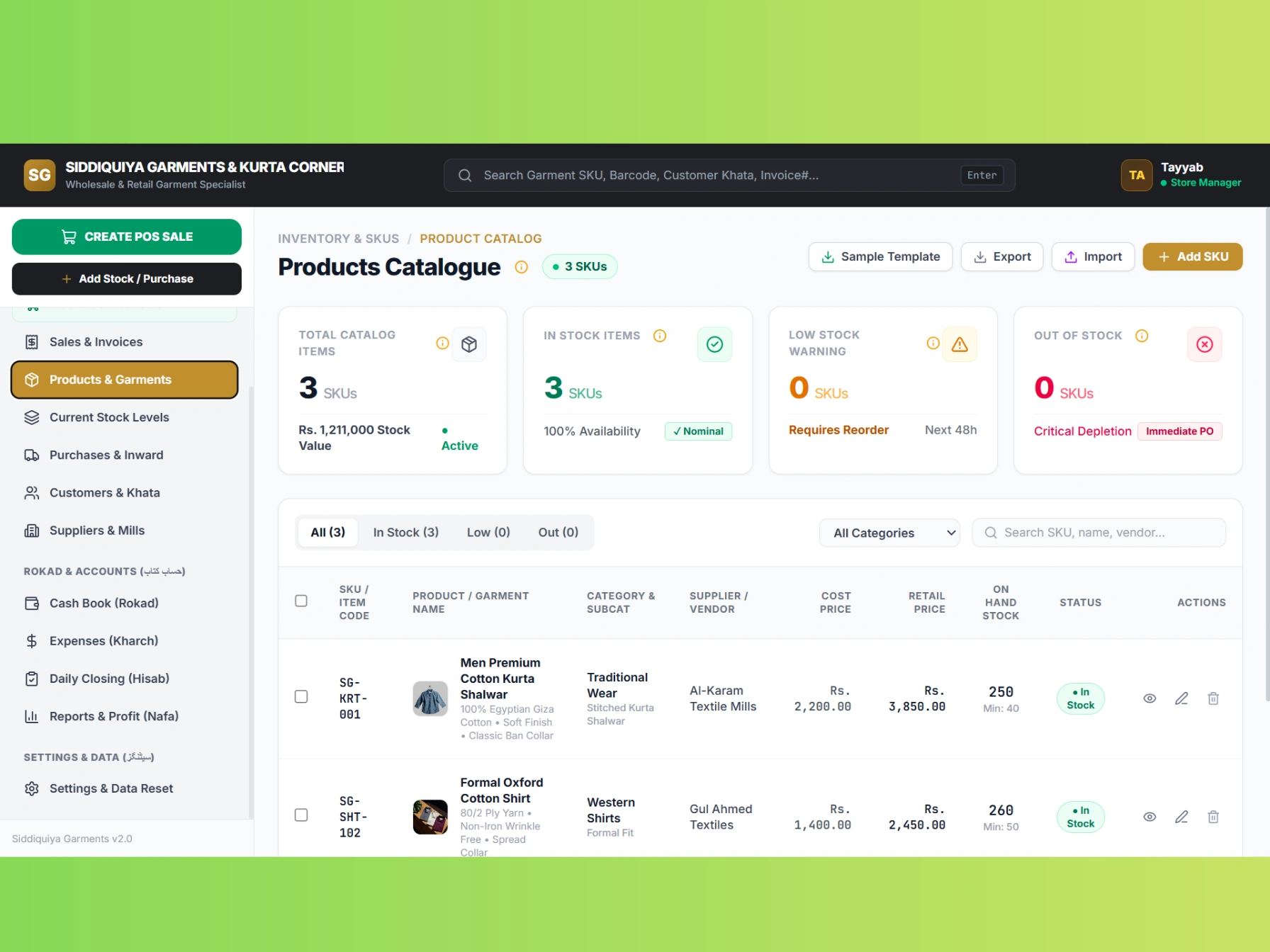
Stock in and out: incoming shipments from mills and factories update stock automatically, and each sale reduces it. Every item has a minimum level. When stock falls below it, the item shows up in a reorder queue, so the owner knows what to order before it runs out.
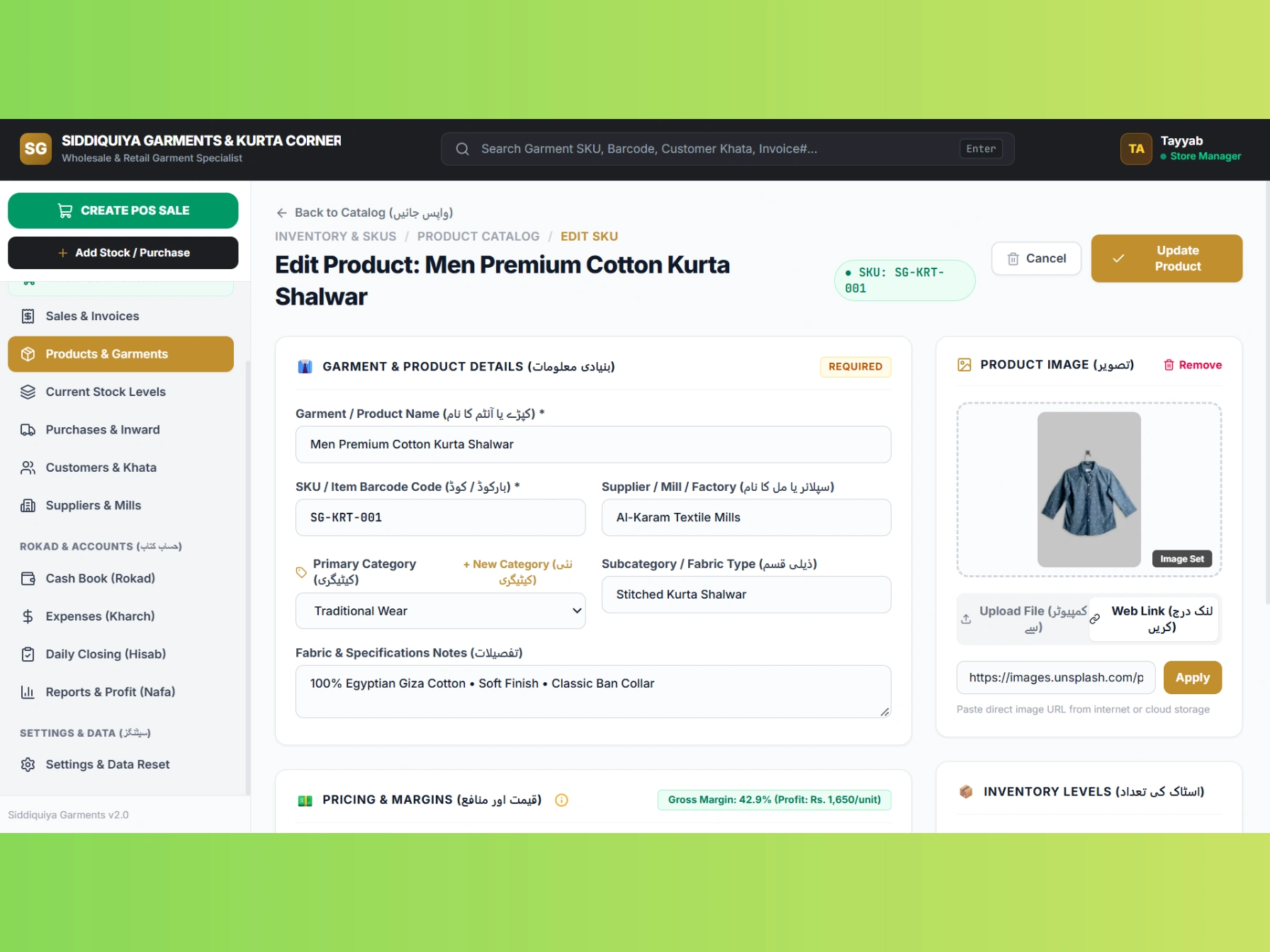
Products: each item has a barcode, supplier, category, fabric notes, image, cost price and retail price. The system calculates gross margin as you enter prices. Products can be bulk-imported or exported from a spreadsheet template.
The shop’s accounts: customer credit ledgers (khata), supplier dues, a daily cash book (rokad), shop expenses (kharch such as rent, wages and electricity), a daily closing report (hisab), and profit reports (nafa). Labels are in both Urdu and English, so staff use it in the language they already work in.
A bilingual (Urdu/English) inventory and POS system for a garment shop, with barcode sales, stock tracking, low-stock alerts, customer credit ledgers and daily accounts.
0 likes · 1 view · Nov 1, 2026
Small garment shops in Pakistan usually run on paper registers and memory. I built a complete inventory and point-of-sale system for a wholesale and retail g...


