Meta Tracking Audit (Women's Health DTC, $20M+ Brand)

Nitin Upadhyay


Meta Pixel & CAPI Audit for Peach Perfect: When 'Working' Tracking Isn't Actually Working
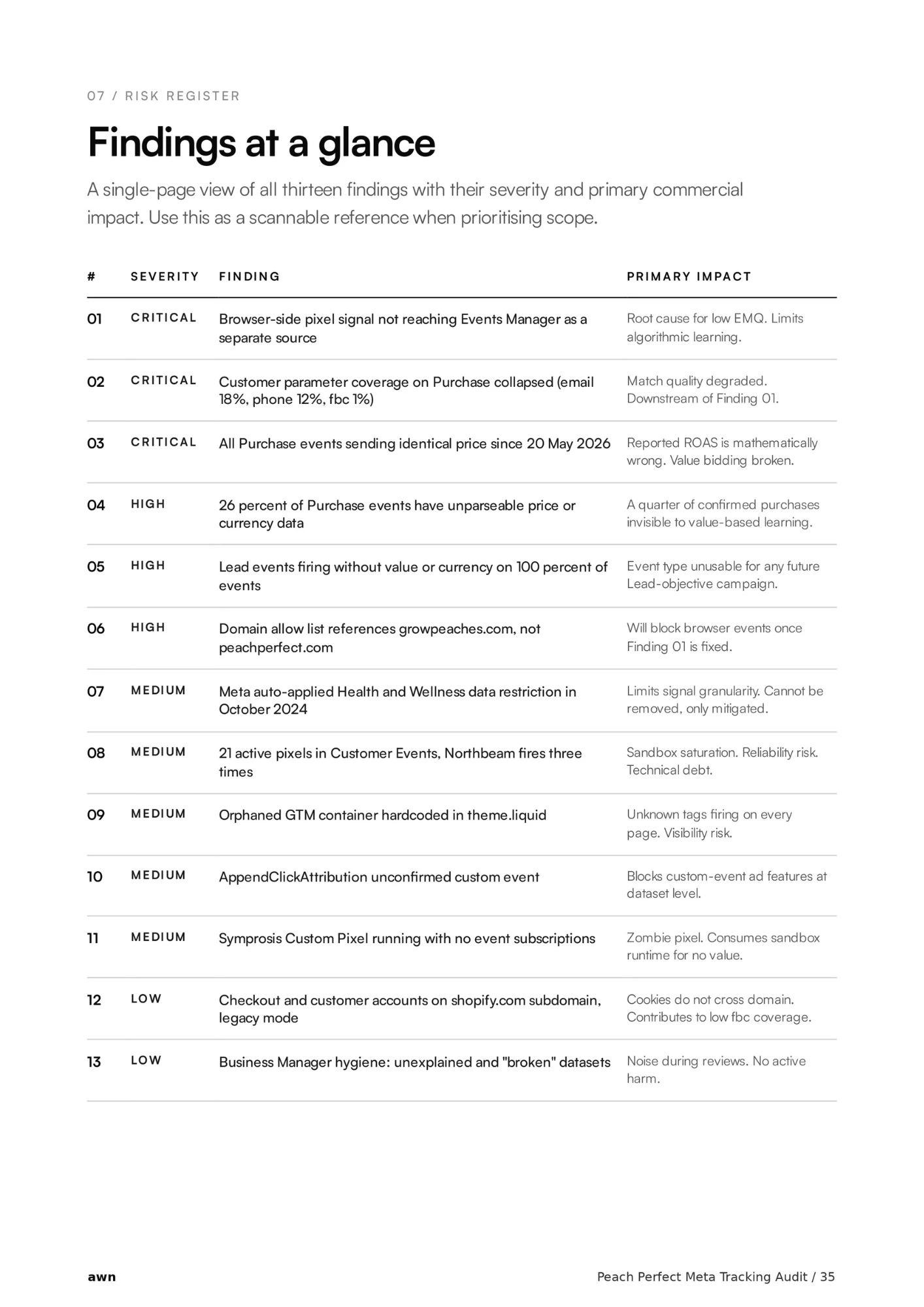
Meta Pixel and CAPI audit for a US DTC supplement brand. 13 findings including a 15-day-old bug distorting ROAS reporting.
The Brief
Peach Perfect is a US-based women's health and fitness supplement brand. Shopify storefront, products covering PCOS, hormone health, creatine, and menopause, and recently expanded into nationwide GNC distribution. Real revenue, real ad spend, the kind of brand where every percentage point of ad efficiency matters.
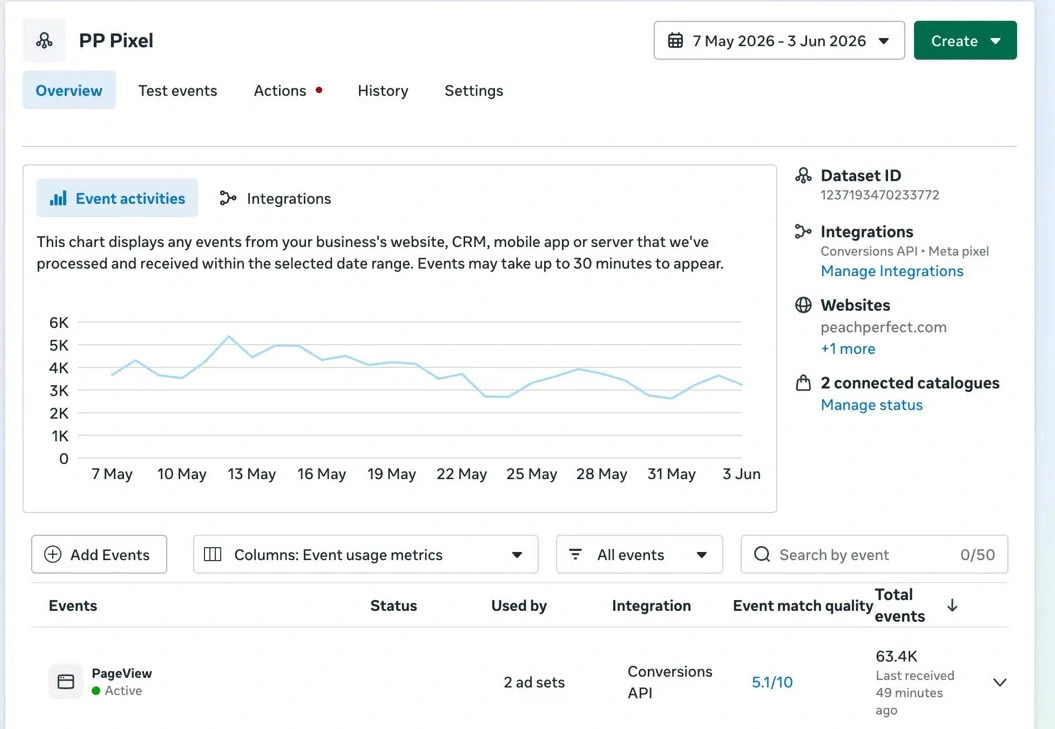
The founders came to me with a specific worry: Meta Events Manager was throwing warnings on their dataset, and Event Match Quality (EMQ) had dropped. They were running Conversions API through Shopify's native Meta sales channel integration. Everything looked configured. Nothing was obviously broken. But the numbers in Ads Manager felt off.
I did an audit to diagnose what was happening before any paid engagement.
What I Found
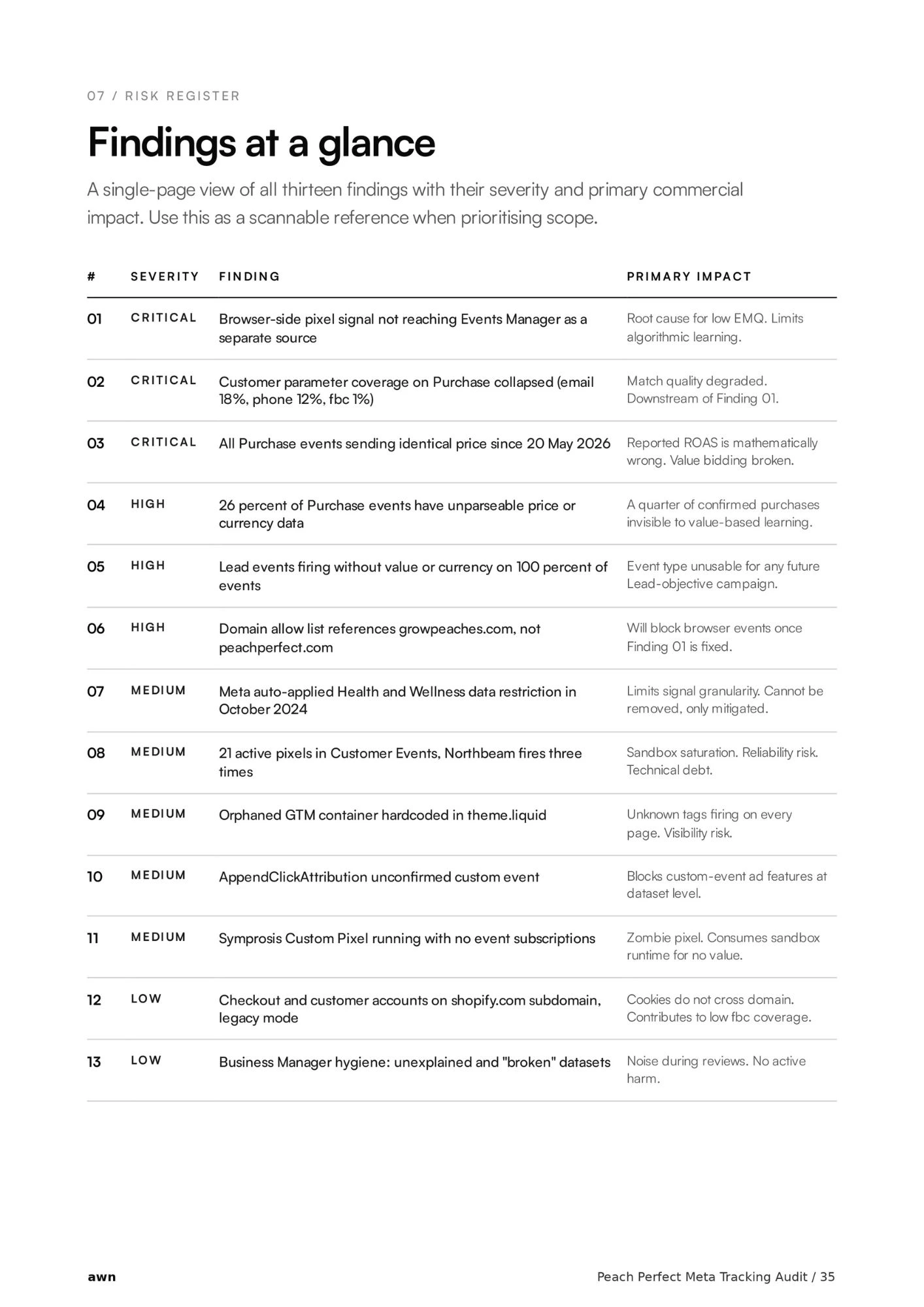
Thirteen findings across the Meta tracking environment. Headline numbers:
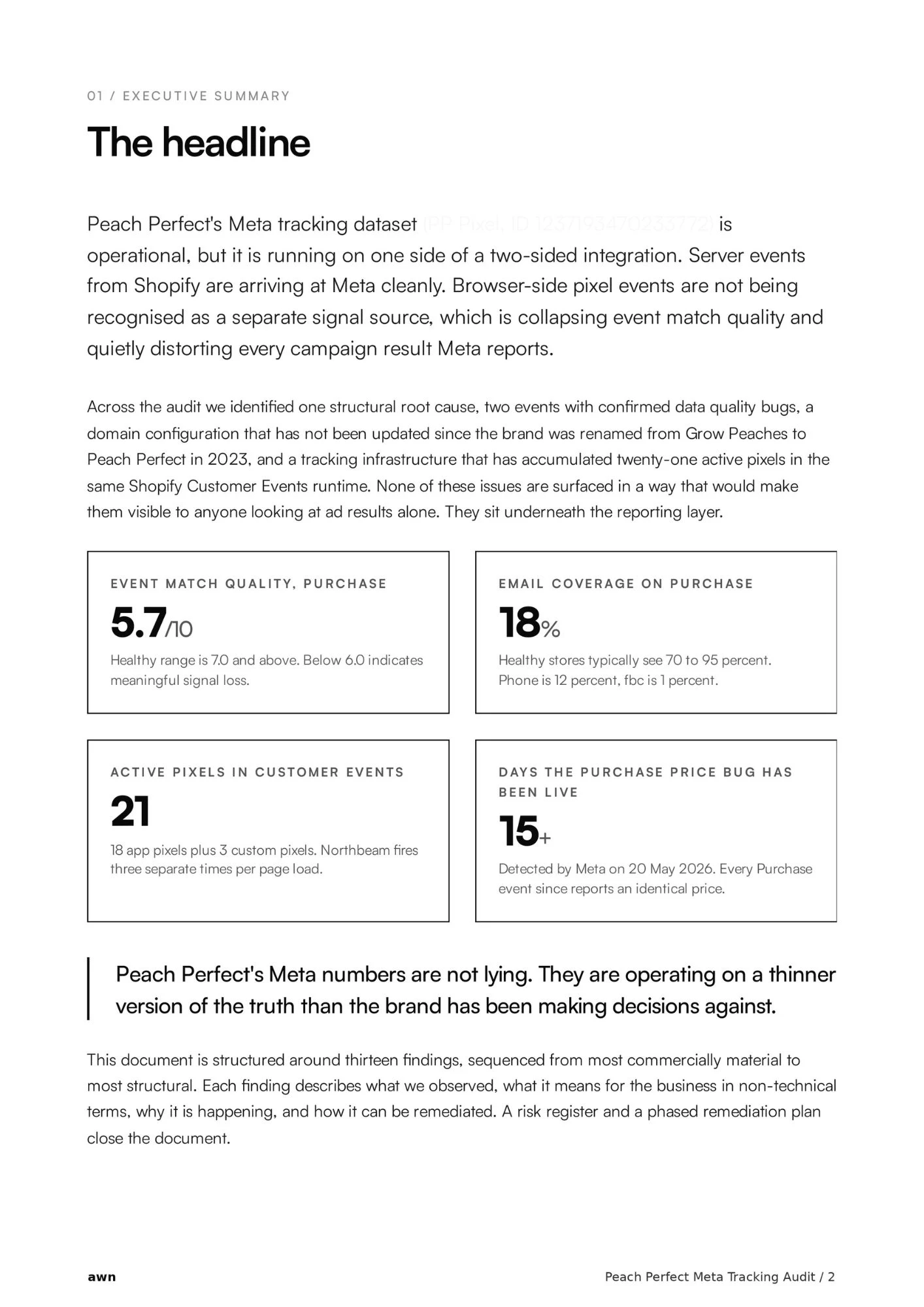
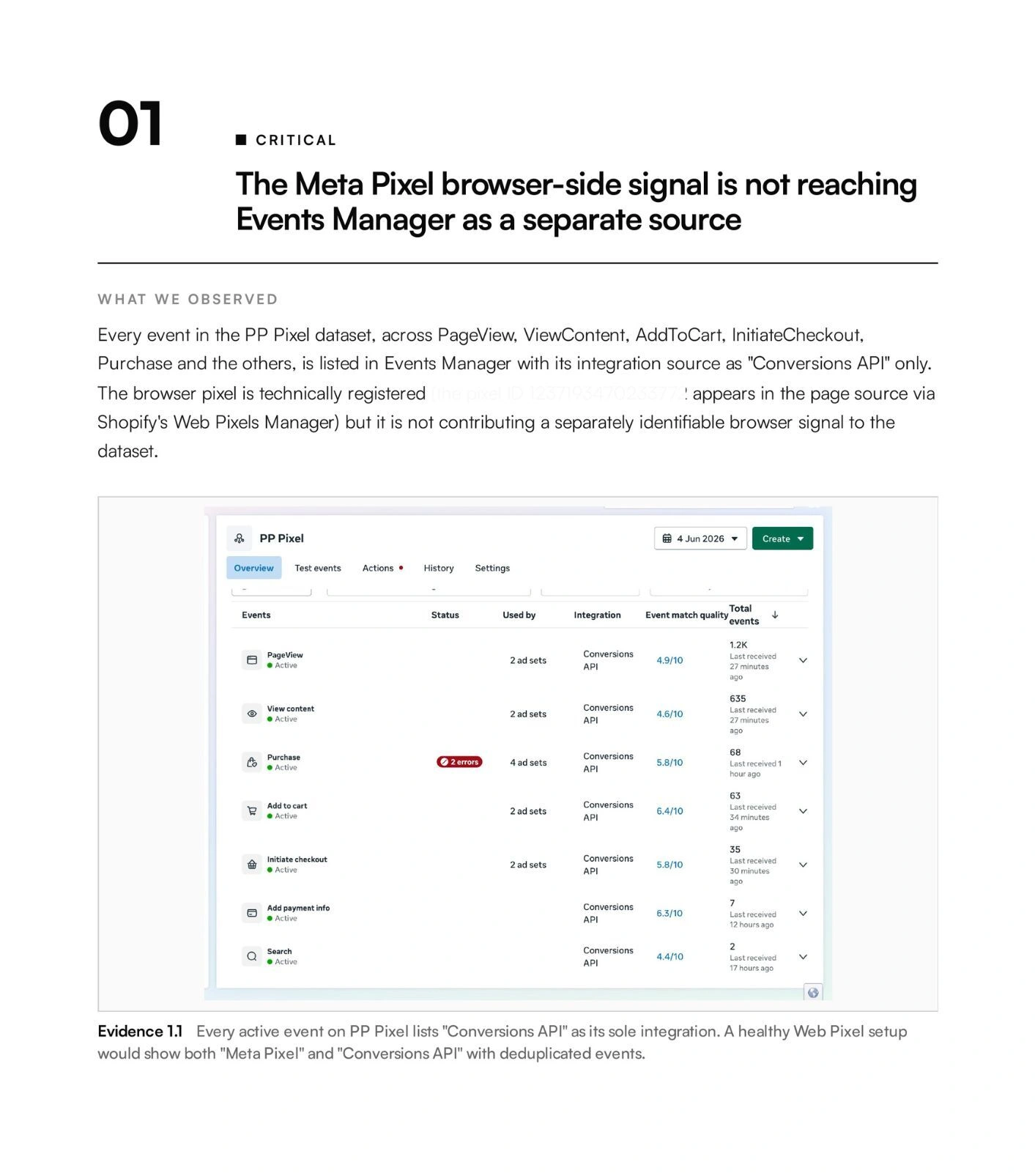
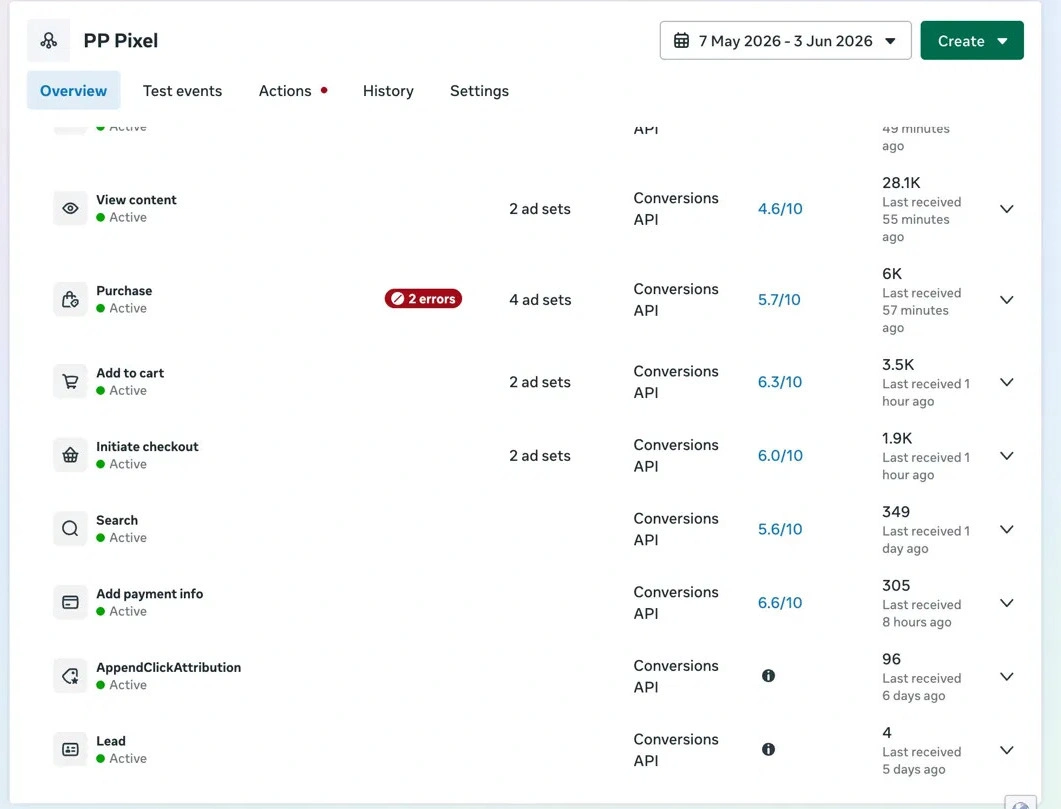
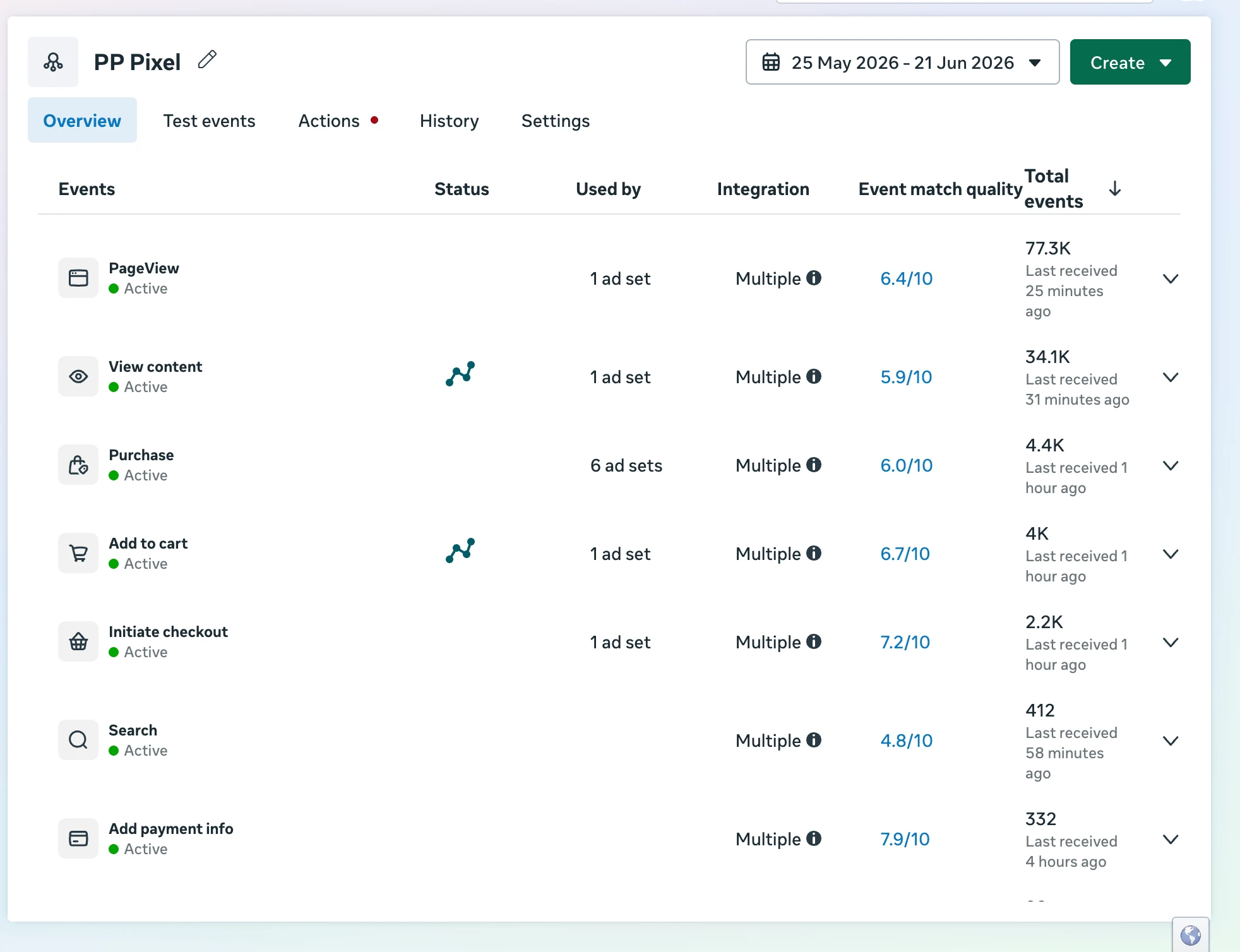
Event Match Quality on Purchase: 5.7/10. Healthy stores typically see 7.0 or higher.
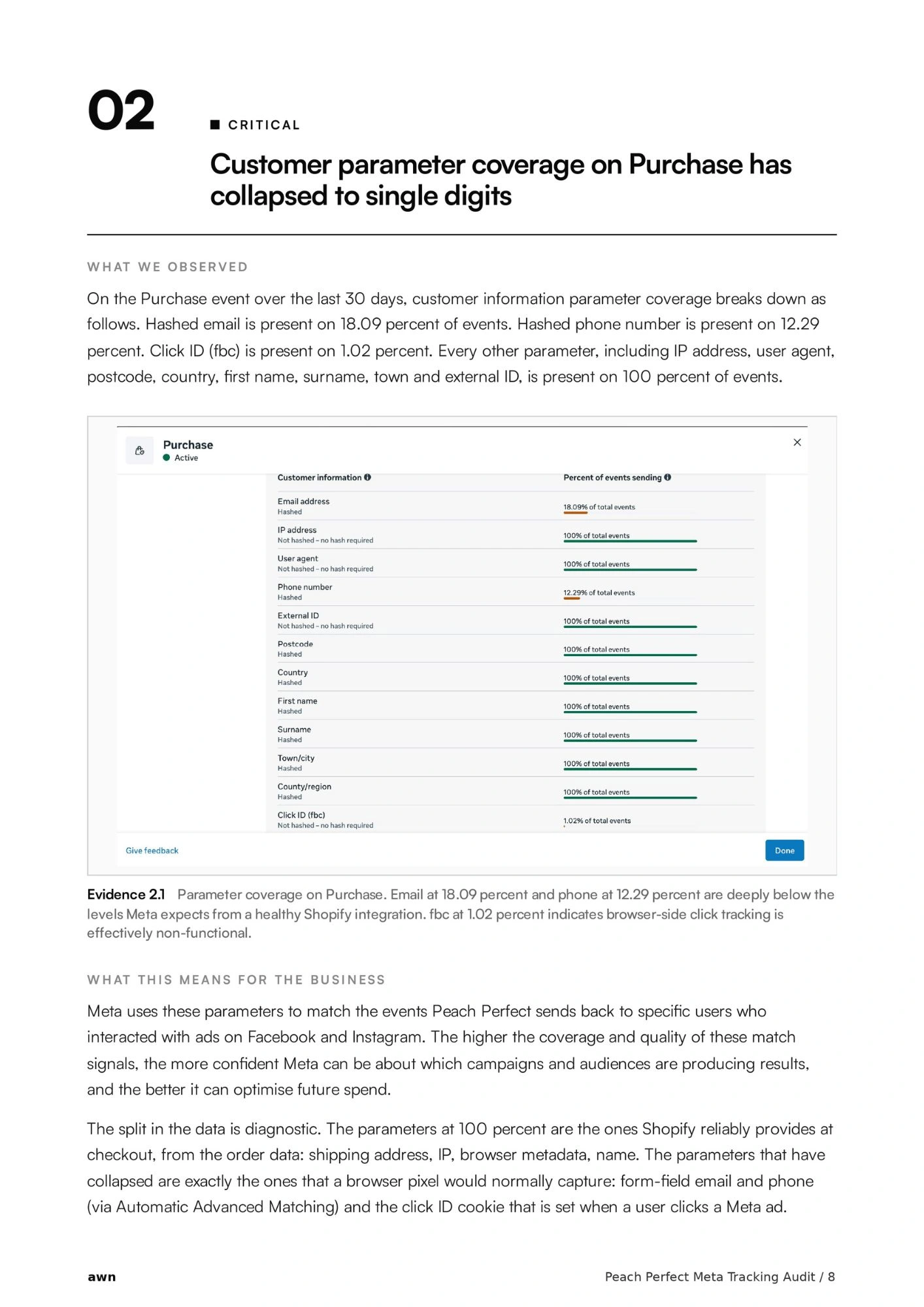
Hashed email coverage on Purchase: 18%. Healthy stores: 70 to 95%.
Hashed phone coverage: 12%. Click ID (fbc) coverage: 1%.
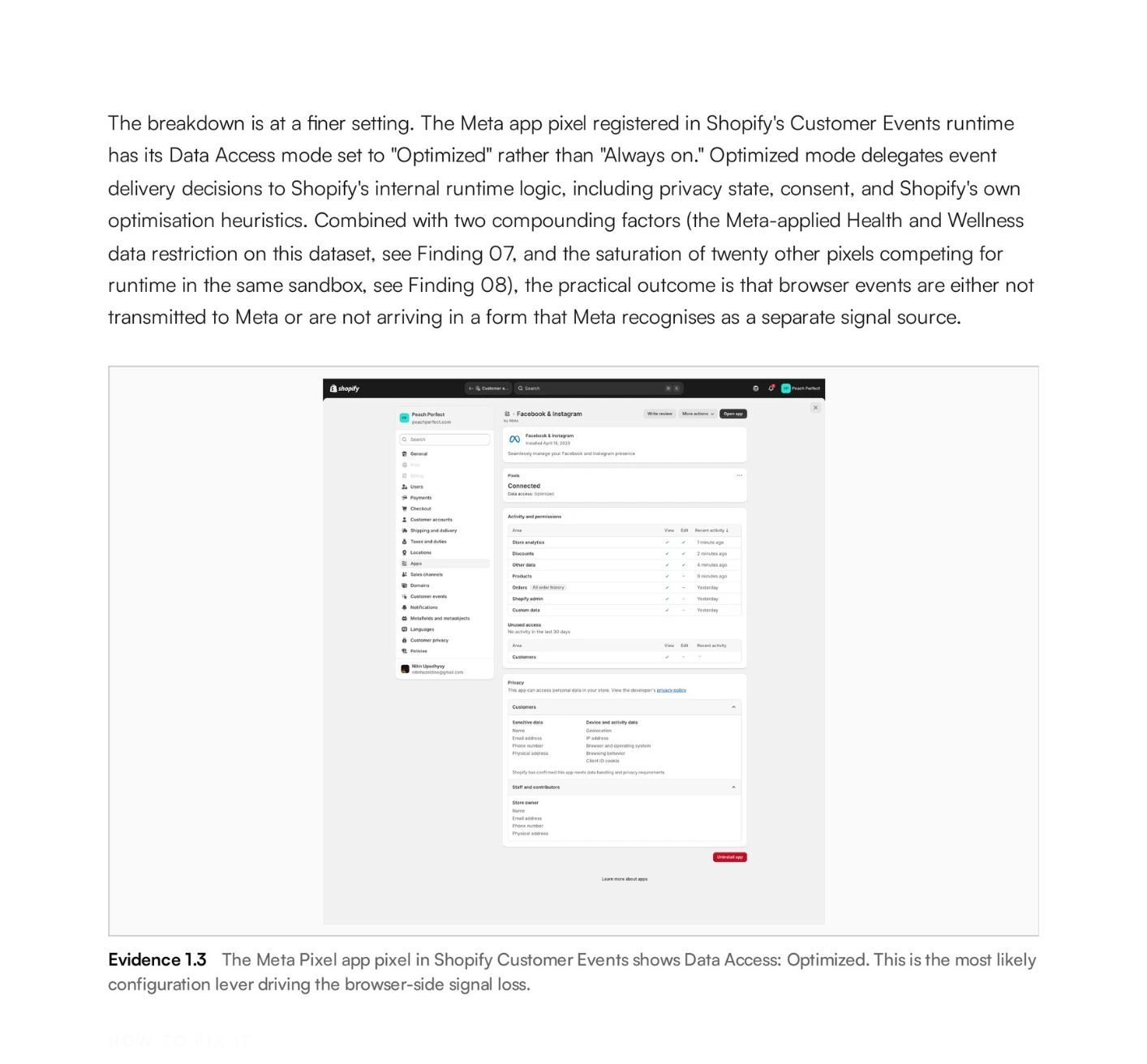
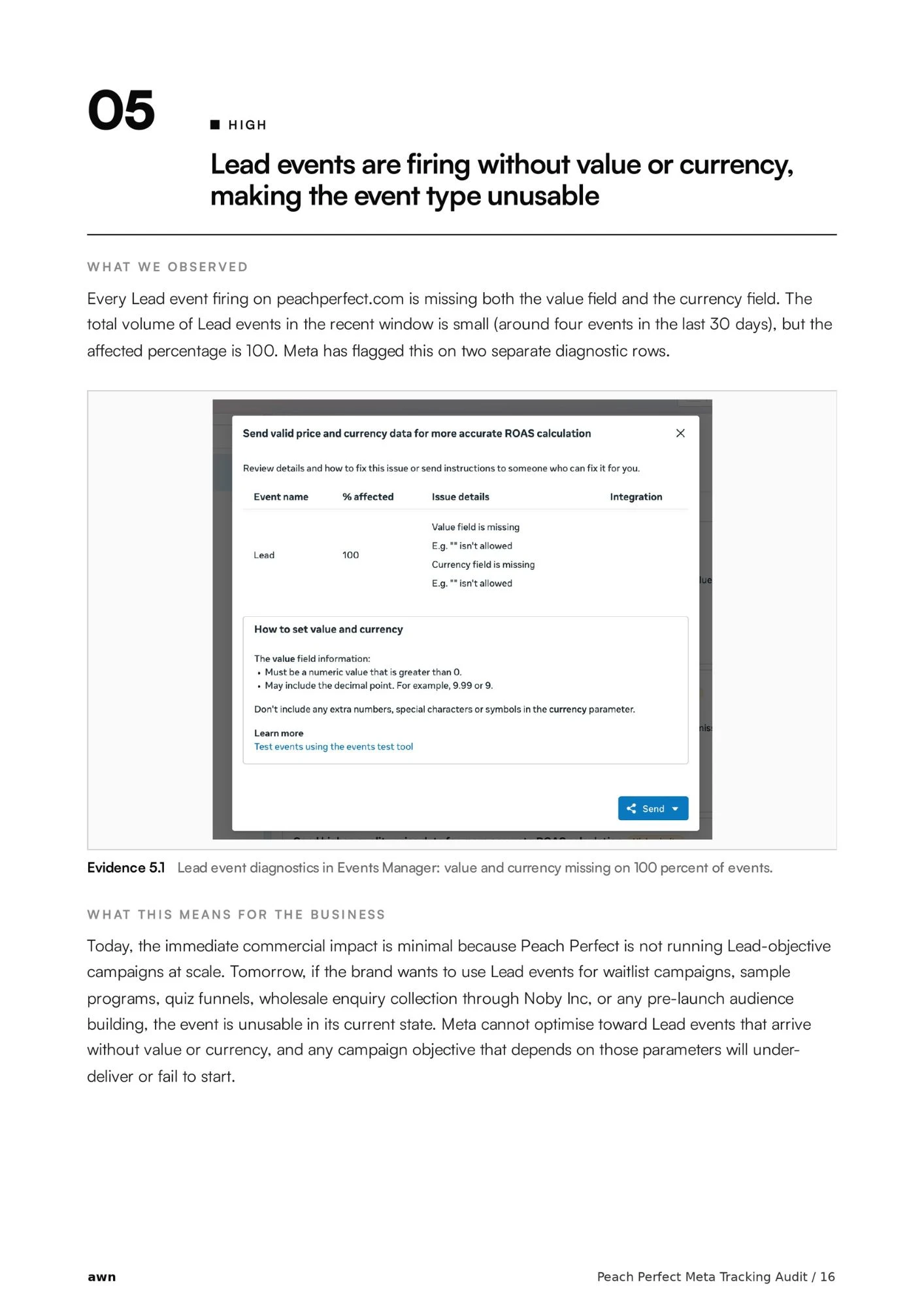
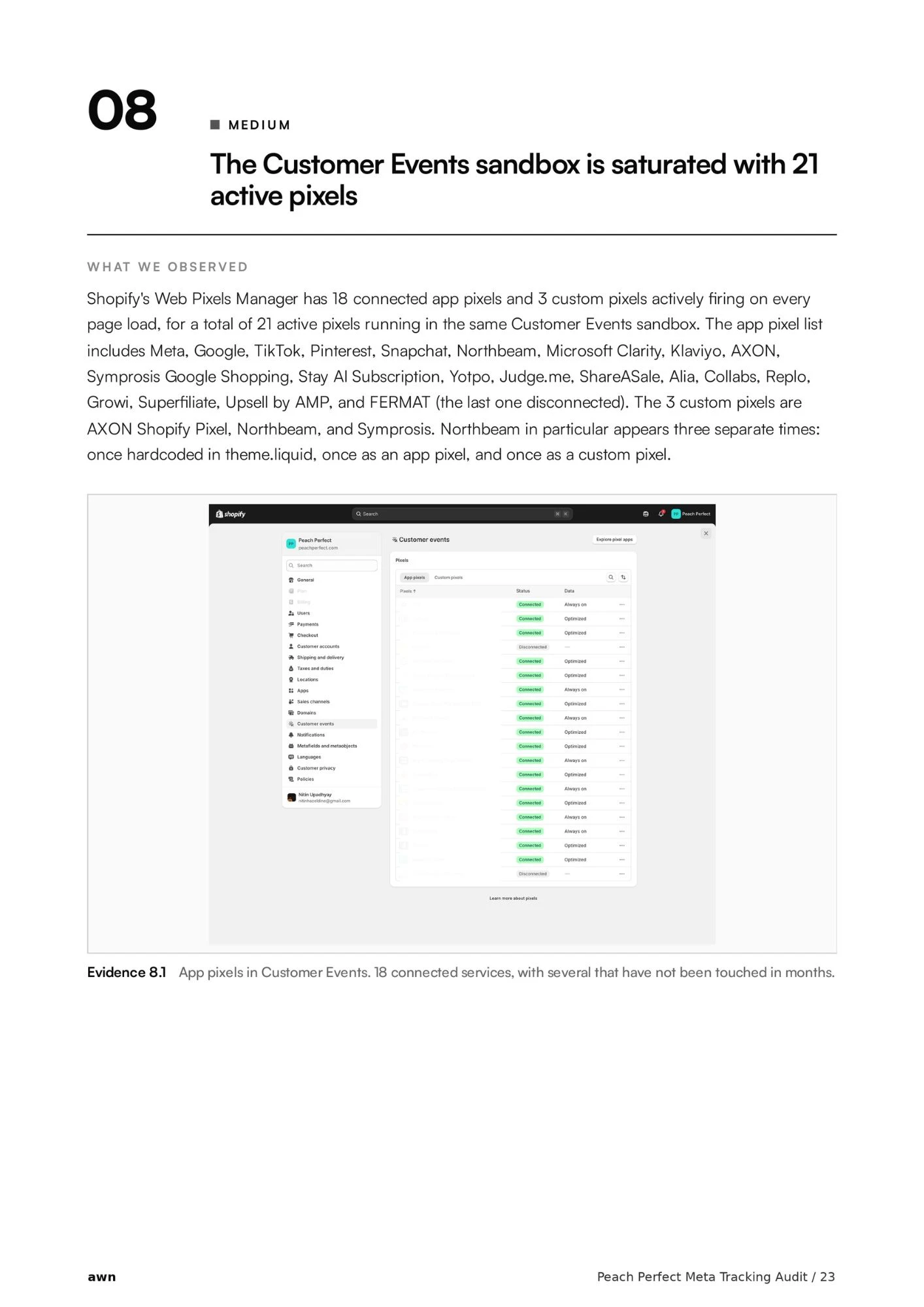
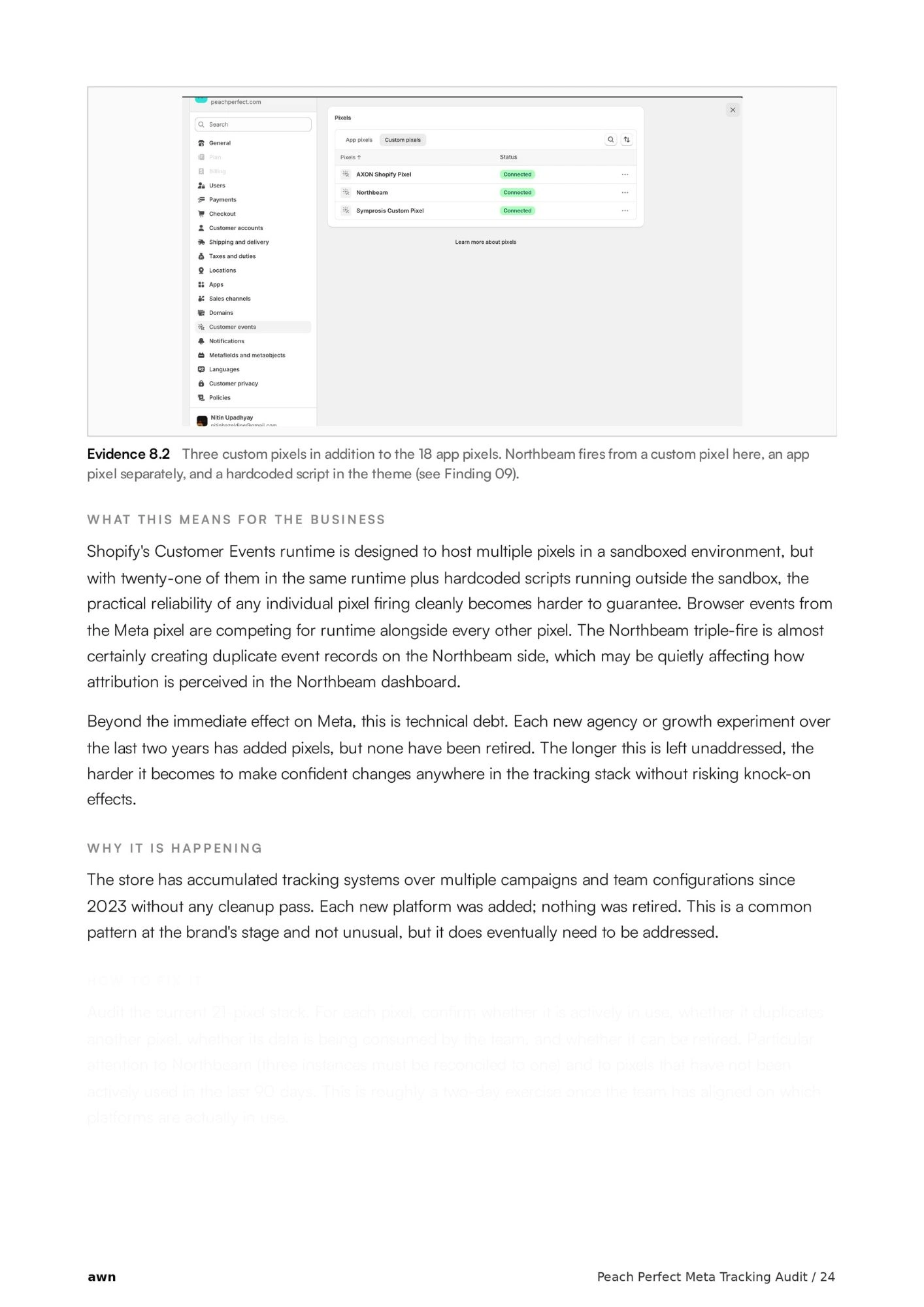
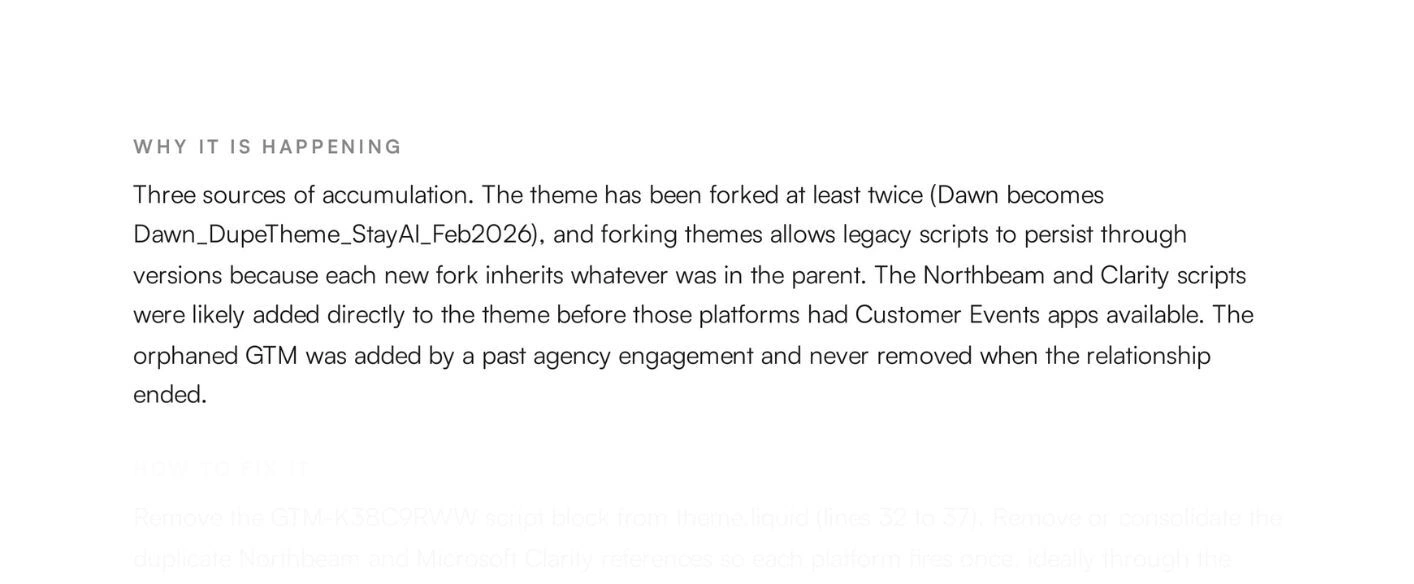
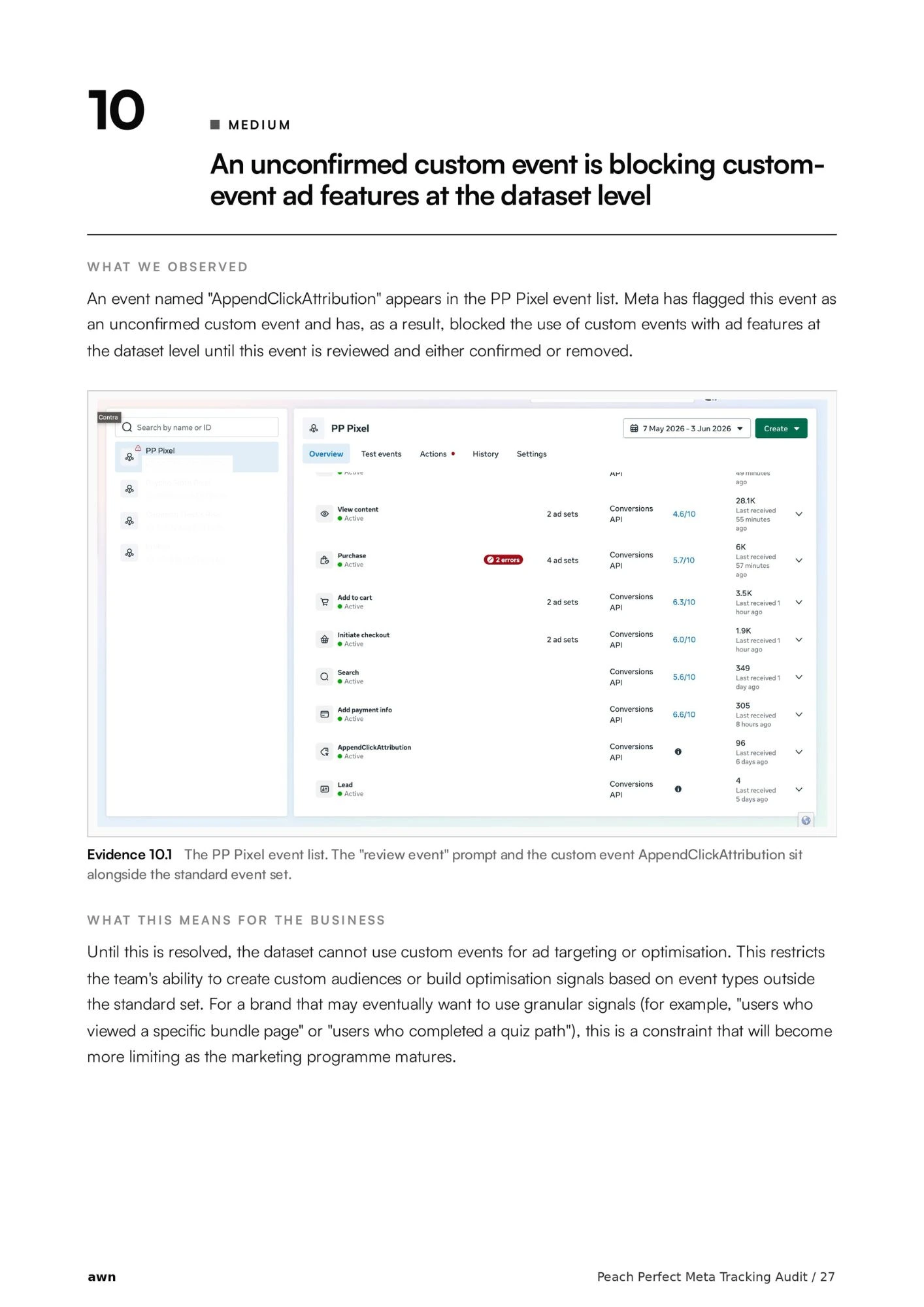
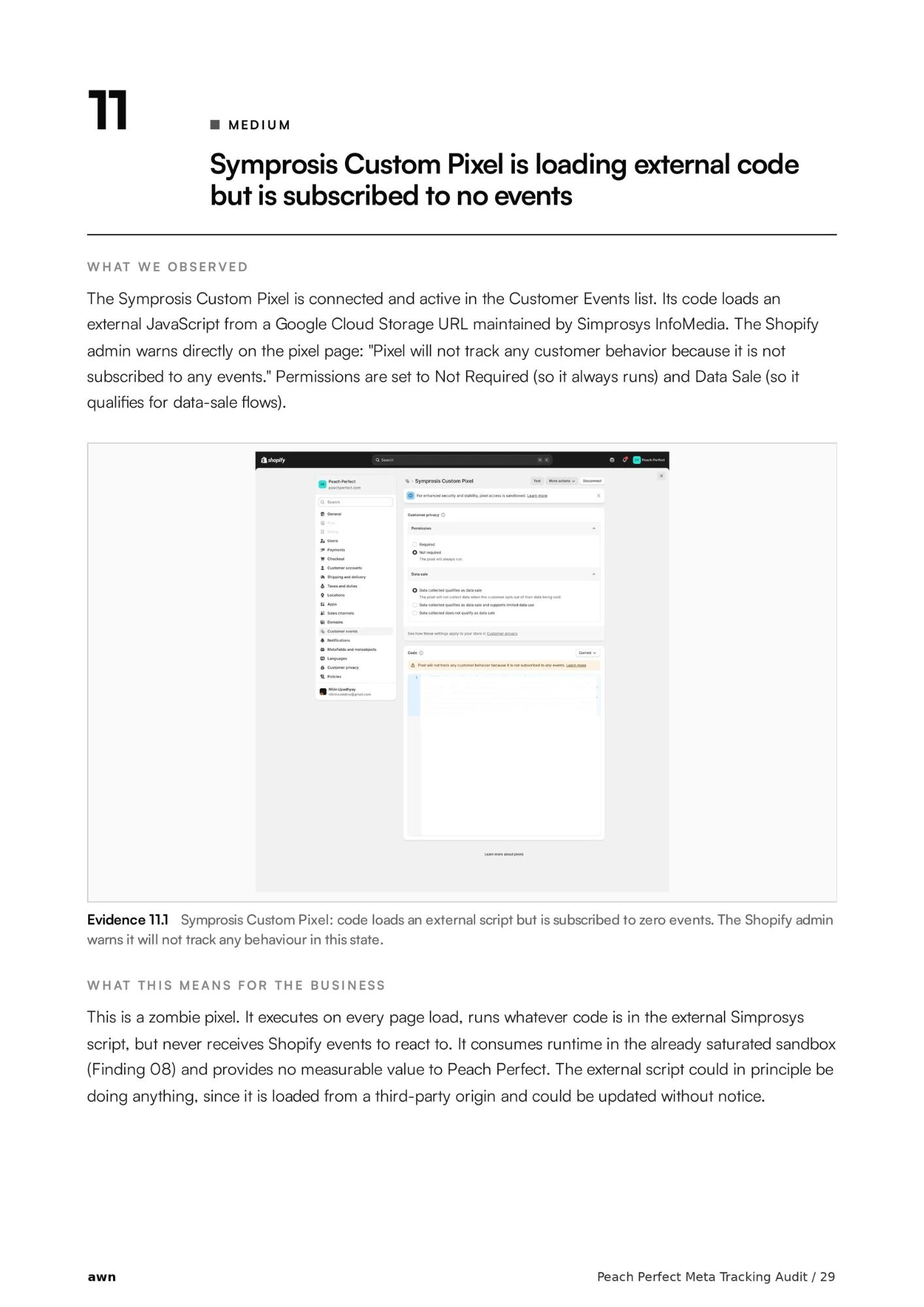
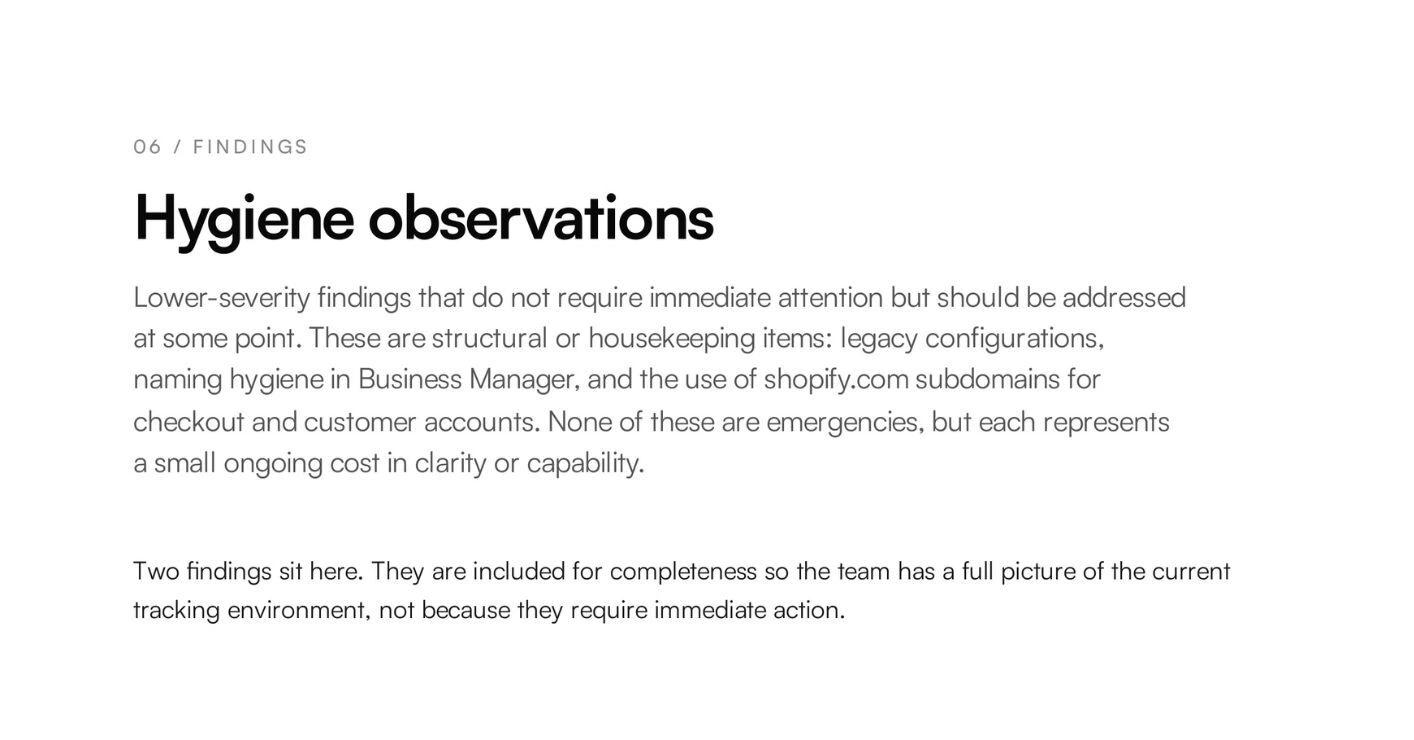
21 active pixels firing inside Shopify Customer Events. One attribution platform was firing three separate times per page load.
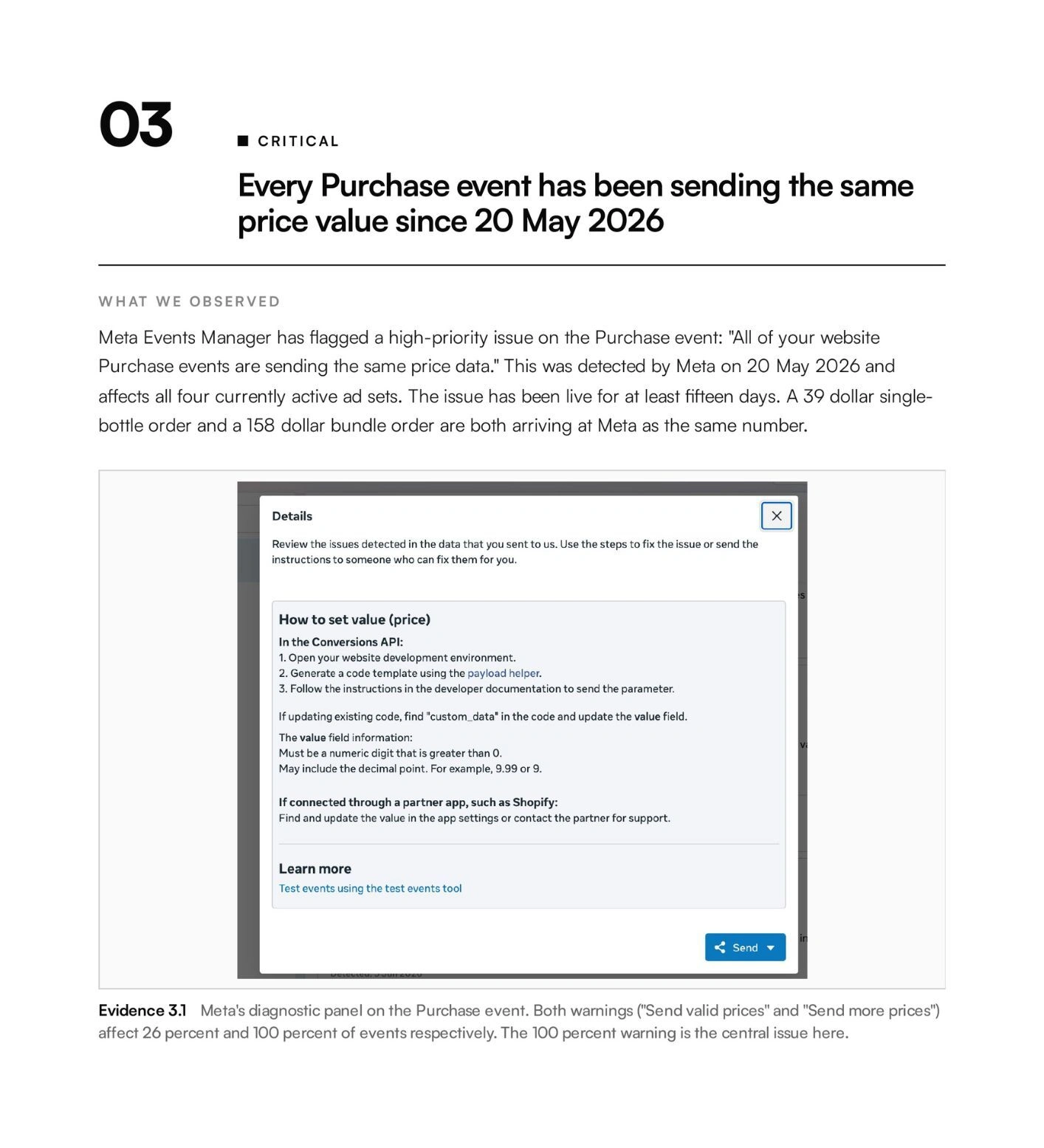
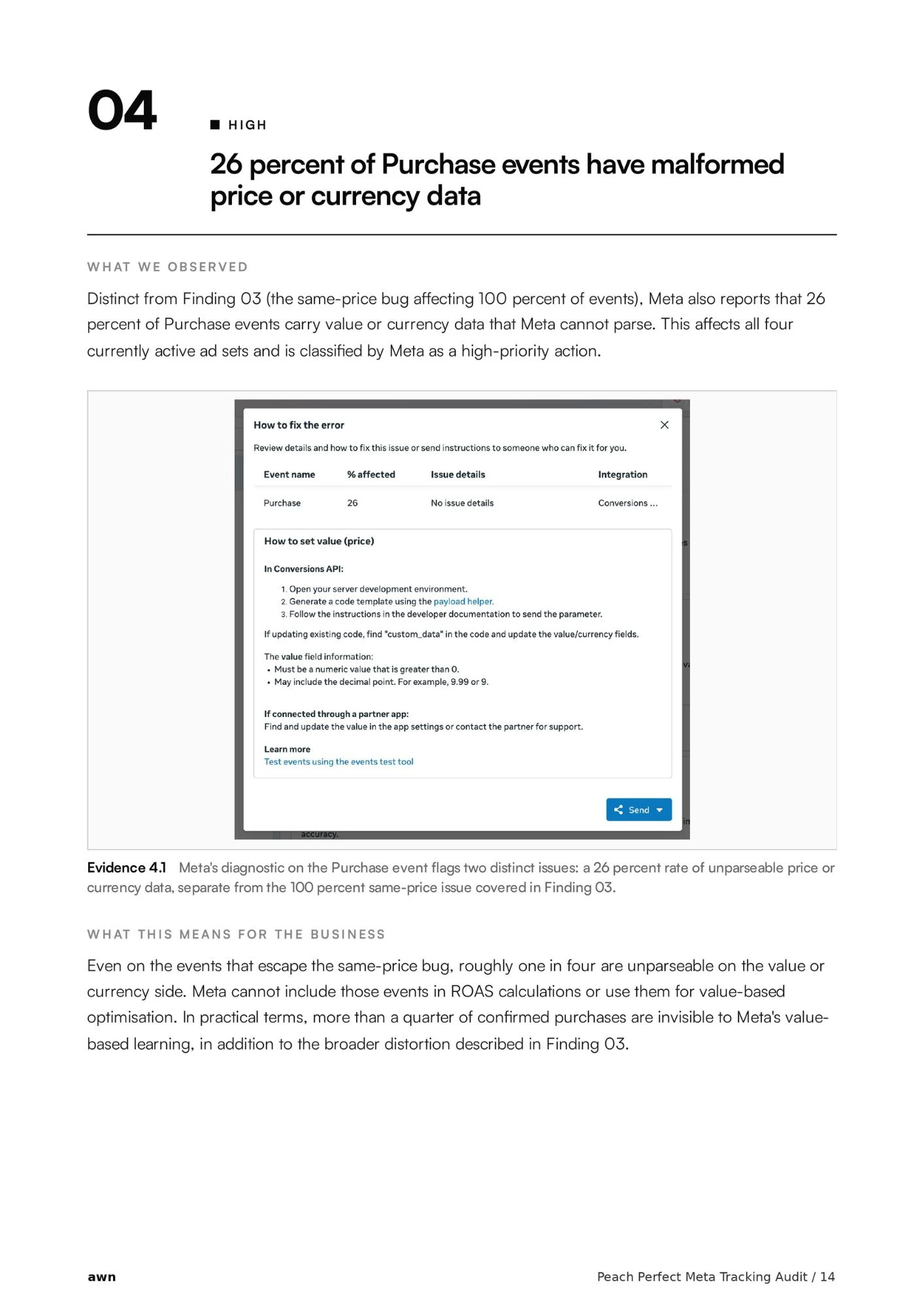
Every Purchase event since 20 May 2026 sending the identical price value regardless of actual order total. That's 15+ days of mathematically wrong ROAS reporting in Ads Manager.
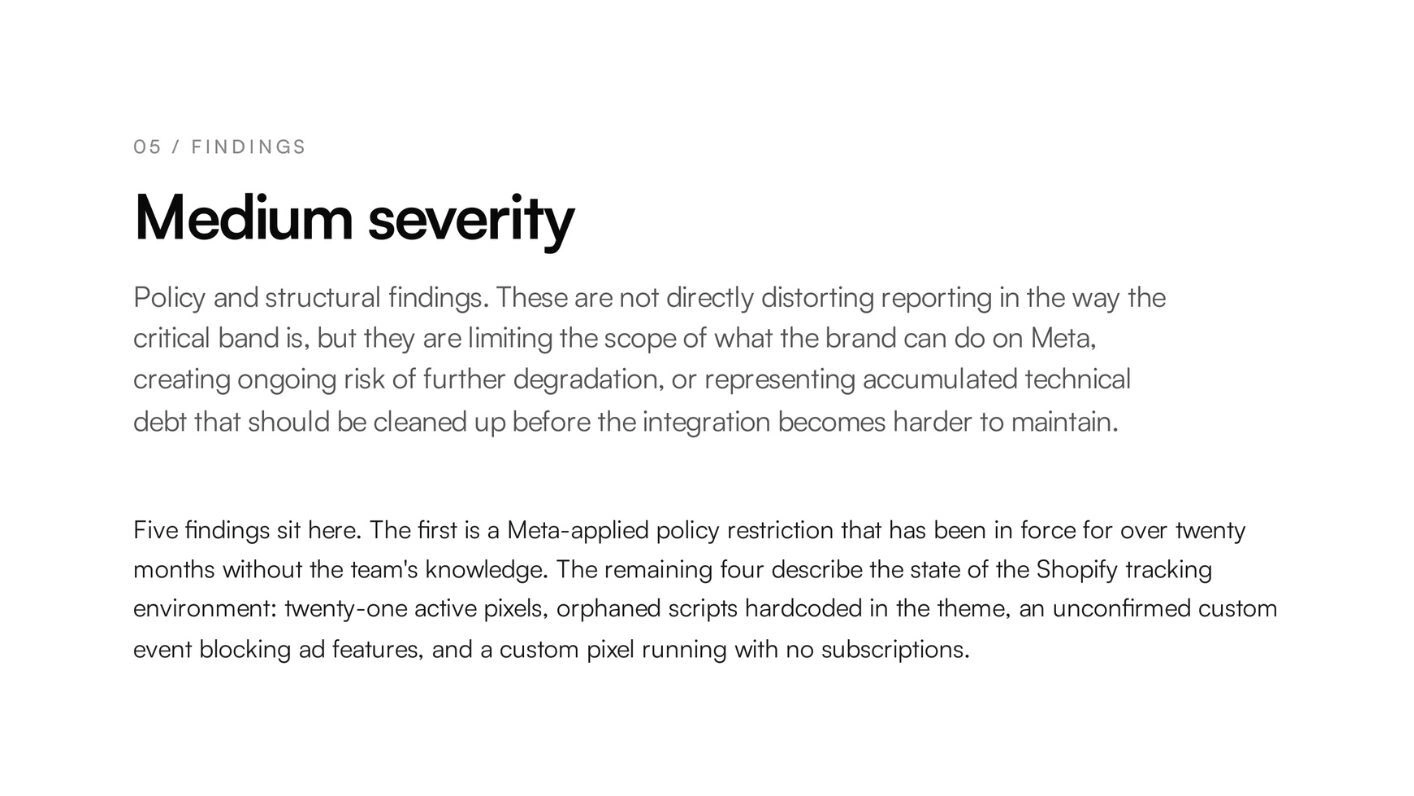
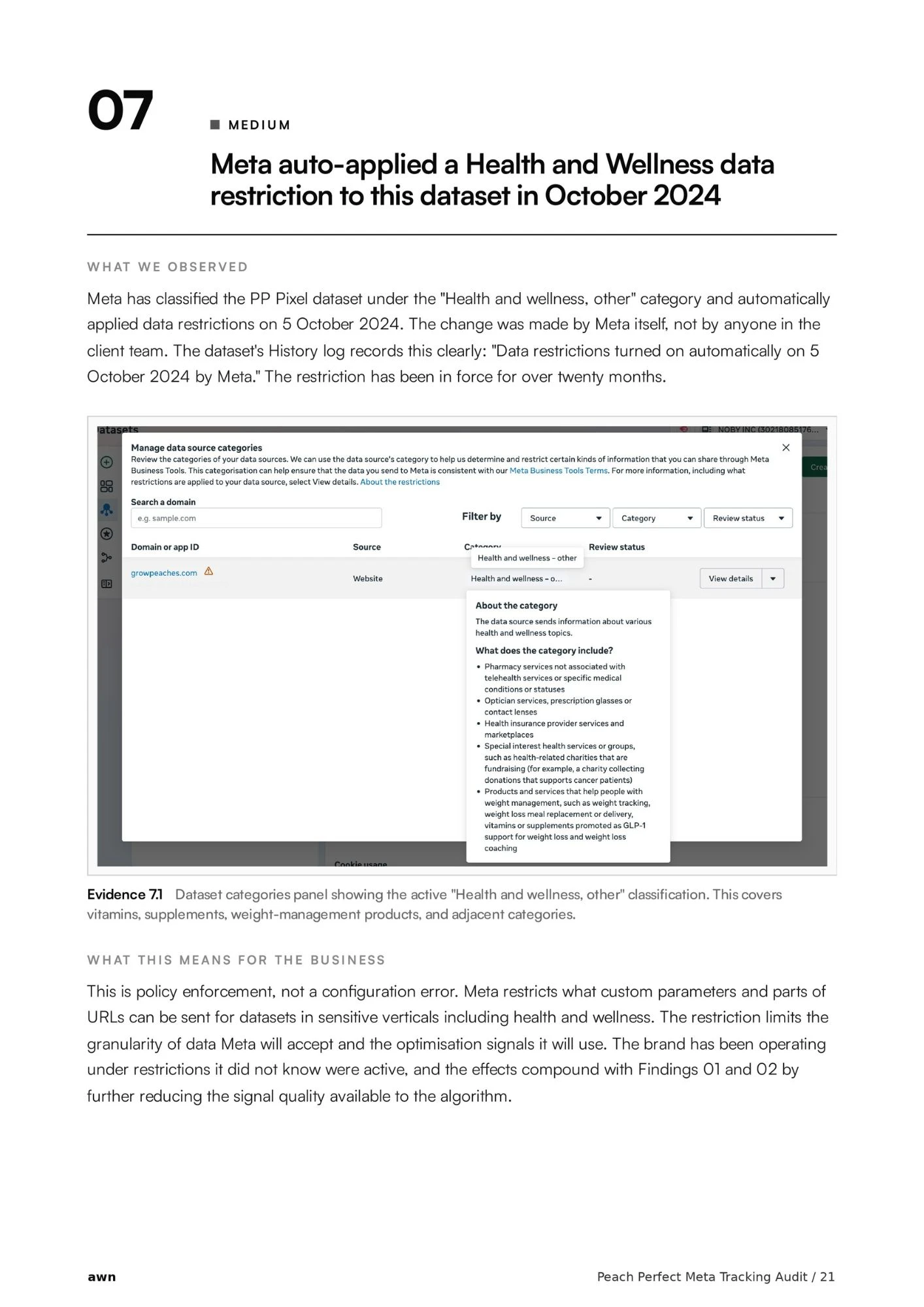
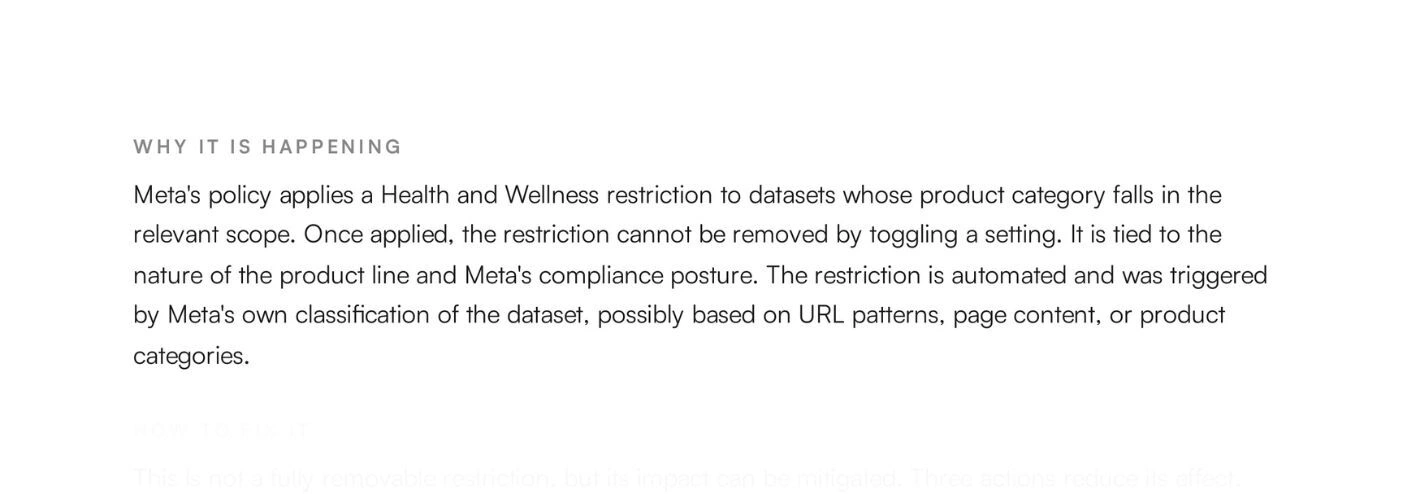
An active Health and Wellness data restriction, auto-applied by Meta in October 2024. Nobody on the team knew it was active.
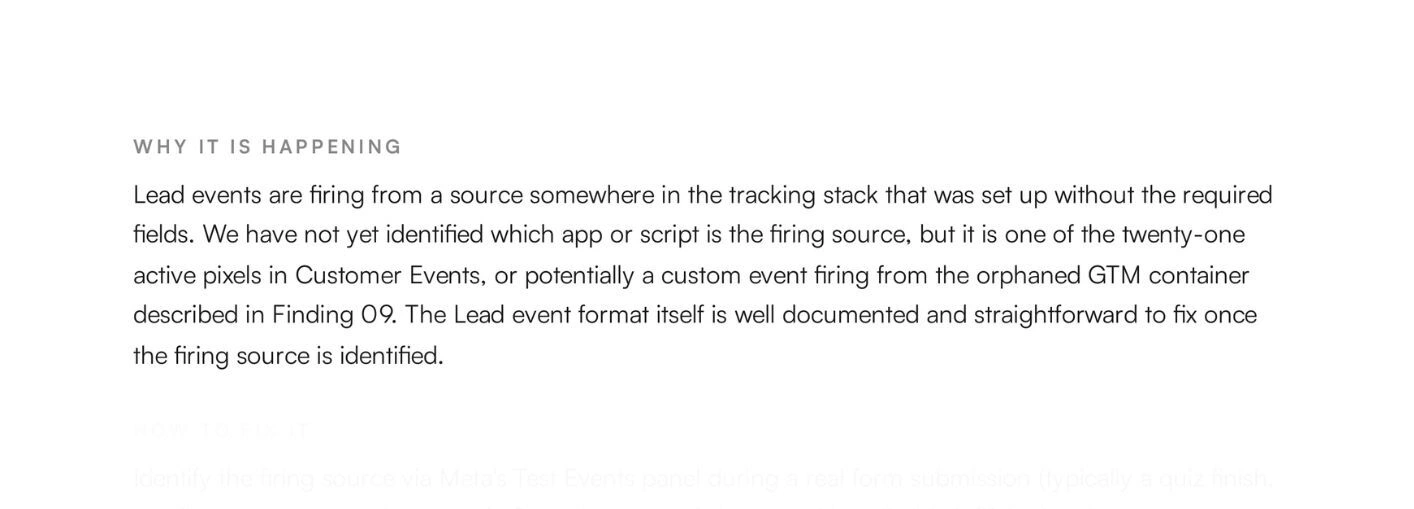
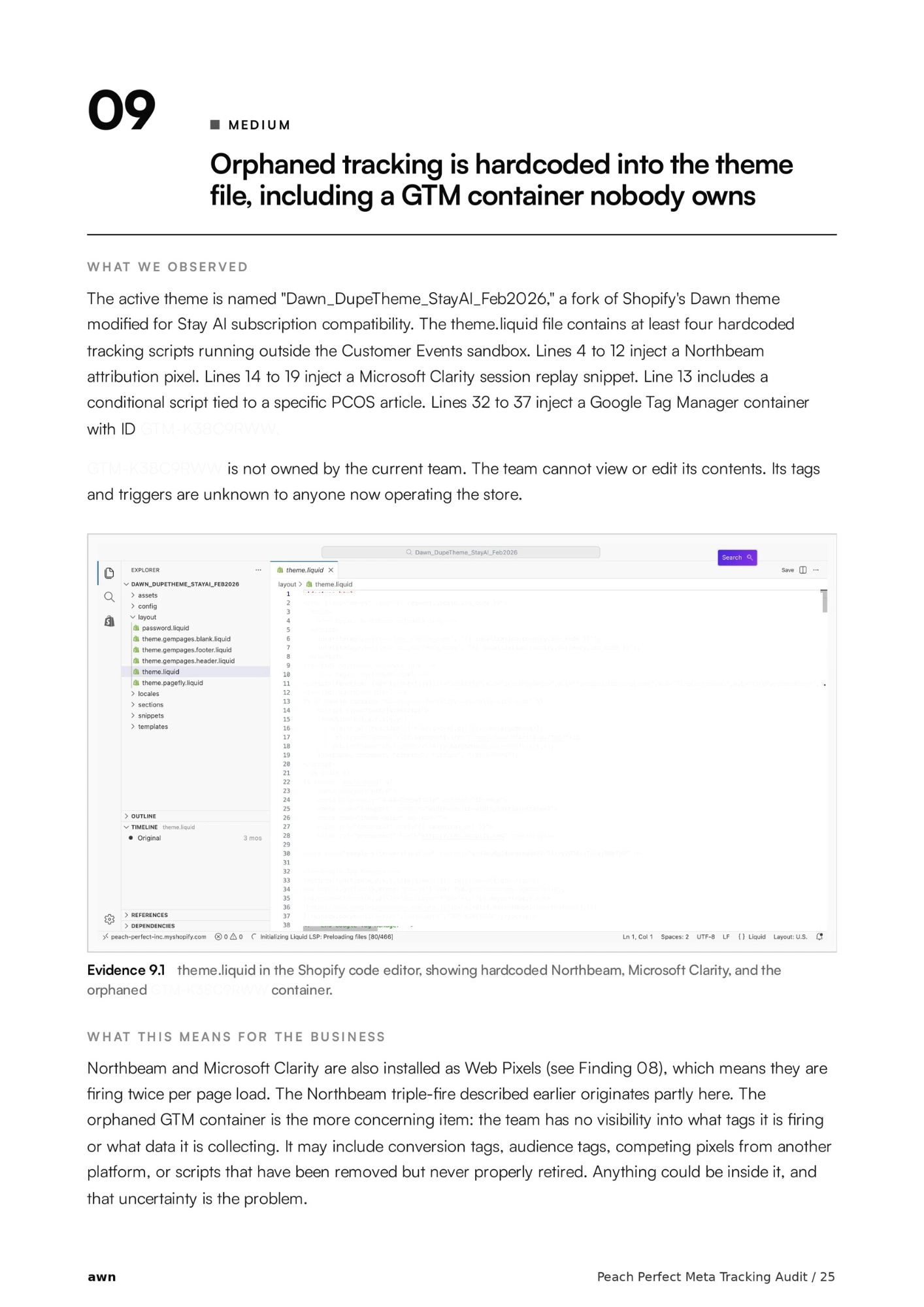
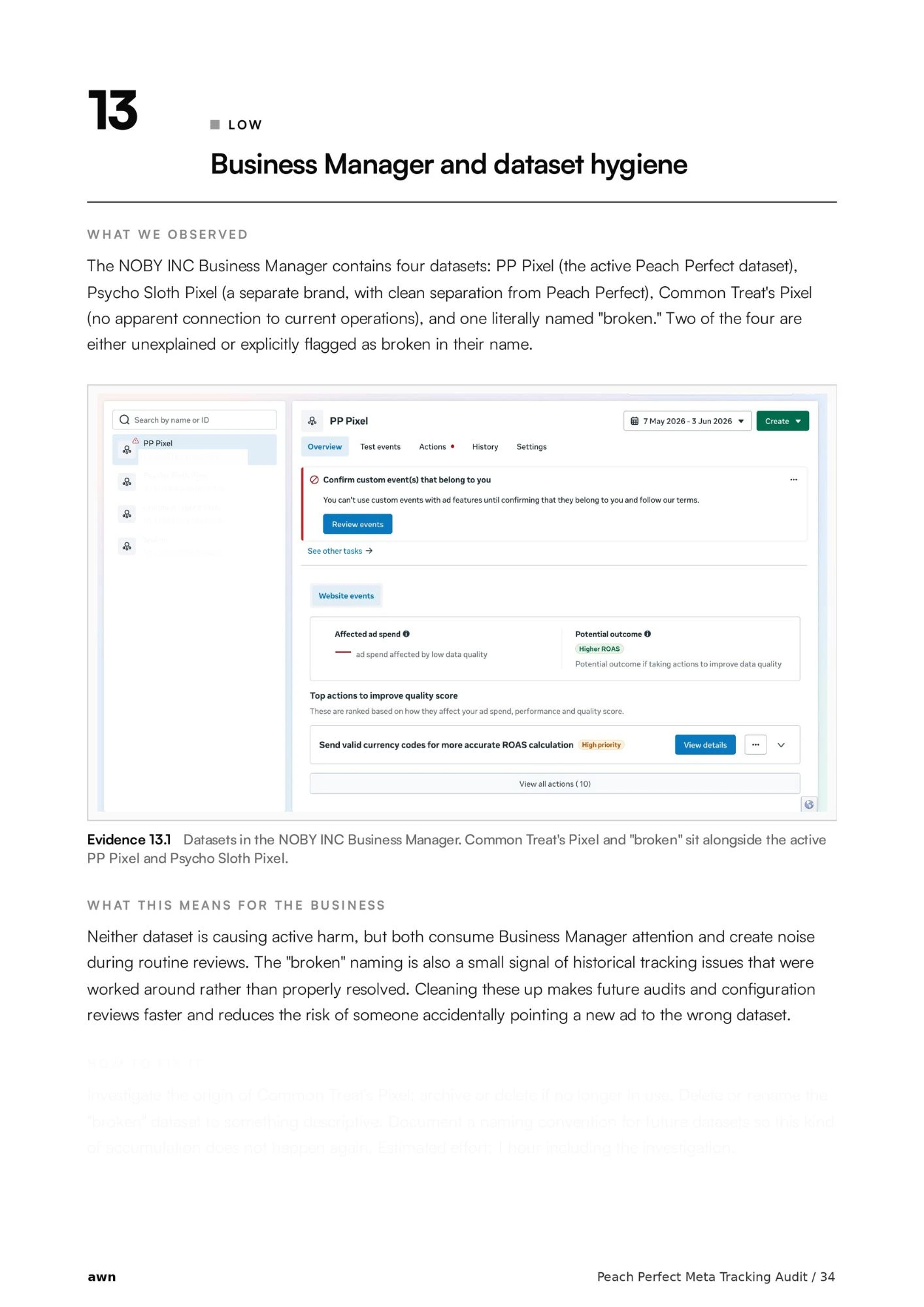
An orphaned Google Tag Manager container firing on every page from a past agency engagement. Nobody on the current team owned it.
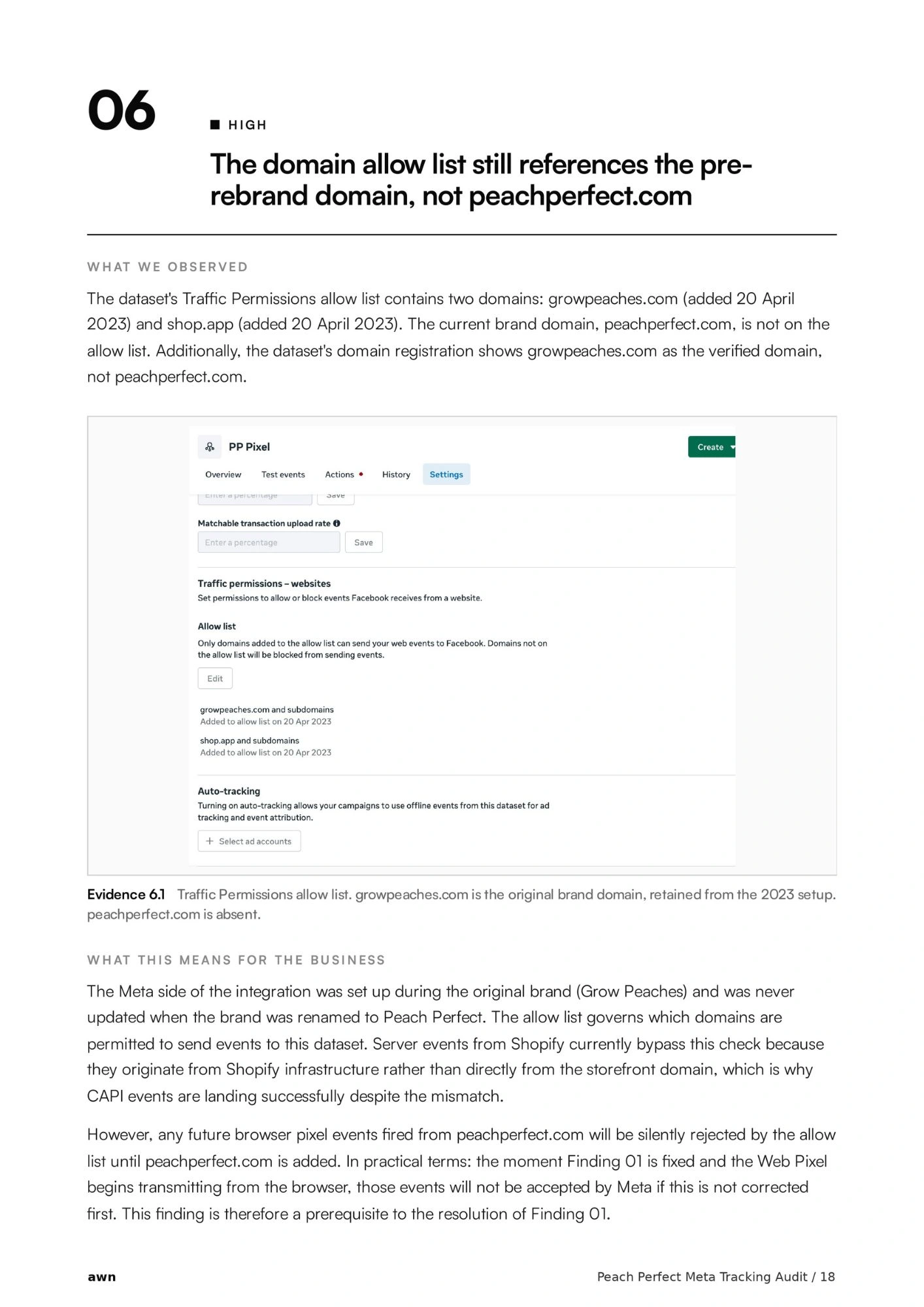
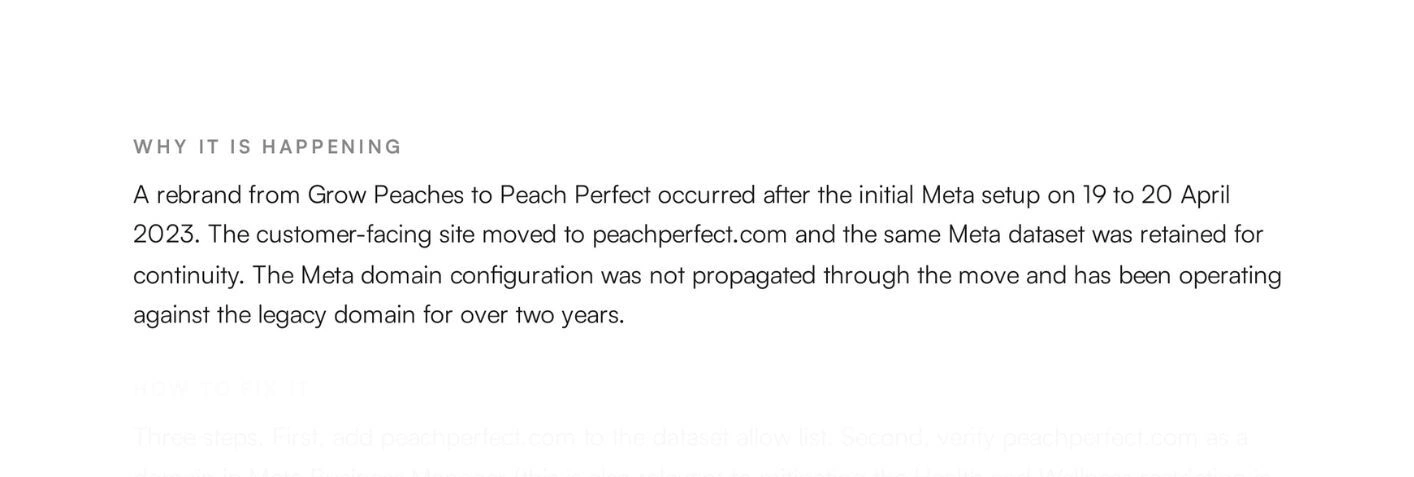
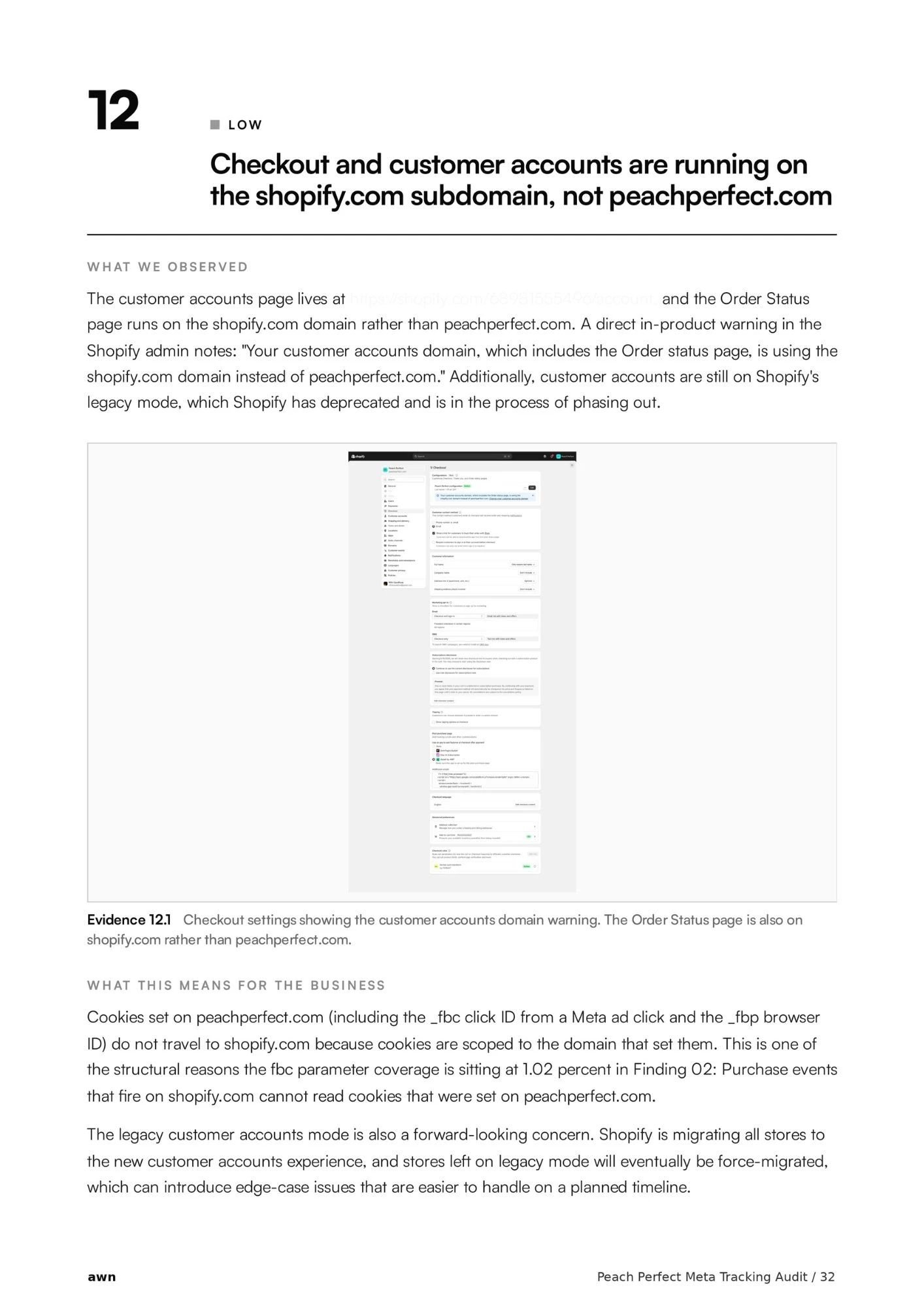
Domain configuration still referencing the pre-rebrand domain from when the brand was called "Grow Peaches" in 2023.
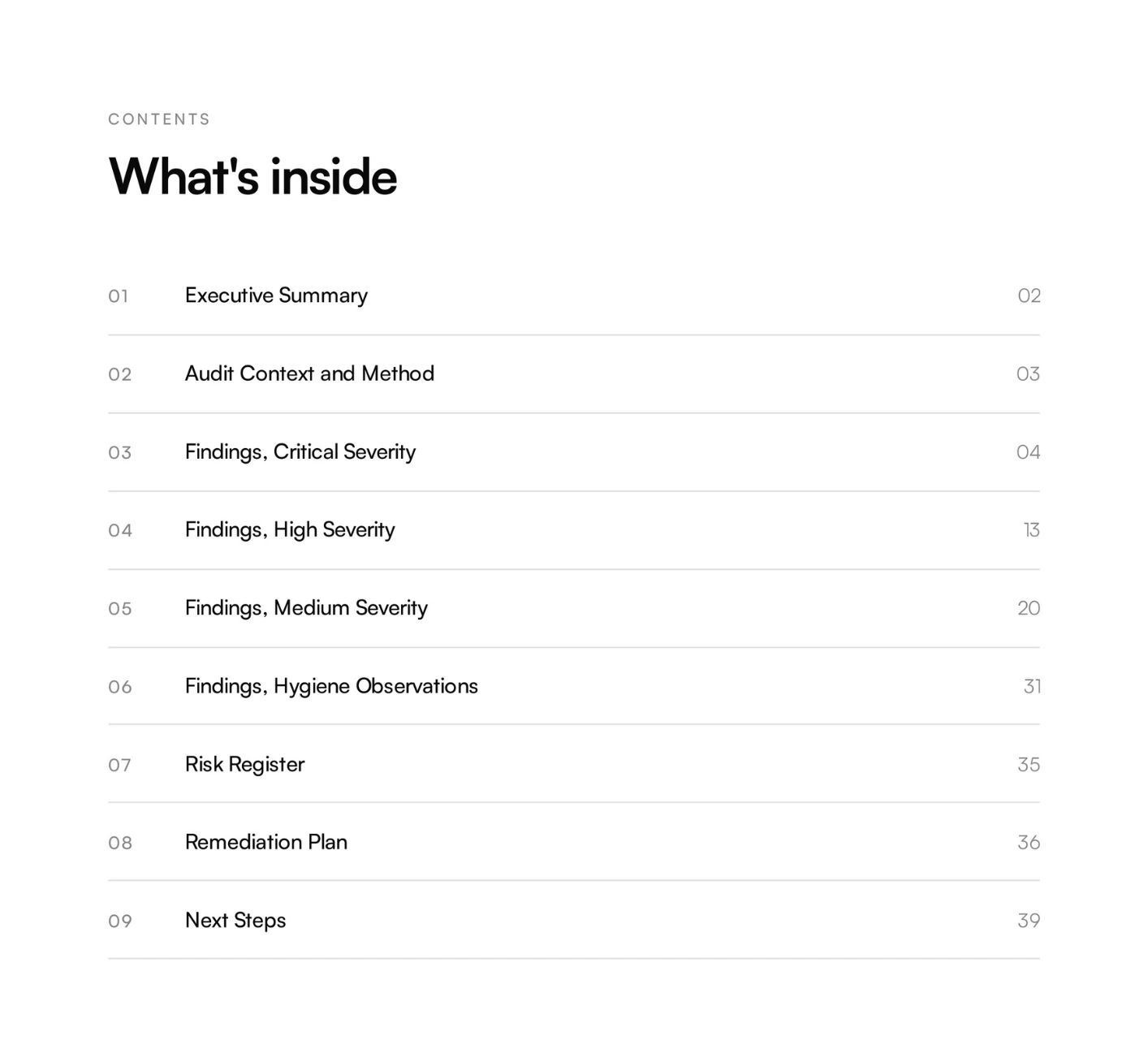
The audit document itself ran to 40 pages with screenshot evidence for every finding, severity ratings, commercial impact framing, and a phased remediation plan.
My Approach
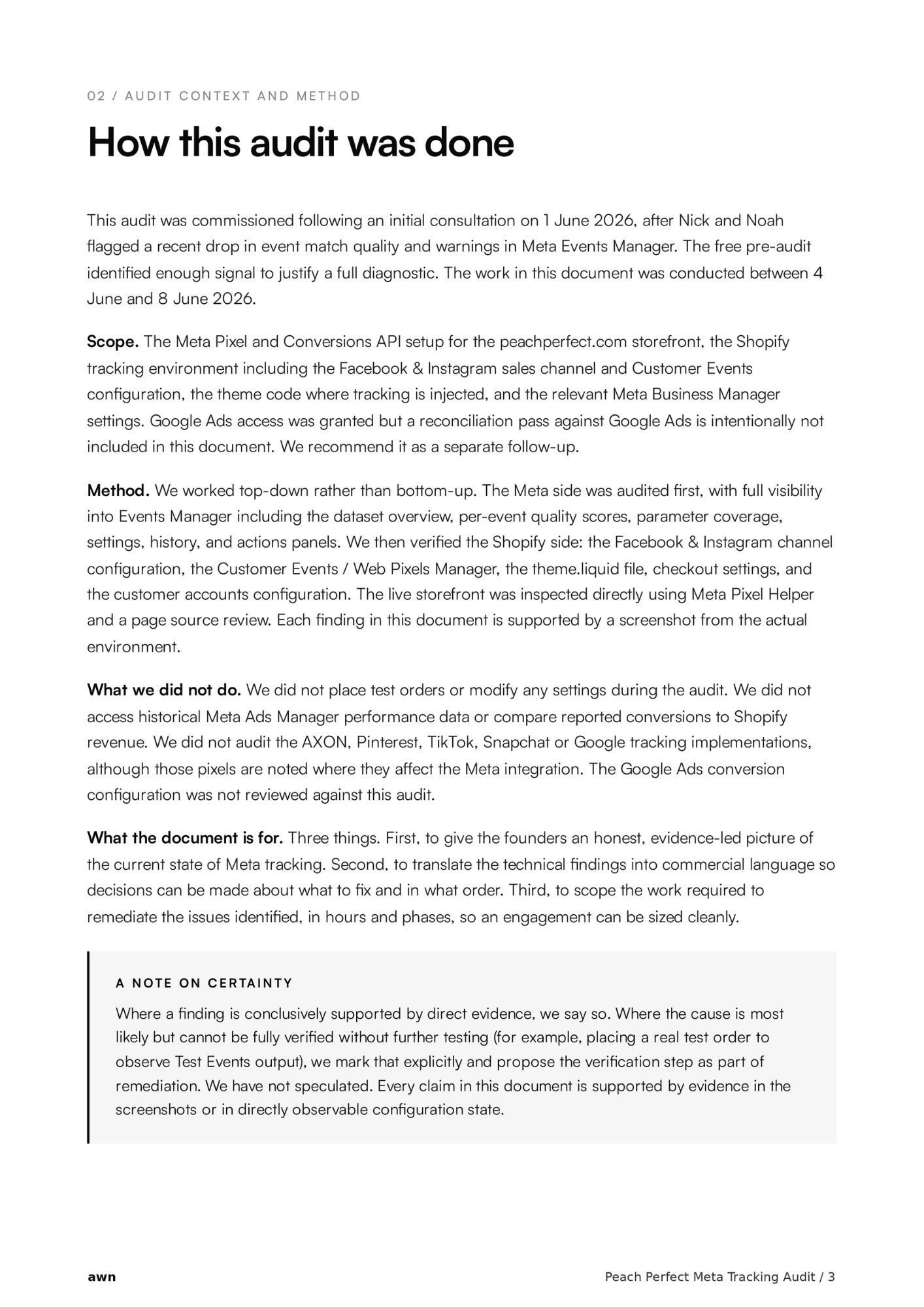
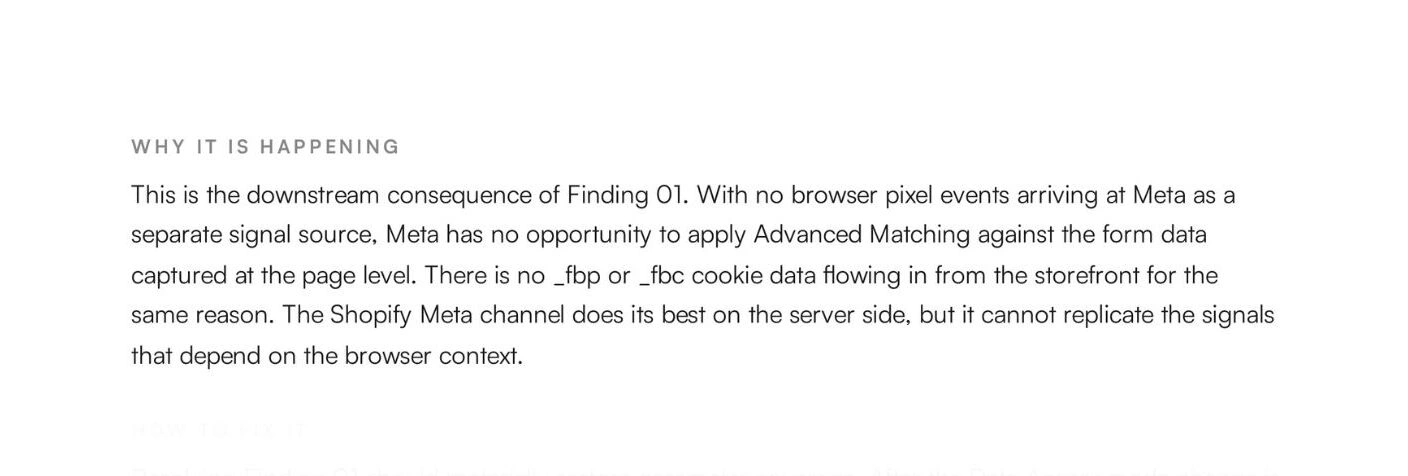
Top-down rather than bottom-up. I started inside Meta Events Manager (dataset overview, per-event quality scores, parameter coverage, settings history, actions panels), then verified the Shopify side (Facebook & Instagram channel configuration, Customer Events, theme.liquid code, checkout settings, customer accounts configuration). The live storefront was inspected directly using Meta Pixel Helper and a full page source review.
Every claim was supported by direct evidence. Where the cause was probable but not fully verified, I marked it explicitly and proposed the verification step as part of remediation. No speculation.
The deliverable was structured in severity bands (Critical, High, Medium, Hygiene) so the founders could make commercial decisions about what to fix first without needing to read the document end-to-end.
The Most Commercially Material Discovery
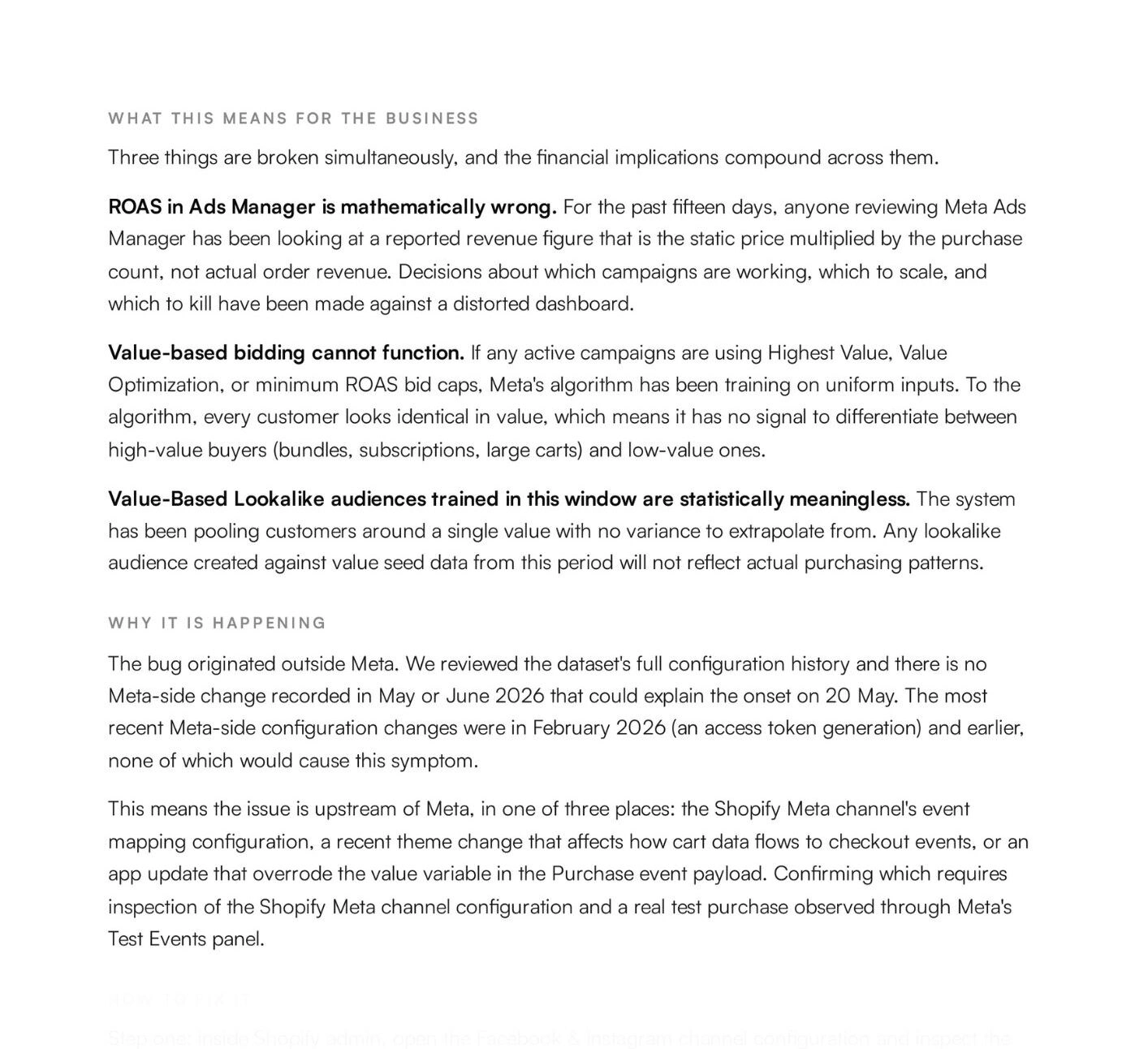
The same-price Purchase bug. Detected by Meta on 20 May 2026. Every Purchase event from that day forward arrived at Meta with the same hardcoded value, regardless of actual order total. Three knock-on effects:
Reported ROAS in Ads Manager was mathematically wrong for the entire window. A $39 single-bottle order and a $158 bundle order arrived at Meta as the same number.
Value-based bidding was training on uniform inputs. Meta's algorithm had no signal to differentiate high-value buyers from low-value ones, which meant any Highest Value or minimum ROAS strategy was operating blind.
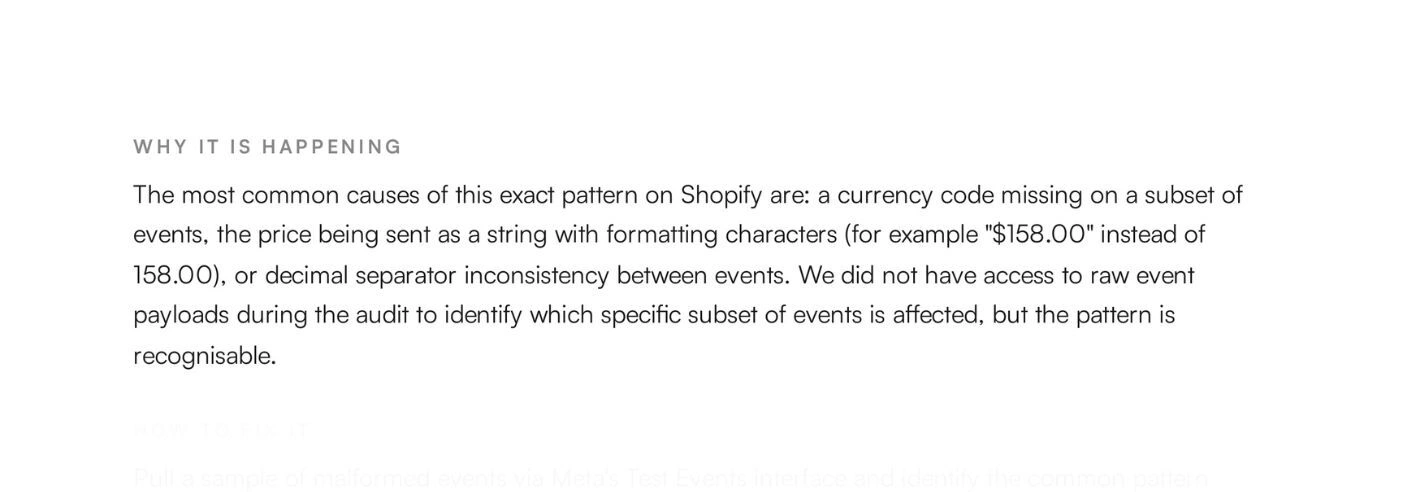
Value-Based Lookalike audiences built during the window were statistically meaningless. The system was pooling customers around a single value with no variance to extrapolate from. Any lookalike trained on that seed data would not reflect actual purchasing patterns and would need to be rebuilt.
Decisions about which campaigns to scale, which to kill, and which audiences to expand had been made against a distorted dashboard for fifteen days. Nobody knew.
What This Means For DTC Founders
Your Meta numbers may not be lying. But they might be operating on a thinner version of the truth than you think.
The most dangerous tracking issues aren't the ones that throw obvious errors in Ads Manager. They're the ones that look healthy on the dashboard while quietly underreporting conversions, distorting ROAS, or feeding the algorithm bad signals. A pixel that "fires correctly" can still be transmitting the wrong values, on the wrong events, with the wrong parameters, against the wrong domain.
If you're spending real money on Meta and you've never had your tracking environment independently audited, you may be operating with the same kind of structural distortion Peach Perfect was operating under for over a year.
THE RESULT
Before
Before
After - within few days
What I Do
I conduct Meta Pixel and Conversions API audits for DTC and e-commerce brands running on Shopify. The deliverable is an evidence-led diagnostic document with severity-ranked findings, commercial impact framing for each, and a phased remediation plan you can either implement in-house or commission as a follow-up engagement. Five to seven business days from kickoff to delivery.
If you've been running Meta ads at any meaningful scale and you recognise any of these signals, your tracking environment probably warrants a look:
Event Match Quality (EMQ) below 7 on your key events
Recent data quality warnings in Meta Events Manager
ROAS in Ads Manager that doesn't match revenue in Shopify
A tracking environment with multiple pixels, past or present agencies, or unknown scripts in your theme
A move to GA4, iOS 14, or a new privacy framework that left tracking in a partial state
Inherited a brand or store and not sure what's actually firing under the hood
The audit document I produce becomes a permanent reference for your team, even if you choose not to commission the remediation work.
Get In Touch
Send a message through Contra and I'll get back to you within 24 hours. Most engagements start with a 30-minute call to confirm scope before any paid work begins.
Like this project
Posted Jun 22, 2026
Meta Pixel & CAPI audit for Peach Perfect, US DTC supplement brand in GNC. 13 findings including a 15-day bug distorting ROAS in Ads Manager.
Likes
1
Views
28
Clients
Peach Perfect