Foldable Phone Stand Design and Development

Ayodele Eunice Monice


Foldable Phone Stand Design | Industrial Design & Product Development
Client
Confidential Consumer Electronics Brand
Industry
Consumer Electronics • Mobile Accessories • Consumer Products
Role
Lead Industrial Designer | Product Design Engineer | CAD Engineer | Design for Manufacturing (DFM) Specialist
Project Overview
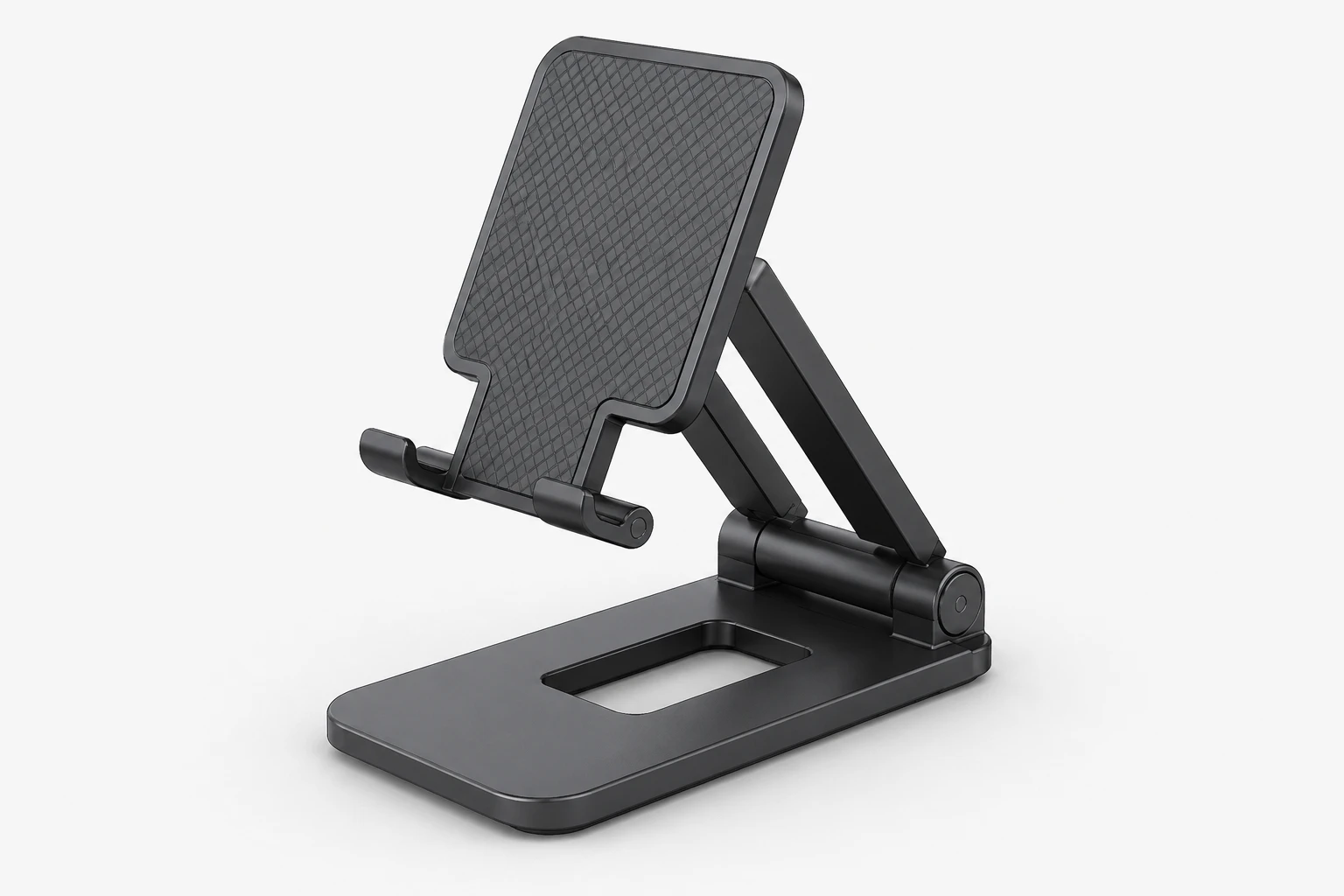
This project focused on the design and development of a premium foldable phone stand that delivers portability, stability, and an exceptional user experience. The client sought a compact accessory that could easily fit into a pocket or bag while unfolding into a sturdy stand capable of supporting smartphones in both portrait and landscape orientations.
The primary challenge was to create a product that balanced elegant aesthetics with reliable mechanical performance. The stand needed to withstand repeated folding cycles, provide adjustable viewing angles, maintain structural rigidity during use, and be optimized for cost-effective manufacturing.
The project covered the complete product development process, including market research, industrial design, concept generation, mechanical engineering, CAD modeling, design refinement, Design for Manufacturing (DFM), and presentation-ready visualization.
Project Objectives
The project was developed around several key objectives:
• Design a compact and highly portable phone stand
• Develop an intuitive folding mechanism
• Provide multiple adjustable viewing angles
• Ensure stability across different smartphone sizes and weights
• Create a premium visual identity suitable for modern consumer electronics
• Reduce the number of components for easier assembly
• Improve manufacturing efficiency
• Optimize material usage without sacrificing durability
• Develop a production-ready CAD model for prototyping and manufacturing
Product Research & Discovery
The development process began with extensive research into existing mobile phone stands, user behavior, and current market trends.
Research focused on:
• Daily smartphone usage scenarios
• Remote work and video conferencing needs
• Ergonomic viewing positions
• Foldable product mechanisms
• Consumer expectations for portability
• Competitive product analysis
• Material options
• Manufacturing methods
• Durability requirements
• Cost considerations
This research identified opportunities to improve portability, stability, ease of use, and overall product quality while differentiating the design from existing products on the market.
User-Centered Design Strategy
The design strategy emphasized simplicity, portability, and premium usability. Every aspect of the product was developed to minimize user effort while maximizing functionality.
Key design principles included:
• Compact folded profile
• Fast one-handed deployment
• Stable support during use
• Clean and minimal aesthetics
• Comfortable interaction
• Durable mechanical construction
• Efficient manufacturing
• Long product lifespan
Every design decision balanced user experience with engineering practicality and production feasibility.
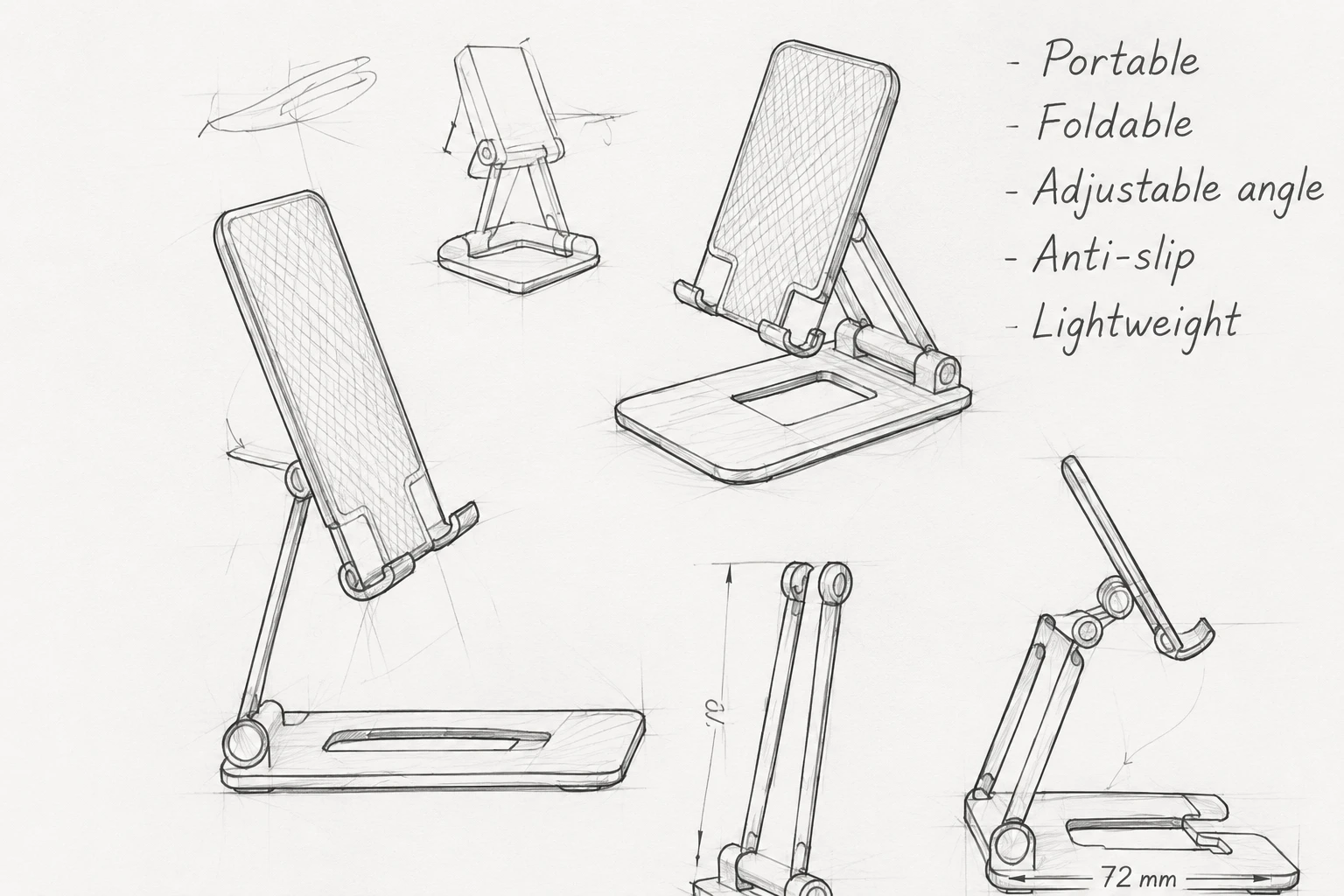
Ideation & Concept Development
Multiple design directions were explored through hand sketches and digital concept development.
Areas explored included:
• Folding architectures
• Hinge mechanisms
• Structural layouts
• Support arm configurations
• Base geometries
• Device retention methods
• Viewing angle adjustments
• Surface treatments
• Branding integration
Each concept was evaluated for mechanical simplicity, portability, visual appeal, manufacturing complexity, and structural performance. Several iterations were completed before selecting the final concept for engineering development.
Industrial Design Development
Following concept selection, the design entered an iterative refinement phase where every detail was optimized for appearance and usability.
Development focused on:
• Product proportions
• Folded and unfolded form
• Ergonomic interaction points
• Surface continuity
• Edge refinement
• Device contact surfaces
• Overall visual balance
• Premium detailing
The final design achieves a refined appearance while maintaining excellent functionality and structural performance.
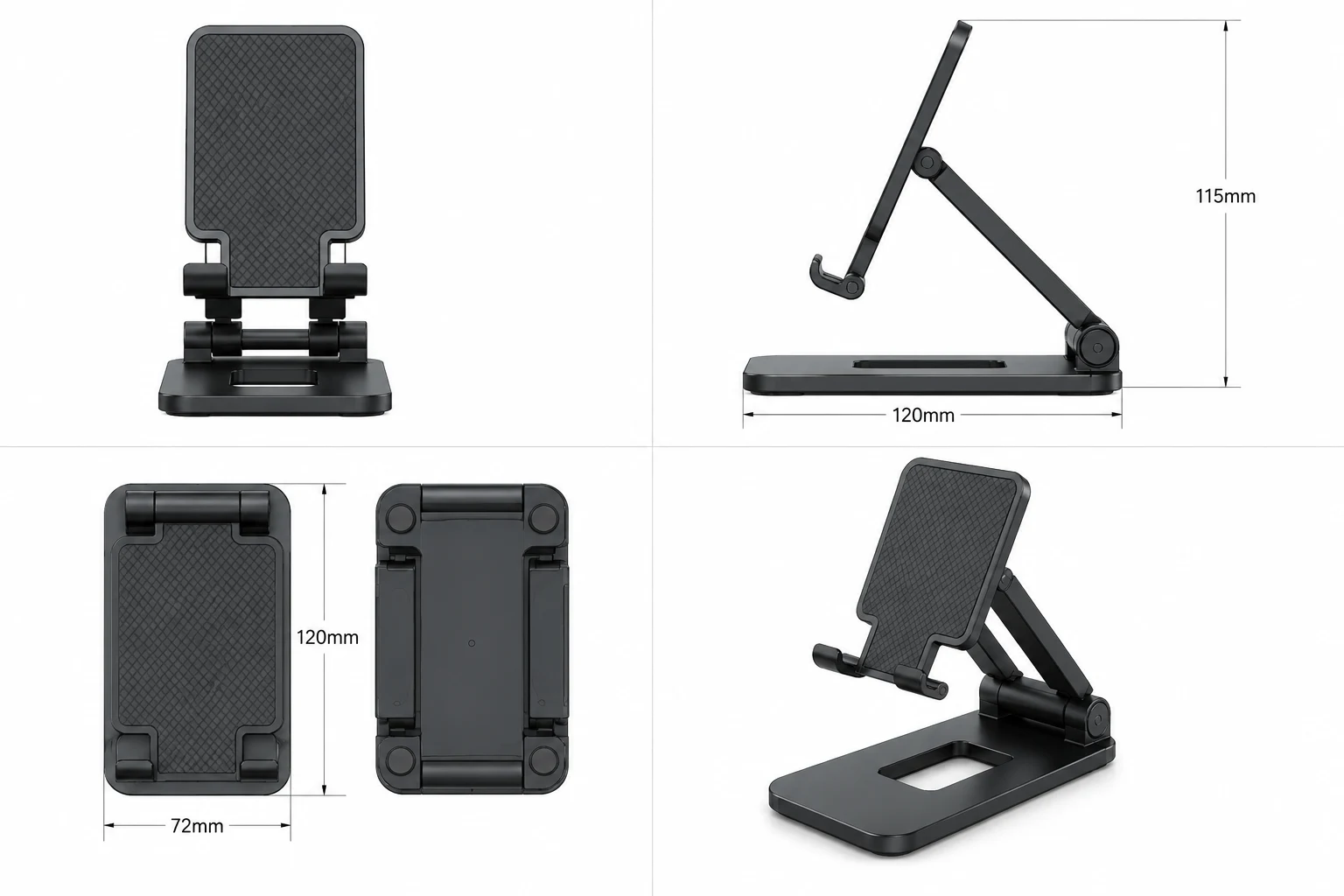
Mechanical Engineering & Product Development
Engineering development translated the industrial design into a functional mechanical product.
Engineering activities included:
• Folding mechanism design
• Hinge development
• Locking position evaluation
• Structural reinforcement
• Load distribution analysis
• Pivot design
• Assembly planning
• Wear point optimization
• Mechanical tolerances
• Durability considerations
Every moving component was designed to provide smooth operation while maintaining long-term reliability through repeated opening and closing cycles.
3D CAD Modeling
The product was developed into a detailed parametric CAD assembly suitable for engineering review, prototyping, and manufacturing.
CAD development included:
• Master assembly creation
• Individual component modeling
• Hinge assemblies
• Mechanical joints
• Fastener integration
• Motion verification
• Clearance analysis
• Assembly validation
• Manufacturing tolerances
• Revision management
The CAD model provided accurate geometry for prototype fabrication and future production tooling.
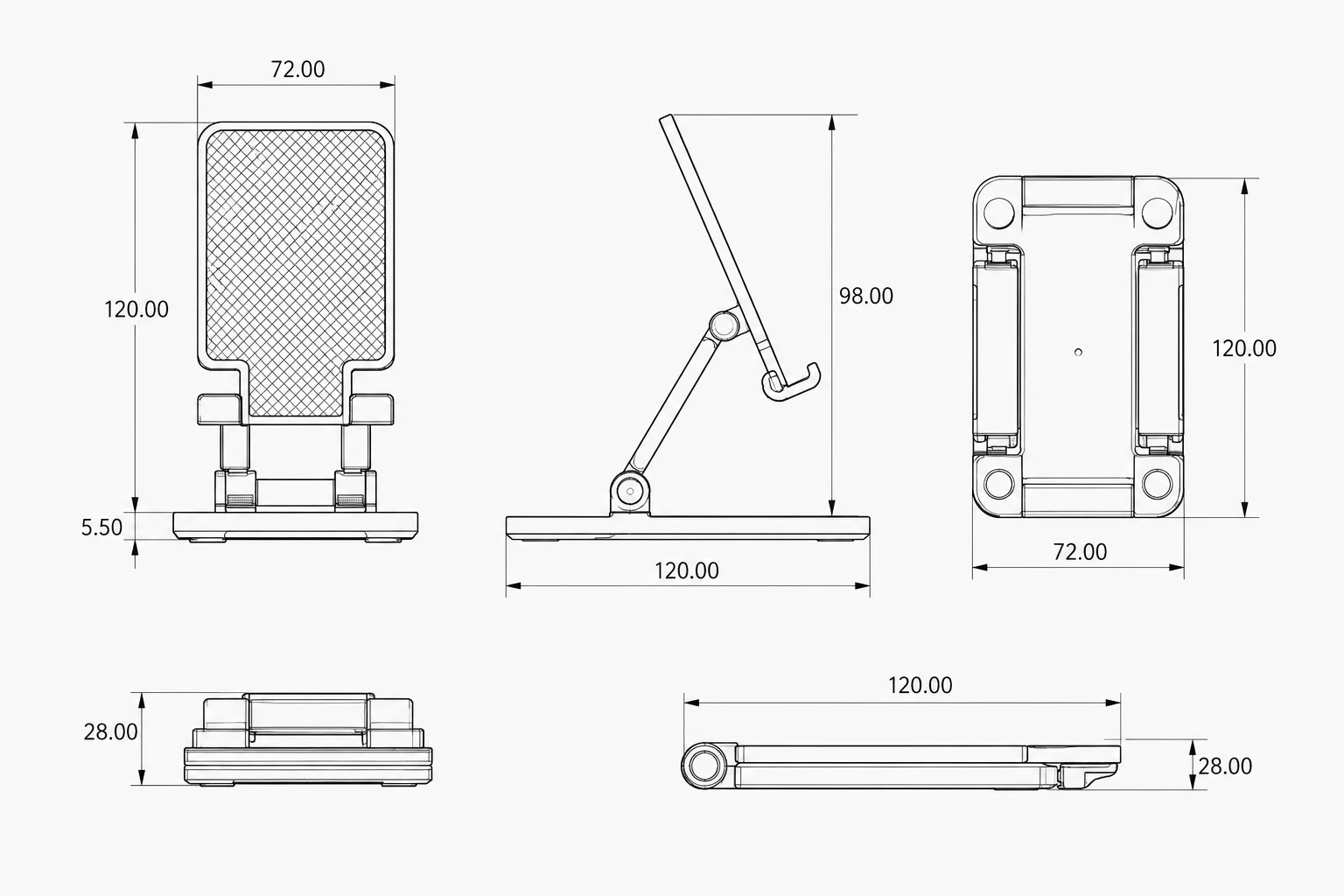
Design for Manufacturing (DFM)
Manufacturing requirements were incorporated throughout development to ensure efficient production and assembly.
DFM considerations included:
• Injection molding compatibility
• CNC machining feasibility for prototype components
• Uniform wall thickness
• Draft angle optimization
• Tool accessibility
• Part count reduction
• Snap-fit opportunities
• Fastener minimization
• Material optimization
• Assembly sequence planning
These improvements reduced production costs while maintaining high product quality and consistent manufacturing outcomes.
Material Selection
Material selection balanced durability, appearance, and manufacturing efficiency.
Recommended materials included:
• Aluminum alloy for structural components
• Glass-filled engineering polymer for high-strength moving parts
• Stainless steel hinge pins
• Silicone anti-slip contact pads
• Soft-touch over molded contact surfaces
• Anodized or powder-coated finishes for enhanced durability
These materials provide excellent structural performance while delivering a premium look and feel.
Engineering Challenges
Several technical challenges required iterative design and engineering solutions.
Key challenges included:
• Designing a durable folding mechanism
• Maintaining stability despite a compact footprint
• Preventing wobble during device interaction
• Supporting multiple phone sizes and weights
• Achieving smooth hinge movement
• Reducing the total component count
• Balancing portability with structural rigidity
Each challenge was addressed through engineering analysis, CAD refinement, and repeated design evaluations.
Design Validation & Refinement
The product underwent multiple refinement cycles to improve both functionality and manufacturability.
Validation activities included:
• Folding mechanism evaluation
• Structural assessment
• Ergonomic testing
• Viewing angle verification
• Device stability assessment
• Assembly review
• Surface quality refinement
• Manufacturing evaluation
Continuous refinement ensured the final design met performance expectations while remaining practical for production.
Visualization & Product Presentation
Professional visualization assets were developed to communicate the design intent and engineering quality before physical prototyping.
Presentation deliverables included:
• Photorealistic studio renders
• Folded and deployed product views
• Exploded assembly renderings
• CAD engineering visuals
• Motion sequence illustrations
• Detail close-ups
• Material and finish explorations
• Product presentation boards
These assets enabled stakeholders to evaluate the product from both aesthetic and engineering perspectives.
Deliverables
The final project included:
• Product research and competitive analysis
• User-centered design strategy
• Concept sketches and ideation
• Industrial design refinement
• Mechanical engineering development
• Fully parametric 3D CAD assembly
• Detailed component modeling
• Folding mechanism design
• Design for Manufacturing (DFM)
• Material and finish recommendations
• Production-ready CAD files
• High-resolution product renderings
• Technical presentation documentation
Results
The final foldable phone stand successfully combines elegant industrial design, intuitive usability, and robust engineering into a compact, production-ready consumer product. Its refined folding mechanism, stable support structure, and premium aesthetics create a high-quality user experience while maintaining efficient manufacturing and assembly processes.
By integrating industrial design, mechanical engineering, CAD modeling, and Design for Manufacturing throughout the development process, the project demonstrates a complete product development workflow, from early research and concept generation to engineering validation and manufacturing-ready design. The result is a commercially viable mobile accessory that delivers portability, durability, and everyday functionality in a sophisticated and minimalist form.
Like this project
Posted Jun 29, 2026
Designed a foldable phone stand blending aesthetics with engineering for durability and production efficiency.
Likes
1
Views
0
Timeline
Mar 11, 2026 - Mar 16, 2026