Eyes Are Not Just Eyes/ Article (ENG+ CHN)

Laz Laz


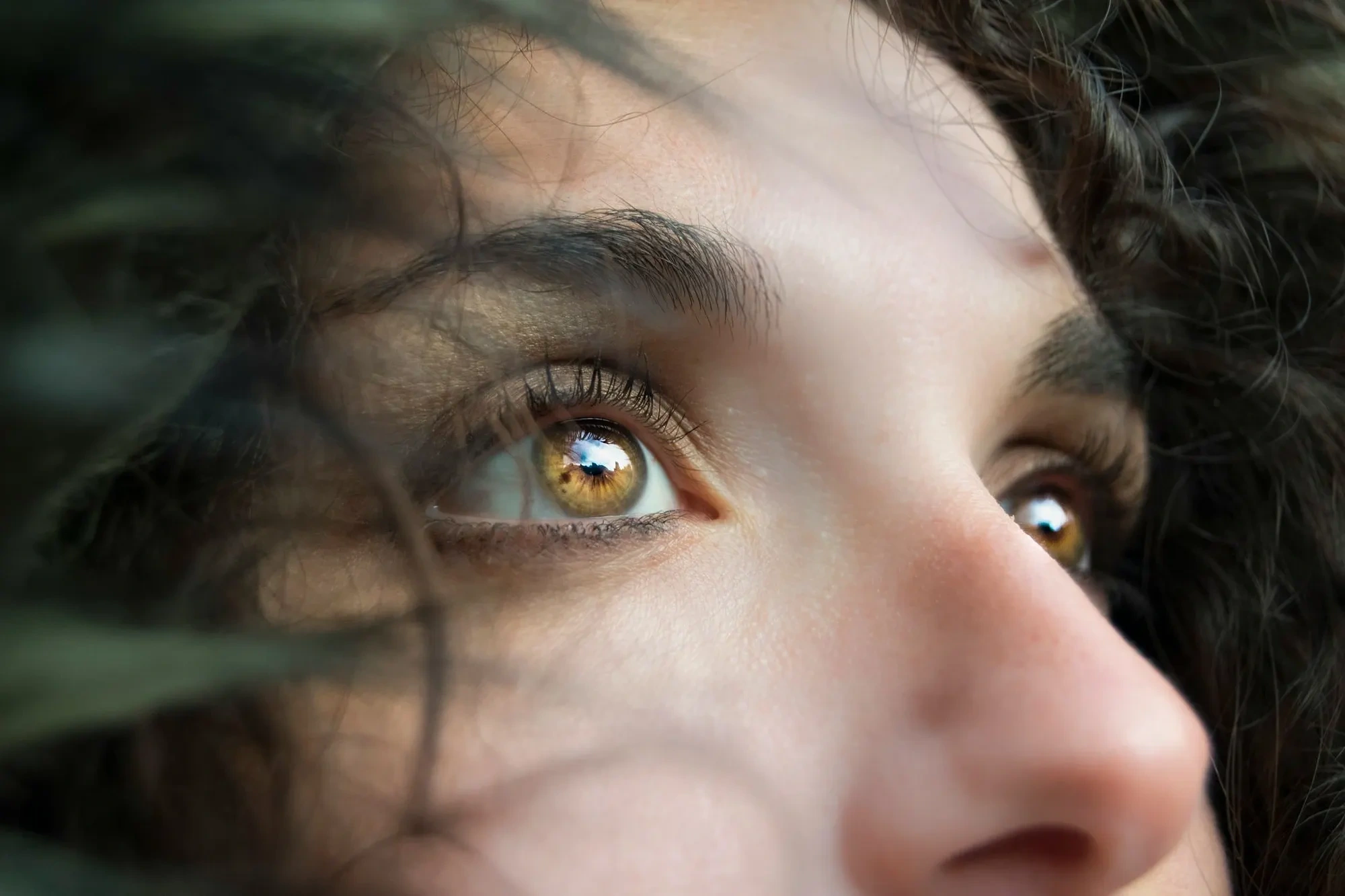
Eyes Are Not Just Eyes
Anger, joy, panic, or emptiness —
we don’t truly know what someone is thinking,
yet we can still feel a certain energy through their eyes.
If you ask me what superpower I would choose,
I would pick mind reading without hesitation.
It’s probably the most naked — and most disturbing — ability of all.
There is a word in Mandarin: 看眼色,
which literally means reading someone’s eyes,
but in practice, it refers to reading their entire facial cue system.
I understood this word, and its meaning, very young.
Early “Eye Reading”
If you grew up in an Asian household,
you had to learn how to read adults’ faces.
We observed expressions, tone, and eye contact
to decide what to do next —
a survival strategy more than anything else.
Power imbalance in childhood is obvious:
the person who holds resources holds control.
The child complies.
I still remember countless situations:
Finishing food I didn’t like
Adjusting my playfulness to avoid being “too much”
Controlling my tone with elders
Preparing excuses for a bad grade
Every family has its own rules and micro-rules.
Childhood is a constant psychological battlefield.
Parents lay the foundation;
teachers sharpen it.
By the time we enter school,
“reading cues” becomes a peer-to-peer competition —
not about pleasing adults,
but about navigating factions and power dynamics.
A Story I Only Understood After Growing Up
My high school banned dyeing and perming hair.
But I did it anyway — despite being afraid.
Another girl in my class did the same.
In the end, I received only a verbal warning
(probably because my academic performance was good)
while she was told to restore her original hair color.
Days later, everyone knew she was upset:
“The teacher didn’t punish Laz Laz because she always behaves.”
She was right.
But what confused me was this:
She knew how the system worked.
She knew how to avoid consequences.
Yet she changed nothing.
Perhaps that was the real rebellion —
knowing the cost, yet refusing to comply.
Even after many years, my opinion hasn’t changed.
What Are the Benefits of Reading People’s Eyes?
It’s not a virtue. It’s a survival strategy.
Even as adults, we adjust our behavior
based on bosses, managers, clients, or strangers.
We make micro-calibrations:
What to say
What not to say
What behavior earns leniency
What behavior brings trouble
Do it well, and life becomes smoother.
Do it poorly, and you pay the price.
The Psychology of Power Beneath the Eyes
Before discussing power, I want to ask:
How do we sense power?
Power doesn’t need to be spoken.
It arrives as pressure.
Not through title or hierarchy,
but through a two-way flow:
A tightened gaze
A sharper tone
A more precise movement
These cues immediately tell you how to adjust.
Conversely, when I sense I am in control,
my mind instantly shifts to:
How do I use this? How do I maintain it?
Power isn’t written in rules —
it hides in every micro-interaction.
So What Do We Get From All This?
Honestly?
It simply makes life a bit easier.
It’s a self-protection mechanism,
not a moral compass.
The longer I live, the more I realize
that survival skills like these
are often more practical than anything taught in school.
Society doesn’t operate in transparency.
It operates in silent mutual understanding.
Reading other people teaches us how to live —
but it never teaches us what is right.
mandarin ver.
眼睛不只是眼睛
生氣、喜悅、恐慌、放空 — — 雖然不一定知道別人在想什麼,但總能從眼睛裡感受到某種能量。
如果問我最想要什麼超能力,我會毫不猶豫選擇讀心術。
這一定是最赤裸、最變態的能力。
中文裡有個詞叫「看眼色」。
雖然只有“眼”這個字,但指的其實是整張臉傳來的訊號。我很小時就懂這個詞,甚至知道它背後的意義。
最早期的察言觀色
在亞洲體系長大的孩子,必須學會如何看大人的臉色。
我們透過表情、語氣、眼神判斷下一步該怎麼做 — — 其中帶著極大的自我利益成分,也是一種本能的保護網。
成長過程的權力配置非常明顯:
掌握資源的人擁有決定權,而孩子必須順從。
我記得我常需要看父母的臉色:
不喜歡的菜也要吃完
玩樂不能太超過
跟長輩說話要拿捏態度
成績不好時要先想好怎麼解釋
除了這些明顯規則,不同家庭還有無數暗示與小細節,儘管如此,他們還是為我們奠定了禮儀及道德標準。
童年的大部分時間,其實都在打心理—不是追求標準,而是避開麻煩。
如果說父母奠定了看眼色的基礎,老師則是強化這項技能的第2階段。
到了學校,我們運用得更純熟,同儕之間也因「眼色遊戲」產生另一層競爭。
這種競爭不是誰比較乖,而比較像兩個派系的角力。
一段我直到長大才完全理解的校規故事
高中校規禁止燙染頭髮。即使害怕破規定還是去燙髮了。同時間班上一位女生也做了這件事。
最後,我因成績較好,只被口頭警告,而她被要求恢復原本髮色。
幾天後,全班都知道她的不滿:
「因為懶懶成績比較好,所以老師都不會怎樣。」
她說的是事實,但奇妙的是:
明知道規則,也知道機制,她卻從不嘗試讓自己的成績變好。
這或許是一種自私的反叛——
知道怎樣做能得到好處,卻拒絕配合,也拒絕承擔後果。
多年以後,我的想法仍然沒有改變。
懂得看眼色帶來什麼?
看眼色其實不是美德,而是一種生存策略。
即便長大,在社會裡仍然要看老闆、主管、客戶的臉色。
為了活得順一點,我們到處觀察、分析、調整。
哪些話能講、哪些不能講;哪些行為能為自己加分,哪些會惹麻煩。
做得好,能得到獎勵;做不好,就只能吞下後果。
眼色底下的權力心理
在意識到權力之前,我想先問:
我們是如何感覺到權力的存在?
權力不是明說,而是一種壓力的來源。
不是階級,也不是職稱,而是一種雙向的流動:
對方的眼神變得銳利、動作變得嚴謹,腦袋會立刻告訴你調整自己;
反過來,當我意識到自己掌握主導時,也會本能地思考「要如何使用、如何維持」。
權力不會被寫在制度上,它藏在每一次互動的細節裡。
最後:看眼色讓我們得到什麼?
說穿了,它讓人活得順一點。
它不是高深哲學,也不是邪惡心機。
它是我們在這個社會裡的自我保護機制。
活得越久,越知道很多生存技能比課本還有用。
社會運作靠的不是透明,而是默契般的沉默。
看眼色教會我們生存——
但它從不教我們什麼是道德。
🪶 Read more and support my writing lab → 懶懶觀察寫作實驗室
☕ Buy me a coffee → Laz Laz is Life Observation
Like this project
Posted Feb 2, 2026
we don’t truly know what someone is thinking, yet we can still feel a certain energy through their eyes.