Agent Ops Console: the human review layer for AI agents

Zahid Hussain


Stack: React · TypeScript · Claude and n8n agents · Postgres audit store
A reference build that shows the pattern TechFoundry uses for agent operations. The screens use sample data, not a real customer's.
The gap this closes
An agent that works end to end still needs someone accountable for the calls that matter. The promise of "escalate only what it genuinely cannot settle" needs a place for that escalation to go: somewhere a person can see a decision, understand why the agent made it, and approve or reverse it, with a record that holds up later. The ops console is that place. The interesting part is how it decides what a human ever sees, and what happens to an override.
The review queue
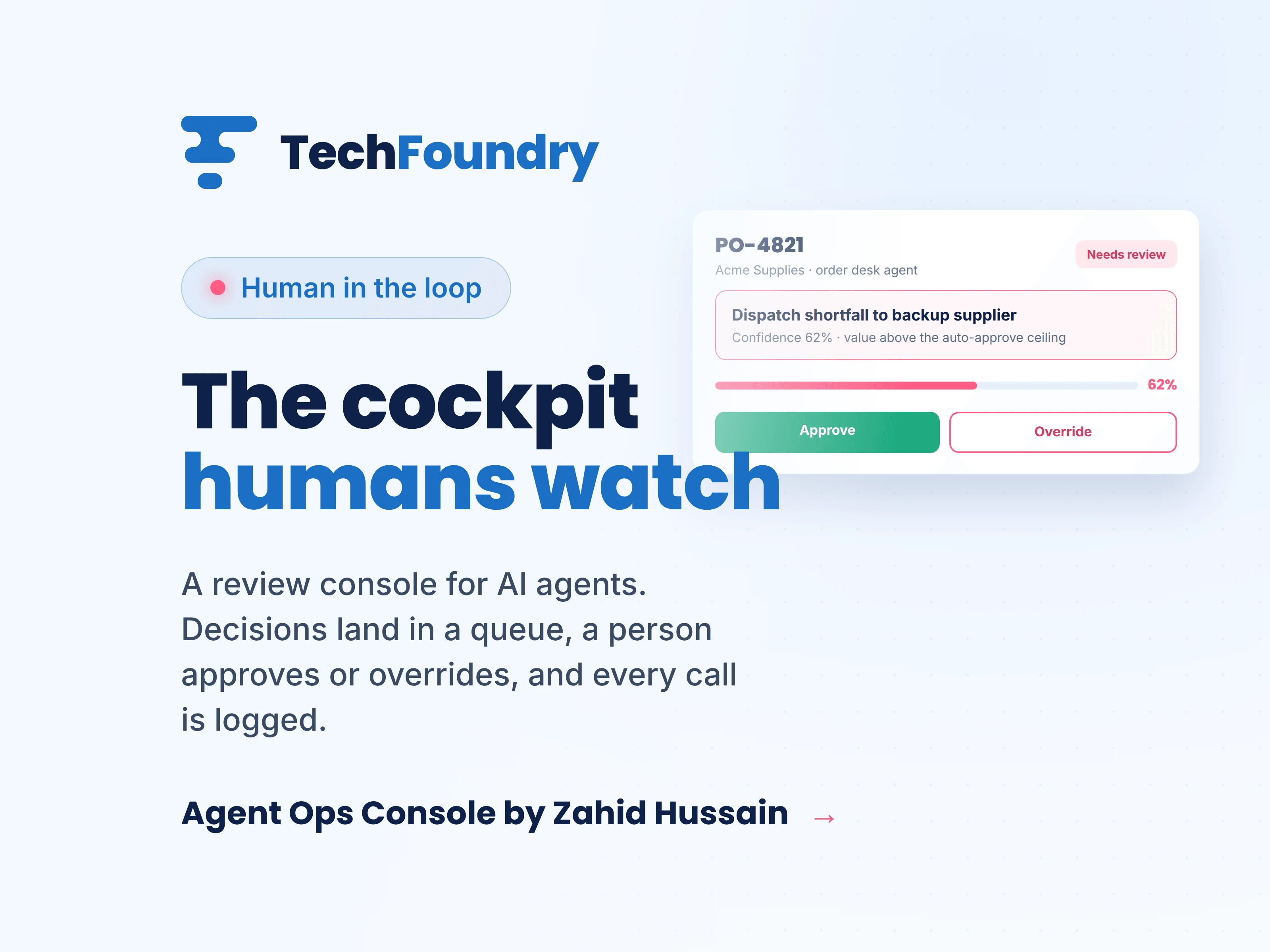
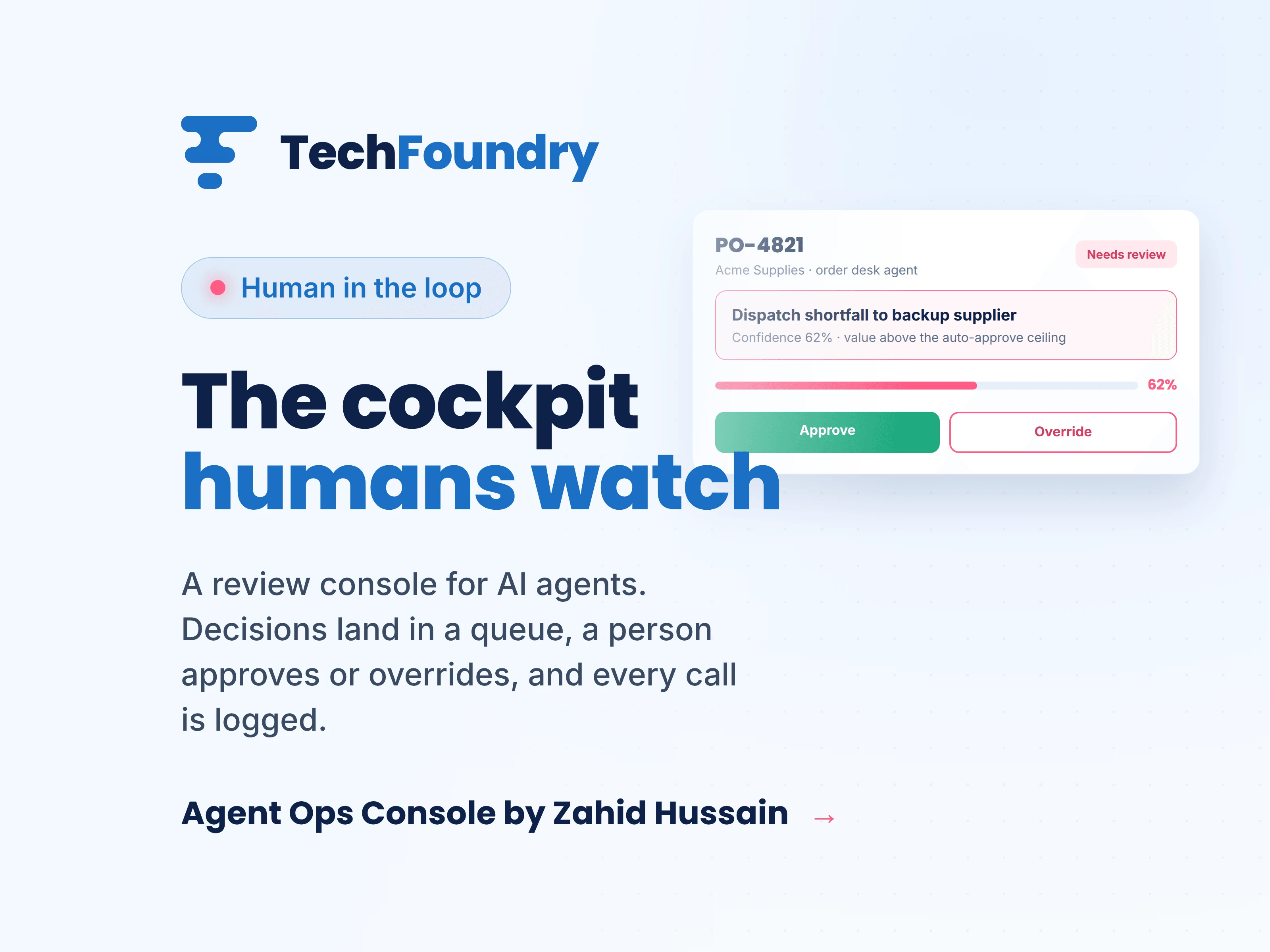
Decisions arrive as structured events, not opinions. Each one carries the agent's proposed action, the inputs it used, and a confidence score. Most clear automatically. Only the ones a rule flags reach a person, sorted so the riskiest items, low confidence and high value, sit at the top.
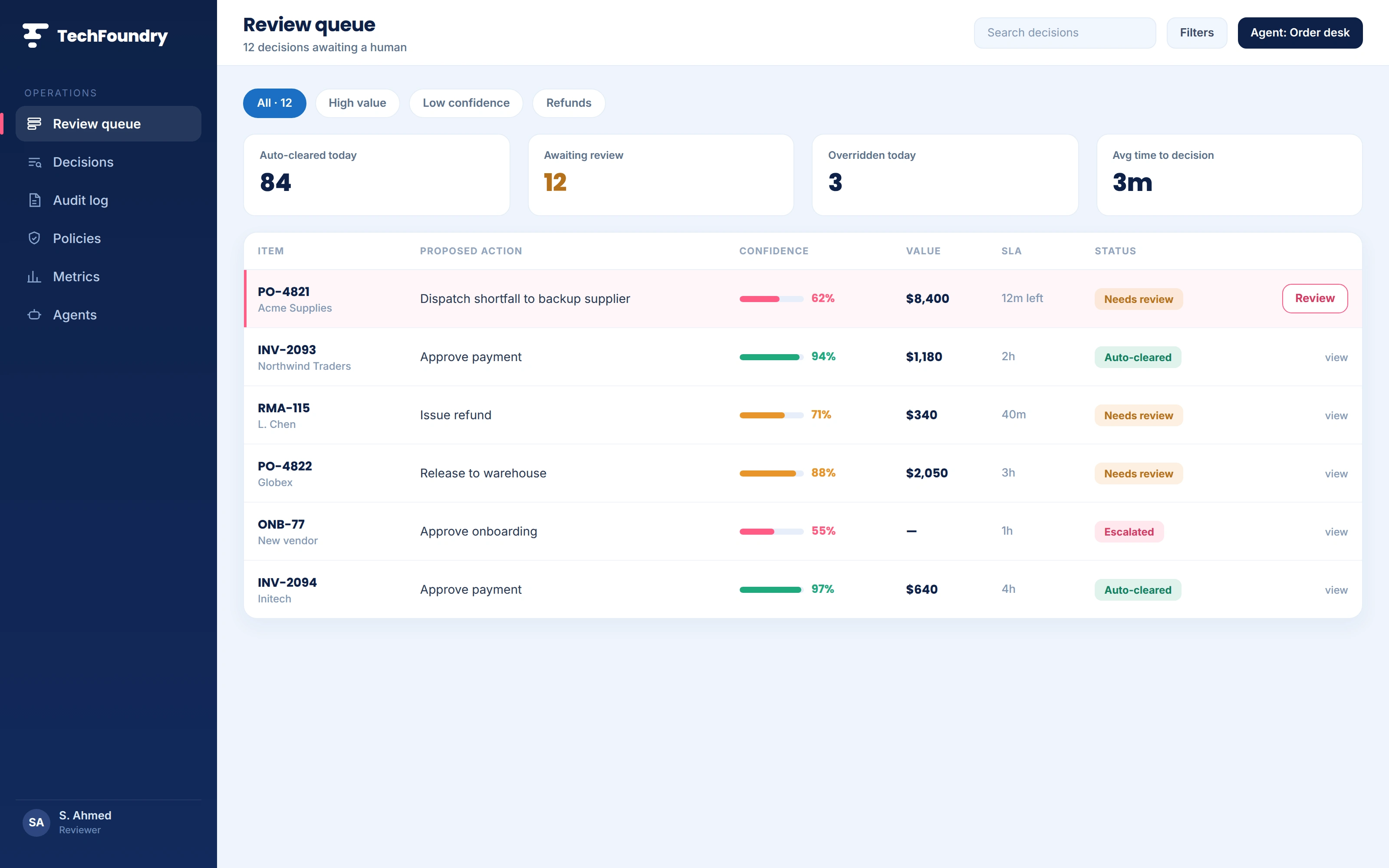
Review queue
The decision, up close
On a flagged item the reviewer sees the whole picture: the agent's proposed action, the evidence behind it, the source document the agent read and the fields it extracted, and a plain read on why the agent was unsure. One click to approve, edit, override with a reason, send back, or escalate.
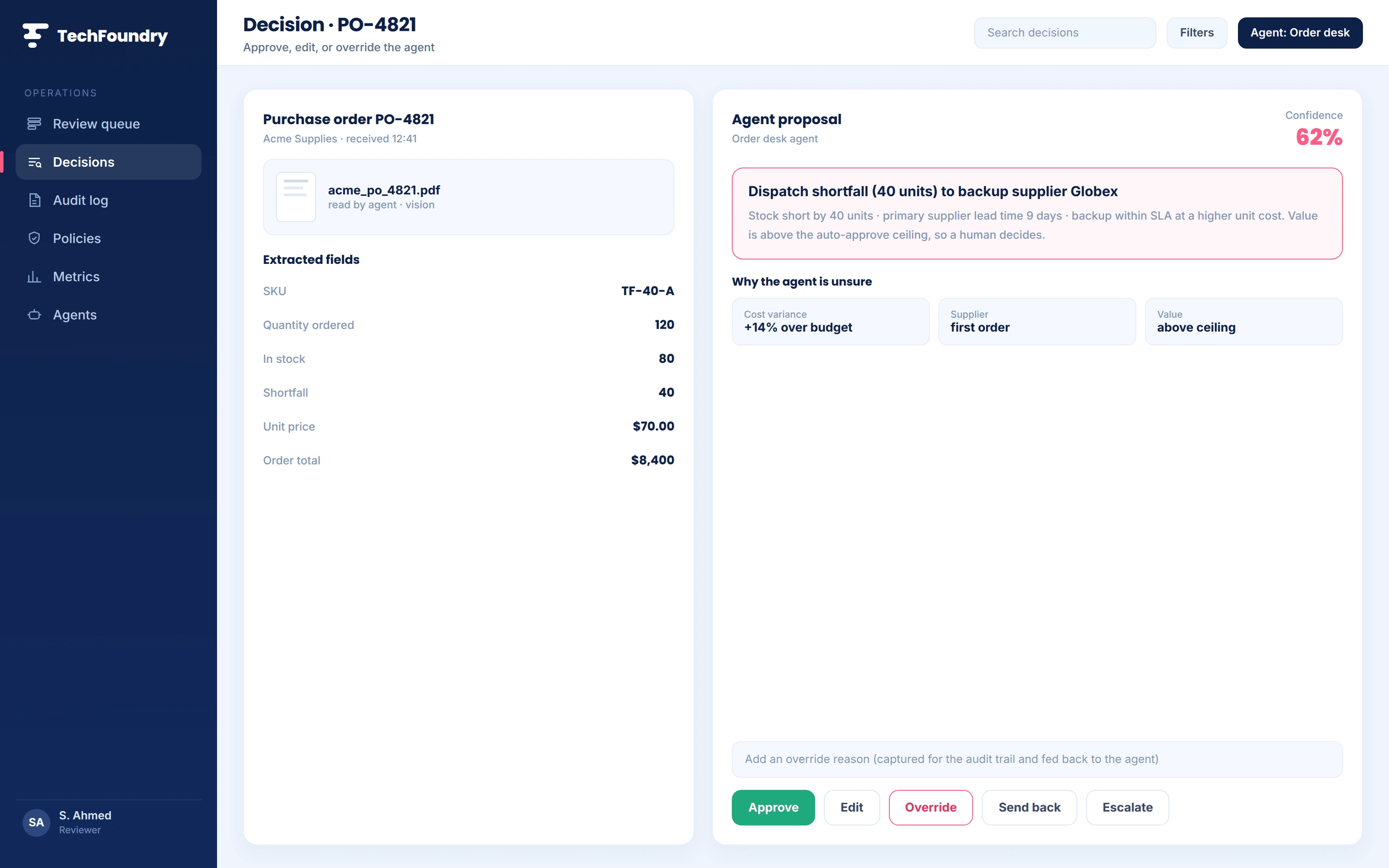
Decision detail: approve, edit, or override
Every override is training data
An override is not just a correction. It is captured with a reason code and fed back, so the same case is handled automatically next time and the share of decisions that need a human keeps shrinking. The audit log underneath is immutable and hash-chained, because these are real business actions, orders dispatched and payments approved, that have to be defensible.
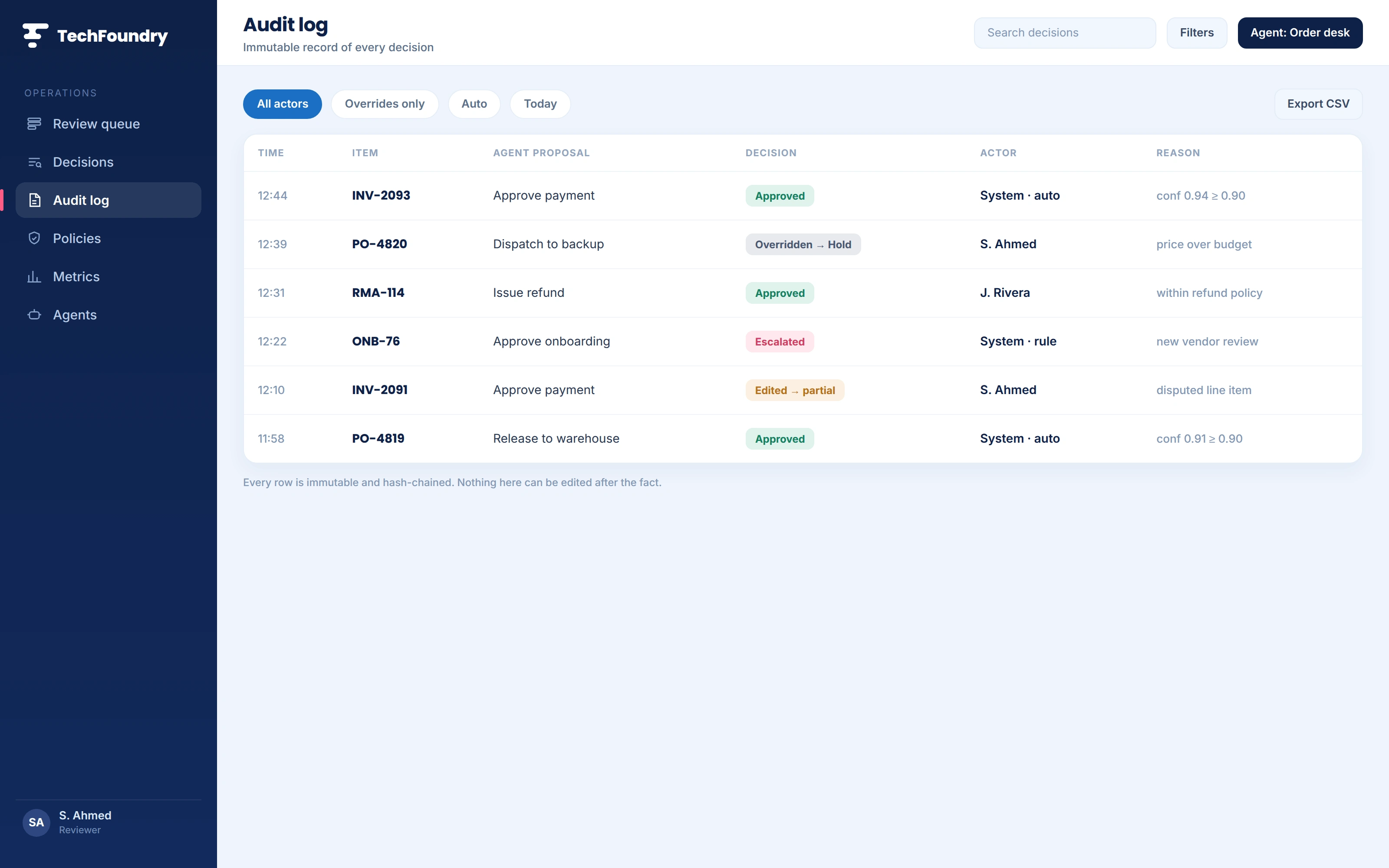
Immutable audit log
The escalation policy is the product
What reaches a human is a rule, not a guess: confidence and value thresholds, categories that always get a look, and a hold when the agent is unsure. Tuning that policy is where the time savings live, and a small metrics view shows the loop tightening as overrides train the agent.
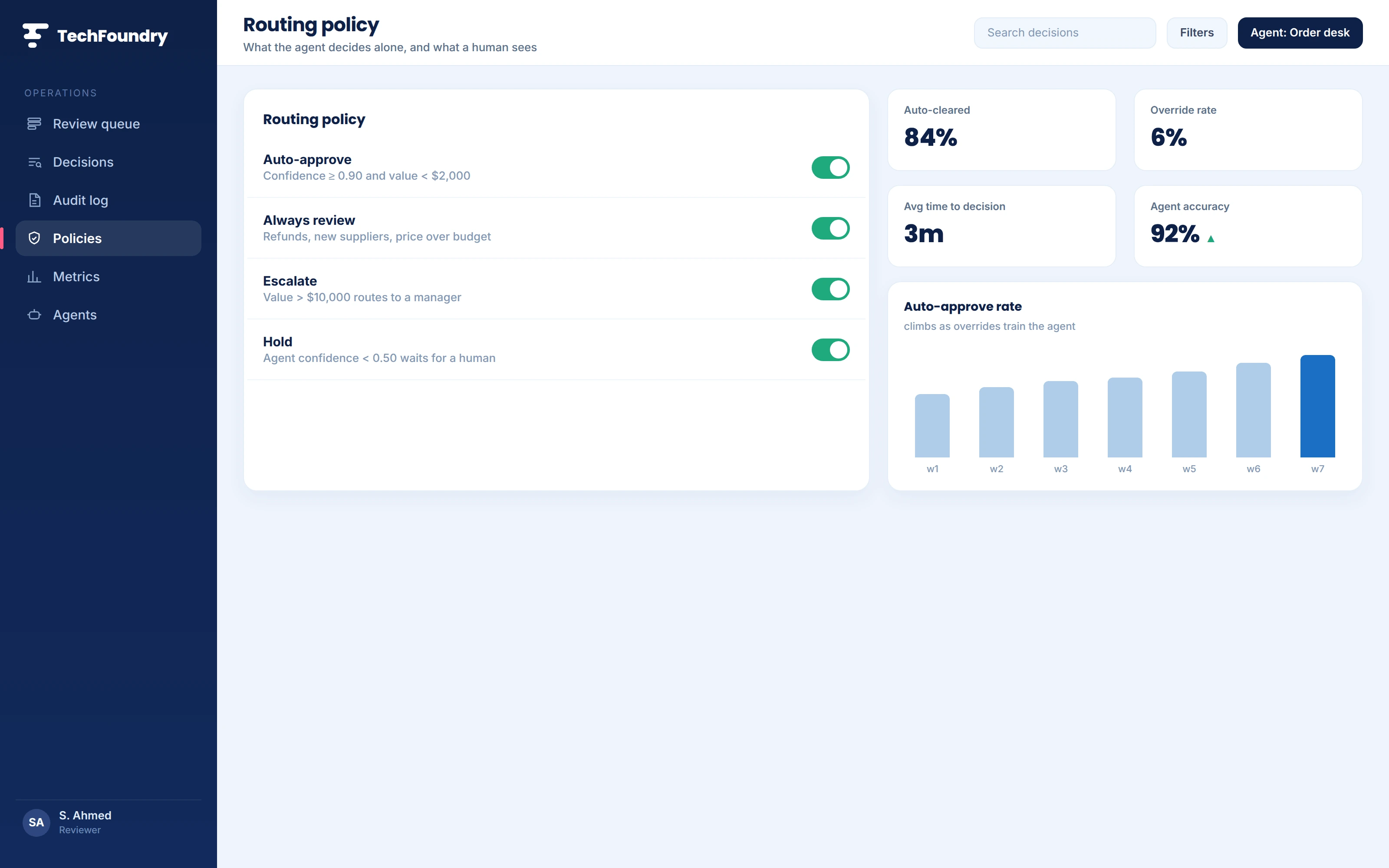
Routing policy and metrics
The same pattern, wider
The screens here show an order desk, but the shape is the same for invoice and payment approvals, refunds, vendor onboarding, or moderation. Only the decision type and the policy change. The queue, the override loop, and the audit trail stay put.
Where the line is
The console is for decisions a human should be able to see and reverse. Genuinely low-stakes autonomous steps do not need it, and wrapping them in review just adds friction. Drawing that line per workflow, deciding what the agent owns and what a person signs off, is part of the build.
Like this project
Posted Aug 27, 2026
A reference build for governing AI agent decisions: human review, overrides, and audit trails around high-stakes actions. Built to give teams control without slowing routine work.
Likes
2
Views
27