Onboarding for a new revenue streamline

Breno Araujo


In collaboration with Vanhack, I redesigned employer onboarding to reach the aha moment fast, showing candidates who fit your role before signup, with every step to set up the account live and interactive.
For ten years, every VanHack customer was won over the same way: by a person. A salesperson found, pitched, and closed them. So, what if the product closed the deal instead? We're testing whether a self-serve subscription could open a new revenue stream, product-led rather than sales-led.
Project Kickoff: The new onboarding flow
The idea of improving the onboarding experience while testing a subscription revenue stream started after research showed that this could work for us. AI-driven companies are now operating on this model, and the market confirmed that. Sales included the new model in their pitch, and companies started to adopt it. So, the next question is: could the product show enough value up front to make the self-serve subscription possible, without hurting the sales motion that closes deals today?
To test it, we decided to take advantage of the fact the website was already being revamped and the tech team was restructuring the platform to rethink the onboarding flow alongside it.
The current state
In the current onboarding, a first-time employer completed a full 7-step, 11-question job-posting form before starting to see some candidates that would fit. Most first-timers filled the form with fake data to see the real product before committing.
After all the steps, users were still seeing a non-interactive list of candidates and a call to action to book a call with a sales representative. That means a dead end for the product experience.
Design approach
The design was based on two principles: speed to value, and progressive commitment. Users won't invest effort until they've seen value.
The search starts on the website, at zero commitment. A public talent pool makes all interactions lead toward a higher goal.
A self-building role card that create the job description from what the user searches, refines, and shortlists, replacing the long intake form with the act of exploring itself.
An AI agent fills the gaps one question at a time, reducing the perceived effort of filling a form. It just feels like answering questions to improve the results.
A commitment ladder that asks for signup only to preserve work the user already built, and for payment only at the moment of interviewing.
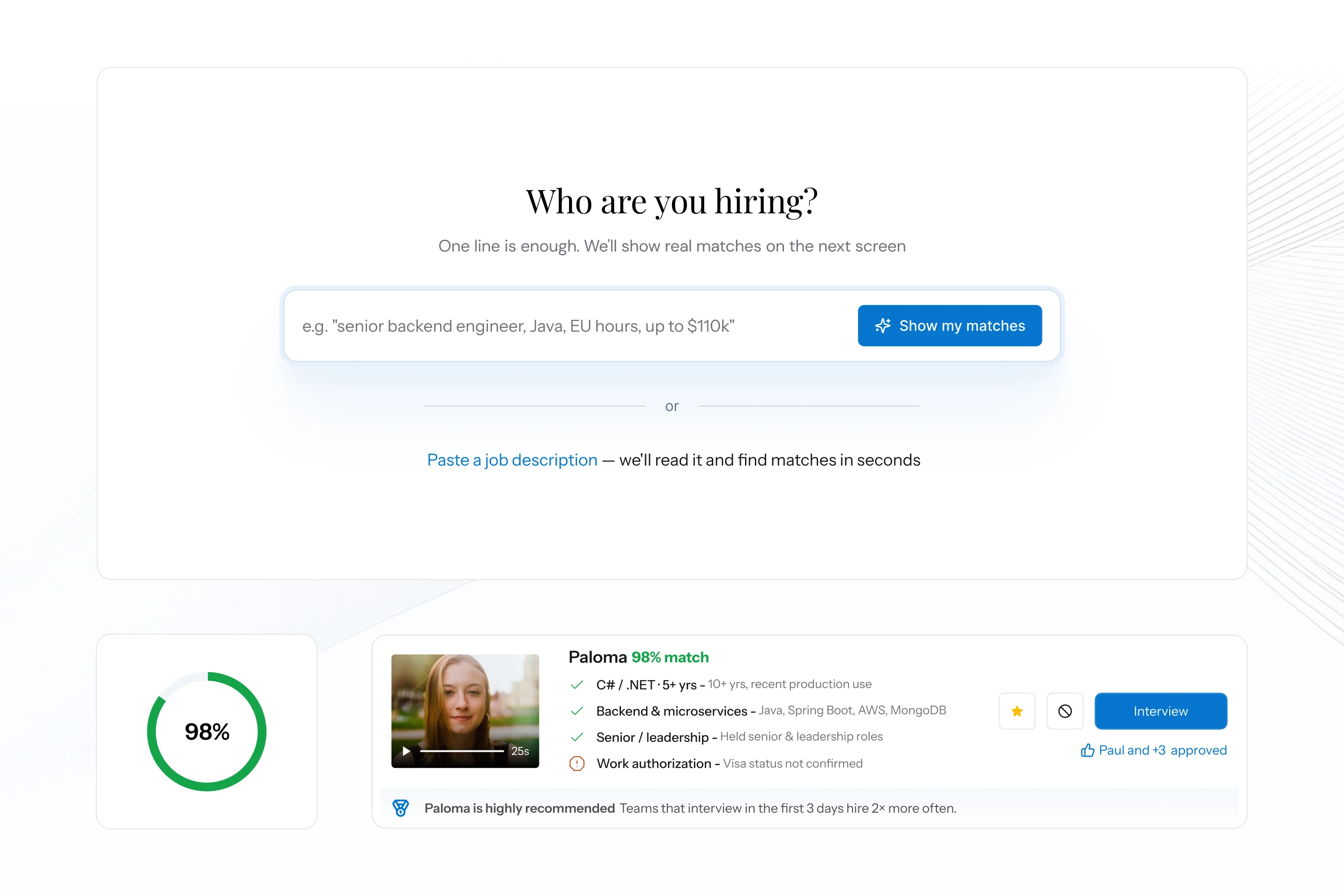
The search starts on the website,
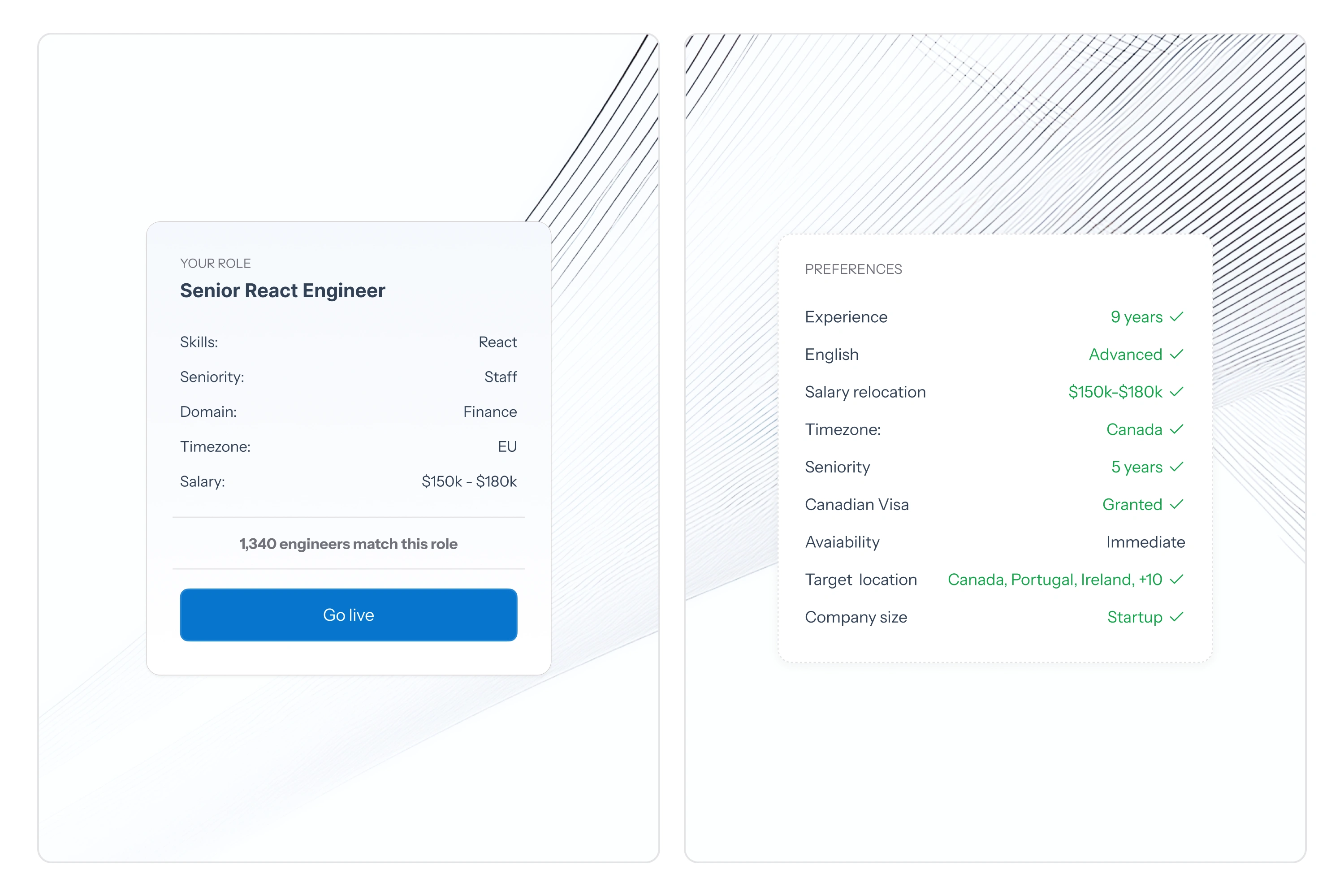
Role card builder
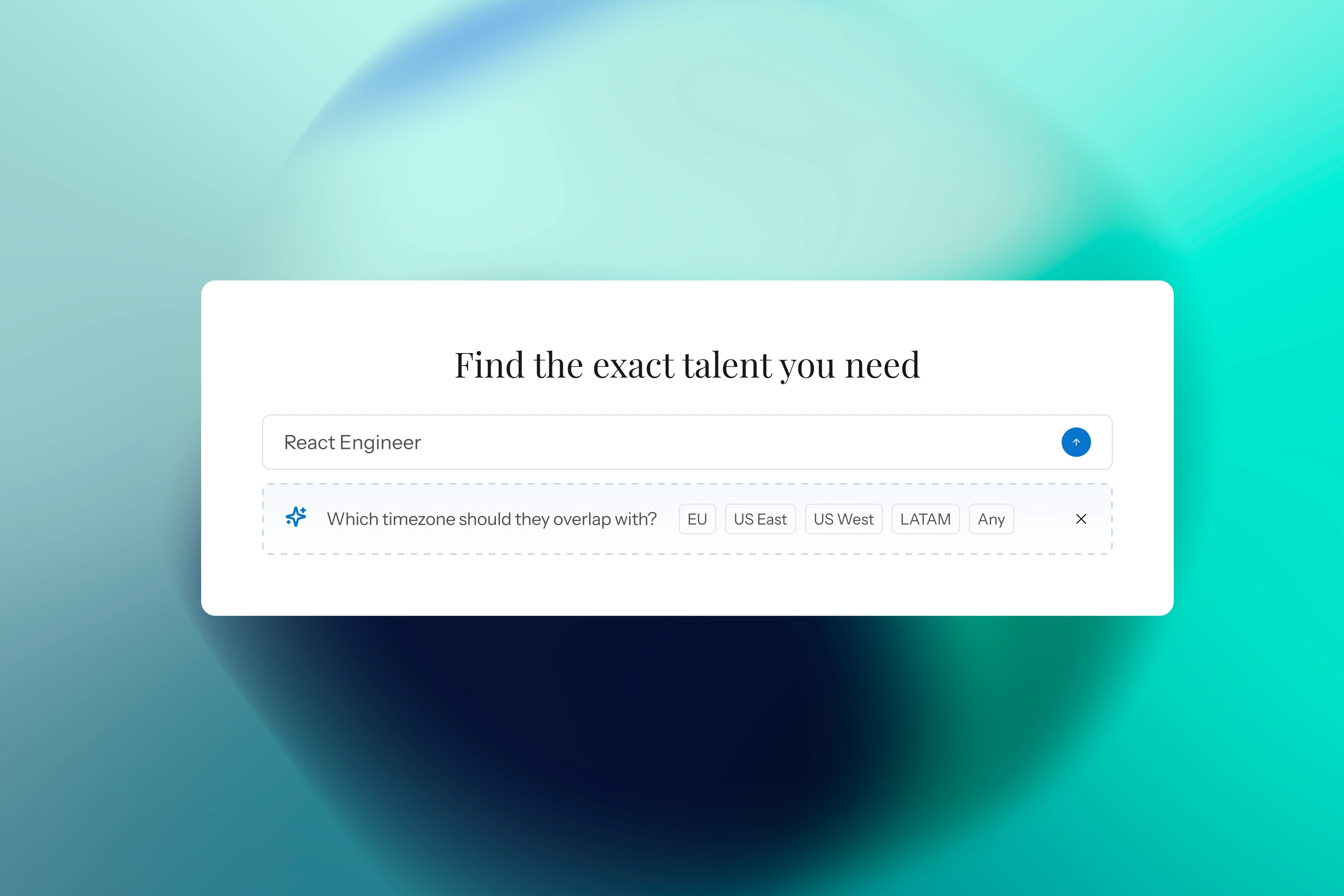
AI agent fills the gaps
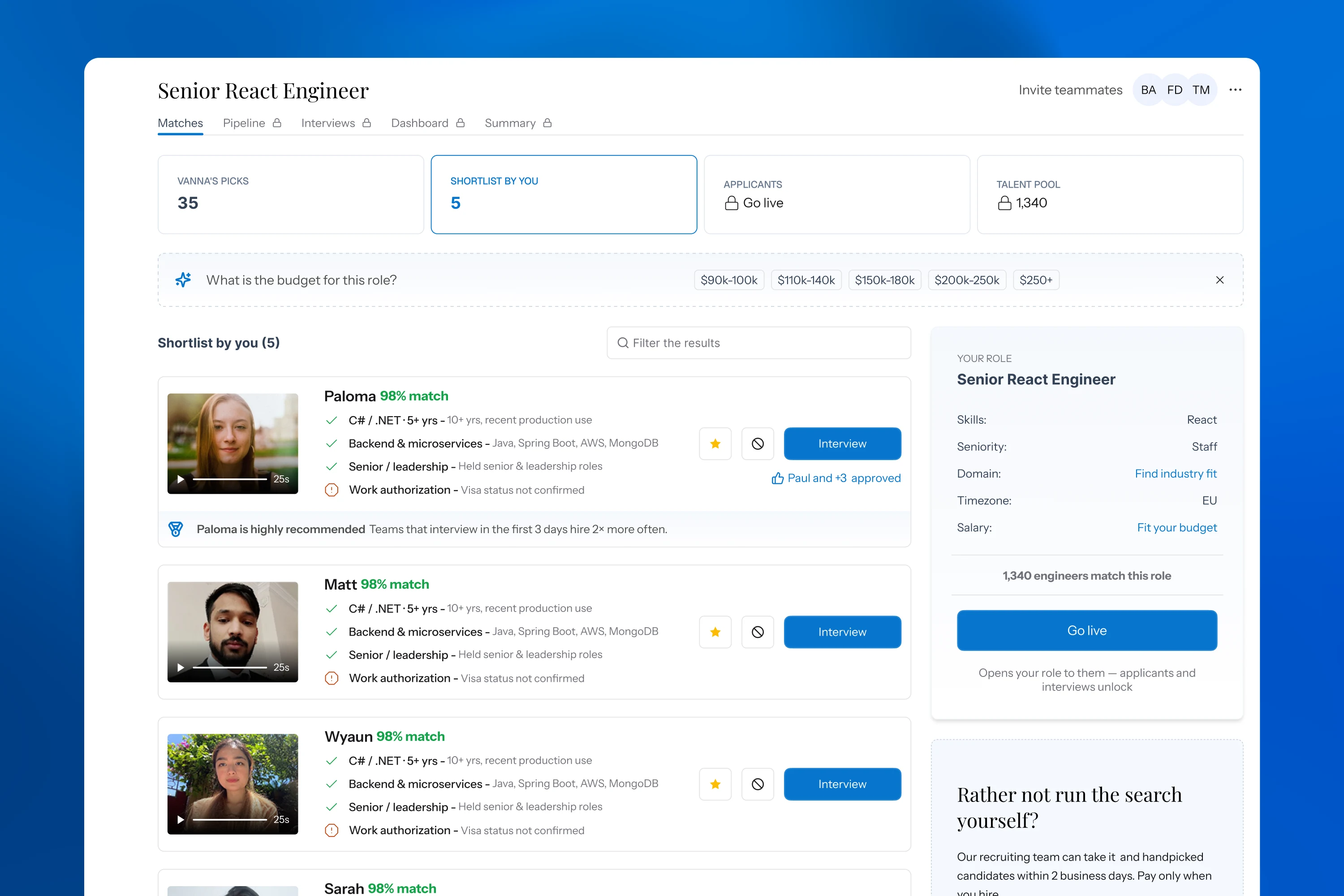
A commitment ladder
Outcome
The redesign is a working in progress. I owned it end to end, problem framing, the full flow, every screen, a clickable prototype, and a design-system handoff integrate with AI tools.
What I'd measure
Time to first match.
Signup-to-shortlist rate, without a card.
Trial-to-paid conversion across the two-path funnel.
Revenue closed through the product
Let’s create something meaningful together!
Like this project
Posted Aug 13, 2026
For ten years, every VanHack client was closed by a salesperson. I redesigned employer onboarding to test whether the product could close instead
Likes
0
Views
3
Timeline
Jul 1, 2026 - Aug 12, 2026
Clients
VanHack