
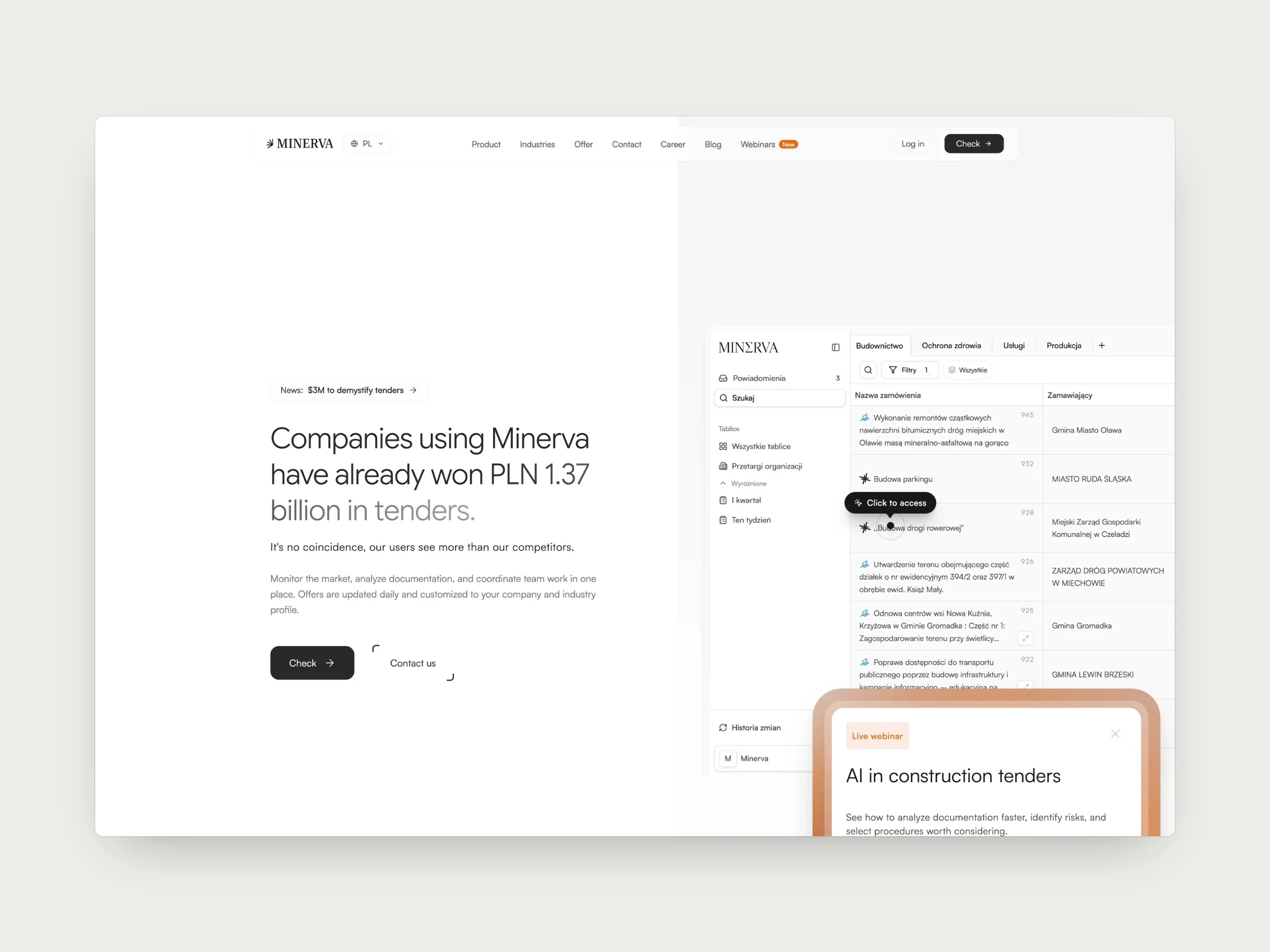
Minerva is a B2B AI platform that helps companies find, qualify and win public tenders across Europe. More than 450 organizations use it.
The problem
The AI search only worked well once it learned the business, but the setup was long and scattered, so people skipped it. Then the system either missed good tenders or showed too many wrong ones. And users didn't check the tenders it rejected, so they thought it just didn't work.
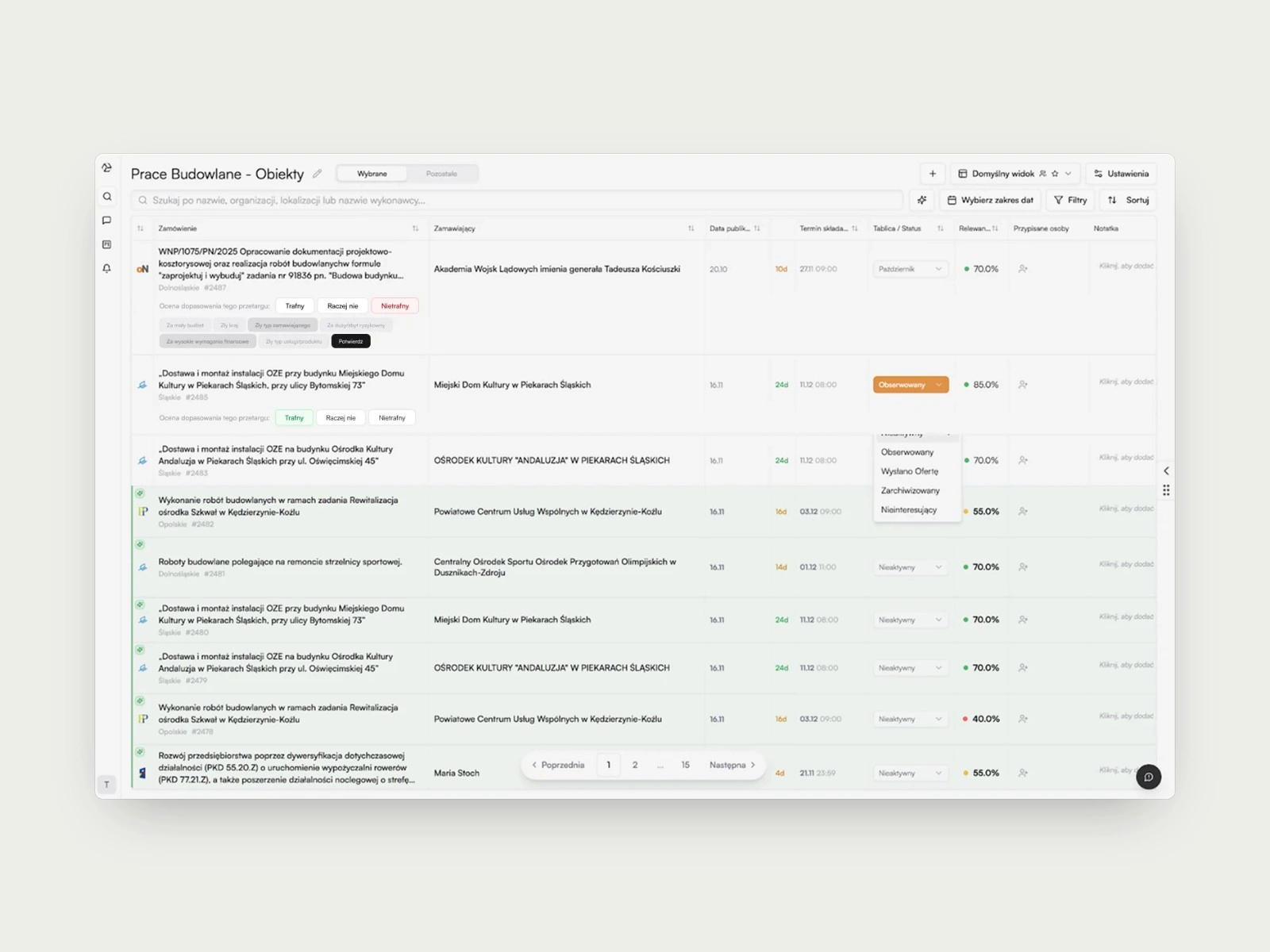
The tender list, built for going through many tenders fast
What I changed
Long onboarding replaced with small feedback moments, so the system keeps learning while people use it.
Plain-language reasons for why a tender was shown or rejected, and where the system isn't sure.
Quick corrections right in the moment, instead of a heavy setup.
A tender list built for going through many tenders fast, with the key facts up front.
One decision panel that puts all the signals in one place.
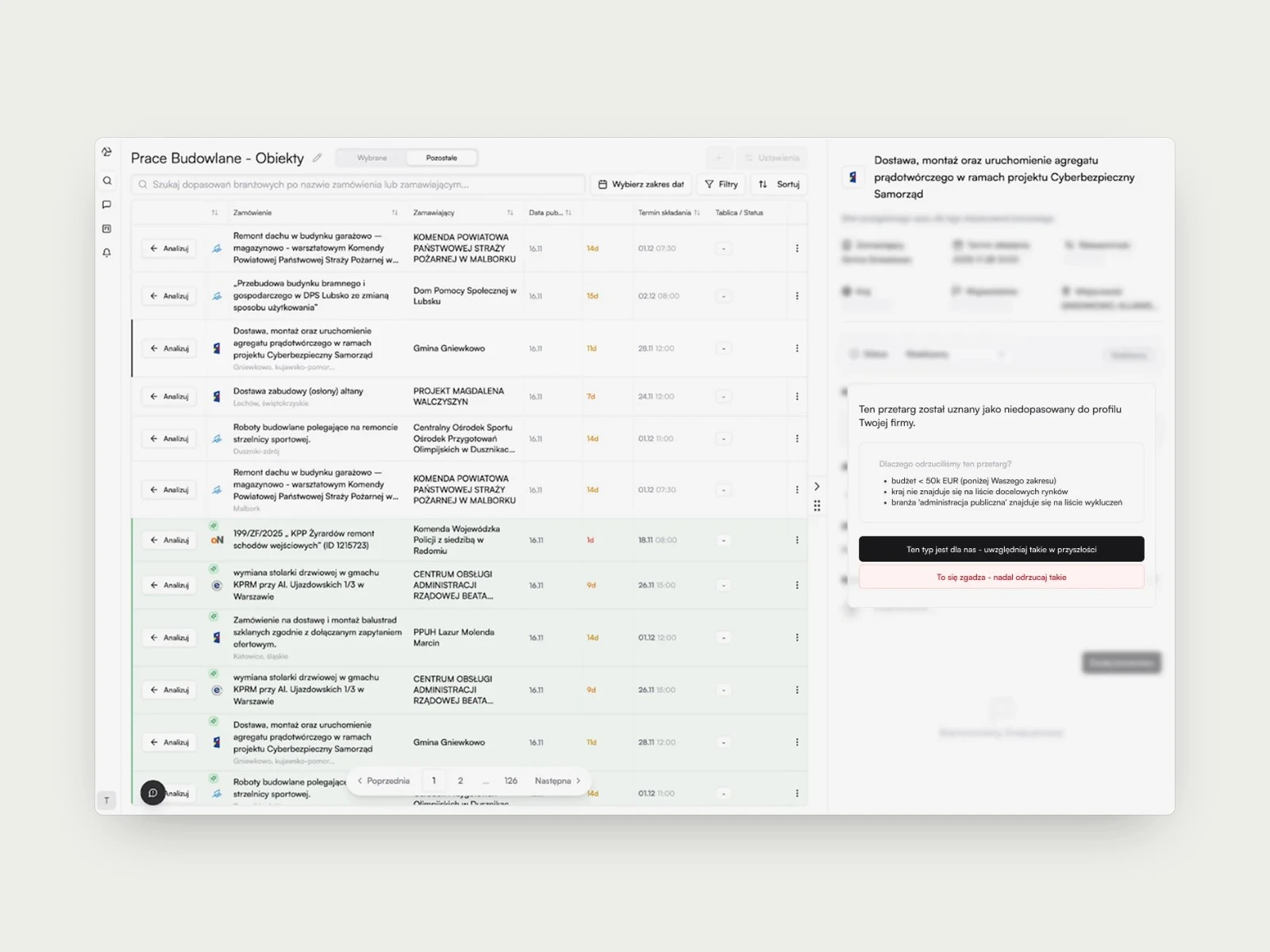
Plain-language reasons for why a tender was rejected, with a one-click correction
Result
Onboarding steps cut by about 60%, and the system keeps learning from every correction instead of one long setup.
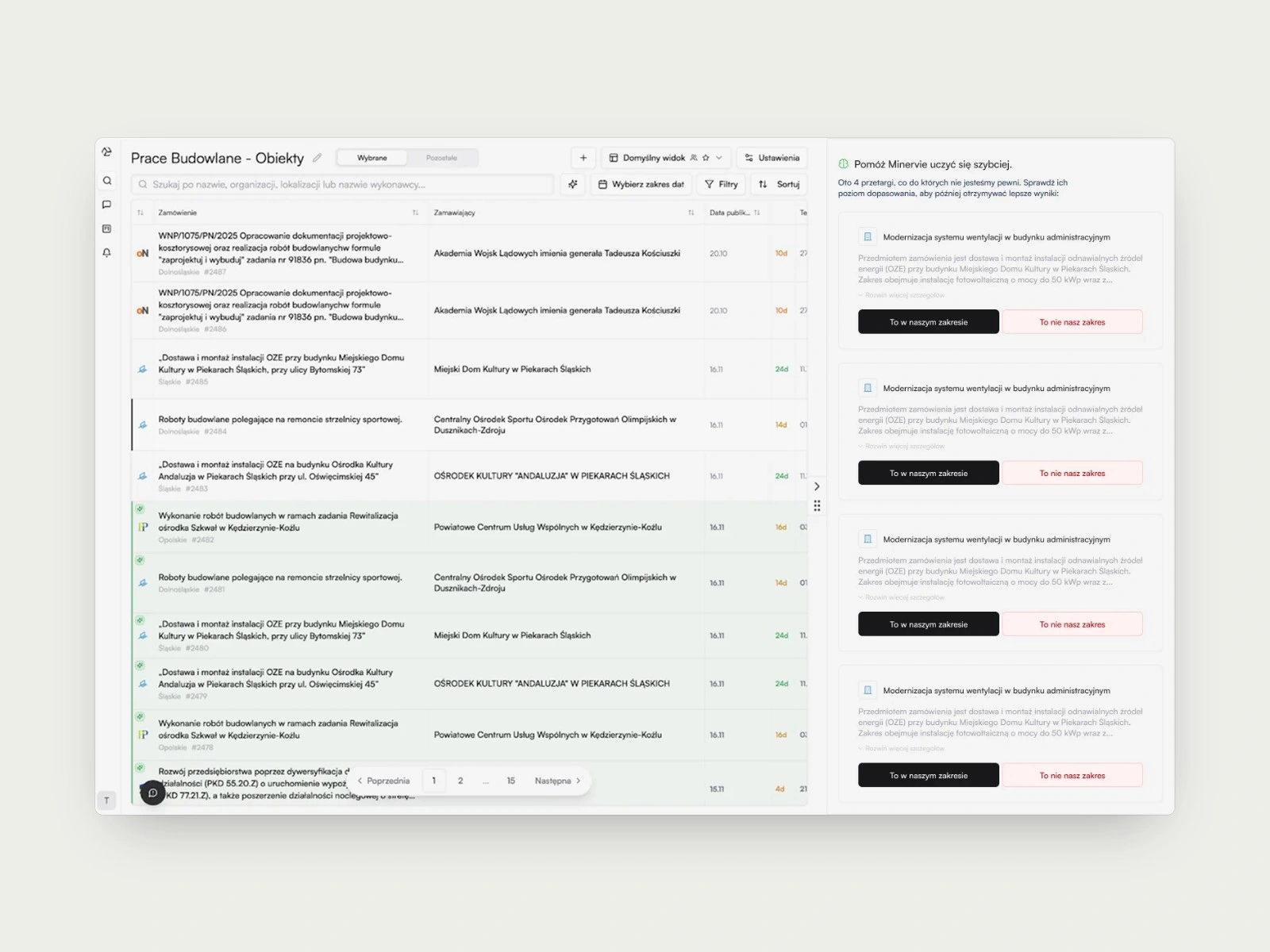
Small feedback moments, so the system learns without a heavy setup
Product UX redesign in about 1 week.
Full case study at nadol.studio/case-studies/minerva
0 likes · 0 views · Nov 21, 2026
Product UX redesign of a B2B AI platform for public tenders. Onboarding steps cut by about 60%, done in about 1 week.