Aurelius AI: The Trading Bot Needed a Door

Adem Awol

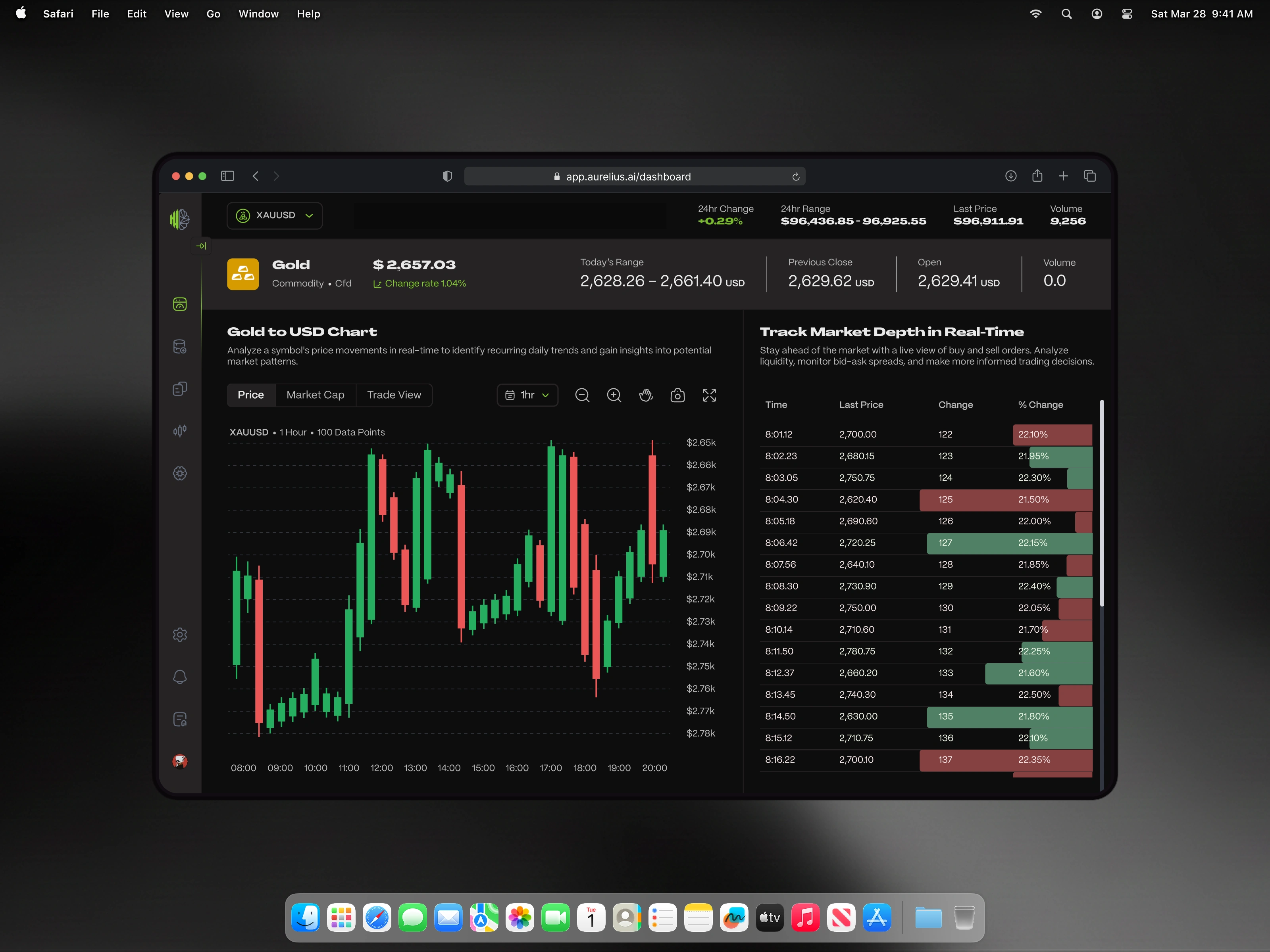
Category: AI / Fintech Tools
Taming the Machine: Designing Aurelius AI
An ML trading framework so sophisticated it critiques its own code, predicts market movement, and probably judges your risk management in silence.
And someone had to make it usable by actual humans, which, tragically, included people who do not enjoy configuring preprocessing pipelines like it is a spiritual punishment.
Aurelius AI was a wildly complex ML trading system with reinforcement learning, LLMs, and regime detection all arguing behind the scenes like a hedge fund group chat possessed by math.
My job was to turn that chaos into a usable product: a data ingestion flow, feature selection panel, preprocessing wizard, and visual feedback system that helped traders configure clean model-ready data without needing a machine learning degree or a spiritual cleanse.
The project ended before launch, but early tests were ridiculous: the model predicted next-close prices within cents and helped generate over $2K in manual trades.
The machine was scary good. The UX made it slightly less likely to emotionally injure its users.
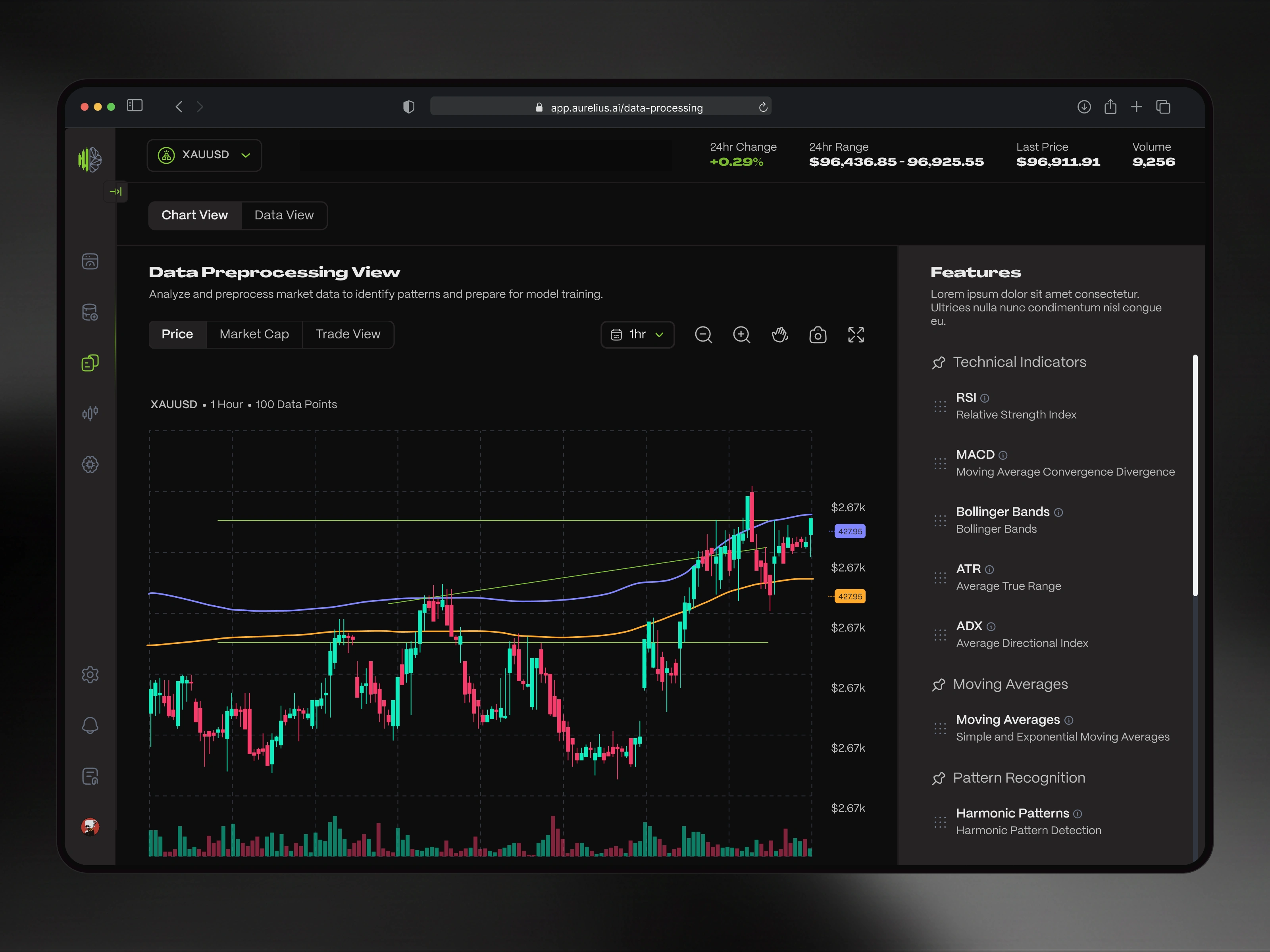
Data Pre-Processing • Feature Selection Panel
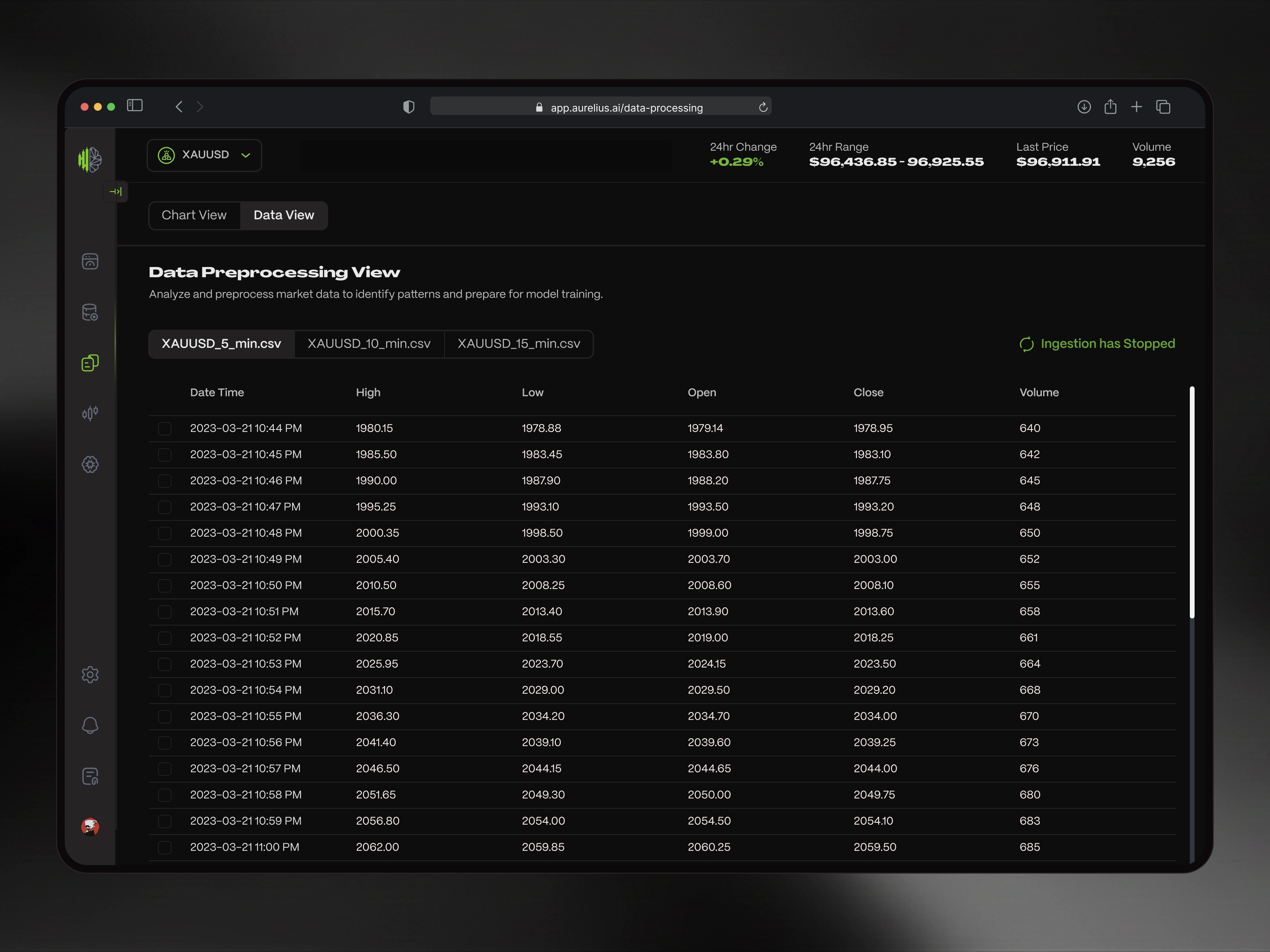
Data Pre-Processing • Pipeline Progress
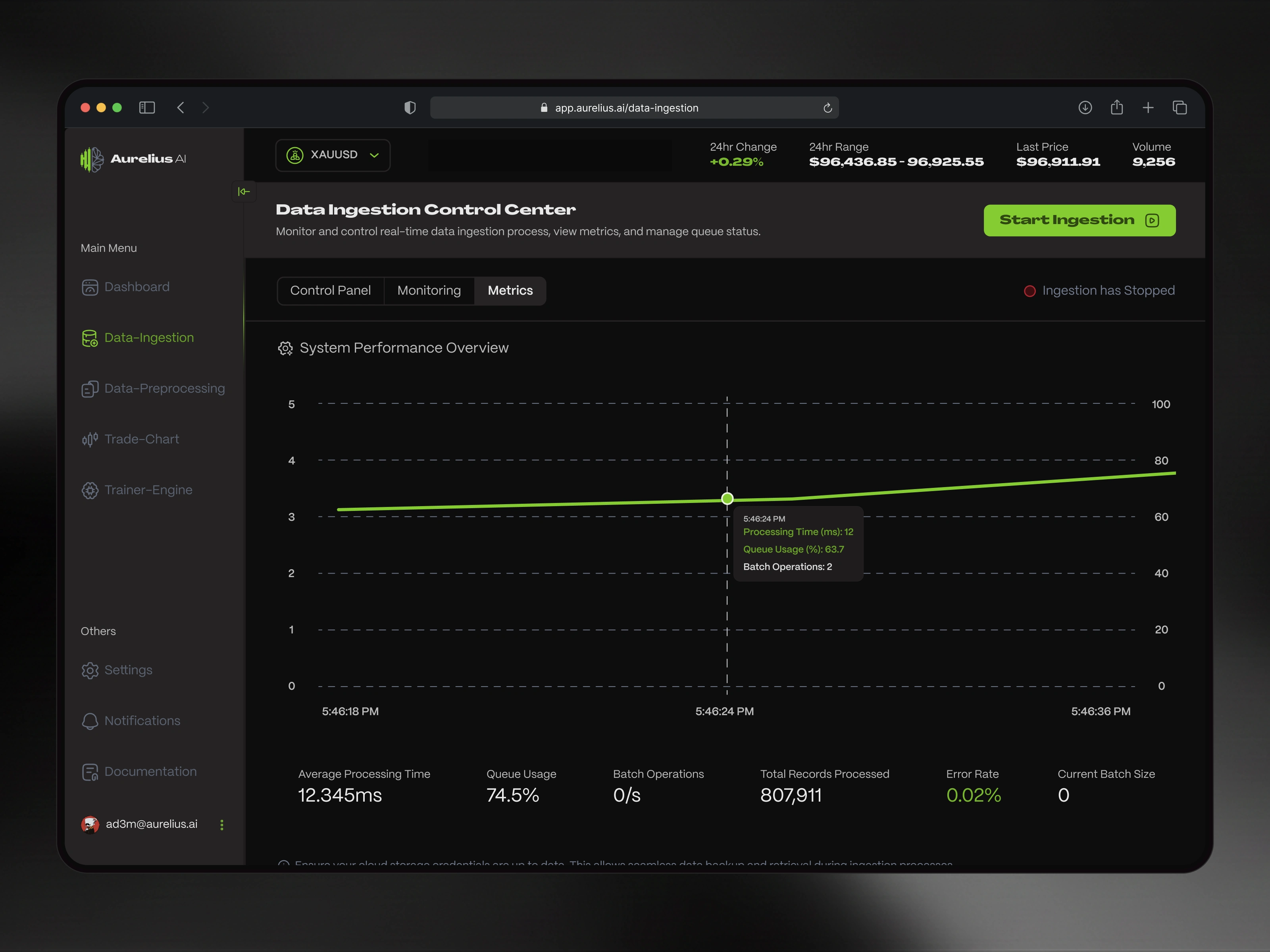
Data Ingestion • System Performance Overview
Figma Link (Proof the Beast Had a Face)
Lesson: The Machine Was Brilliant. The Interface Was in Witness Protection.
Technical sophistication and usability are not the same goal. A system with three interacting ML models still needs one coherent entry point that does not look like a backend admin screen escaped containment.
When the engineer is also the founder, UX pushback becomes product strategy. Scoping the ingestion engine to two APIs instead of six was not “reducing ambition.” It was preventing the MVP from becoming a multi-source data buffet with no adult supervision.
Progressive disclosure is not dumbing things down. It respects the fact that users make better decisions when they are not being waterboarded with every possible option at once.
A project being cut short is not the same as a project failing. The model worked. The design direction held. What was missing was time, not signal.
Working with fast technical stakeholders requires translation. “What the backend can do” and “what the user needs to see” are rarely the same list, and pretending otherwise is how products become dashboards with trust issues.
Aurelius AI is proof that the hardest design problems are not the ones with no constraints. They are the ones where the constraints are buried inside the codebase, disguised as architecture decisions, model dependencies, and one engineer saying, “It should be simple.”
The job was not to simplify the system into something weaker. The job was to give users a door they could actually open.
The model was already on the other side, quietly making money on a single candlestick like a Roman emperor with a Bloomberg terminal and unresolved thoughts.
Like this project
Posted Jun 5, 2026
Designed UX for Aurelius AI, turning a chaotic ML trading engine into a usable preprocessing and prediction workflow for retail algo traders.