Process Improvement Case Study: Client Onboarding Workflow

Amy Frank


Process Improvement Case Study: Client Onboarding Workflow
Overview
This case study shows how I design simple, client-friendly onboarding systems that reduce friction and help projects move from agreement to execution smoothly.
The example focuses on a service-based entrepreneur who:
was juggling multiple clients
had inconsistent onboarding
fielded constant back-and-forth communications
My goal was to streamline their intake process, reduce confusion, and make getting started feel smooth for both sides.
This structure reduces manual coordination, improves onboarding consistency, and helps projects move from agreement to execution more efficiently.
The Problem
This service-based business owner had:
• no consistent onboarding steps
• contracts sent sometimes, but not always
• deposits collected late or after work started
• assets trickling in through email, DMs, and random folders
• lots of confusion about expectations and timelines
They were spending time:
• following up
• tracking conversations
• asking for missing content
• starting work without full information
All of this created stress, blurred boundaries, and slowed delivery.
Key Requirements Identified
A clear intake path so new clients know what information to provide before work begins.
Defined handoffs between inquiry, agreement, payment, kickoff, and asset collection.
Standardized templates to reduce repeated clarification and manual follow-up.
A central place to track onboarding status, missing assets, and next steps.
Simple reporting logic to identify delays, incomplete steps, and bottlenecks.
Recommended Future-State Workflow
Inquiry received → client fit confirmed → agreement sent → deposit/payment completed → kickoff form submitted → assets collected → project workspace created → next steps confirmed.
Proposed Success Metrics
Time from inquiry to kickoff
Percentage of clients with agreement/payment completed before kickoff
Number of follow-up messages needed to collect required assets
Percentage of onboarding steps completed on time
Project Goal
Create a simple, repeatable onboarding flow that:
✔ feels professional
✔ protects time and energy
✔ reduces client confusion
✔ ensures payment and paperwork come first
✔ gathers everything needed before work begins
The goal was to create a repeatable onboarding process that improved consistency, reduced operational friction, and accelerated project kickoff.
My Role & Boundaries
My role was to review the onboarding workflow and design clearer structure.
I created simple drafts and example documents the business owner could reuse, including:
• a clear onboarding checklist
• a welcome email outline
• a shared folder structure
These deliverables were designed to standardize the onboarding process, reduce manual follow-up, and create a more consistent client experience.
Discovery & Information Gathering
Because this was a focused snapshot, we looked at just one workflow: onboarding. I reviewed the existing onboarding workflow to understand how contracts, payments, communication, and asset collection were being managed and where process breakdowns were occurring.
What I Built
1. Before & After Snapshot
First, here’s a quick look at how the onboarding experience changed — from confusing and reactive to clear, organized, and predictable.
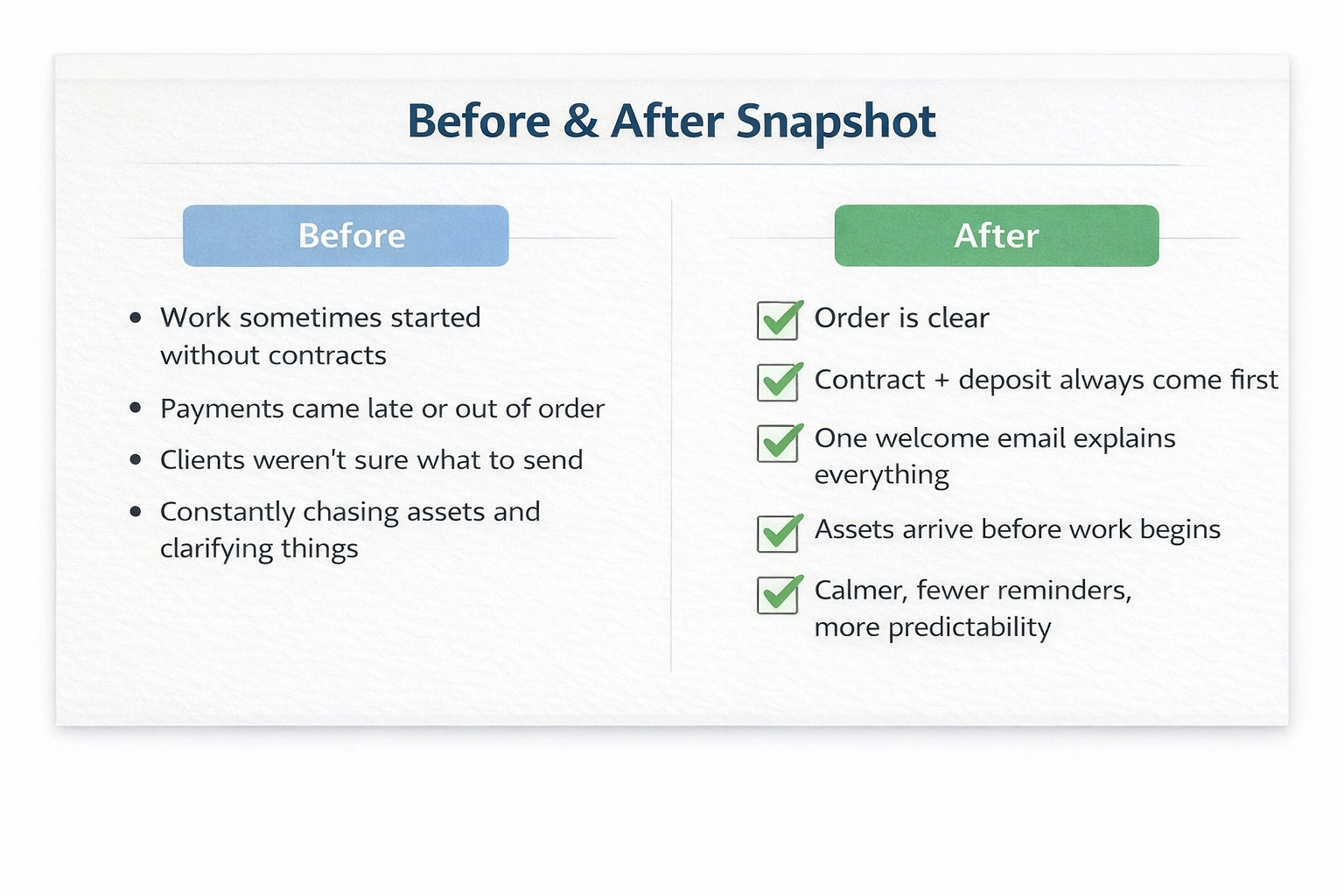
A clearer, calmer onboarding experience — before vs. after.
2. Client Journey Map
Under the hood, the real transformation came from restructuring the onboarding flow — so everything happens in the right order.
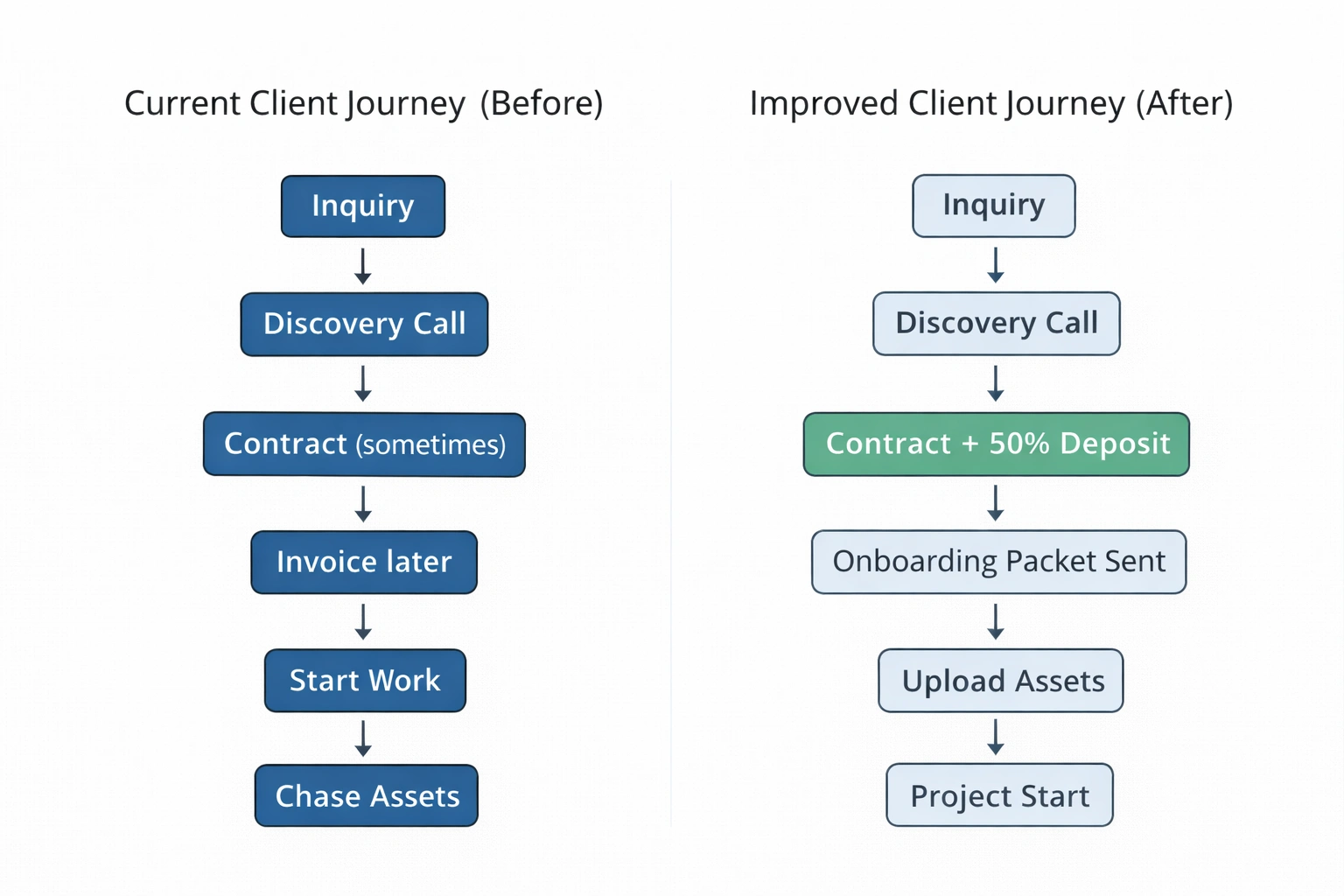
Visual map of the new client journey: contracts and deposits come first, expectations are clear, and assets are collected before work begins.
3. Onboarding Checklist
I created a single checklist covering:
contract signed
deposit paid
welcome email sent
assets collected
shared folder created
communication expectations confirmed
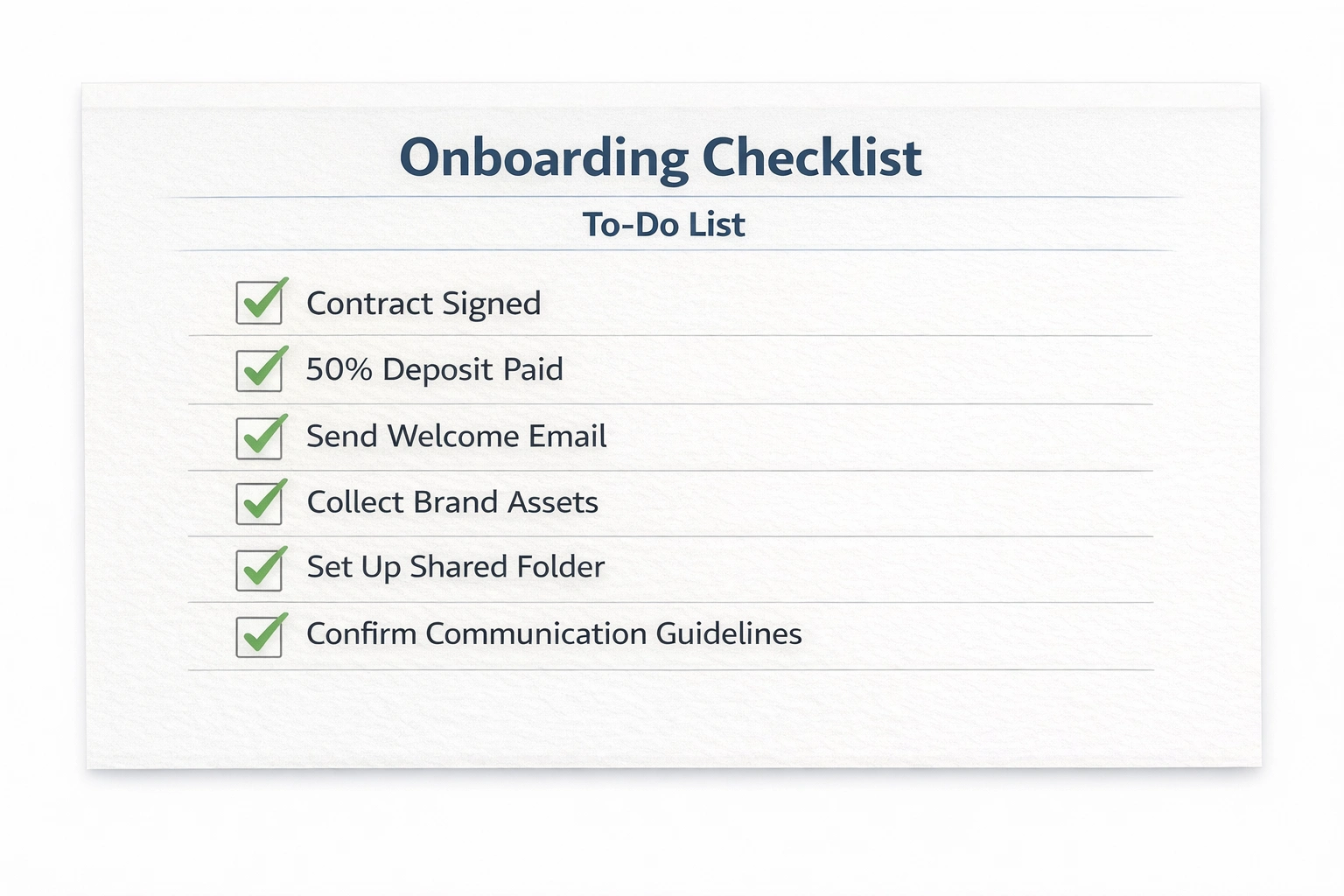
Everything lives in one place instead of being spread across emails, DMs, and random folders.
4. Welcome Email Template
A friendly, professional email walks clients through:
what to expect
where to upload files
how to communicate
next milestone dates
The email serves as an anchor, replacing scattered instructions with one clear message.
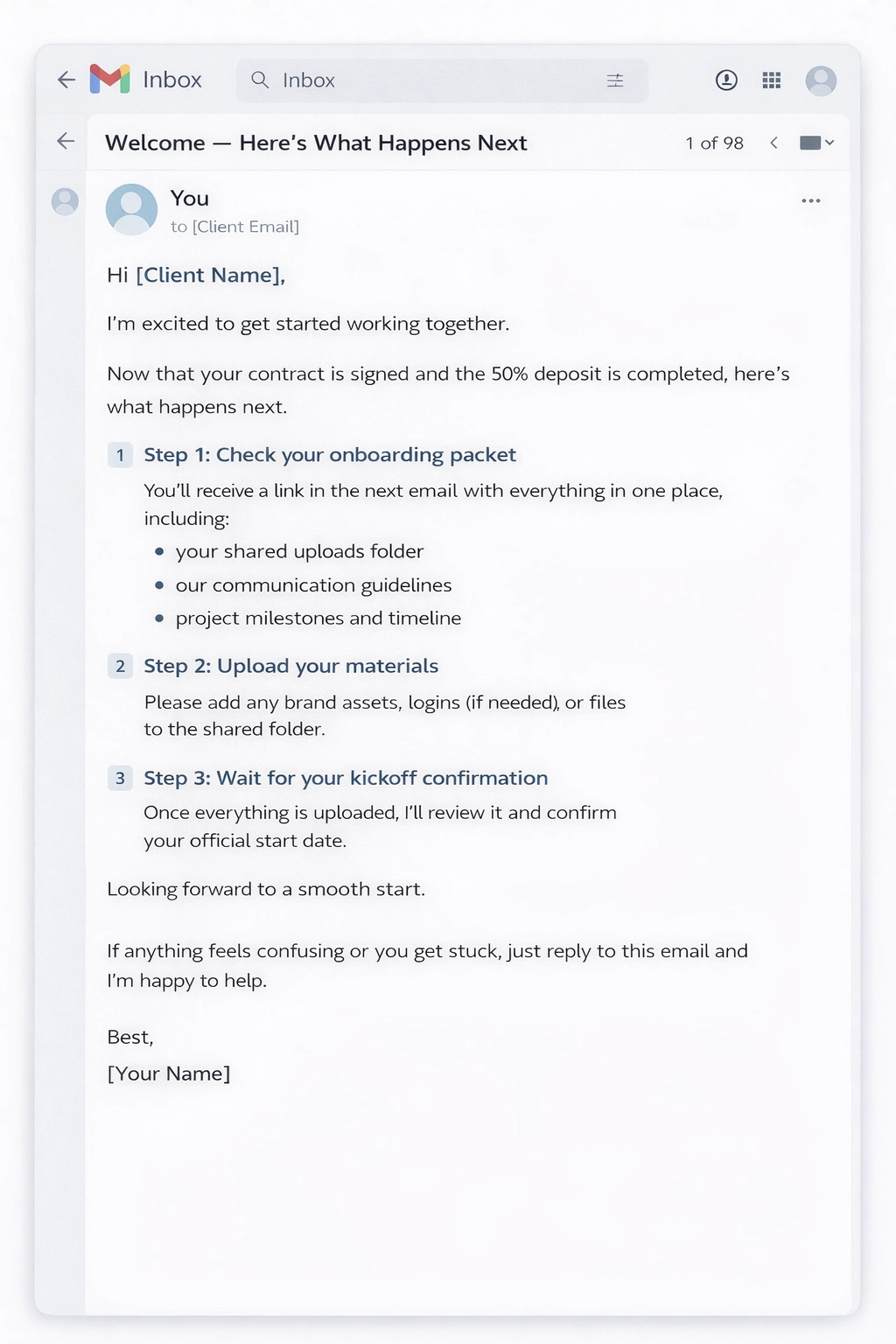
This reduces questions and sets boundaries clearly and kindly.
5. Asset Upload System
I added one dedicated folder with labeled subfolders.
Clients drop everything there instead of emailing files in pieces.
This makes file collection faster, organized, and easy to reference later.
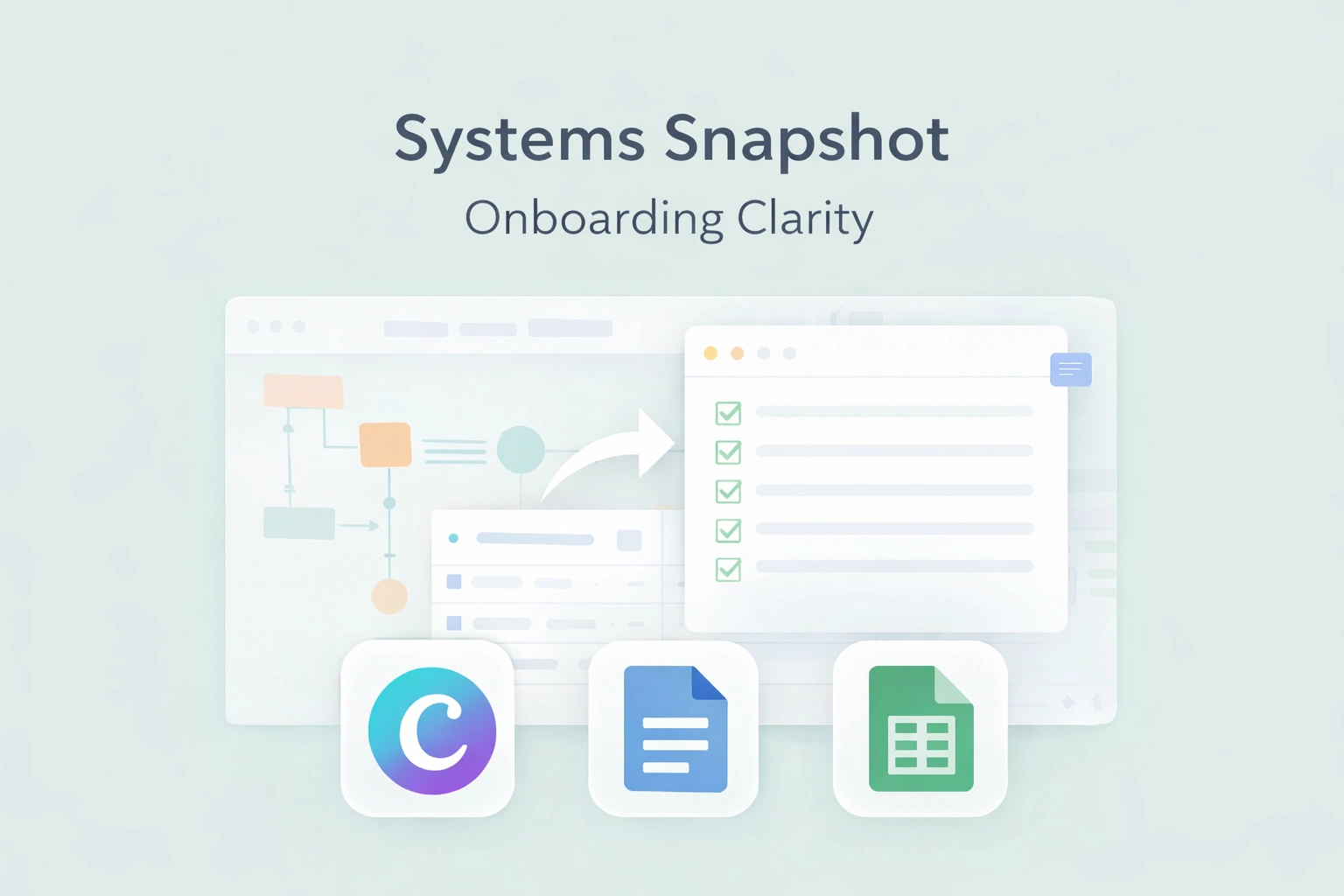
Tools Used
Google Sheets
Organized onboarding steps, tracked status, and ensured nothing was missed.
Google Docs
Drafted the onboarding guide, welcome email template, and supporting documents.
Canva
Created simple, client-friendly visuals and checklists so the process feels clear and professional.
These tools helped organize workflows, create templates, and present everything clearly for clients.
Results & Designed Impact
Because this was a workflow design case study rather than a long-term implementation, success was defined through proposed KPIs rather than post-launch results.
The redesigned onboarding experience was built to support:
Faster time from inquiry to kickoff by replacing open-ended email back-and-forth with a structured intake process
Fewer misunderstandings by clearly defining scope, responsibilities, and next steps upfront
Less manual follow-up through standardized checklists, templates, and asset collection steps
A more consistent client experience that can scale as client volume increases
Recommended success metrics included:
Time from inquiry to kickoff
Percentage of clients with agreement and payment completed before kickoff
Number of follow-up messages needed to collect required assets
Percentage of onboarding steps completed on time
By front-loading clarity into the process, the onboarding flow shifts from reactive coordination to proactive enablement. Clients know exactly what happens next, and the business owner can move projects into delivery faster with less cognitive overhead and fewer interruptions.
Final Note
This case study was created to demonstrate how I approach system design, customer journeys, and friction reduction in early-stage workflows. The same framework can be adapted across different industries and service-based businesses to improve onboarding, adoption, and operational clarity.
If onboarding feels scattered or high-effort, this type of structured clarity layer helps teams move faster, reduce misalignment, and create a more consistent, professional experience for customers from the first interaction onward.
Like this project
Posted Jan 3, 2026
Analyzed an employee onboarding process, identified workflow gaps and ownership issues, and recommended improvements for clarity and consistency.