AI-Generated Imagery & Shoppable UX for Amazon

Jeanette J 👀

AI-Generated Imagery & Shoppable UX for Amazon Men's Luxury Grooming
Role: Manager of Digital Content, L'Oréal Luxe
Project type: Generative AI product compositing across a portfolio of brands
Scope: Amazon Storefront, Men's Luxury Grooming page
Overview
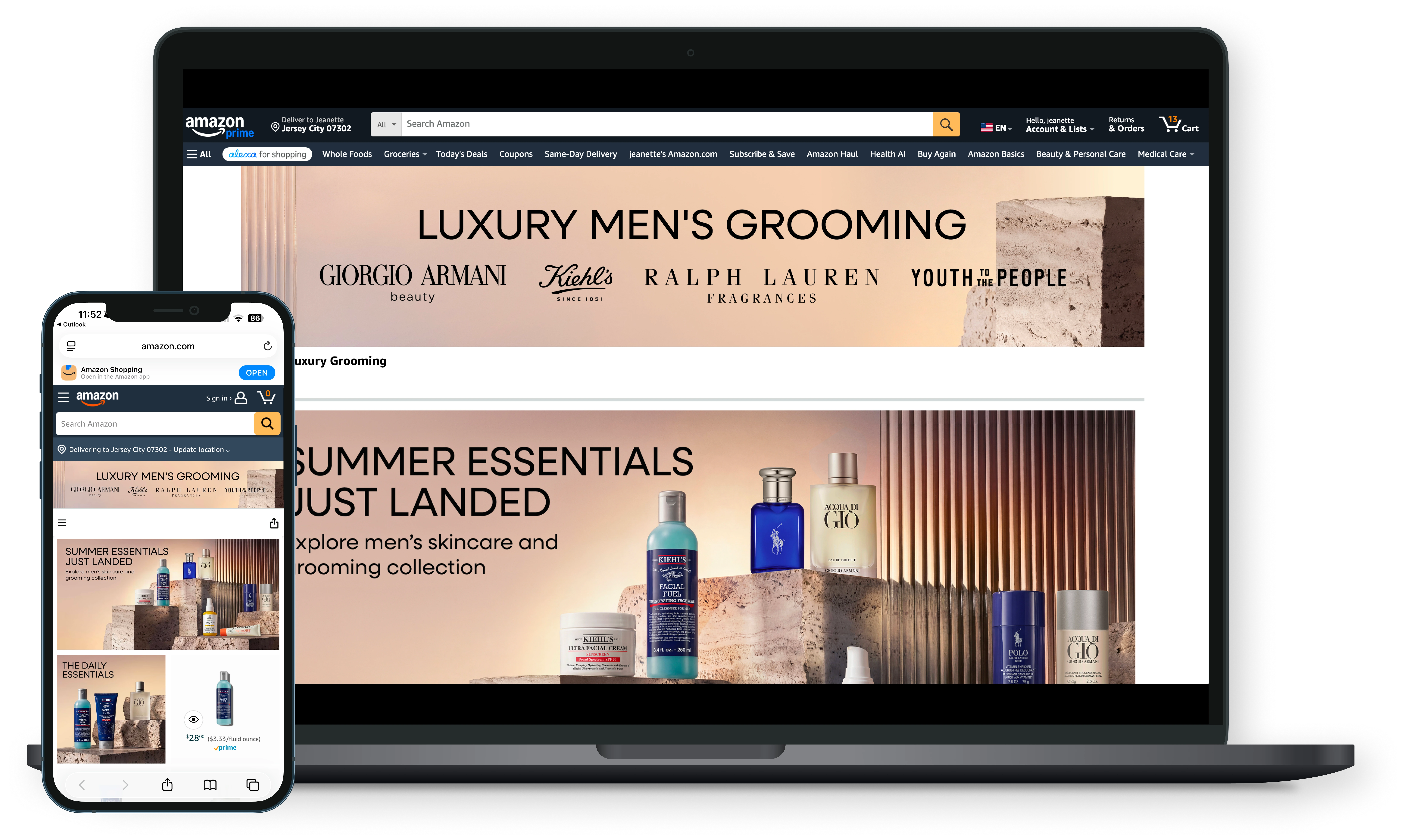
L'Oréal Luxe sells across several distinct brands into the men's grooming space, Kiehl's, Youth to the People, Giorgio Armani, and Polo Ralph Lauren, but on Amazon those brands had never been presented together as a single, cohesive shopping experience for the male consumer. I led the AI imagery workstream for a storefront redesign built around a routine-building narrative: instead of browsing brand by brand, shoppers move through five lifestyle-driven collections, Daily Essentials, SPF Defenders, The Gym Bag, Daily Age Defense, and The Travel Kit, each one assembling the right mix of cross-brand products into a real use-case moment rather than a generic product grid.
The Challenge
Every one of these five collections needed its own hero image showing a curated, cross-brand product lineup styled together in a shared environment, something no photo shoot had ever produced because these products don't naturally live together on set (they come from different brands, different packaging lines, different photography libraries entirely). Reshooting five original scenes with a full product roster in each was not realistic on the timeline. The opportunity was to take existing photographed background plates (the stone-and-brass set pieces already shot for the campaign) and use generative AI to populate each one with the correct product lineup for that specific routine, accurately, repeatably, and across dozens of SKU combinations.
My Role
Workstream ownership: Directed the AI compositing process across all five collection hero images, translating the routine-building concept into a specific product lineup and composition for each pillar.
Tool evaluation: Tested this workflow first in CreaiTech (L'Oréal's internal generative tool), then brought in Pencil, a generative compositing tool built specifically for inserting real products into existing photographed scenes. After extensive back and forth in both, Pencil proved to be the more reliable and controllable tool for this specific job: dropping accurate product renders into a real, already-lit background plate.
Prompt and reference iteration: Directed multiple rounds of generation, refining reference angles, product placement, scale, and shadow matching until each composite looked like it had been shot on that set rather than added afterward.
Cross-brand quality control: Held every output to brand-accuracy standards across four different packaging systems at once, meaning label legibility, color fidelity, and proportion all had to hold up simultaneously for Kiehl's, Youth to the People, Giorgio Armani, and Polo Ralph Lauren products in the same frame.
Shoppable functionality: Built out each banner's hotspot tagging in Amazon's native storefront tool, mapping individual products within the AI-composited scene to their live product detail pages so the imagery doubled as a direct shopping interface.
Process: Compositing as Craft
This project was a different problem than a pure text-to-image generation. Here, the environment already existed as photography, and the job was to insert real, brand-specific products into it convincingly and consistently, five times over, with a different product roster each time.
Key challenges worked through in iteration:
Product-to-plate integration: Matching generated product renders to the plate's existing lighting direction, shadow softness, and surface reflections so nothing looked pasted in.
Cross-brand consistency: Each pillar mixed products from different brands, so scale and proportion between, say, a Kiehl's jar and a Giorgio Armani deodorant stick had to read as physically accurate side by side.
Tool selection under real constraints: CreaiTech gave good raw generation quality but was harder to control for precise product placement into a fixed background. Pencil was purpose-built for exactly this compositing use case, which made it the more efficient and reliable path for shipping five distinct, accurate scenes on a production timeline.
Scalable variation: Once the process was dialed in on the first pillar, the same compositing logic could be reapplied efficiently across the remaining four, each with its own product lineup and framing needs.
Outcome
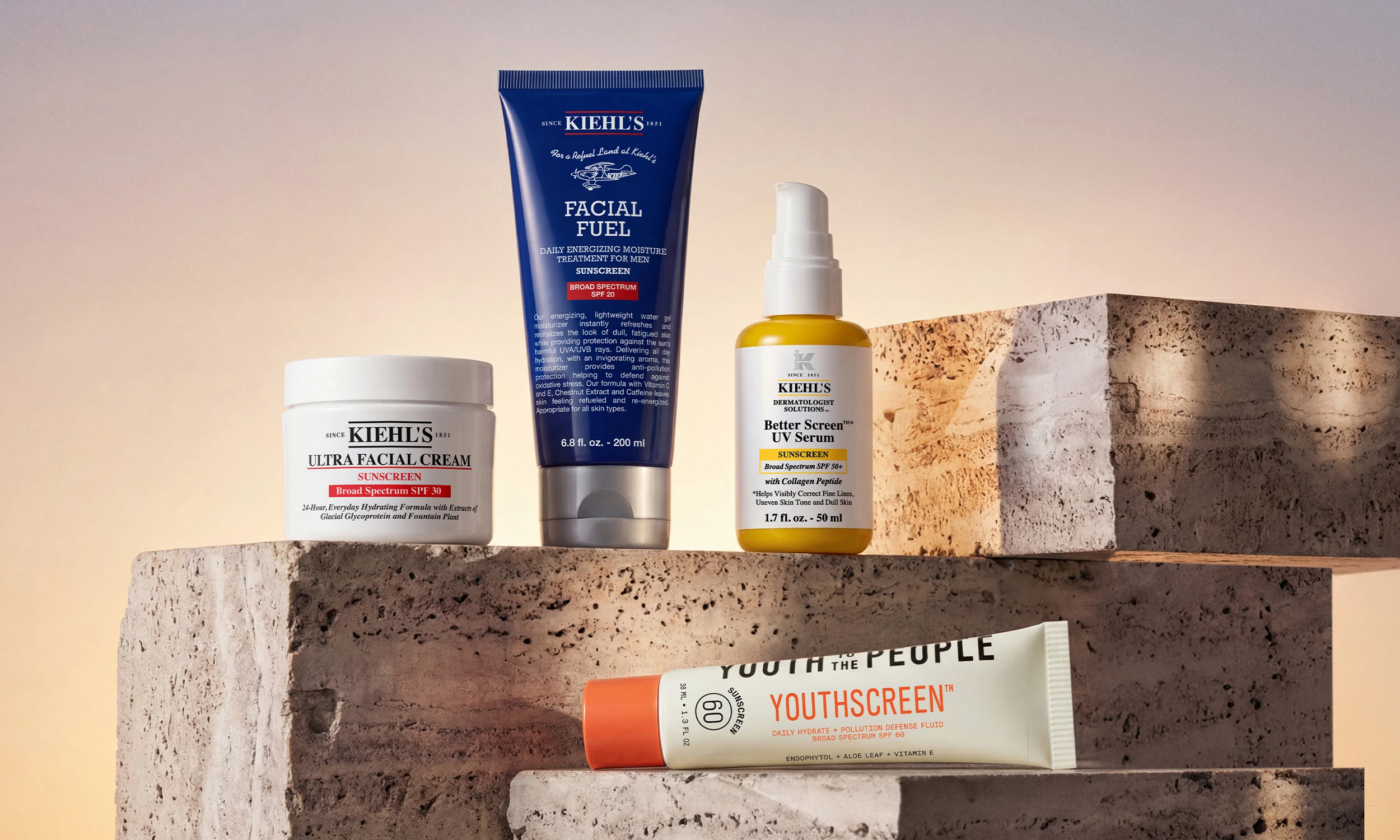
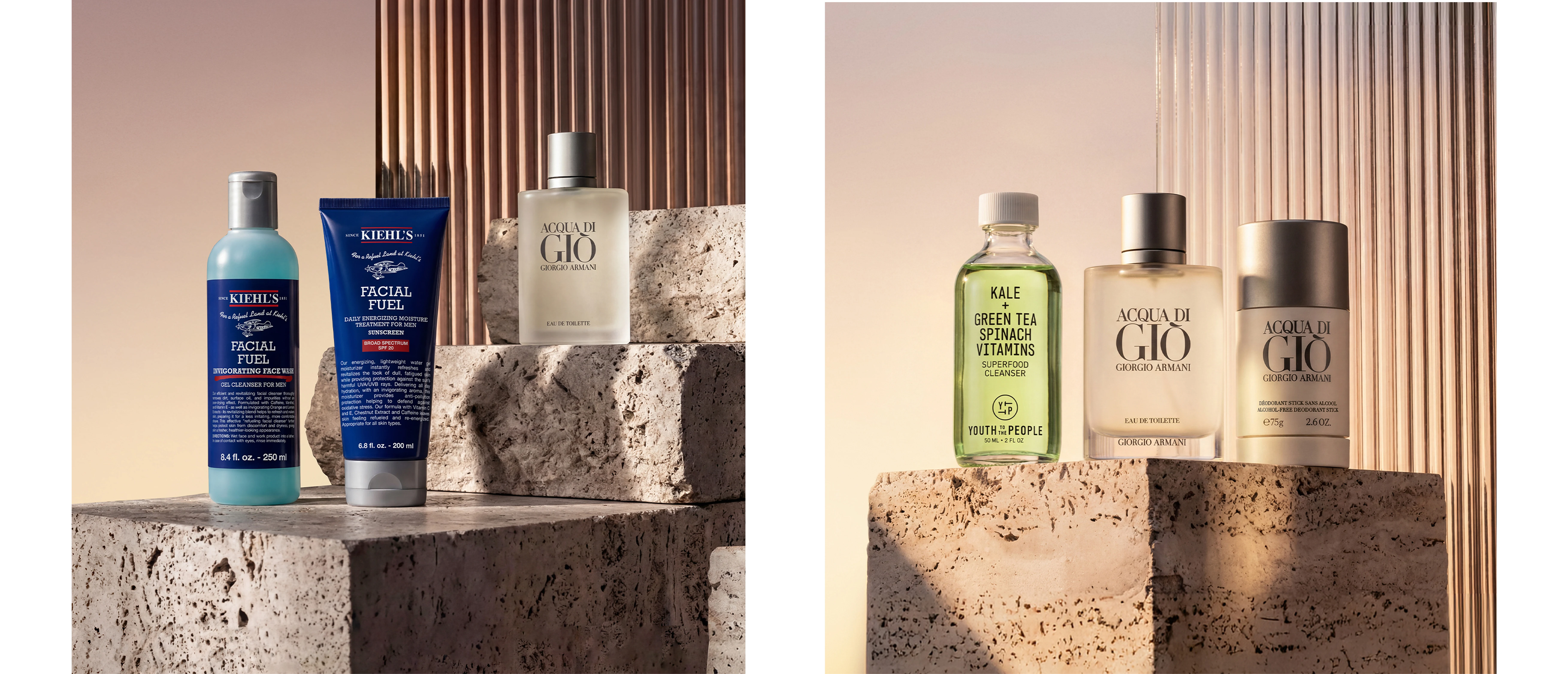
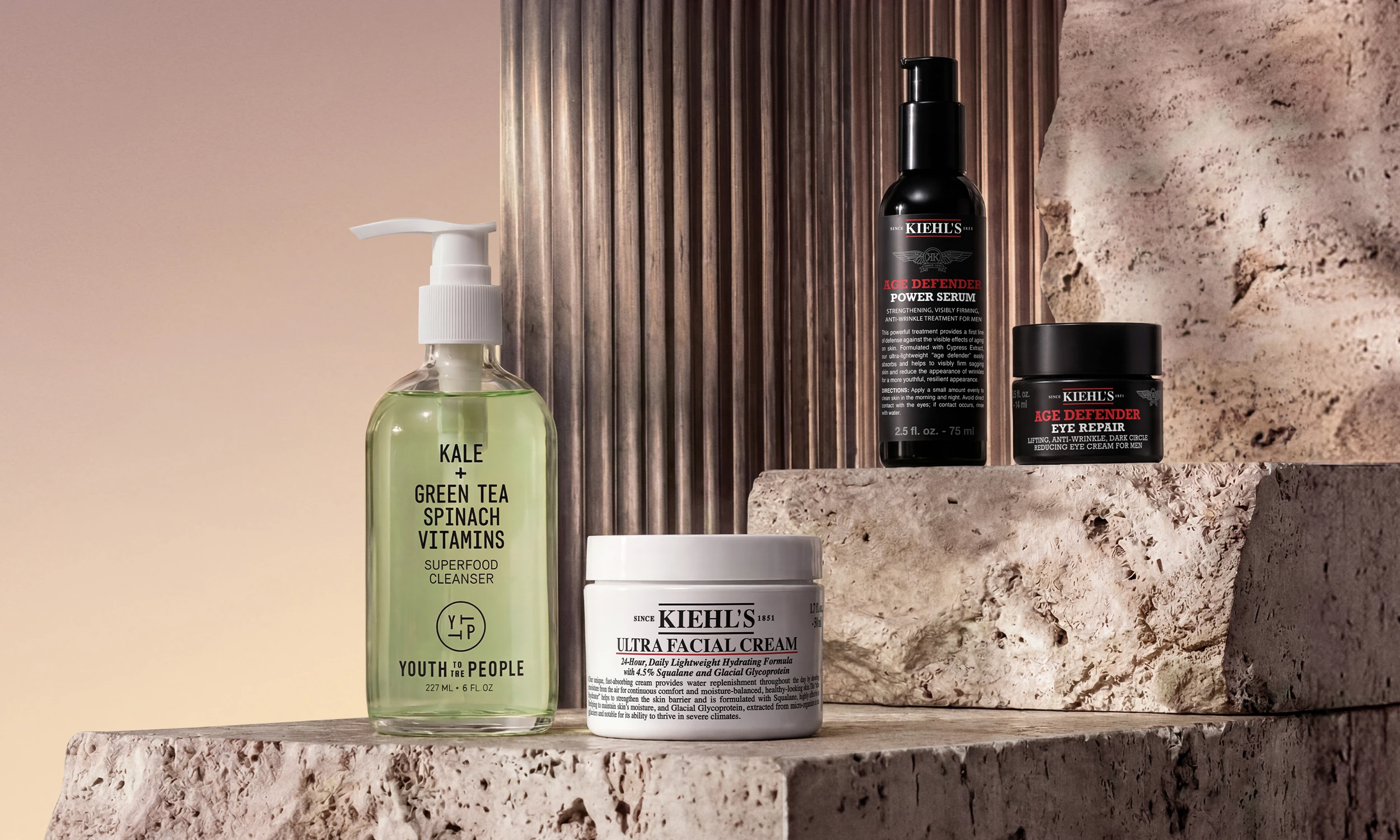
The result was five distinct, routine-based hero images (Daily Essentials, SPF Defenders, The Gym Bag, Daily Age Defense, and The Travel Kit) that let Amazon shoppers browse L'Oréal Luxe's men's grooming portfolio the way they'd actually use it: as a routine, not a brand list. Beyond the imagery itself, I built each banner using Amazon's native hotspot functionality, tagging individual products within the composited scene so shoppers could click directly on, say, the Kiehl's Better Screen UV Serum in the SPF Defenders banner and land straight on that product's detail page. That turned each AI-composited scene into a functional, shoppable entry point rather than a static lifestyle image, closing the gap between inspiration and purchase in a single interaction. The project also established an internal point of view on when to use CreaiTech versus Pencil, generation versus compositing, which became a reference point for how the team approaches similar multi-brand, multi-product imagery needs going forward.
Like this project