Content Manager

Öncel Cebeci


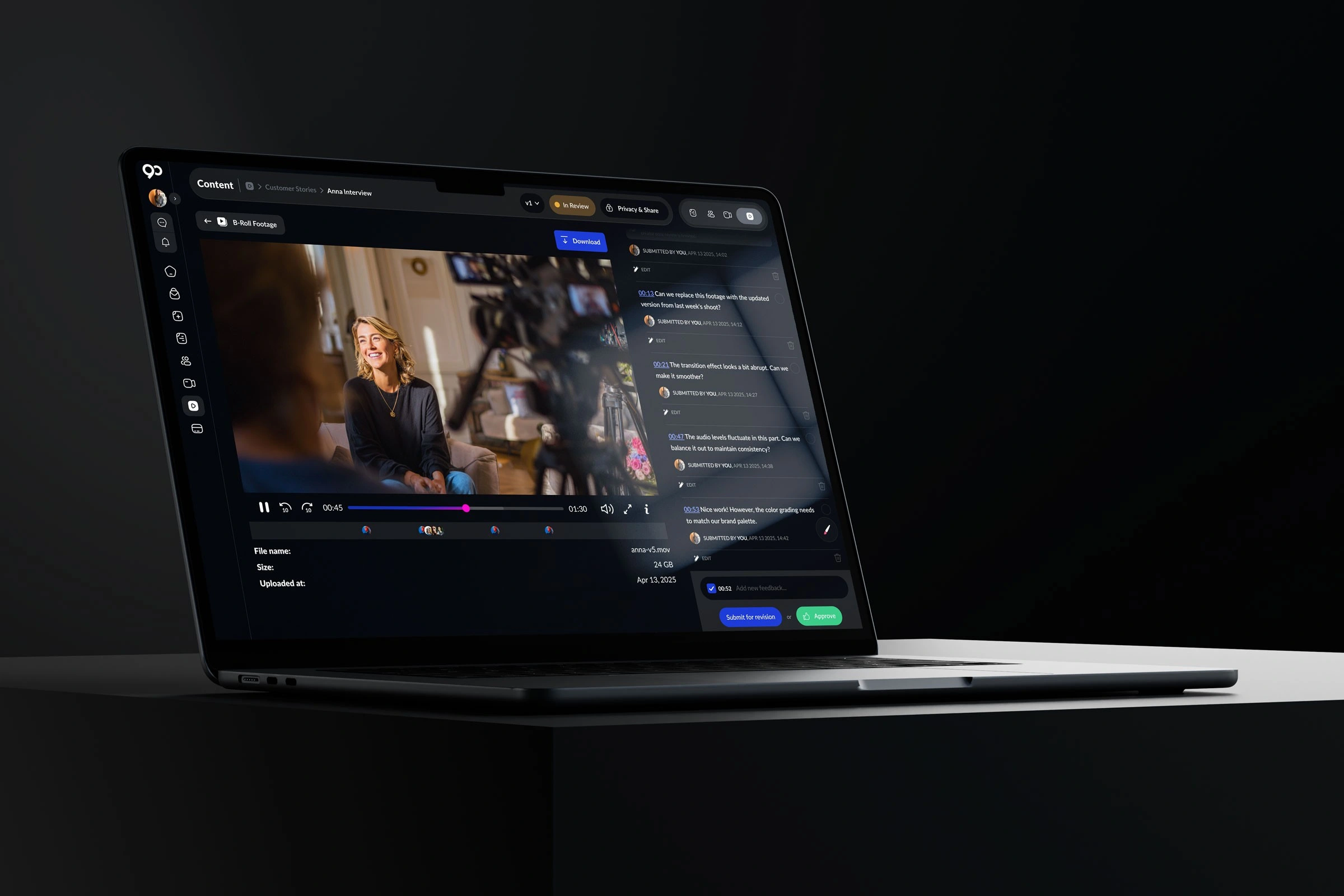
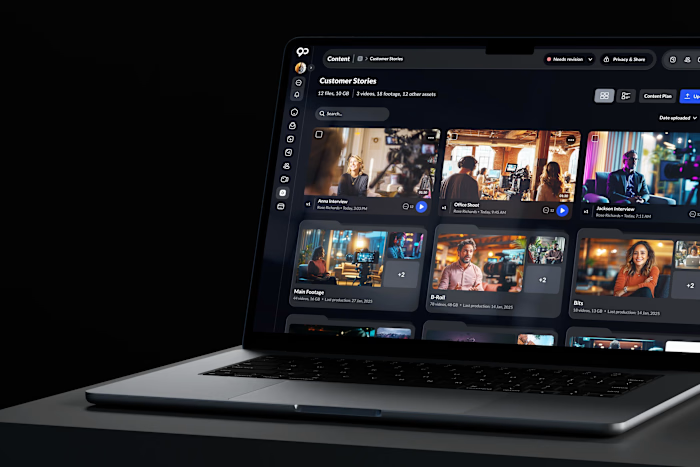
A unified platform that brings every asset into one clear workspace, where creative teams can upload, review and approve without losing momentum. Built to turn feedback chaos into one voice.
Across 90 Seconds, creative teams worked through endless chats, emails and scattered cloud links. Feedback lived everywhere, versions multiplied and approvals took days. What was meant to be collaboration had turned into confusion. Every team chasing the latest version instead of creating. Content Manager set out to fix that: one place for every asset, comment and decision.
The project evolved over eight months, giving space to explore, test and refine. The real challenge wasn’t time but legacy content. Years of disorganised assets and outdated file structures made it difficult to build a clean, unified system. The design had to work within those realities while staying intuitive for teams already using multiple tools across regions.
I began by mapping how teams actually reviewed work. Where feedback broke down, where uploads stalled and how assets disappeared between links. From those insights, the focus shifted to clarity. Folders remained a core element, helping producers organise large volumes of footage without losing control. After multiple iterations, we tested three navigation models and settled on the fastest: a list view built for quick scanning and effortless context switching.
Every part of the interface had to explain itself. The design focused on reusable systems rather than static screens, keeping interactions consistent across contexts. Momentum guided every choice. The less users had to think about navigation, the more they could focus on the work. And above all, every file and comment lived in one place, one source of truth.
During initial discovery sessions, several stakeholders requested real‑time co‑editing of assets. While co‑editing could reduce back‑and‑forth cycles, early prototypes revealed two issues: simultaneous editing introduced version conflicts and the comments feed became chaotic.
To evaluate the trade‑off, we built two prototypes. In the first, collaborators could annotate concurrently; in the second, users took turns commenting in sequence. We ran timed usability studies with four cross‑functional teams from marketing and sales. Participants using the sequential model reported 25% clearer decisions and completed reviews 10% faster. These findings led us to prioritise focused annotations and role‑based approval in the MVP, deferring real‑time co‑editing for a future release.
Once everyone could see the same thing, collaboration stopped feeling like coordination and started feeling creative again.
Within twelve weeks, approval cycles dropped by 35 percent. Publishing consistency improved across all regions, and teams finally had a workspace that felt built for them. The noise was gone; clarity took its place.
I’m Öncel, a multidisciplinary designer who creates products, systems and experiences people rely on every day. I’ve partnered with global brands and startups at different stages, taking ideas from zero to MVP, leading complex designs that reached millions of users and building foundational design systems that grow with teams.
Like this project
Posted Nov 4, 2025
Developed a unified platform for creative teams to streamline asset management and feedback.
Likes
0
Views
3
Timeline
Jan 1, 2022 - Aug 31, 2022
Clients
90 Seconds