AI-in-the-loop automation — n8n, Make and your own APIs

Jessy Mariau


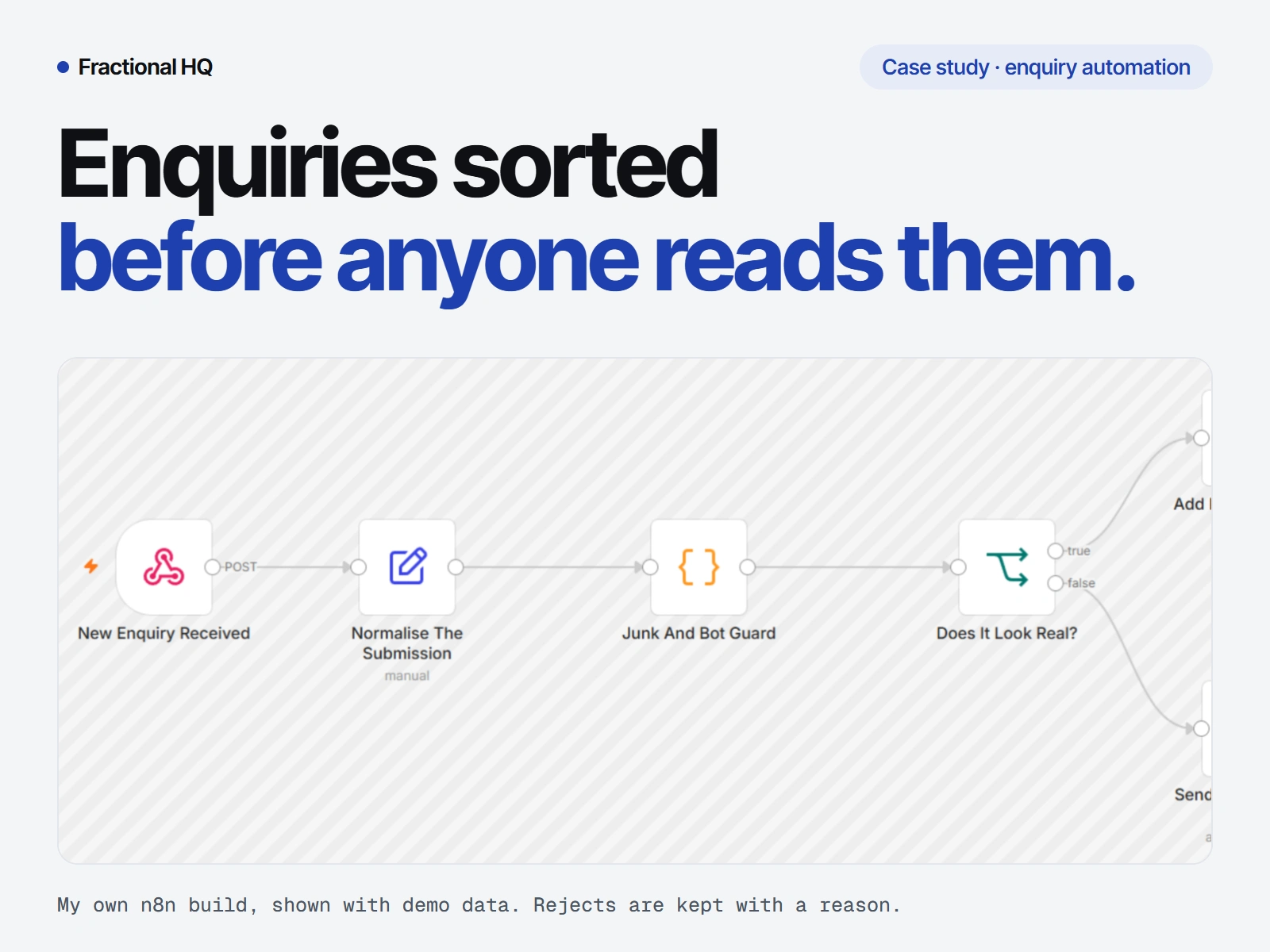
Enquiries sorted before anyone reads them
Website forms collect real leads, spam and everything in between. Someone has to read each one, log it and reply. This workflow is my own build, and the screenshots use demo data.
What it does
Each form submission arrives on a webhook and its fields are normalised. A junk and bot guard runs before any AI does. Submissions that fail it go to an exceptions sheet with the reason attached, so a real enquiry caught by mistake can still be found.
Submissions that look real get the buyer's context added and are read by a classification model. The workflow then writes a row to the CRM sheet and sends the sender an acknowledgement.
Why the AI sits where it does
The cheap checks run first, so the model only sees submissions that already look real. Its job is to read and sort them, while the rules decide what gets rejected.
The rest of my automation work
My own businesses run on scheduled workflows and jobs: research collection, order fulfilment, reports and monitoring. Each writes to a Postgres database, so there is a record of what ran and when. Several have their own case studies on this profile, and the full walkthrough of this one is at fractionalhq.uk/use-cases/inbox-to-crm.
Like this project
Posted Jul 11, 2026
An n8n workflow that sorts website enquiries. Junk is filtered first and AI reads the rest. Real leads land in a CRM sheet with a reply sent, and rejects keep their reason. My own build, shown with demo data.