Custom Medical Management: Rescuing 15 Years of Legacy Data

Bruno Del Monde


When Software Becomes a Liability
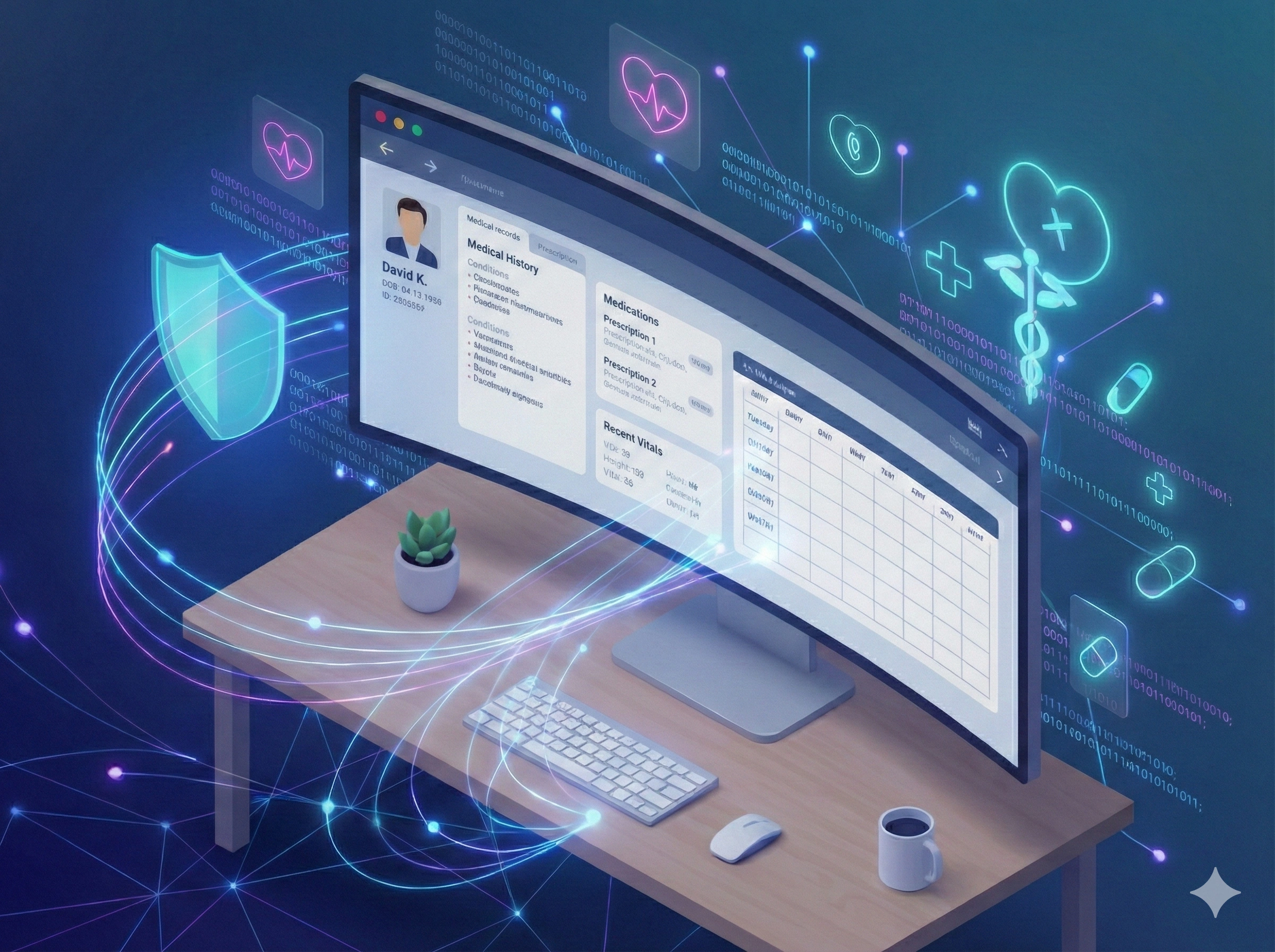
This project started when a family member, a medical professional, began losing sensitive patient data due to a failing, poorly designed management program. The existing software suffered from terrible usability and frequent crashes, putting years of clinical records at risk.
I took this on as a complete ground-up replacement. My goal was to build something that wasn't just functional, but absolutely reliable in a daily clinical environment.
Desktop Performance with Cloud Integrity
I opted for a client-server architecture to ensure data availability across multiple workstations (for the doctor and their assistants) while maintaining a central source of truth.
The Stack: I chose C++ and Qt for the client to deliver a snappy, native Windows experience. For the backend, I implemented PostgreSQL to ensure relational integrity and advanced querying capabilities.
Learning on the Fly: This was my first deep dive into both Qt and PostgreSQL. I learned the intricacies of the framework and the database engine while actively architecting the system.
User-First Design: I spent time shadowing the client to understand her workflow. This led to a clean interface featuring personalized templates for fast record entry and a search-with-preview system that allows for finding patient history without leaving the main view.
Engineering for "Zero Data Loss"
Because the primary motivator was data integrity, I implemented several layers of "fail-safes" that are usually missing in off-the-shelf software:
Graceful Recovery: I built an autosave system that caches text fields locally in real-time. If the system crashes or the power goes out, the data is still there.
Automatic Sync: Data is committed to the database automatically on window closing to prevent "forgetful" data loss.
Cyclical Backups: I implemented a multi-range, cyclical local backup system that creates redundant snapshots of the data at set intervals.
The Migration
The biggest technical hurdle wasn't the new code—it was the old data. I had to reverse-engineer a 15-year-old Microsoft SQL Server database from the previous software.
This was a massive data-cleanup operation. I had to deal with legacy encoding issues, merge redundant tables, and remap columns from a schema that had become messy over a decade of use. Rescuing 15 years of clinical history without losing a single record was the most rewarding part of the project.
The Result
This system has been in daily use for 5 years without a single production issue or data loss incident. It proves that when you build with a focus on reliability and a deep understanding of the user’s pain points, you create tools that truly last.
Like this project
Posted Feb 10, 2026
A high-reliability desktop application built with C++, Qt, and PostgreSQL to replace a failing legacy system.