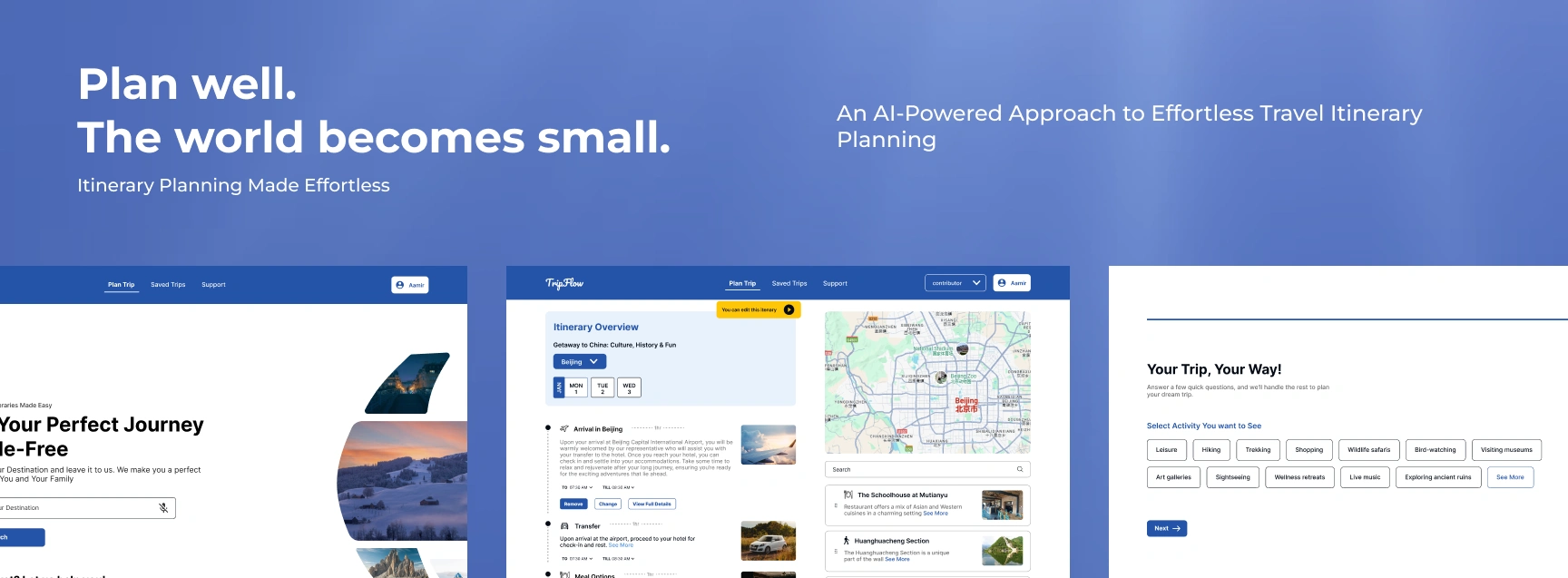
Tripflow A UX/UI Case Study on Travel Itineraries

Aamir Razdan


Ever been on a trip and realized after returning that you missed some must-visit spots?
That’s exactly what happened to David. He had a dream to explore God’s Own Country — Kerala.
He finally made the trip, but after returning home, he realized he had missed visiting some of the most iconic places. The lack of proper planning cost him the complete experience.
Or take the movie “Manjummel Boys” as an example.
They went to Kodaikanal, and just before leaving, one of their friends suggested they visit Guna Caves. What followed was a tragic incident.
Maybe, if the trip had been planned well in advance, they could have avoided that situation altogether.
ound familiar?

Sound familiar?
You open Google to plan a trip… and three hours later, you’re buried in tabs, confused, and still haven’t built an itinerary.
You’re not alone; most people feel overwhelmed trying to plan the perfect trip.
One user shared that while they understood the value of planning a trip, the effort felt exhausting — they preferred experiencing the trip over spending time organizing it.
And that’s when it hit me
People want great trips. What they don’t want is 20 open tabs and hours of researching.
Here’s How I Turned Confusing Trip Planning into a Seamless Experience
Forget the hours spent Googling “places to visit.” I designed an AI system that curates a custom itinerary and travel budget in seconds.

How It Impacted Users & Business
This solution wasn’t just about planning trips — it was about making travel easier, smarter, and more accessible for everyone, without the usual stress and guesswork.

Before we move forward, take a look at my final solution first👇
Now that you’ve seen the bigger picture, let’s dive into the details-
How each screen and interaction I crafted makes the Itinerary effortless.
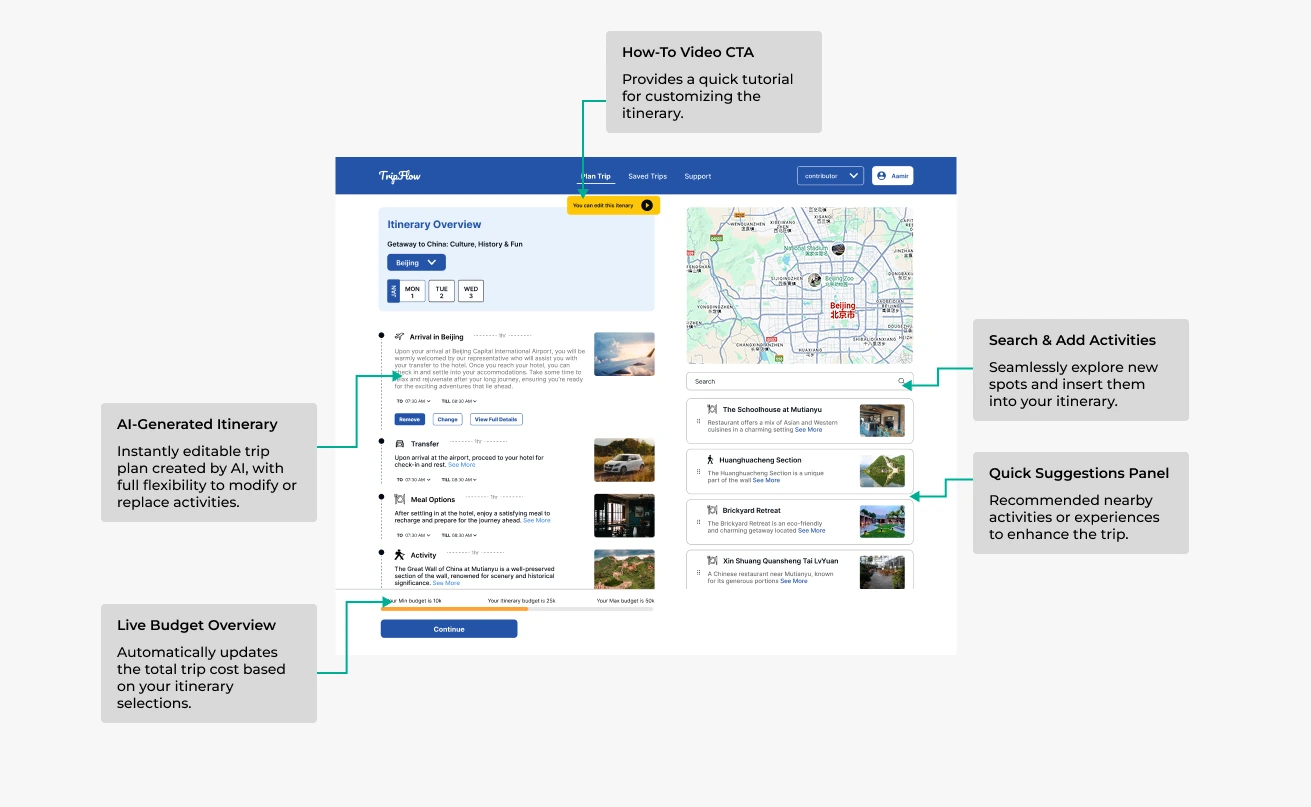
An Itinerary That Plans for You, Not Against You.
Most travelers get overwhelmed trying to manually organize destinations, timings, and budgets. This AI-powered itinerary gives them a ready-made, editable trip plan — so they can focus on the experience, not the research.
Outcome
Users feel more confident and less overwhelmed when planning trips.
Faster decisions → smoother booking → better travel experiences.
Business Impact
Higher user retention and engagement due to simplified planning flow and AI personalization.
Design is an iterative journey — here are some of the early concepts that shaped the final solution.
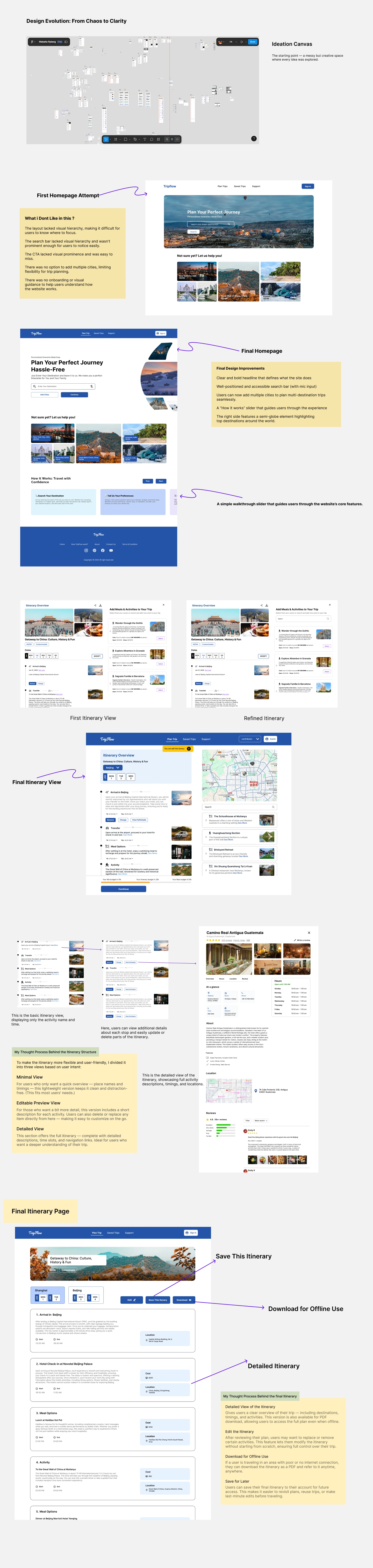
Did My Solution Solve the Right Problems?
Let’s revisit the core problems I set out to solve — and how the final design addresses each one:
Too many tabs, too much confusion while planning a trip (e.g., planning Kerala travel)
✅ Solved by creating a website that auto-generates personalized itineraries based on user input — no need to search across multiple tabs.
🛠️ Plus, the itinerary is editable, so users remain in control.
Running out of money mid-trip due to poor budget planning
✅ Solved with a built-in budget tracker that calculates total costs and provides alerts during the planning phase. This ensures users know their limits in advance.
Poor time management during travel
✅ Solved by showing time allocations for each activity in the itinerary, allowing users to better manage their schedule and avoid missing out.
Remember David the traveler who returned from Kerala only to realize he missed key locations? With TripFlow, he could have had a personalized, editable itinerary that ensured he didn’t miss a thing.
And what about the Manjummel Boys?
In the beginning, we saw how an unplanned detour led to a tragic outcome.
If they had used a tool like TripFlow, which allowed them to plan their destinations properly, maybe that situation could’ve been avoided altogether.
Like this project
Posted Apr 7, 2025
Travel itinerary platform made trip planning easier and more user-friendly. solved problems in planning steps, poor offline access, and sharing features.