Spring Theory Website Design

Min Jin
Verified



Spring Theory (Website Design)
Overview
Spring Theory connects universities and companies through experiential learning and applied research. As the organization expanded partnerships with leading brands and academic institutions, the website needed to explain a complex collaboration model while clearly strengthening enterprise-level credibility.
The focus of the redesign was to create a clear, structured interface that communicates how Spring Theory bridges academic insight with real-world business challenges, helping visitors quickly understand the value of the collaboration.
Objective
The goal was to design a modern website that presents Spring Theory as a trusted connector between universities and companies. The design needed to:
• Clearly explain the collaboration model
• Demonstrate the value of academic–industry partnerships
• Highlight real outcomes and partnerships
• Encourage organizations and universities to explore collaboration
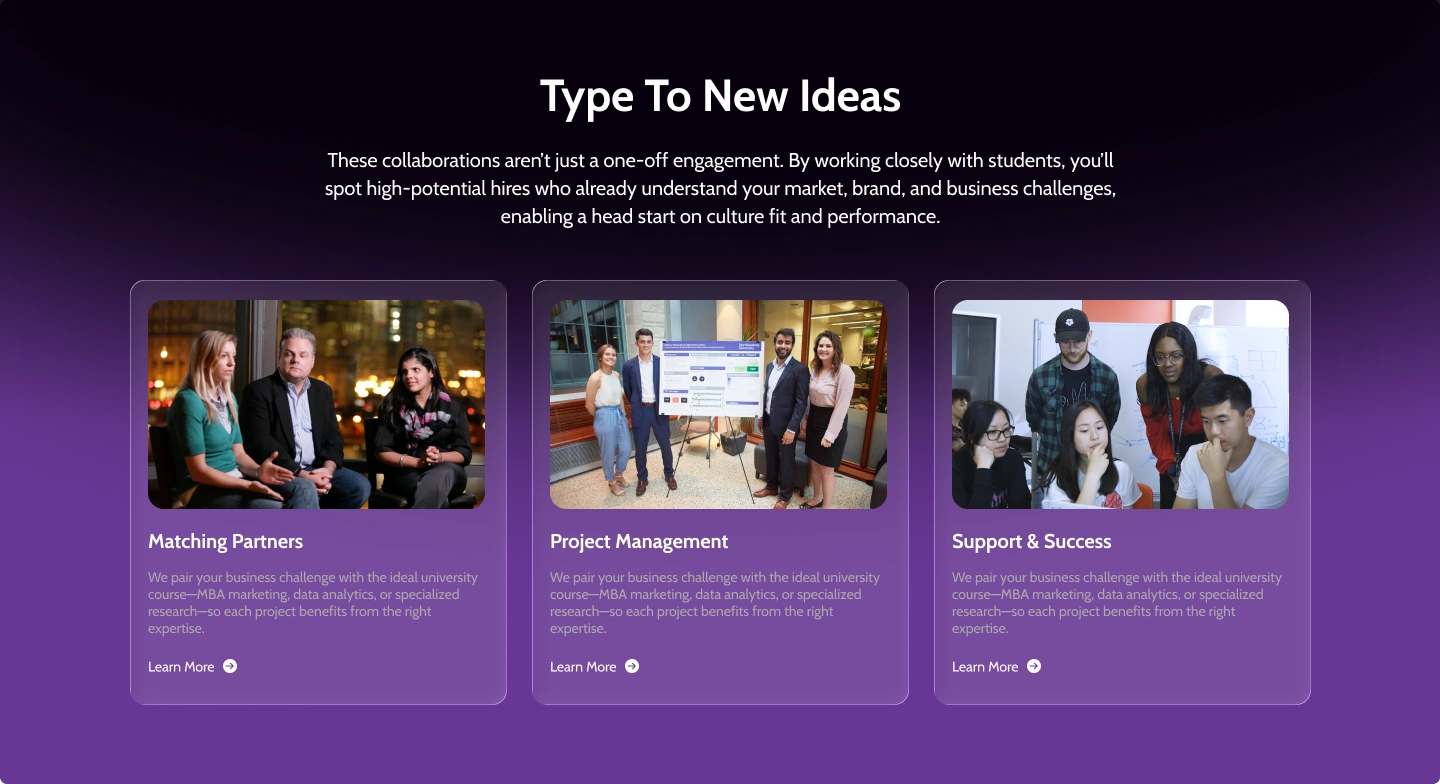
Collaborations
Strategy
The structure was simplified into clear sections that guide visitors through how the collaboration works.
A “How Collaboration Works” section explains the partnership model step by step
A success stories section highlights outcomes achieved through real projects
A collaboration process section outlines how partnerships are structured
The messaging hierarchy focuses on outcomes—new ideas, strong execution, and measurable impact—rather than abstract descriptions of services.
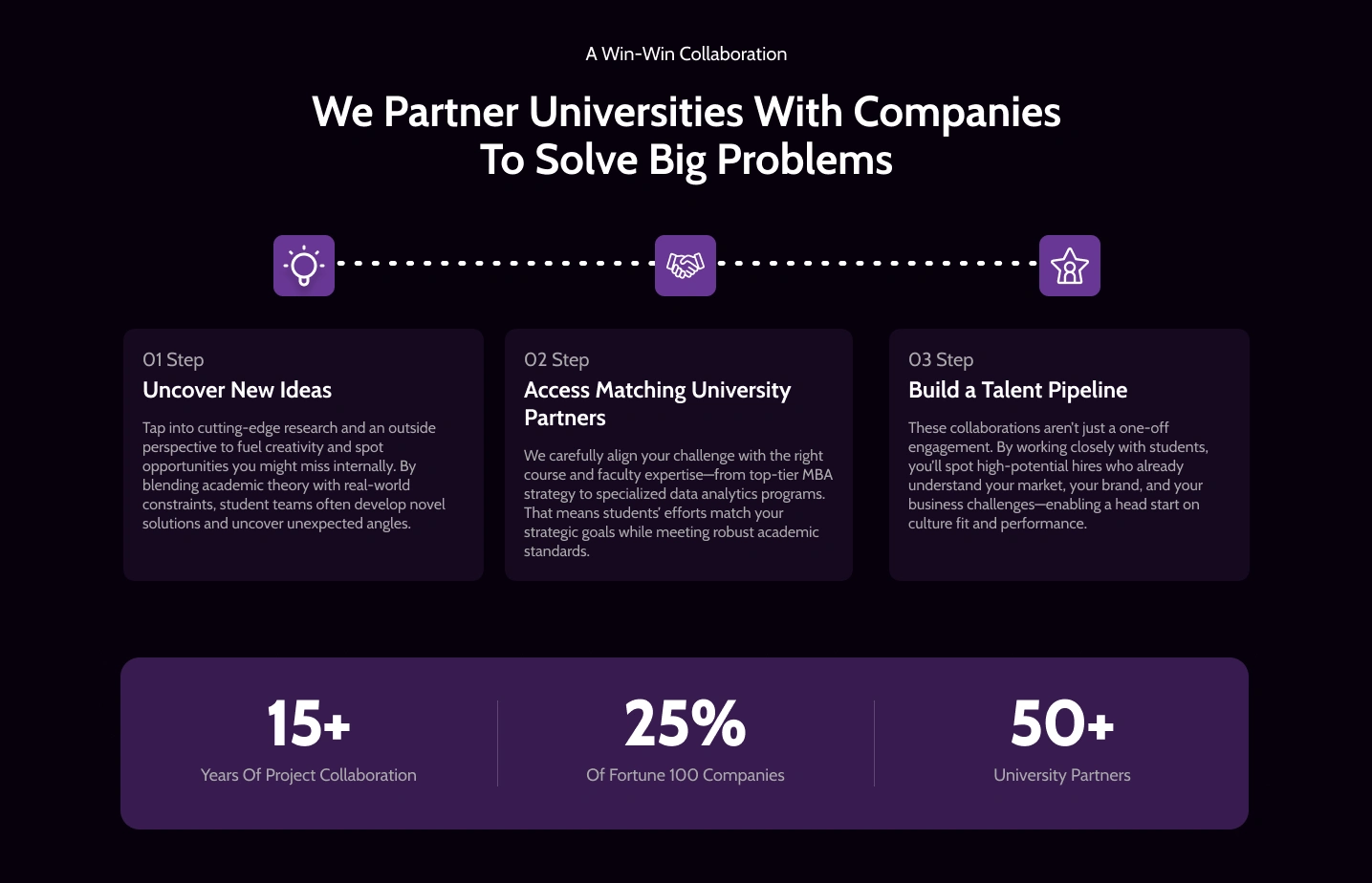
Roadmap & Stats
Design Approach
Visual Direction
A clean, structured layout was used to simplify complex information and make the collaboration model easy to understand. Modular sections and card-based layouts help organize content while maintaining a modern and professional feel.
Typography
Bold headlines establish clarity and guide users through the collaboration story. Supporting text remains concise and scannable to ensure visitors can quickly understand key concepts.
Clarity & Navigation
Information was organized into clear sections that explain the model, demonstrate outcomes, and introduce the process. This structure helps both universities and companies quickly find the information most relevant to them.
Trust Signals
Recognizable brands, university partnerships, and collaboration metrics are highlighted to reinforce credibility and demonstrate the scale of Spring Theory’s network.
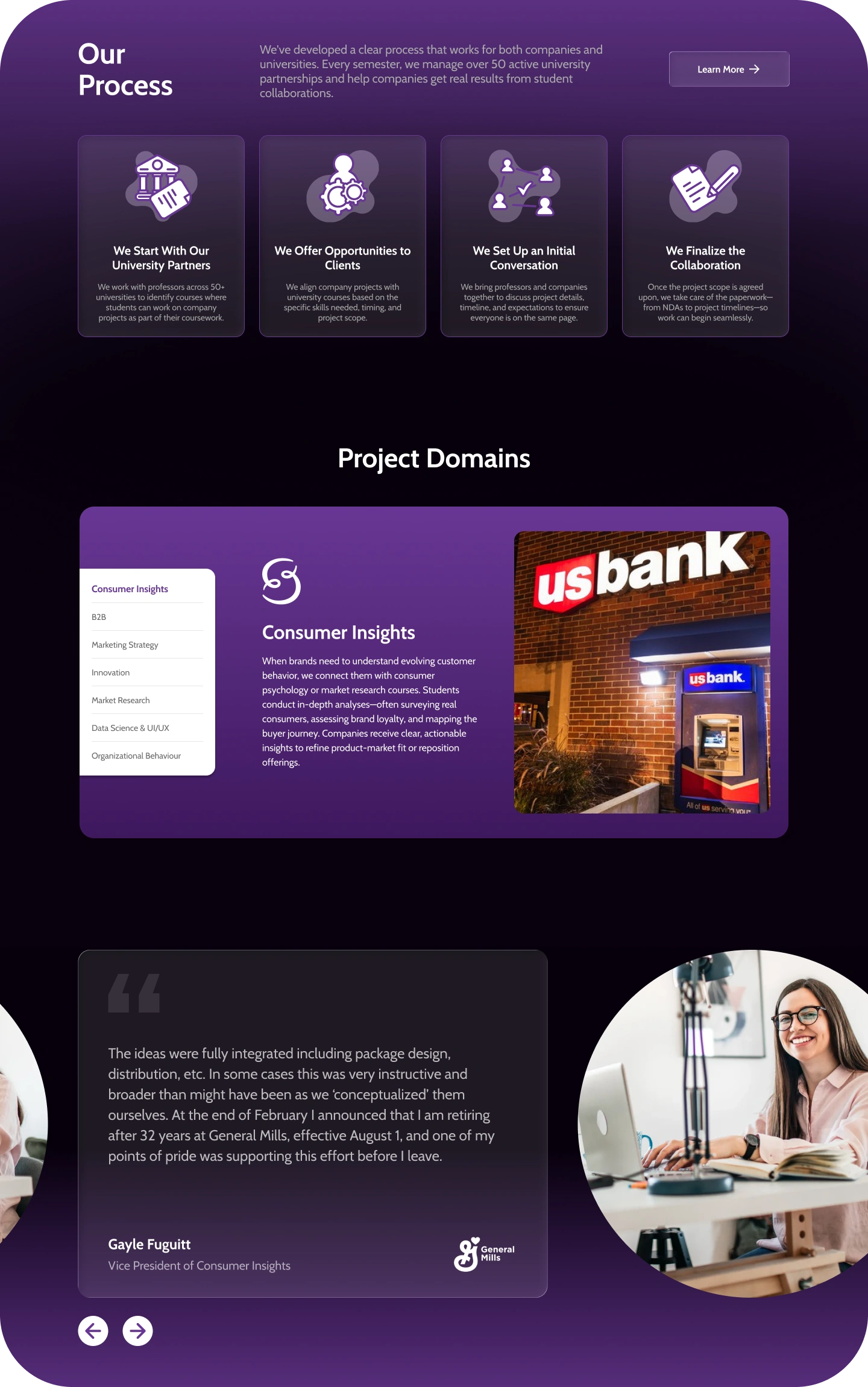
Process & Project Domains
Key Features
• Clear explanation of the academic–industry collaboration model
• Success stories demonstrating real-world project outcomes
• Structured process explaining how partnerships are formed
• Visual presentation of enterprise and university partners
• Modular layout designed to support future program expansion
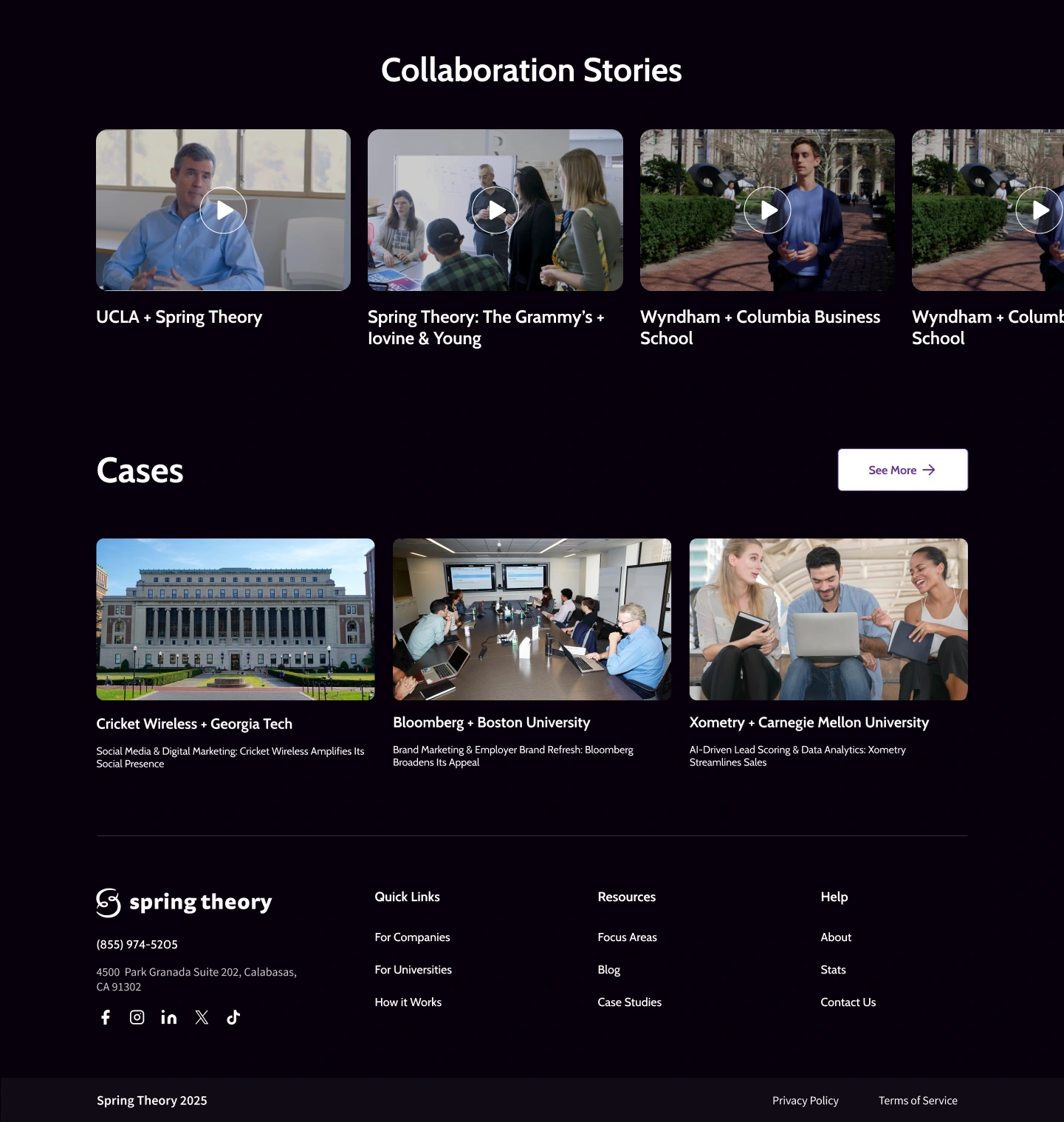
Real Collaboration Stories & Case Studies
Result
The final design positions Spring Theory as a strategic bridge between academic research and business innovation. The website presents the collaboration model in a clear, approachable way, helping visitors quickly understand how universities and companies benefit from working together.
Like this project
Posted Jan 23, 2026
Redesigned Spring Theory's website to boost clarity and engagement.