AI-Powered Process Automation for Supply Chain Efficiency

Aumadi Technologies


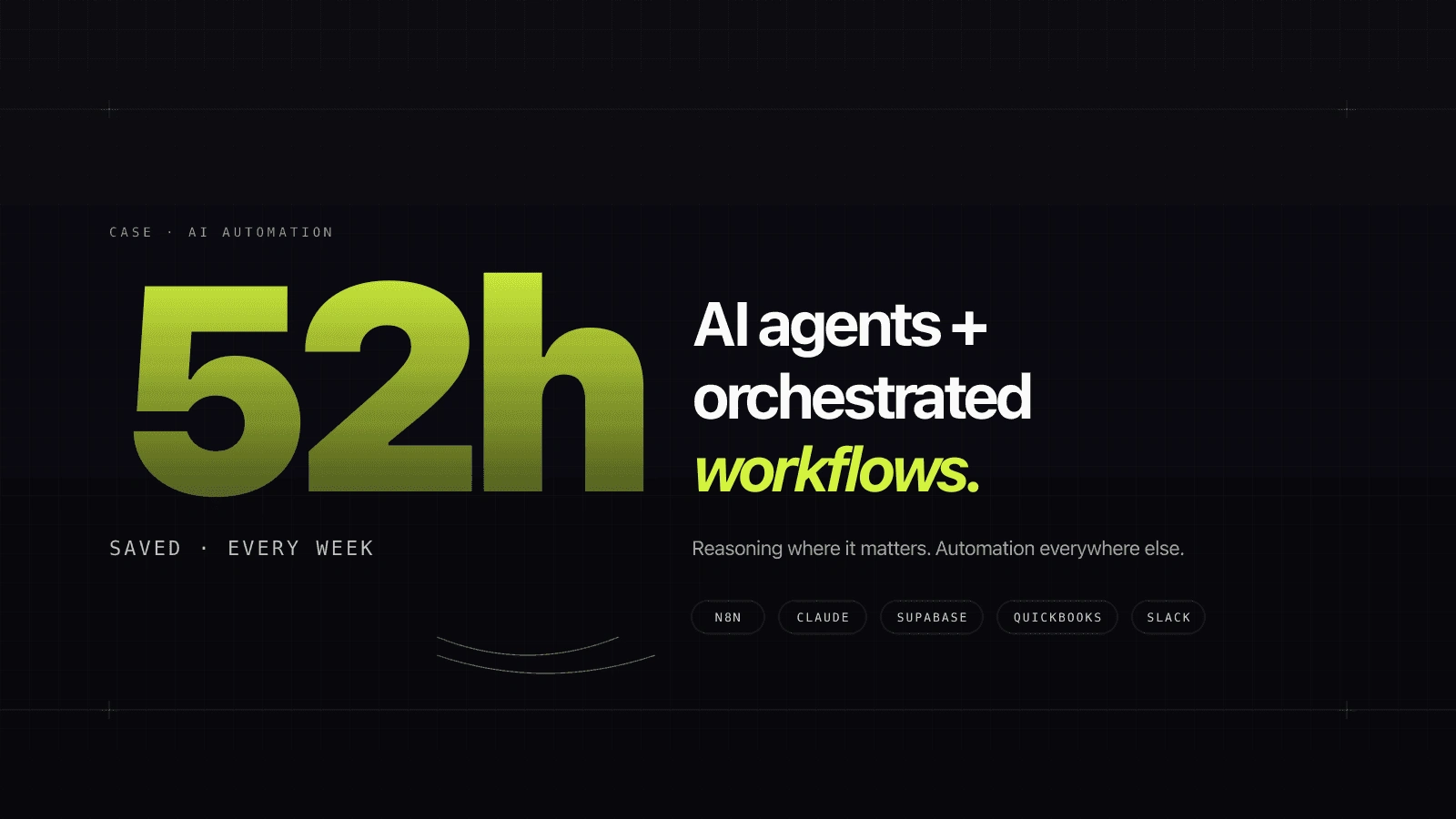
AI powered automation that gave 52 hours back, every week
Client: Commercial Products Distributor In the US
Industry: Supply chain operations
The Goal
A US supply chain company was drowning in manual operations. Project tracking lived in spreadsheets. Data got entered by hand into three systems for every order. Receipts were reconciled once a week, by a person, in a Friday marathon nobody enjoyed. Approvals happened in Slack DMs and email threads, with no record of who approved what or when.
As the company grew, every manual step compounded. Delays. Errors. Missed approvals. The cost was visible, the path forward was not.
They came to Aumadi to build something better, end to end.
The Strategy
Aumadi took the full build. Discovery, design, development, deployment, post-launch tuning.
The brief was clean: find the operations work that did not need a human. Replace it with AI agents and workflow automation. Keep the team in the loop where judgment mattered. Get them out of the loop where it did not.
The stack:
n8n as the orchestration layer connecting the existing tools
Claude as the reasoning engine for the approval agent
Supabase for workflow state and audit trail
QuickBooks API for receipt reconciliation and invoice data
Existing ERP wired in for project record updates and triggers
Slack as the team interface for approvals and notifications
Nothing the team already used got thrown out. The new workflow sat on top of the existing tools, doing the boring work and routing the rest.
The Process
Discovery and Planning
Two weeks of mapping. Every step in the operations workflow documented. Every delay timed. Every decision point flagged. By the end, the team understood their own process better than they had before, and Aumadi knew exactly which steps had to stay human.
Design
The workflow design split into two parts.
The orchestration layer in n8n connected the existing tools. Triggers fired when projects hit certain stages. Data moved between systems without anyone typing it in twice.
The Claude agent on top had a defined job. Read incoming requests. Decide who needs to approve. Route the request through Slack. Track the response. Log the outcome. Every decision the agent made was traceable in the audit log.
Development
n8n flows for the data movements between ERP, QuickBooks, and Supabase. The Claude approval agent prompted, tuned, and wired into Slack so requests landed in a structured message with action buttons. Supabase tables for state, run history, and audit. QuickBooks API integrations for live receipt matching, surfacing discrepancies as transactions came in.
The receipt reconciliation flow got rebuilt the most. The old process was a weekly batch job that produced its results on Friday afternoon. The new process matched receipts against expected transactions within minutes of either landing. Discrepancies surfaced live, not at the end of the week.
Testing
The new workflow ran in parallel with the manual one for two weeks. Approvals went through both routes. Receipts got reconciled twice. Discrepancies between the two outputs were tracked, fixed, retested. Once the workflow caught everything the team caught and nothing more, the manual process was retired.
Launch
The team switched over without drama. Slack approvals replaced the old DM thread chaos. Receipt reconciliation moved from a Friday afternoon job to a continuous background process. Project records updated themselves as triggers fired.
Aumadi stayed on for the first two weeks of live running. A few prompt edge cases got tuned. A handful of false-positive flags got cleaned up. After that, the workflow ran itself.
The Outcome
The team saved 52 hours every week.
Errors fell. Missed approvals stopped happening because the agent followed up automatically when responses were late. The Friday reconciliation marathon disappeared. The audit trail showed every decision and who made it.
In the client's words: "The new setup is saving hours and hours of work. It is amazing."
The 52 hours a week the team got back now go into the work that actually needed a person. Judgment calls. Customer conversations. Decisions that matter. The business runs faster, with cleaner data and more confident decisions behind it.
Good AI does not replace people. It gives them their time back.
Like this project
Posted Jun 23, 2026
Automated a supply chain company's operations using AI, saving 52 hours weekly.
Likes
0
Views
10