WordPress Platform for a Swiss Automotive Tuning Company

Lukman Gbolahan
Verified


Project Overview
A Swiss automotive tuning company needed to move off a legacy Contao CMS + Firebase stack and onto a modern, scalable WordPress platform — while expanding from a single service (chiptuning) into three distinct service verticals: Chiptuning, CarPlay/Android Auto retrofits, and Exhaust flap control (Abgasklappensteuerung).
The brief wasn't just "migrate the site." It was: build an architecture that could support thousands of vehicle-specific, SEO-optimized pages across three product lines, generate high-quality German-language content at that scale, and hand the client a system he could operate himself day-to-day without needing a developer on call.
Role: Full-stack WordPress development, content architecture, AI content pipeline engineering, SEO implementation, client-facing project management.
The Challenge & Vision
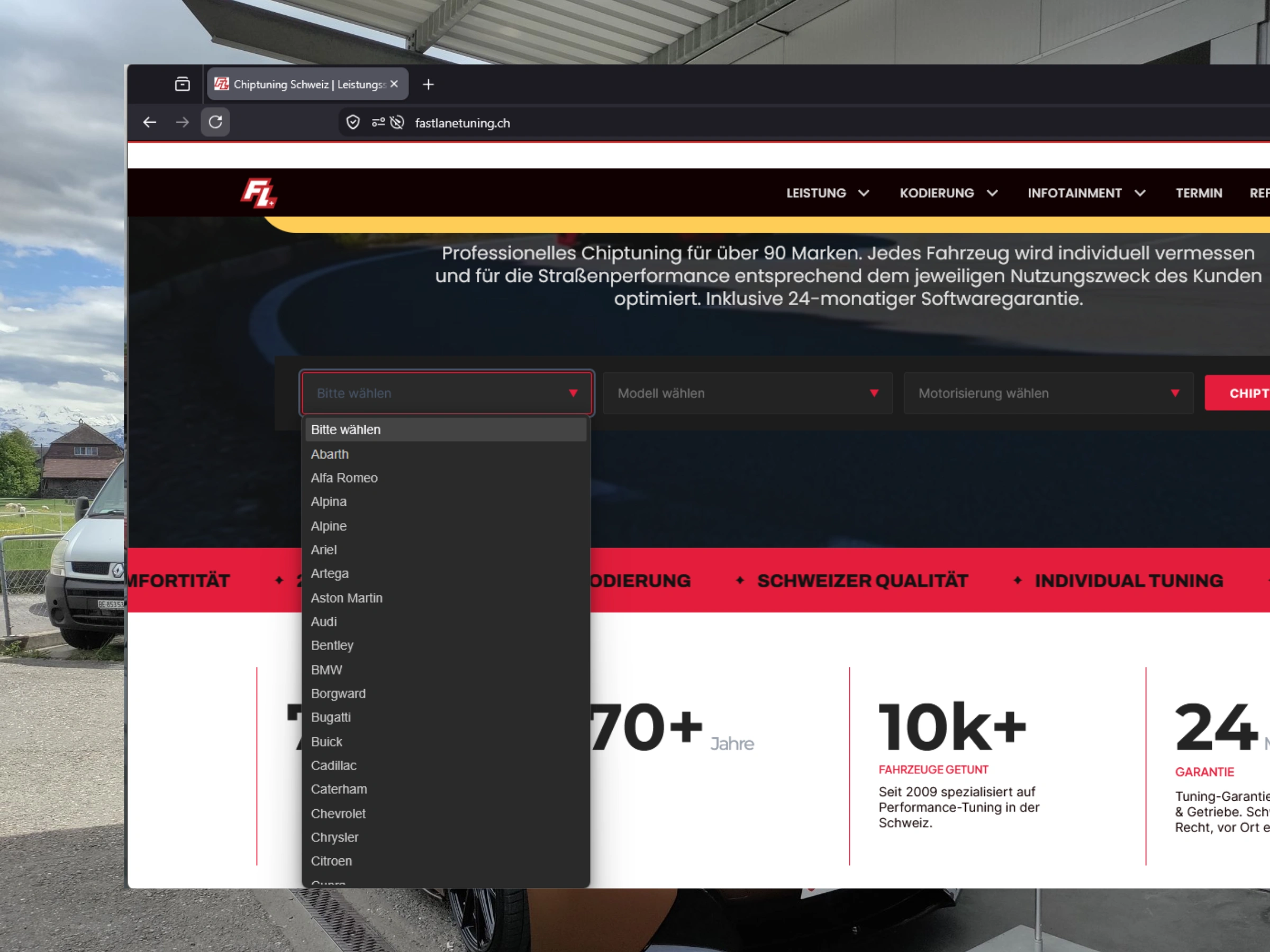
Scale. The target dataset spanned roughly 79 vehicle brands, 800 models, and 7,000 individual tuning entries — each needing unique, non-duplicate SEO content in German, not templated filler.
Constrained toolset. The build used ACF Free, which excludes Repeater fields — a common go-to for structuring repeating vehicle/feature data. Data structures had to be designed around that constraint from day one rather than patched later.
Content quality vs. content volume. Early word-count targets (810–1,000 words per page) risked producing repetitive, thin-feeling copy if approached naively. Google's quality bar for programmatic content is unforgiving of exactly this failure mode.
Client autonomy. The client is non-technical but hands-on and wanted the ability to edit AI prompts and re-run content generation himself, without submitting a ticket every time messaging needed a tweak.
Three service lines, one architecture. Chiptuning, CarPlay, and Exhaust needed independent data models and content generators, but couldn't become three disconnected codebases that were expensive to maintain.
🎨 My Solution
Content architecture
Each service vertical got its own custom post type and hierarchical taxonomy (car-model, carplay_car_model, exhaust_car_model), letting brand → model → entry relationships stay clean and independently manageable across all three verticals.
Working within ACF Free
Rather than upgrading to ACF Pro for Repeater fields, vehicle and feature data were restructured into discrete, purpose-built fields (e.g. individually named feature title/text pairs) — a constraint that pushed toward a more explicit, predictable data model.
Solving thin content at scale
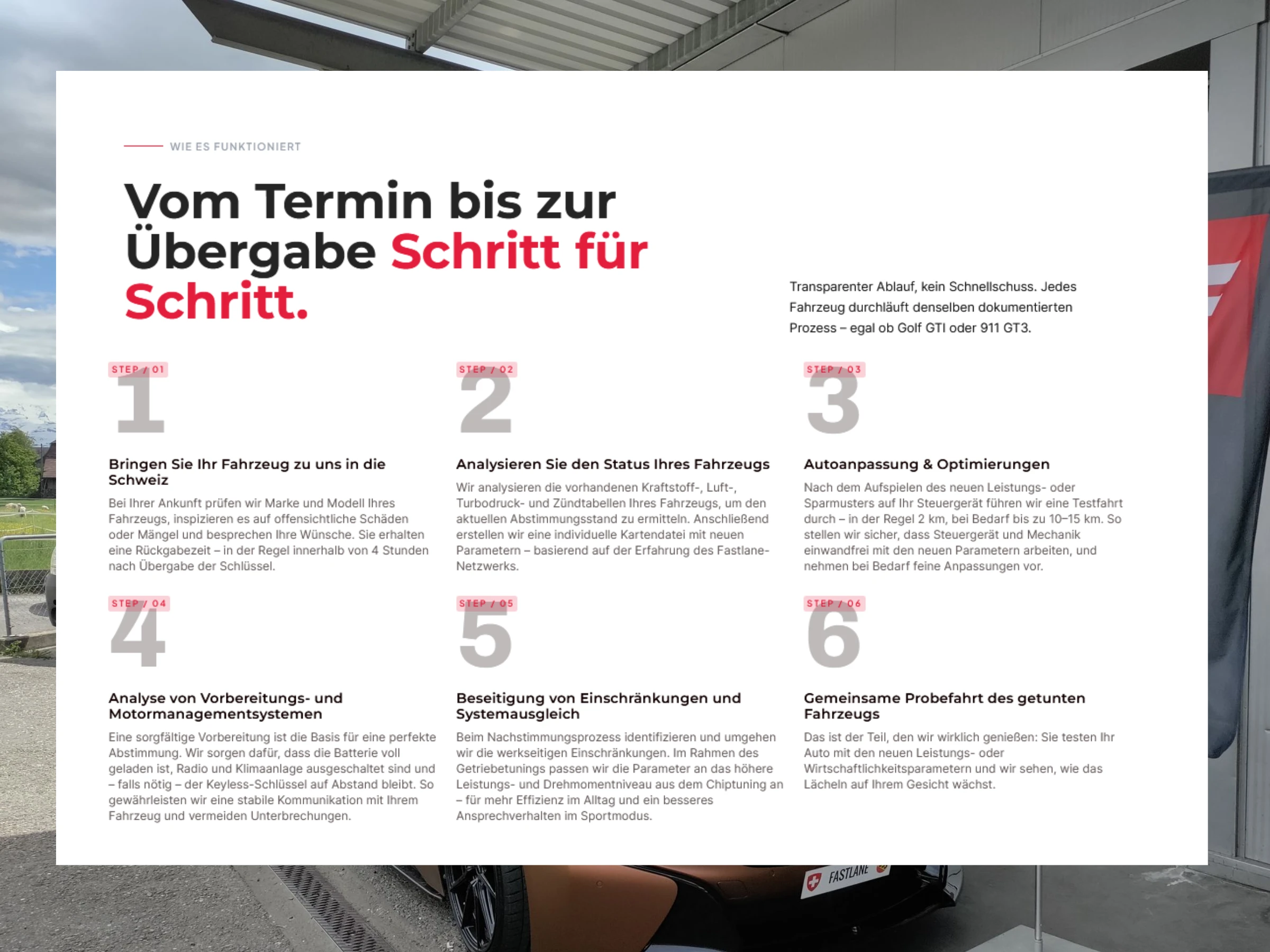
Hitting 810–1,000 words per page without repetition meant adding structure, not just length: FAQ sections with 3–4 real question/answer pairs, step-by-step installation walkthroughs, compatibility notes tied to actual chassis codes and year ranges, and feature cards — each contributing genuinely different information rather than restating the intro in different words.
AI content generation, isolated by design
Three standalone AI SEO content generators were built (Anthropic Claude API, claude-haiku-4-5), one per vertical, deliberately kept as separate WordPress Code Snippets rather than merged into a shared module — after an earlier attempt at combining them surfaced conflicts that weren't worth the maintenance risk.
Each generator includes:
A resumable, pausable batch queue with localStorage-based progress tracking, so runs of thousands of items survive tab closures, page refreshes, and WordPress session/nonce expiry without losing progress.
Automatic retry logic for transient API failures, with clean session-expiry detection so the client always gets a clear "refresh and resume" message instead of a silent failure.
Brand/model-level filtering and a skip-existing toggle, so re-runs only touch what's actually new or explicitly selected for overwrite.
Client-editable prompts
A dedicated Prompt Manager admin page lets the client open WordPress, edit any of the AI prompts driving content generation across all three verticals, and re-run generation — no code, no developer required.
Maintainable templating
Rather than three separate Beaver Themer layouts routed by PHP, a single layout uses depth-aware shortcodes ([ft_if_depth depth="0/1"]) to render brand, model, or entry-level content correctly from one maintainable template.
SEO implementation
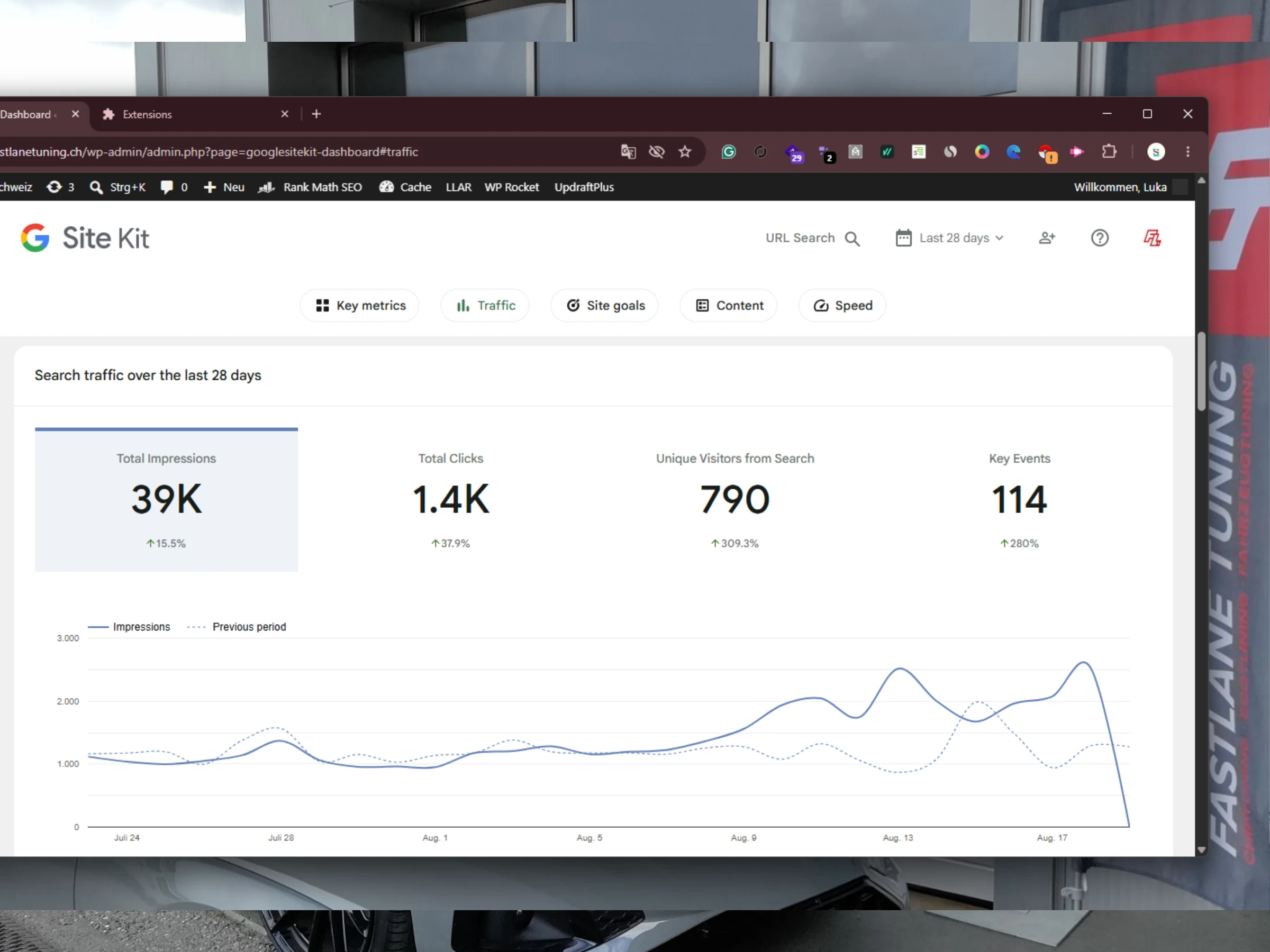
Migrated from SmartCrawl to RankMath, with dynamic title templates and wpseo_metadesc filters that auto-populate meta descriptions from ACF field data — keeping metadata accurate and unique across thousands of programmatically generated pages without manual entry.
Performance data visualization
Dynamic before/after performance charts (horsepower, torque) built with Chart.js 4.4.1 for line charts and pure HTML/CSS for bar charts, rendering per-vehicle tuning data pulled directly from custom fields.
Results & Outcome
Three fully independent, production-ready content verticals launched on a single WordPress platform, replacing a legacy Contao + Firebase stack.
A content generation system capable of producing unique, structured, quality-bar-meeting German SEO copy across ~79 brands, ~800 models, and ~7,000 tuning entries — with room to batch-regenerate the full dataset as content standards evolve.
A resumable, fault-tolerant batch processing pattern reusable across all three generators, cutting the operational risk of long-running AI content jobs to near zero.
Full client self-sufficiency for prompt editing and content regeneration, removing the developer as a bottleneck for day-to-day content operations.
A domain and hosting setup (DigitalOcean + SpinupWP) supporting the new platform, a 301-redirected secondary domain, and a preserved legacy site for continuity during transition.
WordPress · Beaver Builder & Beaver Themer · ACF (Free) · CPT UI · FacetWP Pro · WP All Import · Code Snippets · RankMath SEO · Anthropic Claude API (
claude-haiku-4-5) · Chart.js 4.4.1 · DigitalOcean · SpinupWPTech Stack
Like this project
Posted Aug 25, 2026
A Swiss automotive tuning company needed to move off Contao + Firebase to a WordPress platform built to scale, with SEO content covering thousands of vehicles.
Likes
1
Views
11
Timeline
Feb 9, 2026 - Feb 16, 2026
Clients
Webboxed