OpenSylo Merchant — Credit Drawdown App

Stephen Adedokun
1 collaborator


OpenSylo Merchant — Credit Drawdown App for Businesses
Role: Lead Frontend Engineer
Timeline: January 2026 — May 2026
Stack: Next.js 16 (App Router, RSC), React 19, TanStack Query v5, TanStack Table, nuqs, Recharts, react-dnd, Zod, React Hook Form, Zustand, Tailwind v4
What it is
The app businesses use to verify their identity, connect their sales platforms, request credit against their revenue, and repay it. The merchant is the borrower in the OpenSylo system — a business signs up, proves who it is, connects the sales platforms that prove how much revenue it makes, requests a loan, has it funded by a lender, and repays it through direct debit, self-pay, or its wallet. The most onboarding-heavy app in the monorepo because a business has to clear real trust gates before it can borrow money.
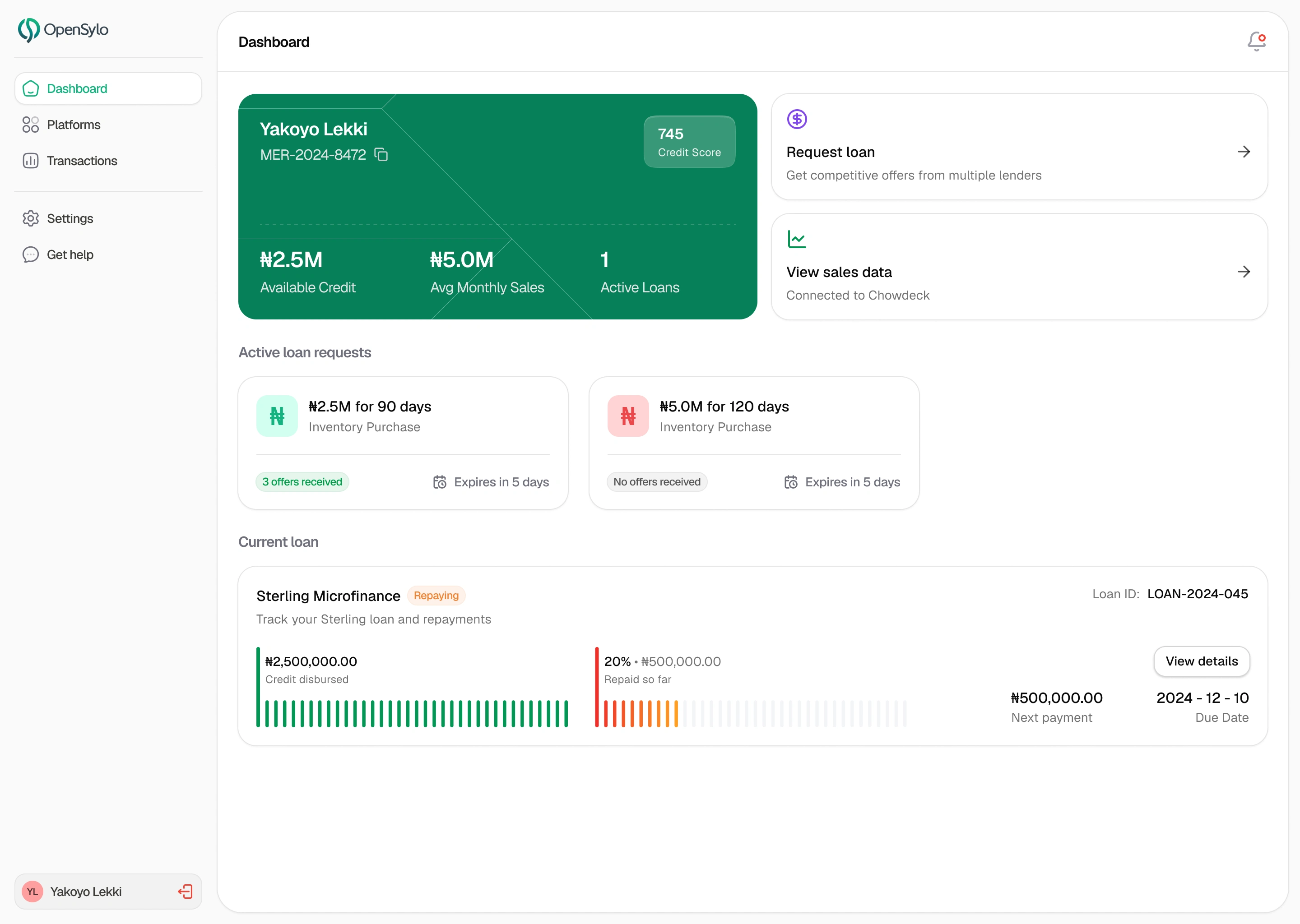
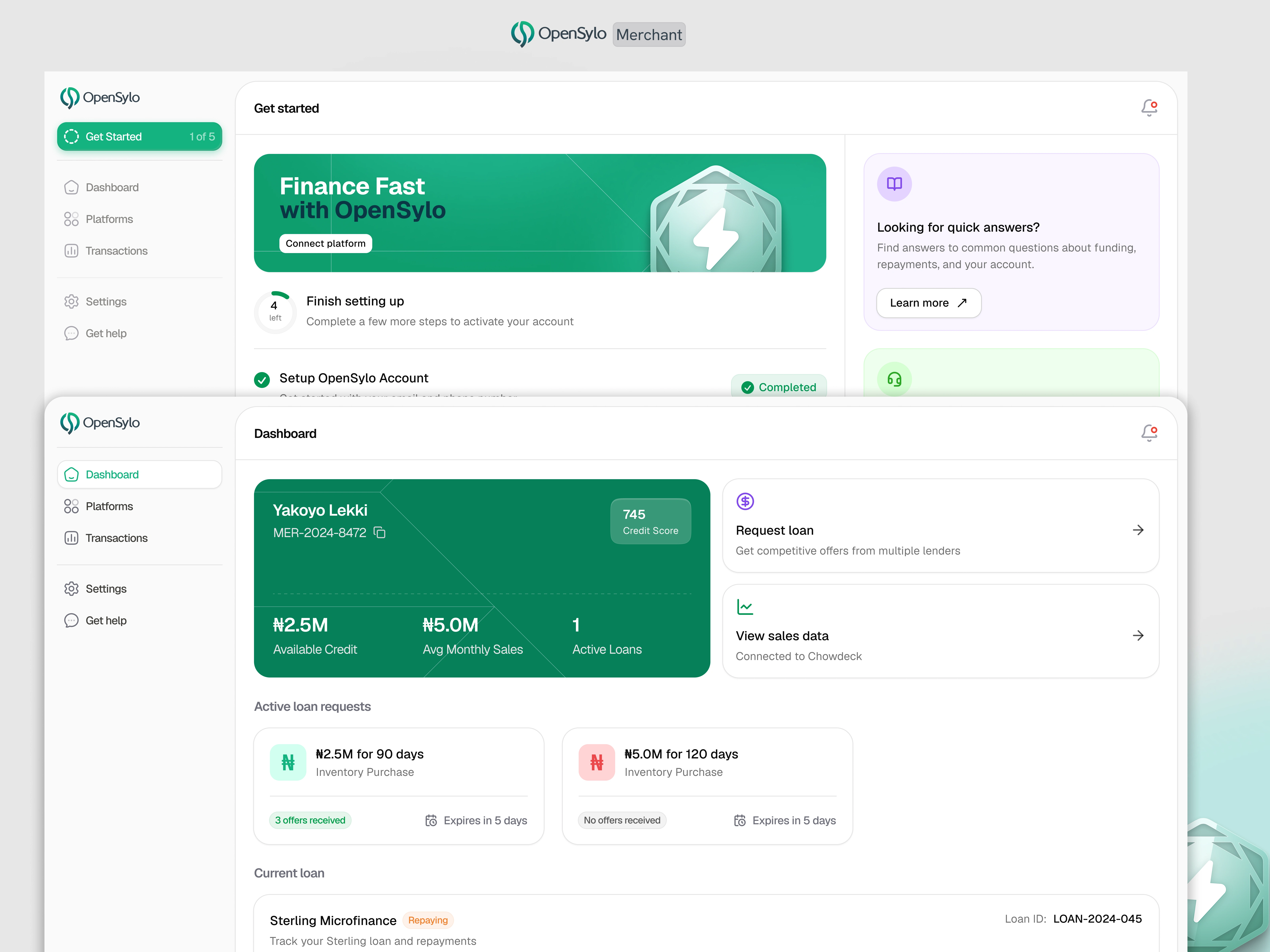
Merchant Dashboard Overview showing Wallet Balance, active loan requests & Current Active Lona
Key features built
Multi-stage KYC and onboarding — Full identity verification flow: business documents, director details, BVN submission with validation, in an (authenticated) route group so each step enforces its own access state. A "get started" surface shows the merchant exactly what's left before its account is active.
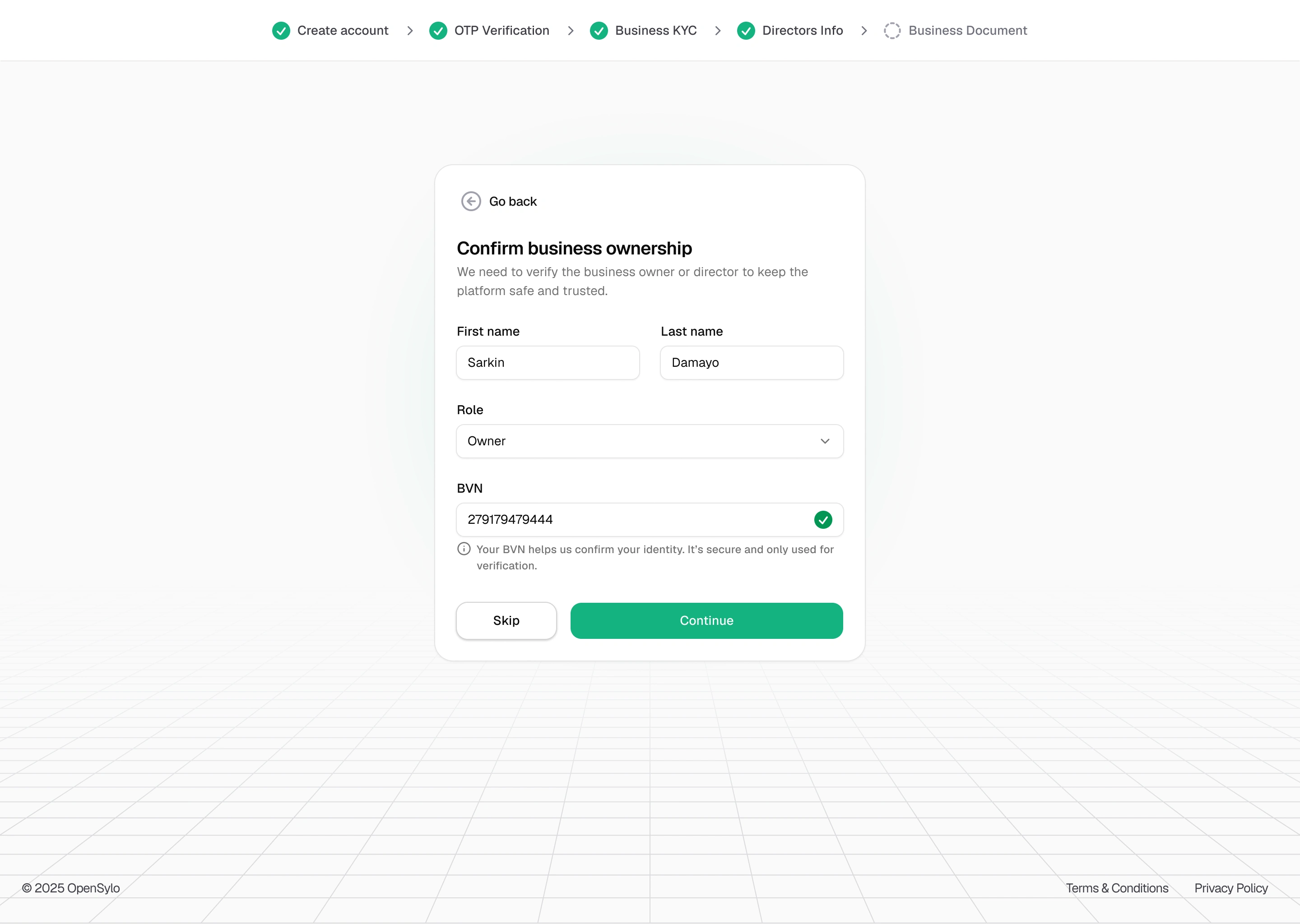
Multi-Stage KYC - Business Ownership
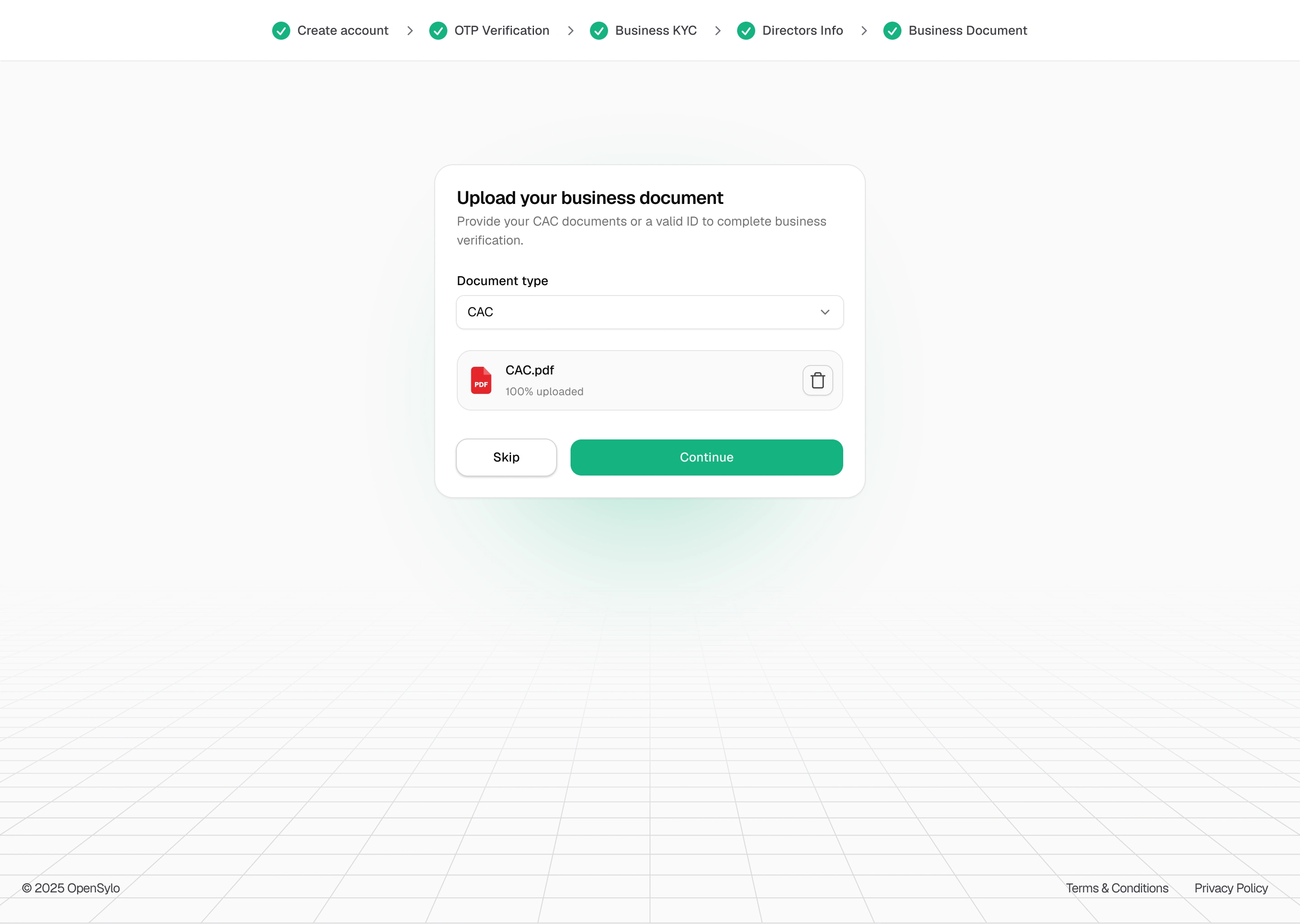
Multi-Stage KYC - Business Document Upload
Sales-platform connections — A merchant's borrowing power comes from its revenue. Built the full platform-connection module: a catalog of available platforms, a connect flow with initialize-then-callback handshake, a sync-progress modal for watching data import, and a per-connection platform report with Recharts transaction trend visualizations. Connecting a platform is what turns a signed-up business into a fundable one.
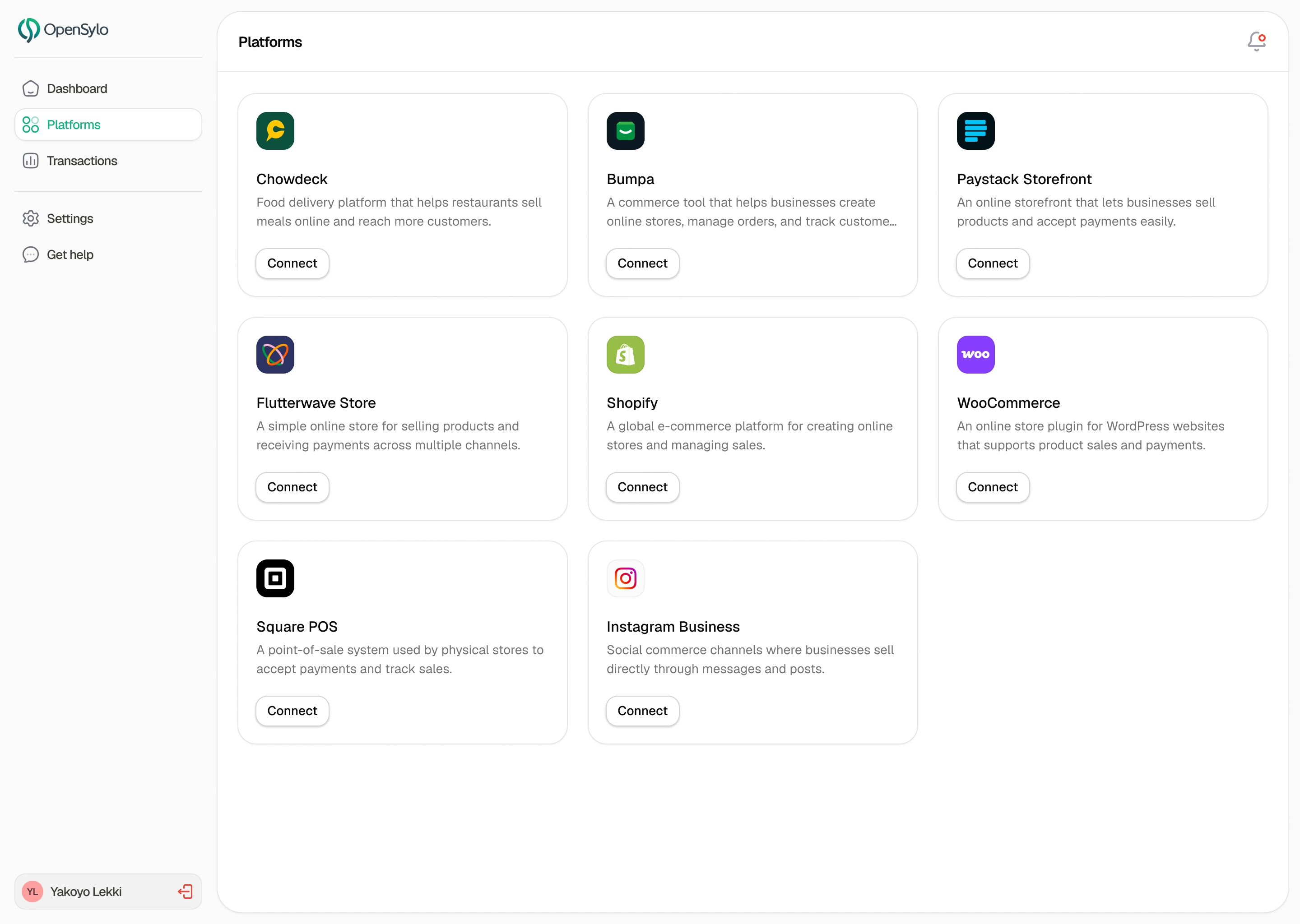
Supported Sales Platform List
Direct-debit mandates — Mandate setup flow with a whitelist-driven state machine: the setup view is shown based on a whitelist of states that genuinely require setup, not a blacklist of states that look done. New backend states fail safe instead of accidentally matching a "done" check.
Loan requests and self-pay repayments — Loan request form built with react-hook-form + Zod, schema driving both validation and the submission type. Loan detail pages with full fee breakdown and repayment history. Self-pay flow with idempotency keys and polling on the payment intent's state — a merchant sees the real outcome, not optimism.
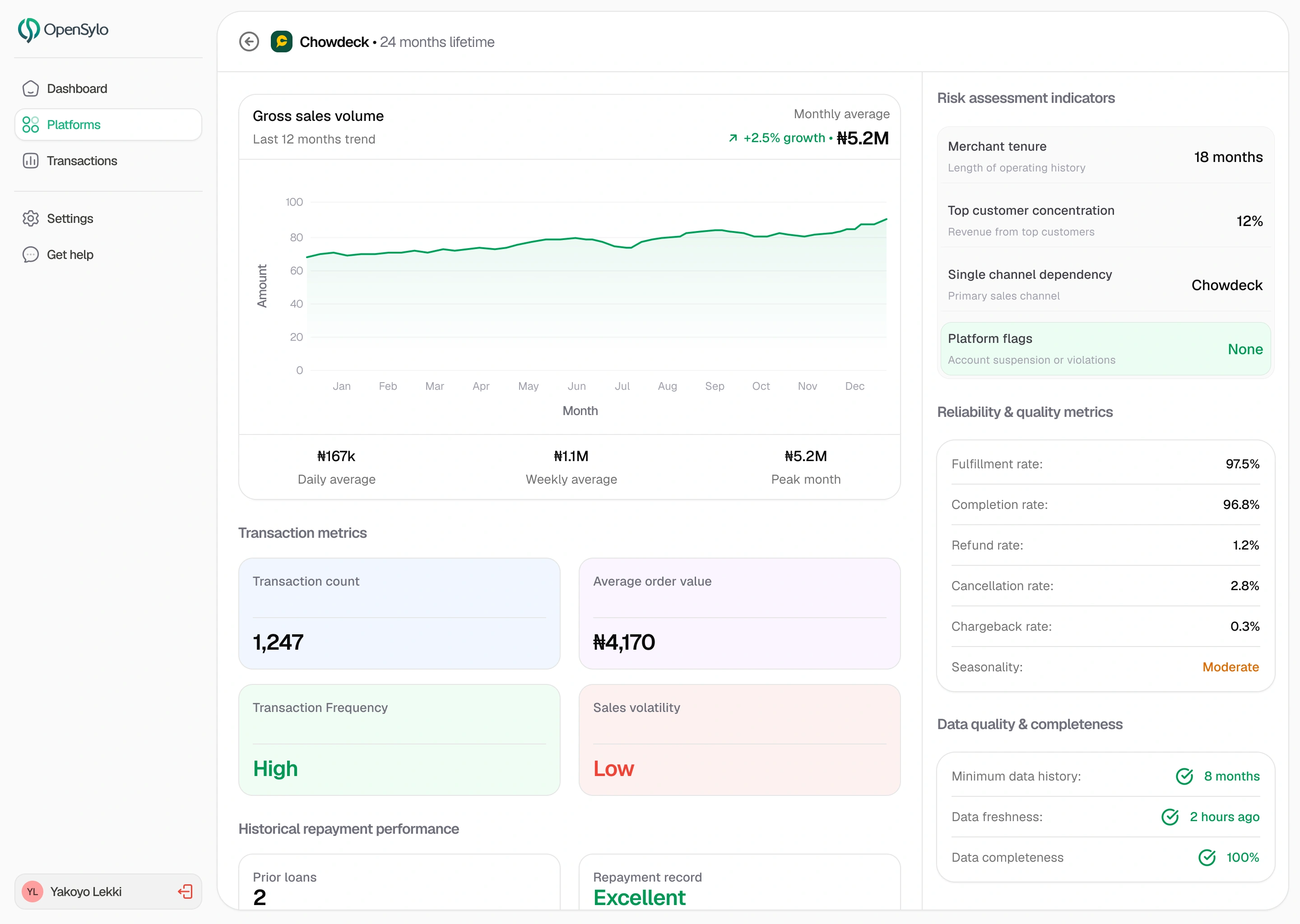
Merchant Connected Sales Platform Data Page reflecting Sales Volume, Metrics & Risk Assessment
Bank accounts, transactions, settings — Connected bank accounts with add/remove/set-default, surviving bank-code edge cases where the provider returns codes the backend doesn't expect. Filterable paginated transaction history and full settings area.
Technical highlights
Onboarding state resolved once in layouts and hydrated into a Zustand store — no per-navigation backend calls that throttled the backend and caused redirect loops.
Whitelist-driven state machines throughout: when a backend enum has more states than the UI cares about, whitelist states that require action rather than blacklisting ones that look done.
Self-pay with idempotency keys and polling — payment isn't done because the request returned, it's done when the intent confirms it.
Schema-driven forms via react-hook-form + Zod — the schema is the single source of truth for validation and the submission type. Form and payload type can't drift apart.
Loan request modal split into create and edit variants — separate components instead of one modal with conditional branching.
Built on shared monorepo packages: @opensylo/auth, @opensylo/storage (with react-dnd drag-and-drop document upload), @opensylo/ui, @opensylo/observability.
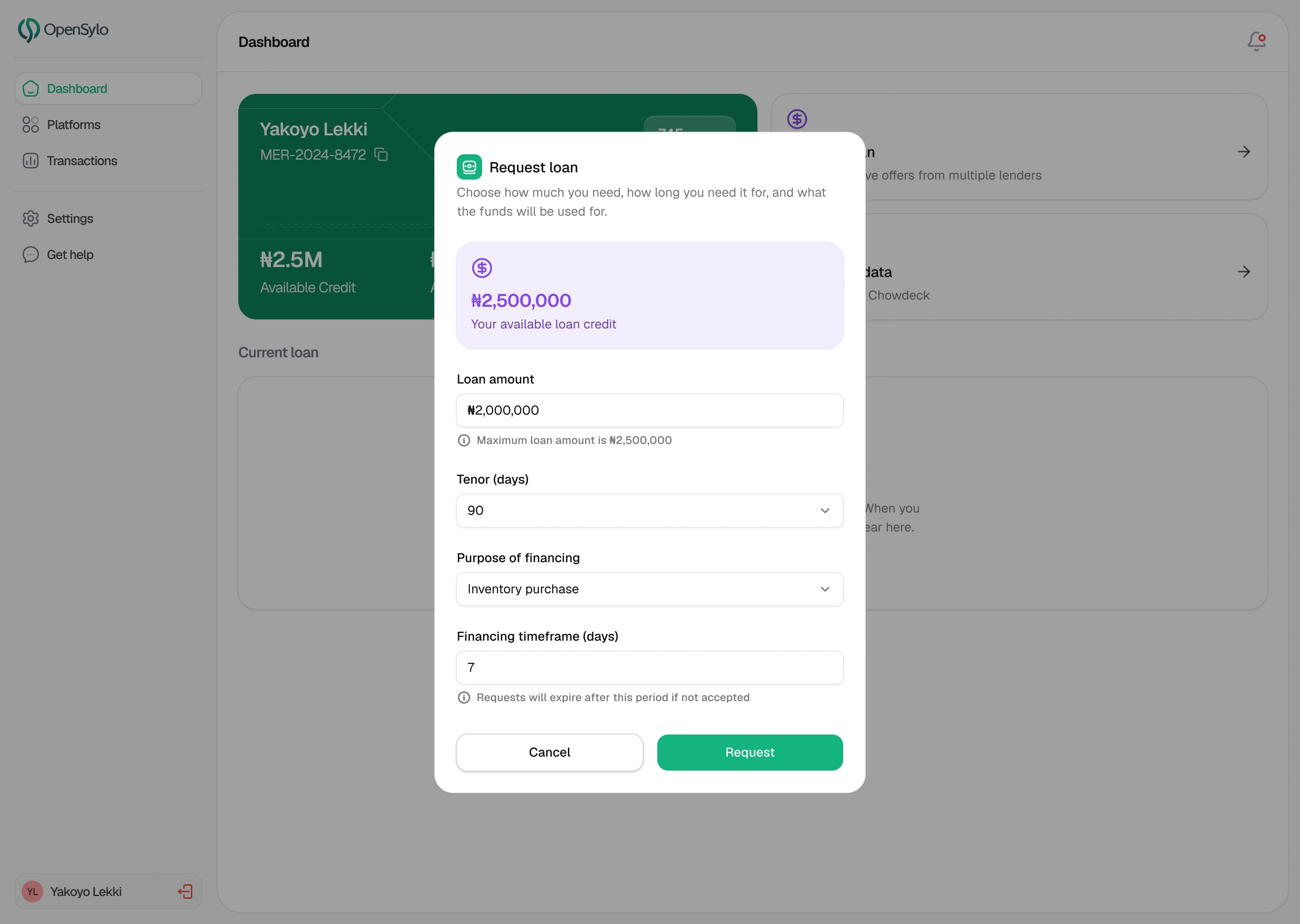
Merchant Request Loan Modal
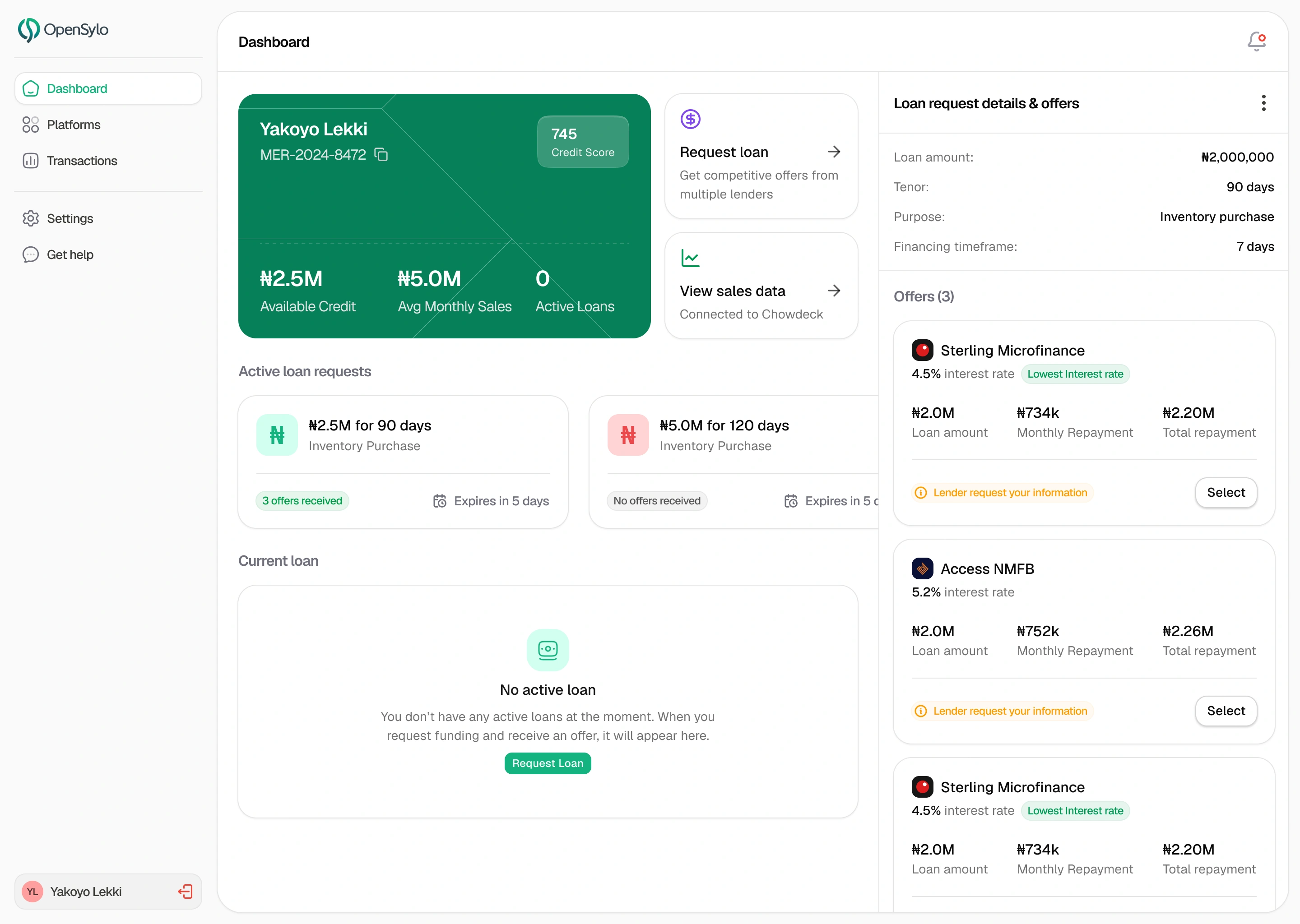
Merchant Loan Request Offers
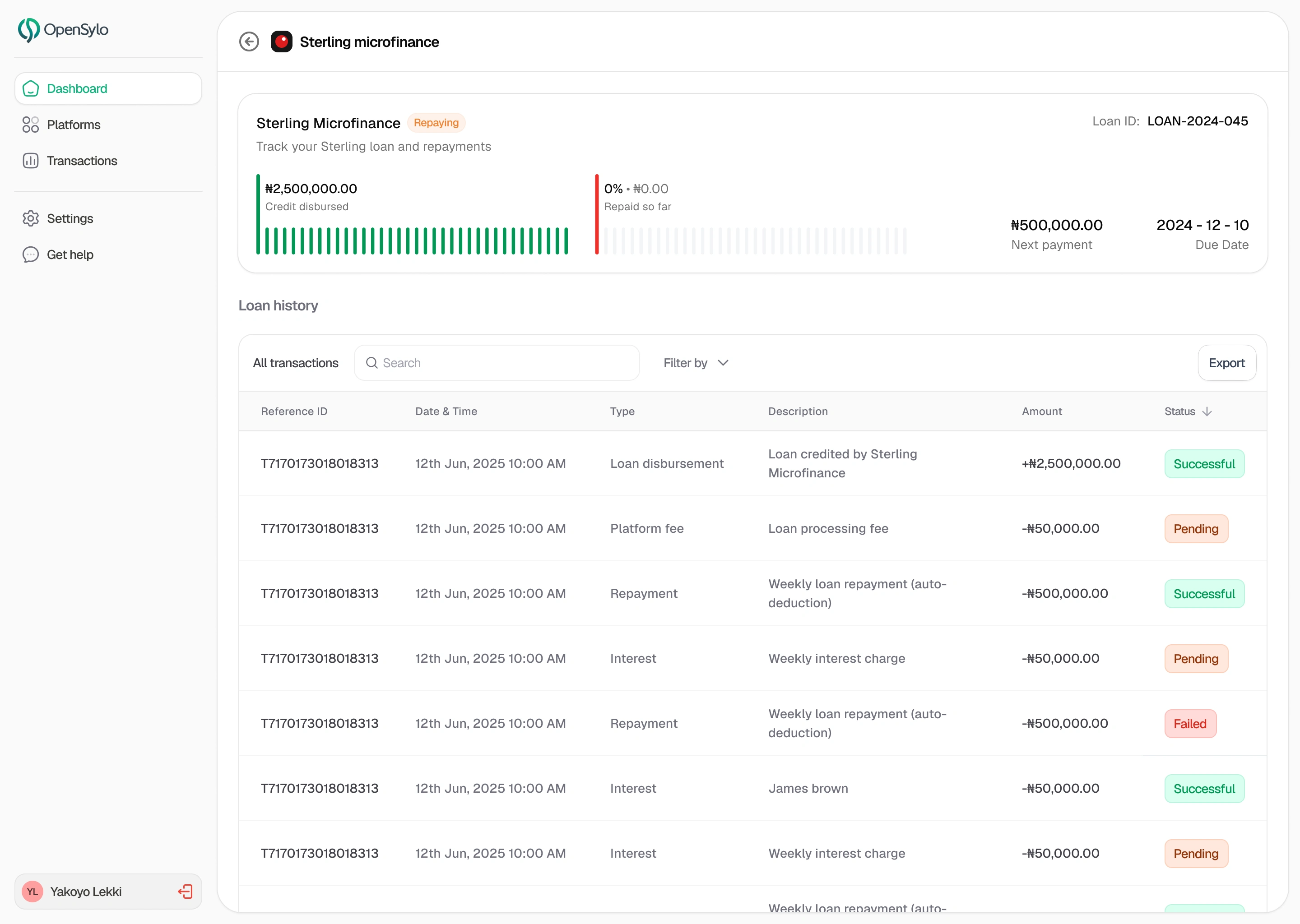
Merchant Loan History Repayment, Transactions to Lender
Notable decisions
Onboarding state in a store, not on every route — the first version checked in the proxy on every navigation and caused redirect loops. Resolved once in layouts, trusted for the render.
Whitelist what requires action, don't blacklist what's done — fails safe when the backend adds a new state.
Self-pay polls instead of assuming — adds a few seconds of "processing" UI, but the merchant gets the truth.
Create and edit loan request flows as separate components — more files, far less branching logic.
Like this project
Posted May 14, 2026
Lead frontend engineer on OpenSylo's merchant app — multi-stage KYC, sales platform connections, direct-debit mandates, and self-pay loan repayments.
Likes
2
Views
20
Clients
OpenSylo
Collaborators