Apreal Social Media App Profile Page Design

romain martinez

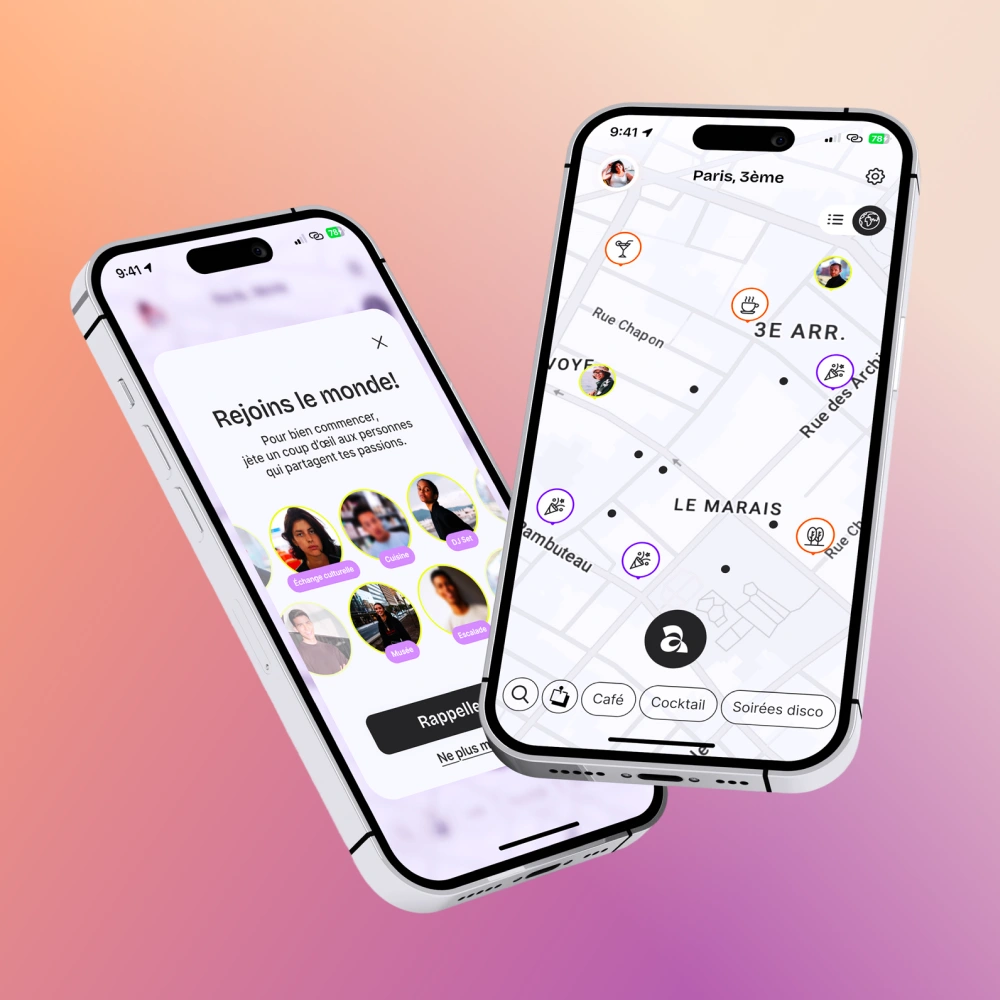
How to adapt to a new environment. Final Project Case Study: apreal
8 min read
In this new story, we will navigate the challenging waters of loneliness. Let’s immerse ourselves in the experience of newcomers through a brief narrative.
Imagine you decide to leave your hometown to pursue personal or professional growth. As you embark on this new chapter, you must build everything from the ground up in an unfamiliar environment.
Initially, your story feels thrilling as you encounter new cultures and navigate in a new environment. However, as the months pass, you realize that the only individuals you have connected with are your colleagues, but they already have a busy schedule to keep. Eager to enjoy your free time and explore your neighbourhood, you struggle to find activities to engage in.
The thought of attending events alone makes you uneasy. You begin to feel a sense of regret and nostalgia for your hometown. For the first time in your life, you are truly experiencing loneliness.
It may evoke some difficult memories, and I apologize for that; however, I assure you that it concludes positively.
I aim to illustrate how everyday small talk has paved the way for social media platforms eager to disrupt conventions.
My name is Romain, and I am pleased to introduce my partner Han. We were both thrilled about this new project.
In this case study, I would like to share details about our partnership with Apreal.
Apreal represents a new generation of social media apps that enable users to break free from their routines by discovering local events and fostering authentic connections. When considering the role of social media in contemporary society, one might naturally ask, “Why tackle social media?”
Recent social media coverage has opened the door for start-up companies willing to reshape the landscape.
We assume that in our generation, social media has become an essential part of our daily lives. Thanks to it, people can handle numerous of information, and knowledge with one click. Despite an overstimulated society, social media does not address the human need for connection.
But why does it not truly succeed in preventing loneliness?
To respond to this, we began our research before meeting the stakeholders.
Initially, we wanted to confirm our first assumptions: “People do not create real connections through their daily activities”, and “Our target users spend most of their free time in bars and parties, where they don’t form new or real connections.”
To expand our research, we focused on understanding why people feel alone. We deepened this area of exploration, which provided us with relevant insights.
Our findings revealed that loneliness, which was once commonly associated with the older generation, has increasingly affected younger people since Covid-19.
Thanks to several articles, we discovered the following insight:
A loneliness epidemic has sparked in the younger generation. 44% of 18–24-year-old respondents claim to feel lonely regularly.
People experiencing life events, such as separation, job loss, or finishing their studies, are more often lonely — source: European Commission, 2022.
Stakeholder Kickoff
Our meeting with the stakeholders provided valuable clarity on the focus of our project. The atmosphere was relaxed, and our collaboration was warmly welcomed.
As a seed-stage company, they have tasked us with envisioning an innovative profile page that aligns with the established conventions. Their feedback pointed out that “Profile pages are often unattractive and provide a poor user experience.”
With this scope in mind, we encountered our first challenge:
How can we align stakeholder expectations with user needs?
We met with numerous client hypotheses, as they appeared to already have a distinct vision for their profile page. However, we were committed to demonstrating that a user experience design strategy could breathe new life into the project.
User investigation
I would like to take a moment to reflect on this stage of the project. It has been both exhausting and somewhat unsettling.
For those unfamiliar with user research, the process of collecting information may not be widely understood. To obtain sufficient insights, we are required to conduct at least seven user interviews and secure 100 survey responses.
Fortunately, we are part of a boot camp with enthusiastic students who are eager to participate in the user interviews. However, we face the challenge of gathering user responses effectively within two days of the survey.
To meet our targets, we truly maximized our resources. We decided to use the team strengths by writing our survey questions in three different languages (Vietnamese, English, and French). Our decision was led by the previous issues met to collect responses. For this specific project, we had the will to attend 100 respondents.
The challenge we faced was to deal with user mistrust. For several years now, we have been harassed by commercial canvassers inviting us to respond to commercial surveys. The result today is a kind of fed-up attitude on the part of users. It seems that they no longer want to take the time to respond to these requests.
After two endless days, we were still not satisfied because we had collected only 70 responses. It was not enough to move on to our next step.
My colleague Han is Vietnamese, naturally, she decided to pass the user survey on a bunch of Vietnamese expat groups. This decision has been beneficial because it provided us with relevant information and the missing respondent that we needed to achieve our goal.
The outcomes of these days of investigation gave us a broad map of user habits and behaviours. Here are our findings :
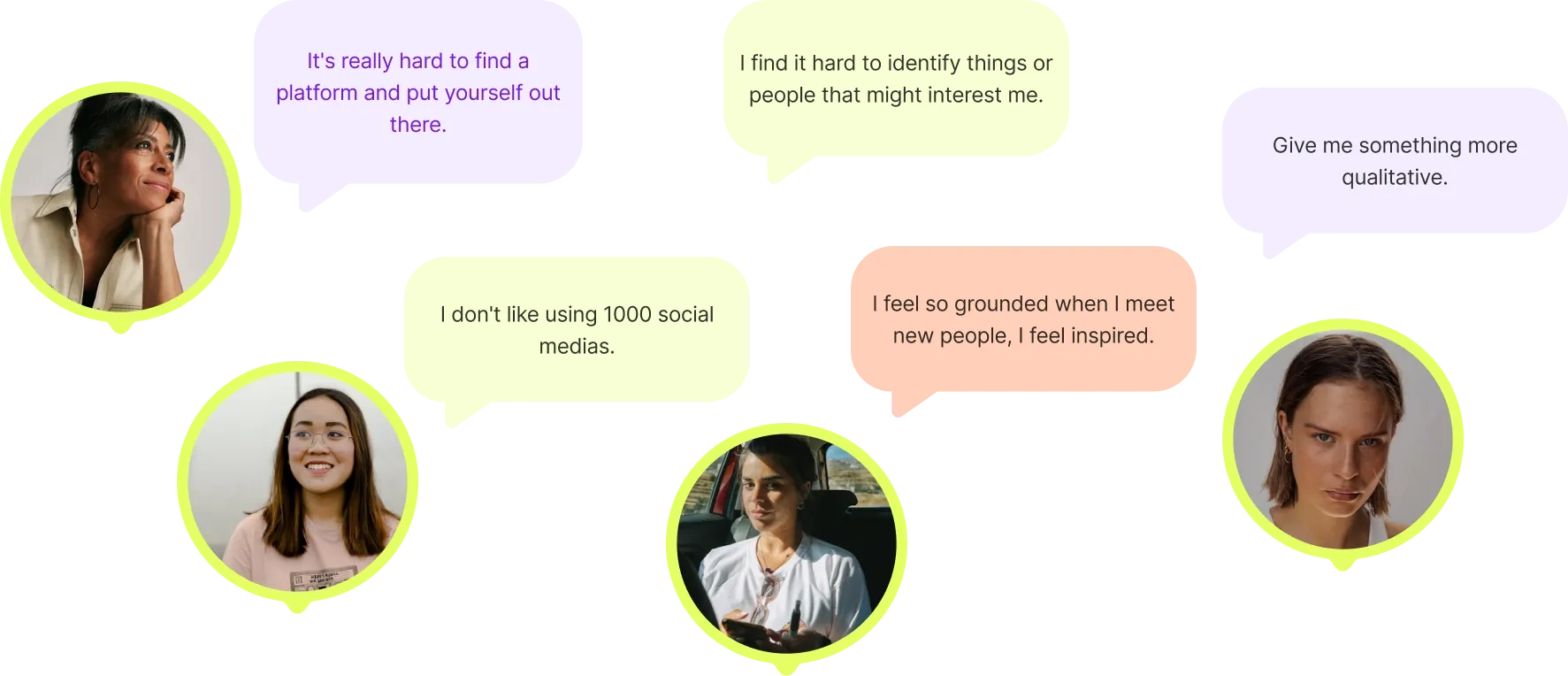
With this data in hand, we started to sketch a User Persona.
User Persona
What exactly is a persona?
The persona is a fictitious representation of an ideal customer, which provides a better understanding of the behaviour and needs of the target.
It involves creating a detailed profile of a fictitious person who embodies the company’s ideal customer.
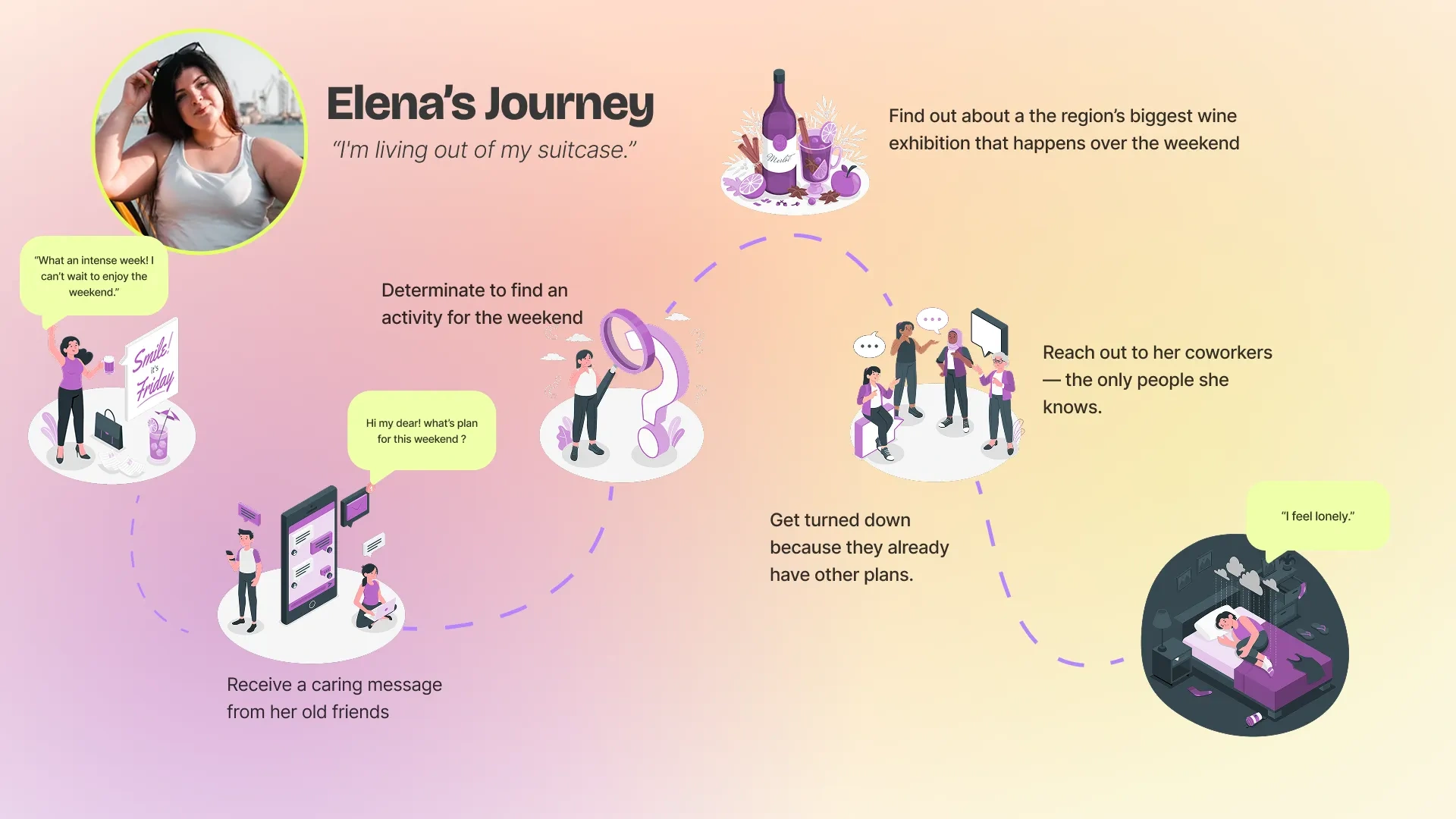
Above, we have created our persona, Elena and here is her journey.
Elena recently moved to Paris. Despite being open and sociable, she struggles to form genuine friendships. She’s tired of small talk and craves deeper connections.
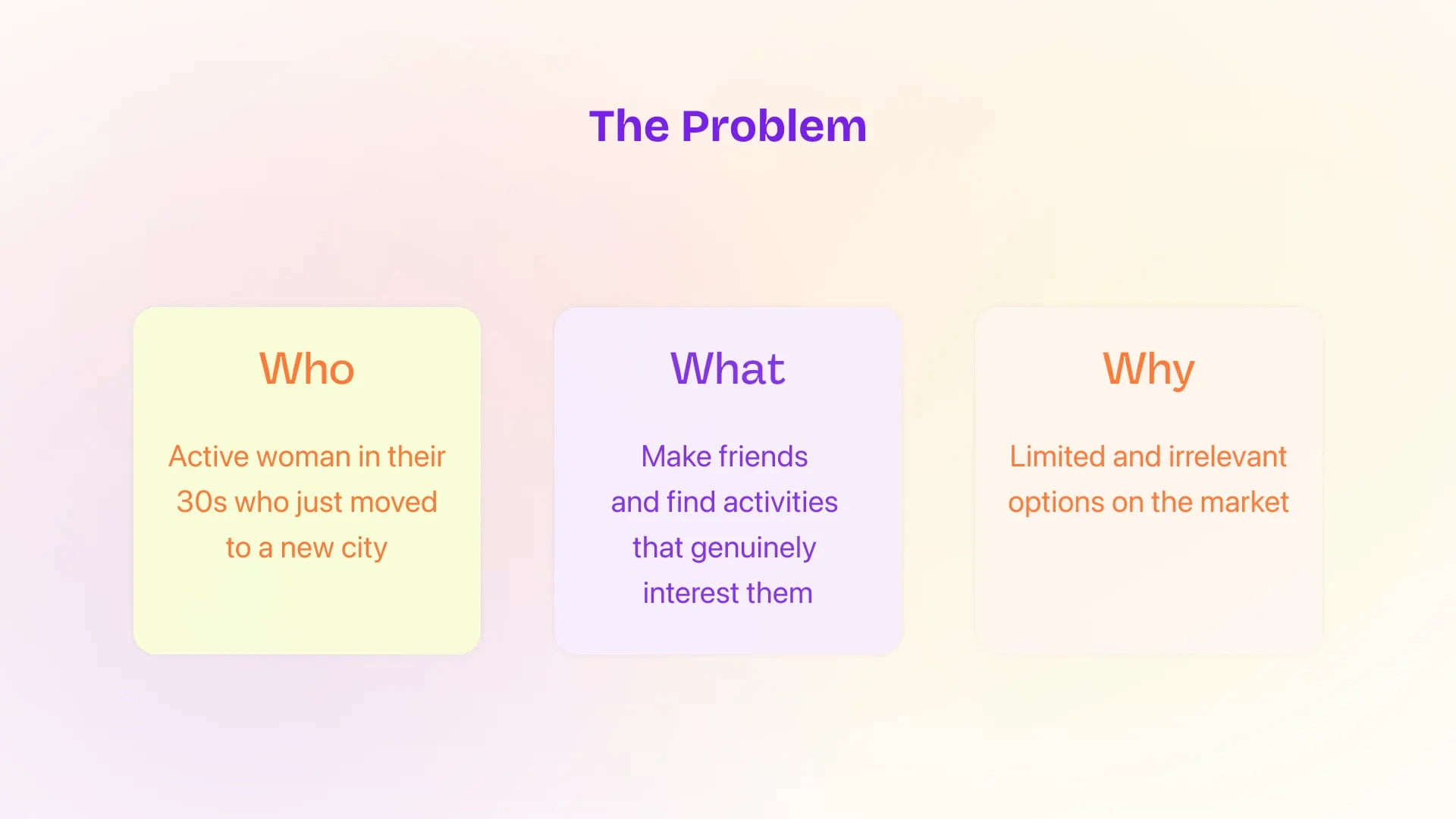
Elena’s journey highlights a challenge many new dwellers face: the struggle to attend events alone and create meaningful new connections. 1By knowing that we established our problem statement.
Ideation
For this step, it was crucial to align the problem statement with our stakeholder requirements. They assigned us the responsibility of developing a profile page aimed at enhancing the adoption rate of their new product.
To respond we started to ideate with the Crazy 8s method expanding into Crazy 32s for the occasion. The objective was to transcend our initial thoughts and thoroughly explore various solutions.
It was important for our small group to discuss findings and determine the key solution through the feature prioritisation process.
Working with constraints was challenging because we had to develop a profile page that was sufficiently appealing to users. Simultaneously, we had to adhere to the existing guidelines established by our stakeholders to ensure consistency with the onboarding process.
We started to create low-fidelity wireframes to quickly move to a concept testing phase.
Concept test learnings
I can’t move forward with this article without emphasising how crucial concept testing has been!
We conducted numerous user tests to evaluate our work and ensure it aligns with user expectations. In light of user feedback, we realised there were significant improvements to be made. Apreal is a comprehensive app designed to address various user challenges. Should we enable users to connect directly through the profile page by displaying potential matches? Would introducing gamification enhance the profile experience? And what about user confidentiality?
We found ourselves at a crossroads, grappling with the challenge of prioritising the content for the profile page.
To address this situation, we revised our user journey. It was essential to alter our flow by facilitating access to both external and internal user profiles. We linked the homepage to users’ inner profiles by introducing a pop-up notification that enabled newcomers to connect with others. Additionally, we restructured the user profile for improved clarity. To evaluate this updated version, we conducted A/B testing.
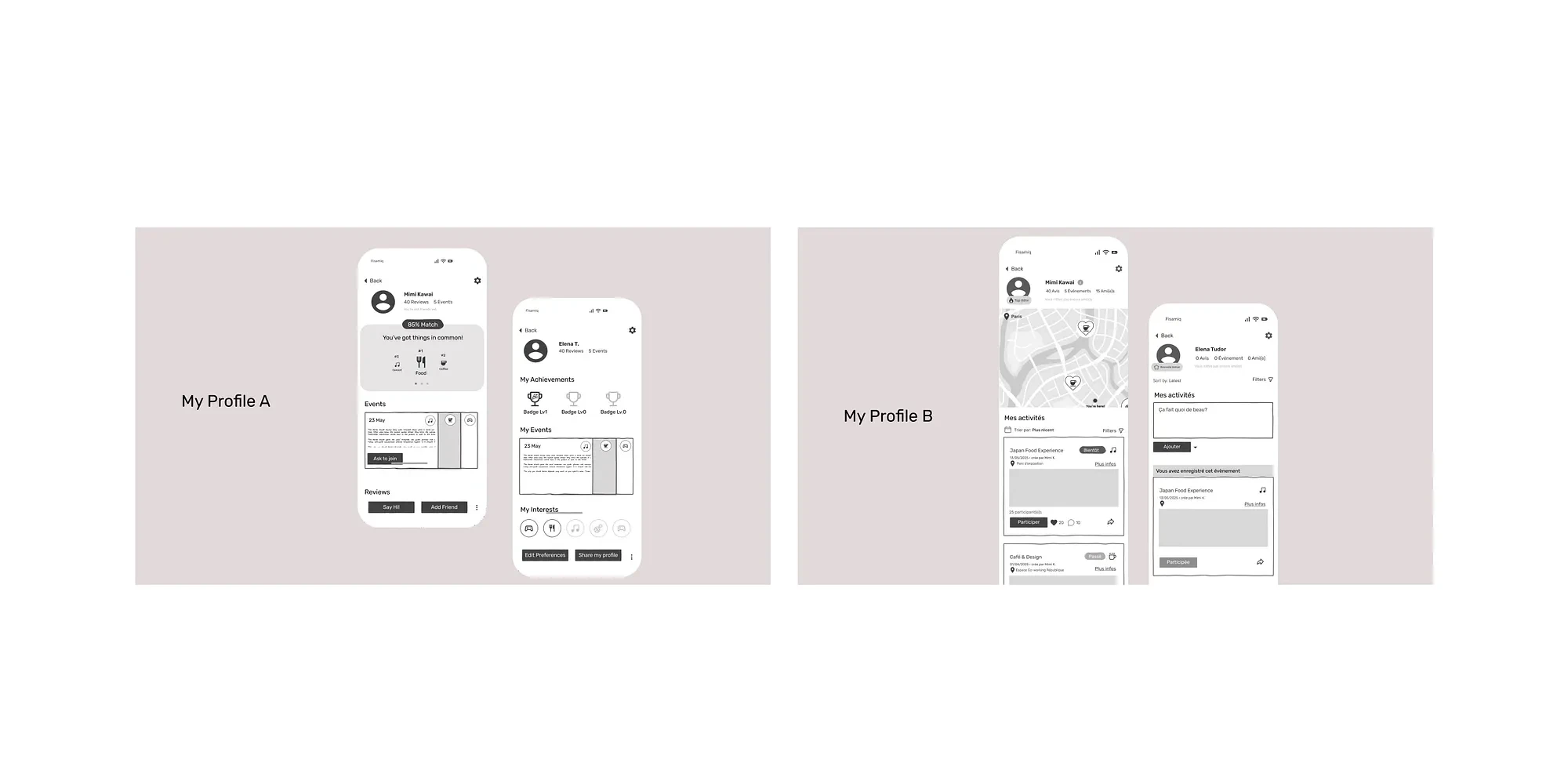
Above, is our prototype. Leading A/B testing proved to be an invaluable tool in validating our high-fidelity prototype. To provide some context, we presented two versions of our work and asked users to select the one they found most appealing. The results helped us align our solutions with user preferences and expectations.
Throughout this project, we aimed to thoughtfully leverage our strengths by developing an innovative solution that reflects both user desires and stakeholder requirements.
To guide you through our solution, let me take you through this scenario:
“You just finished onboarding. Now, you’re on the homepage, looking at a paris’s map, wondering where to start. That’s when the app suggests you some profile of people who share your interests!
You notice a girl who’s interested in Cultural Exchange. Thanks to the profile picture she looks friendly — so let’s go deeper on her profile!
Her name is Fabienne. She also loves rock climbing and left many reviews on the app. It’s seems she is active on the app.
You’re excited to discover her favourite places! But for now, let’s send her a message:
📩 “Hello Fabienne, nice to meet you! I saw that you’re into rock climbing. Do you have any good spots to recommend? I’m new to the city and I don’t know many people yet. :)”
…And just like that, you’ve taken the first step toward making a new friend! 🎉
Next, let’s check out your profile!
Right now, it’s empty — but that’s exciting! As you explore the city, you’ll start adding your favourite places and build your map of Paris. That’s reflect your personality.
And if you ever feel overwhelmed and need a break from the app, no worries! You can always go to your profile settings and turn on the holiday Mode”.
Profile Page prototype version High fidelity
Key learning
The Apreal collaboration allowed us to work in real-world conditions, providing an opportunity to empathize with both user and stakeholder expectations, which has been highly instructive. During the research interviews, we encountered user mistrust. Nowadays, it’s challenging to conduct user surveys and one-on-one interviews, as many individuals struggle to find the time to participate.
Although it may not have been our primary focus, an interview with a retired informatics engineer proved to be a pivotal moment in the final phase of our project. The insights gathered from this discussion unexpectedly guided us toward our final design. He offered valuable information that clarified our understanding and refocused our attention on the user’s needs.
To conclude this exercise, I would like to express my gratitude to the Apreal team for their dedication and support over these past two weeks. I would also like to extend my heartfelt thanks to my wonderful partner, Han Nguyen. I truly admire her patience and her willingness to share her expertise. I am proud to announce that, thanks to the Apreal project, we secured the second place in the final project presentation.
Like this project
Posted Nov 10, 2025
Developed an innovative profile page for Apreal's social media app.
Likes
0
Views
6