Built with Framer
Personal Hub Framer Website Development for Sabrina Barbara

Blessing Adewale


Sabrina
A Personal Hub for a Multi-Discipline Practitioner With Four Rooms and One Voice
The Brief
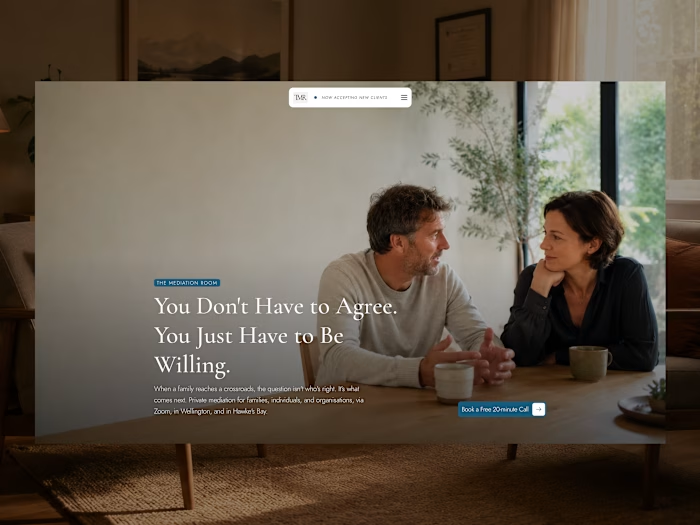
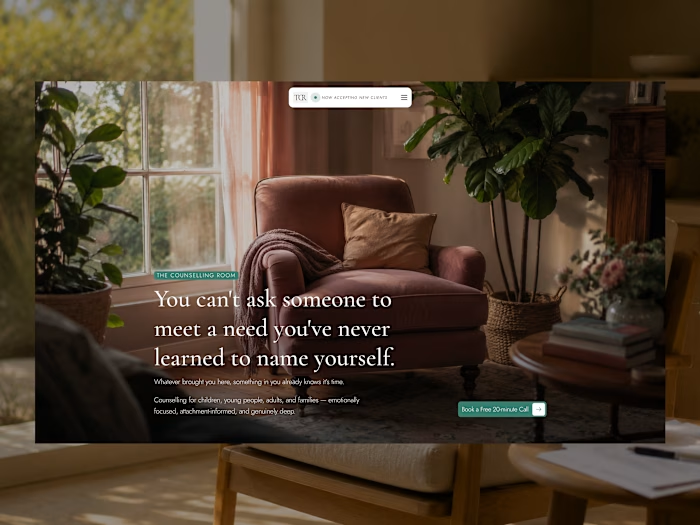
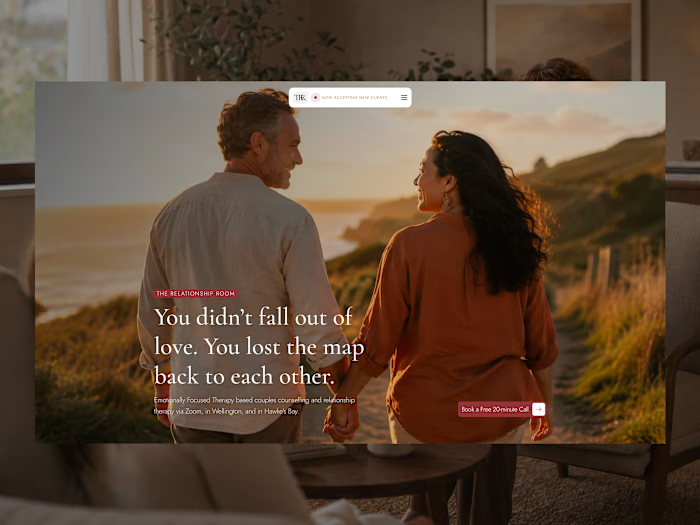
Sabrina Barbara is a counsellor, accredited mediator, and EFT-trained relationship therapist based in Wellington and Hawke's Bay, New Zealand. She operates three distinct practice sites — TheRelationshipRoom.nz, TheCounsellingRoom.nz, and TheMediationRoom.nz — each with its own identity and audience.
The fourth site needed to be something different. Not a services site. A personal hub — one place that told Sabrina's full story and routed visitors confidently to wherever they needed to go. Single scrolling page, no CMS, no sub-navigation. The practitioner behind the practice, not the practice itself.
The Challenges
Routing without overwhelming. Visitors could need any one of three very different services — or have no idea which one they need at all. The site had to make that uncertainty feel safe and give each visitor a clear next step without making them work for it.
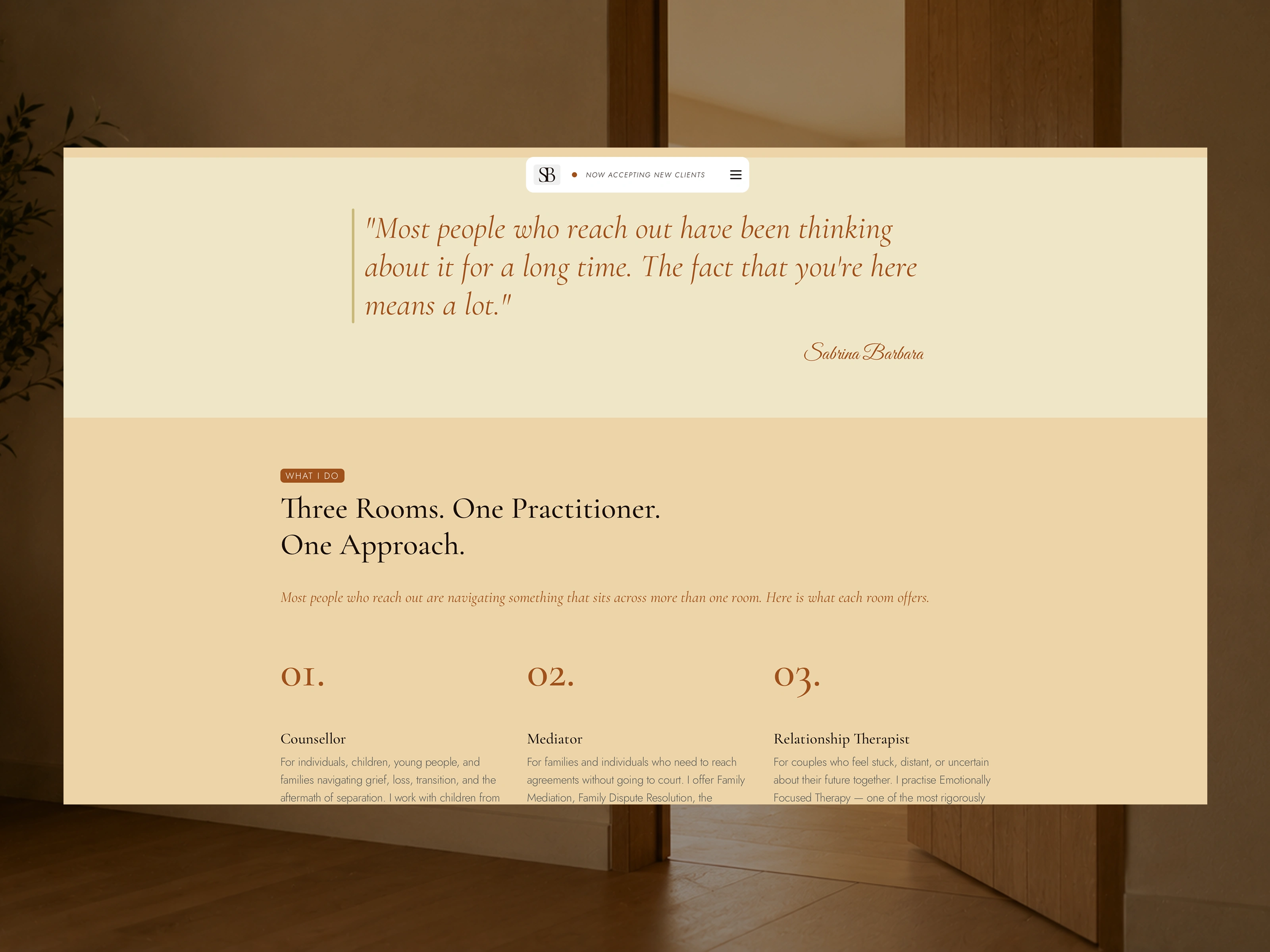
One person, three distinct roles. Counsellor, mediator, and relationship therapist are three separate professional identities. The site needed to hold all three with equal clarity without flattening them into a generic blur.
Personal without being indulgent. Sabrina's personal history — family separation, her own marriage and separation, becoming a single mother — is directly relevant to her practice. The writing needed to be honest and specific without tipping into oversharing.
My Approach
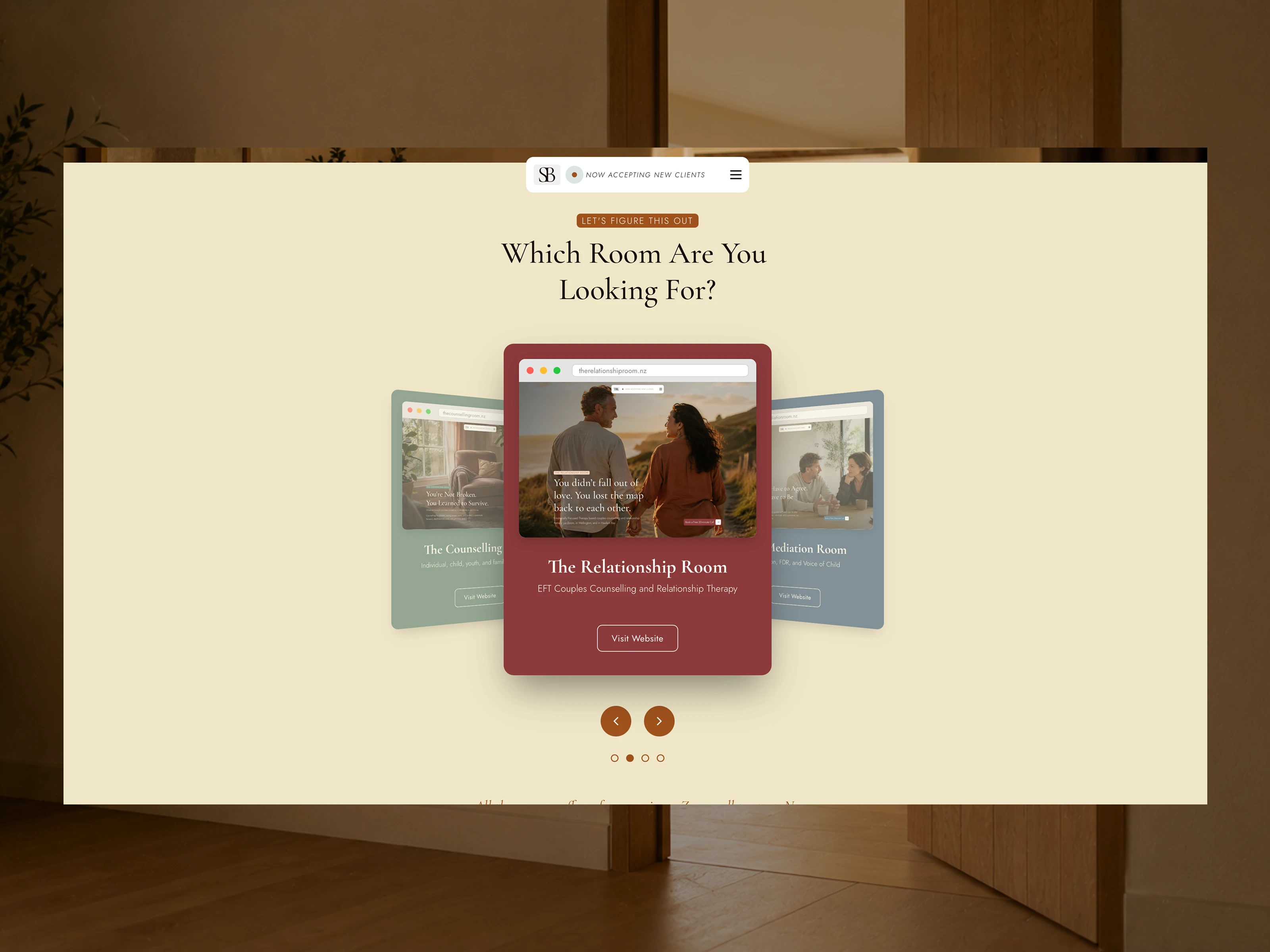
Routing cards as the primary navigation device. Four large cards — one per destination, each in the primary colour of its target site. Headlines written in the visitor's own voice: "Something in me needs support." "My relationship needs help." "I'm not sure where to start." The fourth card gives uncertainty its own space and routes directly to a free 20-minute call.
The origin story as the trust anchor. Rather than a credentials list, the about section opens with Sabrina's personal experience of separation and loss — the slow accumulation of understanding that comes from living inside the complexity she now works with professionally. The credentials follow, but they land differently once the reader knows the person behind them.
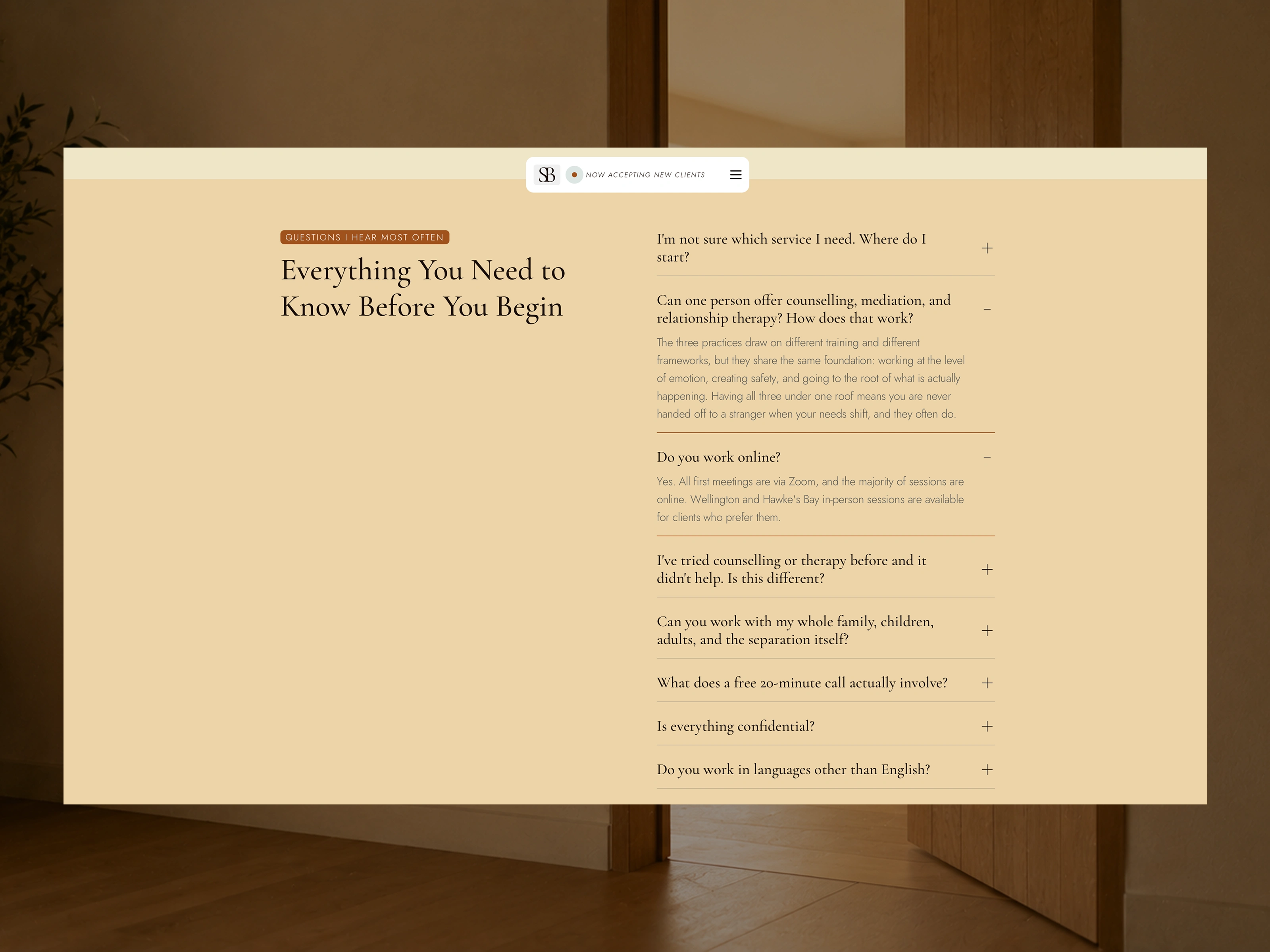
Copy written from the visitor's emotional reality outward. The FAQ answers the questions people are actually embarrassed to ask. "Can one person really offer all three?" "I've tried therapy before and it didn't help." "What does a free 20-minute call actually involve?" Each answer is warm, direct, and honest about what to expect.
What Was Built
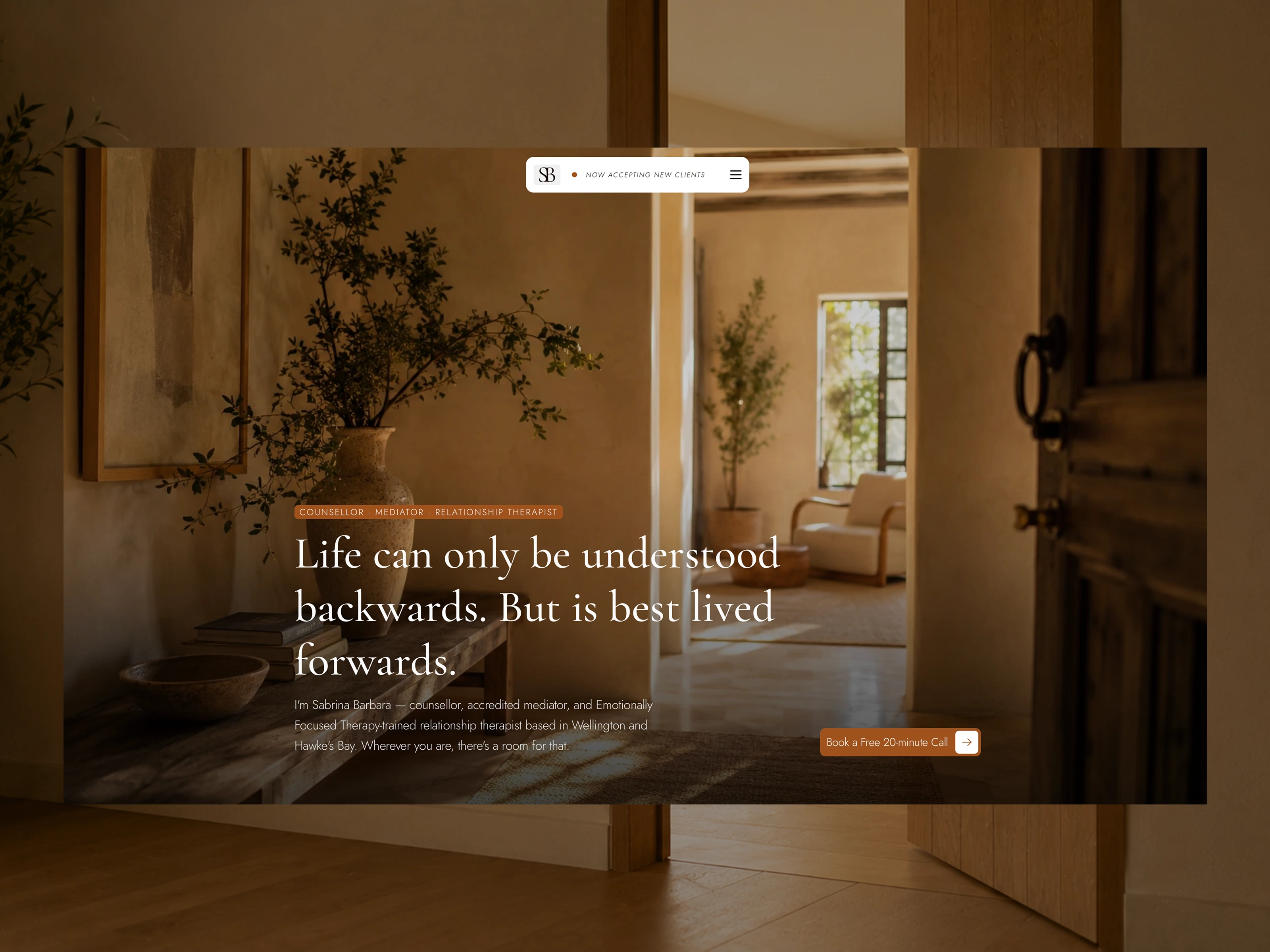
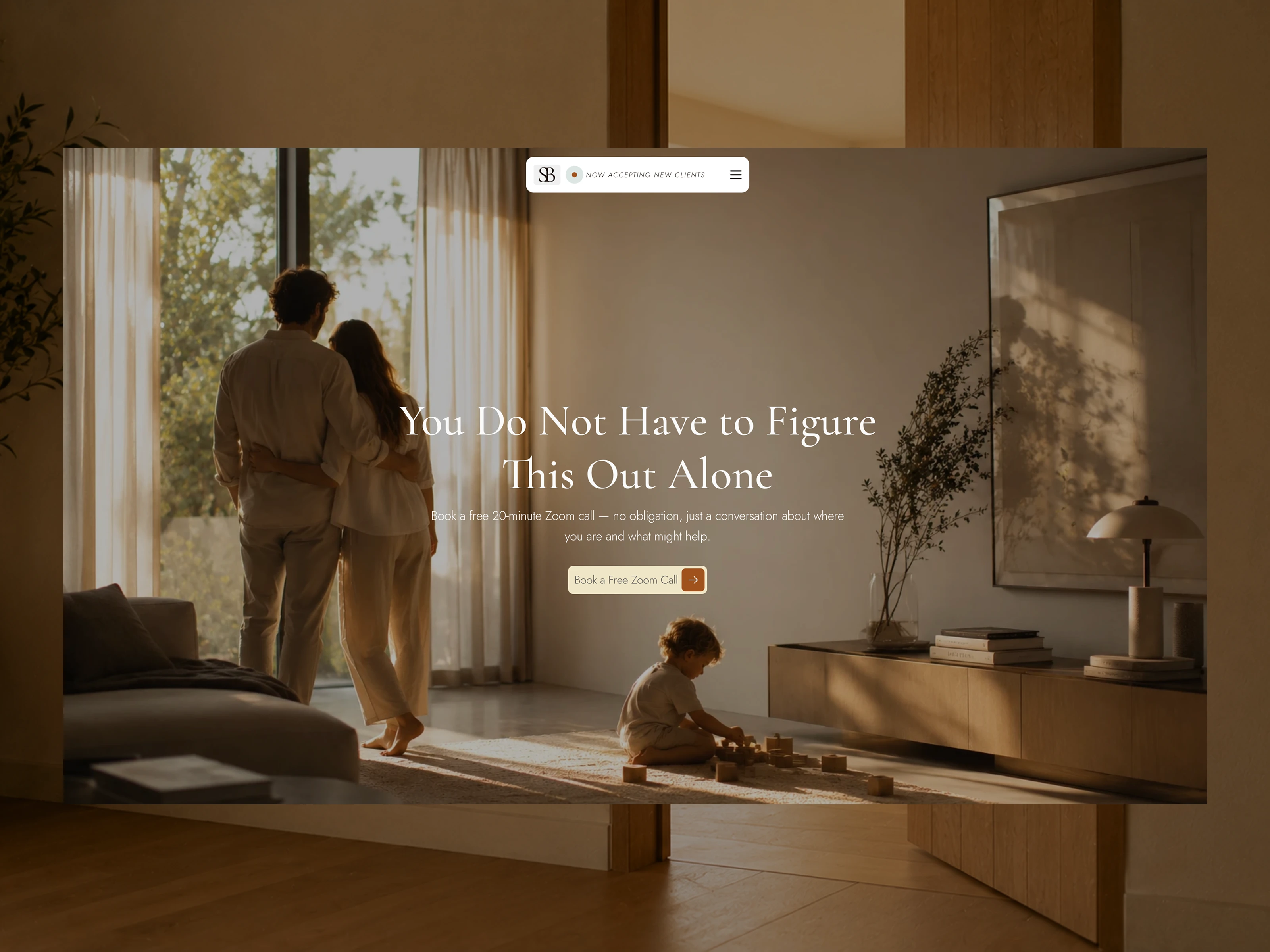
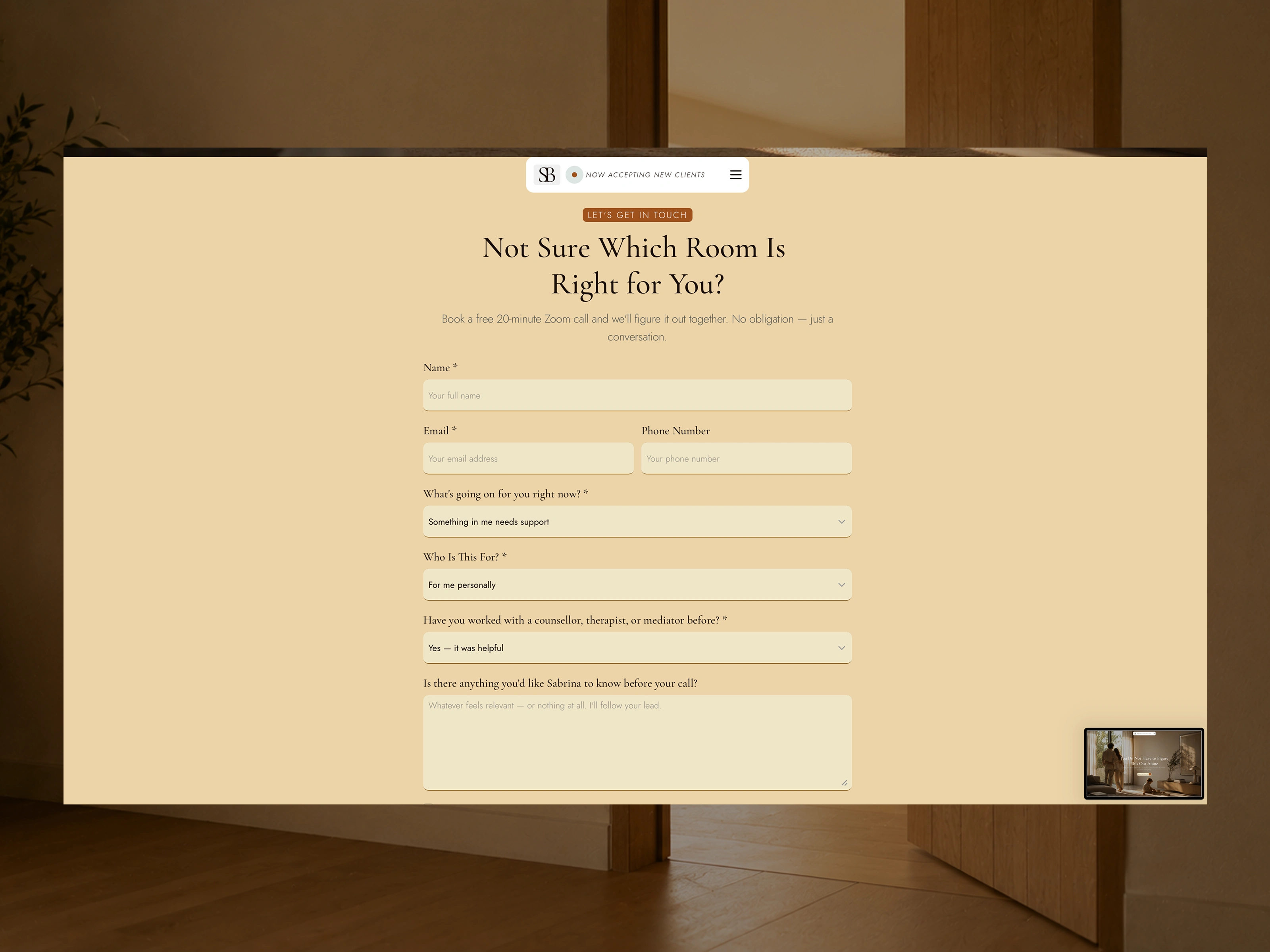
Single scrolling page — ten sections: announcement bar, hero with word-by-word headline reveal, four routing cards, origin story with animated stats counters and pull quote, What I Do cards, credentials with logo strip, Google Reviews widget, nine-card static journal grid, FAQ accordion, pre-footer CTA, five-question contact form, and four-column footer.
Key features:
Four routing cards in destination site colours — visual continuity across the ecosystem
Animated stats strip counting up from zero on scroll-enter
Pull quote with caramel left border draw-up animation
Framer native contact form — no auto-reply, warm on-screen confirmation only
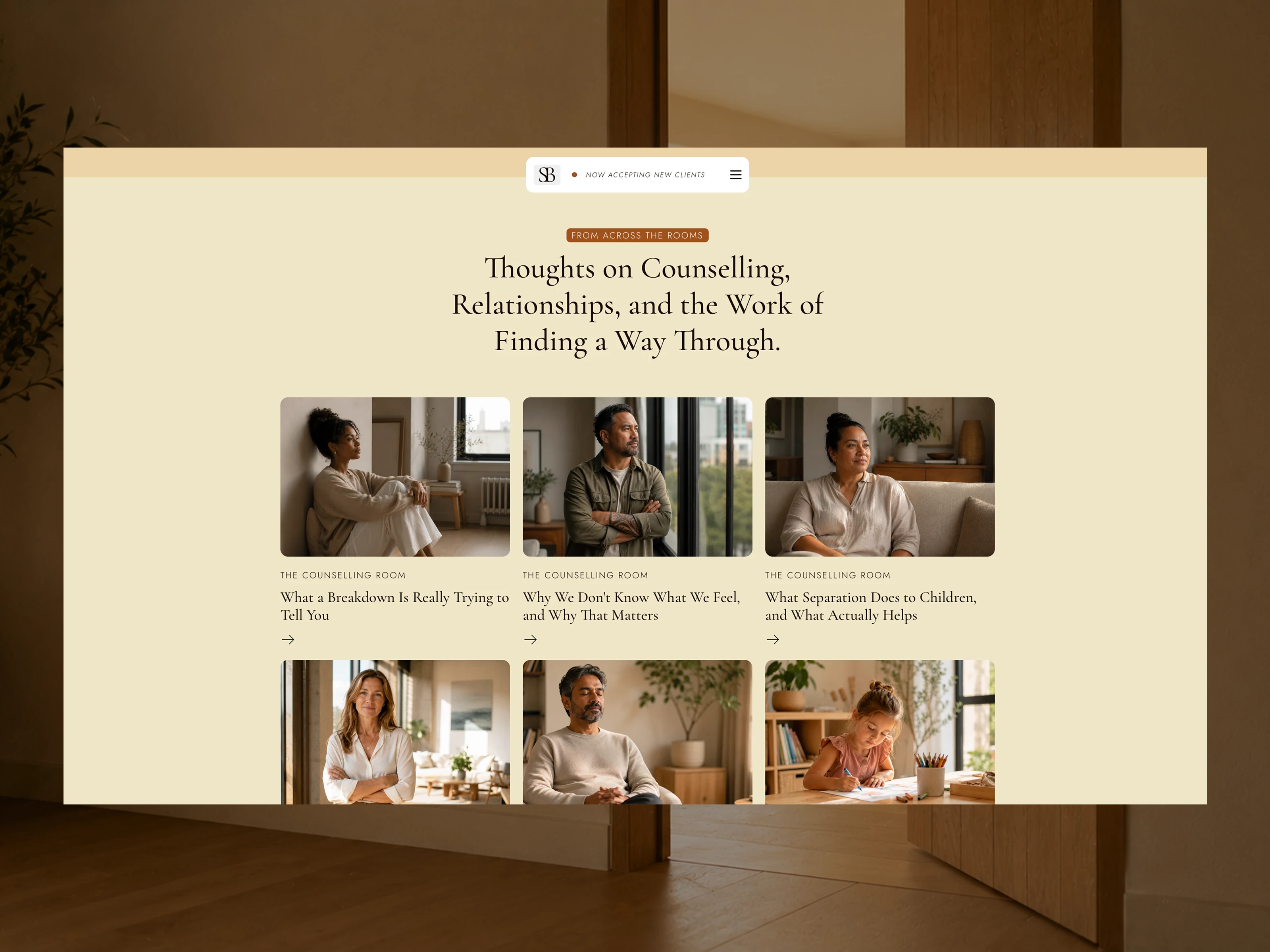
Static journal grid — nine cards Sabrina updates directly in Framer, no CMS required
Editable portrait image block — Sabrina swaps her own photo in August 2026 without touching the design
Full animation suite shared across all four sites
Full SEO setup across all pages
Key Features
The routing cards do the job of an entire navigation system. The second thing a visitor sees after the hero is four cards written in their emotional language. Using each destination site's primary colour as the card background means a visitor who clicks through to TheRelationshipRoom.nz arrives somewhere that feels visually connected to the card they just tapped — a small but meaningful moment of continuity.
A personal story told with editorial restraint. The origin story contains some of the most personal copy on any of the four sites — specific enough to feel real, restrained enough to keep the focus on the visitor. The pull quote that closes the section does the emotional work in a single line: "Most people who reach out have been thinking about it for a long time. The fact that you're here means something."
Built to hand off to a non-technical client. Every editable element — journal cards, portrait image block, routing card links — is structured so Sabrina can make changes directly in Framer without touching the design or breaking the layout.
Four sites. One design system. The component architecture, animation logic, and shared accent colours mean a visitor moving across all four sites experiences one coherent practice — not four separate websites bolted together.
The Result
Sabrina.co.nz introduces the person before the services, routes visitors by emotional reality rather than service category, and holds three distinct professional identities under one warm, unhurried presence. It does what only a personal hub can do — give the visitor a sense of who they are about to work with, and make them feel confident that wherever they end up, they are in the right hands.
What This Means for You
If you run a therapy, counselling, or specialist practice with more than one service stream or audience type, a personal hub site can do work that no individual services page can — one place that tells your story, holds your full range, and gives every visitor a confident next step.
Project Shots
Ready to build a website that carries the full weight of your practice?
Let's talk about what's possible.
Like this project
Posted Jul 17, 2026
Personal hub site for a multi-discipline practitioner — single scrolling page routing visitors across a four-site therapy and mediation ecosystem.
Likes
3
Views
24