End-to-end design of a Financial Planning and budgeting platform

Rain Lieberman

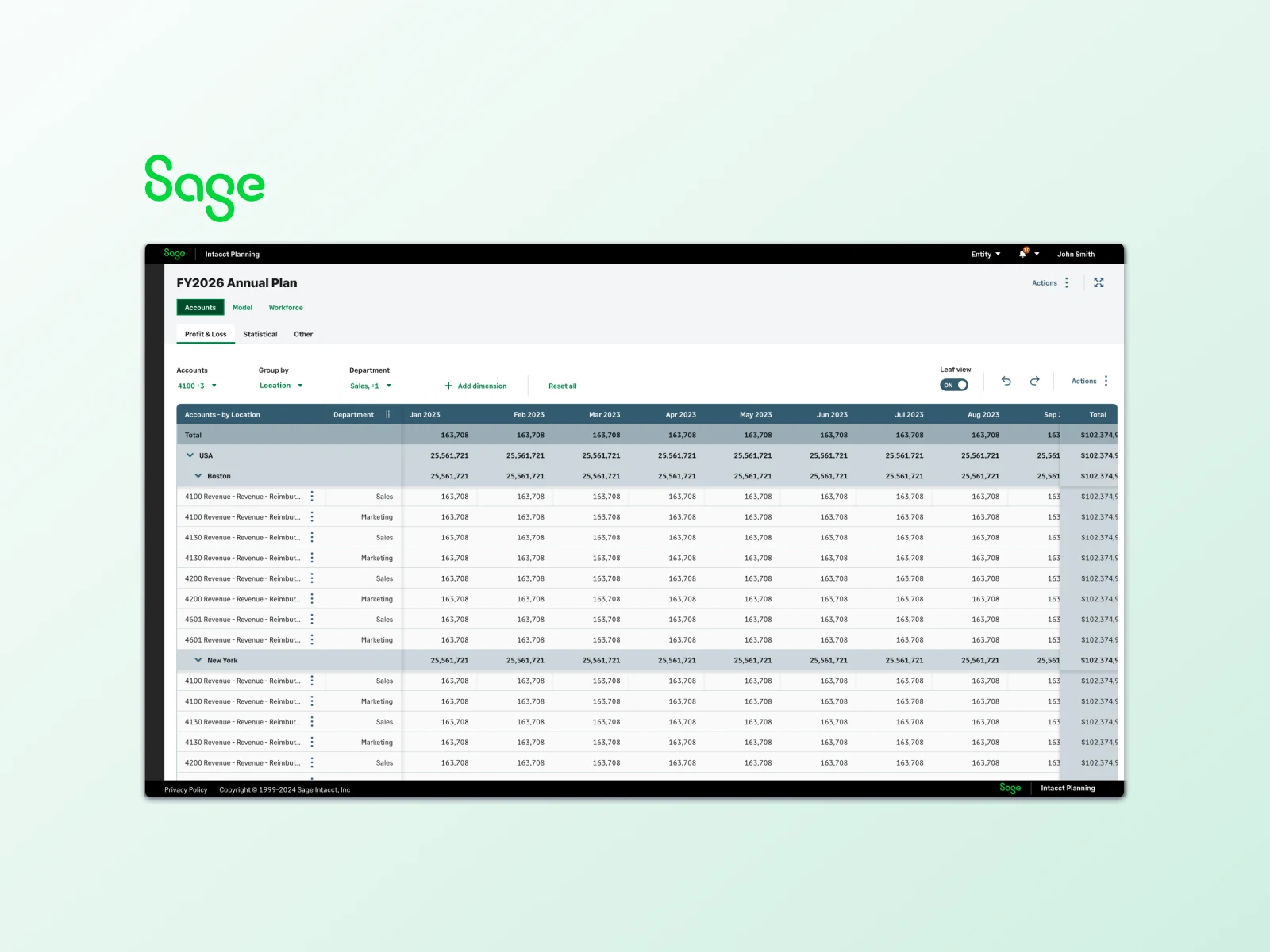
Making complex financial planning easier to build
Financial planning depends on interconnected structures, models, drivers, formulas, and versions. Yet many planning tools treat this complexity as a collection of disconnected tables and text fields.
Formula creation was a particularly painful example. Users had to write expressions from memory, understand account and dimension relationships, and discover errors only after applying formulas to live data. As models became more complex, logic became harder to trace, audit, and maintain.
The goal was not to reduce the sophistication of the planning model. It was to make complex logic buildable, readable, and reliable at scale.
Rethinking the planning architecture
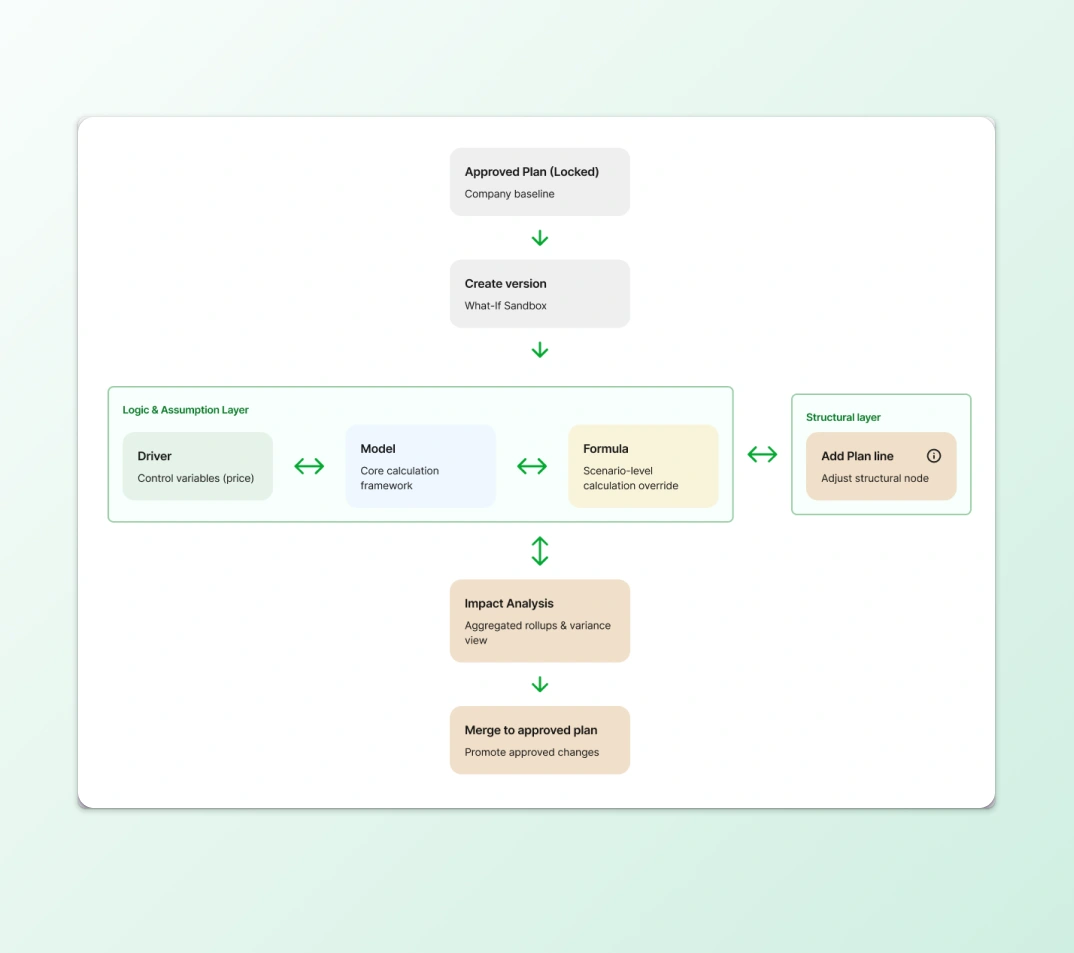
The underlying problem extended beyond formulas. In the legacy experience, plan structure, modeling logic, drivers, and adjustments were tightly coupled. Changes in one area could affect another, while important logic became fragmented across individual plan lines.
We reorganised the experience into five distinct but connected layers:
Plan Structure
Models
Drivers
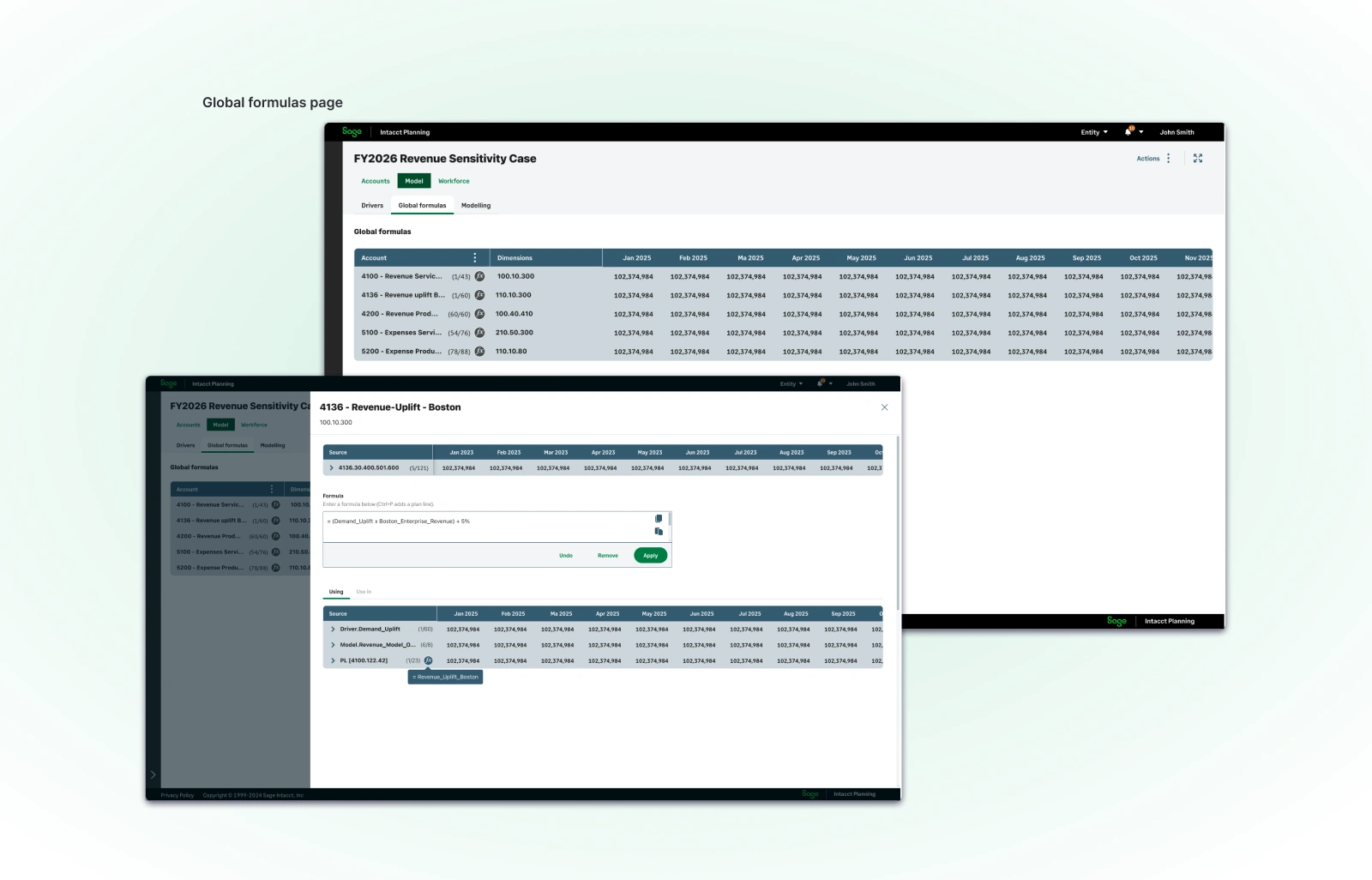
Global Formulas
Versions
Each layer could now be managed independently while remaining connected through a shared data model. This made the system easier to understand, modify, and scale without forcing users to reconstruct dependent logic whenever the plan changed.
Turning formula writing into guided assembly
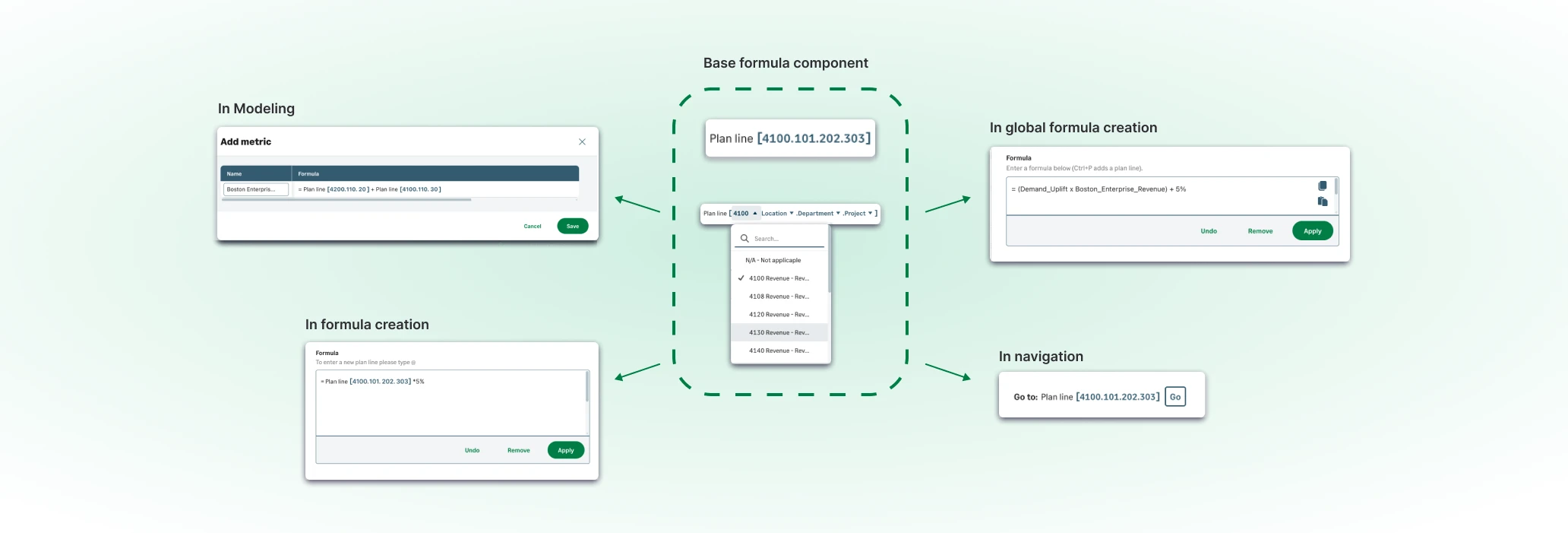
Within this architecture, formulas became a first-class layer rather than logic buried inside individual plan lines.
I designed a reusable formula component that replaced free-text authoring with a guided assembly flow. Users begin with a plan line, select a valid account, and progressively add the relevant dimensions, operators, and additional logic.
At every stage, the interface reflects the formula’s structure back to the user. Available choices respond to the underlying data model, so only valid accounts and dimensions can be selected. Instead of asking users to remember syntax and debug invalid combinations later, the system prevents those combinations from being created.
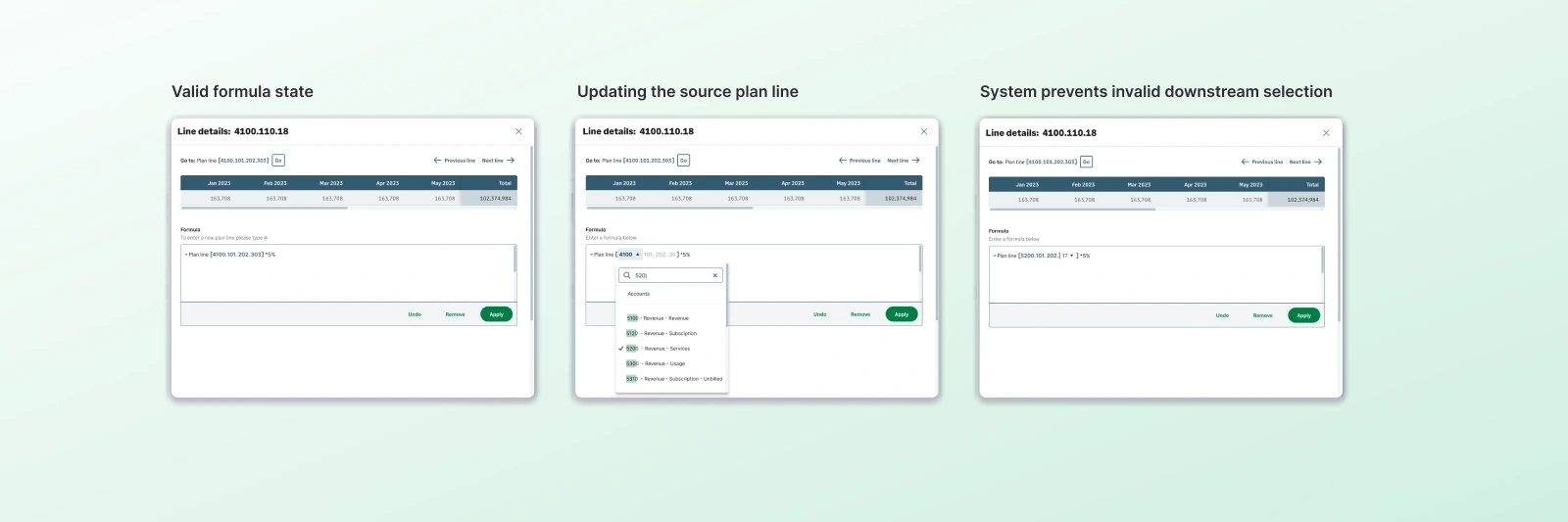
The same component could support formula creation wherever this logic appeared across the product. This established one consistent interaction model instead of allowing separate screens to develop their own variations.

Extending the design system
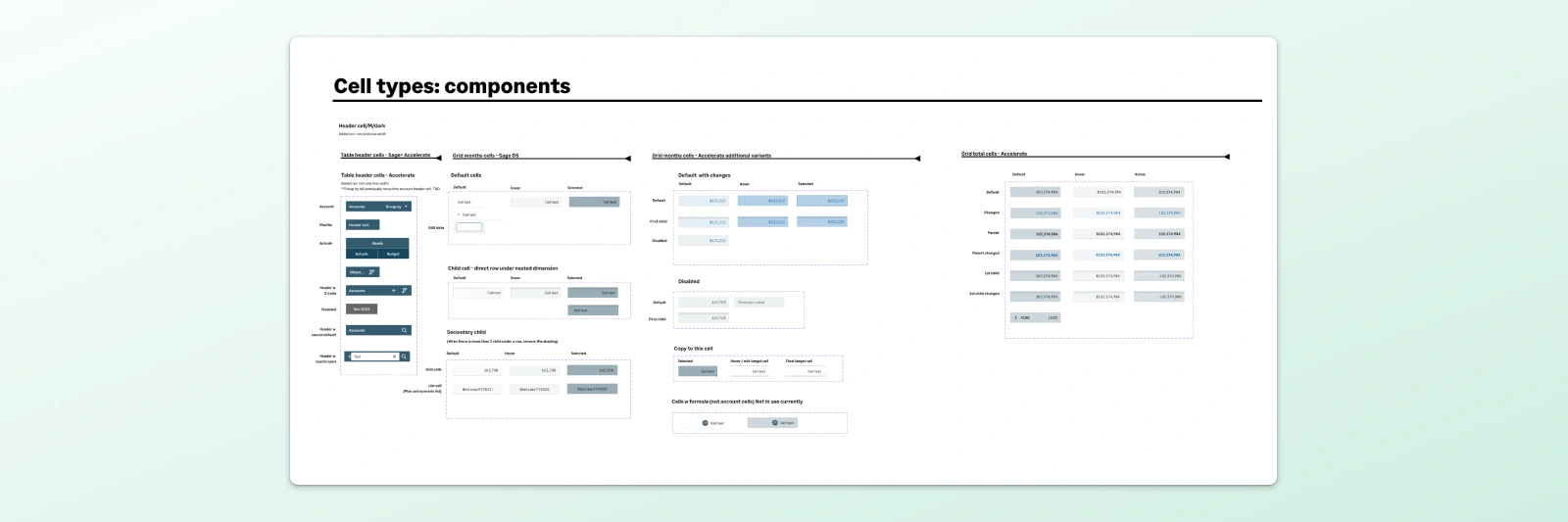
Supporting this level of complexity also required expanding the existing Sage design system. Intacct Planning was one of the most data-heavy products in the suite, with more component states, grid behaviours, and interaction patterns than the base system covered.
I introduced more component-driven, token-based workflows and designed the grid cells, formula states, validation patterns, and interactions needed for the planning product. These additions gave design and engineering a reusable foundation for building complex workflows consistently, rather than solving each screen independently.
Results
This work created:
A clearer separation between planning structure and planning logic
A reusable formula-building pattern across the product
Earlier validation and fewer opportunities to create invalid logic
More readable and auditable formulas
A stronger design-system foundation for data-heavy planning workflows
Greater consistency between design and engineering implementation
Like this project
Posted Sep 17, 2026
Creating a new finance planning architecture and design for large enterprise, improving usability, architecture and user flows.