
Context
As a consultant (through Bounteous), I led UX for a global hospitality client's customer service platform migration to Amazon Connect. The work spanned IA, user flows, wireframes, final mocks, and a Figma component library.
Problem
The client's existing customer service system lacked the AI capabilities needed to reduce guest chat wait times and improve satisfaction. A platform migration was required, but multiple companies and time zones made alignment difficult.
Options considered
Extend the existing system with limited AI bolt-ons, or migrate fully to Amazon Connect to unlock advanced AI capabilities, including Amazon Q for unknown responses and bot-to-agent handoffs. The migration was the only path to a meaningful reduction in wait times.
Trade-offs
Full migration introduced scope risk on a compressed timeline. I used gap analysis exercises to align stakeholders across organizations on required capabilities before any design work began, which reduced late-stage rework.
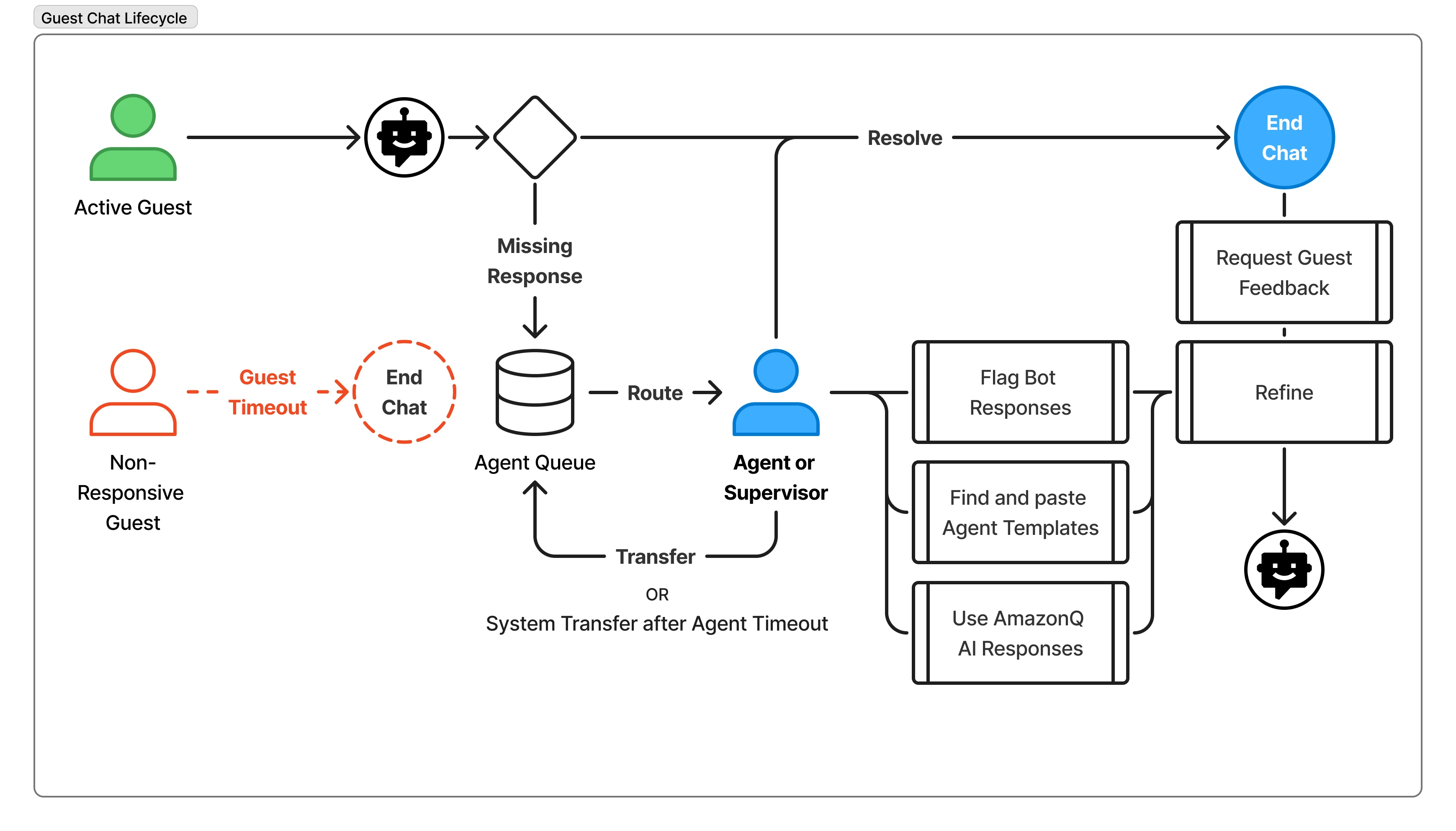
Agent-facing chat capabilities
Manage multiple guest chats
Complete or transfer chats
Stop receiving new chats
Notifications
Guest reservation details
Non-English translations
Search and paste known responses
Amazon Q AI for unknown responses
Flag chatbot responses for AI training
Outcome
Delivered user flows, wireframes, and a Figma component library that let developers build and deploy the right capabilities, reducing SMS chat resolution time by 1–2 minutes per interaction.
What I'd do next
Run a post-launch review with stakeholders across the participating companies to check whether the gap analysis captured all required capabilities, and use any gaps found to refine cross-company alignment for future milestones.
Full case study: https://sites.google.com/view/port4ward/work/reduce-chat-wait-times
0 likes · 0 views · Nov 12, 2026
UX for global hospitality: gap analysis, user flows, and a Figma component library for AI-assisted agent chat. Wait times fell by 1–2 minutes.
