HR Software for Staffing Agencies

Anastasiia Binsted


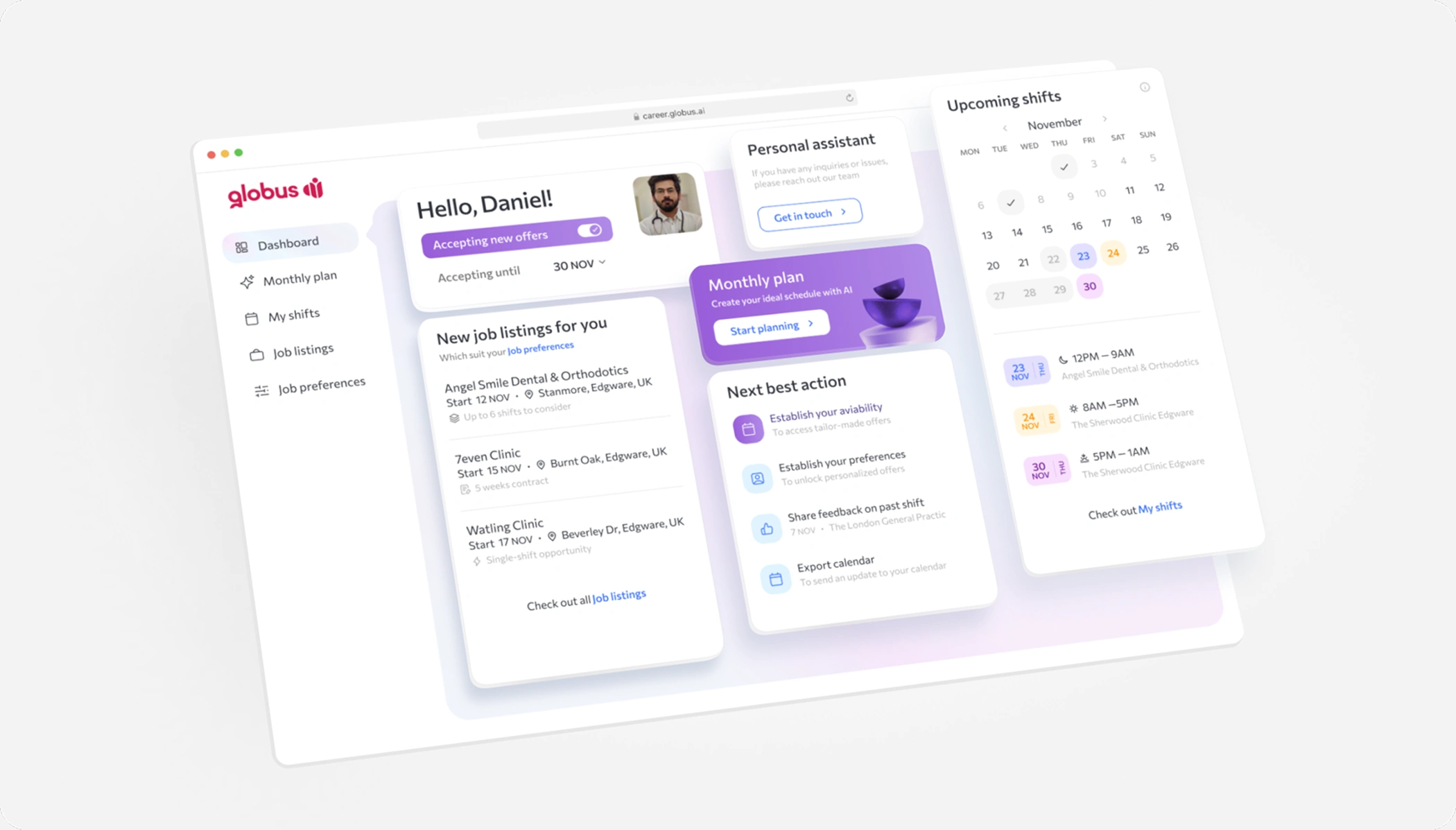
An AI-powered HR platform that streamlines staffing agency operations through intelligent candidate matching and automated workflows.
This case study highlights a team project I worked on during my 4-month internship at Globus.ai in 2023. As part of a design intern group, I focused on understanding shift-based workers by conducting user interviews, identifying key issues, and forming hypotheses for solutions. In addition to my design duties, I took on managerial tasks to keep our work on track.
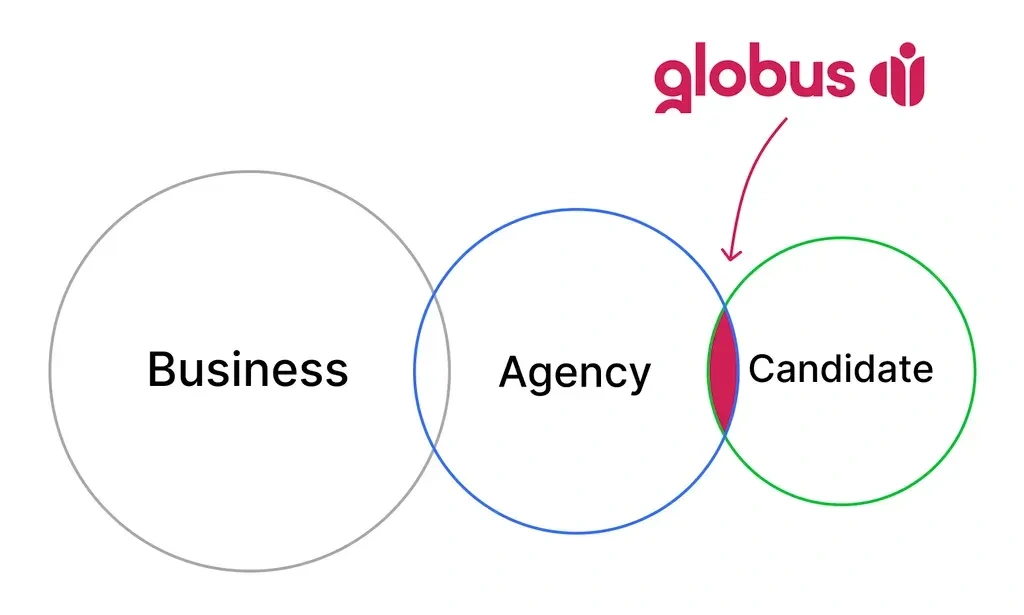
Globus.ai is a SaaS platform for recruitment agencies in the healthcare sector (primarily in Scandinavia), positioned between agencies and candidates to streamline their interactions. Its focus is on high-volume shift hiring. Especially important given the strong demand for medical staff and the appeal of flexible, higher-paying shift work. By optimizing the entire hiring pipeline and boosting candidate engagement, Globus aims to make recruitment more efficient for everyone involved.
Agencies on Globus have powerful tools such as a web application, an AI assistant, and more, to reach out to candidates. However, candidates themselves have almost no dedicated interface. They only get emails, SMS, or phone calls. This results in such a problems:
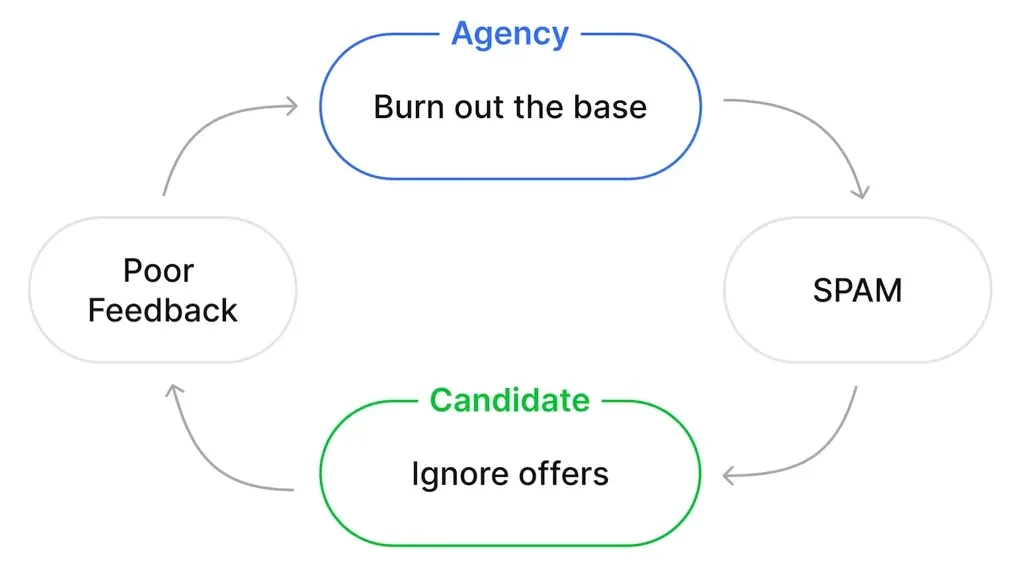
Spam Overload: Candidates face a barrage of irrelevant job offers, leading to a spam-like experience.
Feedback Hurdles: Providing feedback is challenging, hindering effective communication.
Motivational Disconnect: Candidates lack motivation to update their status, resulting in offer ignorance.
Mental Health and Burnout: Half of NHS doctors in the UK are struggling with mental health problems. 77% reported burnout, and 73% experienced anxiety.
Financial Struggles: Young doctors face challenges with low wages. 45% couldn't afford rent or a mortgage; 50% had difficulties paying for heating and electricity. They are forced to take extra shifts. Working 12-hour shifts without breaks.
Feedback Vacuum: Agencies struggle to receive feedback, hindering improvement.
Preference Blindness: Lack of candidate preferences and status information leads to indiscriminate spam.
Spam Conundrum: Indiscriminate mailing negatively impacts the candidate database and diminishes its value.
This creates a vicious cycle. Without understanding candidates needs, agencies continue blasting their entire database and burn out valuable leads. The poor candidate experience reduces Globus's value for agencies — and that's the core problem we needed to solve.
Conducting 19 in-depth interviews — 8 with agents and HRs, 11 with candidates — offered crucial insights into recruitment dynamics. These conversations provided nuanced perspectives, informing targeted improvements for our platform to better serve both recruiters and candidates.
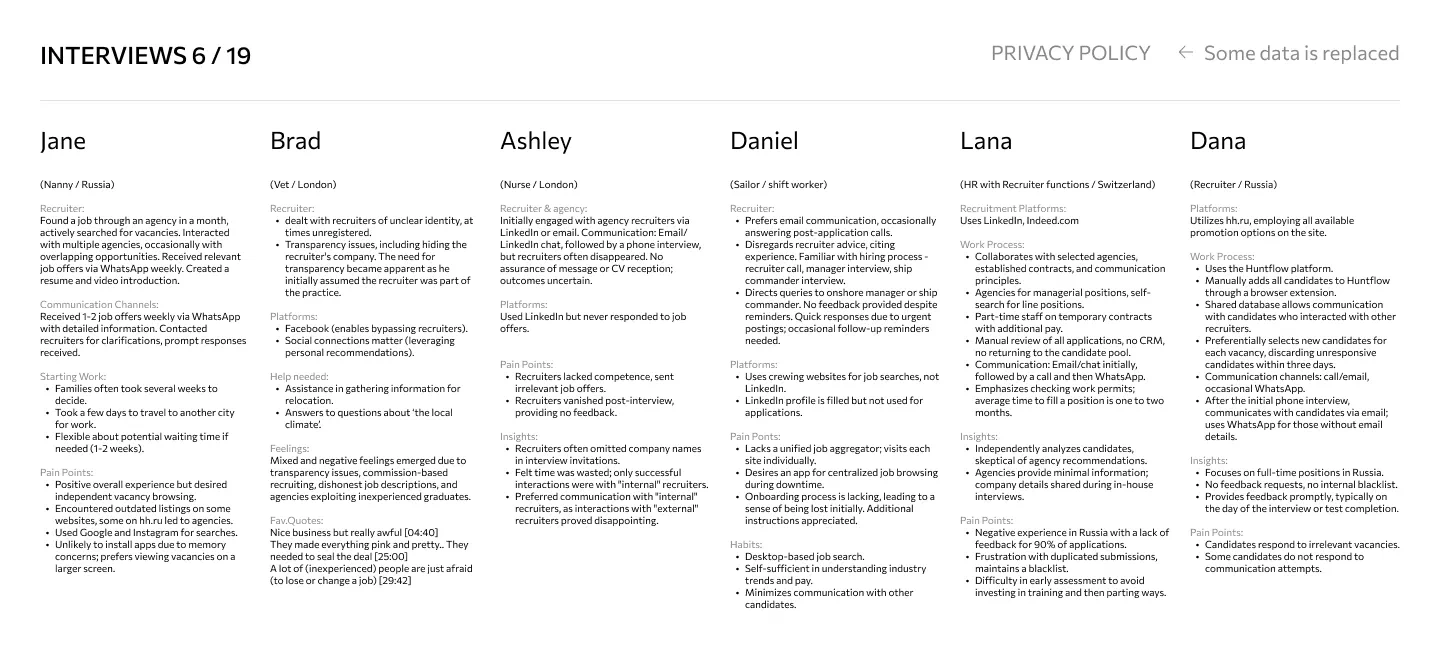
In 19 in-depth interviews, we extensively examined diverse recruitment facets, including platforms, communication channels, industry practices, alternative job search methods, corporate dynamics, expatriate support, and the transition to part-time and freelance work.
Unpredictable Schedules: Candidates require a convenient schedule. Elevator workers have an unpredictable schedule, making it challenging to plan work and rest times, contributing to burnout.
Recruitment Precision: A conflicting situation arises where candidates want to receive relevant job offers, but recruiters must strike a balance, avoiding excessive persistence and proposing jobs that align with candidate preferences.
Information Gap: Candidates face a lack of information about job vacancies, new workplaces, and job specifics, leading to poor onboarding experiences.
Intrusive Communication: There is a need for convenient communication channels with recruiters, without being overly intrusive.
We also examined diverse recruitment facets, including platforms, communication channels, industry practices, alternative job search methods, corporate dynamics, expatriate support, and the transition to part-time and freelance work.
We discovered a lot of insights and pain points. The key discoveries were shaped into a product vision through numerous brainstorming sessions and validation with stakeholders.
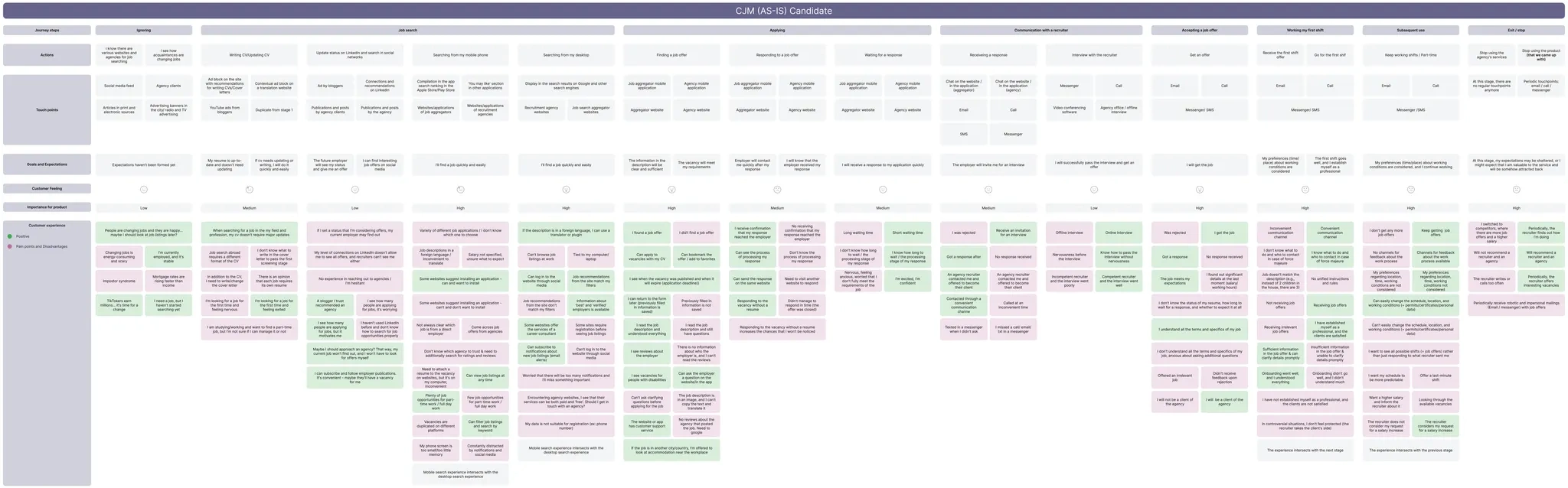
In addition, we created a CJM, worked through idea-generation activities, and developed detailed UX flows, Service Blueprints, and a Data Model. These artifacts guided us in refining our approach and priorities.
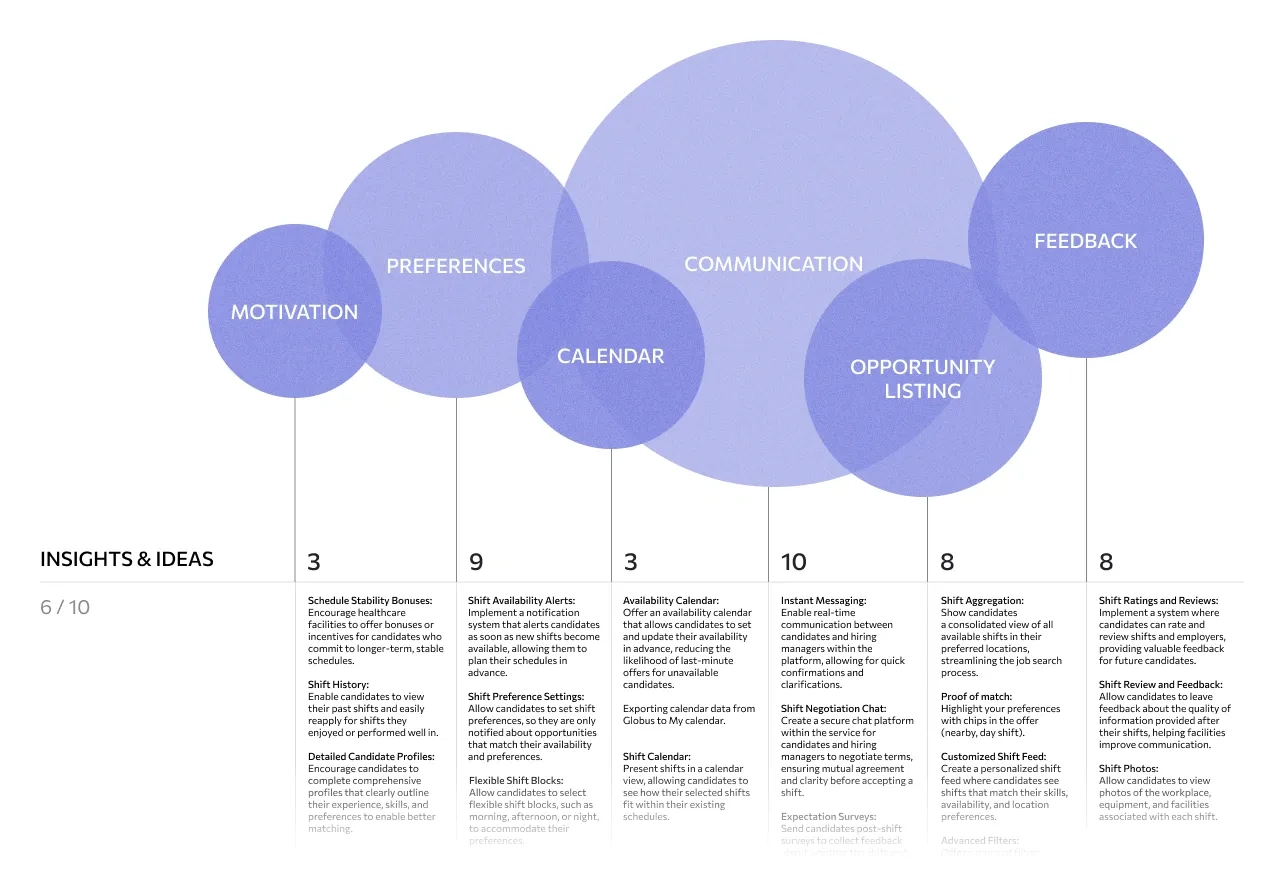
We gathered, categorized, and presented the primary ideas stemming from our comprehensive research. These insights have been thoughtfully discussed, fostering collaborative discussions within the team to ensure a shared understanding.
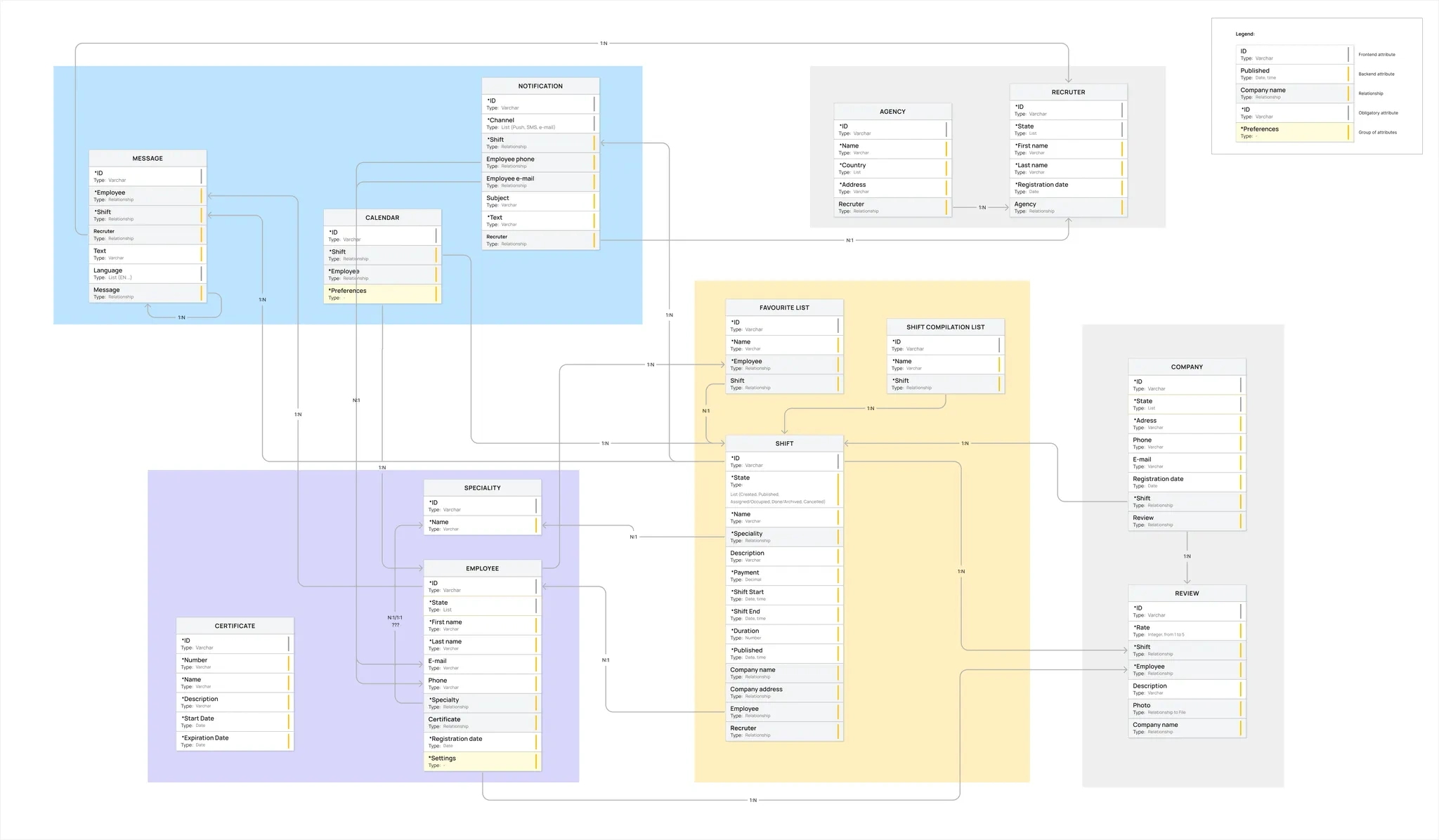
Here, we break down the detailed design and structure of our information system, providing a clear picture of how data flows and interacts within our platform. This section acts as a key reference to understand the organization and utilization of data in our system.
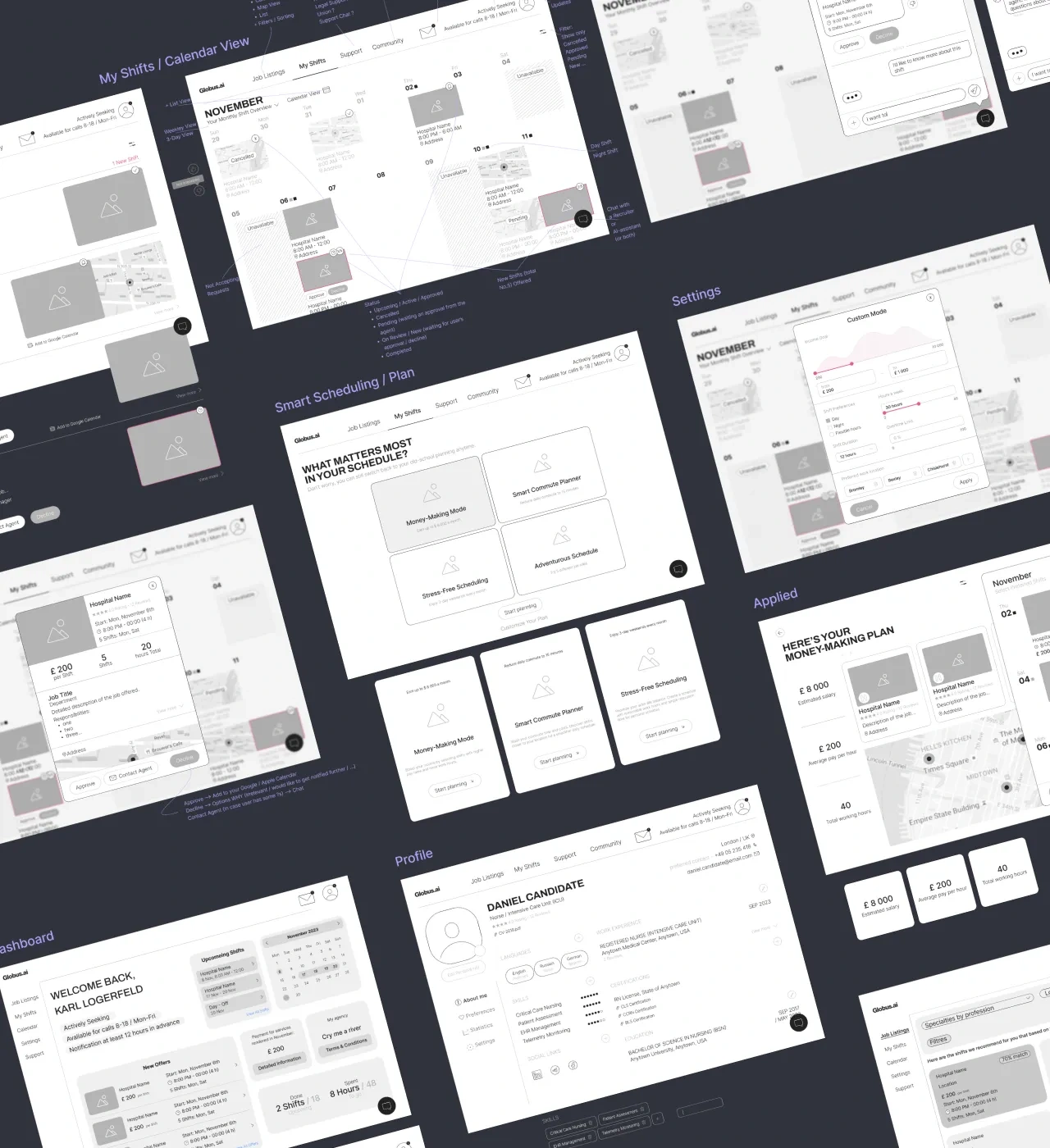
In crafting the Mid-fi wireframes, I designed the main user scenarios. Based on the established Information Architecture and insights into users' pain points and solutions, I assembled layouts and functions. The result is a set of wireframes that promise a seamless and intuitive user experience.
Our product vision were based on 4 pillars, like four major jobs which service should perform:
Turn a mess schedule into a stable Monthly Plan
To prevent irrelevant spam of Job Opportunities
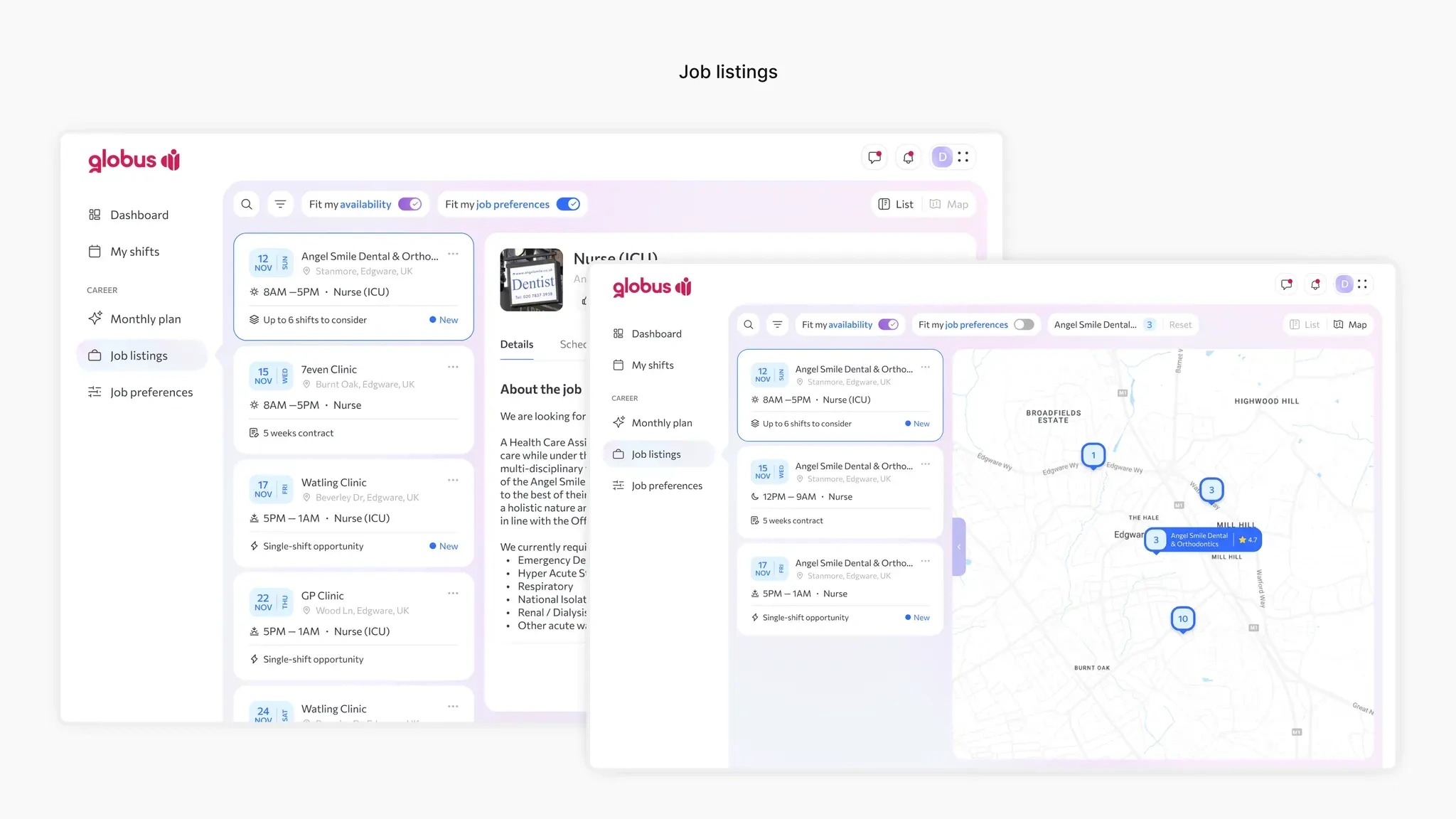
Allow viewing of all opportunities through a Job Listing
Enable Chats to fix poor communication
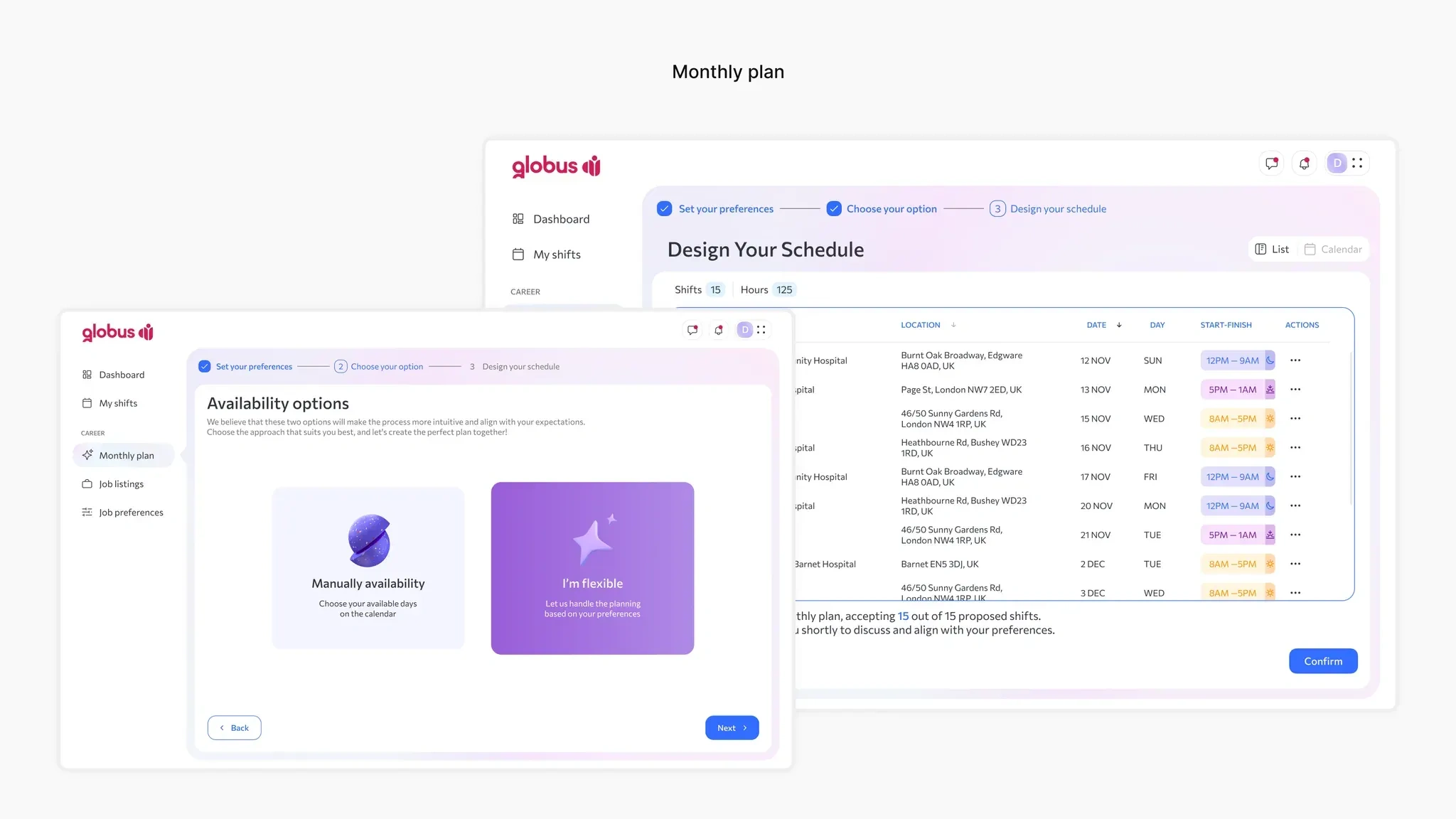
We made the Monthly Plan our primary focus because it directly addressed a range of candidate issues (such as burnout and unpredictable schedules) and, at the same time, helped recruiters close more orders. This concept was my proposal, and after presenting it to the team and key stakeholders, we secured their approval to move forward.
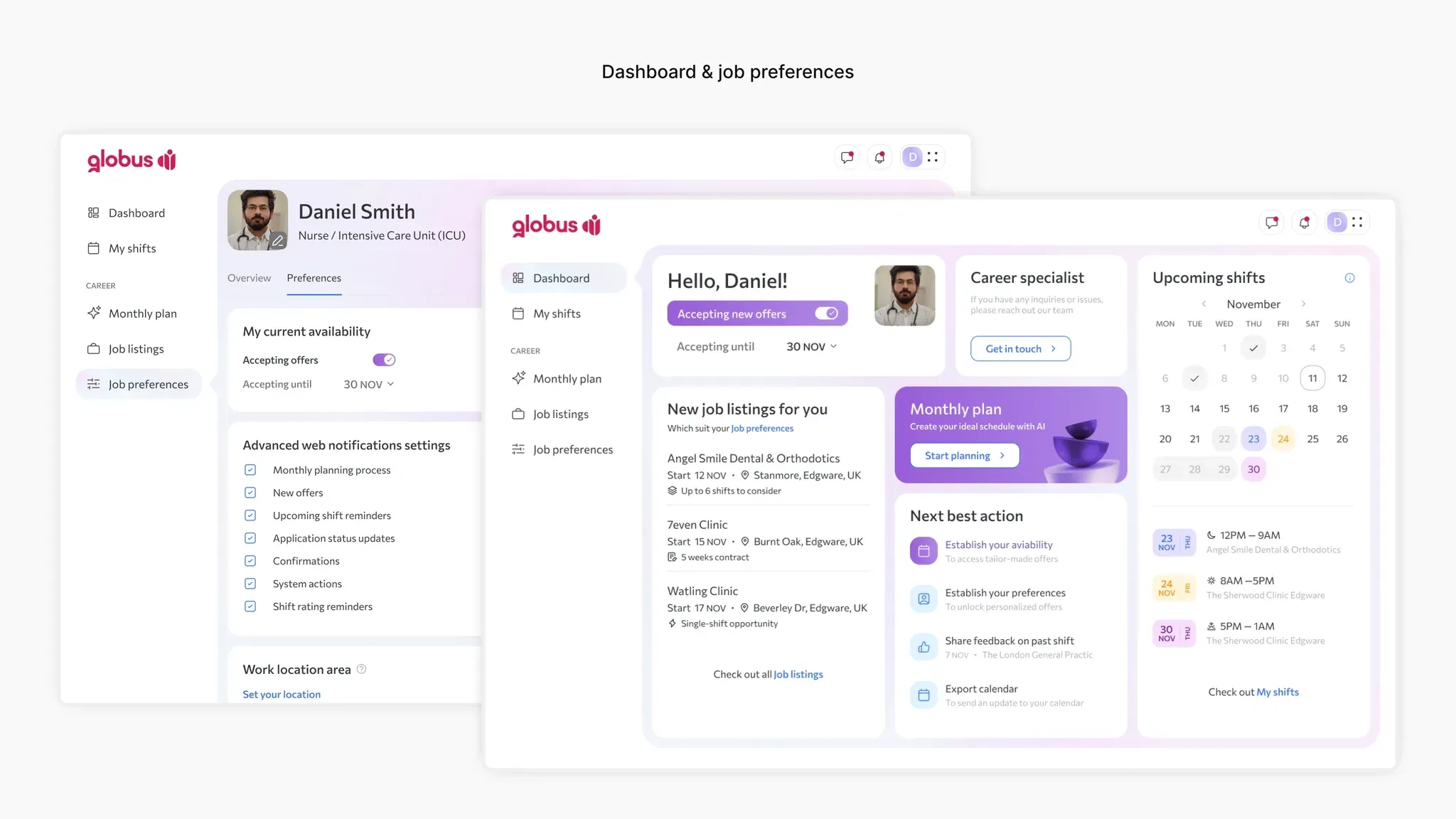
Users access a dedicated web interface through an email link, with a welcome screen that highlights key tasks. By maintaining accurate preferences, they receive more targeted job opportunities ↓
During research, we found that most medical shift workers deal with highly unpredictable schedules and overtime, even though they chose shift work for its flexibility. The Monthly Plan addresses this by letting them enjoy both the income of shift work and a more predictable schedule, keeping everyone satisfied ↓

Time Allocation. A design project expands to fill the time you allow. Establishing deadlines and clear limits is essential to avoid endless revision cycles.
Stakeholder Involvement. Evaluating every step with stakeholders keeps everyone aligned and helps ensure high-quality outcomes.
Team Experience. Collaborating within a design team fosters personal growth, improves communication skills, and builds resilience.
Like this project
Posted Nov 16, 2025
Designed solutions to improve candidate engagement and recruitment efficiency at Globus.ai
Likes
0
Views
7
Timeline
Jan 1, 2023 - Apr 30, 2023
Clients
Globus.ai