
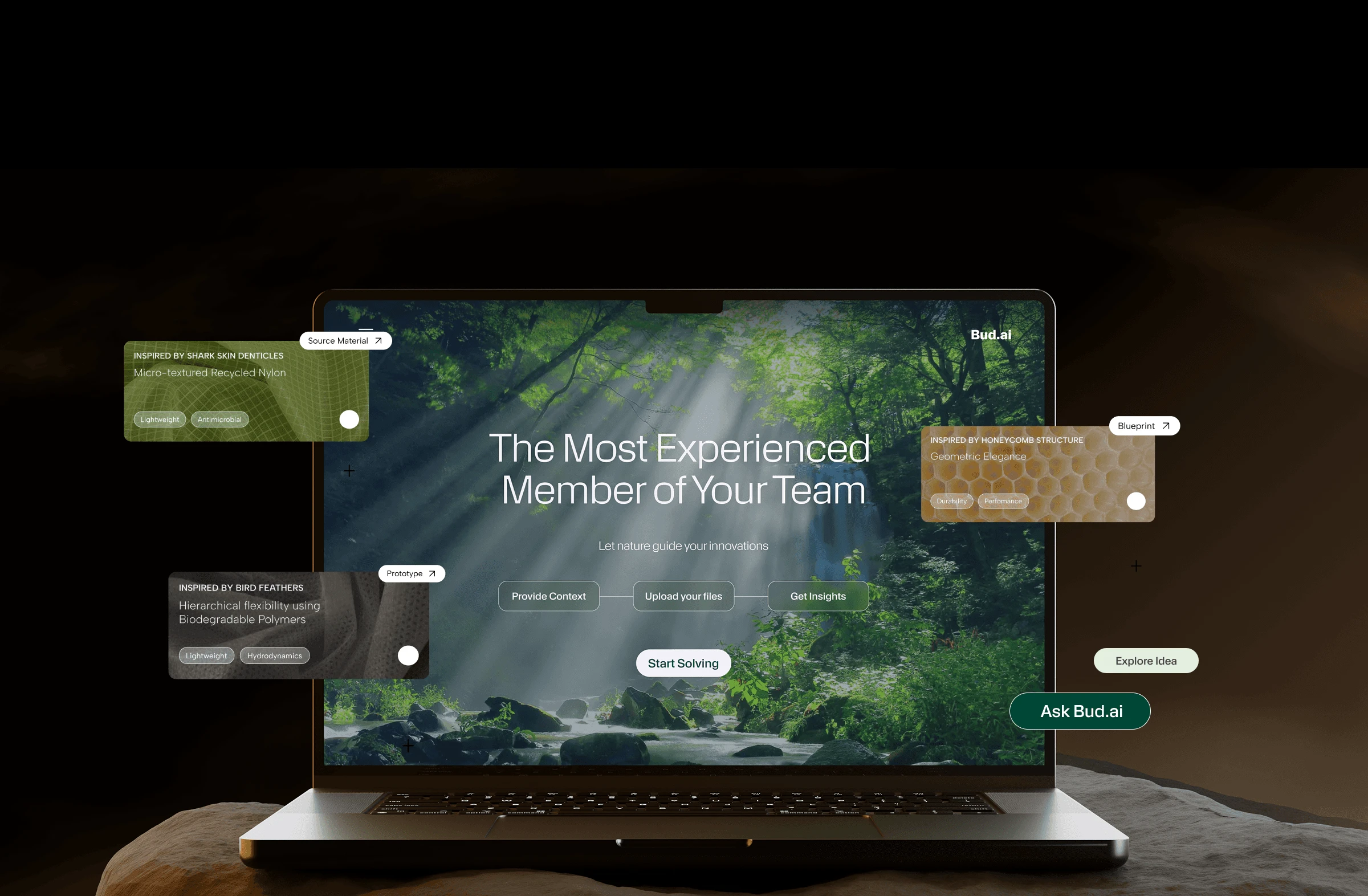
Bud.Ai
Turning nature's strategies into actionable artifacts for innovators, designers and researchers
Web App
Conversational AI
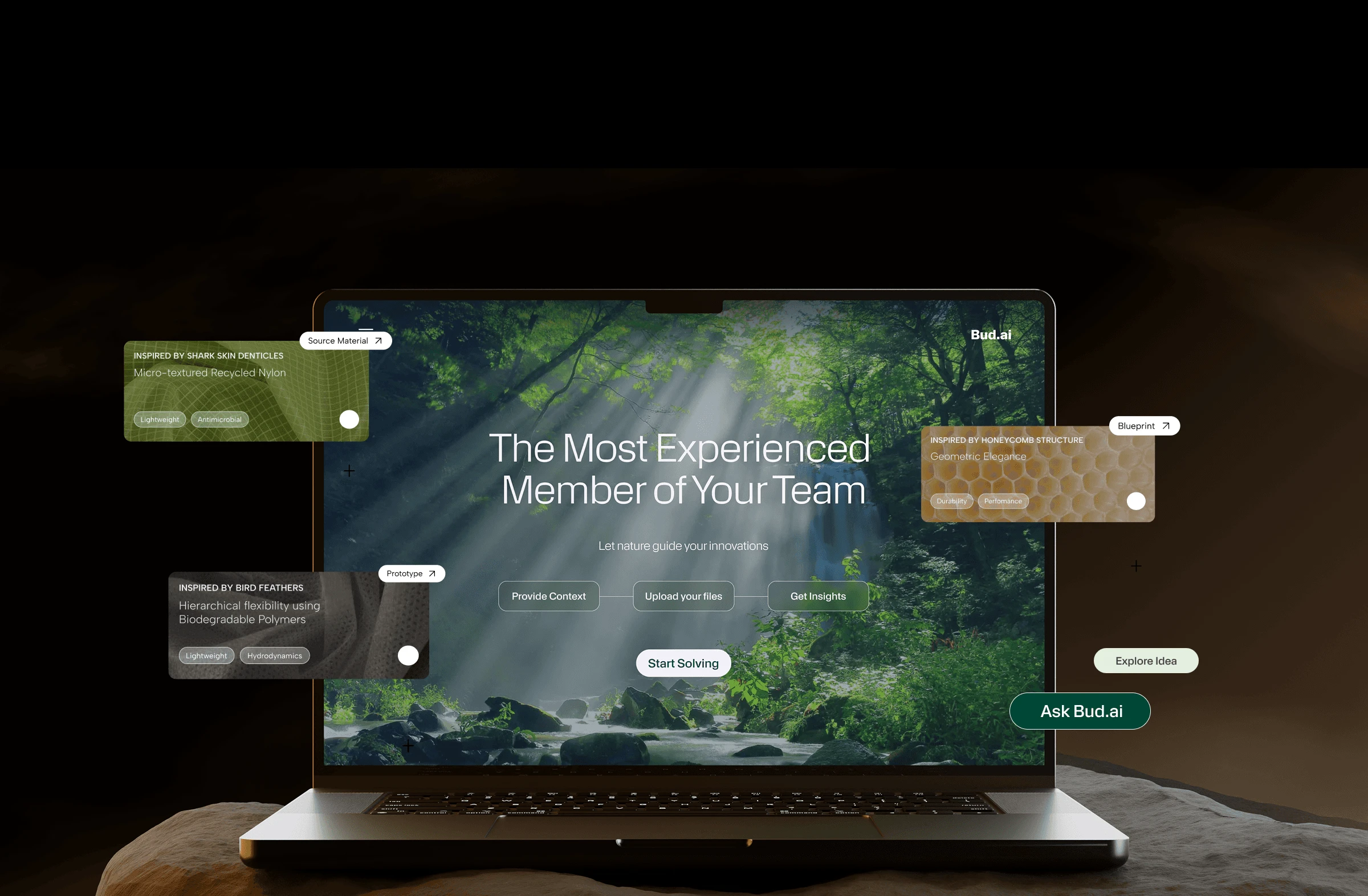
Overview
My Role
Researching , Conversation Design, Prototyping flows, Visual Design and UI systems
Outcome
We expect to see a considerable difference in the way industrial designers, researchers and innovators approach sustainable design
Team
4 Designers, 2 Eng
Mentor
Nathan Sherdoff
Status
Working on building a working prototype

CONTEXT
72% of surveyed companies
have found that Biomimicry led to new product ideas or designs.
Less that 10%
of them are able to apply Biomimicry in their workflows
Sources : PMC/ResearchGate
THE PROBLEM
Biomimicry as a tool for design is not as straightforward...
Scattered Information
Users often have to jump between databases, research papers, and design platforms.
Dealing with Complexities
Existing databases require extensive understanding -harder for non-experts
Unspecific Solutions
Platforms don’t always deliver applicable, cross-disciplinary solutions
Leading us to identifying a gap
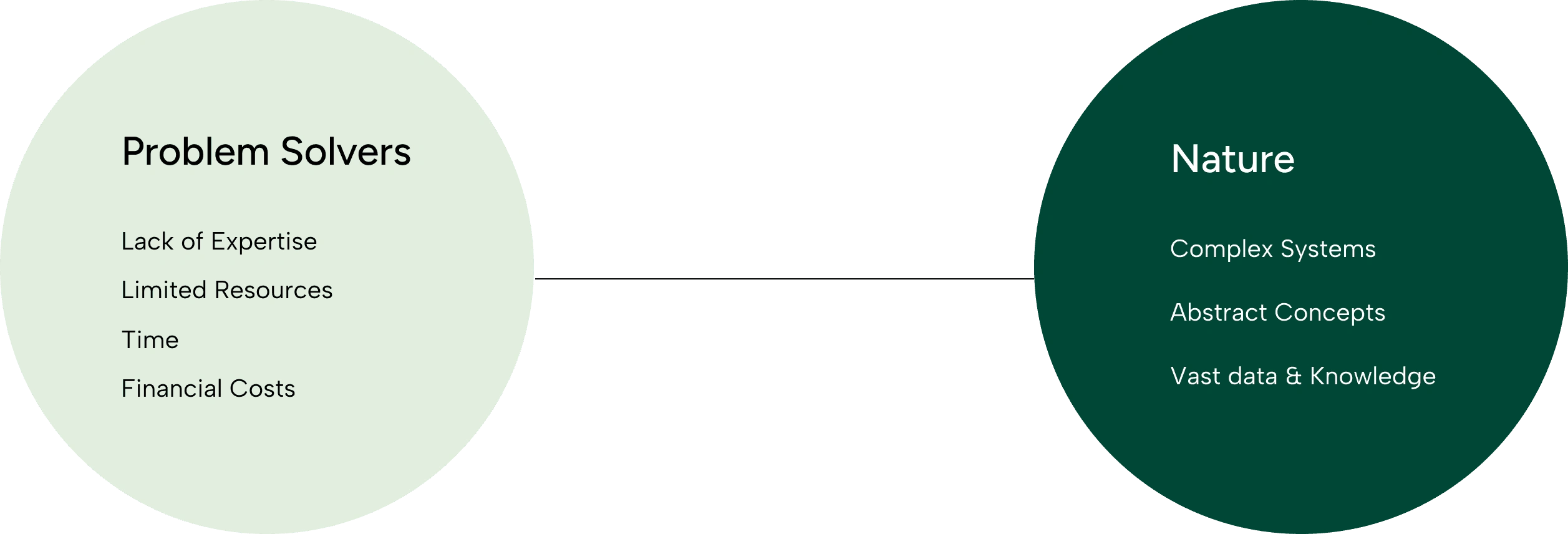
SO WE ASKED OURSELVES…
How do we enable problem solvers to access and apply nature’s insights in a sustainable and practical way?

An AI tool that transforms biological insights into actionable artifacts
POTENTIAL IMPACT
20%
Reduction in Design Waste
25-50%
Faster development cycles
2x more
Sustainable Material Adoption
HOW IT WORKS
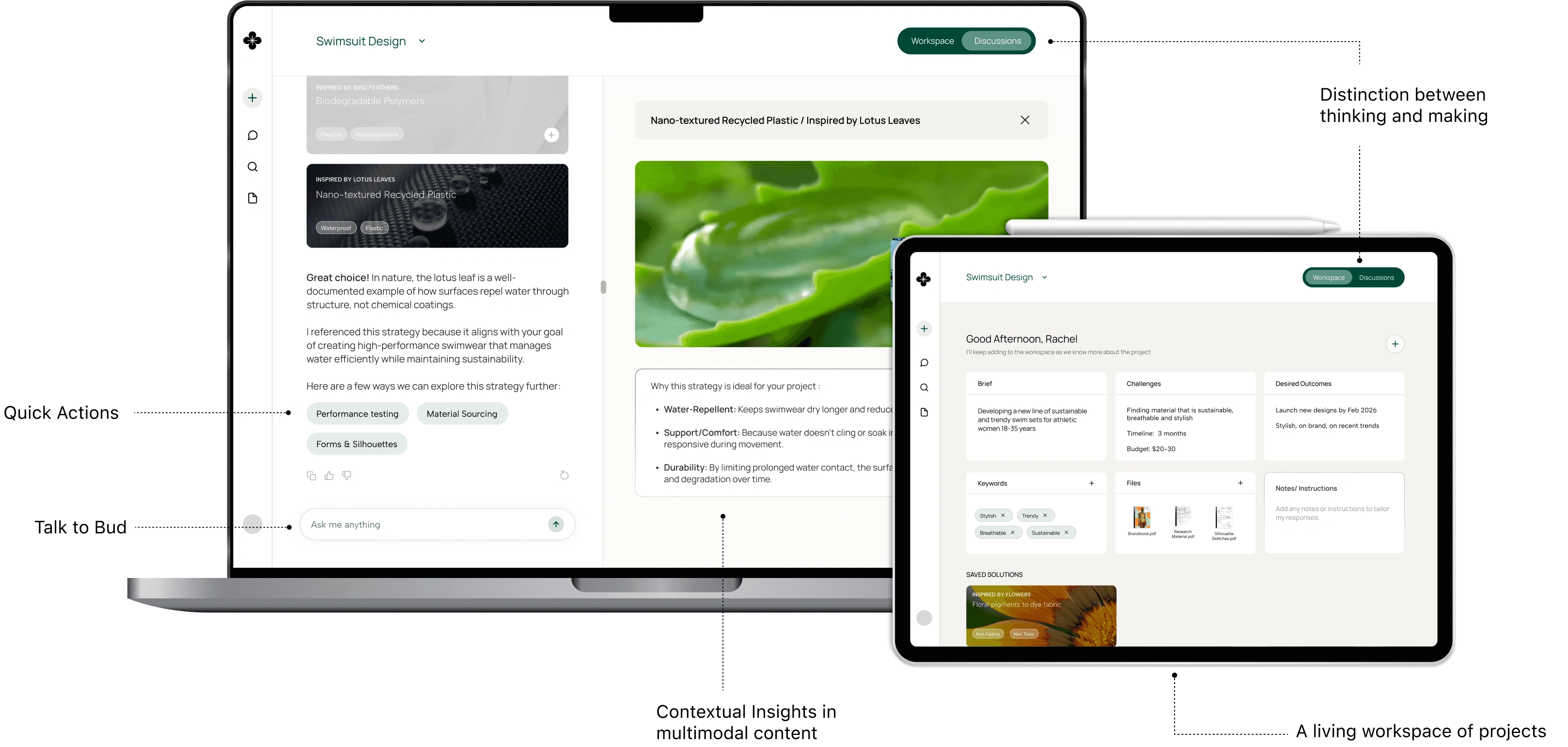
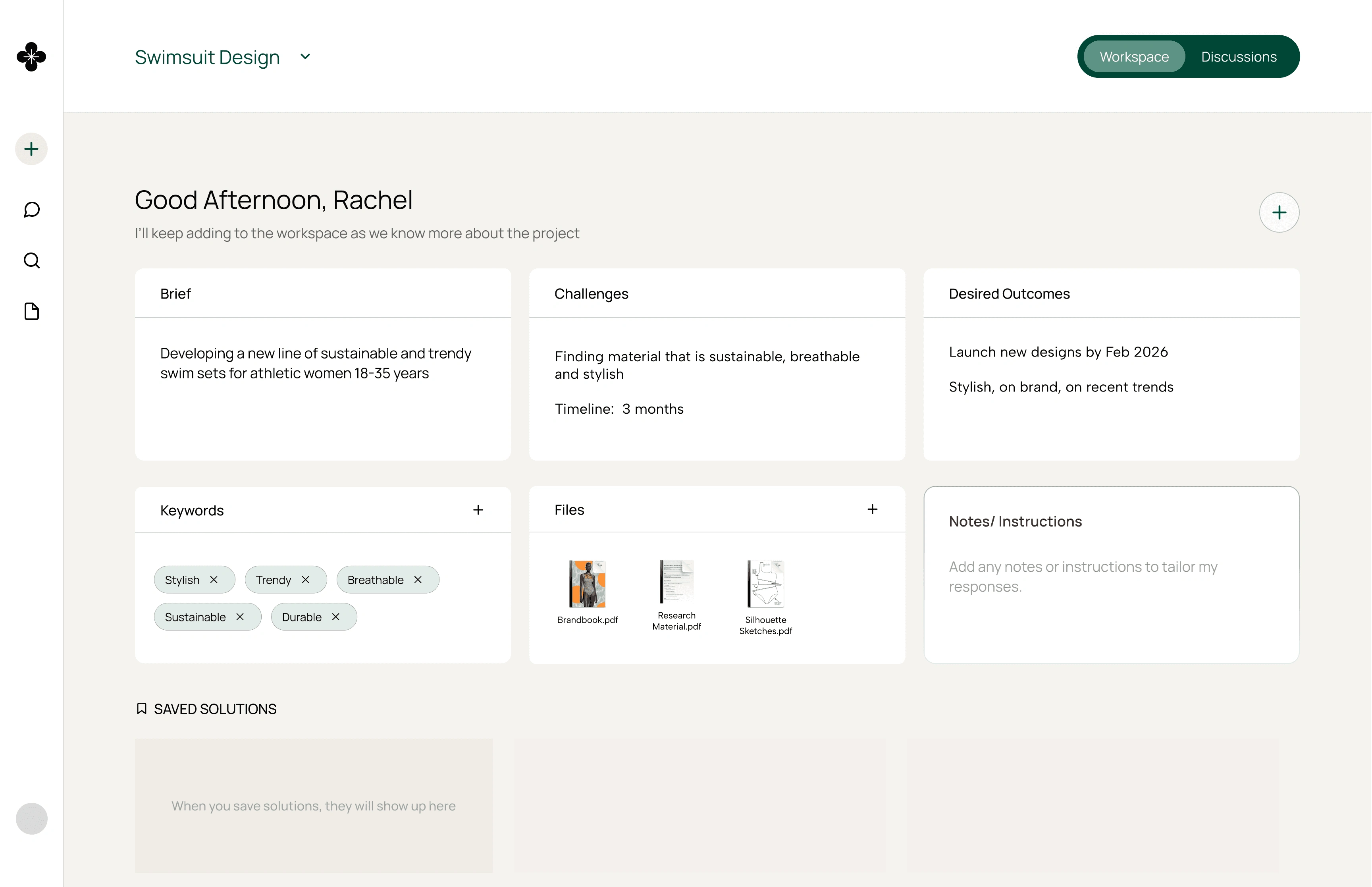
According to the inputs, Bud creates a workspace for the user
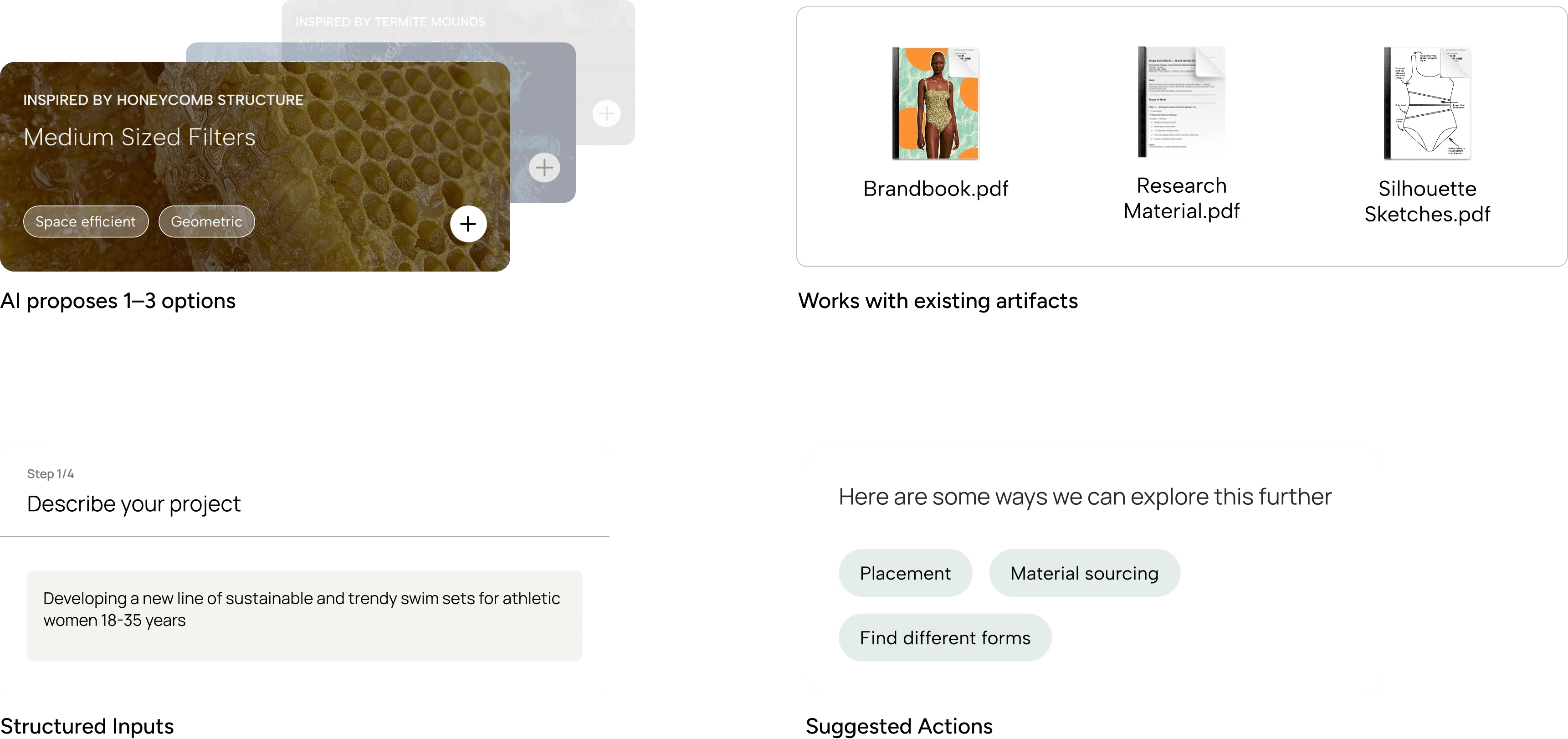
Based on the workspace, user starts the discussion with Bud, to find materials
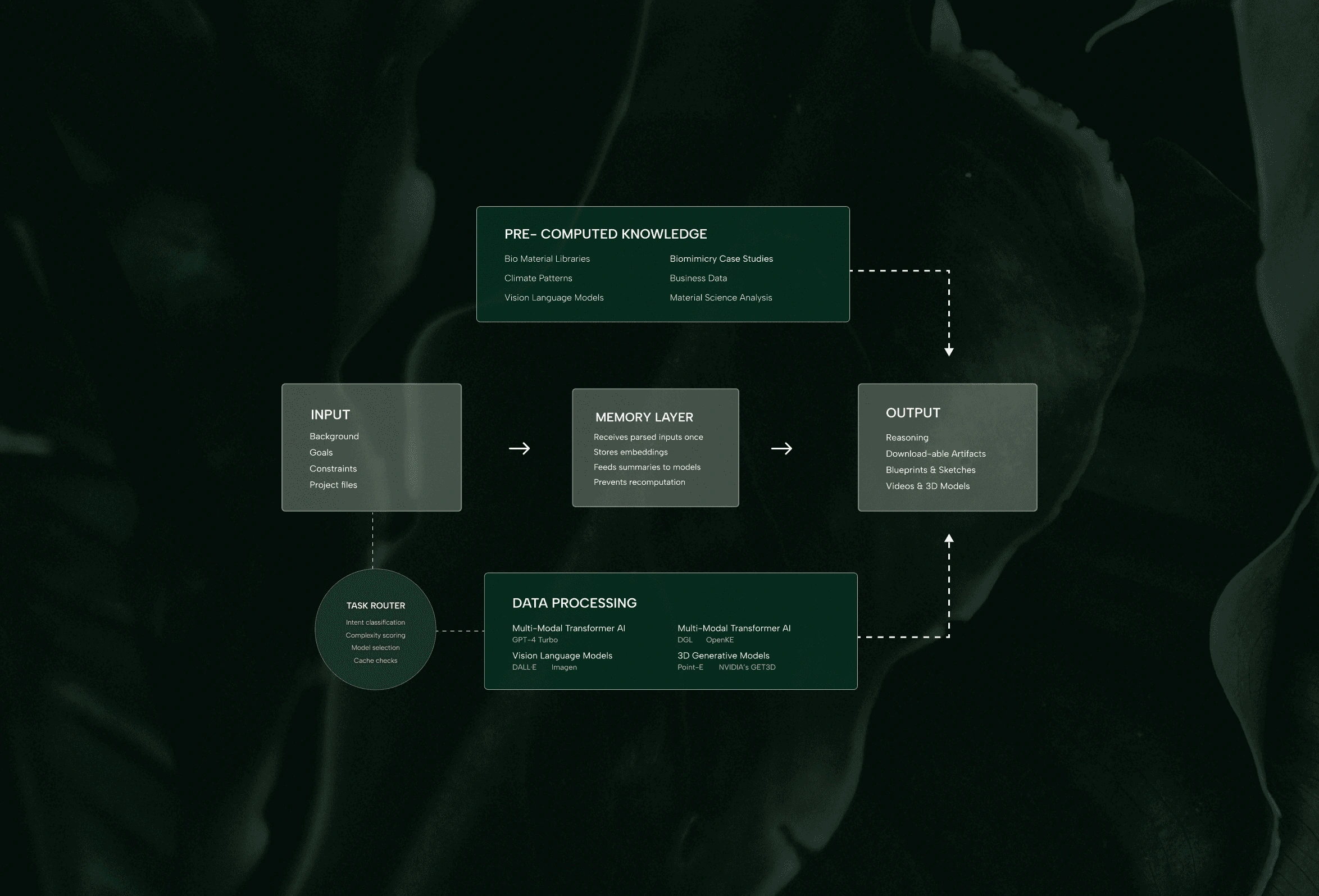
BEHIND THE SCENES
Training our AI to be sustainable
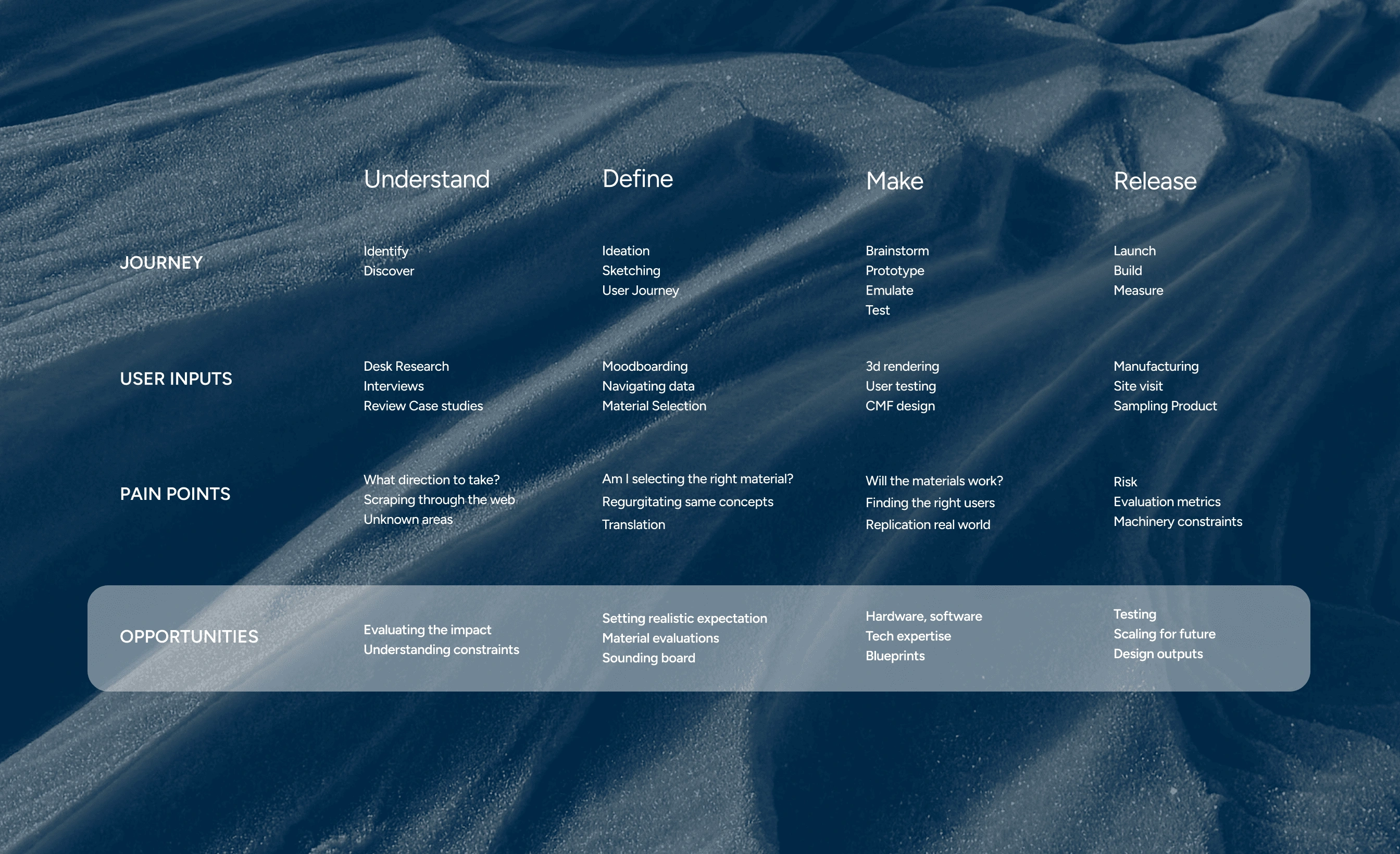
PROCESS
Mapping out the common Problem Solving Flow
The best products today blend AI seamlessly into familiar workflows. To build Bud, we wanted to do the same
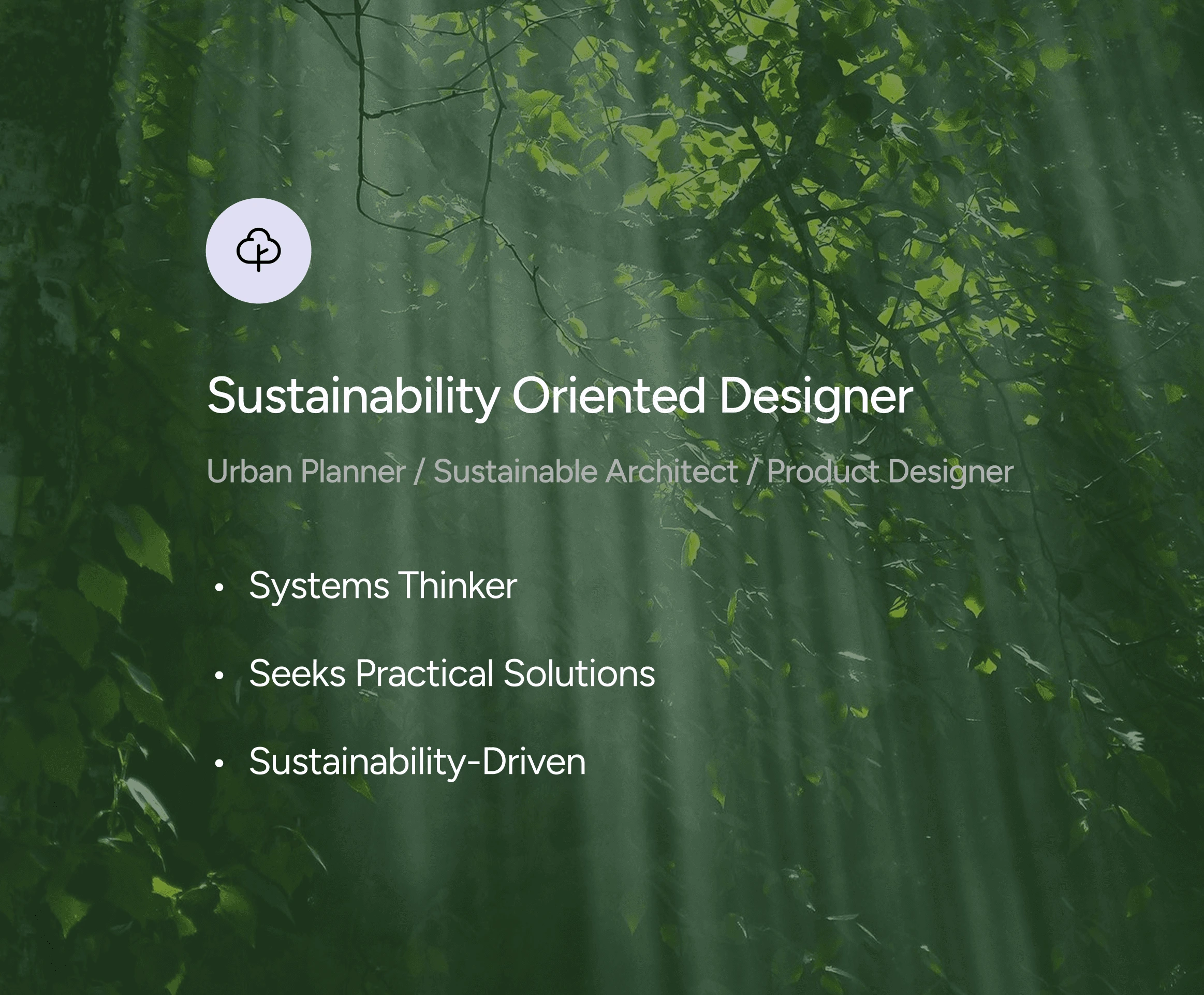
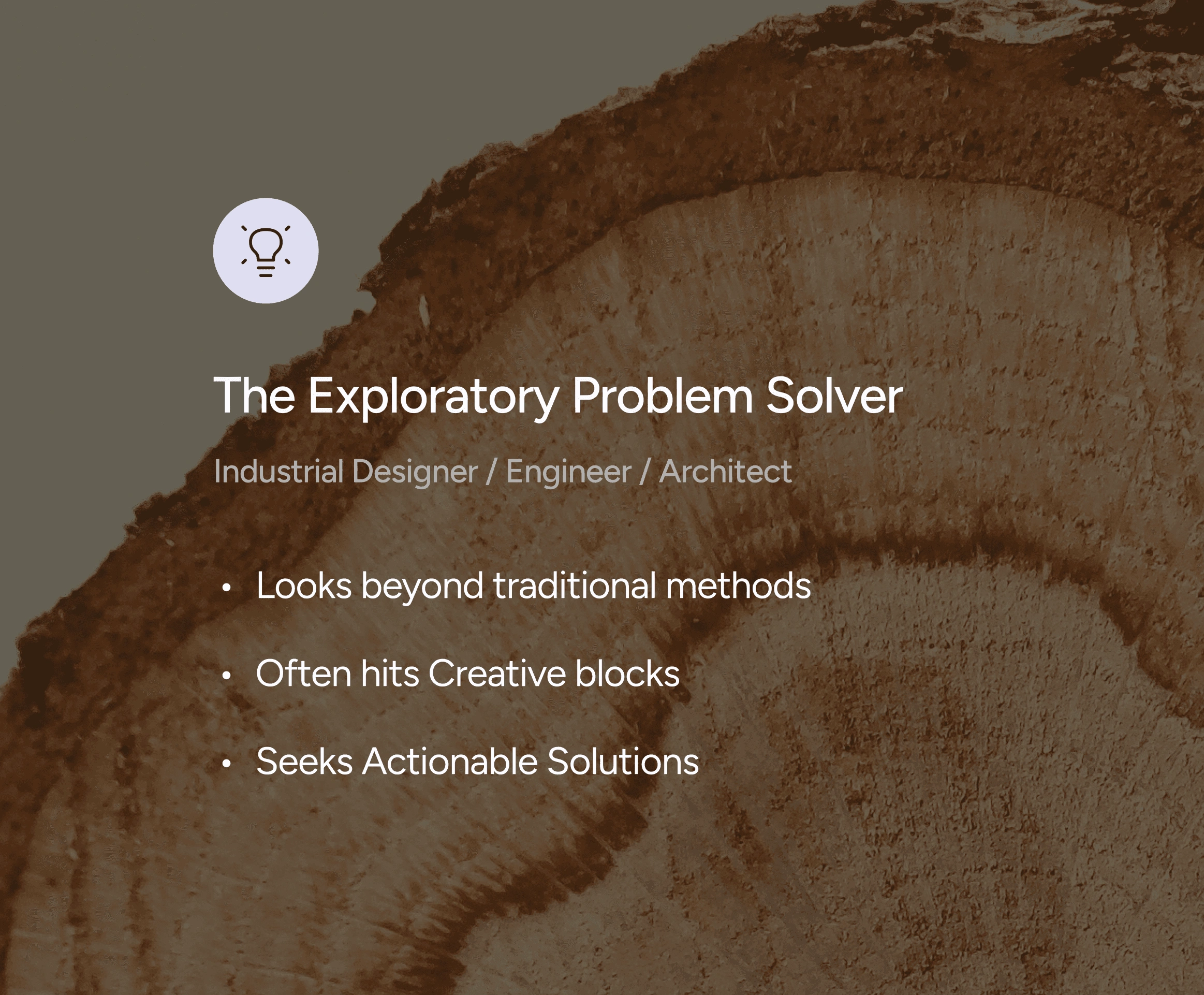
Building two archetypes of our main users
Post conversations with 5 types of problem solvers from different walks of life - Designer/Architect etc.
Synthesizing data into key insights
After our research, we narrowed down what we learnt
Inspiration vs. Application
"Translating biomimicry into real, practical solutions feels like an abstract thought."
Sustainability beyond buzz words
Even though biomimicry pulls information from nature, it is not always sustainable
Lack of Tangible Outputs
"As designers, we need 3d properties, and materials, to test and refine our ideas"
BUD AI IN ACTION
User Story : A textile designer exploring sustainable materials for their swimwear collection for athletes
Guided Setup
Creating a workspace through a guided setup of project details for establishing context
Discussing with Bud
User explores quick actions and asks Bud to source some materials for her
Workspace <-> Discussion
User is able to add missed constraints/
specifications to their workspace as they go
Learnings and Takeaways
Designing in a short time frame
Building a product means learning to prioritize, simplify, and execute quickly without sacrificing core quality
Iterating and Pivoting
Learning that a design process is not linear, sometimes you need to go back to the drawing board
Designing user experience for AI
The biggest challenge AI faces is articulation barriers. Designing within exisiting user flows is key.
0 likes · 8 views · Mar 31, 2026
An AI tool that transforms biological insights into actionable artifacts for innovators, designers and researchers working with biomimicry.