VeriFree Pitch Deck | SaaS Startup Presentation

Mansi Chauhan


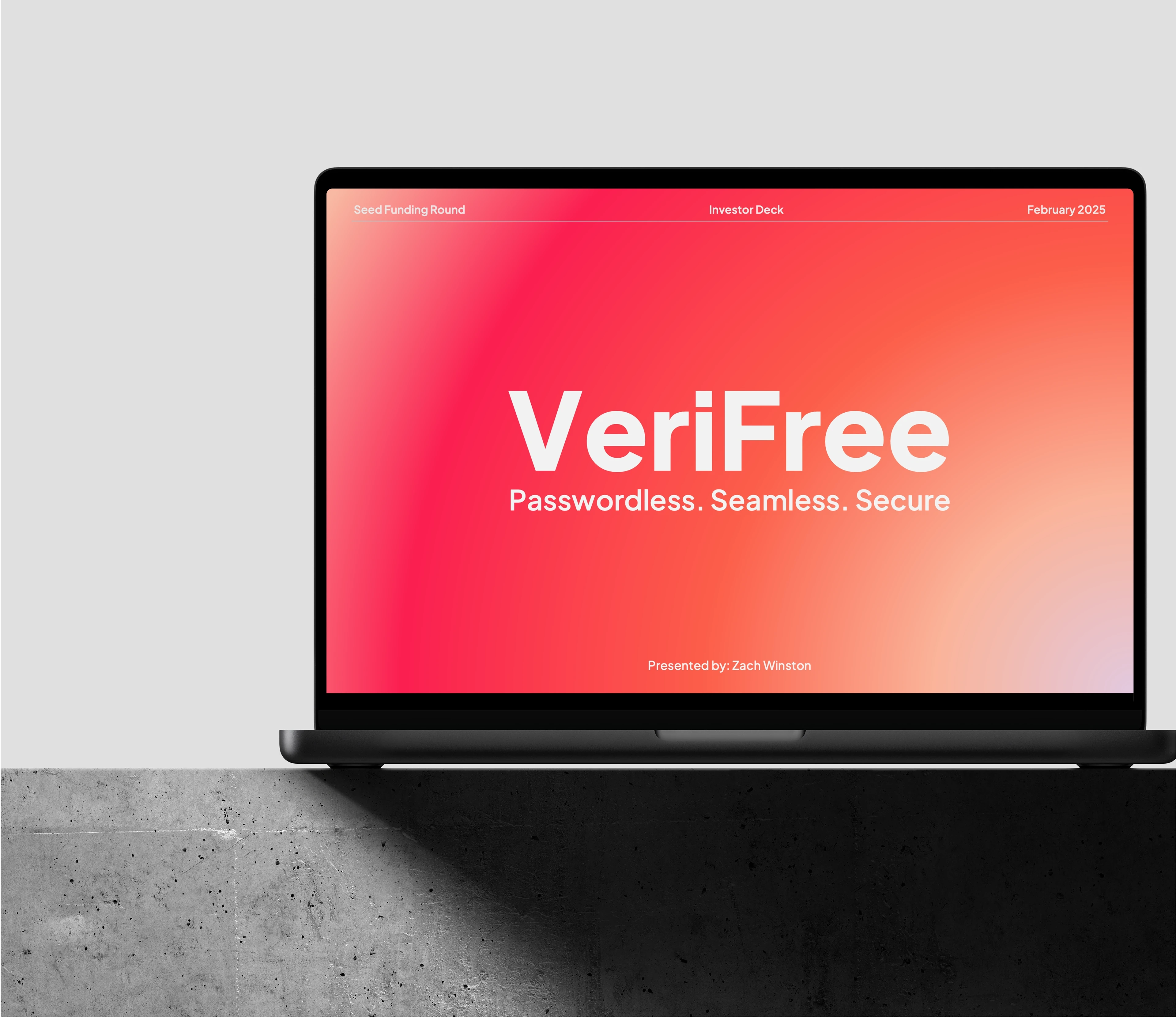
An investor pitch deck is often the first place where a company’s strategy, priorities, and ambition come together in a single narrative.
Long before a conversation begins, the deck is already shaping how the business is understood and evaluated.
For this AI SaaS startup, the goal was to create a deck that supports clear decision-making. Not by overwhelming investors with information, but by structuring the story in a way that makes the opportunity easy to grasp, credible to assess, and coherent from start to finish.
This case study outlines the thinking behind that approach and the decisions that guided how the company was positioned for fundraising.

Early in the deck, the emphasis was placed on orientation. Investors encounter dozens of companies each week, often without context. In the first moments, they are forming assumptions about category, scale, and relevance.
The opening framing was designed to answer those questions quickly. It establishes who the product is built for, the level at which it operates, and the kind of leverage it creates.
With that context in place, the rest of the narrative becomes easier to follow and evaluate without additional explanation.
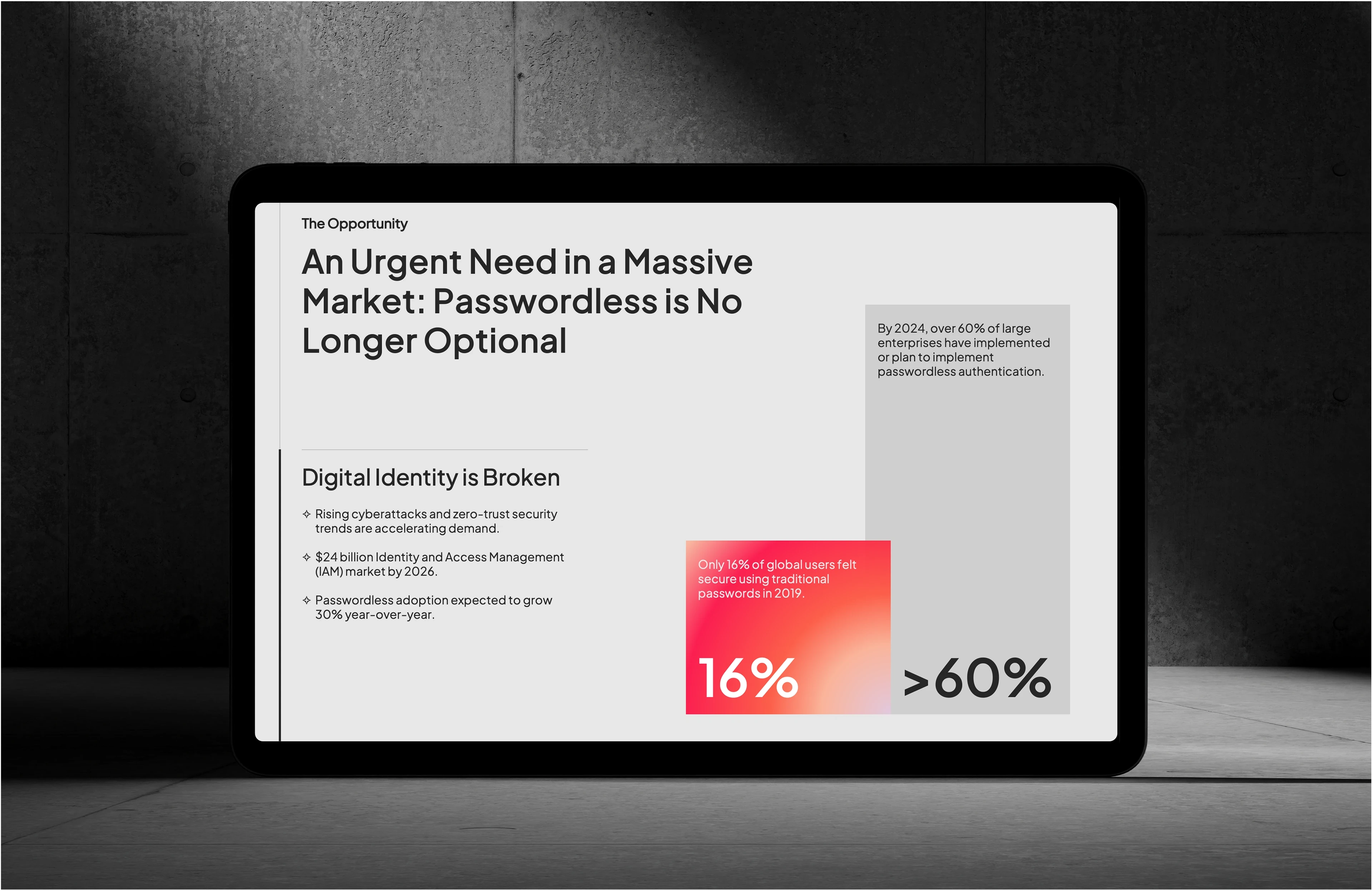
The opportunity was framed with precision rather than scale.
Instead of presenting the market as broadly addressable, the focus stayed on where value is actually created and captured. By defining a specific segment and its constraints, the story avoids inflated market claims and makes the opportunity easier to evaluate.
Distribution dynamics and buying behavior are used to ground the narrative in reality, allowing investors to assess durability and scale without relying on abstraction.
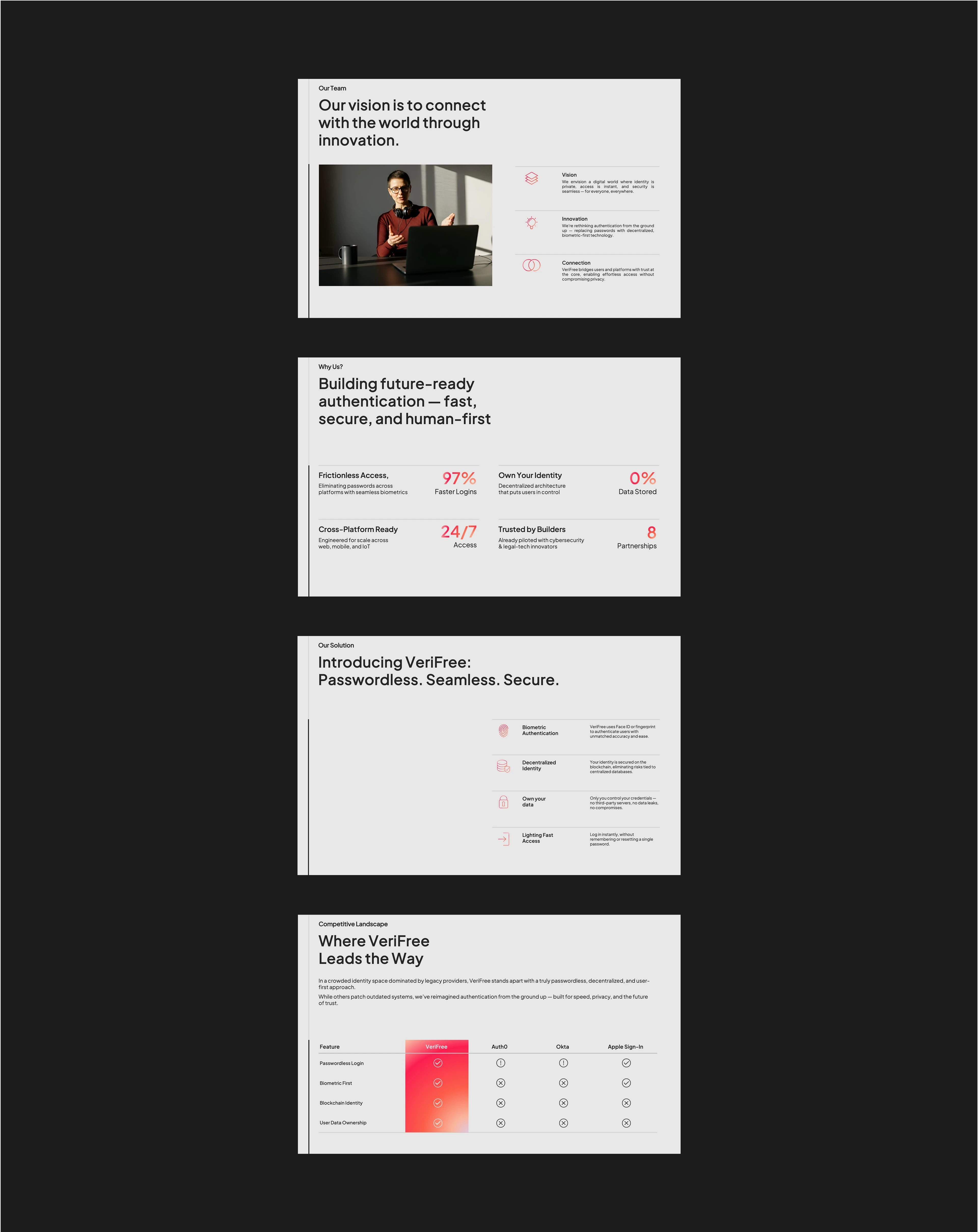
These sections work together to reinforce a single point of view.
Vision, product choices, and competitive positioning are expressed through the same set of principles, creating internal consistency rather than narrative escalation. The focus remains on fundamentals: security by design, user ownership, and simplicity at scale.
Instead of listing advantages, the deck allows differentiation to emerge naturally through contrast and clarity. This approach helps investors understand not just what the product does, but the standards it is built to uphold.
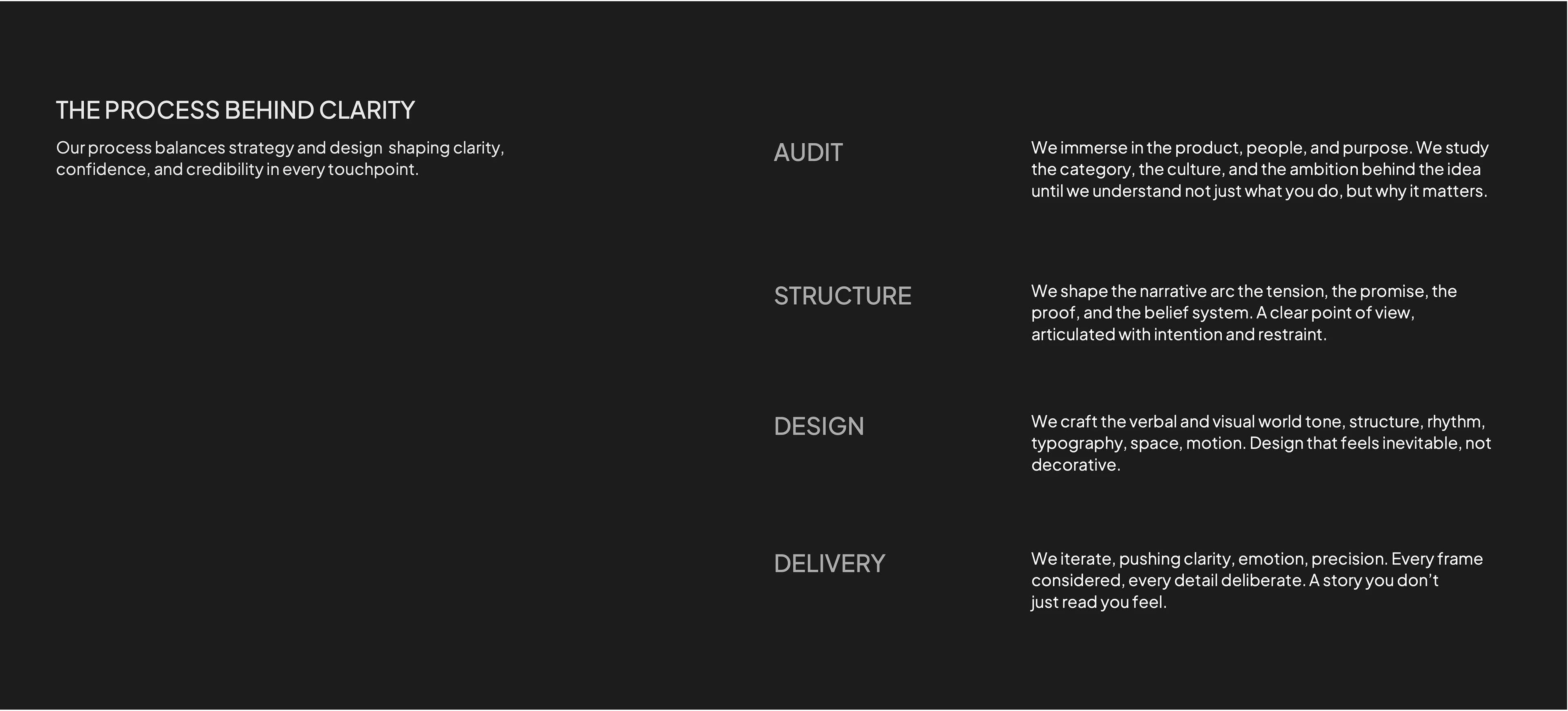
Our process guides the project from concept to completion, making sure every decision improves the final outcome.
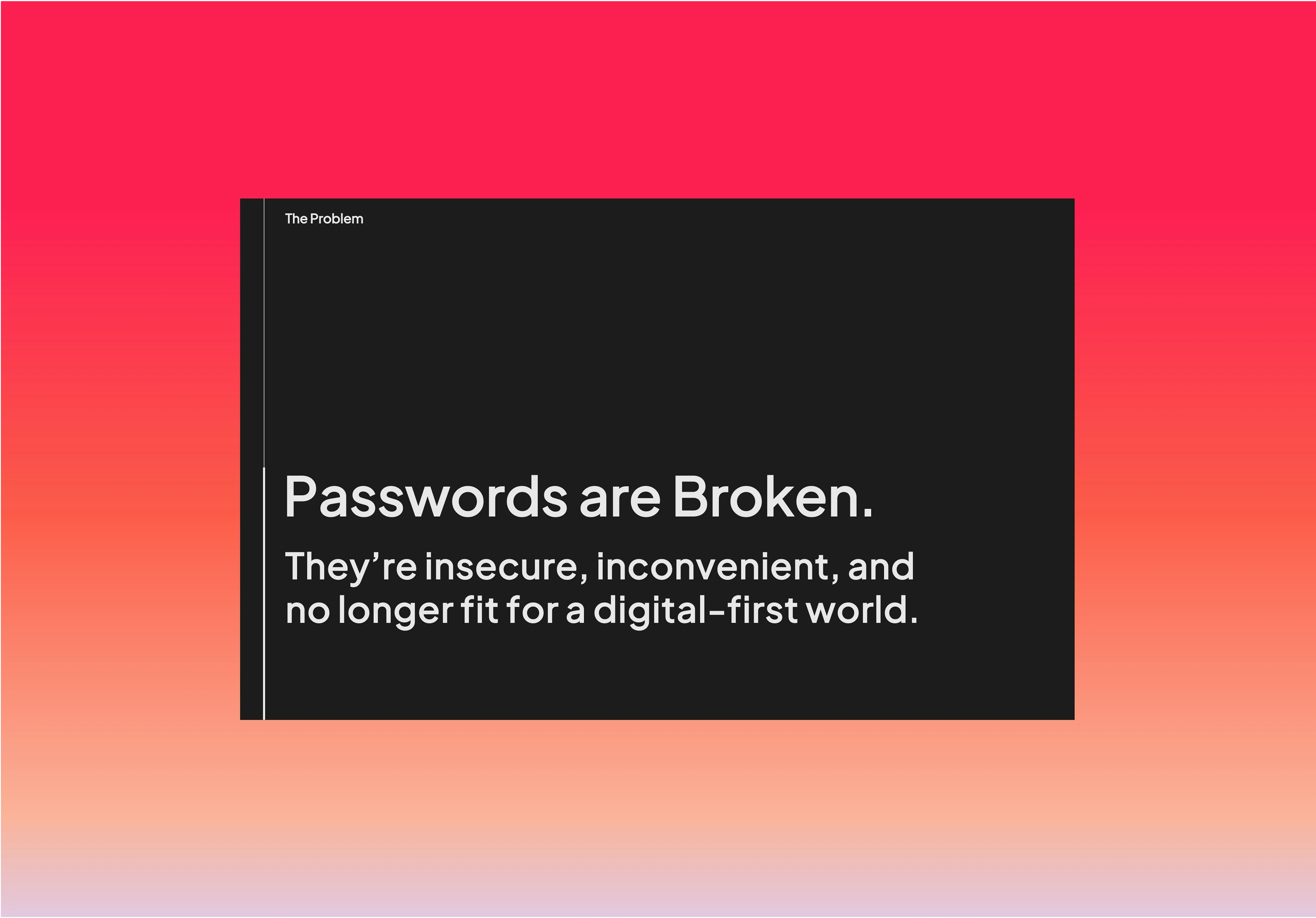
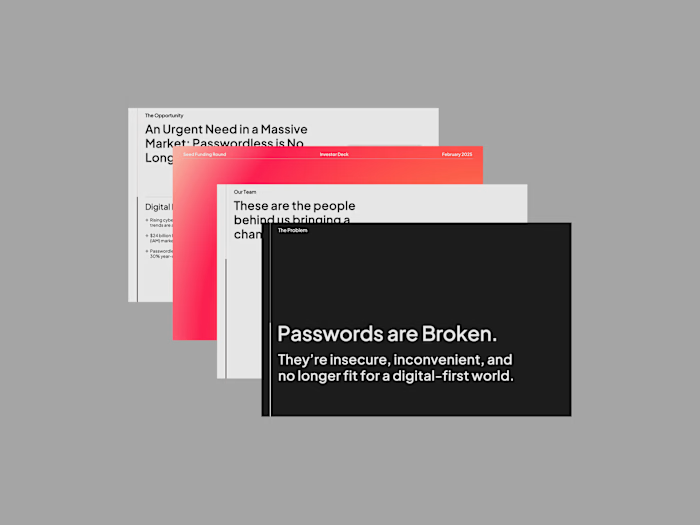
We highlighted that traditional password systems are broken, difficult to remember, prone to security risks, and frustrating for users.
By framing this problem clearly, we set the stage for the solution, showing investors why a better approach is not just desirable but necessary.
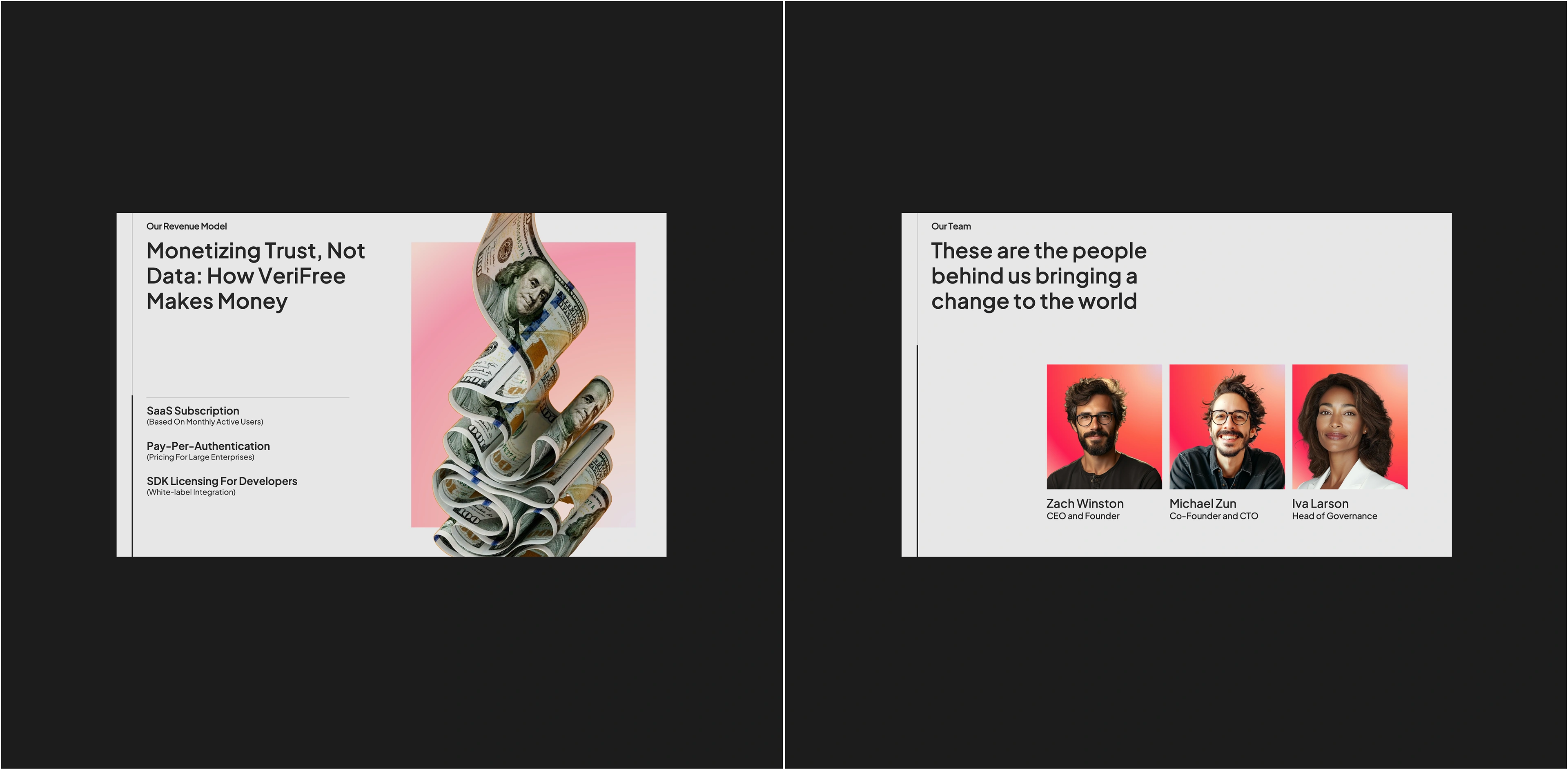
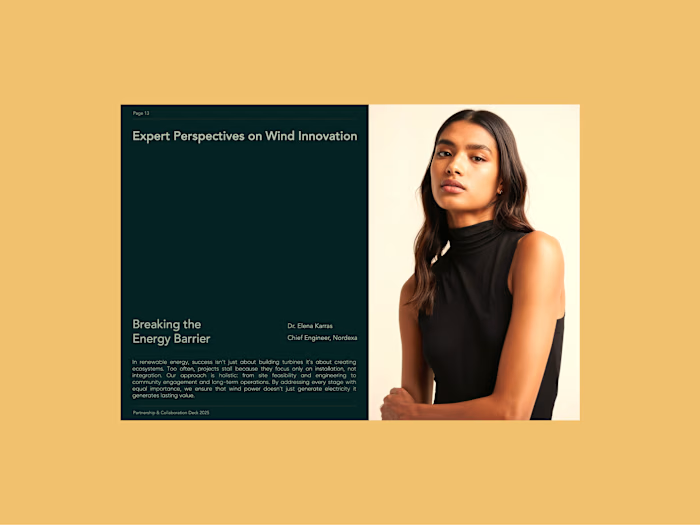
The pitch was designed around a clear, logical narrative that helps investors quickly understand the problem, opportunity, and credibility of the idea.
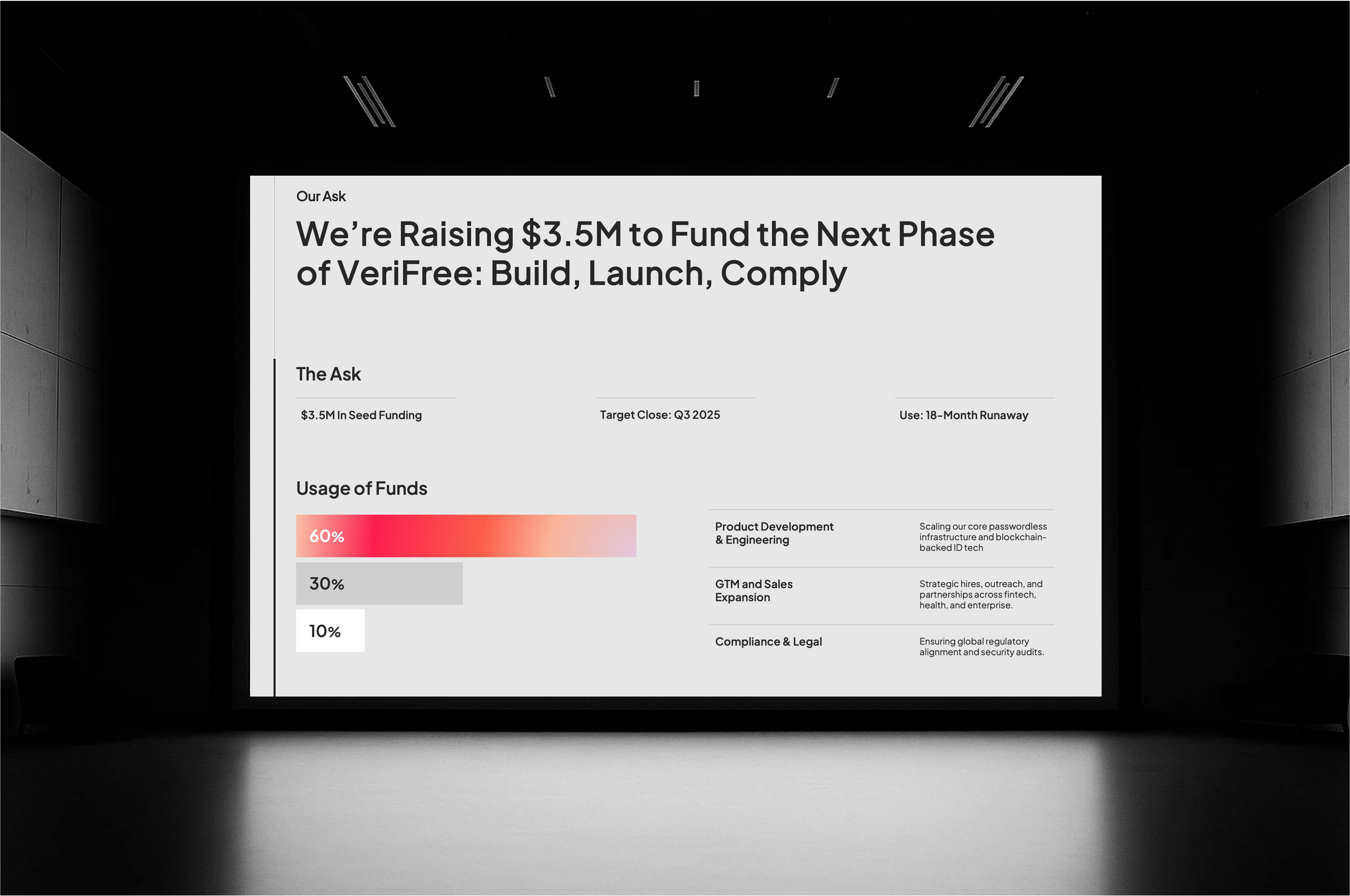
We structured the ask as a natural conclusion to the story, connecting the problem, opportunity, and solution to a clear funding objective.
This ensures the deck ends with direction, not ambiguity
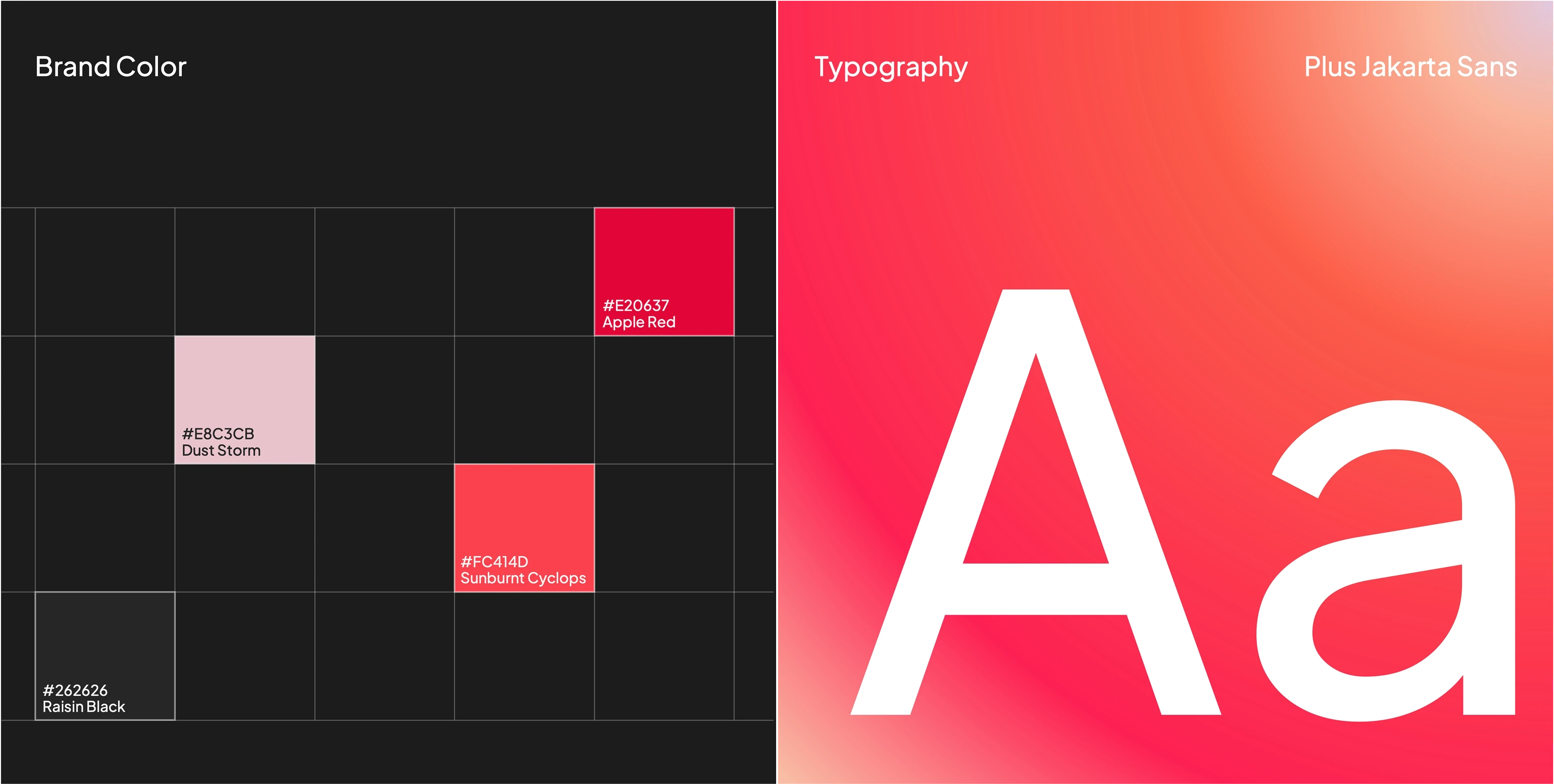
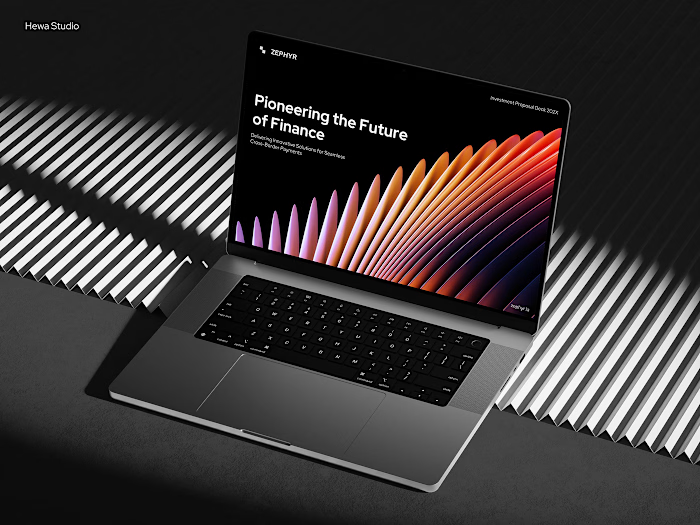
From framing the problem to closing with a clear ask, the pitch was designed to guide investors through the story with clarity and intent.
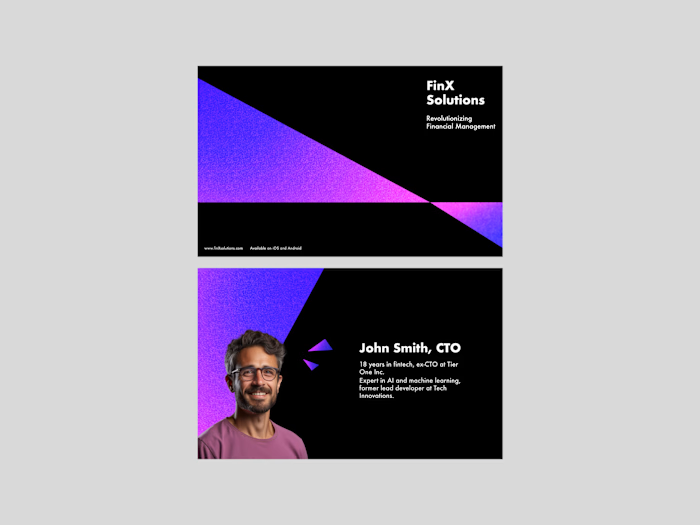
Every decision was made to keep the message focused, credible, and aligned with how investors evaluate early-stage companies.
This case study is shared for illustrative purposes only. The original project is subject to a non-disclosure agreement. Certain details, including the company name and specific information, have been modified to respect confidentiality while preserving the integrity of the work.
Want your deck to communicate with this level of precision & elegance?Get in touch!!
Like this project
Posted Nov 12, 2025
VeriFree is redefining digital finance. I helped craft a clean, credible, and investor-ready pitch deck that turns complex ideas into clarity and trust.
Likes
1
Views
19
Timeline
Jan 9, 2025 - Nov 22, 2025