Designing Dine Elite

Soujanya Vijayprakash

Mobile mockups
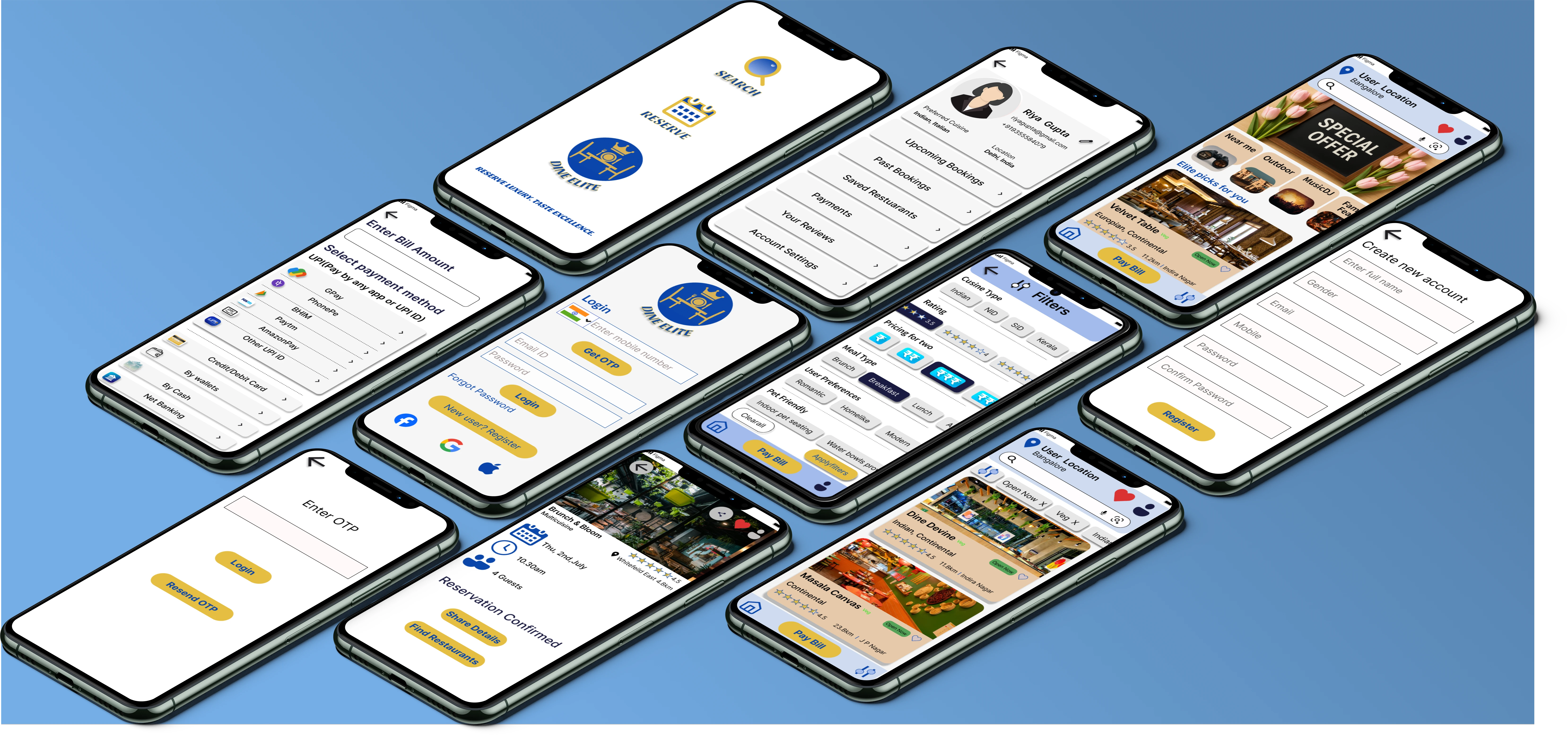
Dine Elite is a fine-dining restaurant booking app designed to provide a seamless reservation experience for high-end customers. The app focuses on simplicity, elegance, and convenience in booking tables, viewing menus, and managing reservations.
Project Overview
Dine Elite is a fine-dining restaurant booking app designed as part of the Google UX Design Certificate program. The goal was to create a seamless and premium reservation experience for high-end customers. The app emphasizes simplicity, elegance and convenience, enabling users to discover restaurants, book tables, explore menus, and manage reservations effortlessly.
This project provided an opportunity to apply the complete UX design process — from research and wireframing to high-fidelity design and prototyping. By focusing on both usability and a luxury aesthetic, the design balances functional efficiency with a refined, elegant look that reflects the exclusivity of fine dining.
Role & Responsibility
As the sole designer on this project, I was responsible for the end-to-end design process — from understanding user needs and defining the problem to creating wireframes, building the design system, and developing high-fidelity mockups. My role also included designing interactive prototypes to demonstrate the booking flow and applying a visual style that reflects the premium nature of fine dining.
Project Duration
July 2025 – August 2025
Problem
Booking a table at a fine-dining restaurant is often inconvenient. Customers face long wait times, lack of clarity on table availability, and limited visibility into menu options or special experiences. For restaurants, managing reservations manually can lead to errors, overbookings, and missed opportunities to provide a premium customer experience.
The aim of this project was to design a seamless, elegant, and user-friendly restaurant booking app that simplifies the reservation process for customers while supporting restaurants in managing availability efficiently. The focus was on combining functional ease with a luxury aesthetic, ensuring users enjoy both clarity and sophistication throughout their dining journey.
Design Thinking Stages
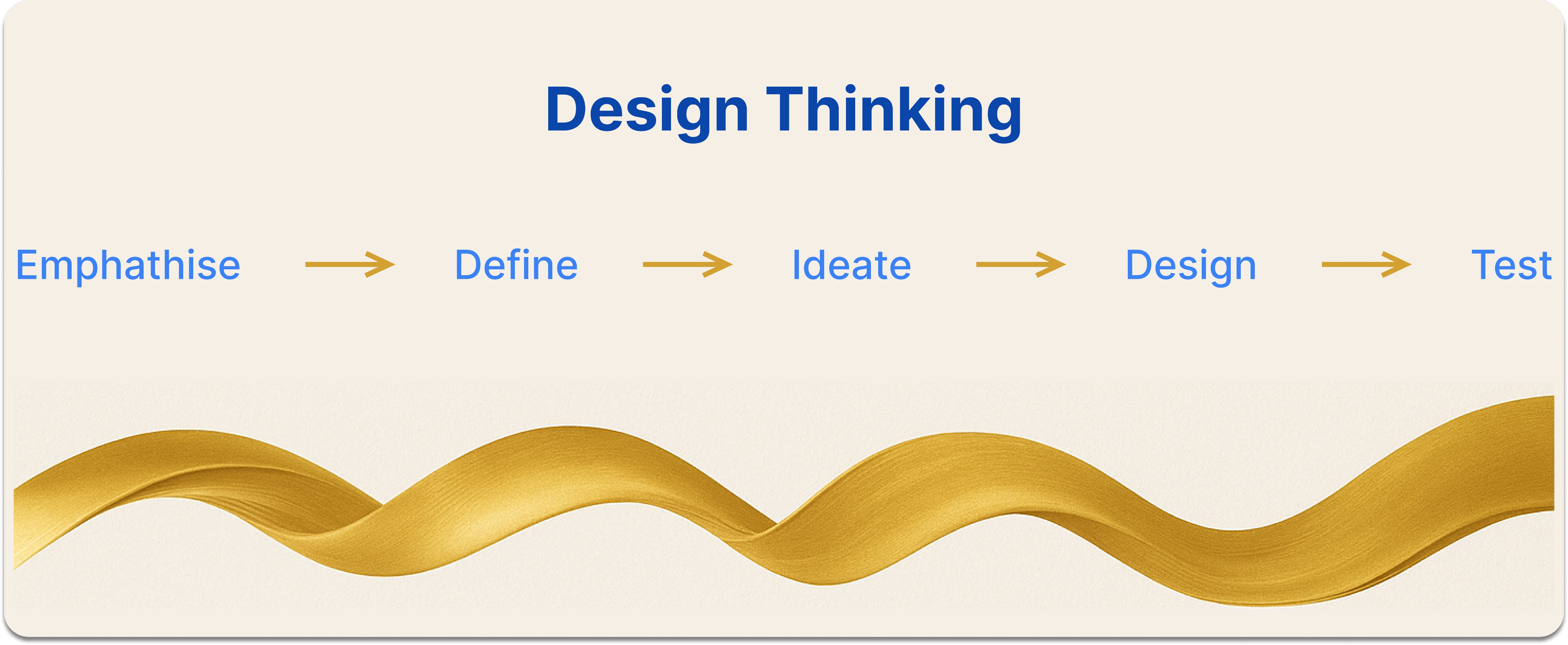
Design Thinking stages
Empathize – Conducted user interviews and research to understand dining challenges and expectations.
Define – Framed problem statements based on user pain points in booking high-end restaurants.
Ideate – Brainstormed solutions and created concepts to improve reservation experiences.
Prototype – Built low-fidelity and high-fidelity mockups to visualize design ideas.
Test – Gathered feedback on the prototype to refine usability and improve the final design.
User Research
Summary
To better understand user needs and expectations, I conducted secondary research and created user personas representing typical fine-dining customers. The research revealed that:
• Customers want a hassle-free reservation process without waiting or calling restaurants.
• They value real-time table availability and special dining options (private rooms, chef’s specials).
• A luxury, visually appealing interface helps build trust and reflects the exclusivity of fine dining.
• Restaurants require a smooth reservation management system to reduce errors and enhance customer satisfaction.
The insights shaped the app’s design to focus on simplicity, premium visuals, and a reliable booking flow that serves both diners and restaurants.
Pain Points
1.Uncertain Availability – Users often don’t know whether tables are available at their preferred time, leading to frustration.
2.Time-Consuming Booking – Calling restaurants or waiting in long queues reduces the convenience of dining out.
3.Limited Information – Lack of access to menus, special offers, or premium dining options makes planning difficult.
4.Poor User Experience – Existing solutions are either too complex or don’t match the expectations of a luxury dining experience.
5.Restaurant Challenges – Manual reservation management causes overbookings, cancellations, and inefficient customer service.
Research methods
To understand user needs and behaviors, I applied a mix of qualitative and secondary research methods:
• Secondary Research – Reviewed existing dining apps and industry reports to identify gaps in the restaurant booking experience.
• Competitive Analysis – Compared popular platforms like OpenTable and Zomato to study their strengths, weaknesses, and user feedback.
• User Surveys (hypothetical in this project) – Gathered insights on how users currently book tables, their frustrations, and preferences.
• Persona Development – Created detailed personas to represent different types of fine-dining customers and their goals.
• Journey Mapping – Outlined the end-to-end flow of a typical user, from discovering a restaurant to completing a booking.
Personas
Persona1
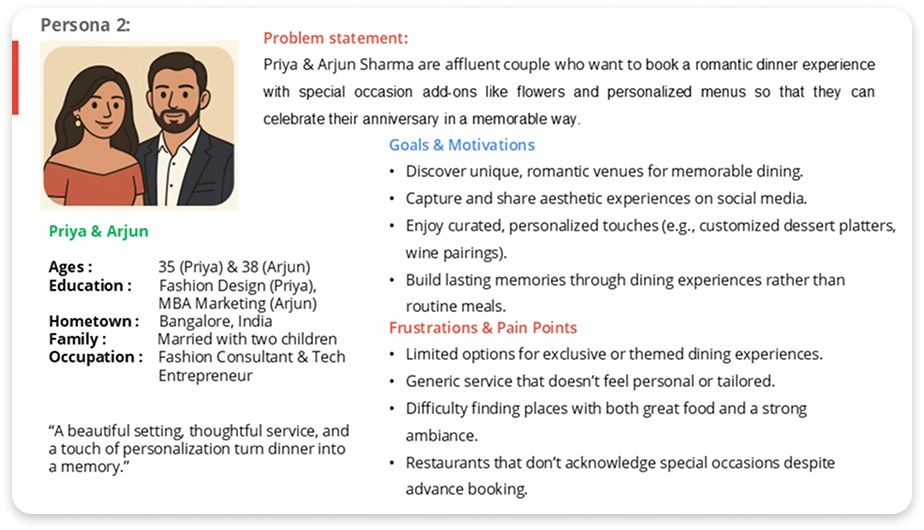
Persona2
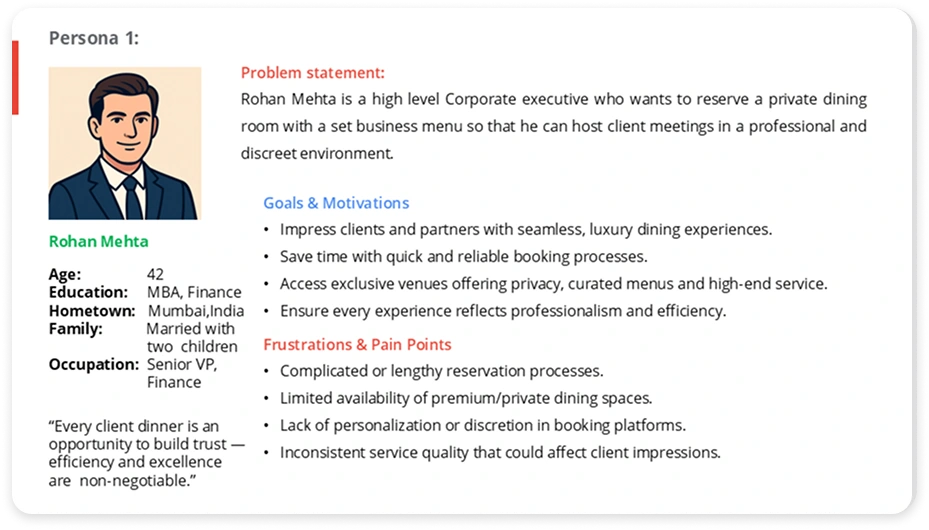
The personas guided the creation of user stories that shaped and influenced key design choices.
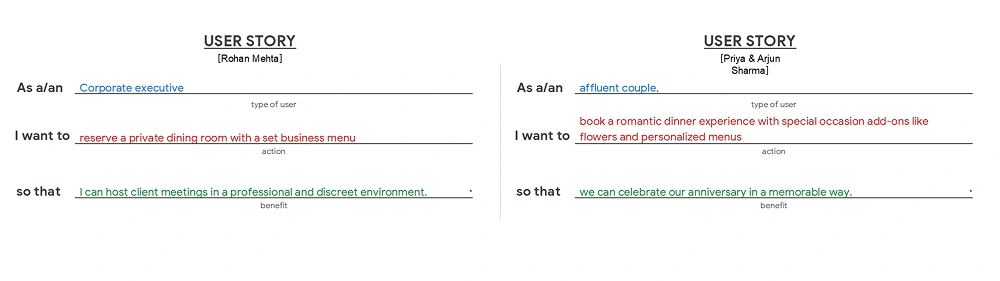
From these user stories, a clear goal statement was defined to align the design process with user needs.
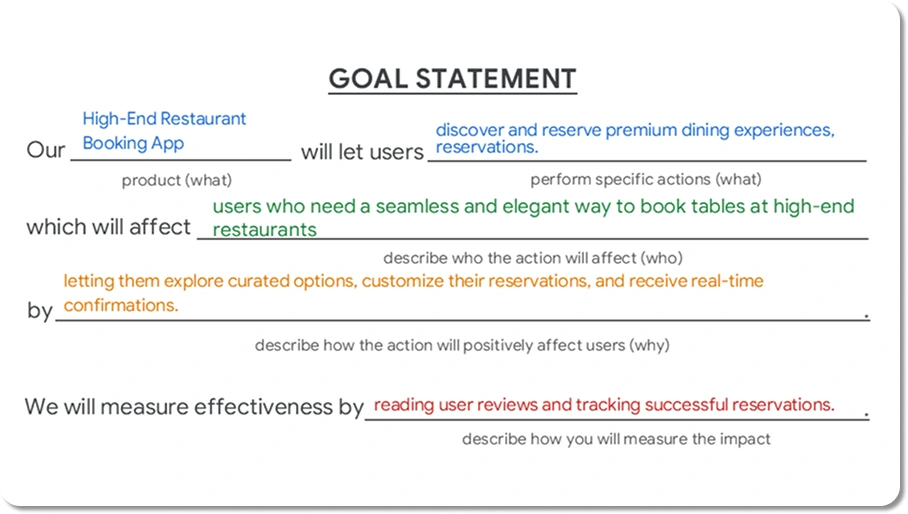
Goal Statement
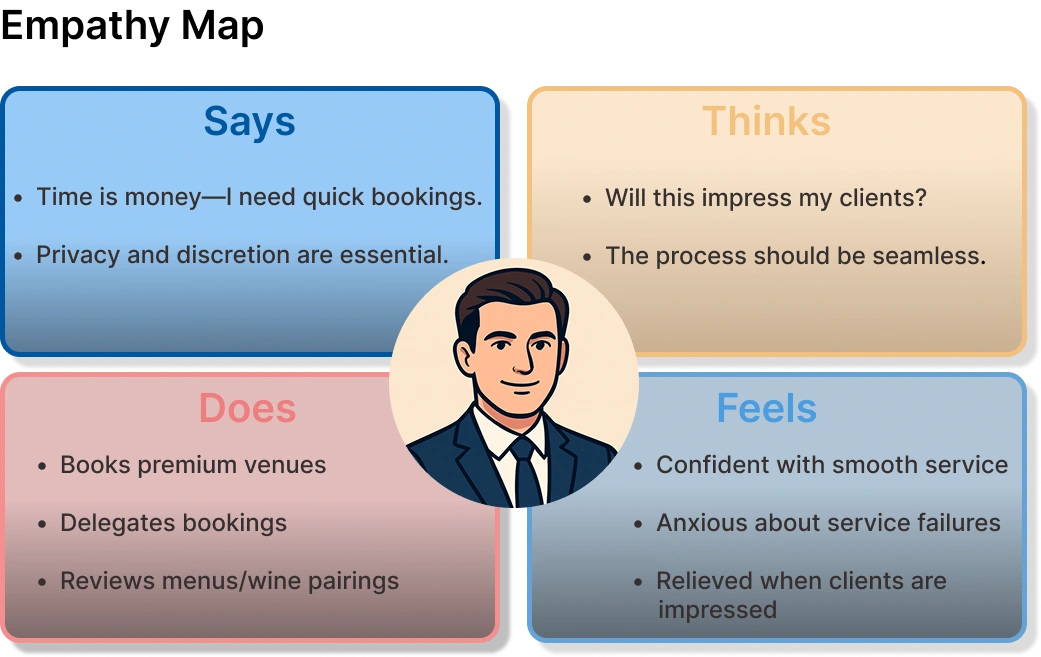
Empathy Map
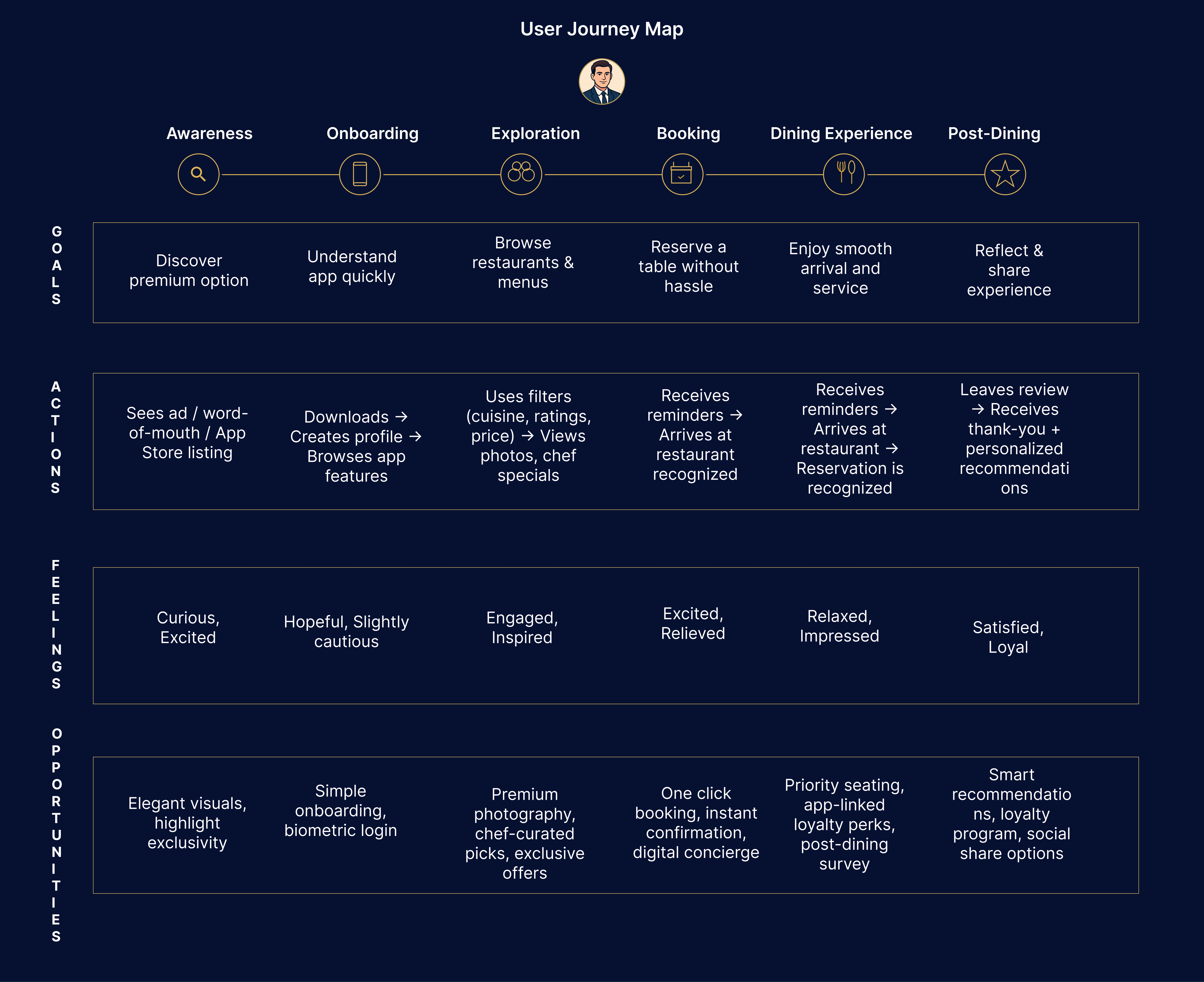
User Journey Map
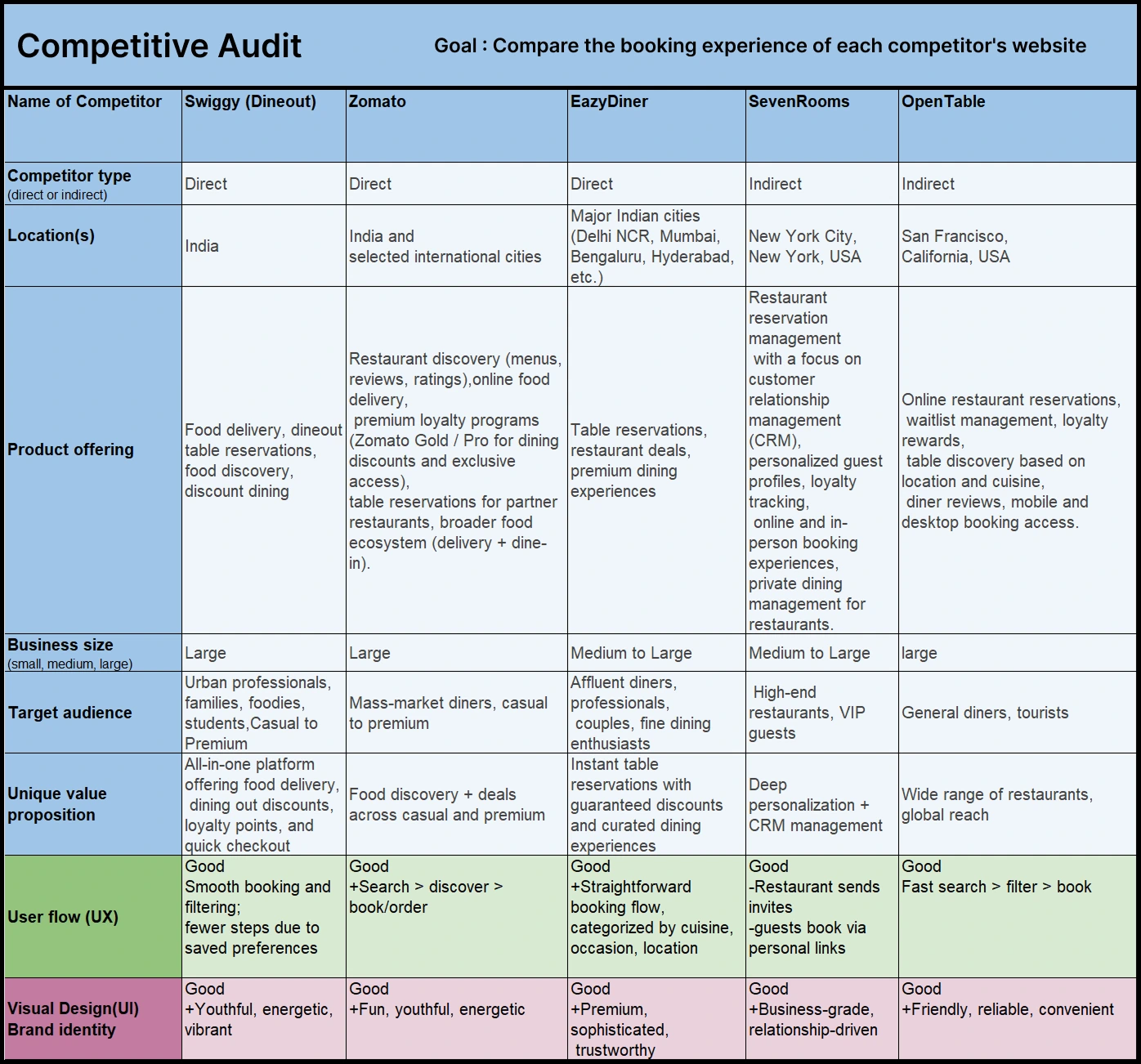
Competitive Audit
From the user problem statements and the goal statement Big Picture Story and Close up Stories are created
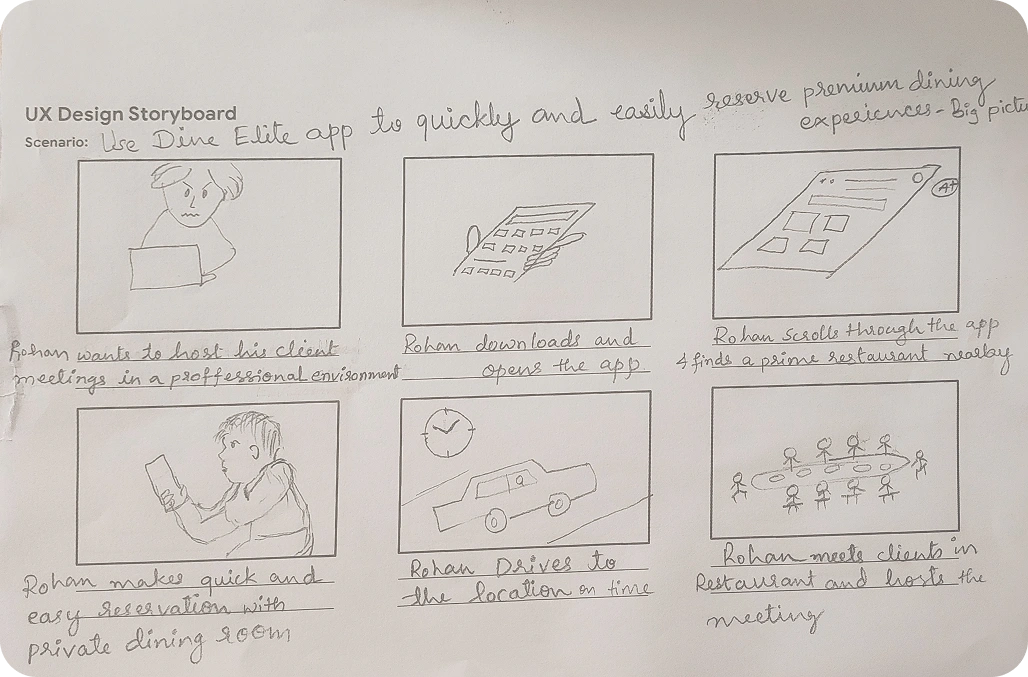
Big Picture Storyboard
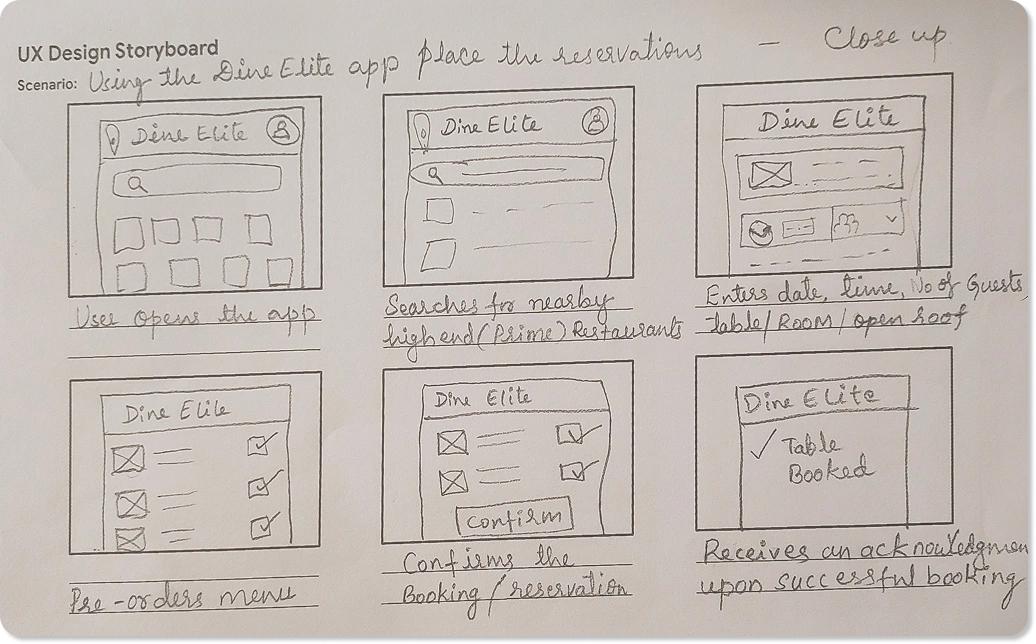
Closeup Storyboard
Building on the storyboards, initial layouts were explored through paper wireframes. Wireframes — a basic outline of the digital experience — are created to translate abstract ideas into tangible design structures. The digital wireframes are then presented in a more polished and refined form. A low-fidelity prototype was created to map out the core user flows and validate the structure before moving to high fidelity.
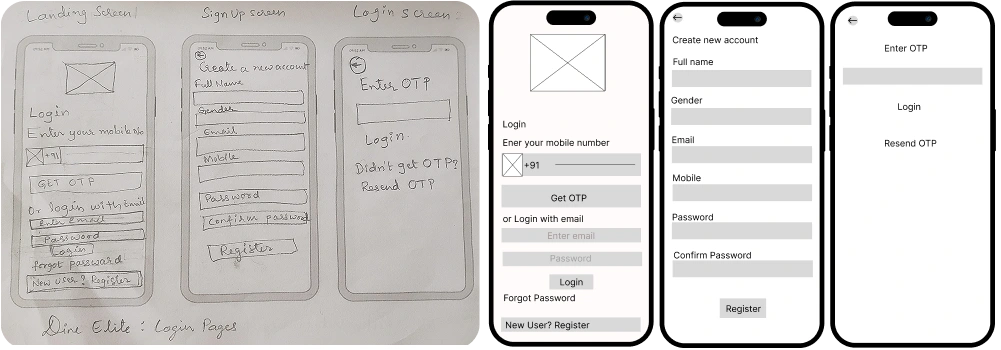
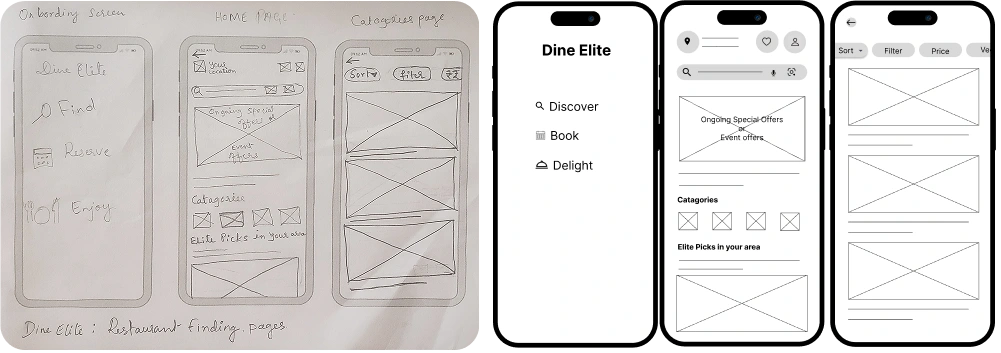
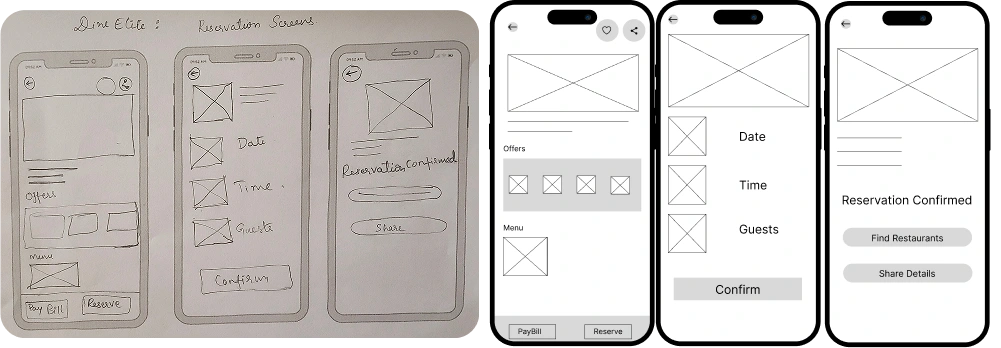
Paper wireframes and Digital wireframes
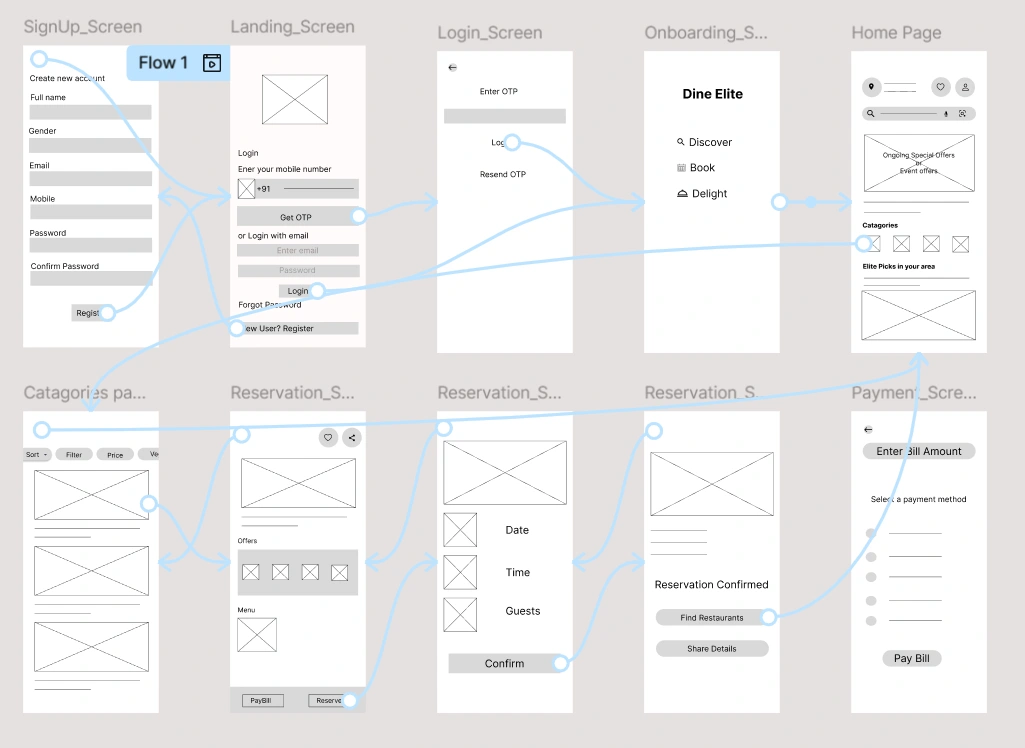
Low-fidelity prototype
Insights from the design principles learned in the course guided the transition from low-fi prototypes to high-fidelity mockups, showcasing the final look and feel of the product.The low-fidelity prototype was refined into high-fidelity mockups, focusing on visual hierarchy, typography, and brand consistency. Key considerations included usability, accessibility and creating an intuitive flow that aligned with user expectations. This transition brought the design closer to the final product while maintaining clarity and simplicity.
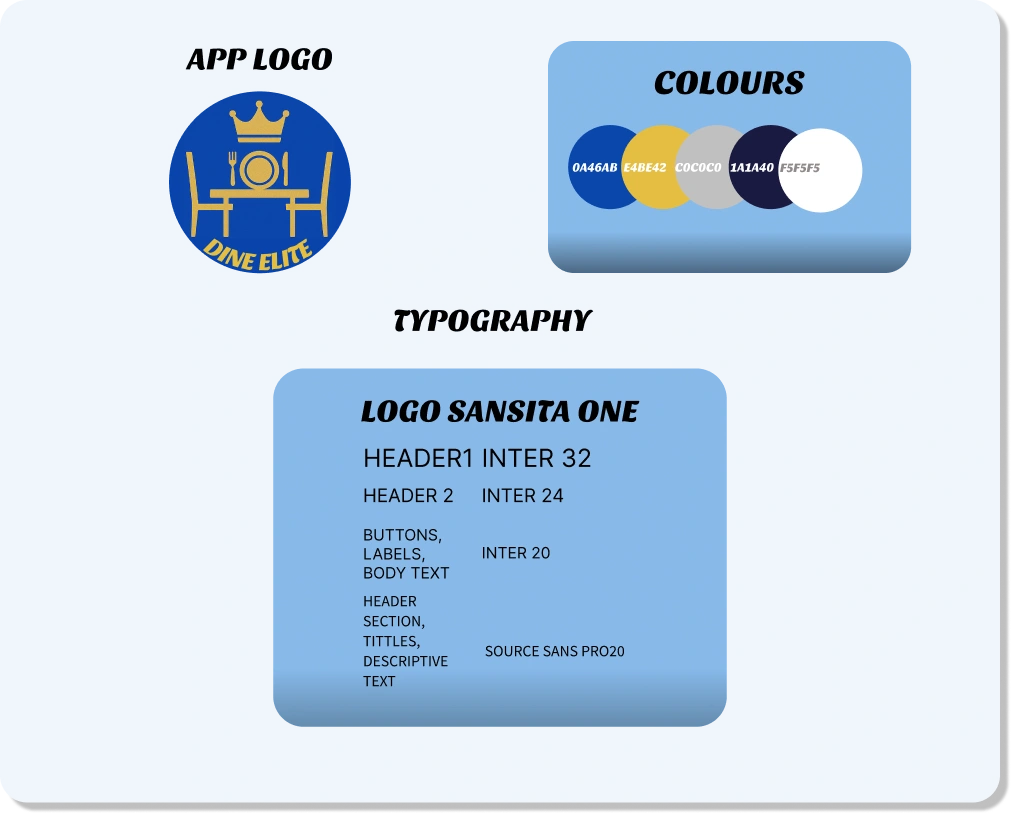
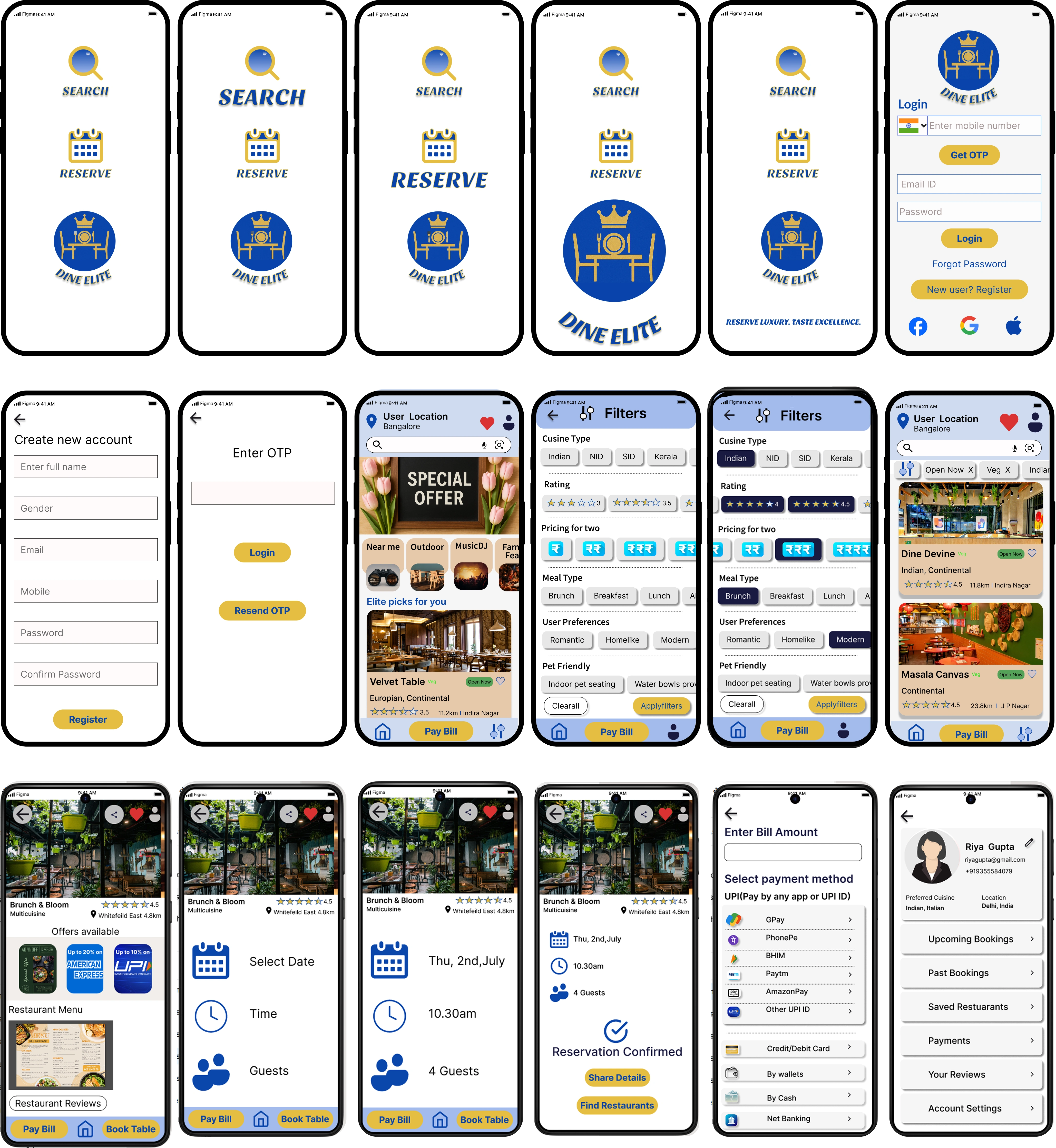
Mobile Mockups
Accessibility Considerations:
•Contrast & Readability:Ensured high contrast between text and background colors to improve readability for users with visual impairments.
•Tap Targets & Navigation: Designed buttons and interactive elements with sufficient size and spacing for easy navigation on mobile devices, supporting users with motor impairments.
•Consistent Layout: Maintained consistent layout and clear hierarchy to help users with cognitive disabilities navigate effortlessly.
Going Forward:
Takeaways
Focus on adding accessibility features, like screen reader labels and alt text for images.
Conduct usability testing with real users to validate flow and discover pain points.
Explore micro-interactions and animations to enhance the premium dining experience.
Consider personalization features, like favorite restaurants or recommended dishes, to increase engagement.
Impact :
The Dine Elite design demonstrates a clear, elegant, and easy-to-navigate booking experience. Peers reviewing the prototype noted the flow as intuitive and visually appealing, suggesting strong potential to enhance user satisfaction and engagement if implemented in the real world.
What I learned:
The importance of following a structured design process, moving from sketches to wireframes to high-fidelity mockups.How visual hierarchy, typography, and color choices can elevate the brand and create a premium dining experience.That usability and accessibility need to be considered early and revisited in each iteration, shaping the product from the beginning rather than as afterthoughts.The value of peer feedback and critique, which guided refinements and improved overall clarity.
Next steps :
• Conduct more usability testing with real users to validate the booking flow and identify improvement areas.
• Explore adding personalization features, such as saving favorite restaurants and tailored recommendations.
• Incorporate micro-interactions and animations to enhance the premium dining experience.
• Continue refining accessibility features (contrast, larger tap targets, alt text) to ensure inclusivity.
• Expand the prototype into more end-to-end scenarios, like payments, loyalty rewards, or cancellation flows.
Thank you for exploring my Dine Elite design journey. Just like a fine dining experience, I hope this project leaves you with a taste of clarity elegance and simplicity.
Contact
Email : soujanya.sh@gmail.com
LinkedIn : www.linkedin.com/in/soujanyavijayprakash
Like this project
Posted Jan 13, 2026
Dine Elite is a premium restaurant booking app designed to simplify table reservations, reduce waiting time, and enhance fine-dining experiences.
Likes
0
Views
2