Trontra Agent Platform Development and Launch

Daniel Afaqi


Overview
Trontra is a software platform with one goal: make software development completely agentic. You describe what you need in plain words, and agents take it to production. They write the plan, build it in phases, test each phase and ship it with every version kept. I designed and built it: the product, the brand, the interface, the platform and the site. It's live at trontra.com. Agent Builder is open today, and App Builder and Store Builder are coming soon.
The problem
AI can write code fast, but code that looks finished isn't software you can put in front of customers. Most tools stop at a draft. Nobody checks that it works, and the hard part is left to you: payments, security, email, a domain, legal pages, and a way back when a release breaks something.
I built Trontra for founders and small teams who want working software, not a demo. They need a plan they can read and approve, proof that each part works, and something live at the end.
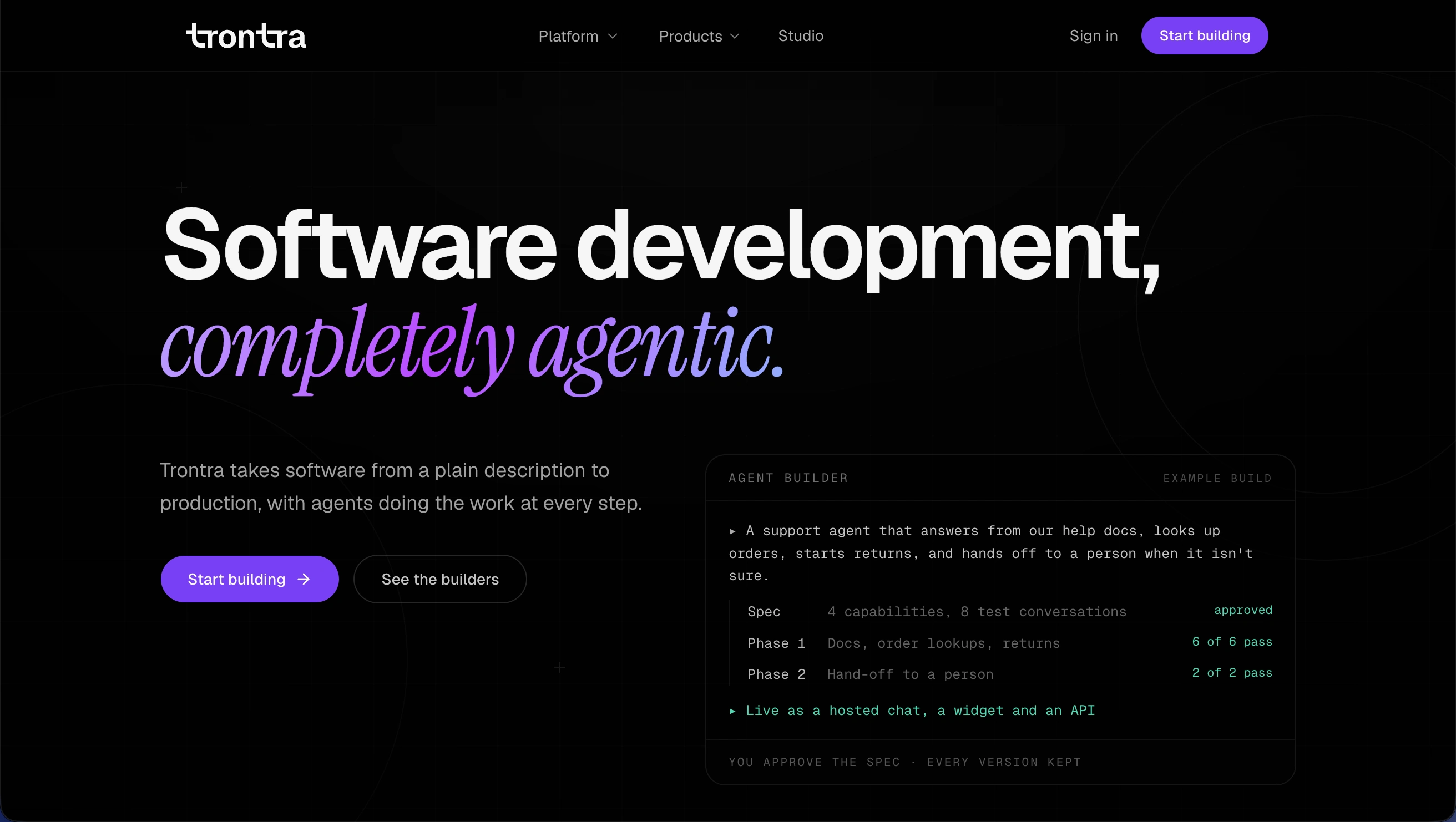
Hero setion
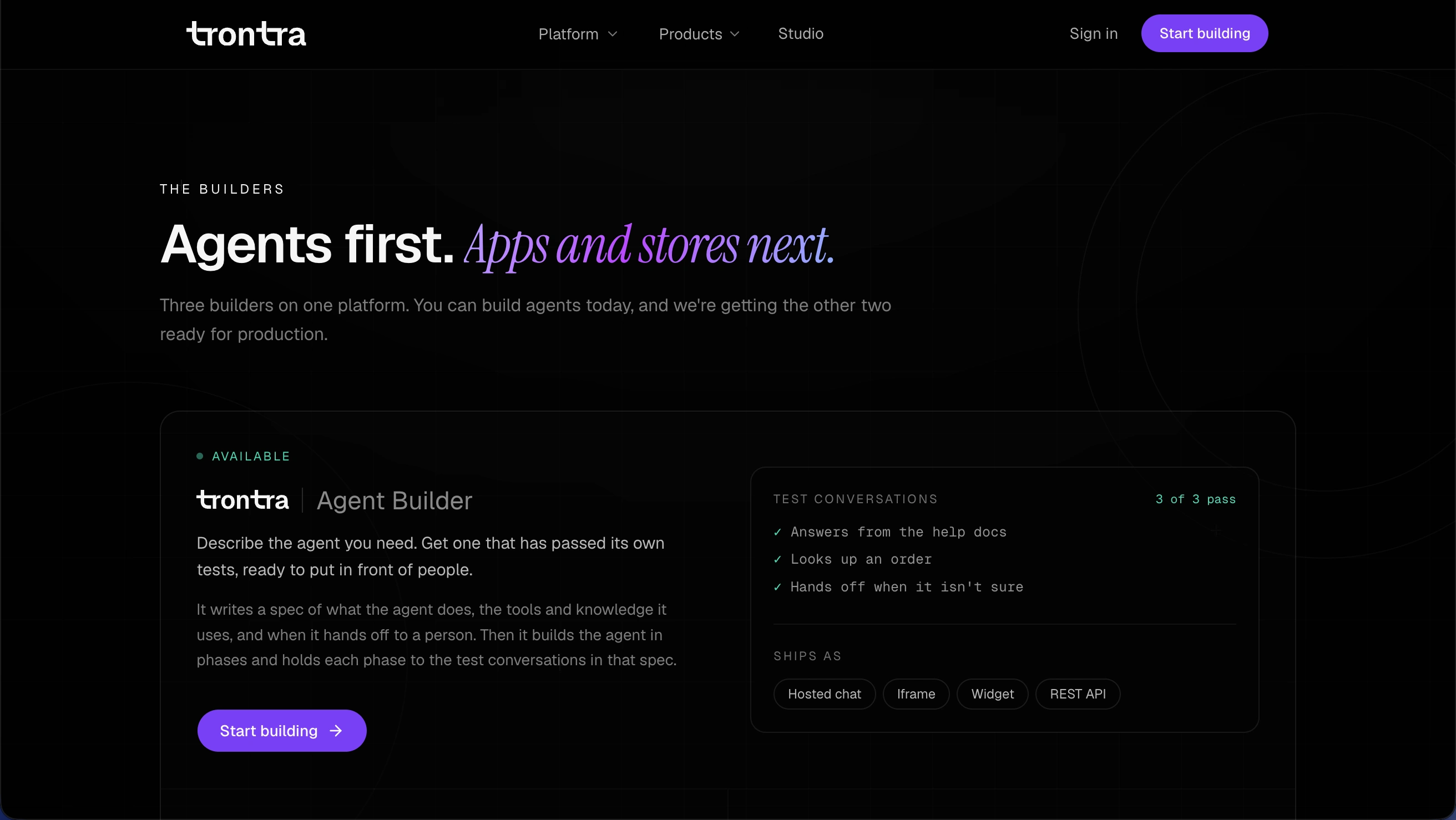
landing page section
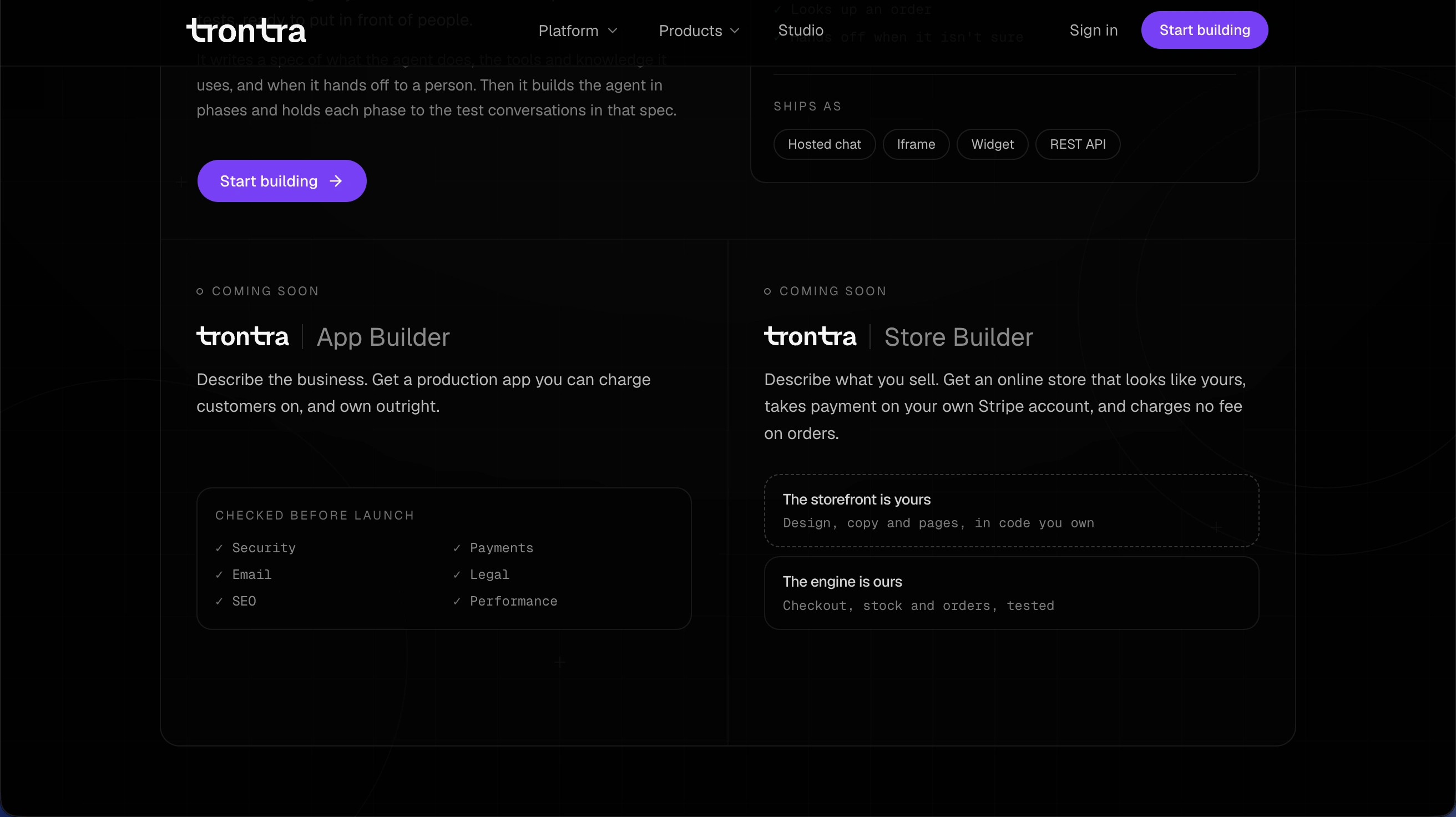
landing page section
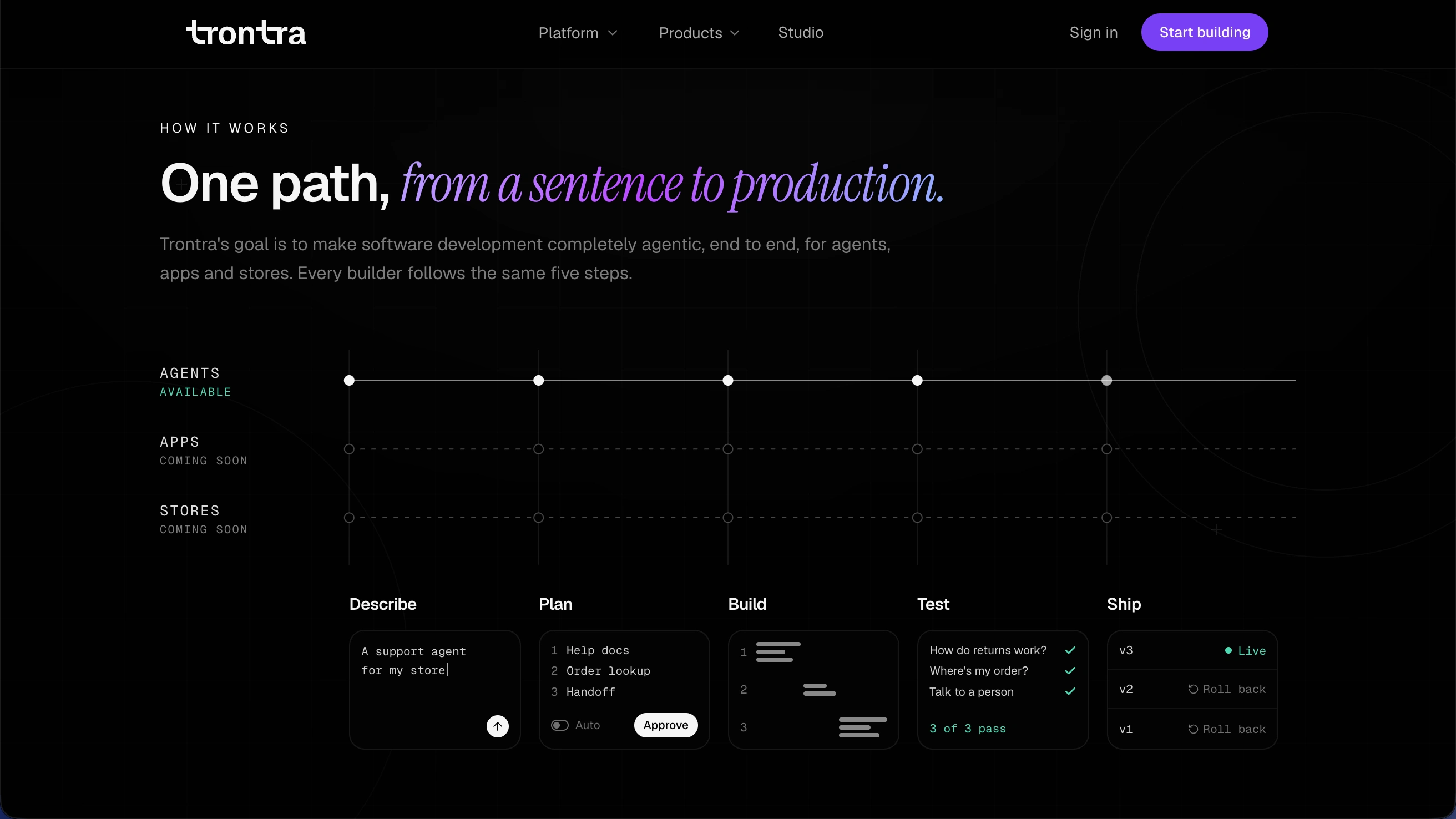
landing page section
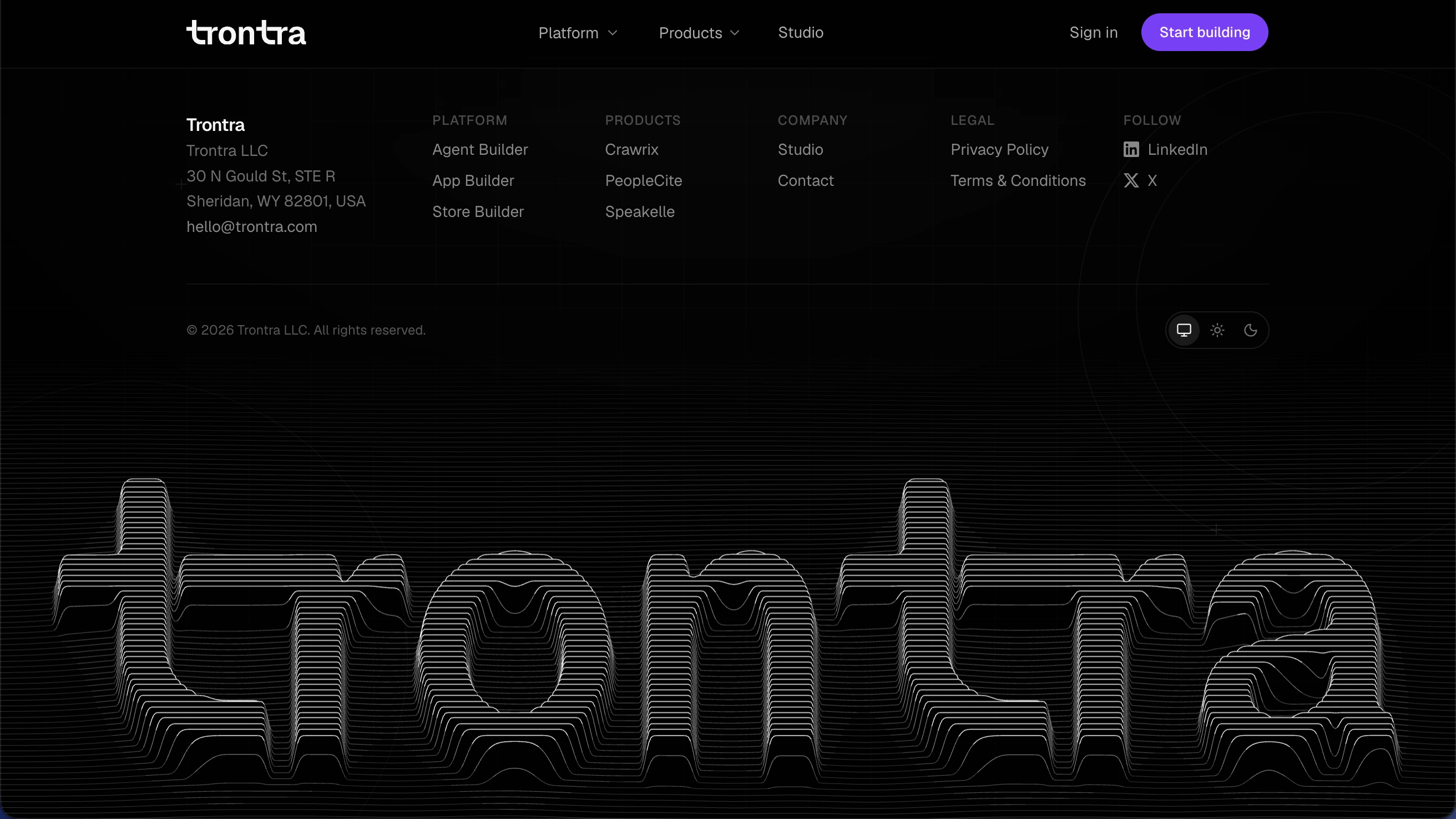
footer
What I built
One path for everything. Every builder follows the same five steps: Describe, Plan, Build, Test and Ship.
A plan you approve. Agents turn your description into a spec and split it into phases. You approve it, or pick Auto and they carry on.
Built in phases, tested as it goes. Agents build a few pieces at a time, and each phase is checked before the next one starts.
Agent Builder. Describe the agent you need and get one that has passed its own tests. Its spec covers what the agent does, the tools and knowledge it uses, and when it hands off to a person. It goes live as a hosted chat, an iframe, a widget or a REST API.
App Builder, coming soon. Describe the business and get a production app you can charge customers on and own outright. Before launch it's checked for security, payments, email, legal pages, SEO, performance, accessibility, reliability and your domain.
Store Builder, coming soon. Describe what you sell and get an online store that looks like yours, takes payment on your own Stripe account and charges no fee on orders.
Every version kept. Each release is saved, so you can roll back.
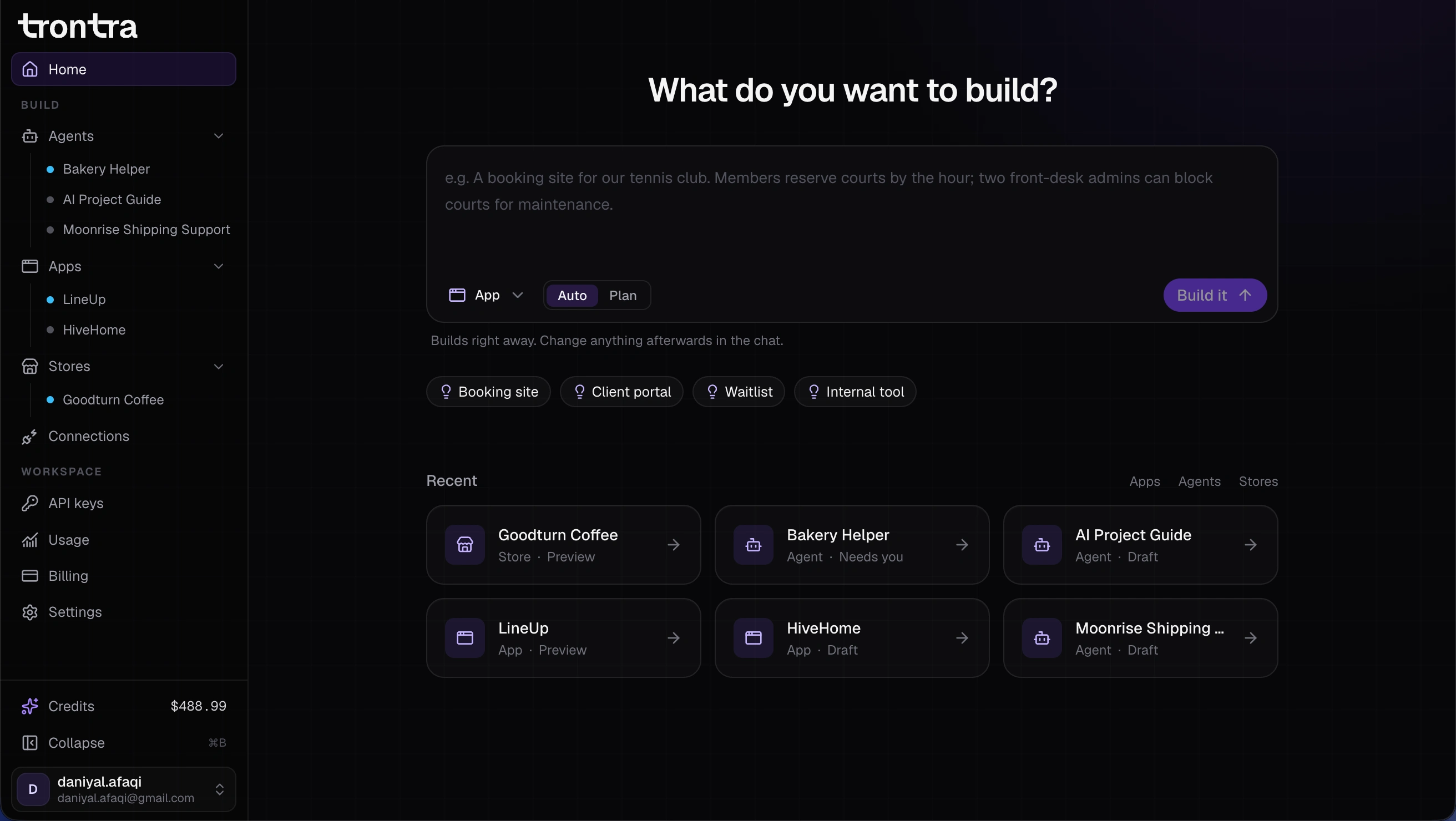
chat empty state ui
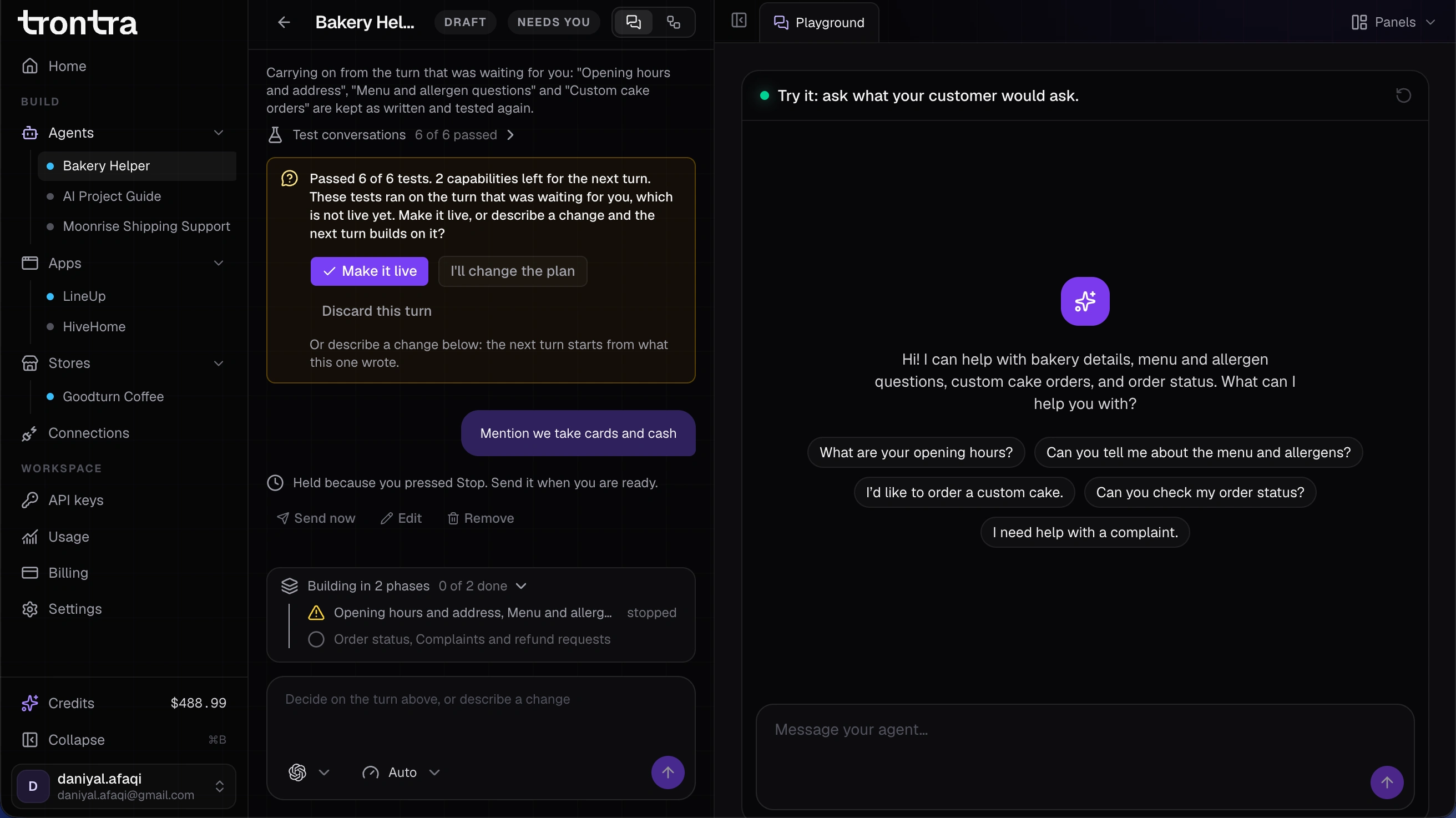
agent builder chat interface
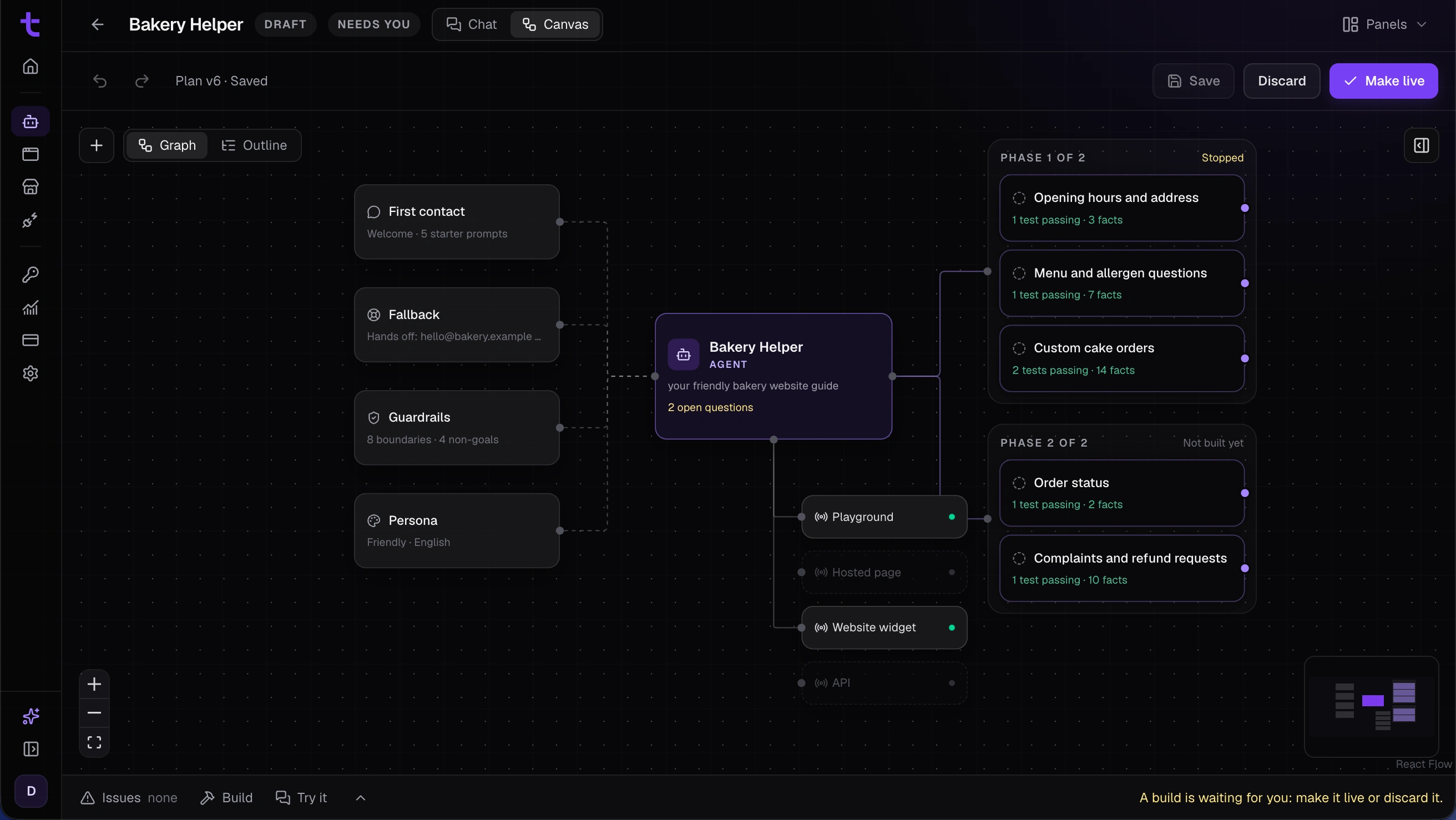
agent builder drag and drop interface
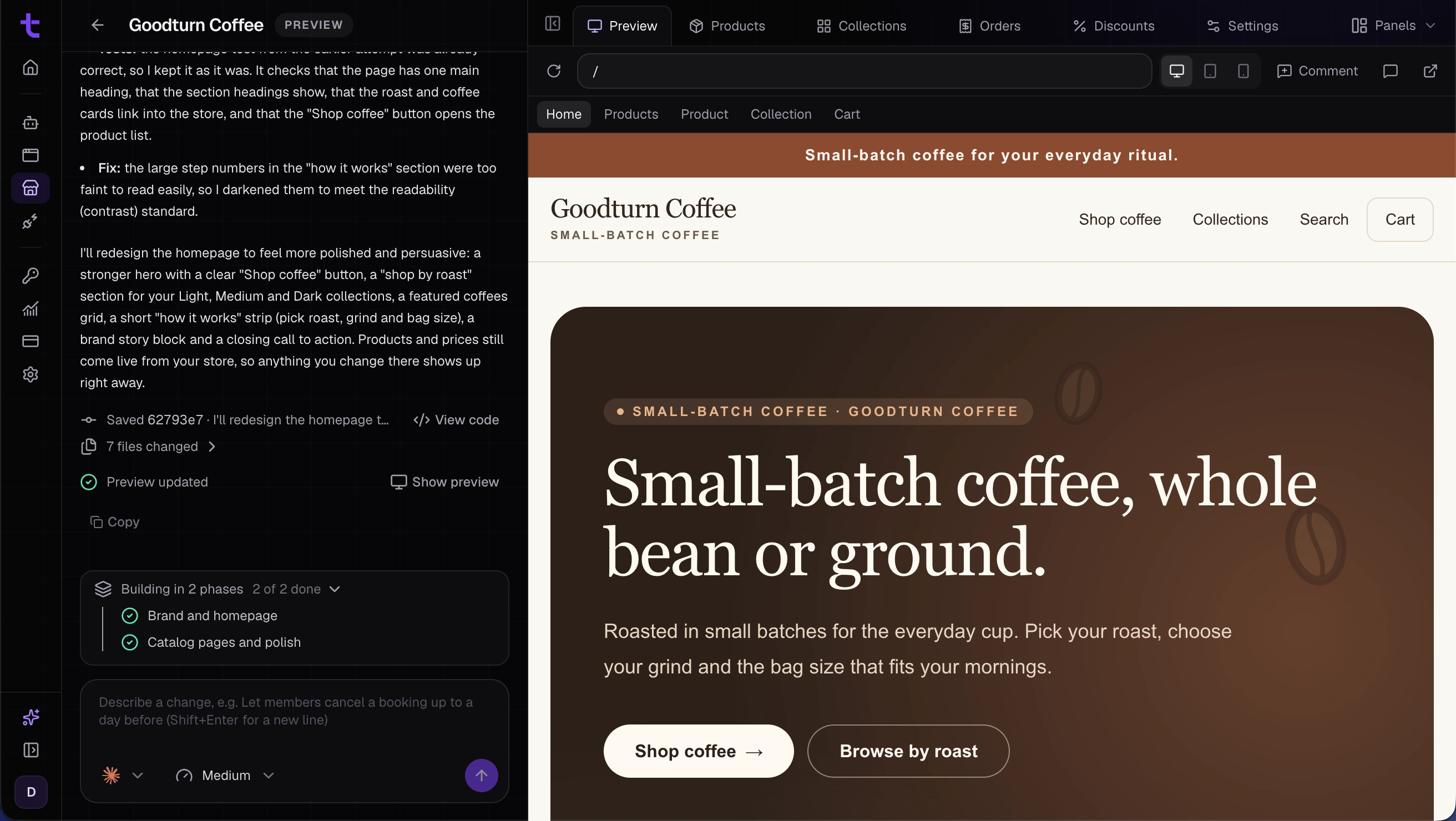
store builder
Decisions I made on purpose
Tested before it ships. A phase isn't done until it passes its checks. An agent is held to test conversations from its spec, and an app to typecheck, lint, build and tests.
A plan in plain words. You can read what will be built before any of it is built.
Agents first. I opened Agent Builder on its own and kept apps and stores on a waitlist until they're ready for production. The site only claims what the platform does today.
You own what you build. Apps are yours outright, and a store takes payment on your own Stripe account.
One process for three builders. Agents, apps and stores share the same five steps, so learning one teaches you the others.
Design
The brand comes from the product's main idea: nothing ships without passing a check. The logo is a lowercase t in two parts. The path, the stem and foot, is one unbroken stroke that comes in at the top and leaves to the right. The gate, the crossbar, is cut clear of the stem on the right. Nothing reaches the foot without crossing it.
The wordmark uses that symbol for both t's, and each gate carries on into the r, so "tr" is one shape, twice. The other letters are Geist at weight 636, where their stems are as thick as the symbol's. Violet is the one brand color. Cyan is kept for motion and never appears in the logo.
I made the 4 second logo animation too. The path draws itself with a cyan light at its head, the gate slides in and the cut flashes once. Then the camera pulls back while the rest of the name arrives, and it ends on the flat violet wordmark.
Around the logo I built a full brand kit: every logo format, app icons, favicons, share images and email headers, lockups for the three builders, "by trontra" marks for the products Trontra runs, and "Built with trontra" badges for customers' agent pages.
On the site, motion explains the product. The hero types out an example build, from the brief to a spec, phases and passing tests. The "One path" figure plays the five steps in turn. The site and the platform both come in light and dark.
How it's built
Trontra is a TypeScript monorepo with two Next.js apps, the site at trontra.com and the platform at app.trontra.com. Supabase handles accounts and data, Stripe handles subscriptions, and both apps run on Cloudflare Workers. Builds run on the server, so a build keeps going after you close the tab. The logo animation is made in code with Remotion.
Where it is now
Trontra is live at trontra.com. You can build agents today, and App Builder and Store Builder have a waitlist. Trontra also runs three products I built: Crawrix, PeopleCite and Speakelle.
The part I'm happiest with is the logo. The product's promise, tested before it ships, is drawn into the letter t, so it shows up every time the name does.
My Role
Founder. Product strategy, brand identity and logo, motion design, UX and UI design, design system, full-stack engineering, AI agent product, subscriptions and billing, marketing site and launch.
Skills
Product Design, UX Design, UI Design, Brand Identity, Logo Design, Motion Design, Design Systems, Web App Development, Full-Stack Development, AI Product Development, AI Agents, Landing Page Design, Copywriting, SaaS
Tools
Next.js, React, TypeScript, Tailwind CSS, shadcn/ui, AI SDK, Supabase, Stripe, Cloudflare Workers, Vitest, Remotion, PostHog
Like this project
Posted Nov 9, 2026
I built and designed the Trontra Agent platform end to end. It allows to build Apps, AI Agents and Stores in natural language.
Likes
1
Views
3
Clients
Trontra