Fuel Station Stock System – Architecture Design & Handoff

Crystal Zhu


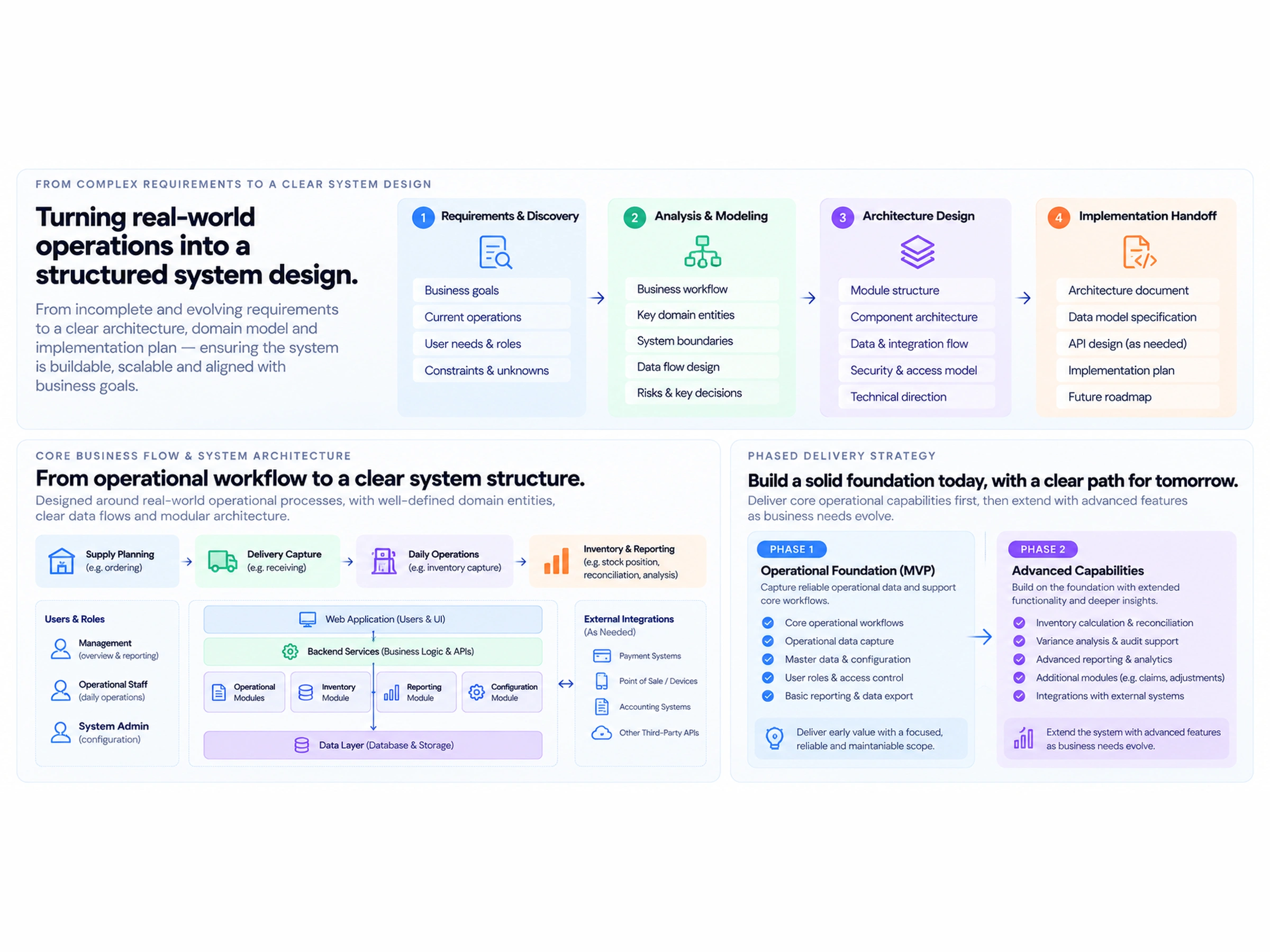
Fuel Station Stock System — Architecture Design & Handoff
Overview
This case study shows how I turned complex operational requirements for a multi-location fuel stock system into a structured system design and implementation-ready architecture.
The work went beyond defining features. I analyzed the underlying business workflows, identified the core domain objects and system boundaries, structured the data flow, separated immediate delivery needs from future capabilities, and translated the result into a clear technical handoff.
The goal was simple: give both business stakeholders and developers a shared understanding of what the system needs to do, how the pieces fit together, and what should be built first.
The Challenge
The system needed to support operational processes across multiple locations while creating a reliable foundation for future inventory and reporting capabilities.
The difficult part was not simply designing screens or APIs. The requirements involved interconnected business processes, physical operations, data dependencies, user responsibilities, and functionality that needed to evolve over multiple phases.
Building everything at once would have increased complexity and implementation risk.
My Role
System Architect & Backend Consultant
I was responsible for turning the business requirements into a system strucutre that could be implemented and extended.
My work included:
Business workflow analysis
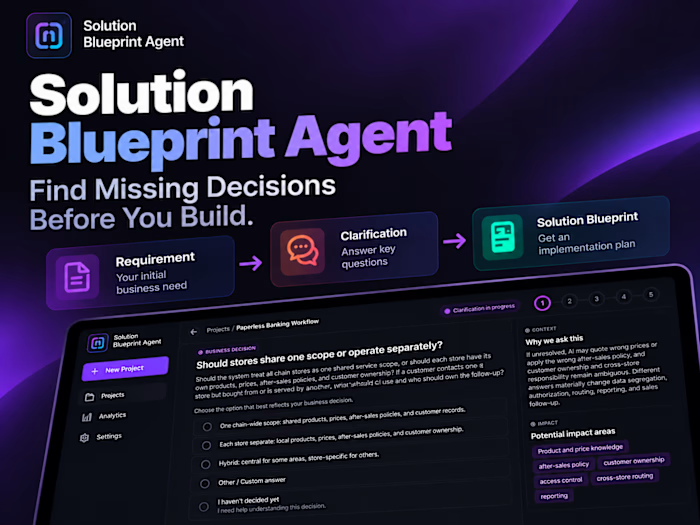
Requirement clarification and gap identification
Domain and entity modeling
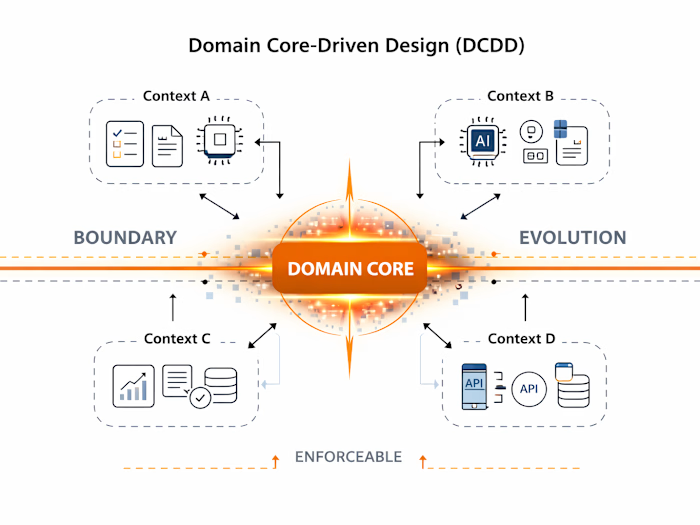
System boundary and responsibility design
Data-flow design
Role and access modeling
MVP / future-phase scope definition
Technical architecture
Implementation-ready documentation and handoff
From Business Operations to System Design
Instead of starting with database tables or APIs, I first modeled how the business actually operates.
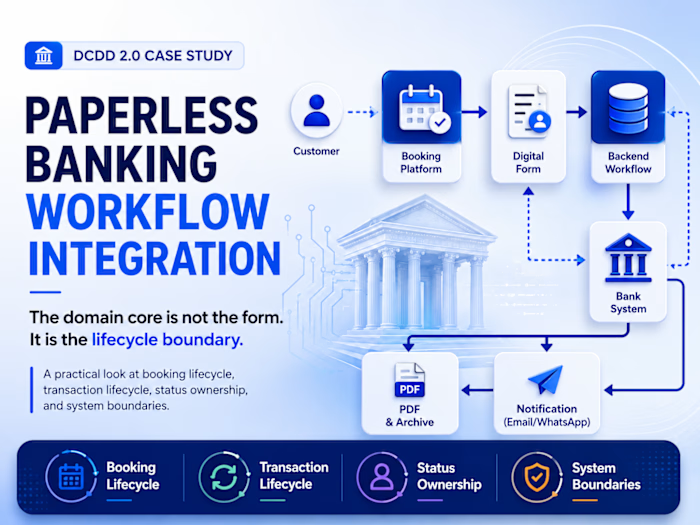
I identified the chain of operational events, the information created at each stage, the responsibilities of different users, and the relationships between the core business objects.
From there, I translated the business flow into system responsibilities and data relationships.
This created a clear path from:
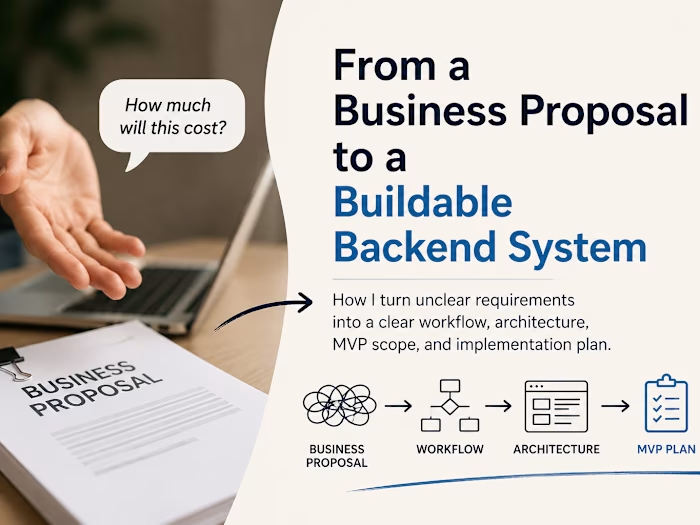
Business Operations → Domain Model → System Boundaries → Data Flow → Technical Architecture
Designing for What Exists Now — and What Comes Later
One of the key architectural decisions was separating the immediate operational foundation from more advanced capabilities.
The first delivery phase focused on capturing reliable source data and supporting the essential operational workflow.
More complex capabilities — such as inventory intelligence, reconciliation, historical controls, advanced reporting, and additional integrations — were deliberately separated into later phases.
This allowed the system to deliver useful functionality earlier without forcing future business logic into the first implementation.
Architecture & Handoff
The final design translated the business analysis into a devlopment-ready architecutre covering:
Core business workflows
Domain entities and relationships
Module responsibilities
Data flows
User roles and access boundaries
Delivery scope and future extensions
Backend and persistence responsibilities
Integration points
Technical implementation direction
The documentation was structured so that both technical and non-technical stakeholders could understand what the system does, why it is designed that way, and how development should proceed.
Outcome
The result was a clear architectural foundation that transformed a complex operational problem into a structured implementation plan.
Rather than treating the project as a collection of independent features, the design connected business workflows, data, responsibilities, and future system capabilities into one coherent model.
The deliverable provided a practical reference for development while preserving room for the system to evolve as additional business rules and operational requirements became clearer.
What This Case Study Demonstrates
Business understanding → Workflow modeling → Domain design → System architecture → Implementation planning
This is how I approach complex systems: understand the business first, make the important decisions and boundaries explicit, then design the technology around them.
All client-specific information, operational details, and identifying data have been removed or generalized for confidentiality.
Like this project
Posted Dec 17, 2025
Turned complex fuel operations into a clear system design, covering workflows, domain modeling, data flows, phased delivery, and implementation handoff.