Built with Framer

Meridian: edge network website
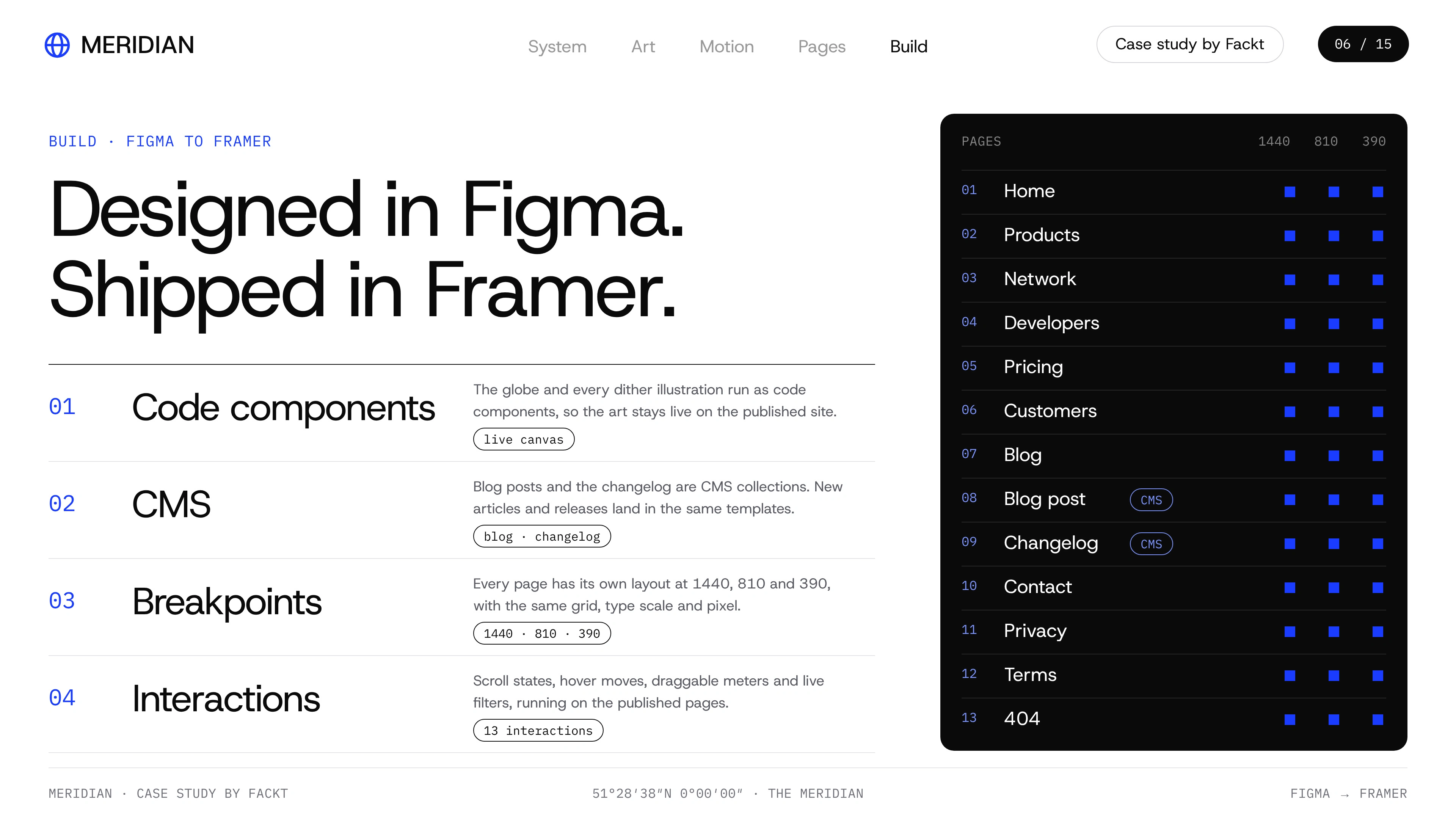
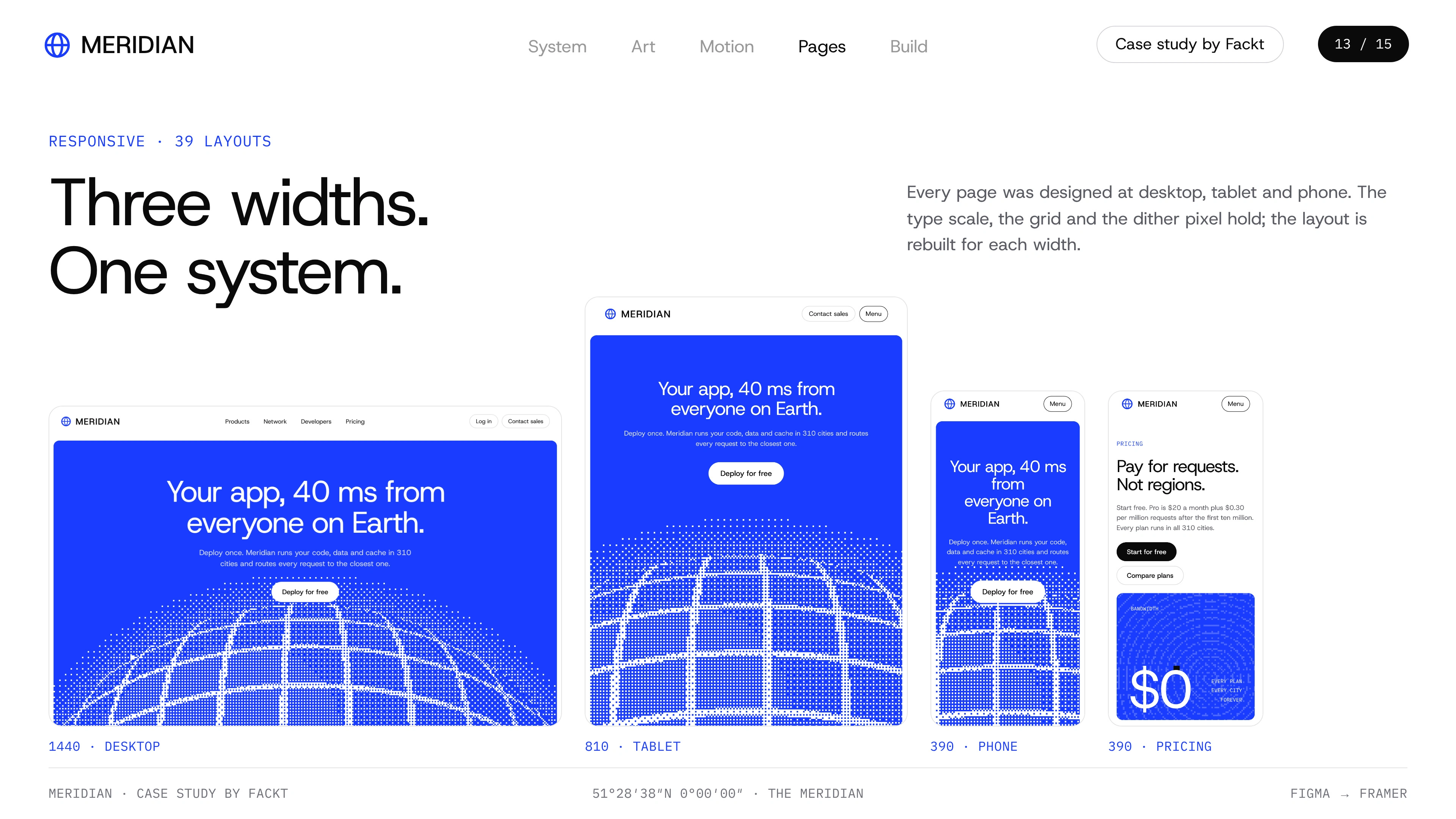
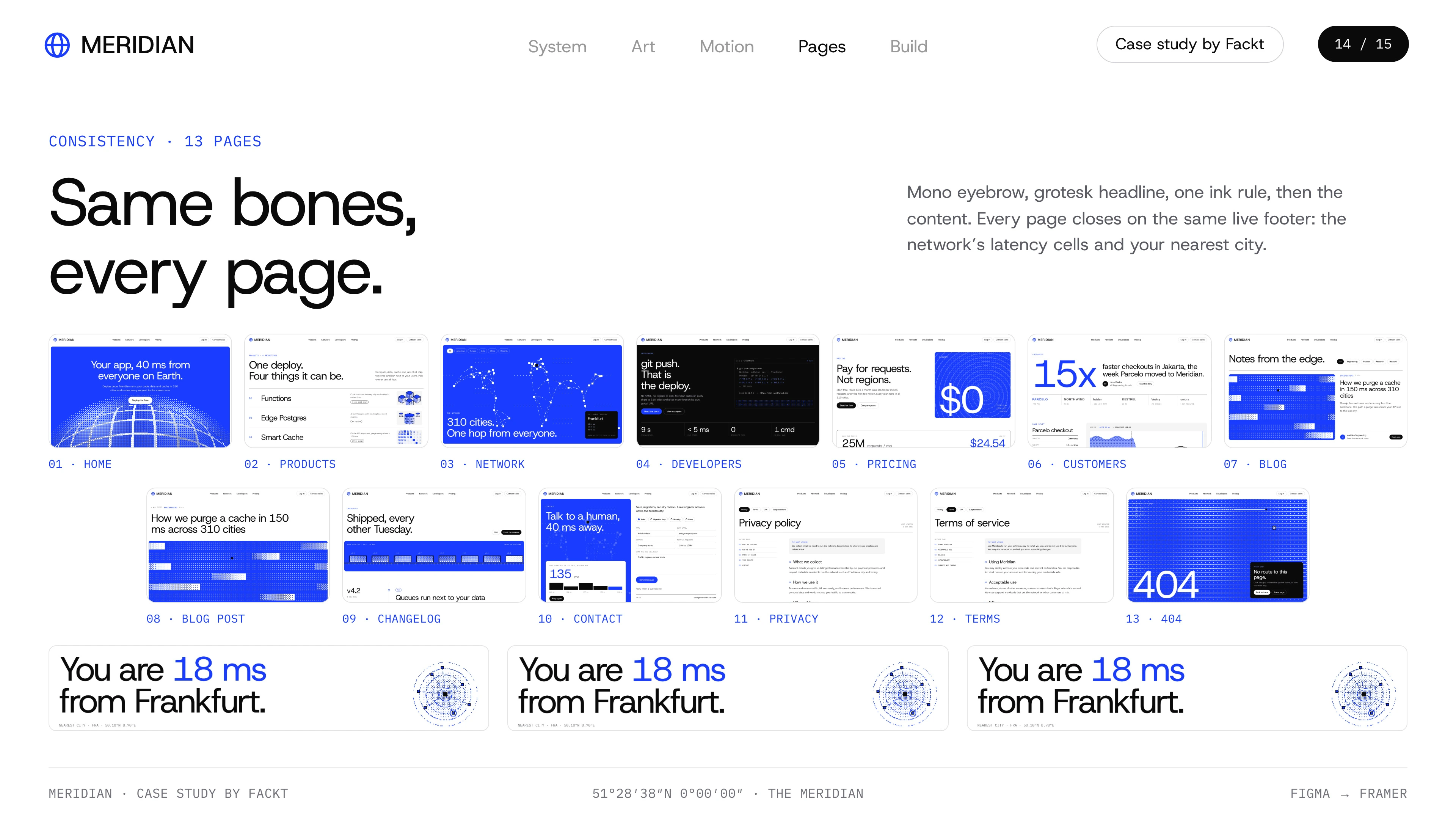
Meridian runs code, data and cache in 310 cities and routes every request to the closest one. We designed its marketing site in Figma and built it in Framer: thirteen pages, each laid out at desktop, tablet and phone.
The art is code
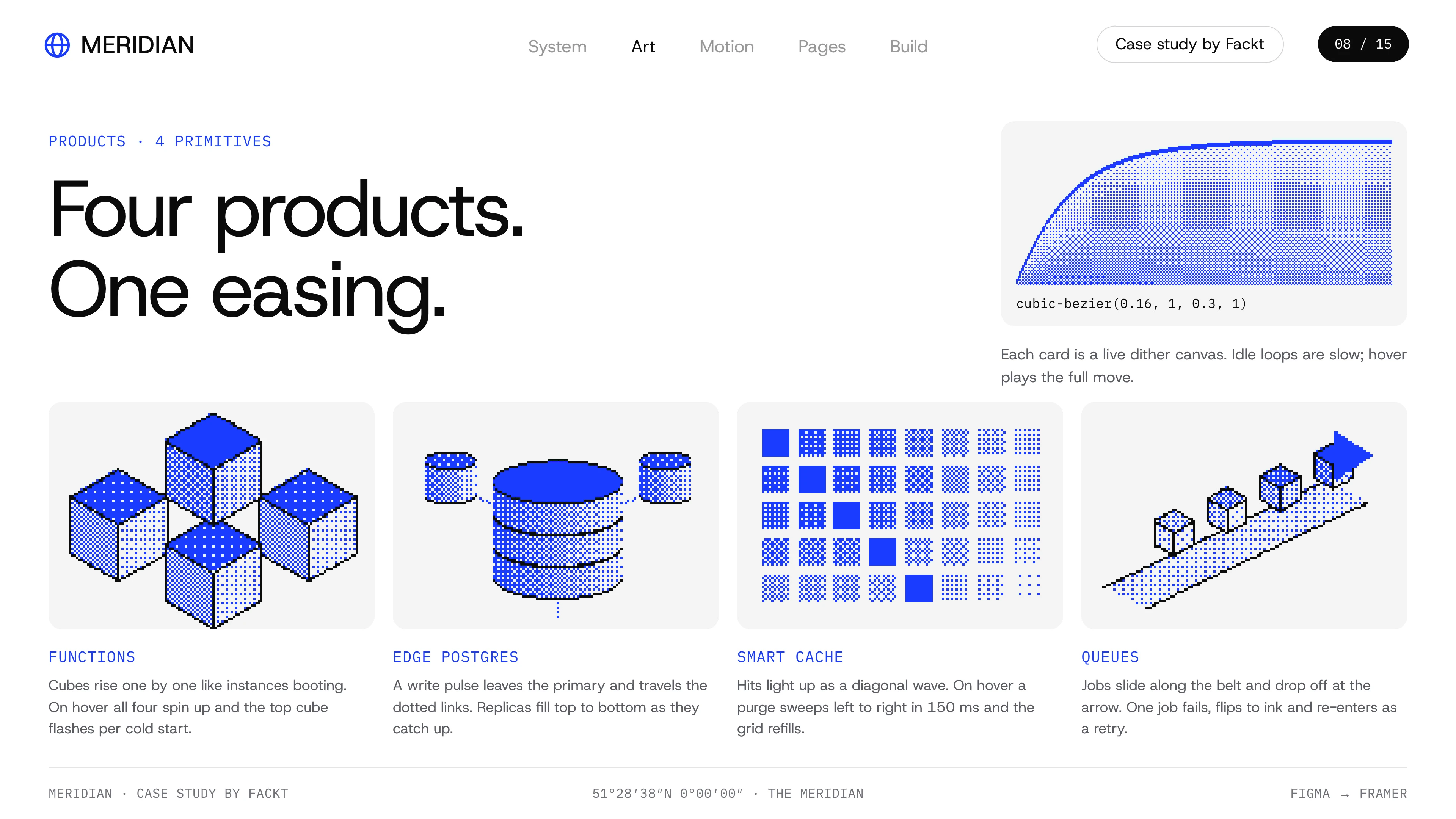
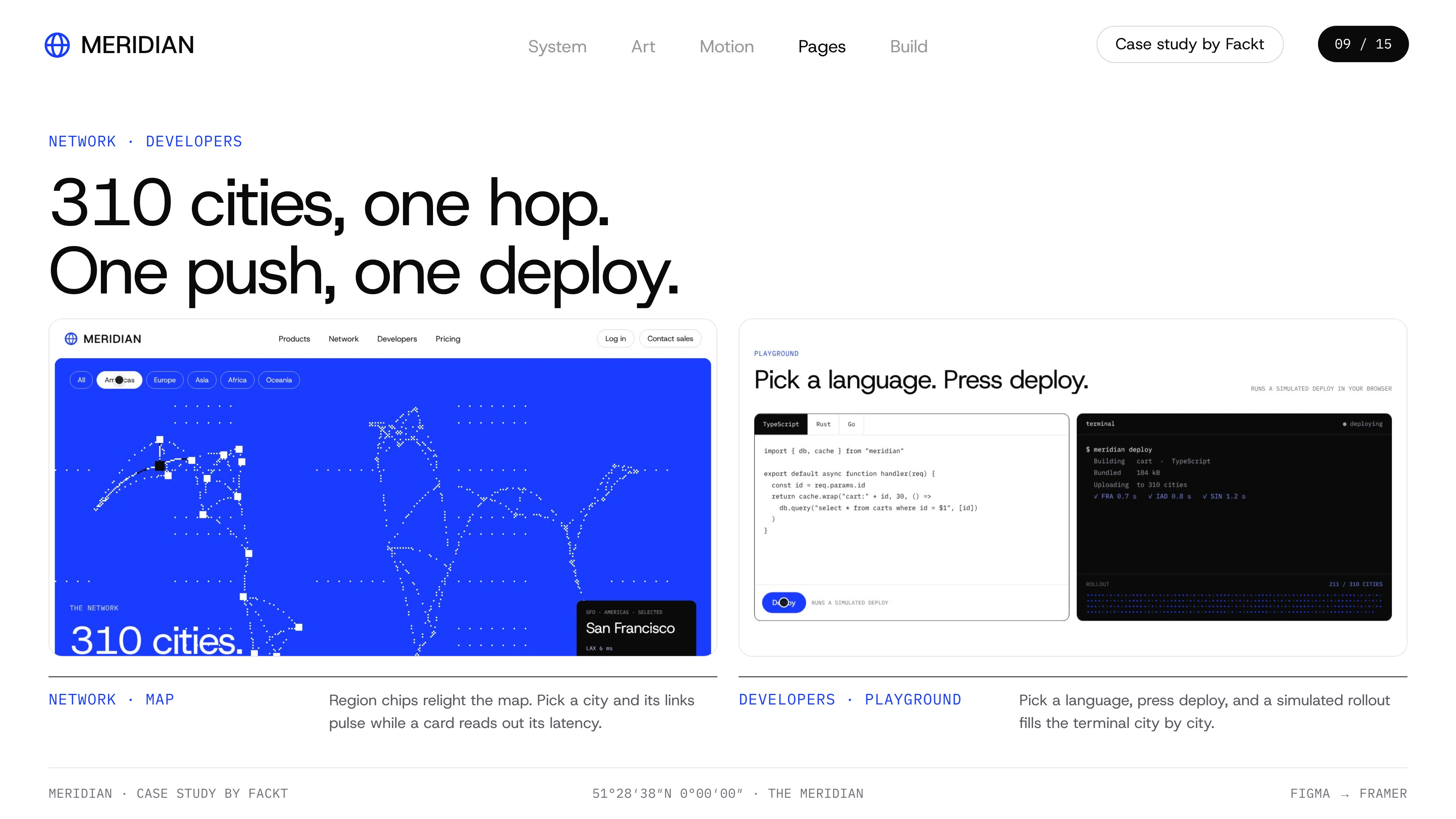
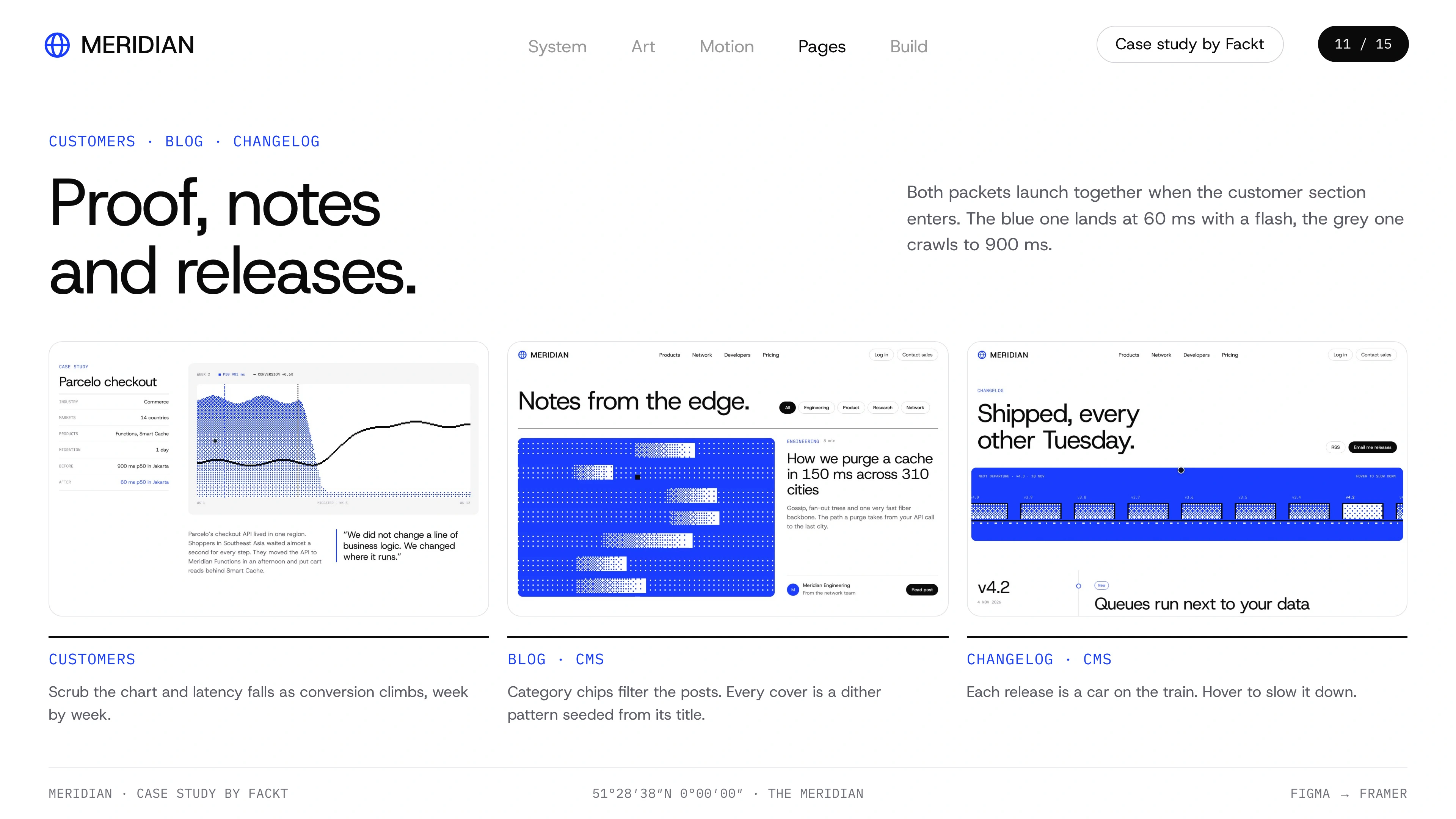
Not one illustration on the site is a static image. The globe, the network map, the product cards, the blog covers, the charts and the release train are all canvases drawn in code and dithered through a single 4x4 Bayer matrix, in two colors. In Framer they run as code components, so the art stays live on the published pages.
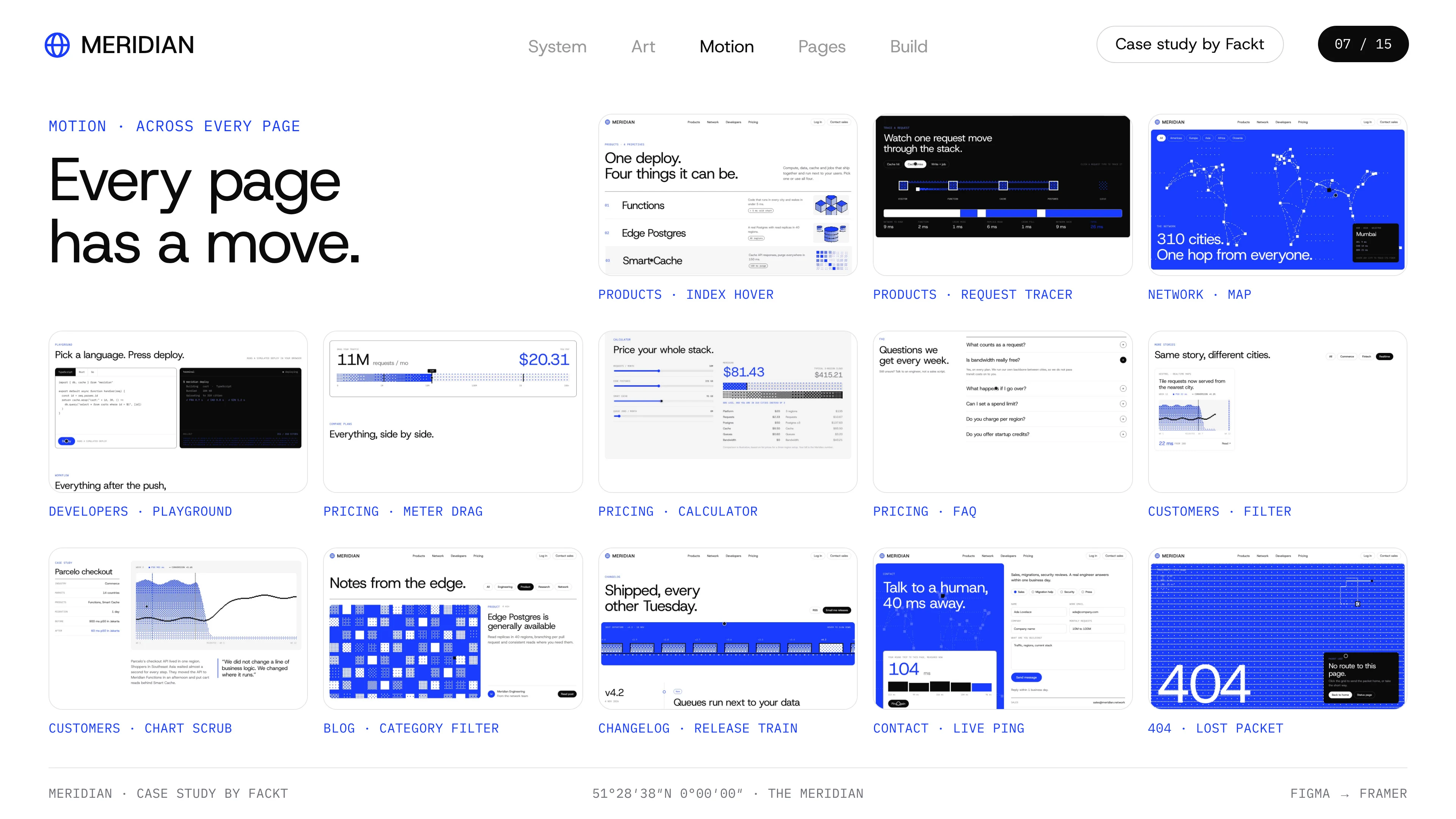
Animations across pages
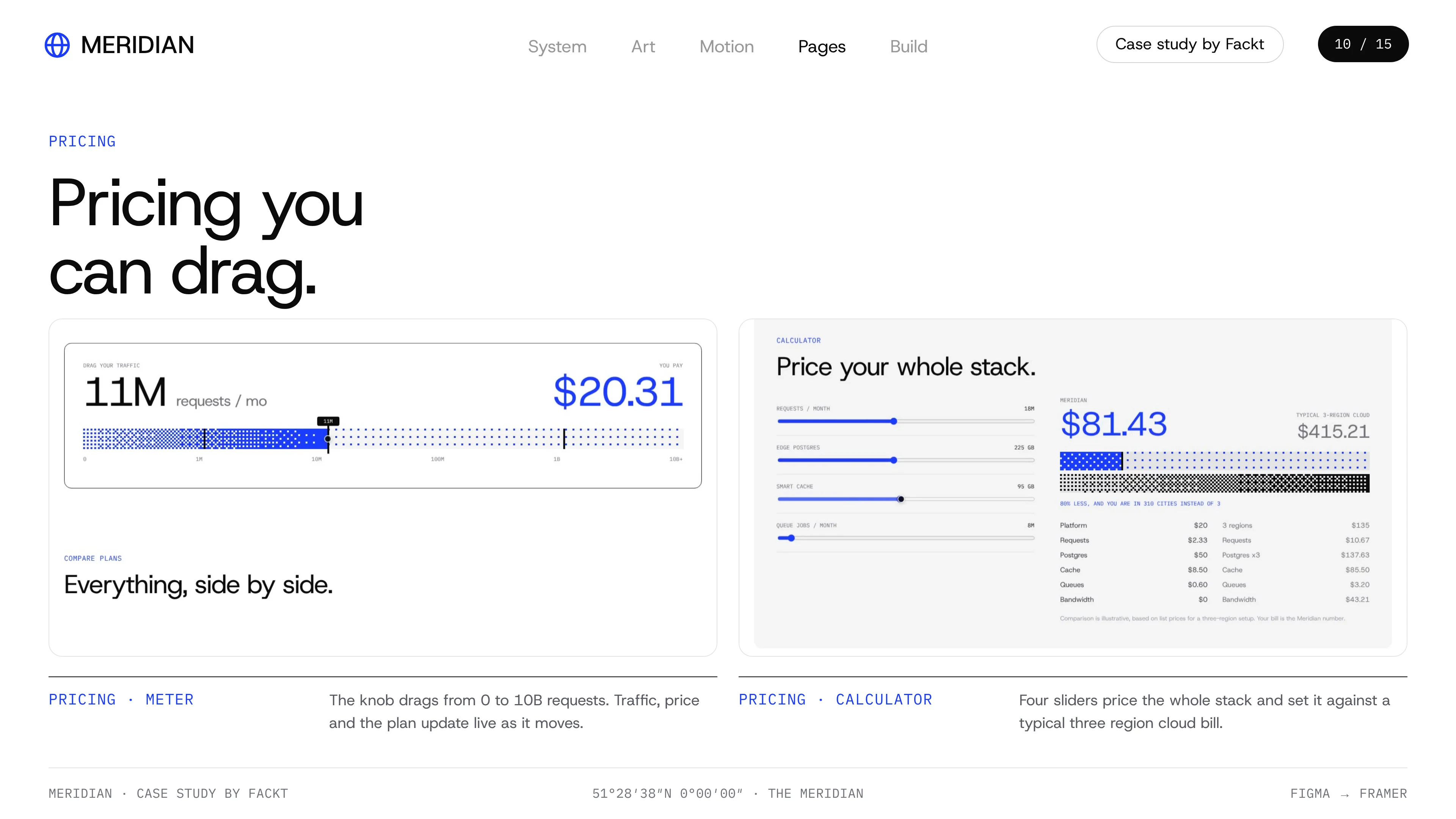
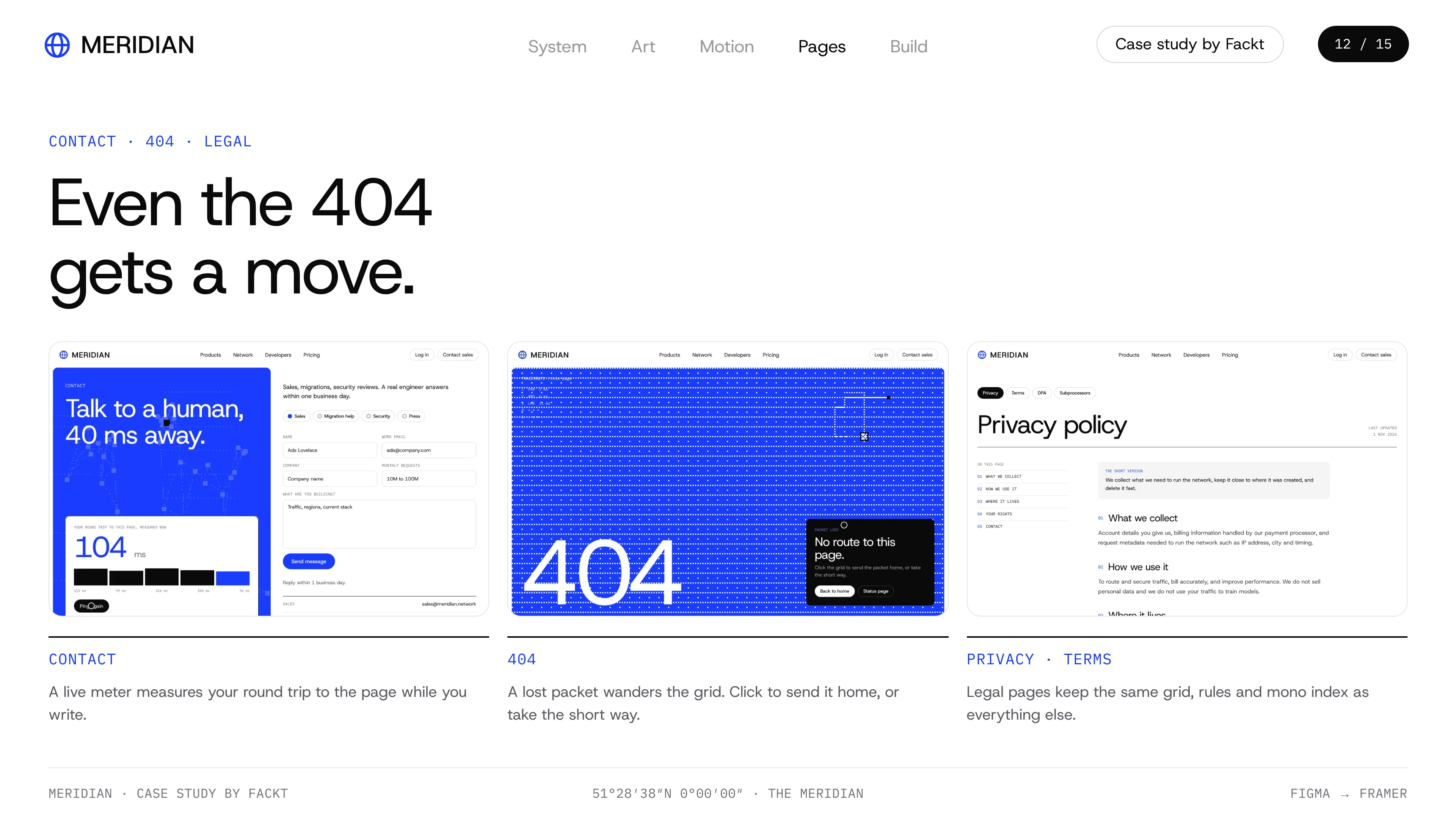
Every page has its own move. The home globe is one canvas with four scroll states: it rises, lights its routes, zooms to the visitor’s nearest city, then breaks into pixels that fall into six live latency cells. Products trace one request through the stack, the pricing meter drags from zero to ten billion requests, the changelog runs as a train you can slow down, the contact page measures your round trip, and the 404 sends a lost packet home. All four product illustrations share one easing curve.
Design consistency
Two typefaces, Host Grotesk and IBM Plex Mono. Five colors: ink, electric blue, paper, tint and sky. Every page follows the same bones: mono eyebrow, grotesk headline, one ink rule, then the content, and every page closes on the same live footer. The blog and changelog are CMS collections that reuse the same templates.
What we did
Design system, page design, motion and the Framer build.
Full case study: https://fackt.io/work/meridian
0 likes · 6 views · Nov 12, 2026
We designed and built the marketing site for Meridian, an edge network that runs code in 310 cities. It’s thirteen pages, designed in Figma and built in Framer


