
Elementor 4’s Atomic Editor architecture changes the performance conversation. Here is how to position it to clients today.
With the release of Elementor 4.0 and its lean, React-based Atomic Editor, the "Elementor sites are slow" argument officially dies.
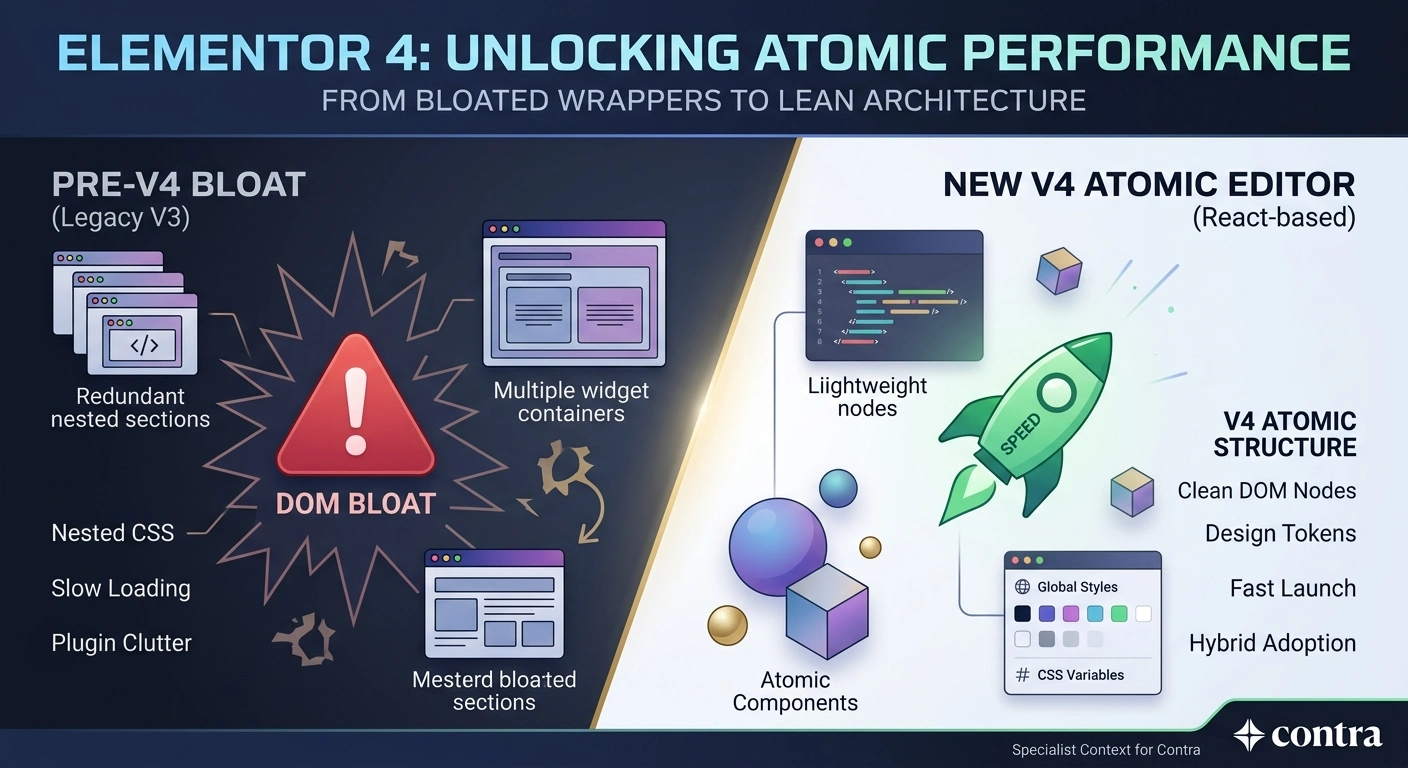
For years, the trade-off for speed-to-build was DOM bloat—nested section wrappers, heavy widget overhead, and global CSS clutter.
The new atomic architecture changes the baseline economics of your agency:
DOM Reduction: Atomic elements strip away legacy widget wrappers. You get clean, semantic HTML nodes straight out of the box without needing 14 third-party optimization plugins.
Design Tokens & Systemic Scaling: Global Classes and Variables act as native design tokens. A full client rebrand or style iteration takes minutes across an entire site rather than hours of page-by-page editing.
Hybrid Adoption: Legacy V3 widgets and new V4 Atomic components live together on the exact same page. You don't have to rebuild client sites from scratch to start shipping faster.
If you are pitching clients right now, update your proposals. Position yourself not just as a page builder, but as an early adopter of lightweight, atomic web systems.
Algorithmic Dwell-Time Trigger:
Are you migrating existing client sites over to the V4 Atomic structure gradually, or leaving legacy V3 builds alone until they opt in for a full redesign? What’s your rollout strategy?
0 likes · 0 views · Sep 15, 2026
Elementor 4’s Atomic Editor architecture changes the performance conversation. Here is how to position it to clients today. With the release of Elementor 4.0...


