ShiftOps Control Pack — Daily Operations System

Shaun Flanagan


The challenge
This is an internal operations build, not paid client work.
High-volume teams often have the information they need, but it is fragmented across KPI updates, shift handovers, action lists and local workarounds. The result is a control problem: the operation is harder to see, handoffs are inconsistent and actions can lose ownership.
What I designed
a structured daily and shift-management view
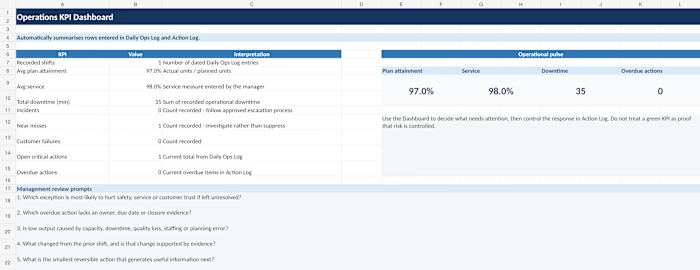
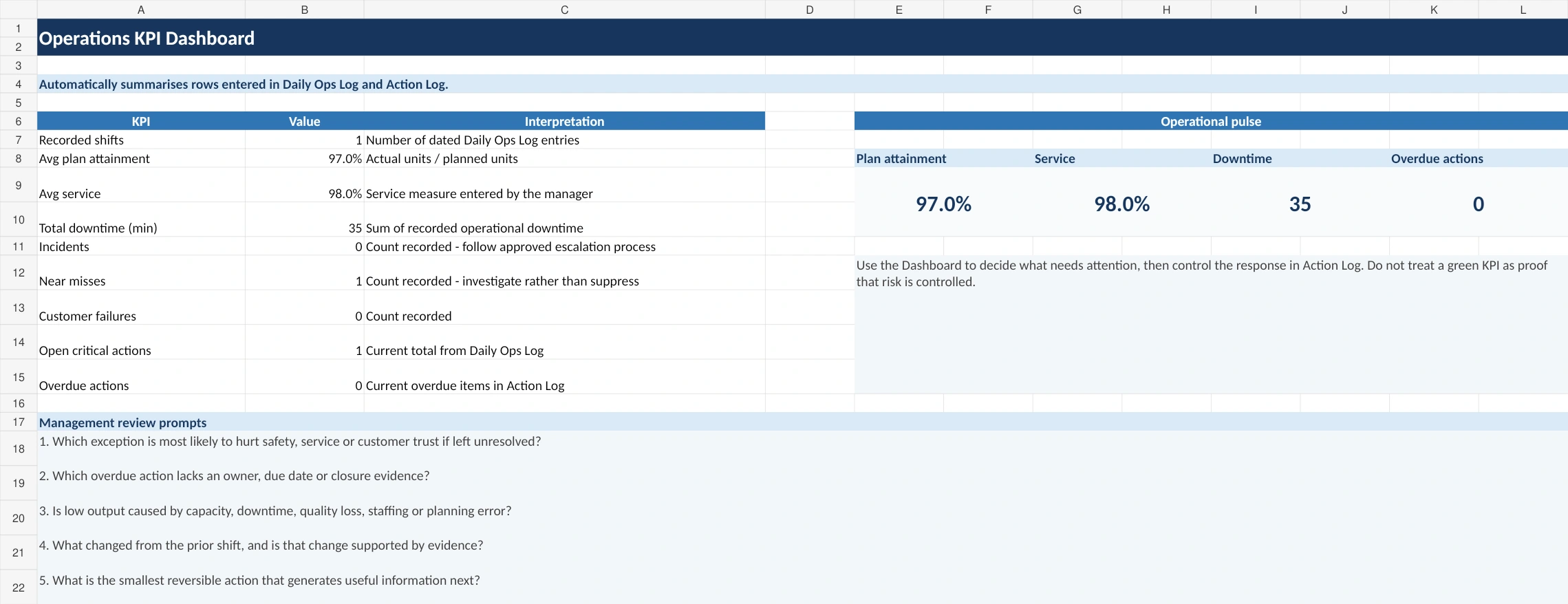
KPI visibility tied to operational control
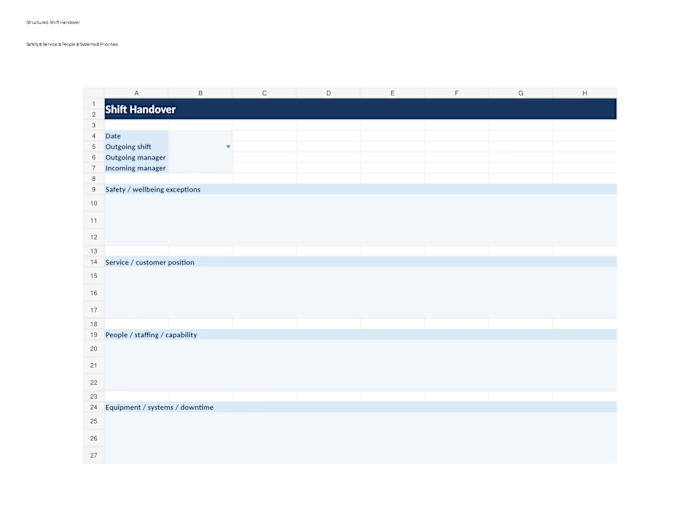
a repeatable handover structure
explicit action ownership and follow-through
a practical operating rhythm rather than another disconnected dashboard
How I approached it
I treated the problem as an operating-system design issue rather than a software problem. The focus was to make flow, ownership, exceptions and control points visible first, then make any later automation decision from evidence.
What the work demonstrates
This build demonstrates how I think about current-state control, handoffs, information flow and action closure. Those same principles sit underneath my workflow diagnostics.
Evidence boundary
No client or business-performance result is claimed here. This case study shows the method, system design and artefact only.
Like this project
Posted Sep 26, 2026
Internal build showing how I structure daily operational control around KPI visibility, handovers, ownership and follow-through.
Likes
0
Views
1