NovoHotelier Software as a Service

Januarisman .

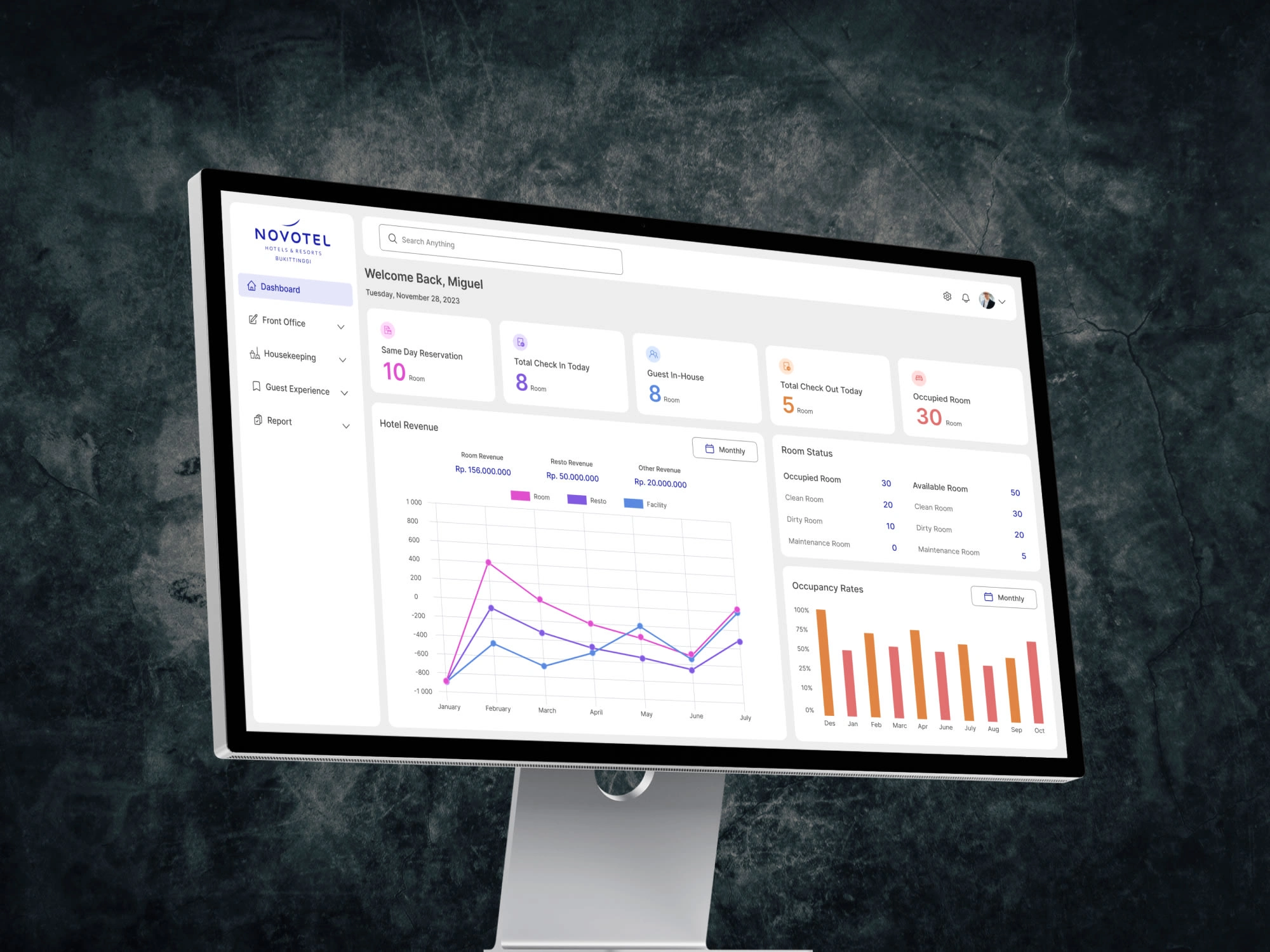
NovoHotelier
NovoHotelier is a SaaS-based Hotel Management System (HMS) designed to streamline hotel operations—from booking to billing—through seamless integrations, real-time insights, and an intuitive interface built for modern hospitality teams.
Project Overview
Digitize and simplify hotel operations.
NovoHotelier is a SaaS HMS built to modernize hotel workflows — from bookings to housekeeping — with a user-friendly, all-in-one platform.
Project Goals : reduce complexity, improve speed, and boost guest satisfaction through seamless design.
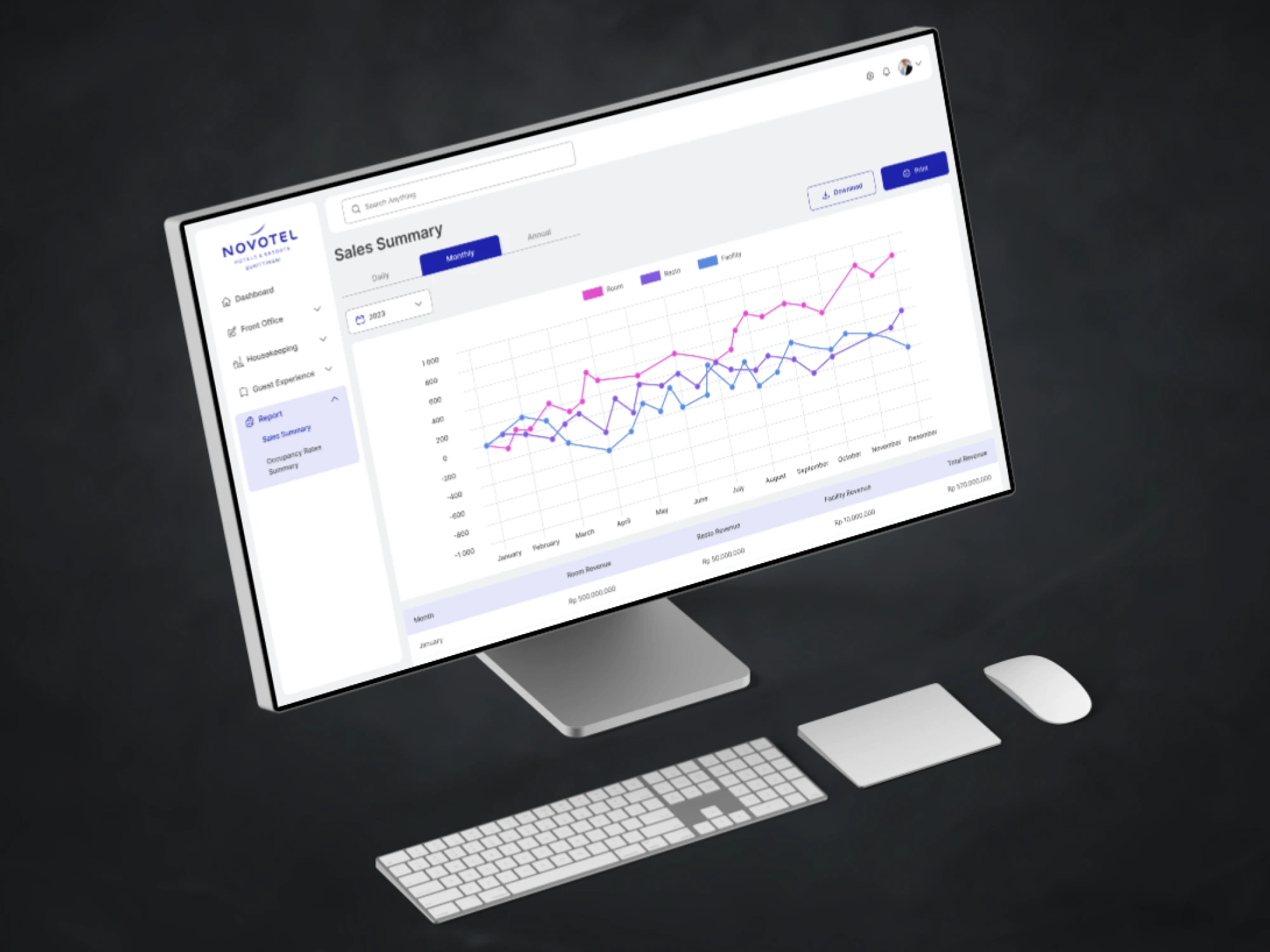
The Solutions
Novohotelier is a modern HMS tailored for front office staff to reduce manual work, improve accuracy, and streamline communication.
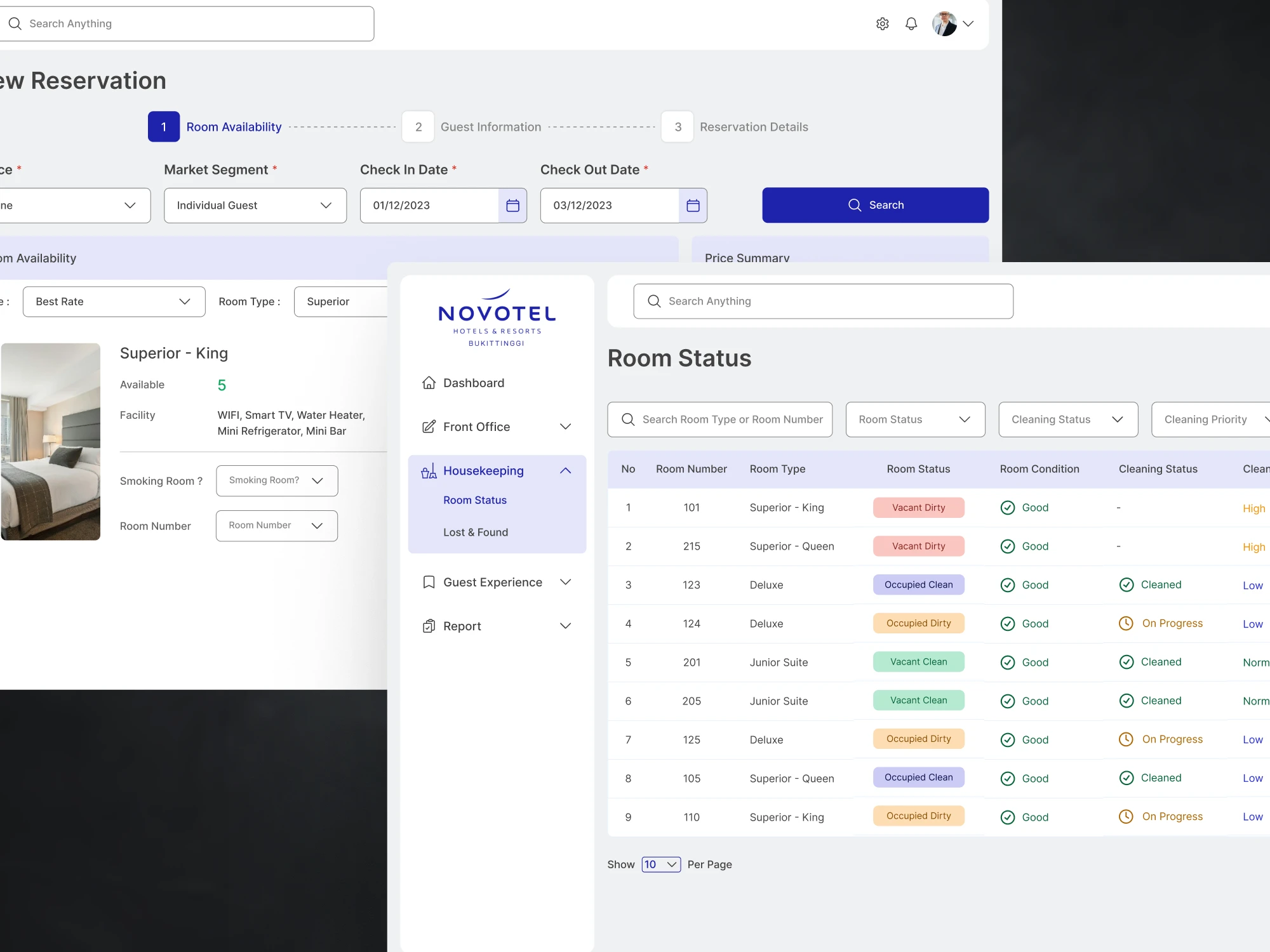
Smart Guest Profile - Prevents duplicate data and simplifies returning guest handling
Real-Time Housekeeping Sync - Avoids miscommunication about room status
Automated Reporting Dashboard - Saves time and improves report accuracy
Special Request Tracker - Ensures consistent guest experience across shifts
Room Inventory Management - Digitizes manual tracking and reduces item loss disputes
Success Metrics
Time to complete check-in : Reduce by 30%
Manual reporting tasks : Reduce to <10% of daily work
Data duplication errors : 0% in testing phase
The Problem
Front Office (FO) staff in hotels manage high-pressure tasks and guest expectations—yet their tools were working against them. From in-depth interviews, we discovered that:
Manual reporting wastes time and causes missed info
Duplicate or missing guest data slows down operations
Housekeeping and FO operate in silos with limited real-time feedback
New staff take weeks to learn the current HMS due to clunky UI/UX
Key Decisions
Integrated Housekeeping & FO systems - To avoid status confusion and reduce reliance on supervisors for updates
Designed smart data input fields - Names often spelled differently; fuzzy search and merging are essential
Created dynamic reporting dashboards - To shift reporting from a repetitive task to a decision-making tool
The Process
User Research
To understand user behavior, we conduct in-depth interviews and then translate the findings into a Mental Model.
Future/New Mental Model
An overview of the idea, solution, and user journey within the application we are going to create, based on the previously defined user mental model.
Information Architecture
This is followed by structuring to help organize the app's content and features, ensuring that users can easily find the information they need. The sequence of information focuses on logically arranging content based on user priorities.
Wireframe
Lo-fi design and happy flow are developed based on the draft of the information architecture and layout, presented in the form of wireframes.
Final UI Design
Creating a UI Design using a Design System.
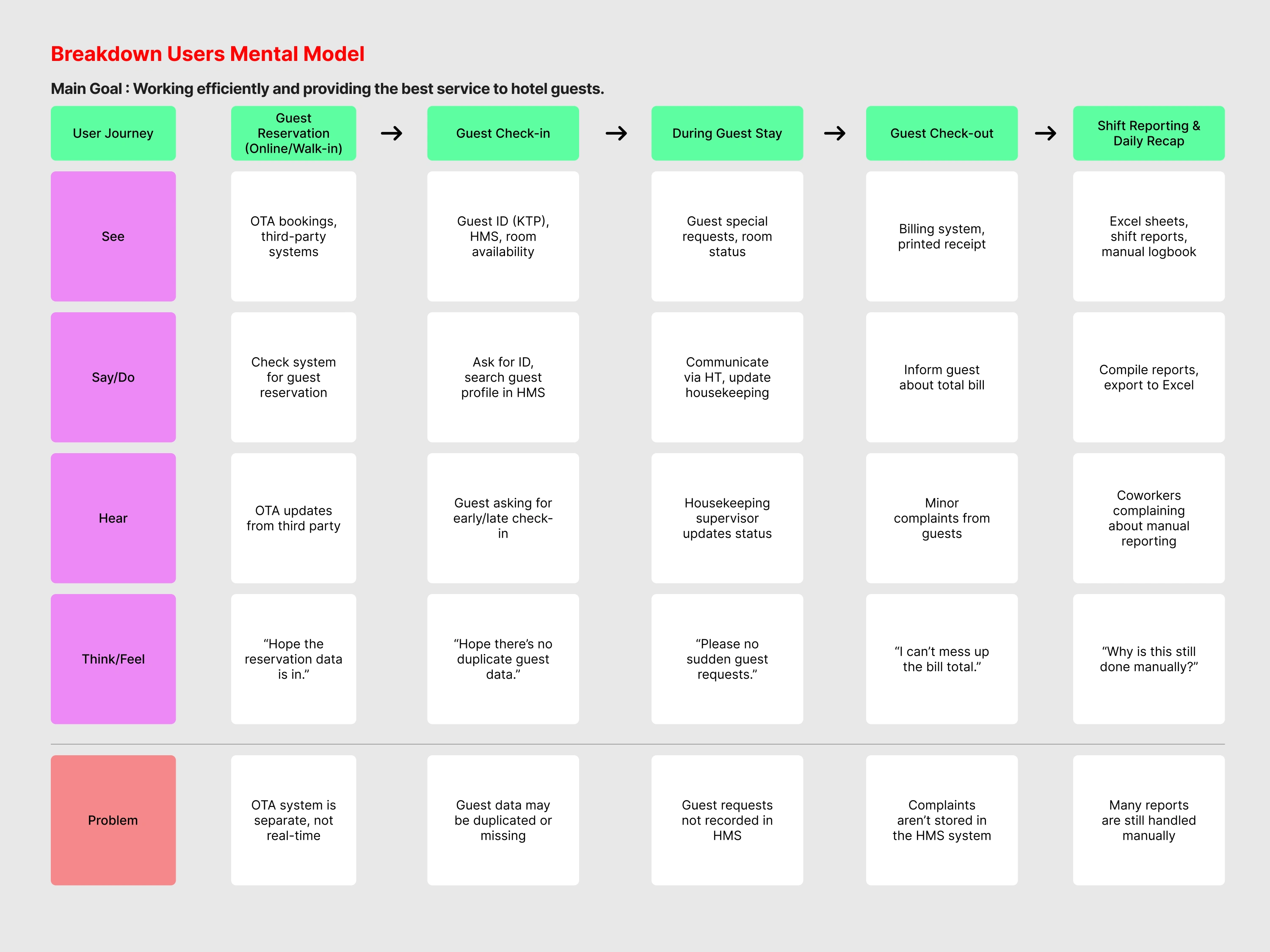
Users Mental Model
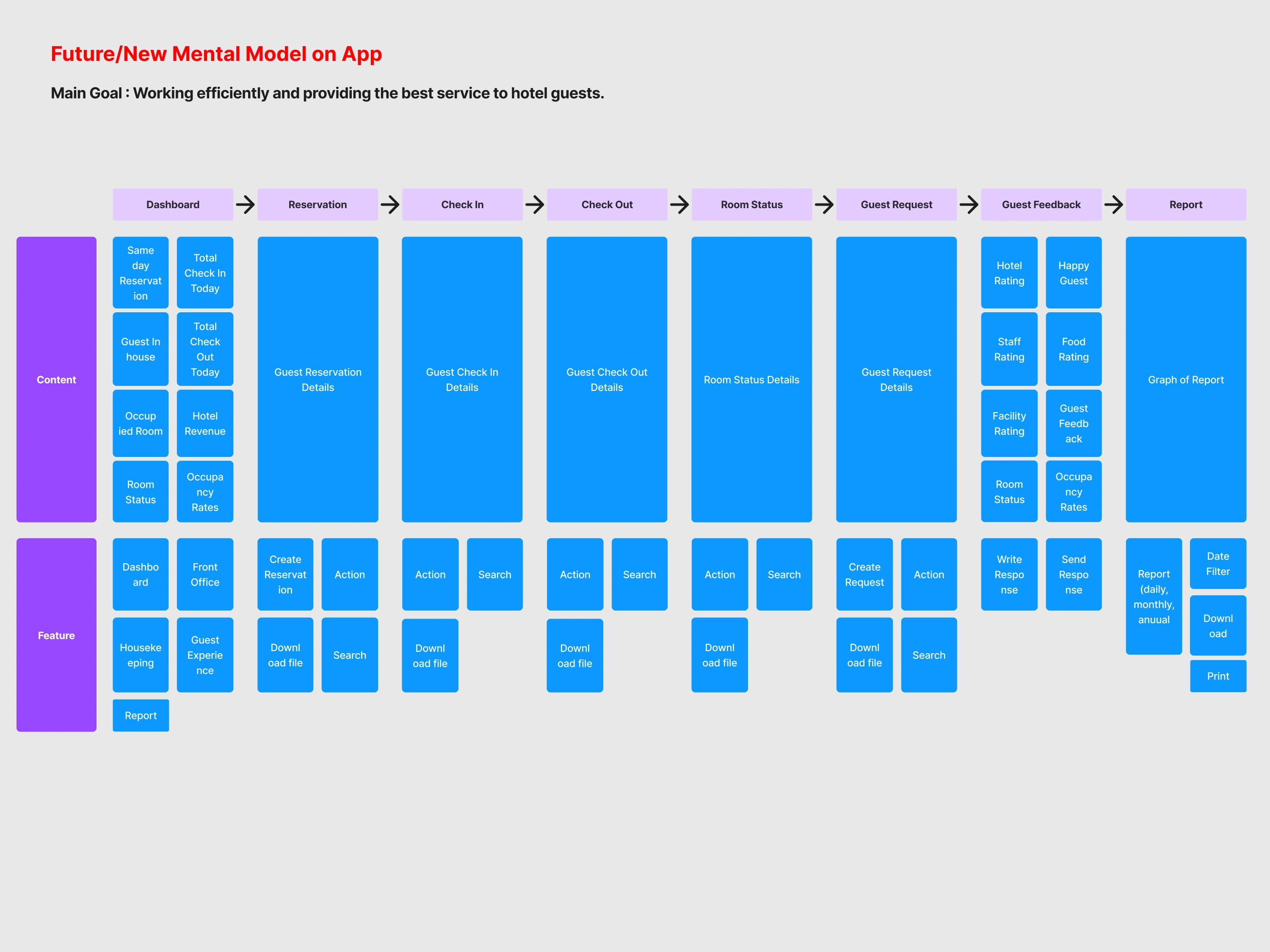
Future Mental Model
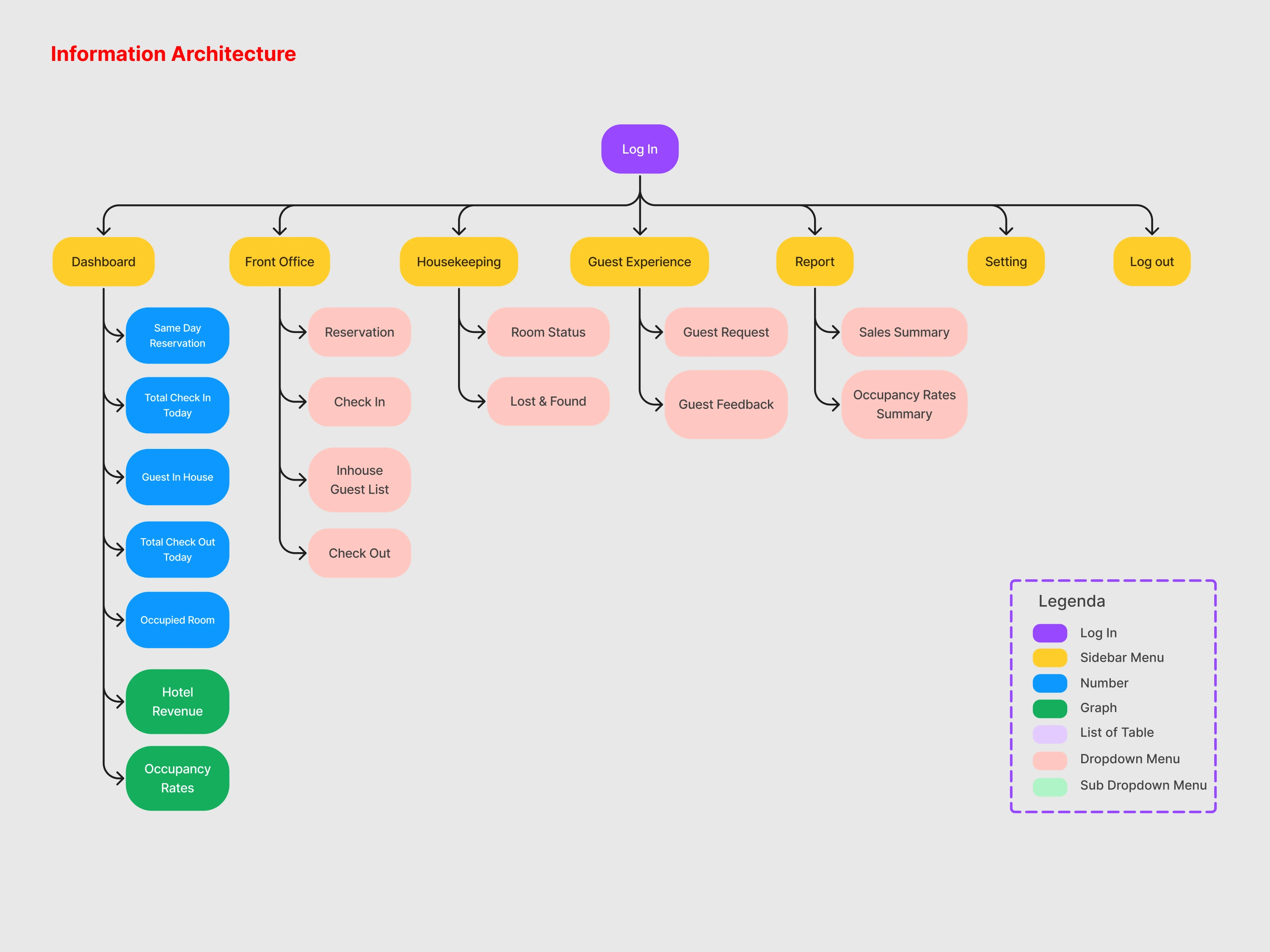
Information Architecture
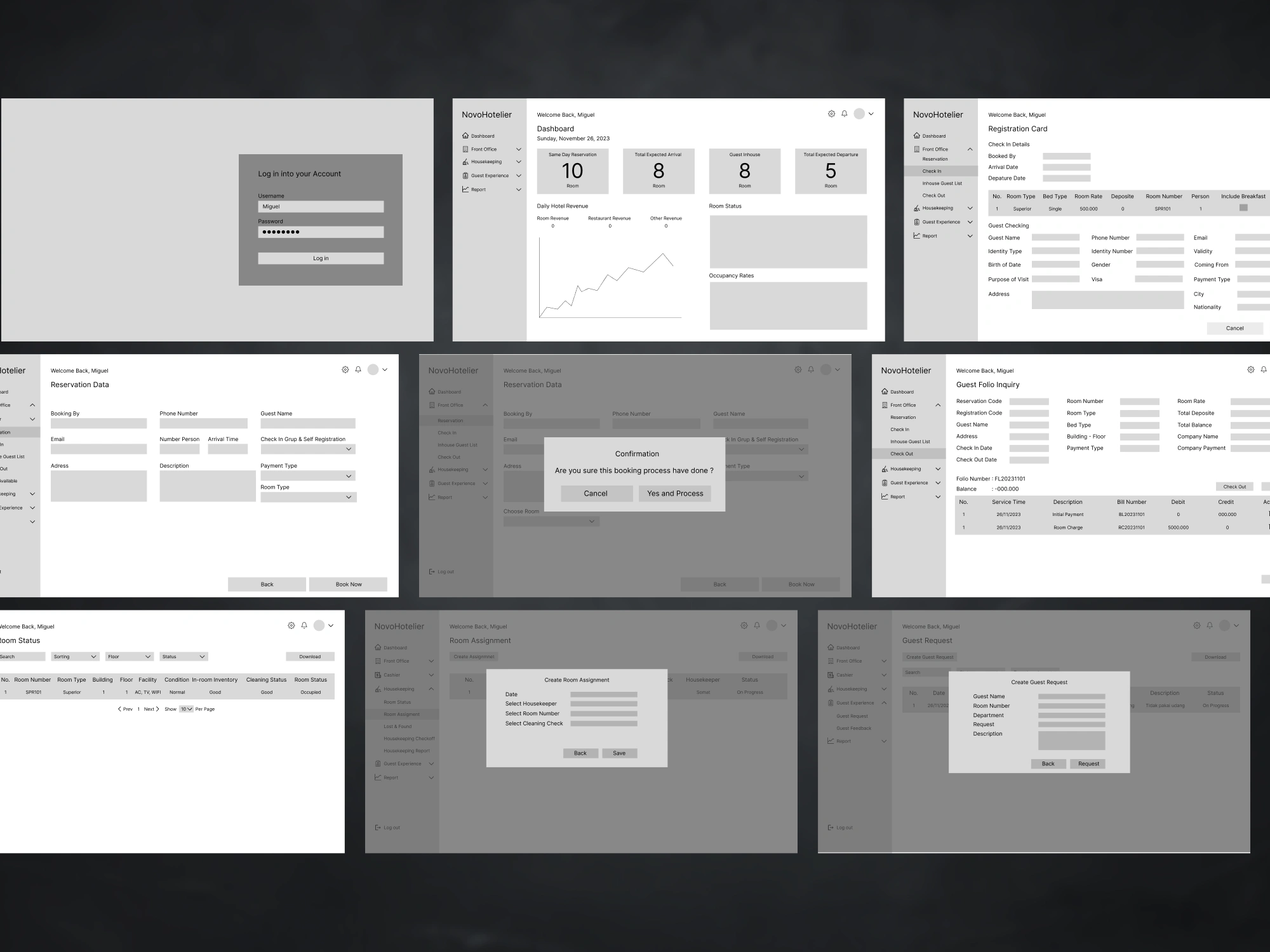
Wireframe
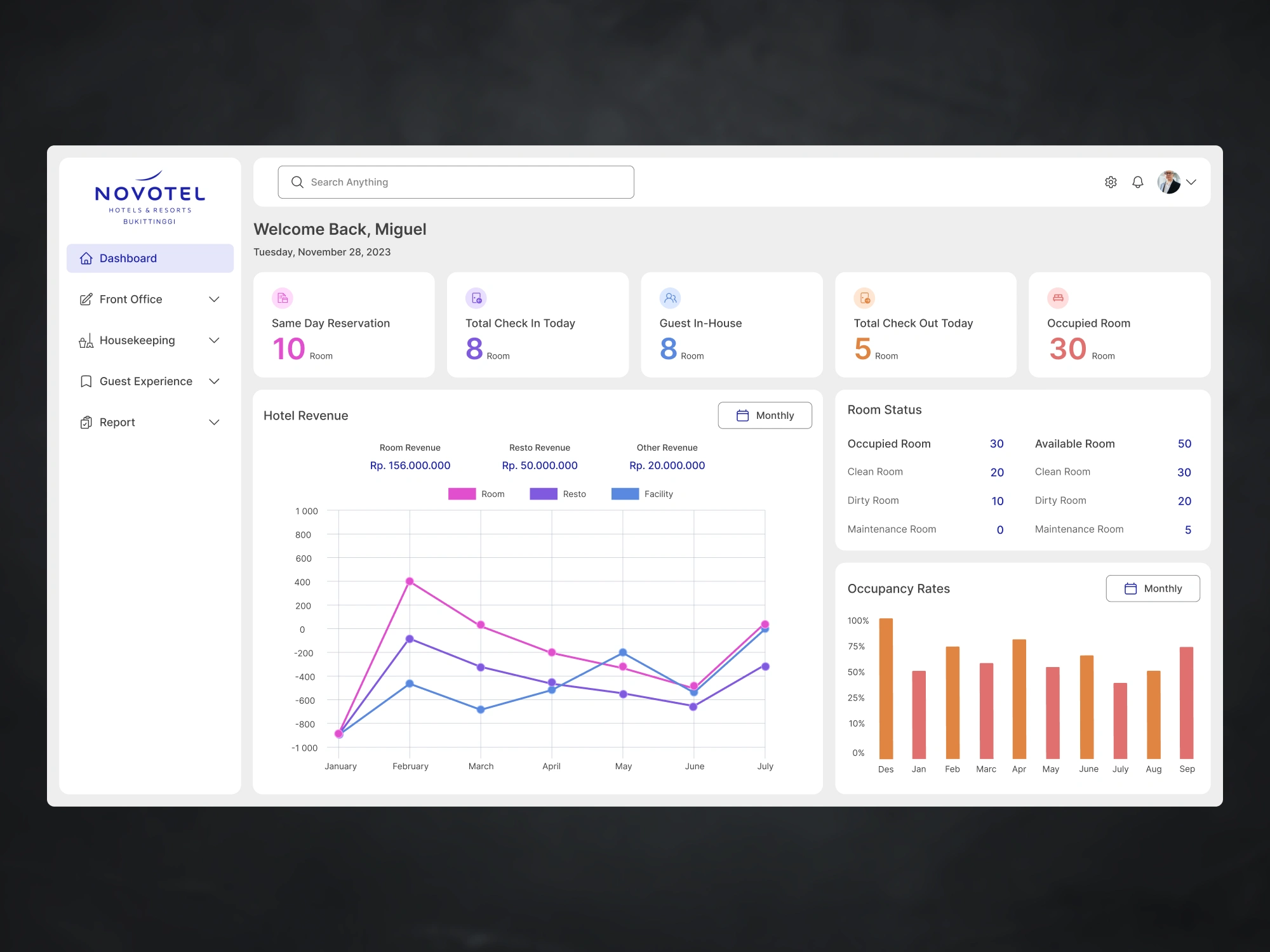
UI Design
Learnings
Real-world behavior trumps ideal workflows
People use shortcuts. Good UX supports them rather than forces a rigid process.
Manual workarounds = product gaps
If users rely on notebooks or verbal communication, the system is missing something critical.
Intuitive doesn't mean simple
Even complex tasks (like reporting or inventory tracking) can feel easy when UX flows naturally.
Staff mental bandwidth is limited
Every second saved in thinking about “how to use the system” is a second gained for serving guests.
Like this project
Posted Oct 9, 2025
Developed a modern Hospitality Management System to streamline hotel operations and improve guest satisfaction.
Likes
0
Views
5