Veenie: Space Simulation-as-Story

Ivan Karaman


Scrollytelling interaction for flying a Venus aerostat on the Veenie homepage
Veenie: Space Simulation-as-Story
Space technology is notoriously hard to communicate. Physics that took decades to develop gets buried in papers nobody reads, or flattened into animations that explain nothing (and become obsolete the moment a mission parameter changes).
Veenie changes that with a composable, story-first simulation engine that runs complex physics at 120 FPS in the browser, and choreographs on-page interaction by changing simulation parameters based on scroll depth.
Stack: SvelteKit, Threejs, Threlte, Neodrag, PostgreSQL (TimescaleDB), headless TypeScript physics engine
Under the hood: RK4 integrator, full VIRA atmosphere (0-100km), Beer-Lambert radiative transfer, Fick's Law helium permeation, zonal superrotation winds. Decoupled from the UI so the same engine drives browser rendering, Monte Carlo batch runs, and LLM flight commands through a unified commander API.
Live: veenie.space
Born for Venus Atmospheric Science 🌖
Veenie started as a research project: build a Venus atmospheric simulator to train LLM pilots with human demonstration. It became a startup when the architecture turned out to be useful for any space company trying to show what their mission actually does.
The Venus sim is the proof of concept. Validated within 2.2% of 1985 Soviet VEGA balloon telemetry, presented at the 57th Lunar and Planetary Science Conference (LPSC). See the abstract below 👇
Aerostat flight with LLM (Claude), with draggable live avionics and flight controls
Lab: Open-Source Physics and Researcher GUI
The physics engine and Veenie Lab are fully open source. The Lab is a floating, draggable mission control UI built in SvelteKit 5 + Threlte:
size Venus aerostats
mix gases and thermodynamic properties for buoyancy
run batch simulations with Web Workers
time-travel through telemetry
experiment with detailed vehicle configurations
Pre-loaded with VEGA 1985, NASA HAVOC, EVE NIAC 2025, the MIT/JPL Horn 2026 long-duration aerobot, and many other concepts that flew or were proposed for Venus atmospheric flight.
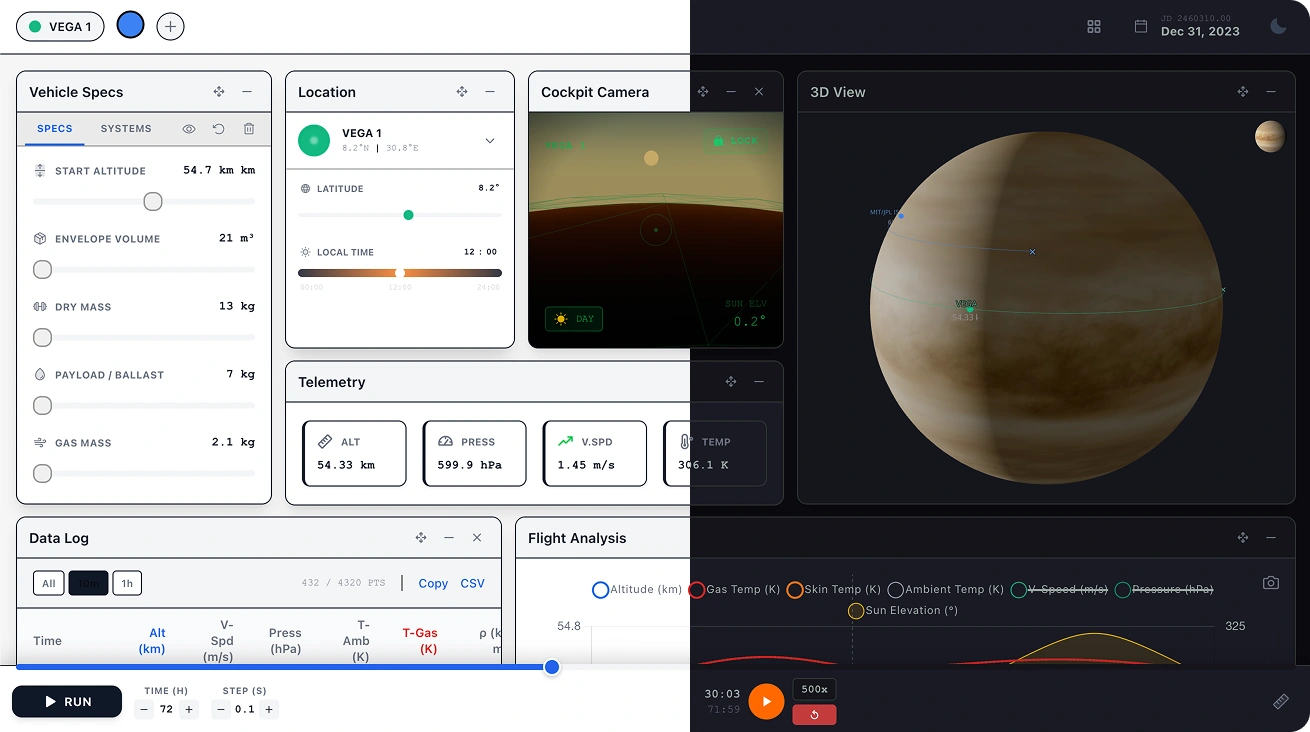
Veenie Lab open source GUI for testing Venusian aerostats in the physics sandbox
The multiplayer backend and LLM pipeline are proprietary and power the live experience at veenie.space but the engine and GUI are open to collaborators and researchers.
What's next?
The Veenie architecture is ready to turn any space mission into an interactive story. Open for Non-Recurring Engineering (NRE) engagements for space companies needing physics-accurate browser sims, with SaaS productization once demand patterns are clear.
The long game is the mission itself: industrializing Venus clouds for propellant, with an LLM the public trained flying the first aerostat.
Tags: Fullstack Engineer · Aerospace Engineer · Product Designer · SvelteKit · Three.js
Timeline: March 2025 – present
See more: veenie.space/work
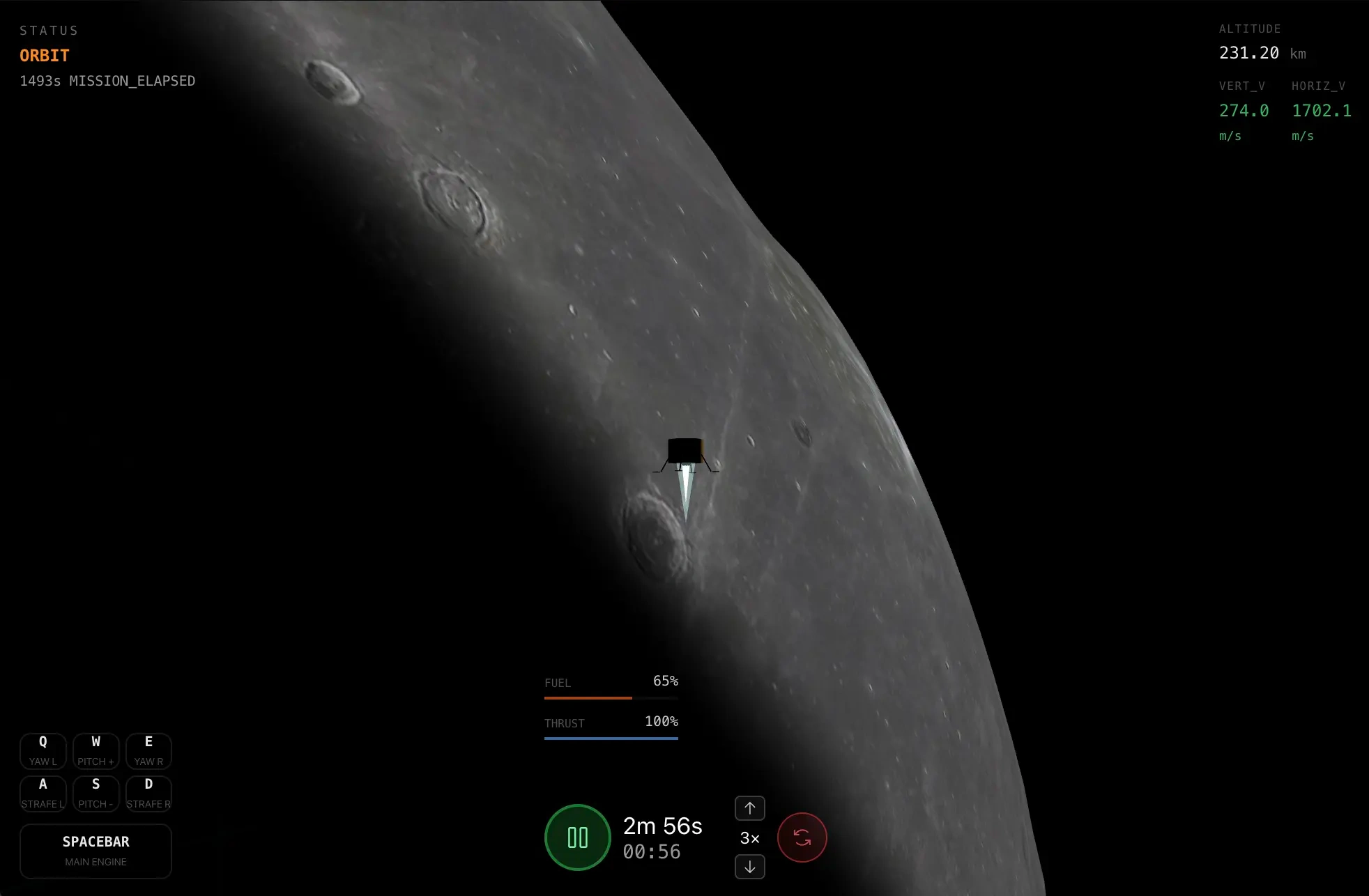
3D simulation: Firefly Blueghost Lunar Lander
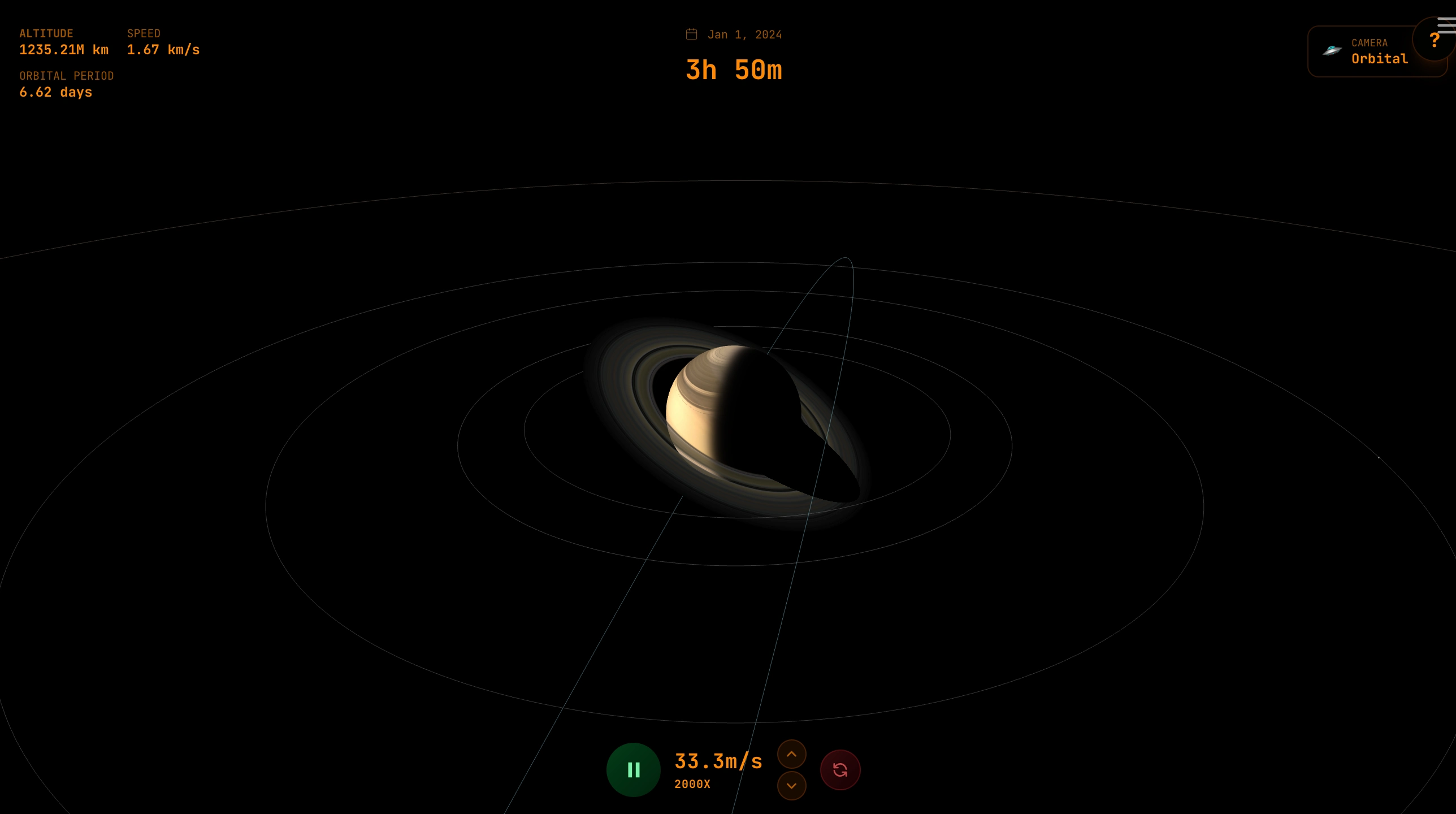
Cassini Saturn 🪐 simulation built with the same stack as Veenie in one day
Like this project
Posted Apr 3, 2026
Veenie is the Solar System's most composable browser-based space simulation suite. Built for Venus atmosphere, now ready for NewSpace scrollytelling demos.
Likes
1
Views
13
Timeline
Dec 26, 2024 - Mar 17, 2026