Gated AI Workflow Design for Long-Form Research

Daniel Taylor


Spec project / self-directed independent work sample
This case study documents a real, self-directed AI workflow-design project for long-form research and related artifacts. It is not paid client work and does not present AI as autonomously managing the workflow.
Problem
Large AI-assisted projects can generate polished material faster than the underlying structure is stabilized. That creates predictable failure modes: conceptual drift, duplication across sections, inconsistent terminology, scope creep, reconstruction errors across long conversations, and supporting artifacts generated before their purpose is fully defined.
The practical challenge was designing a process that let AI contribute without allowing speed to outrun coherence.
Approach: a gated workflow
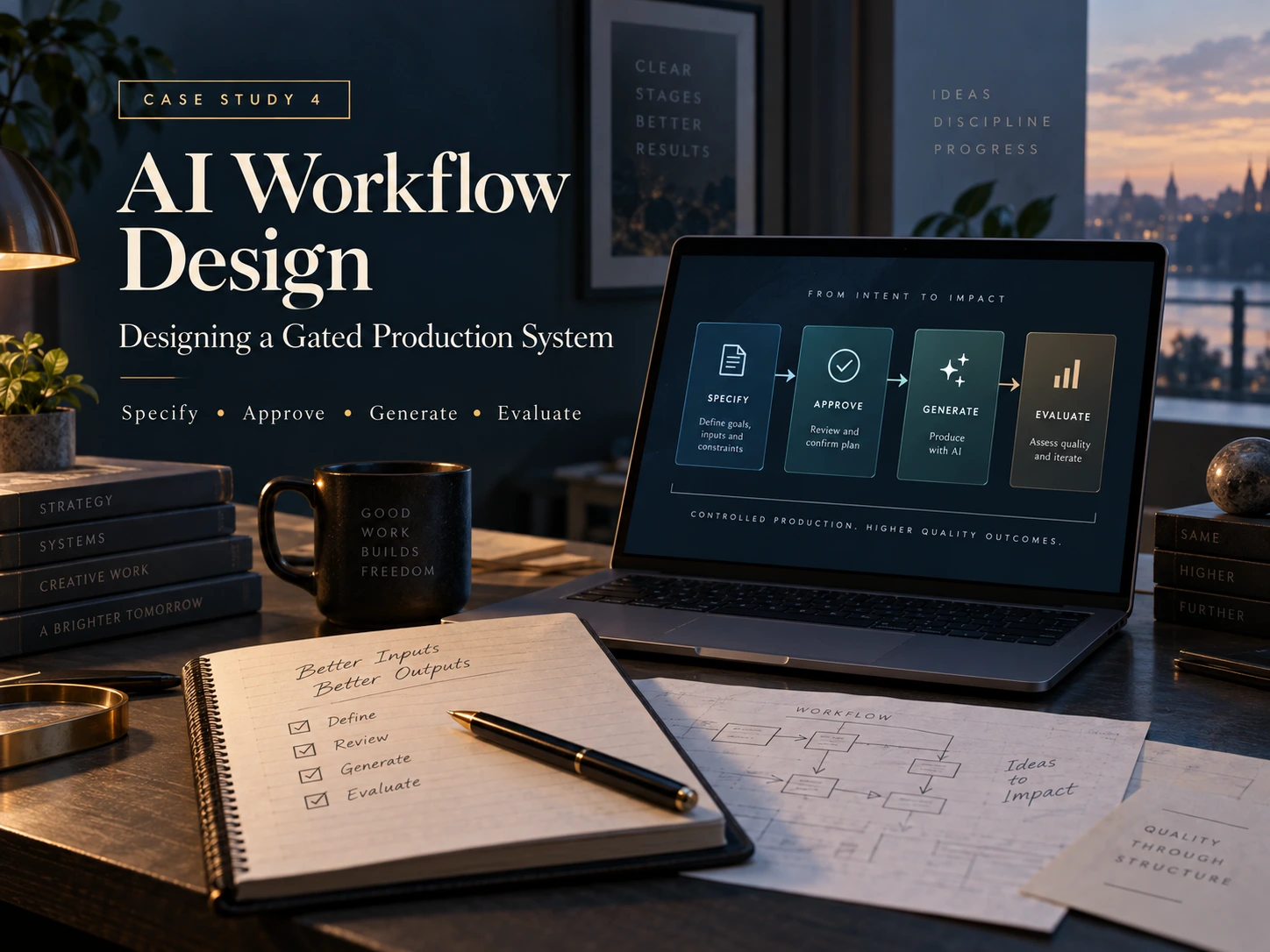
I designed the project as a gated workflow with explicit state transitions, canonical inputs, and human approval points.
Canonical structure, defining the overall identity, thesis, sequence, and high-level logic.
Section and chapter skeletons, defining purpose, questions, claims, exclusions, and tone for each unit.
Core-ideas expansion, developing each unit's internal architecture so drafting does not need to invent structure.
Drafting from approved inputs, generating one unit at a time from approved structural source files rather than conversational memory.
Revision and alignment, reviewing outputs against named failure classes including drift, redundancy, overstatement, tone inconsistency, and conceptual bleed.
Supporting artifacts, generating derivative outputs only after the conceptual structure is stable.
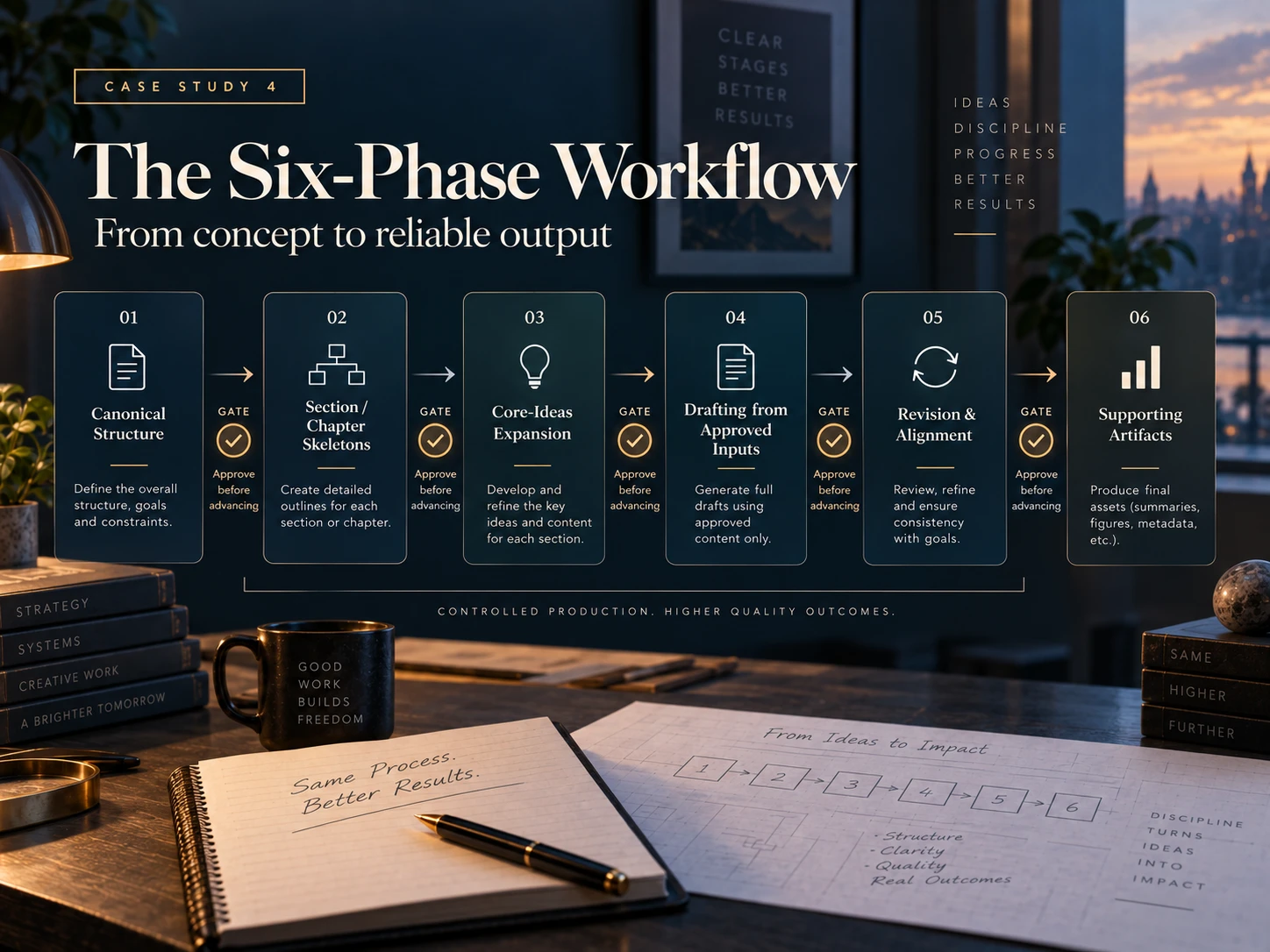
Six-phase workflow
Control mechanisms
The workflow remained reliable through stage gates, canonical input files, one-unit-at-a-time execution, explicit exclusions, output contracts, revision taxonomy, and human approval before advancing.
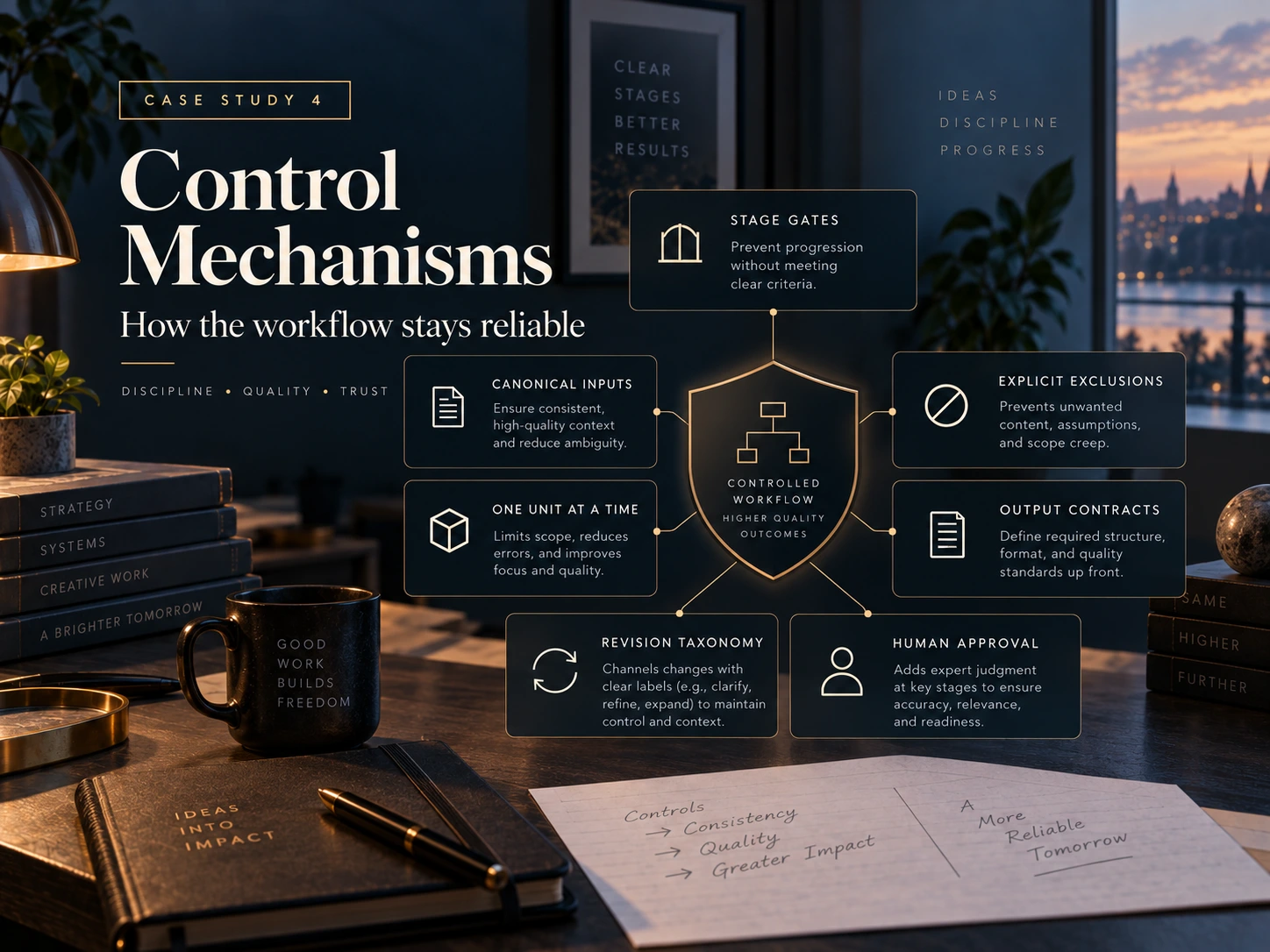
Control mechanisms
Human and AI workflow
My role was to define purpose, scope, success criteria, boundaries, and readiness to advance; approve structures; evaluate outputs; and redesign the workflow when recurring failure patterns appeared.
AI was used to expand approved structures, generate candidate arguments and examples, draft from canonical inputs, perform structured revision passes, and transform core material into derivative formats.
Deliverables
A six-phase workflow model
Documented stage gates
Control-mechanism architecture
A human and AI division-of-labor model
An artifact-generation pipeline
A published case-study page
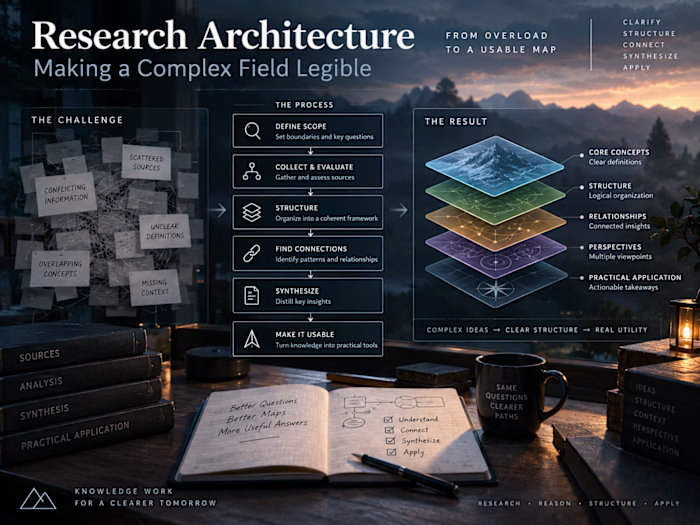
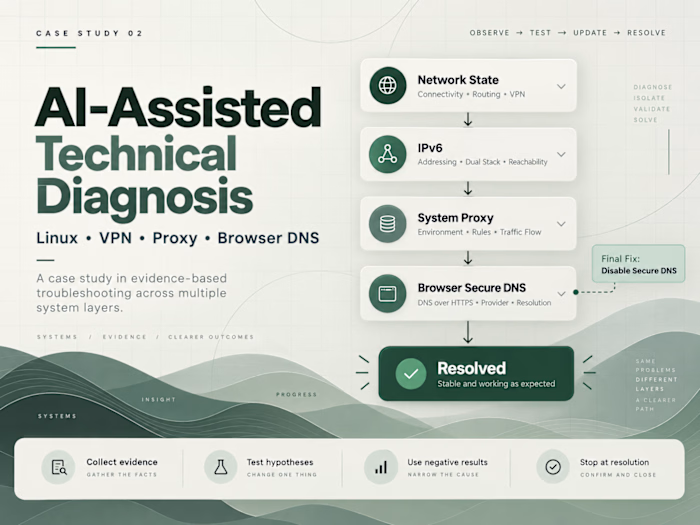
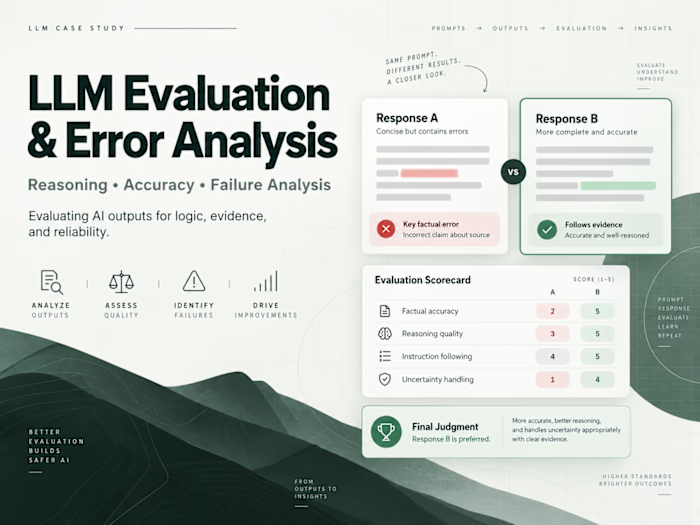
Four 4:3 supporting graphics for the Contra presentation
Result
The result was a reusable AI production system that converts an open-ended intellectual project into bounded tasks with clear inputs, outputs, review criteria, and decision points.
The core insight is that value comes from designing the process through which AI is allowed to contribute. The method transfers to research, documentation, knowledge-base work, and other projects where quality depends on preserving structure across many stages.
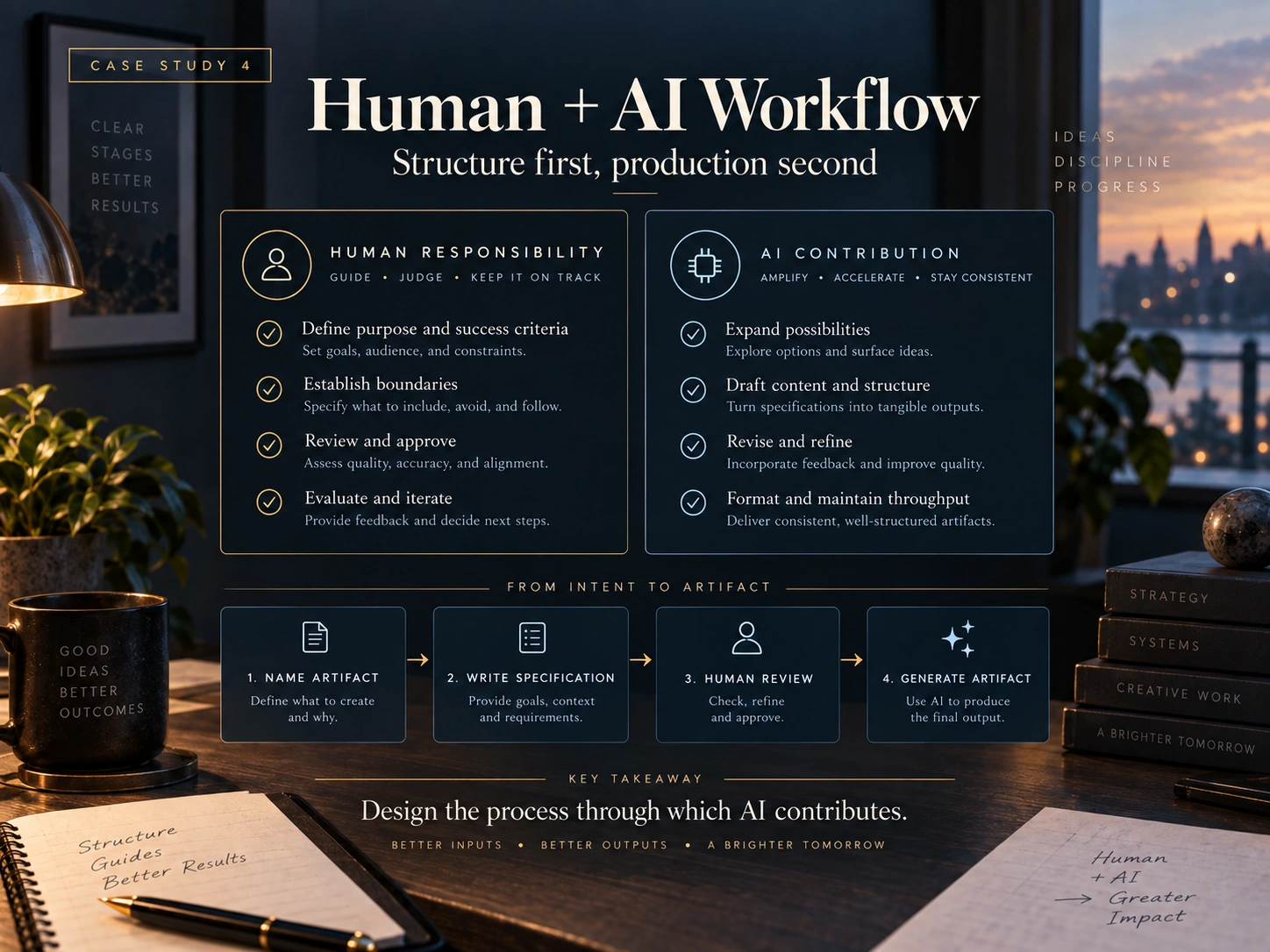
Human and AI workflow
Completed: August 2026.
Like this project
Posted Sep 7, 2026
A self-directed case study on building a gated AI workflow for long-form research, with stable inputs, review controls, and human approval points.
Likes
0
Views
2