Norholm Freight: Freight Forwarder Website

Devansh Prakash


The brief
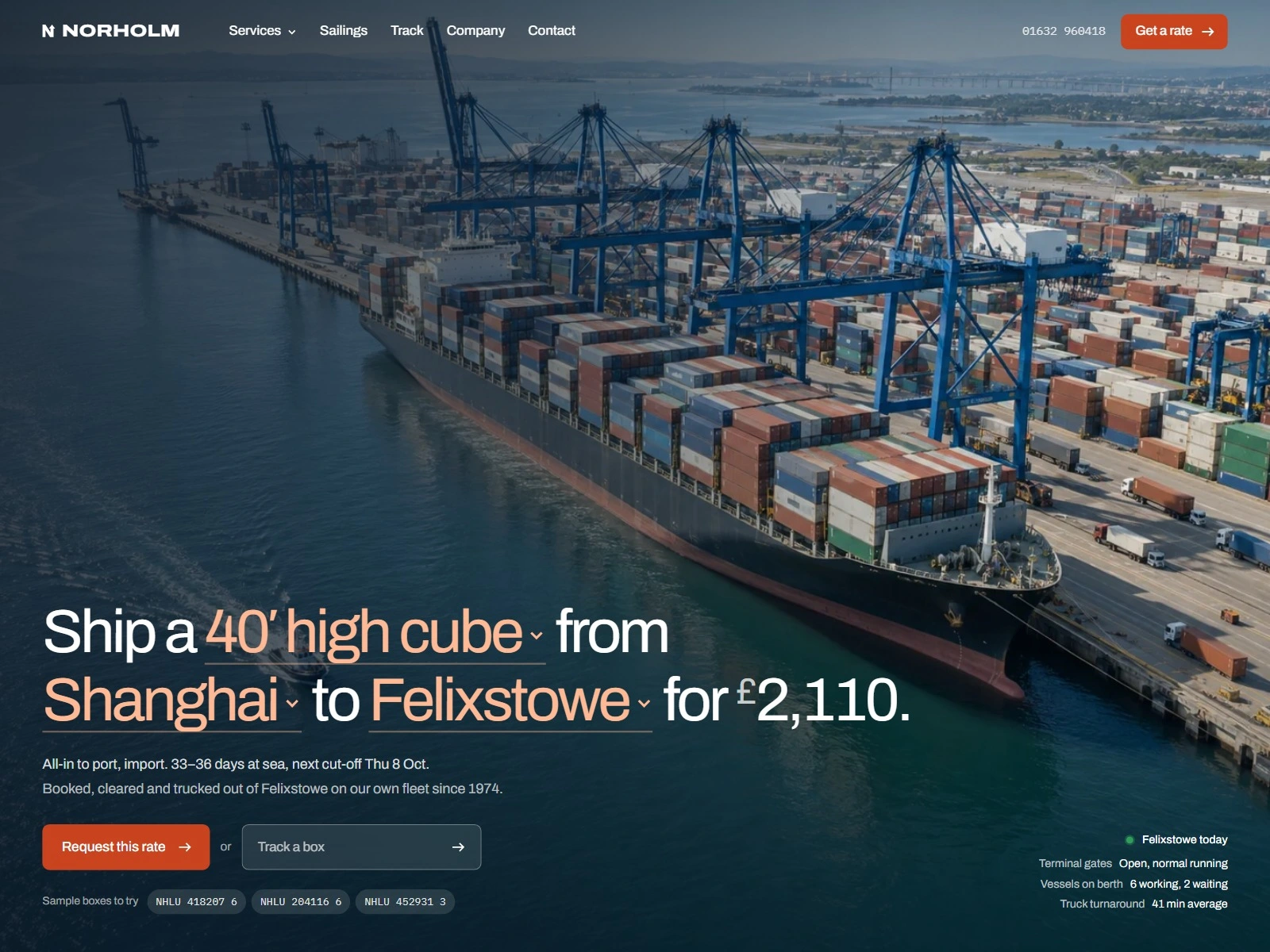
Norholm Freight is a freight forwarder in Felixstowe that has moved containers through the port since 1974. It needed a website that shows a shipper the price, the next sailing and the progress of a box without a phone call, from one desk and one fleet of its own trucks.
The challenge
Freight sites usually hide the rate behind a form and show tracking as a bare input. Norholm had to put a real price on the first screen, make cut-offs and space easy to read, keep the voice of a long-established firm and still feel current beside the large forwarders.
The approach
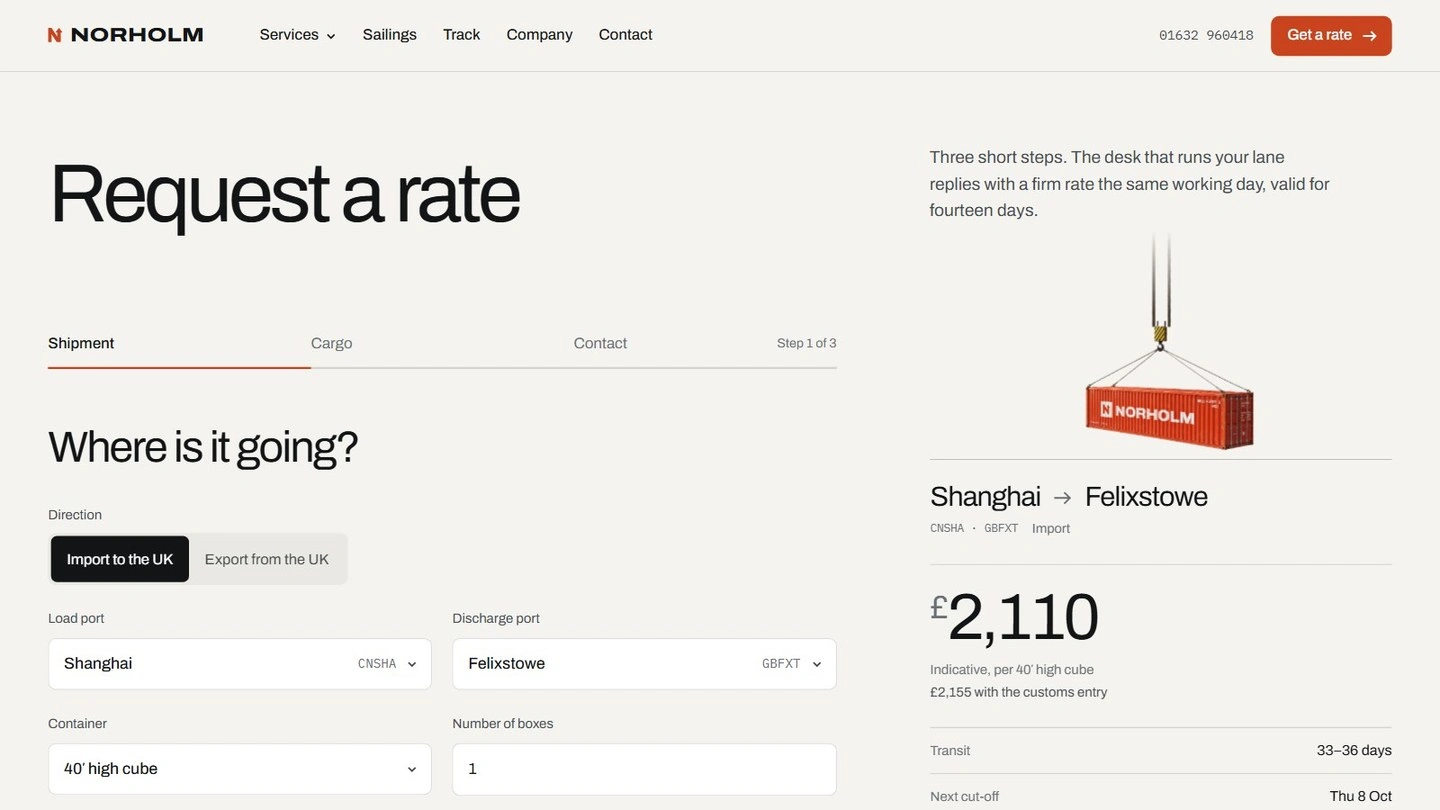
The hero is a sentence you edit in place. Pick a container, a load port and a destination and the rate and next cut-off change over aerial photography of the terminal. Services, a sailings table, a three-step rate request and a container tracker follow in a calm, large-type layout.
Design system
A light fog page carries ink and a single rust-orange accent. Archivo is set large in sentence case, IBM Plex Mono is kept for container numbers and rates, corners are tight, and tabs, filters and accordions animate both ways so the interface reads as a working tool.
Built with Astro
Norholm Freight is a static Astro site written with plain TypeScript, so it loads quickly on a phone at the yard gate. The rate, sailings, tracking and contact forms are built into the pages, and motion respects reduced-motion settings.
Five services, one file
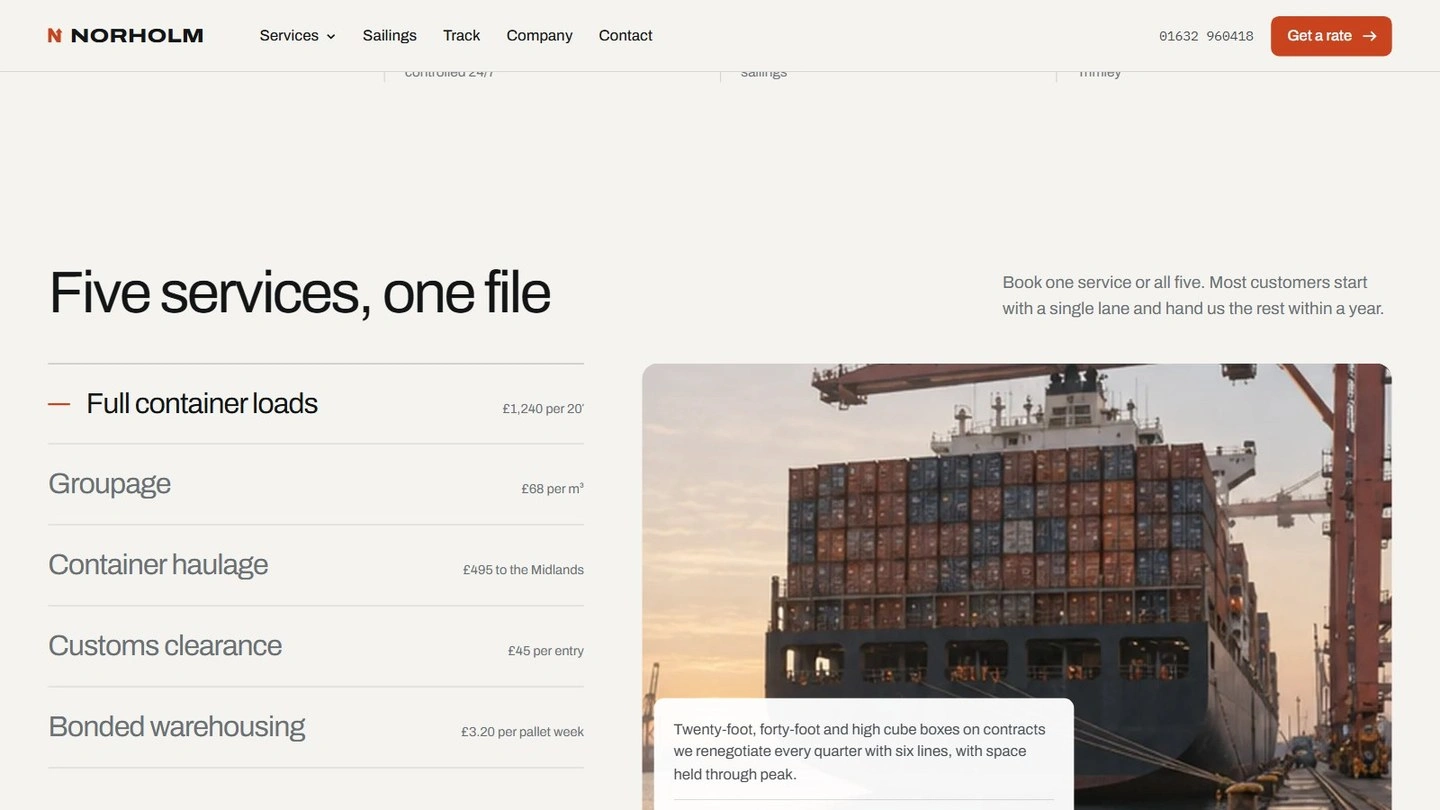
Full container loads, groupage, container haulage, customs clearance and bonded warehousing each get a row with a starting price, and open into how the work runs, a sample invoice line by line and the lead times the desk plans to.
One box, followed door to door
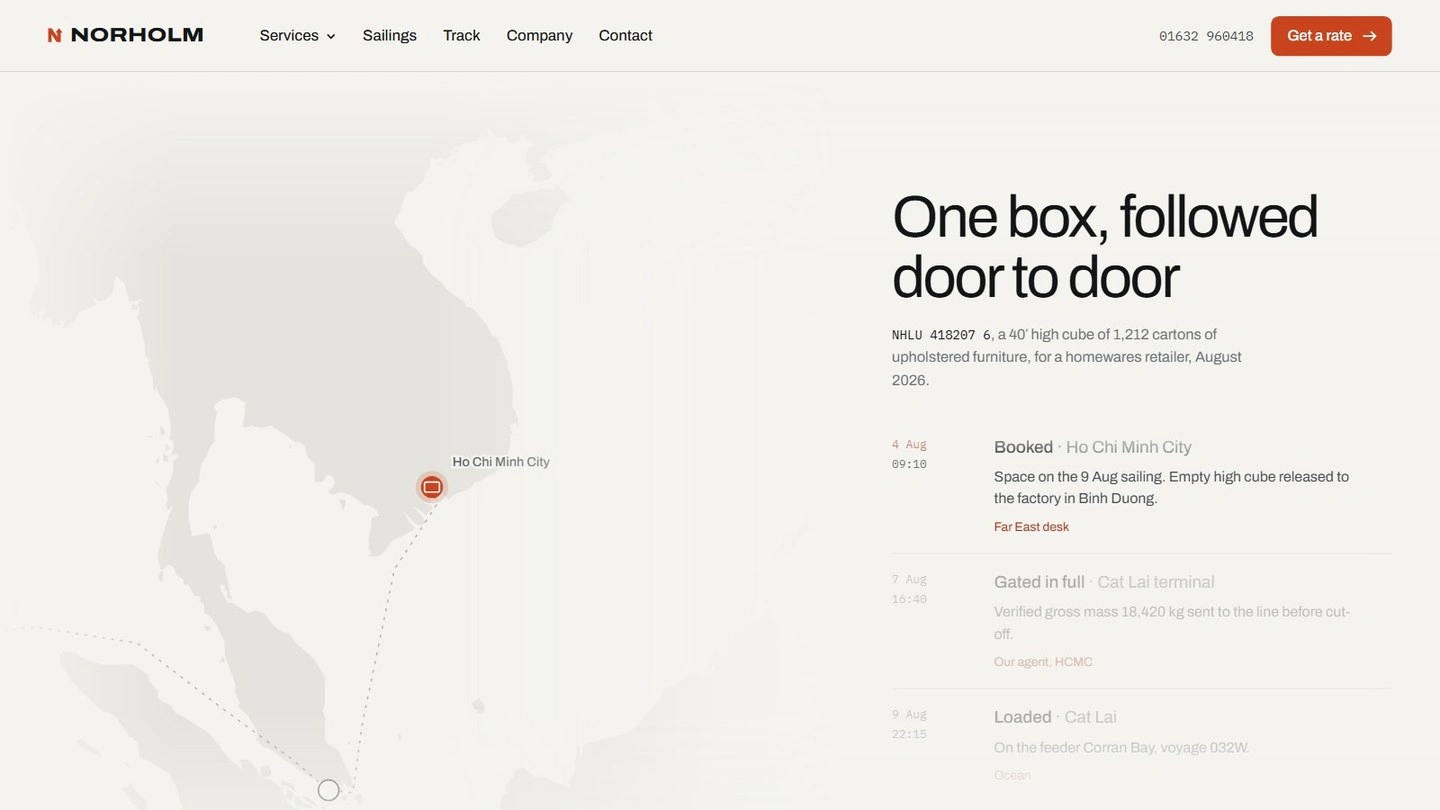
A scrolling journey follows a sample container from the load port through the Suez route to the Felixstowe terminal and on to the customer's door, with dated events from the line, the terminal, customs and Norholm's own trucks beside a map.
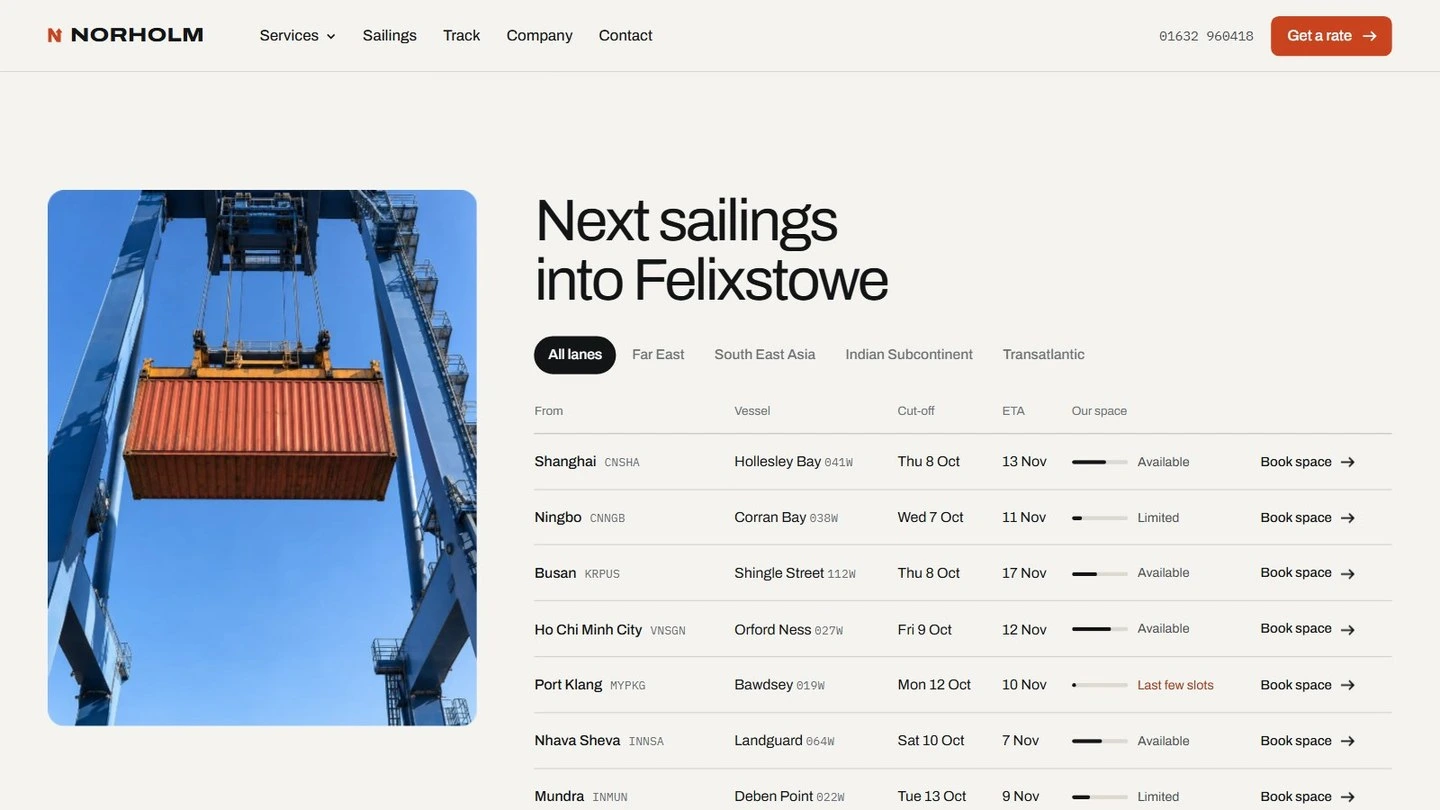
Next sailings into Felixstowe
The homepage table lists upcoming sailings by lane with vessel, cut-off, ETA and space, filtered by Far East, South East Asia, the Indian Subcontinent and transatlantic, and each row opens to book space. The full Sailings page adds import and export views and a search by load port.
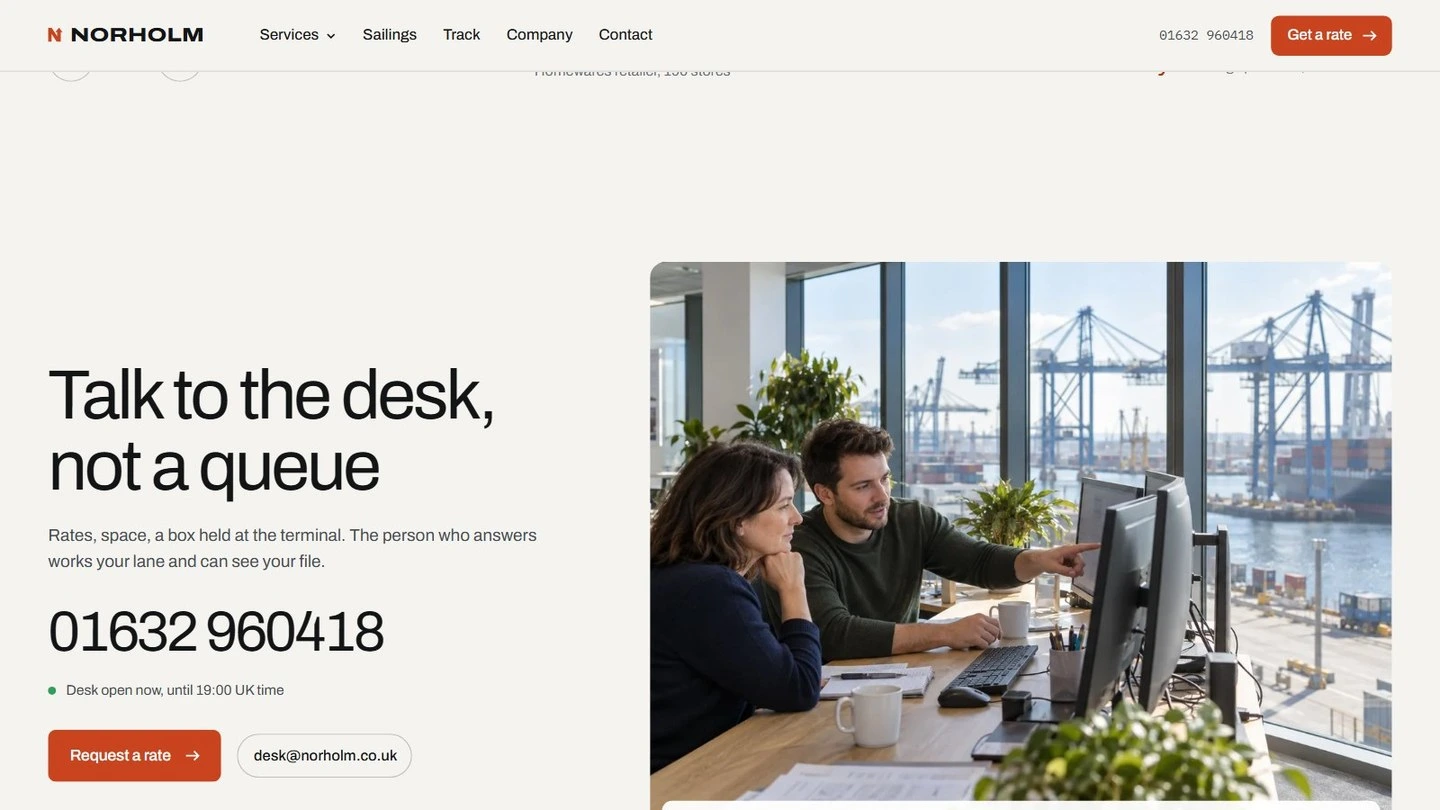
Talk to the desk, not a queue
The closing section puts the desk's phone number and opening status beside a photograph of the team at work, with a request-a-rate button and an email address, so a shipper knows the person who answers is the person who runs their lane.
The outcome
A shipper can now price a lane, see the next sailings, request a firm rate and track a container from one site, with a named desk and a phone number on every page. The rate request runs in three short steps and the site stays quick on a phone at the yard gate.
Like this project
Posted Oct 2, 2026
A Felixstowe freight forwarder site with a live rate sentence, a filterable sailings table, a three-step rate request and container tracking.
Likes
0
Views
0