UX Design Innovation for Google's NotebookLM

Jana Styblova

Google / NotebookLM
I worked directly with the Head of UX. Brought to life new features, optimized onboarding and cold-start friction, maintained a design system, and helped scale a complex dashboard to massive adoption.
SR. UX DESIGNERDASHBOARDSDESIGN SYSTEMSTAKEHOLDER PITCHING & COLLAB
At the end of 2025, I wrapped a year-long engagement at Google on their AI product NotebookLM, working directly with the Head of UX and presenting and pitching ideas to the Head of Product.
Many of the features I owned existed as 0 to 1 to 10 projects. I envisioned them from ground up, collaborated closely with engineers for swift execution and optimized and scaled the UX framework as we built. I introduced rapid prototyping to get a feel for features, used AI Studio to build in-depth prototypes, setup a design system from the rudimentary components and scaled that design system throughout my tenure.
This portion of my work only encapsulates 30% of what I did at Google, many more features to be launched and shared in the future, especially optimizations for partners, content-creators, audio overviews, video overviews, onboarding, and featured notebooks.
—
How I worked
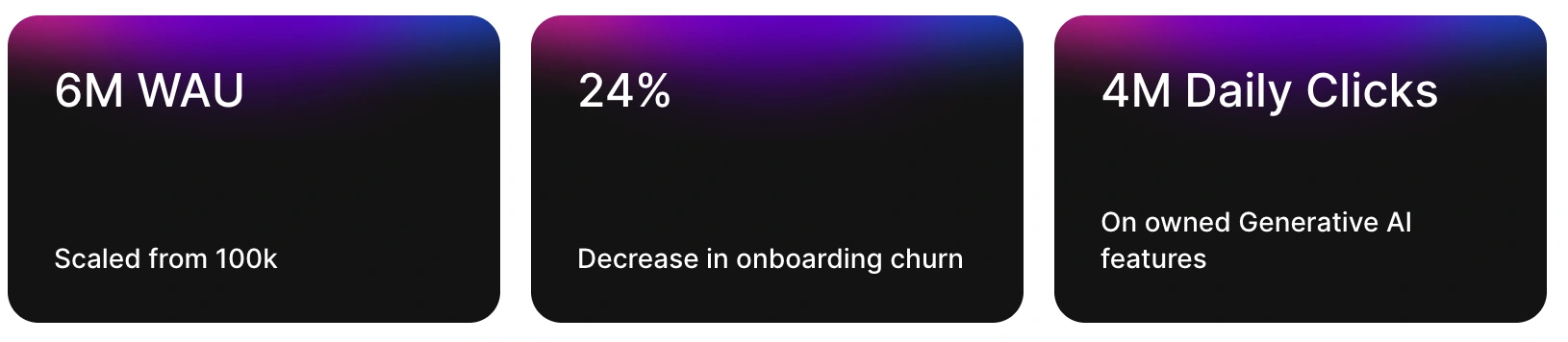
As an embedded employee, I worked directly with the Head of UX while presenting and pitching ideas to the Head of Product at NotebookLM. I designed core features that helped grow the product from ~100k to 6M WAU, reduced cold-start churn by 24%, and created new AI interaction patterns that now see ~3.8M daily clicks. I also owned and scaled a multi-platform design system, establishing interaction frameworks, onboarding patterns, and micro-interactions focused on clarity and trust.
What I owned
→ UX/UI design, platform scaling, and new feature launches
→ Deep engineering collaboration for swift building & shipping
→ Agentic Design, Conversational UX, LLMs, Generative AI
→ AI-accelerated design workflows (research, synthesis, prototyping)
→ Growth, virality, partnerships and cold-start onboarding
→ Full cross-platform design systems and UX frameworks
_
NotebookLM is designed to help people think with their sources, not just search them. Across research, teaching, and knowledge work, the core challenge is the same: transforming large, complex information sets into understanding. These features work together to shorten the distance between input and insight.
_
Features I owned...
🔎
Source Discovery
& "I'm Feeling Curious"
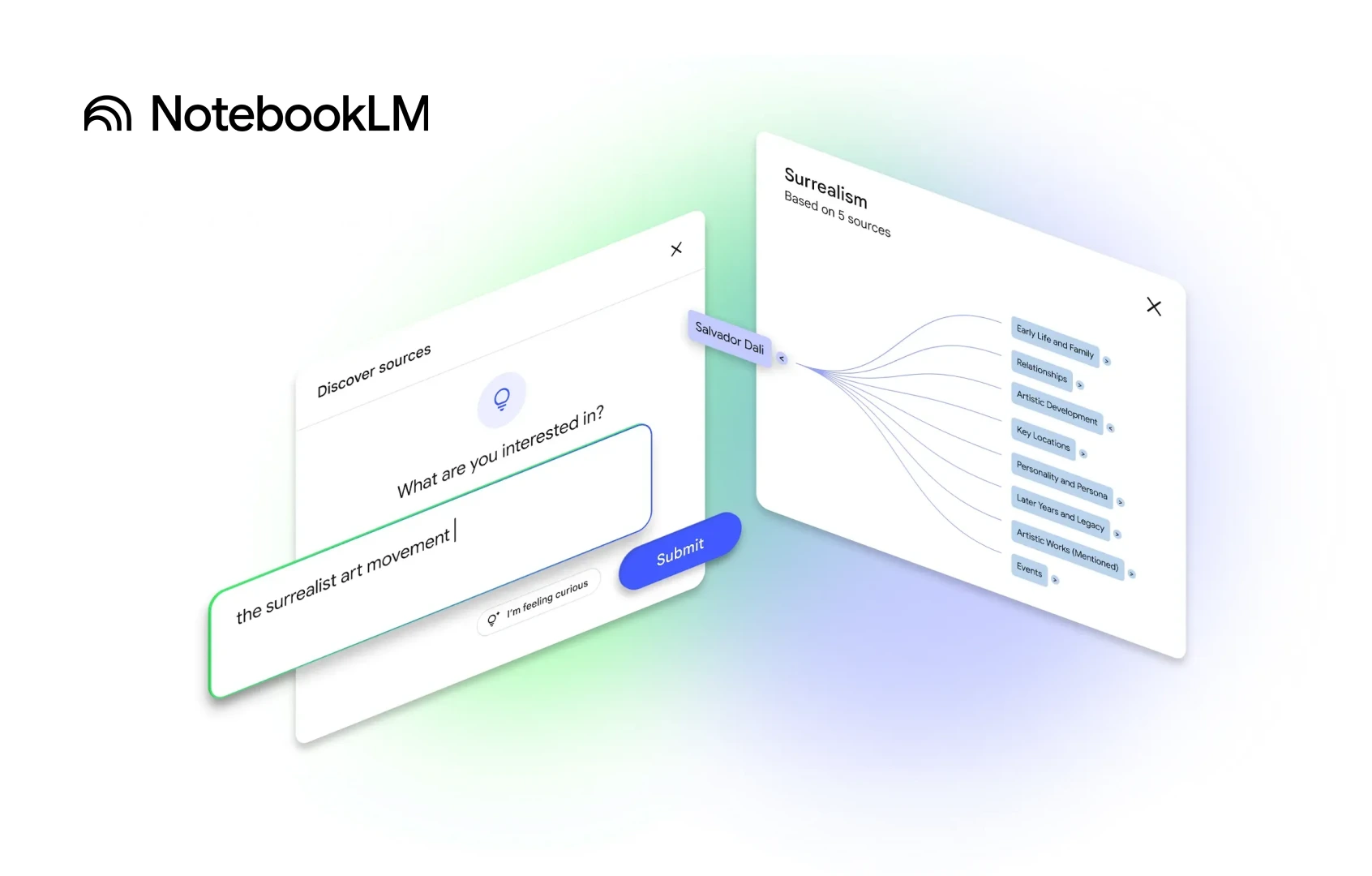
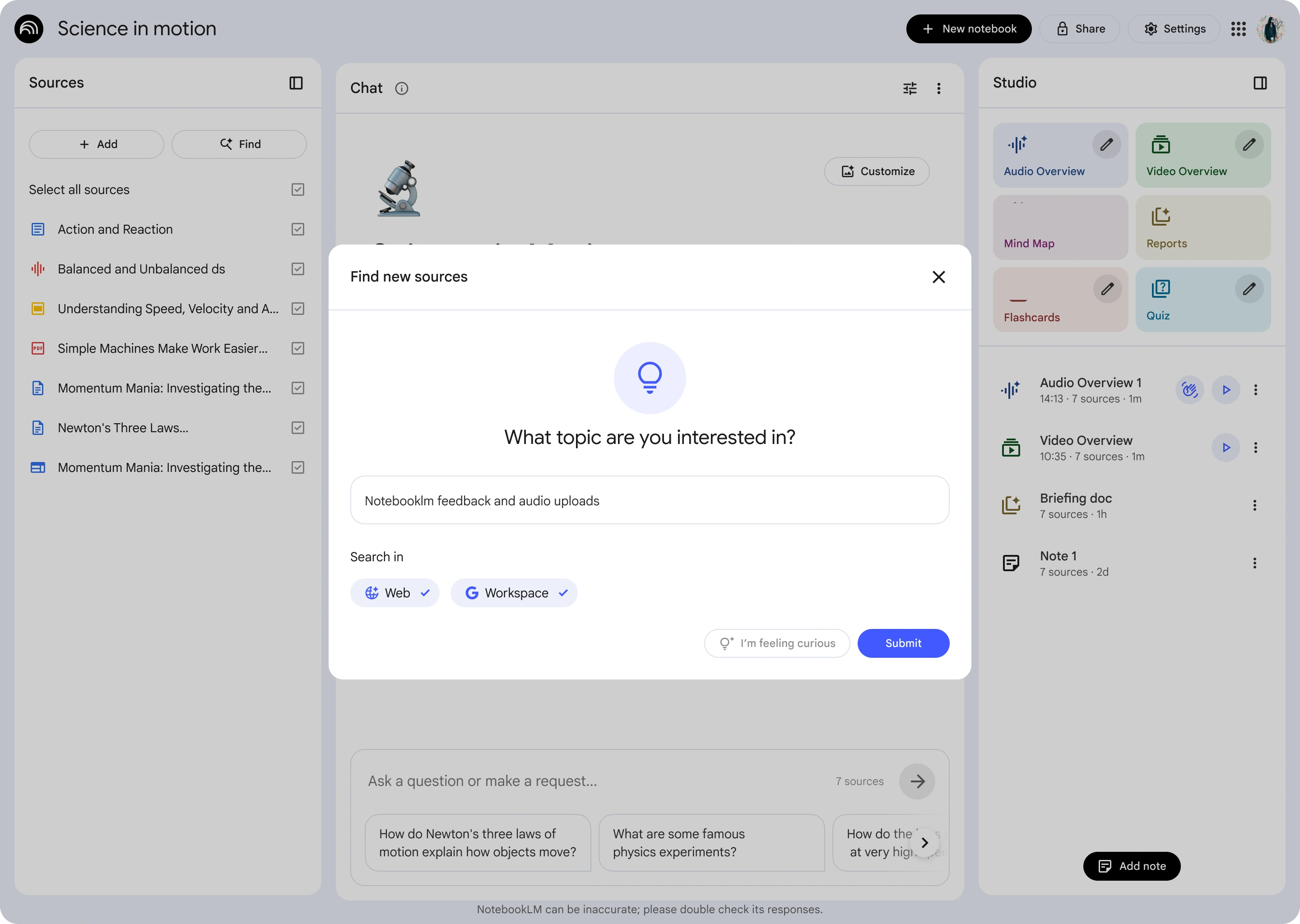
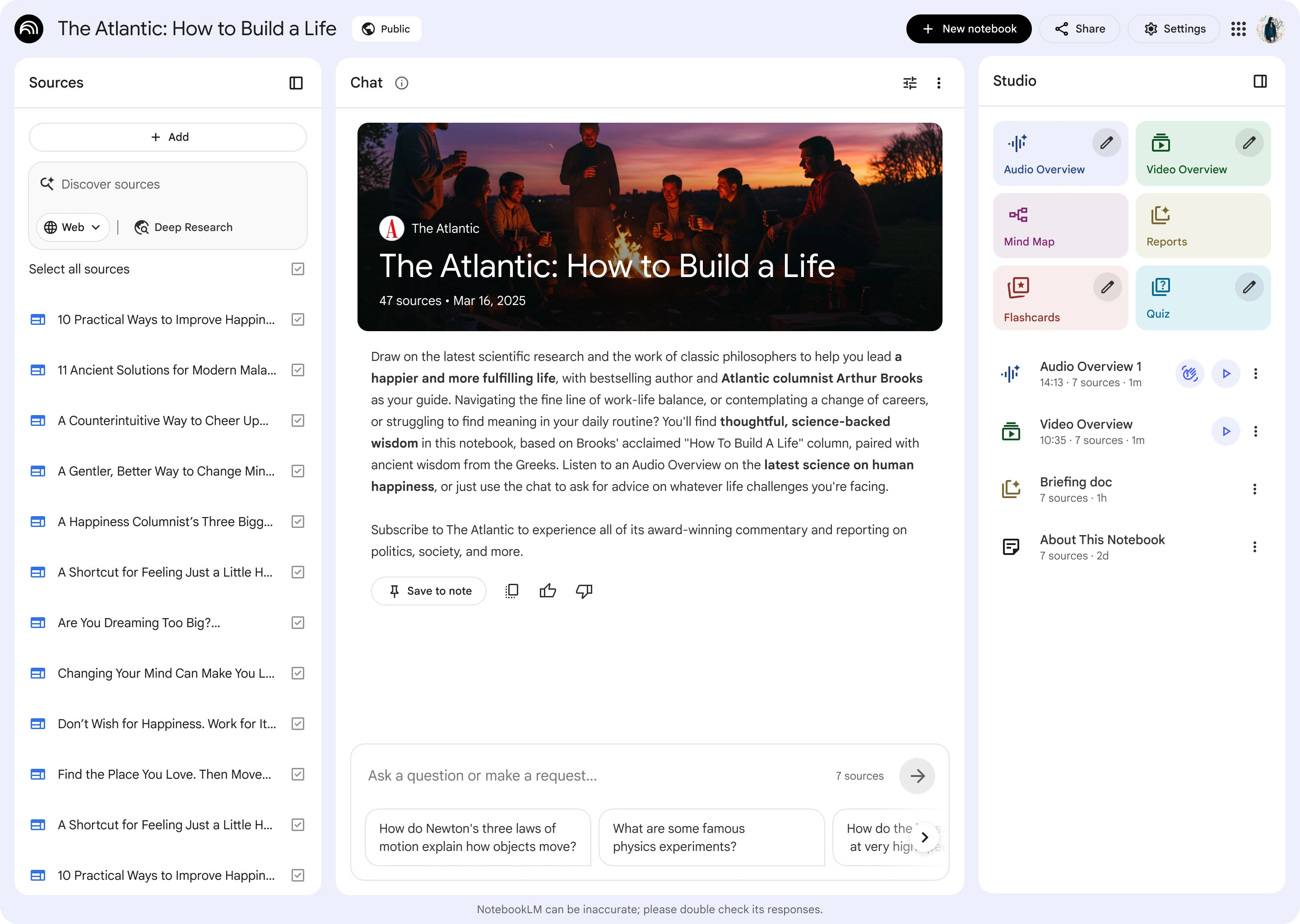
Notebook is grounded in sources, but the original product had huge cold start issues. I designed a feature that let you find sources from the web and import them. This completely removed the dead-end of not user's not having their own sources, or not knowing where to start. If one is feeling playful, they can create a notebook with "I'm Feeling Curious" on a randomized topic (I have a patent for this!), a throw-back to "I'm Feeling Lucky" and a fun experimental way to learn new topics.
Solution:
Source Discovery allows users to describe a topic and instantly receive a curated set of relevant sources, ready to import and explore.
Impact:
Accelerates early research and exploration phases
Keeps discovery transparent and source-based
Reduces cognitive load during cold-start
Keeps notebooks relevant with latest news, research, etc. Why it matters: This feature reframes search as guided curiosity, helping users move from vague interest to structured inquiry in minutes and quickly frames the power of the product, expediting paths to additional discovery.
20% of all notebooks created start by using this feature.
"
NotebookLM allows you to select which sources your query draws from, so each deep research answer is traceable to the specific material you provided — critical for academic rigor.
"
One of NotebookLM’s strongest differentiators is that you can upload and fully control your source library — PDFs, URLs, YouTube, and more — so your insights stay anchored in verified information.
See it in action
↓
🗺️
MindMaps
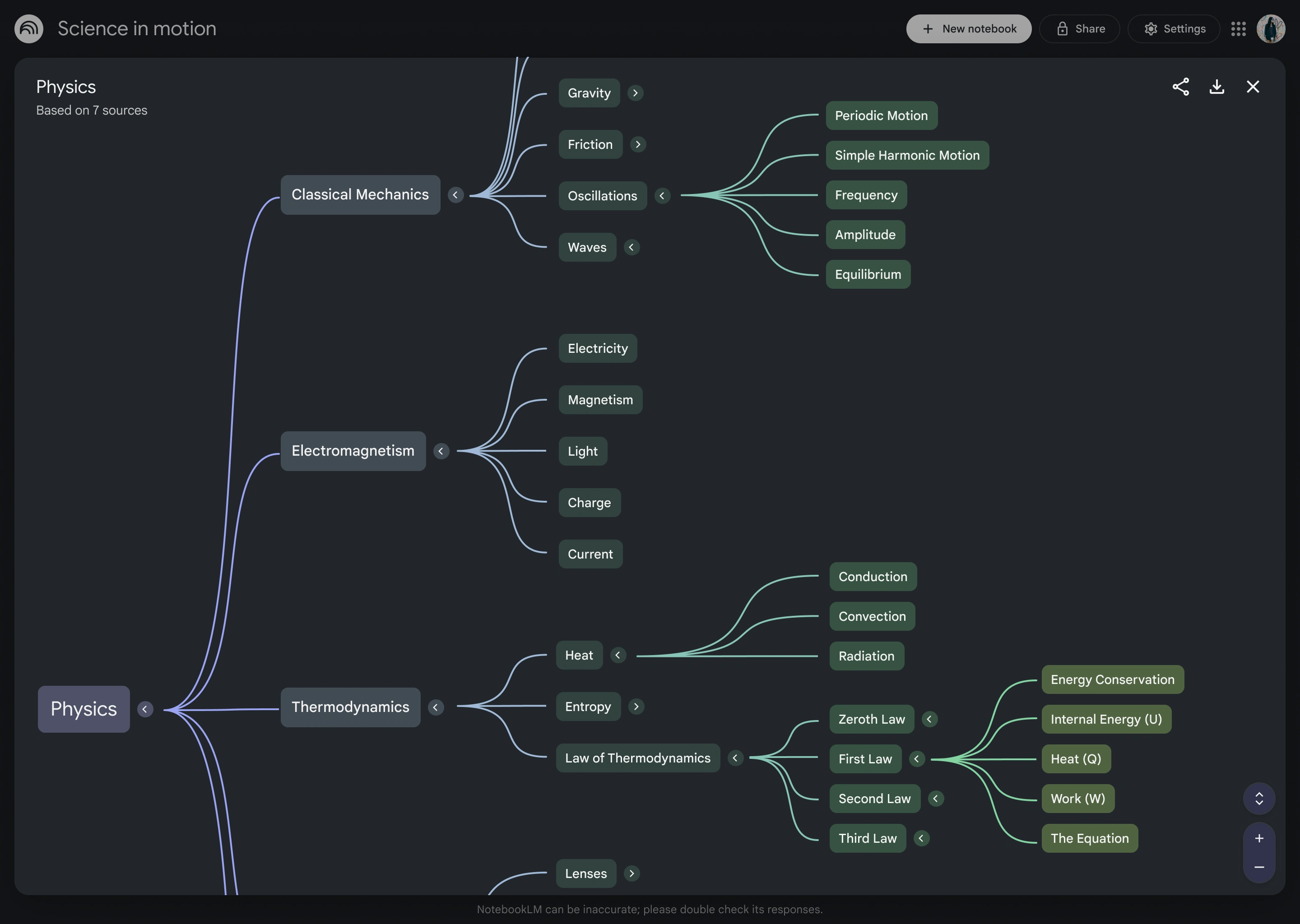
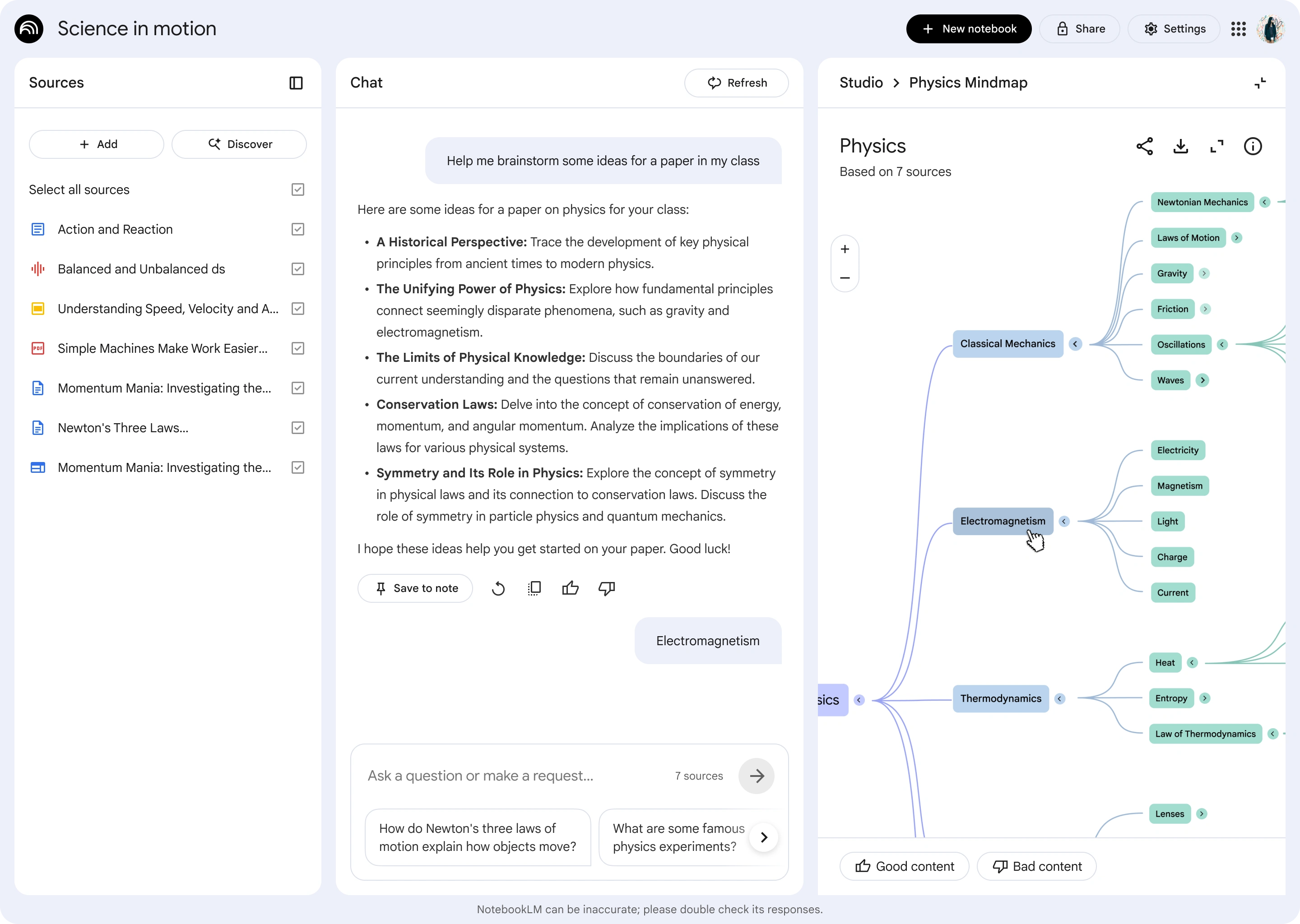
Mind Maps allow you to visualize interactive connections across multiple sources showing key concepts nested and structured; especially useful when making sense of a literature, study materials, research papers, and review and identifying thematic relationships.
Problem:
Researchers and educators often struggle to form a coherent mental model when working across multiple dense sources. Writers struggle to find reference common themes in their writing.
Solution:
Mind Maps automatically extract and organize key concepts across uploaded materials into a navigable, visual hierarchy that also allows for direct querying of topics/nodes.
Impact:
Helps researchers quickly identify themes, gaps, and relationships across literature
Enables educators to scaffold complex topics for teaching and discussion
Supports non-linear exploration without losing context
Facilitates student learning by simplifying complex concepts and finding parallel themes
Why it matters:
Instead of reading sequentially, users can see the structure of knowledge emerge helping to accelerate synthesis and sense-making.
“
I tried Mind Maps in NotebookLM and it’s my new favorite feature… NotebookLM chewed through all of it and spit out a mind map upon request… it helped me learn faster.
“
NBLM was revelatory… uploading sources and being able to jump around topics visually in the map… immensely crucial and interesting.
🌄
Featured Notebooks + Homepage Architecture Update
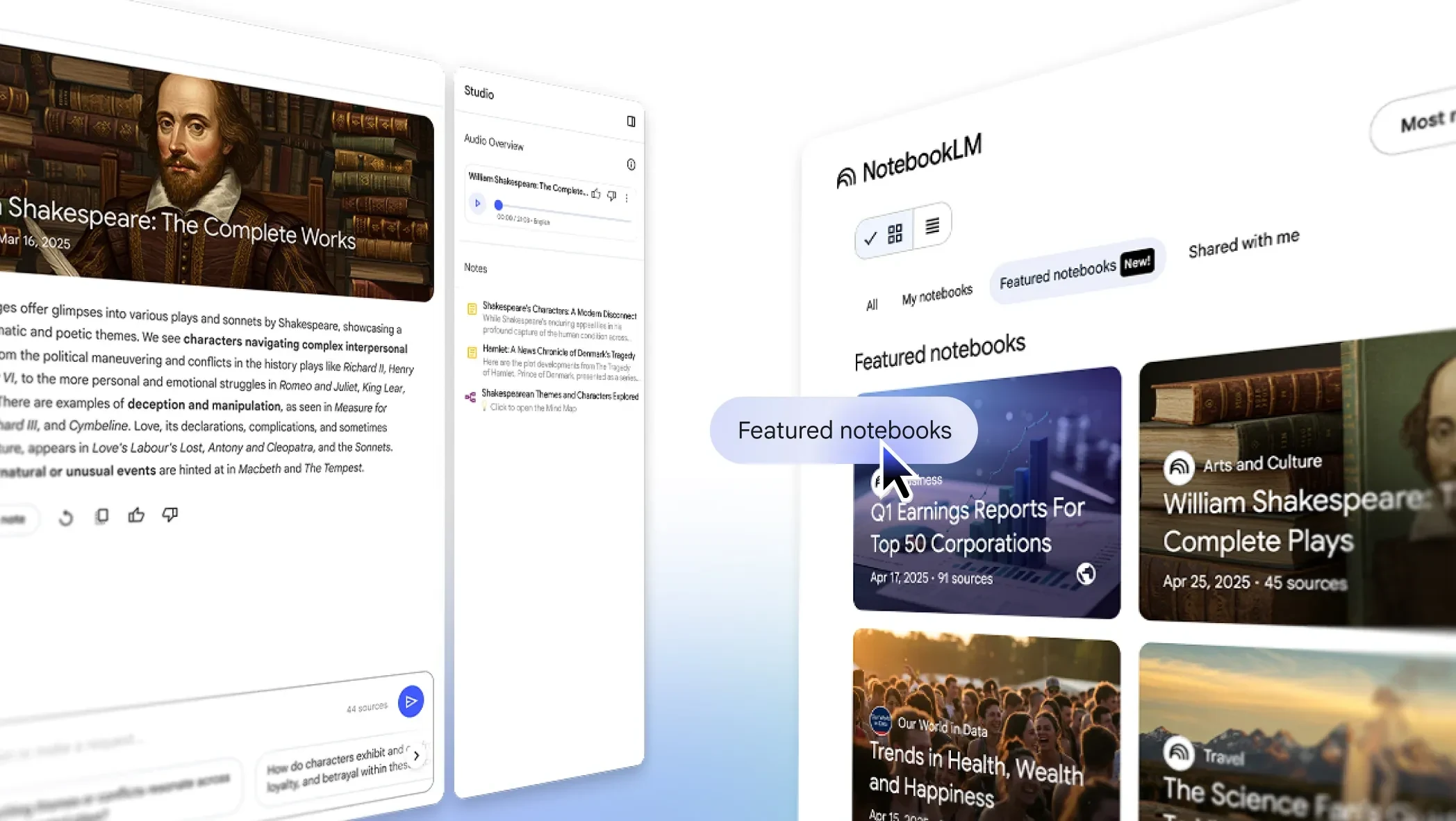
Featured Notebooks transformed NotebookLM from a tool you start from scratch into a place you can immediately explore. By introducing curated, high-quality notebooks directly on the homepage, NotebookLM now offers clear entry points into timely, complex topics—showing users what’s possible before asking them to do any setup.
Problem:
Starting research from scratch is time-consuming, especially when exploring unfamiliar or fast-moving topics.
Solution:
Featured Notebooks provide curated, high-quality collections of sources, summaries, and visualizations around timely topics from vetted partners.
Impact:
Gives researchers and teachers credible jumping-off points
Demonstrates best-practice usage of NotebookLM workflows and tools
Encourages reuse, sharing, and collaboration
Why it matters:
Featured Notebooks lower the barrier to entry while modeling how deep, source-grounded work can be done inside the product. They elevate the product and increases trust, facilitating onboarding of new users, and provide monetization pathway with future partners.
Design System
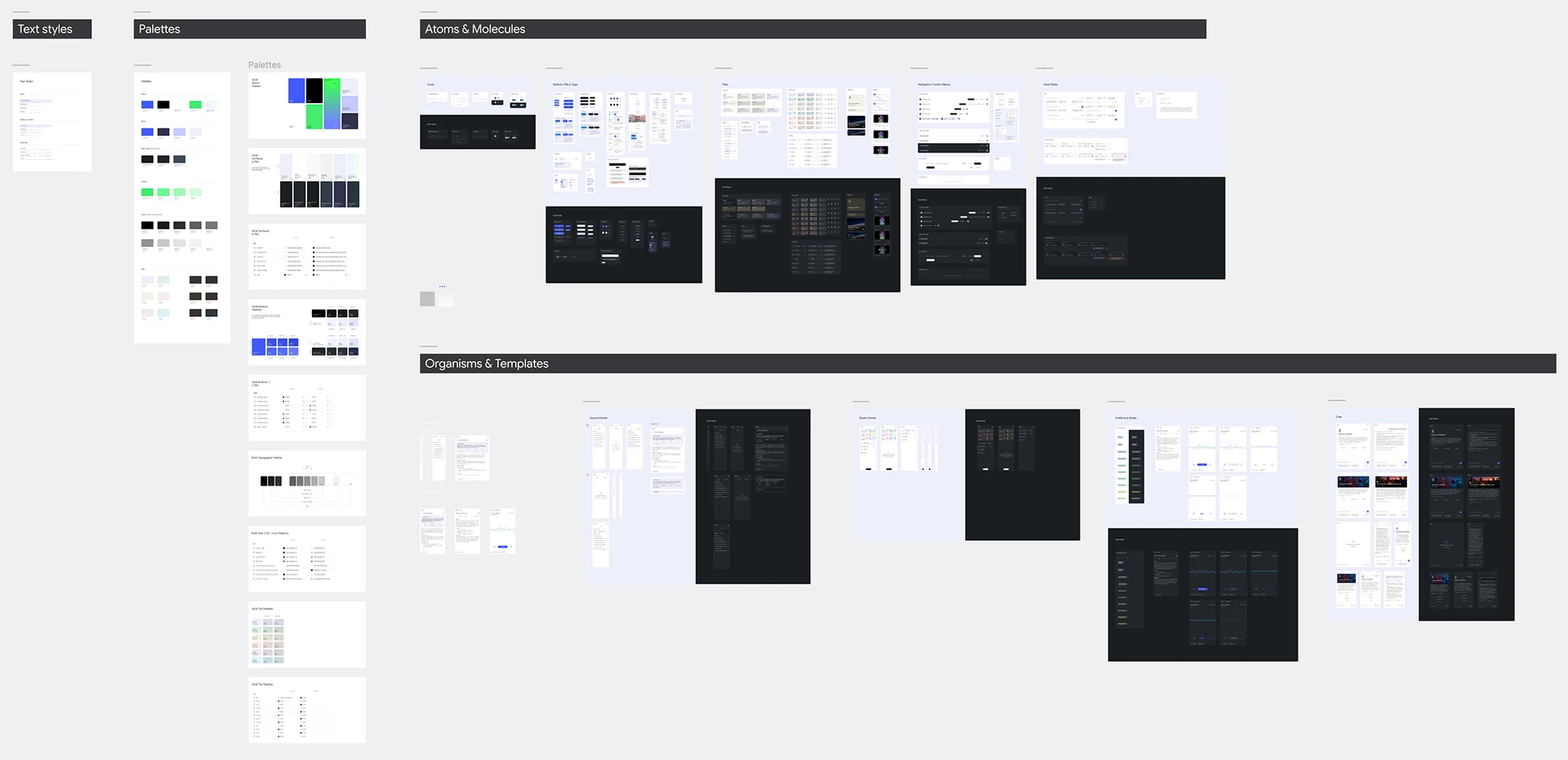
Owned and scaled the design system, maintaining it for a team of 3 active designers.
Some awards we won along the way
2025 Webby Winner
— AI, Immersive & Games
— Technical Achievement 2025
2025 Nominee
— AI, Immersive & Games
— Experimental & Innovation 2025
2025 Webby Winner
— AI, Immersive & Games
— Best Integrated Experience 2025
2025 People's Voice Winner
— AI, Immersive & Games
— Best Integrated Experience 2025
Like this project
Posted Apr 16, 2026
Designed and scaled UX features for Google's NotebookLM, enhancing user engagement and expanding AI functionalities.
Likes
0
Views
37
Timeline
Dec 31, 2024 - Dec 30, 2025
Clients
Google