
Nikita Vertyanov
Front-end developer building
- 2
- Followers


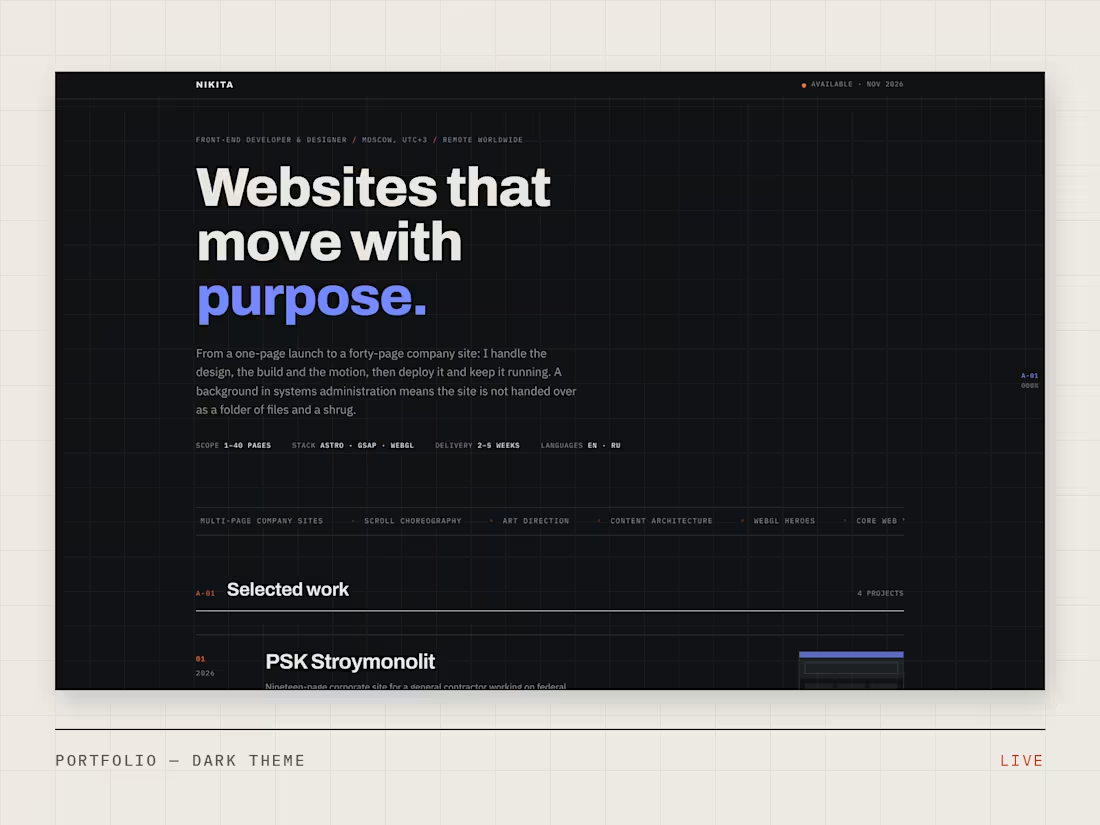
My own site, built on the visual language of an engineering drawing
sheet: hairline grid, sheet references, a dimension rule that tracks
scroll position in the margin, and a CAD-style title block in the
footer. The construction background is the subject, not decoration.
Astro for a static build with no framework overhead, GSAP for scroll
choreography, Lenis for smooth scroll. Motion respects reduced-motion
settings, and only elements below the fold animate in — the first
screen is complete the moment it loads, so link previews and quick
visitors see a finished page.
Deployed on Cloudflare with automatic rebuilds from Git.
1
75
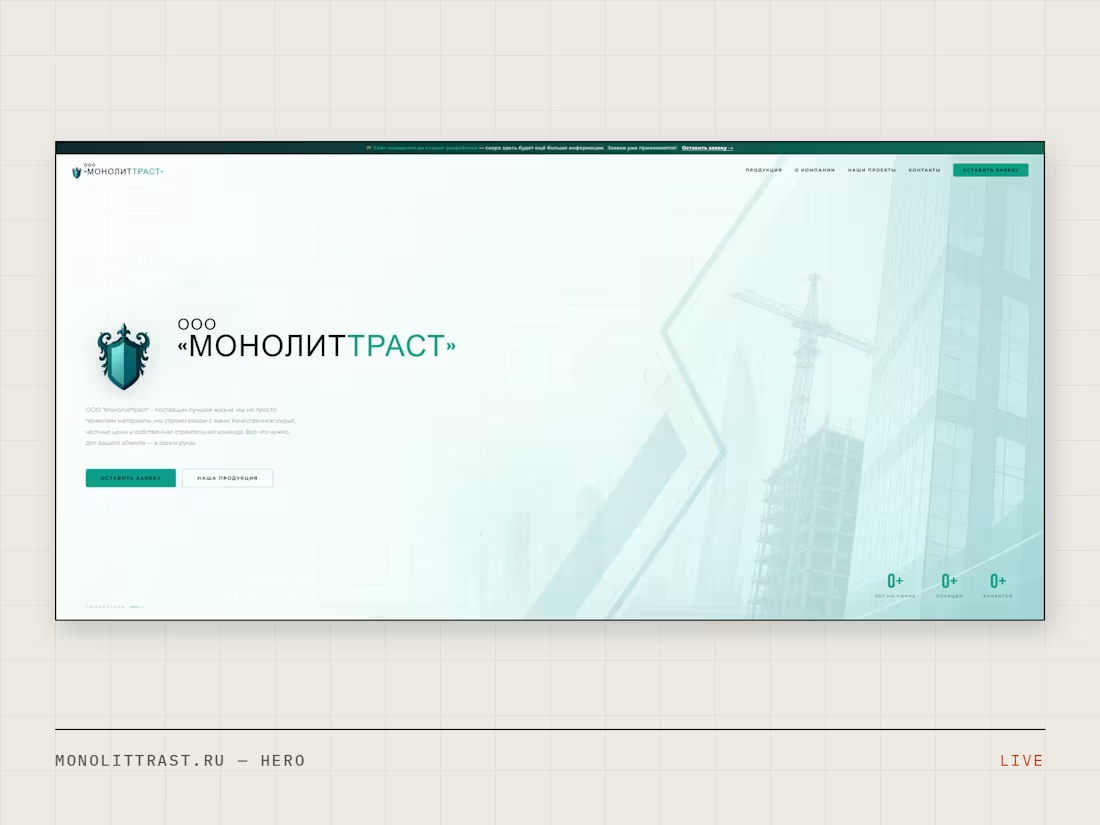
Site for a construction materials wholesaler that also builds turnkey.
Two directions were produced. The one in production covers the
catalogue, service offer and project history. The second is an
editorial alternative built around motion: the hero is a dot-globe
that rotates and traces delivery routes, reacting to the cursor and
draggable by hand; below it, a pinned scroll-scrubbed sequence walks
a single shipment from dispatch through transit to arrival on site,
with the page scroll driving the sequence frame by frame.
The second direction exists to answer a question the first one can't:
what the company's logistics actually feel like.
1
86
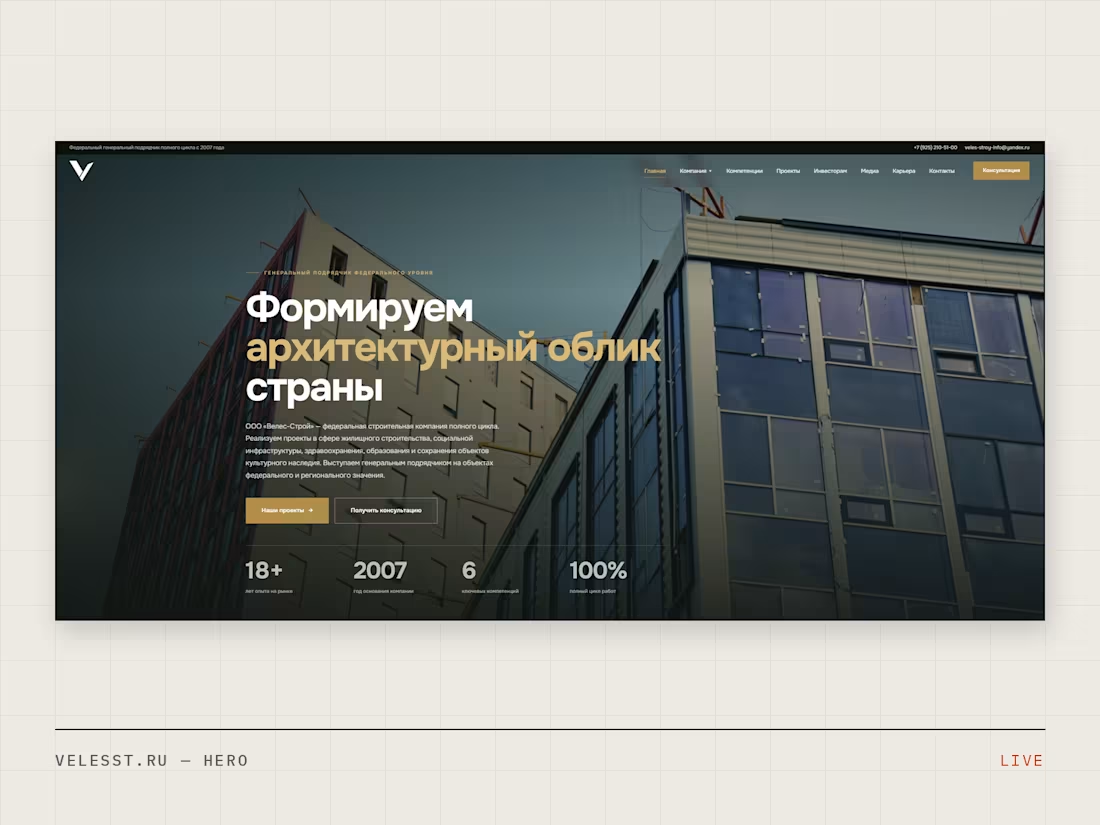
Corporate site for a general contractor whose work spans housing,
commercial property, medical infrastructure and the restoration of
listed buildings.
Four service lines that have almost nothing in common operationally —
so each got its own section and its own visual logic, instead of being
flattened into one shared template.
Delivered as two complete art directions: one in dark green and gold,
one heraldic. Both were built as working sites, not static mockups,
so the client picked an identity by using it rather than by approving
a picture of it.
1
95
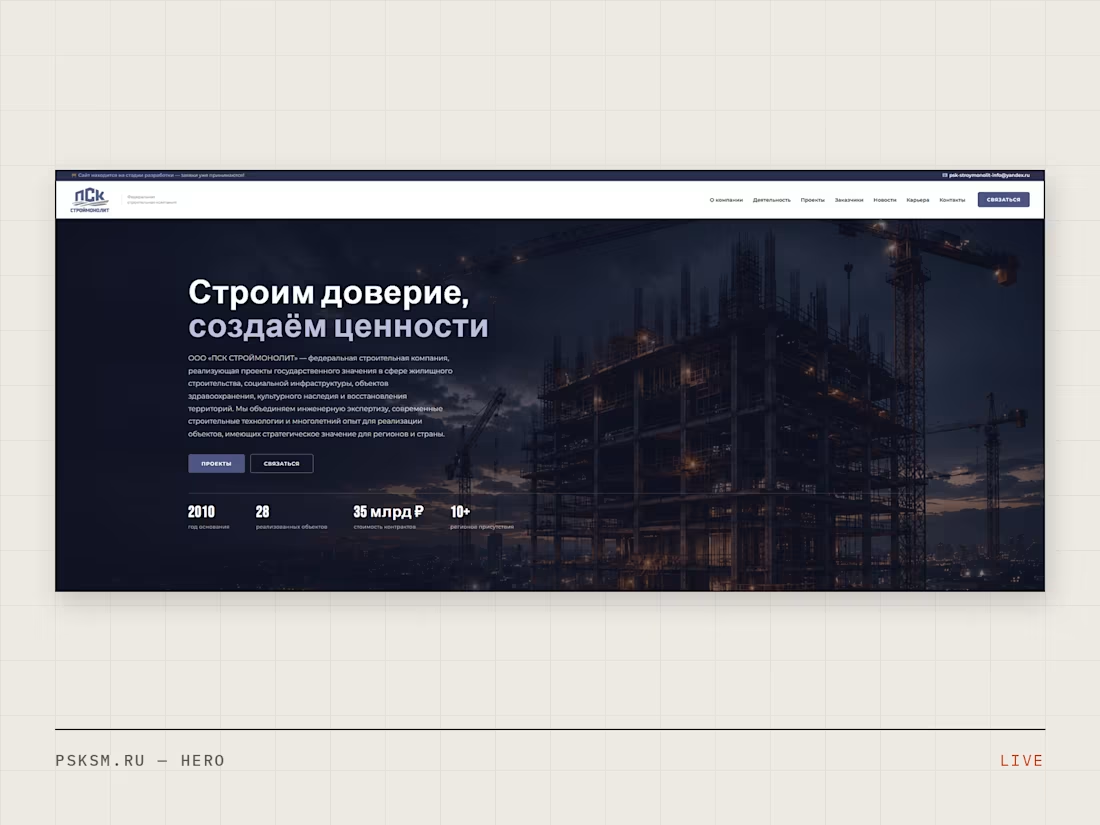
Corporate site for a general contractor working on federal construction
projects — nineteen pages built around the client's own archive rather
than a template.
The work was mostly content architecture: turning a folder of project
documents, certificates and site photography into a structure a visitor
can actually navigate. Every reference, client logo and completed
project on the site is real — no stock imagery anywhere, which in this
industry is rarer than it should be.
Photography was processed and optimised in a custom pipeline to keep
page weight down across all nineteen pages. Layout holds from 390px up
to 2560px, since a lot of the audience opens it on large office
monitors.
1
98