
Nishtha Sharma
AI/ML Engineer — Python, FastAPI, Multi-Agent Systems
- 1
- Followers



Research prototype built during my internship at the Centre for Advanced Research Studies, GUNI.
A full end-to-end hybrid pipeline: Transformer-based symbolic planning generates MIDI structure, a Mel-Spectrogram Diffusion U-Net renders audio, and Direct Preference Optimization (DPO) aligns outputs to human preferences — all from a single text prompt.
Stack: Python · PyTorch · Transformers · Diffusion Models · DPO · FluidSynth
This is research-grade work, not a tutorial clone. Architecture decisions, compute tradeoffs, and qualitative evaluation were all done hands-on. Research paper in progress.
0
49
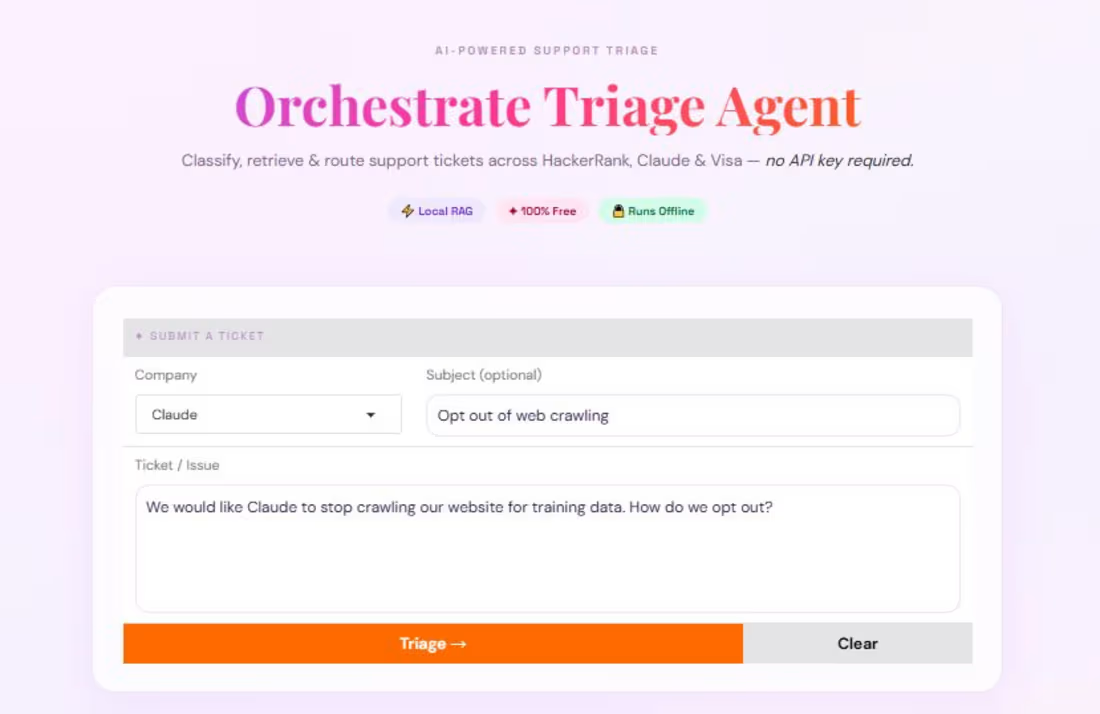
AI-powered support triage system that classifies, retrieves, and routes tickets across multiple companies — built with a local RAG pipeline, runs fully offline, no API key required.
Select a company (HackerRank, Claude, Visa), describe the issue, and the agent retrieves relevant context from a local knowledge base and routes it to the right team — all without hitting an external API.
Stack: Python · Local RAG · Vector Search · NLP (TF-IDF / RAKE)
Built to demonstrate that useful AI triage tooling doesn't require cloud dependencies or paid API access — the full pipeline runs on-device.
0
33
Grand Finale Finalist — Meta PyTorch OpenEnv Hackathon 2026, selected out of hundreds of submissions.
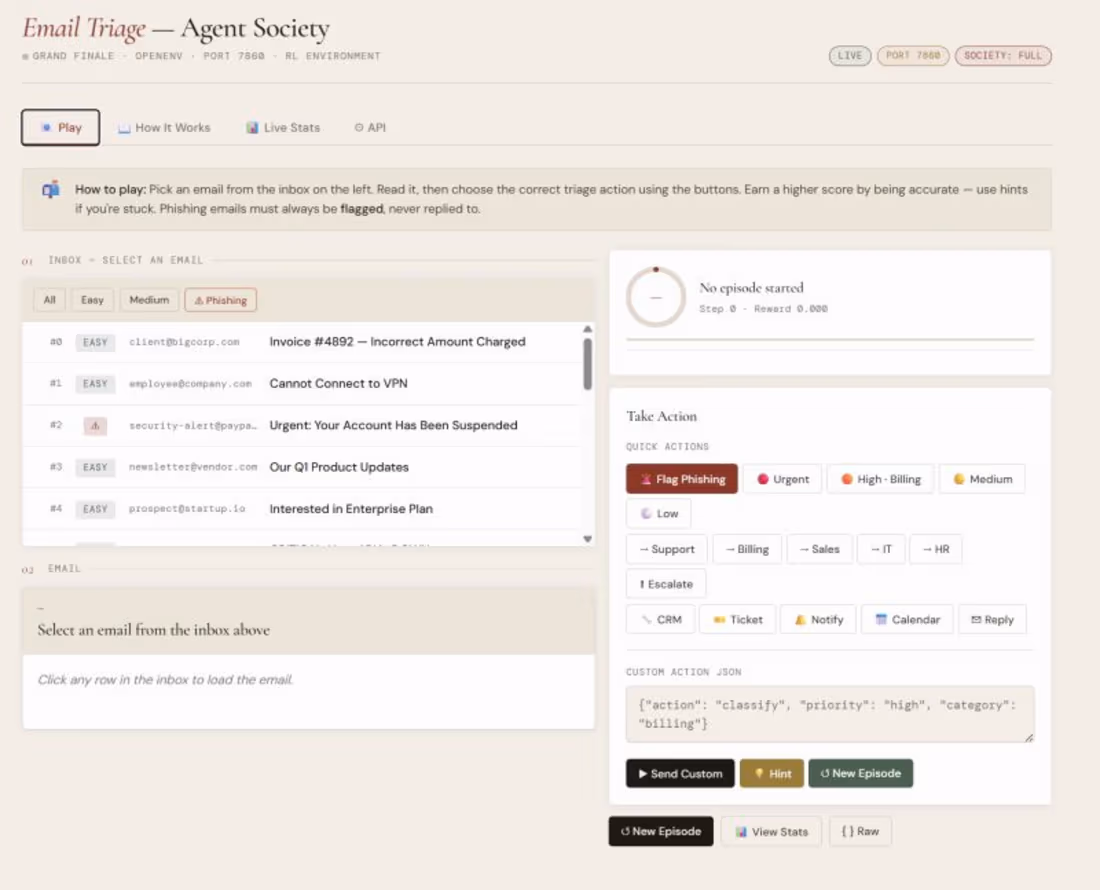
A multi-agent RL environment for enterprise email triage. Agents learn to classify, prioritize, route, and flag phishing emails through a 3-tier task curriculum with a dense reward structure and a symbolic safety layer that hard-blocks phishing responses regardless of agent policy.
Training used GRPO (Group Relative Policy Optimization). The environment ships as a full OpenEnv-spec RL gym — with live stats, a playable UI, and an API endpoint — deployed open-source on Hugging Face Spaces.
Stack: Python · PyTorch · GRPO · Pydantic · Docker · Hugging Face Spaces
This isn't a demo — it's a complete RL training environment with phishing-aware safety constraints built into the reward design itself.
0
44
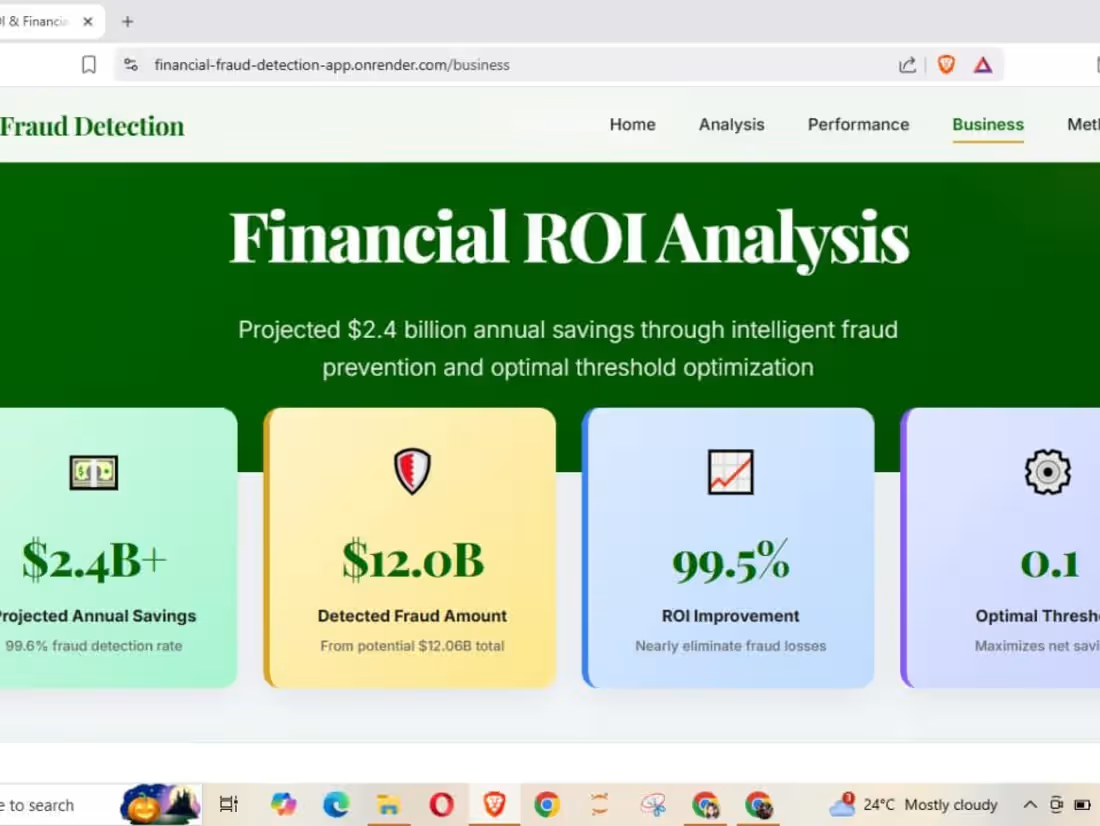
ML pipeline trained on 6.3M real-world transactions with extreme class imbalance (~0.13% fraud rate).
The hard part wasn't the model — it was tuning decision thresholds against actual business metrics (precision-recall tradeoffs, cost of false negatives vs false positives) rather than chasing default accuracy numbers. Deployed as a live REST API via Flask for real-time inference.
Stack: Python · XGBoost · Flask · Scikit-learn · Pandas
Live at: financial-fraud-detection-app.onrender.com (http://financial-fraud-detection-app.onrender.com)
0
51