
Murugeshwari S.
Construction & MEP Finances Strategist Businesses.



It was a Friday afternoon, right as I was wrapping up the week’s books.
A construction client called me, looking at his bank account in confusion.
Their bank balance shows I have $50,000, but my accounting software says I only have $42,000. Where did $8,000 go?
He was worried a payment had bounced or that money was missing.
Instead of panicking, we did what every bookkeeper loves doing: A clean bank reconciliation.
Here is what we found after digging through the transactions:
The Ghost Deposit: A client paid an invoice via ACH late Thursday, which hit the bank balance immediately but hadn't been matched to the open invoice in the software yet.
The Uncleared Check: A vendor check written two weeks ago for direct materials was still sitting in the owner's drawer, waiting to be cashed.
Once we reconciled every line item matching bank statements to the general ledger the $8,000 difference vanished into thin air.
His books were completely balanced, his job costs were accurate, and he could enjoy his weekend without worrying about missing cash.
Why Bank Reconciliation is Your Weekly Business Health Check
In construction and trade accounting, a bank balance is not your real profit.
Without regular reconciliation
Unmatched vendor bills skew your Job Costing.
Unapplied payments mess up your WIP reporting.
You end up making business decisions based on phantom cash.
Reconciliation is not just about matching numbers it is about giving business owners total peace of mind before they close their laptop for the weekend.
Friday Reminder for Business Owners & Contractors: Have your accounts been reconciled this week? Or are you heading into the weekend guessing your true cash flow?
Let’s keep those books clean so you can build with confidence!
#ConstructionAccounting (https://www.linkedin.com/search/results/all/?keywords=%23constructionaccounting&origin=HASH_TAG_FROM_FEED) #BankReconciliation (https://www.linkedin.com/search/results/all/?keywords=%23bankreconciliation&origin=HASH_TAG_FROM_FEED) #JobCosting (https://www.linkedin.com/search/results/all/?keywords=%23jobcosting&origin=HASH_TAG_FROM_FEED)
Activate to view larger image,
0
63
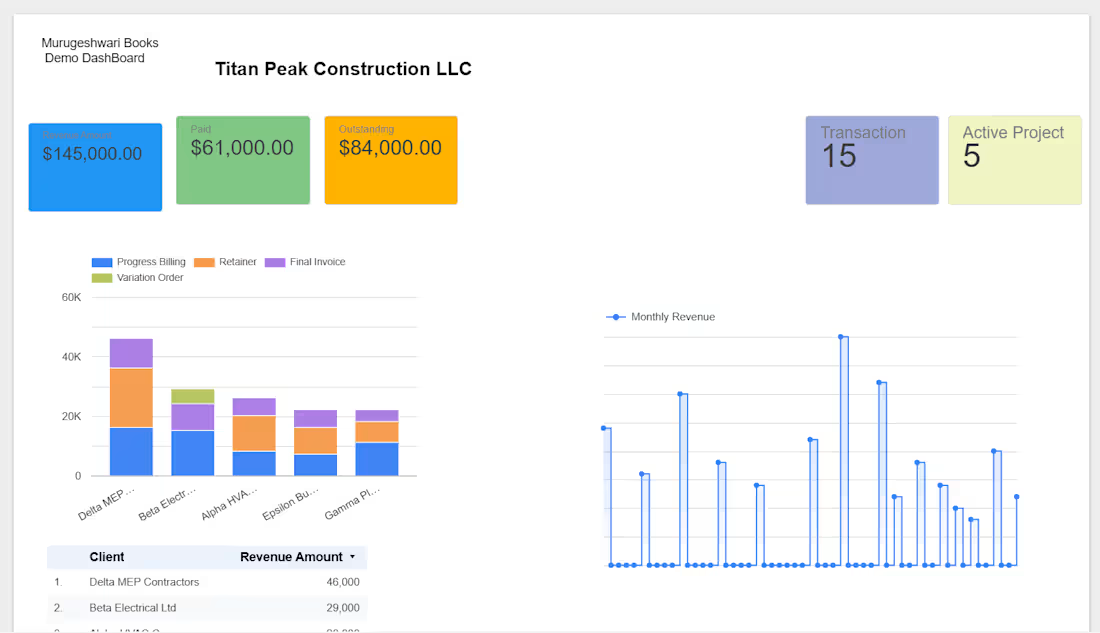
Are you actually watching your revenue trend or just hoping it is going up?
Construction and MEP contractors look at revenue only at month end or year end.
But the trend is where the real story is
Are your billings growing month by month?
Did revenue suddenly drop after a big project finished?
Is your cash inflow stable, or spiky and risky?
In my work with contractors, I don’t just show total revenue.
I build Revenue Trend Dashboards in Looker Studio that show
== Month-by-month revenue movement
== Project-wise contribution to total revenue
== Breakup of Retainers, Progress Billings, and Final Invoices
When you can see your revenue trend clearly:
You know when to push sales harder.
You can plan cash flow instead of reacting.
You spot dependency on 1–2 big clients early.
Right now I’m building sample Revenue Trend dashboards from simple Google Sheets data and turning them into visual reports for construction businesses.
If you’re a contractor or trade business (HVAC, Electrical, Plumbing, MEP) and want to see your revenue trend instead of just static totals, DM me
#ConstructionAccounting (https://www.linkedin.com/search/results/all/?keywords=%23constructionaccounting&origin=HASH_TAG_FROM_FEED) #RevenueTrend (https://www.linkedin.com/search/results/all/?keywords=%23revenuetrend&origin=HASH_TAG_FROM_FEED) #JobCosting (https://www.linkedin.com/search/results/all/?keywords=%23jobcosting&origin=HASH_TAG_FROM_FEED) #MurugeshwariBooks (https://www.linkedin.com/search/results/all/?keywords=%23murugeshwaribooks&origin=HASH_TAG_FROM_FEED)
1
57

Why Construction Retainage is Just Like Buying a Custom Car
Imagine taking your car to a top mechanic for a major upgrade.
They tell you:
Pay 90% now, and pay the final 10% after you drive it for a week to make sure everything runs perfectly.
That final 10%? That’s Retainage.
In construction, clients hold back 5% to 10% of every invoice until the project is 100% complete and inspected.
Why does this matter for your business lifestyle?
The Trap: If you treat that 10% as money you can spend today, your cash flow will feel like driving on empty.
The Reality: That money is locked away until final sign off.
The Fix: Treat retainage as a savings account for project completion, not everyday operating cash.
When you track retainage separately and clearly, you stop guessing your bank balance and start running your business with peace of mind.
1
171

AIA billing looks simple on paper.
In real life? It’s a math test, a paperwork fight, and a cash flow waiting game.
Example:
Contract value: $250,000
Work completed this month: $42,500
Retainage: 10% = $4,250 held back
Stored materials: $12,000, but only if the backup is perfect
One missing attachment, one mismatch in the schedule of values, one late submission = payment pushed 30 days
That’s the part people don’t talk about.
AIA billing is not just “sending an invoice.”
It’s proving every dollar with clean backup, matching your G702 and G703, tracking retainage, and making sure your numbers don’t tell a different story than your job cost report.
The real pain?
You did the work, but the paperwork slows the money.
You’re carrying payroll while waiting on approvals.
You’re fixing billing errors that should’ve been caught before submission.
You know the job is profitable, but cash flow still feels tight because the money is stuck in the system.
Good AIA billing doesn’t just get you paid.
It protects your margin, your schedule, and your sanity.
2
227