
MEHEDI HASAN FAHIM
Bookkeeping & Excel Expert | QuickBooks Online & Xero



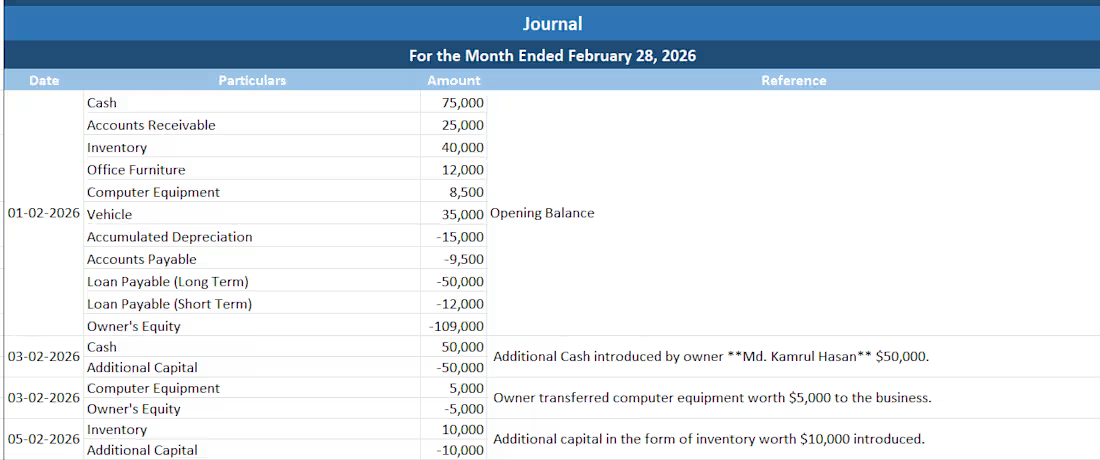
I set up the general journal for a small business for the month ended February 28, 2026. I entered the opening balances and recorded the owner's capital contributions, so the books started from a clean, balanced position.
Scope of work:
Recorded the opening balance across all account types: cash, receivables, inventory, furniture, computer equipment, vehicle, accumulated depreciation, payables, short- and long-term loans, and owner's equity
Confirmed the opening entry balances (total assets of 180,500 equal total liabilities and equity)
Recorded additional cash introduced by the owner as capital
Recorded non-cash contributions, including computer equipment and inventory transferred into the business
Added a clear reference note to every entry, so each transaction can be traced and audited
Result
The business had a documented starting point and a clear record of how the owner funded it. The journal was ready to post to the ledger and to feed the trial balance, P&L, and balance sheet.
2
60
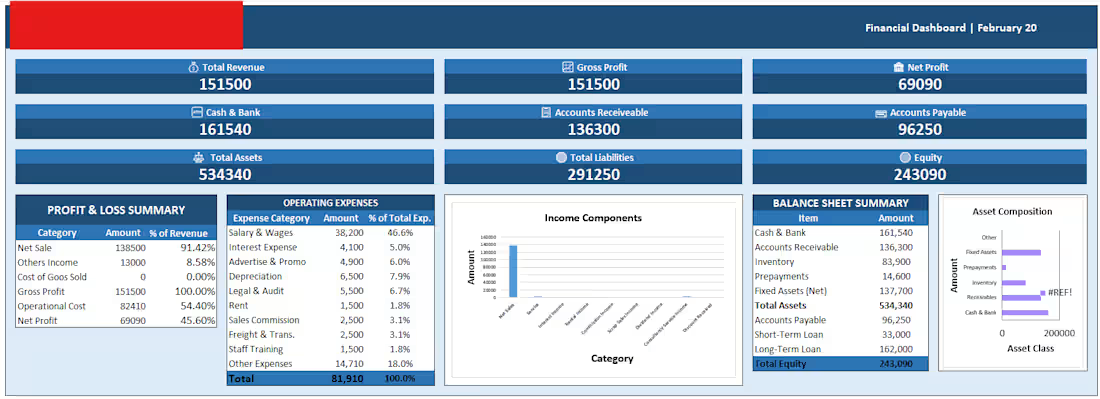
I designed an Excel financial dashboard that turns a business's accounting data into one page the owner can read in a minute. Instead of going through separate P&L and balance sheet reports, they see revenue, profit, cash, receivables, payables, and equity together.
What the dashboard includes:
Headline KPI cards: total revenue, gross profit, net profit, cash and bank, accounts receivable, accounts payable, total assets, total liabilities, and equity
Profit & Loss summary:
net sales, other income, cost of goods sold, gross profit, operating cost, and net profit, each shown as a percentage of revenue
Operating expense breakdown:
expenses by category (salaries, interest, marketing, depreciation, legal and audit, rent, commissions, freight, training) with each one's share of total expenses
Balance sheet summary:
cash, receivables, inventory, prepayments, fixed assets, payables, short-term and long-term loans, and equity
Charts: income components and asset composition, for quick visual comparison
Result:
The owner can see profitability, cost structure, and financial position at a glance. For example, they can tell that salaries make up nearly half of operating costs and that net profit is about 46% of revenue. It works for monthly reviews, lender conversations, and budgeting.
1
2
72
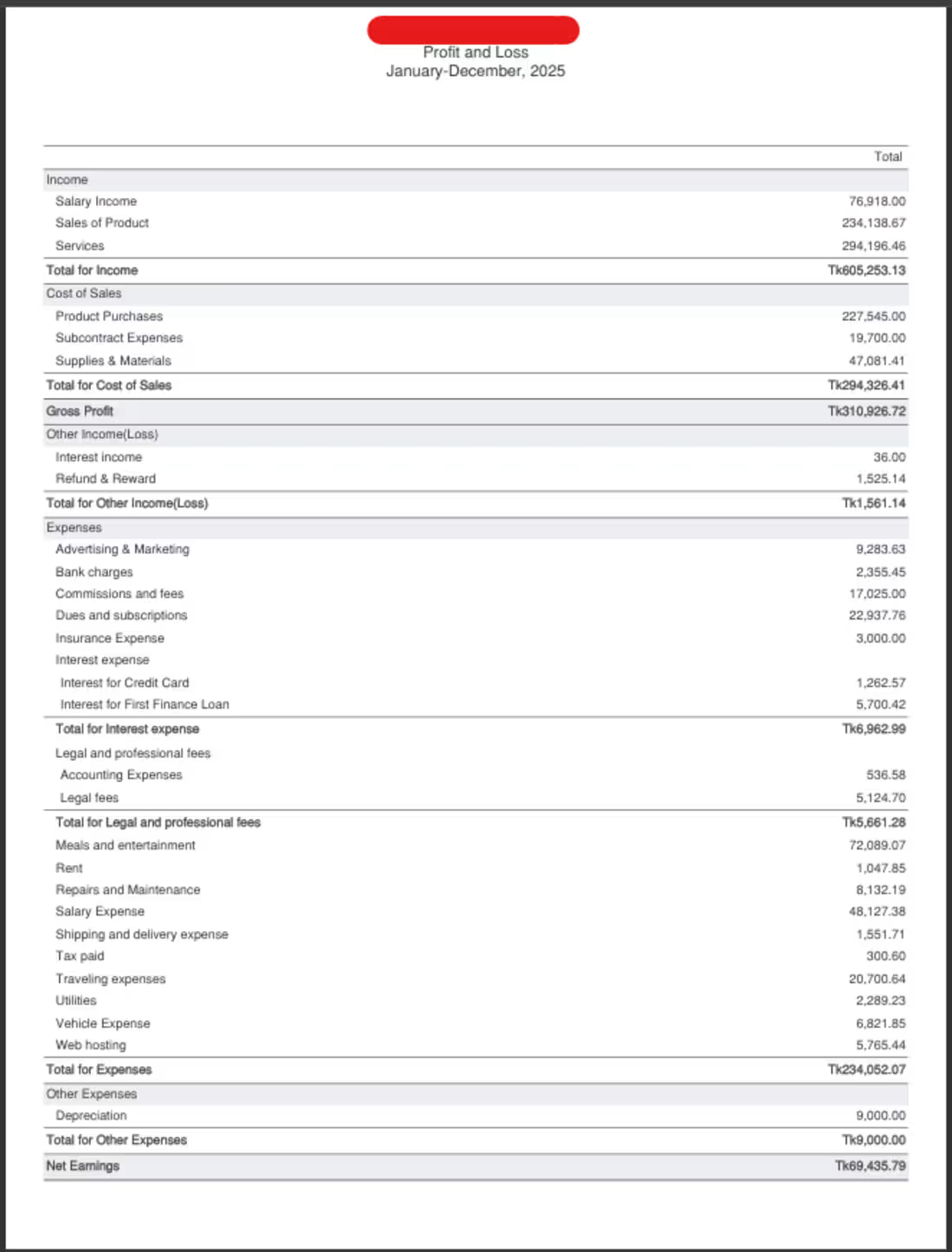
I prepared the full-year 2025 Profit & Loss statement (January to December) for a small business with multiple income streams, turning raw transactions into a clear report the owner could use to understand profitability.
Scope of work:
Set up income categories to separate product sales, service revenue, and other income
Structured Cost of Sales (product purchases, subcontractors, supplies and materials) so gross profit was accurate
Categorized operating expenses, including marketing, bank charges, commissions and fees, subscriptions, insurance, rent, utilities, travel, vehicle costs, and web hosting
Split interest expense by source (credit card and bank loan) and grouped legal and accounting fees under professional fees
Recorded depreciation on the company vehicle so net earnings reflected true costs
Reconciled the P&L with the balance sheet so the two statements agree
Result
The owner received a clean, well-organized report showing revenue, gross profit, expenses, and net earnings. It made it easy to see where money was coming from and where it was going, and it was ready for tax preparation, loan applications, and budgeting.
2
72
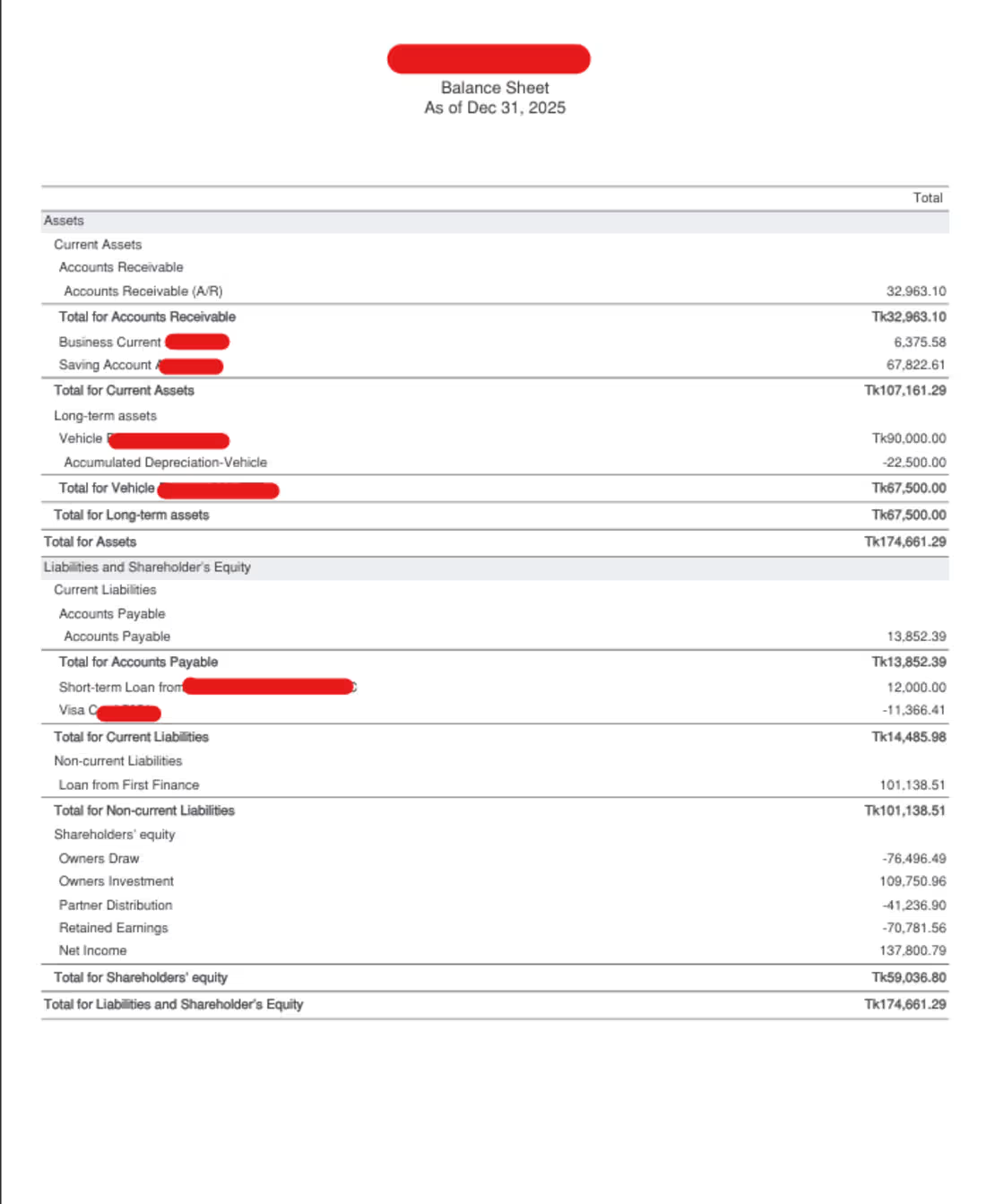
I prepared and reconciled the year-end balance sheet (as of December 31, 2025) for a small business client, giving them accurate, review-ready financial statements.
Scope of work:
Reconciled business checking and savings accounts to bank statements
Tracked and cleaned up accounts receivable and accounts payable
Recorded the company vehicle as a fixed asset and calculated accumulated depreciation
Categorized short-term and long-term loans correctly, including a bank loan and a credit card balance
Set up and reconciled the equity section: owner's investment, owner's draws, partner distributions, retained earnings, and net income
Confirmed the balance sheet balances, with total assets equal to total liabilities and equity
Result:
The client received a clean, accurate balance sheet showing their true financial position, including cash, receivables, debts, and owner equity. It was ready to hand to their accountant, lender, or tax preparer.
Tools used:
QuickBooks Online
2
85