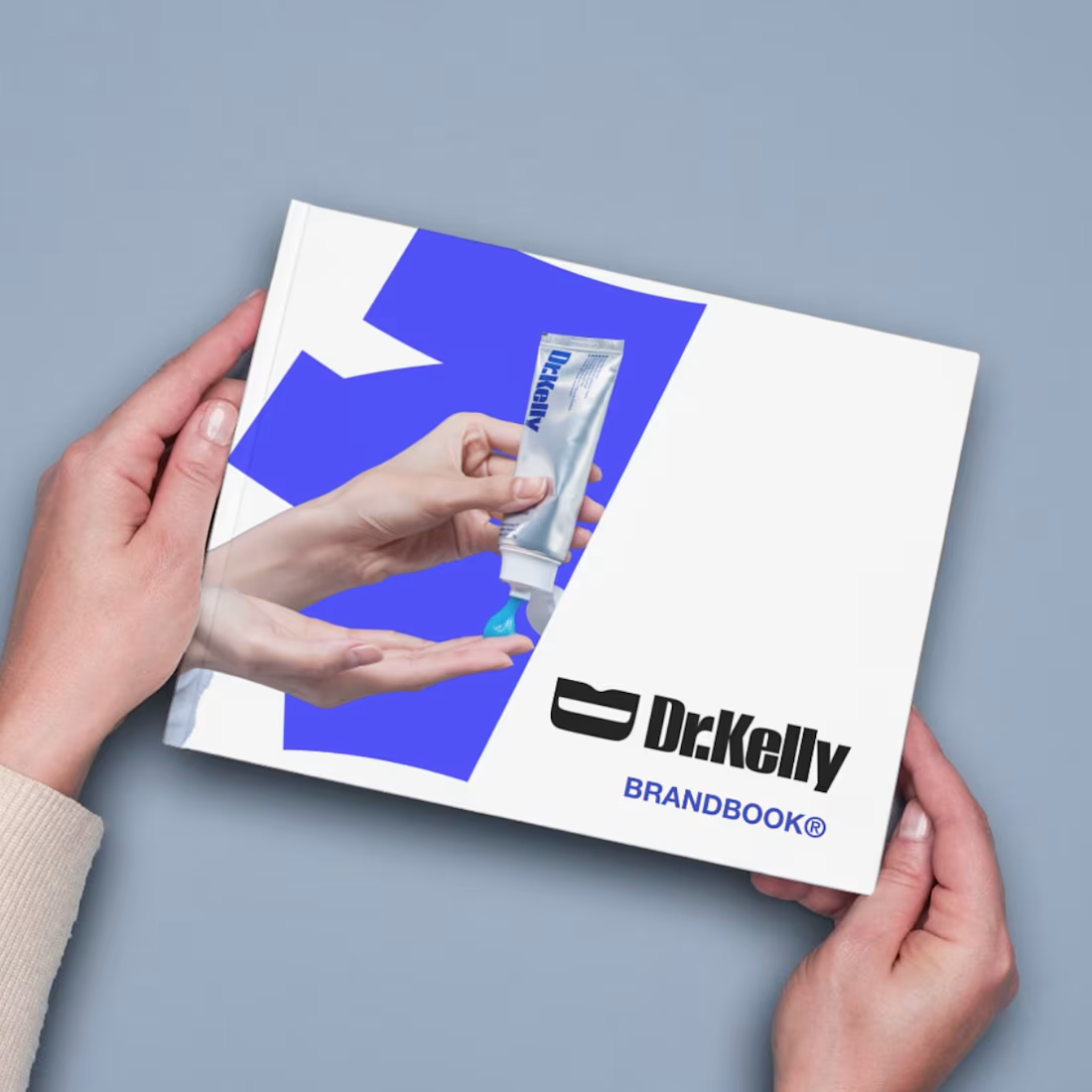
Dr. Kelly came to me with a brilliant product but a blurry position.
She had a scientifically rigorous formula, a refined visual identity, and a bold ambition to change oral care—but no clear strategic anchor to pull it together. In a category crowded with inflated promises, the brand risked blending in rather than standing apart.
I partnered with Dr. Kelly to clarify her strategic position and build a brand grounded in evidence, transparency, and long-term health. Through a Spoken Identity Workshop™, positioning and messaging work, and the creation of a BrandBook®, we shaped a voice that honored the science while earning trust.
Today, Dr. Kelly has a brand with presence, precision, and purpose. With the Southeast Asia launch underway, the brand is positioned to grow through meaning—not hype.
2
1
86
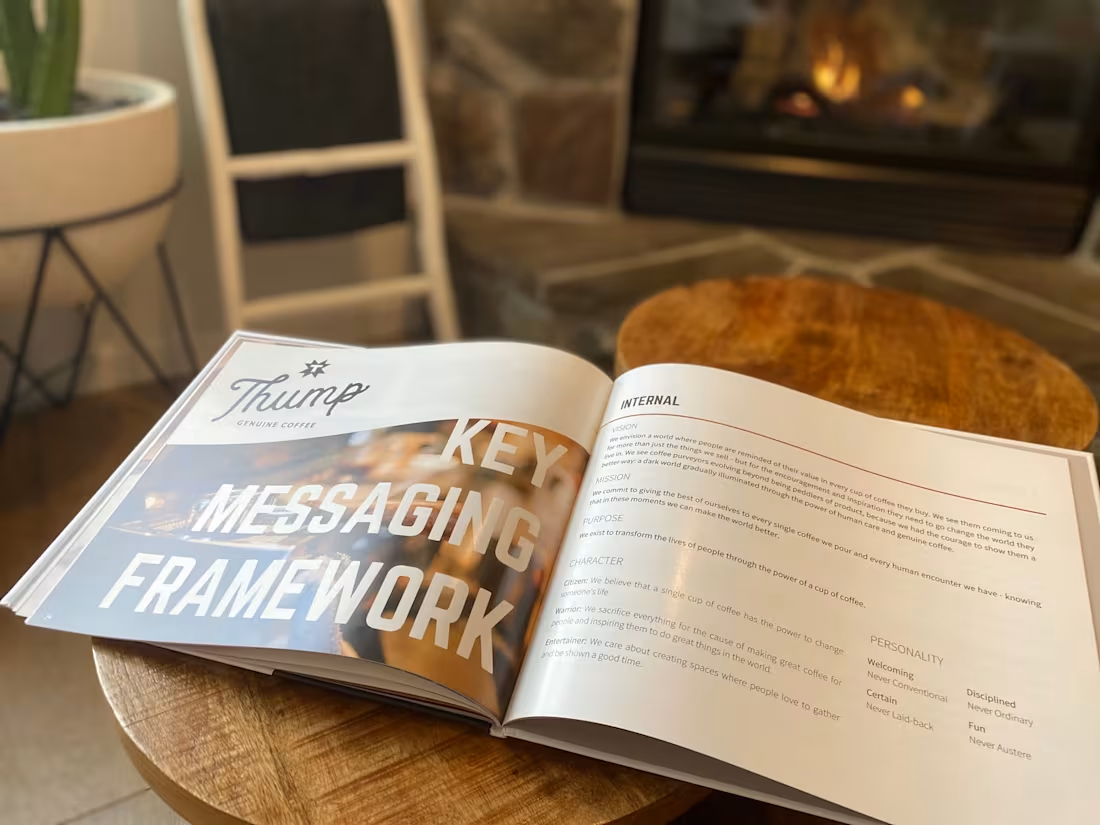
Thump Coffee came to me with a strong but indistinct sense of purpose.
The owners knew what they valued, but their beliefs were difficult to articulate and even harder for teams and customers to rally around. They wanted deeper engagement—not through abstract ideals, but through tangible commitments to community, decency, and showing up well.
My role was to help Thump clarify and name those commitments, align leadership around them, and translate purpose into practical expressions across culture, customer experience, and communication. Through a Spoken Identity Workshop™ and BrandBook®, we gave the brand a shared language that its people could embody.
Since then, Thump has increased year-over-year growth targets, opened new locations, and expanded its wholesale footprint into new markets across the U.S., Canada, and Australia.
1
77
Green State Coffee came to me with a compelling idea and very little infrastructure.
Their goal was to create the first drive-thru coffee brand where every aspect of the business—from operations to customer experience—was environmentally conscious. Sustainability was core to the vision, but they needed clarity and a cohesive brand foundation to enter a crowded, waste-heavy category.
I partnered with the ownership group to define the brand from the ground up through a Spoken Identity Workshop™, market research, naming, and the creation of a BrandBook® that aligned culture, customer experience, and communication.
Green State launched successfully in the Yakima, WA market. Within five months, the brand was acquired by a competitor for nearly 50% more than the total startup and operational investment.
1
68
Spoken Moto came to me during an identity crisis.
While the ownership group had a clear vision, competing staff opinions around brand identity were eroding the culture. Internal misalignment began showing up externally, leaving patrons feeling excluded rather than welcomed.
My role was to help Spoken Moto clarify who they were, what they stood for, and how that identity should be expressed internally and externally. Through the Spoken Identity Workshop™ and BrandBook®, we aligned leadership, rebuilt cultural foundations, and translated that clarity into language, systems, and customer experience.
As direction sharpened, Spoken Moto rebuilt its team, restored its reputation as an inclusive community hub, and regained momentum—ultimately leading to an acquisition offer from the owners of See See Motor Coffee.
1
56
City Without Orphans came to me at a moment of inflection.
After seven years of growth, they had built dozens of initiatives supporting foster families, children, and partner agencies—but those efforts weren’t aligned under a single, motivating purpose. The need was clear. What was missing was a reason people could believe in and act on.
My role was to help City Without Orphans clarify why they exist, align their work around a shared vision, and translate that clarity into language their team, donors, volunteers, and partners could consistently stand behind.
The result was a BrandBook® and messaging foundation that gave the organization a clearer voice, stronger internal alignment, and a more compelling case for participation—supporting increased momentum in both volunteer engagement and fundraising.
1
51
After years of moving between coffee shops, co-working spaces, and my own dining room table, I needed something different.
So I built a space where I could be immersed in my work, while still close enough to home so my kids wander in, sit for a bit, or pull me back into their world.
2
2
53
Last week, I was inside Maricopa County’s jail system, listening to frontline healthcare workers who care for people in custody.
I was there to conduct a culture gap analysis: to understand how to improve employee outcomes by first empathizing with the employee experience.
It was eye-opening, heavy, and deeply human.
Although I still believe our correctional model is imperfect—often fueled by retribution rather than restoration—this trip opened my eyes to a beautiful discovery: the nurses, clinicians, and staff who work here refuse to let a broken system define the people inside it. They choose to see and serve their humanity.
That’s the tension—holding on to humanity inside a system that easily forgets it.
It’s also why culture work matters. Because to truly improve a system, we must first listen to the people living within it.