
Izabella Bojte
Website Designer | AI Automation & Business Operations
New to Contra
Izabella is ready for their next project!

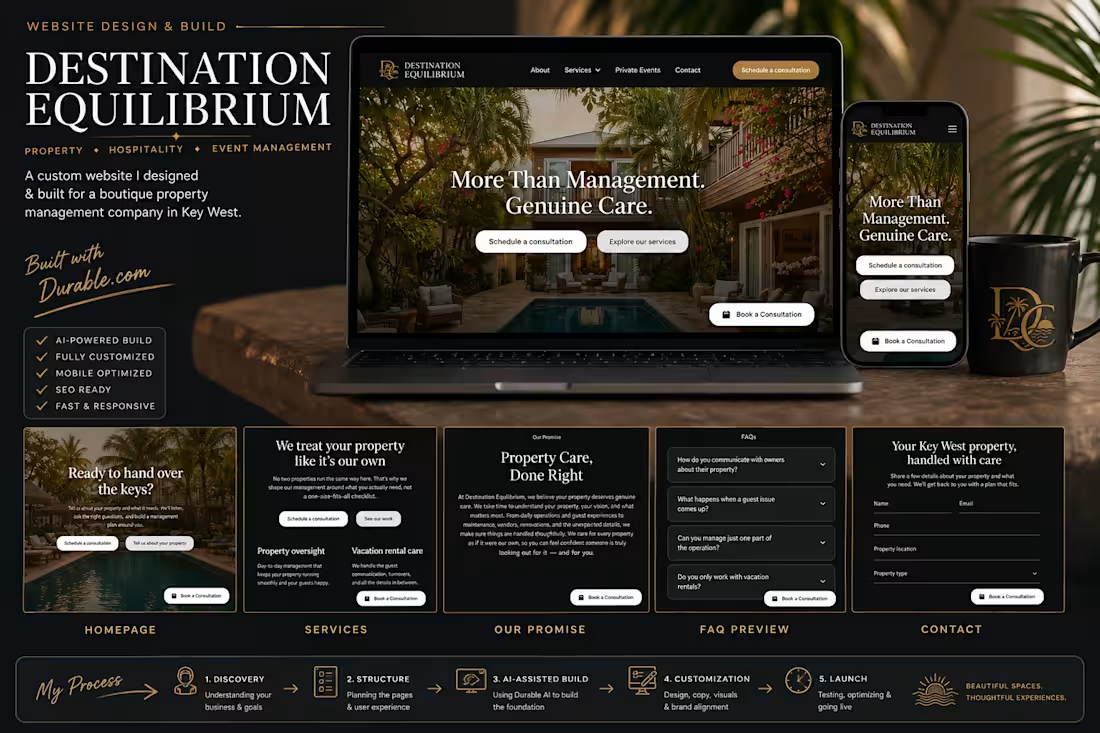
Destination Equilibrium — Website Design & Build
I created this website for Destination Equilibrium, a boutique property and hospitality management company in Key West.
The goal was to create something that felt warm, personal and elevated — not like a typical corporate property management website.
I used Durable as the AI-powered website builder, then developed and refined the brand direction, site structure, visual style, messaging, service presentation and overall user journey.
The process:
Concept & brand direction → website structure → AI-assisted build → copywriting → visual selection → layout refinement → mobile optimization → final details & launch.
One of my favorite parts of working with AI tools is that they make the build faster — but the real work is still understanding the business, deciding what the website needs to communicate, and turning that into something that actually feels like the brand.
Built with: Durable AI Website Builder
My role: Website Design • Brand Direction • Copywriting • AI-Assisted Development • UX
1
27
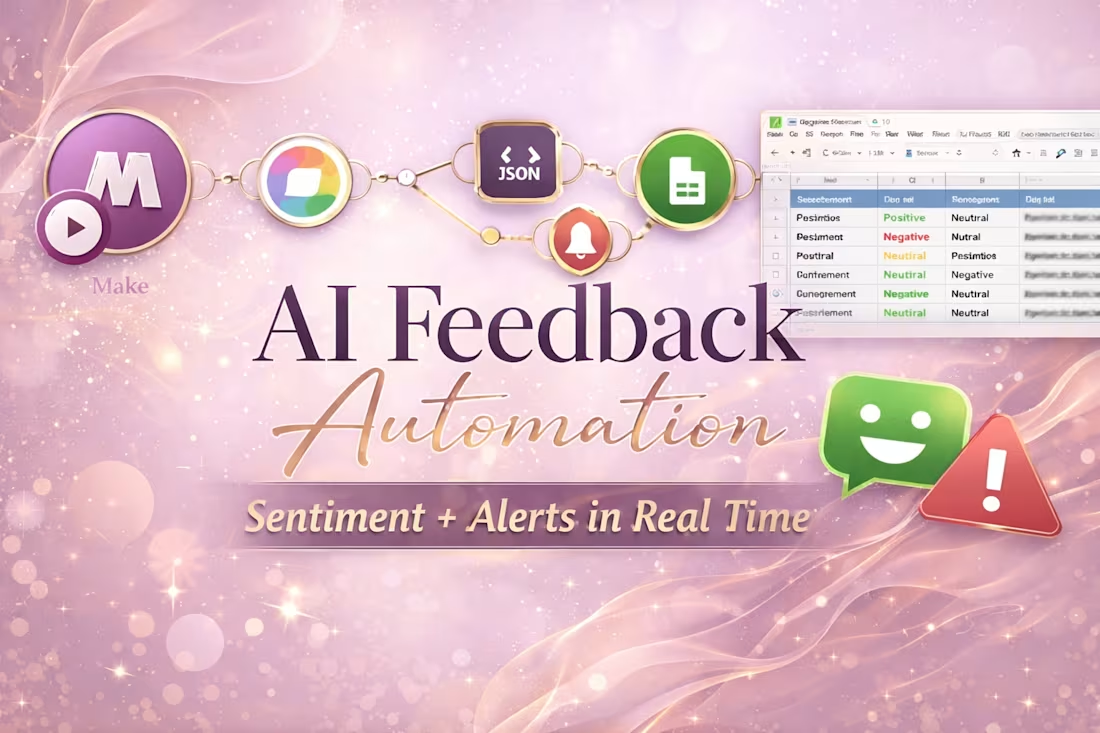
In this Loom, I show my automated feedback analysis workflow to analyze guest feedback in real time using AI, detect sentiment, generate summaries, and alert staff to negative responses. I use Google Forms for data collection, Google Gemini for structured JSON output, Make for automation, a JSON module, Google Sheets, and Gmail. Gemini returns sentiment categories and a short summary, and Sheets updates the correct row by timestamp. If sentiment is negative, Gmail sends an immediate alert. I also address Gemini availability with paid plans, alternative models, and fallbacks.
Video Link: https://www.loom.com/share/6ba0672fa12141c9bec4b33d3884296d
1
29
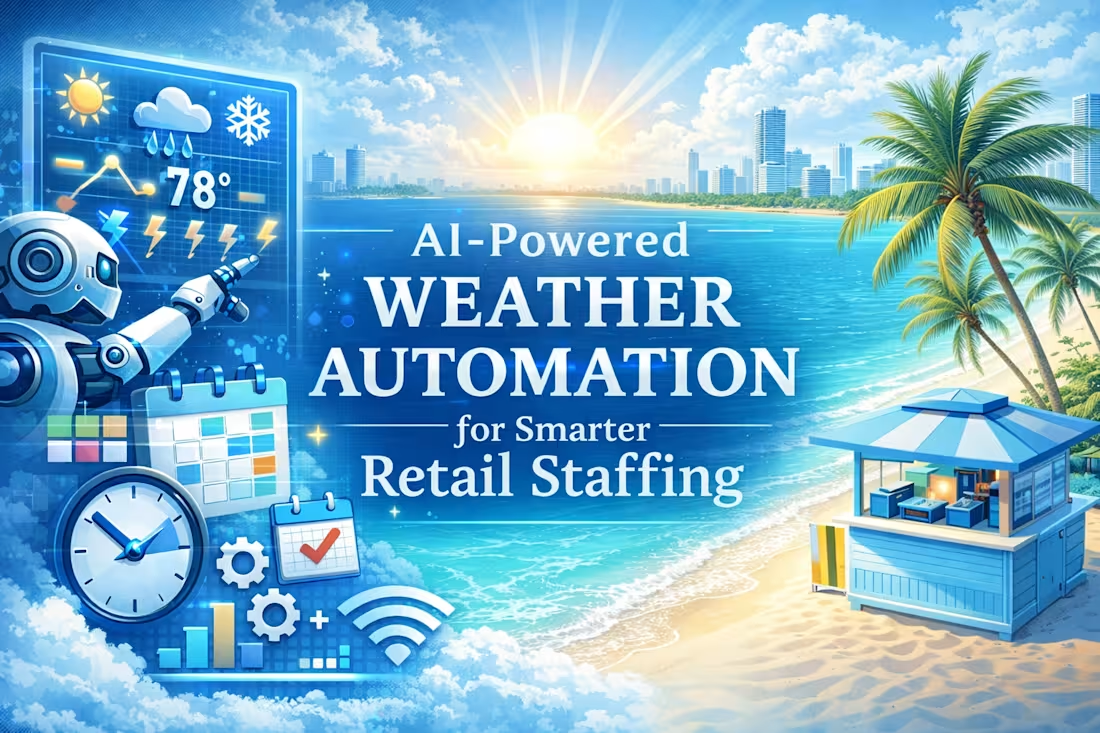
In this Loom I walk you through an automation that turns real time weather data into smarter sales and staffing decisions. I built a workflow that polls daily weather, evaluates current conditions, and then either generates an AI daily plan or sends a targeted severe weather alert. For normal days it uses temperature and weather description to recommend what to prioritize, how to stock, and how to promote, and sends the plan to the team via Gmail. For extreme conditions it triggers alerts with immediate operational adjustments like focusing on cold items during heat waves. No action is directly requested from you, but the team receives the outputs.
Here is the link to the video: https://www.loom.com/share/755f111f9b524b7191b355f26dd61c15
1
29
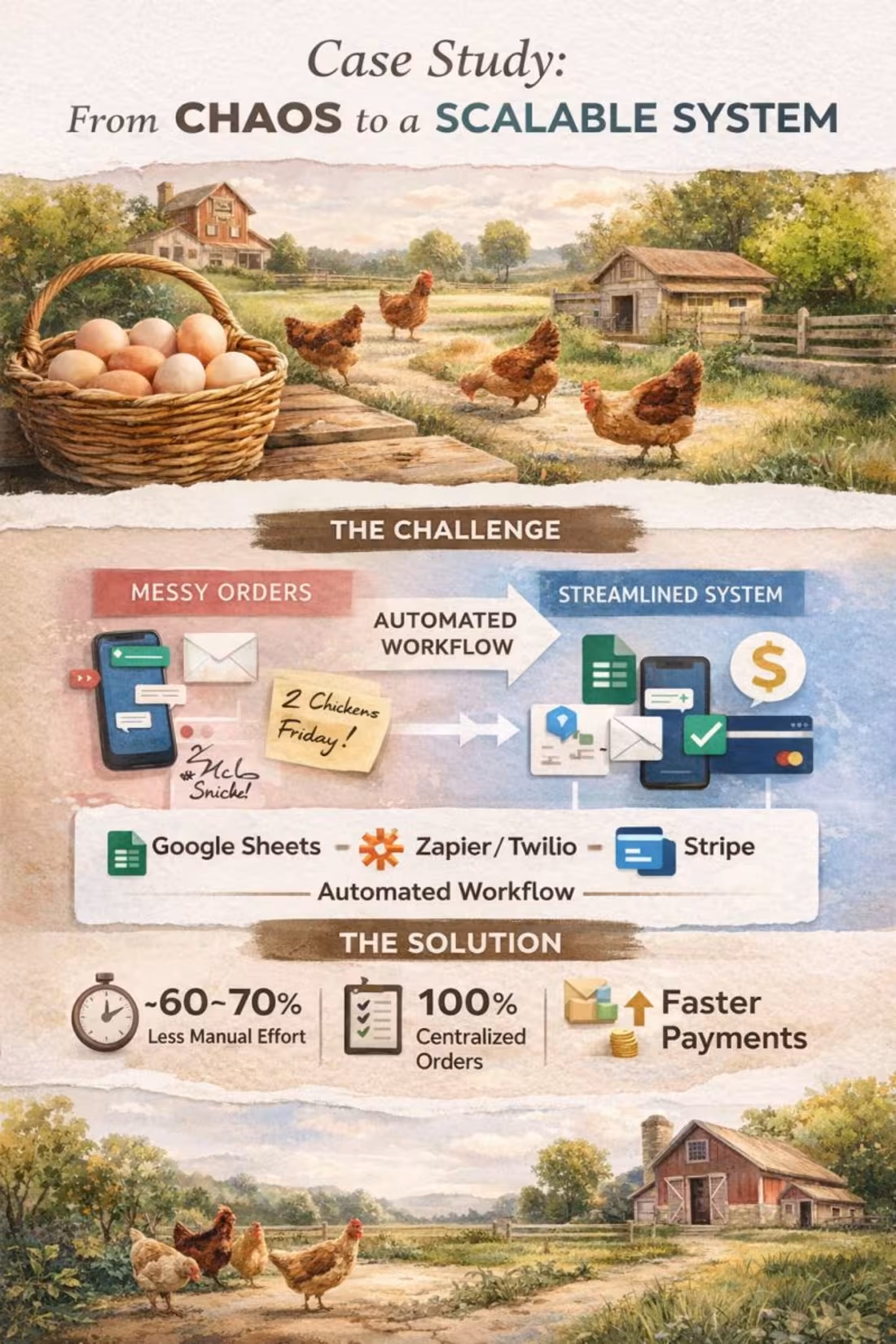
From Order Chaos to a Scalable System
What started as a thriving organic chicken farm quickly turned into an operational challenge.
Orders were growing—but so was the chaos behind them.
Customers placed requests through text messages, emails, and casual conversations. What once felt manageable became overwhelming. Tracking orders, organizing pickups, and confirming payments turned into a daily puzzle.
The business didn’t have a demand problem.
It had a system problem.
The Challenge
At peak times, orders came from multiple directions:
A quick text.
A late-night email.
A verbal “don’t forget me for Saturday.”
Each request lived in a different place, with no connection between them.
As a result:
Orders were hard to track and easy to miss
Pickup schedules became confusing
Payments required constant follow-up
Time was spent reacting instead of operating
The process relied on memory—making it impossible to scale.
The Turning Point
Instead of adding more effort, the goal became clear:
Create a system where none existed.
Not something complex—just something that could bring structure, clarity, and reliability.
The Solution
I designed a workflow that transformed scattered communication into one organized system.
Using Google Sheets as a centralized database, every order—regardless of source—was captured in one place. Automation tools like Make (Integromat) or Zapier then categorized orders by date and pickup details.
The real shift came with automation.
Customers received automatic SMS notifications via Twilio with clear pickup details, while Stripe payment links were sent instantly. Payments were tracked automatically, removing manual follow-ups.
What was once fragmented became a smooth, structured flow.
The Impact
The results were immediate:
⏱️ 60–70% reduction in manual coordination time
📋 Full visibility across all orders
💳 Faster payment collection
❌ Fewer missed or duplicate orders
📲 Clearer customer communication
What once required constant attention became a system that largely ran itself.
Key Takeaway
The biggest lesson wasn’t about tools—it was about clarity.
Automation doesn’t need to be complex to be powerful.
It needs to solve the right problem.
By turning a chaotic process into a structured workflow, the business gained efficiency—and control.
And once there’s control, growth becomes sustainable.
What’s Next
With more time, the system could evolve further:
A simple order form
Automated pickup reminders
A real-time dashboard
Customer profiles for repeat buyers
1
30