
pro
Irinel Doiciu
Full-Stack Builder — SaaS, AI Apps & Complex Web Products


RoomVibe — Social Interior Design Platform
Built for the Bubble "Prompt & Circumstance" Hackathon.
RoomVibe is a social platform where users design virtual rooms in 2D and explore them in immersive first-person 3D. Furniture stores can list their 3D models directly on the platform, and users place real products in their rooms before publishing designs to a community feed.
How I built it:
Started with Bubble AI — one prompt generated the entire foundation: authentication, community feed, user profiles, likes, saves, and an Explore page.
From there, I collaborated with Claude to extend what Bubble couldn't do natively. Claude wrote a full drag-and-drop 2D room editor with wall snapping, furniture resizing, and height control — embedded as a custom HTML element. Claude also built the Three.js 3D first-person viewer, where you stand inside your room and rotate 360° with mouse and keyboard.
Categories: 🛒 Marketplace + 🤝 Social/Community
Tech stack: Bubble (AI-generated base + manual workflows), Custom HTML/JS, Three.js, Bubble Data API, GLB 3D assets generated with Freegma/Hunyuan3D.
3
1
309
What is Freegma?
Freegma is a local AI generation studio that runs entirely on your own GPU — no subscriptions, no cloud costs, no limits. Users can generate images, 3D models, videos, lip-sync avatars, and full ad creatives, all powered by open-source AI models running on their own machine and exposed securely through a Cloudflare tunnel.
UI/UX — Built with Figma Make
The entire interface was designed and generated using Figma Make, Figma's AI-powered code generation tool. Starting from a design prompt describing a holographic, cyberpunk aesthetic, Figma Make produced the component structure, layout system, and visual language that became Freegma's UI.
The design language is built around a "Holographic AI Studio" concept:
Deep black backgrounds (#0a0a0f) with a subtle cyan grid overlay
Neon gradient accents in cyan (#00f5ff) and purple (#7000ff) — reflecting the duality of neural generation
Corner bracket decorations on cards, glitch text animations, and a GPU status badge that pulses live
Typography: Orbitron for headings (geometric, futuristic), Share Tech Mono for labels and data (terminal aesthetic), Rajdhani for body text
Every page is a full-screen "portal" — Text→Image, Image→3D, Image→Video, Lip Sync, Ads Studio — with a persistent holographic navbar and animated transitions via Framer Motion
The landing page features a large hero section with a "CREATE WITH HOLOGRAPHIC AI" headline, live GPU status, and animated tool cards built with Figma Make's component generation. The auth page follows the same visual system with glowing input fields and corner accent decorations.
Technical Stack
Layer Technology Frontend React 19 + TypeScript + Vite 6 Styling Tailwind CSS v4 + Framer Motion (motion/react) UI Generation Figma Make Routing React Router v7 Auth Supabase (email/password + Figma OAuth) Backend FastAPI (Python) on local GPU machine Tunnel Cloudflare Tunnel (fixed domain: api.freegma.win (http://api.freegma.win)) Deploy Vercel (frontend) — auto-deploy on git push AI Runtime ComfyUI (local)
AI Models Integrated
Text → Image: SDXL 1.0 via ComfyUI
Image → 3D: TripoSR, SF3D, InstantMesh (isolated Python venvs)
Image → Video: WAN 2.2 via ComfyUI
Social post: X= https://x.com/IDoiciu1863/status/2066761804730999111
Figma comunity= https://www.figma.com/community/file/1648074023441664027
Live project= https://www.freegma.win/
2
6
229
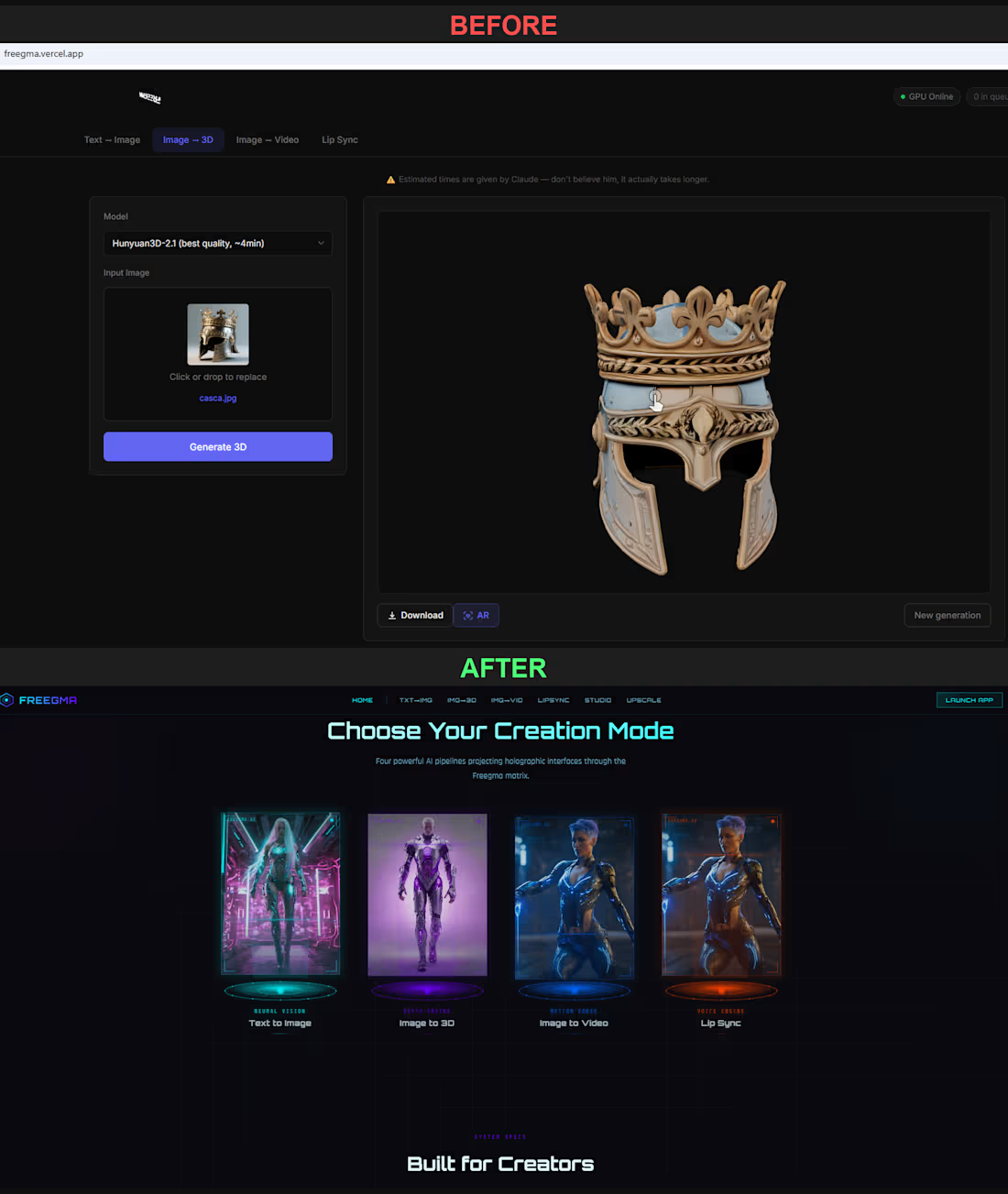
Freegma — AI Generation Studio Redesign
0
18
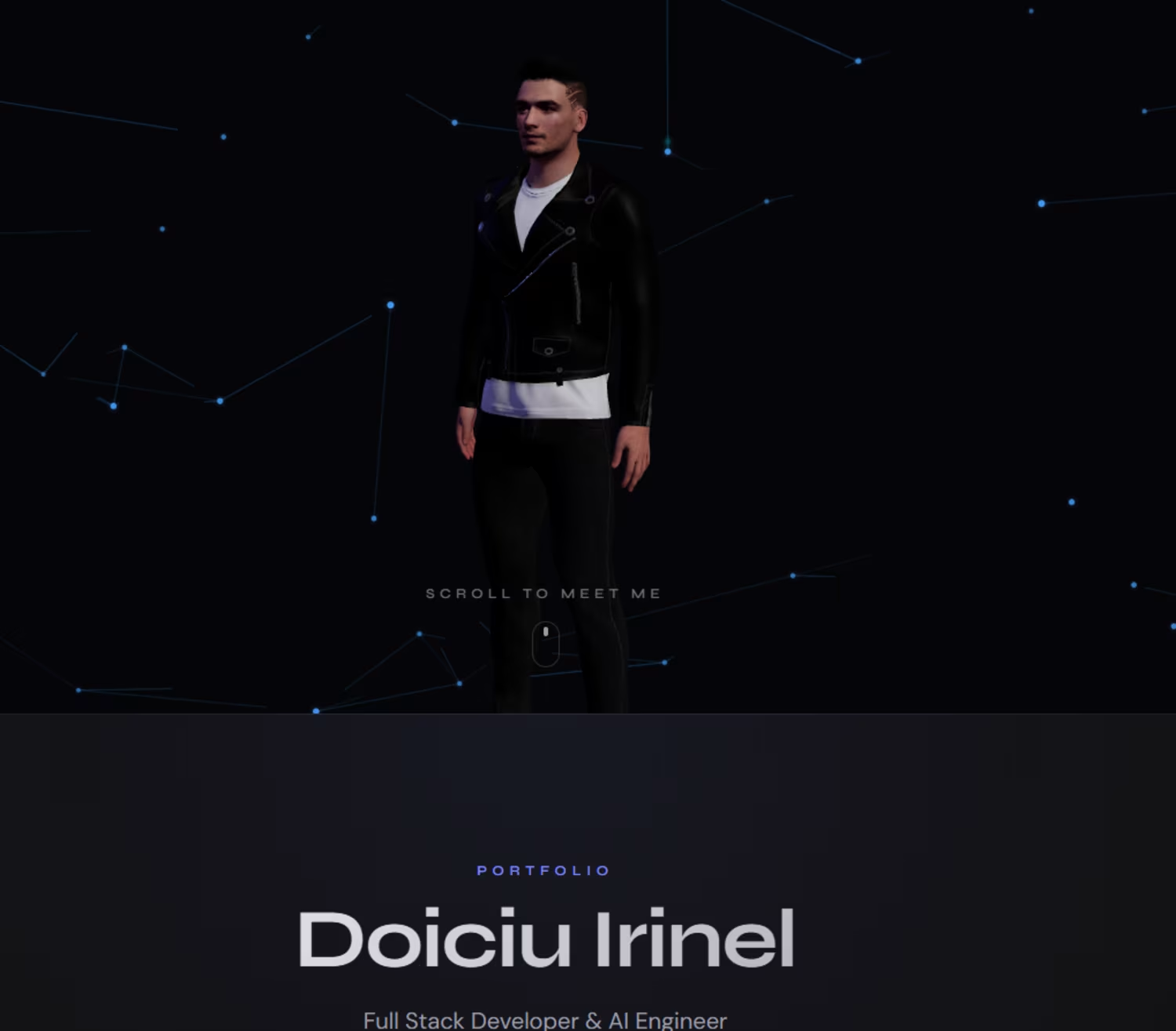
After years of saying I don't need a CV, I finally decided to build one, a little differently. I decided that if I were to do it, it should be one that shows some of my skills, not just lists them.
2
141