
IDOWU ELIJAH
AI Product Engineer | Building Production Ready AI Apps
- 26
- Followers


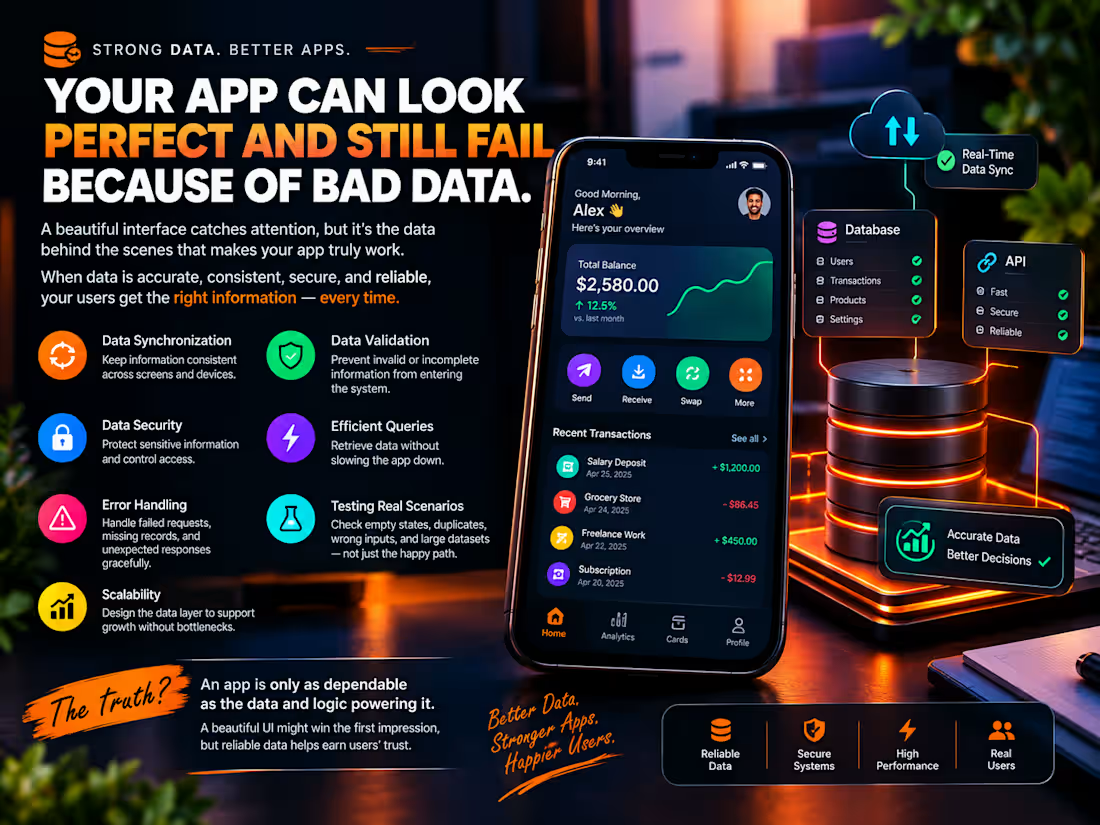
🗄️ YOUR APP CAN LOOK PERFECT AND STILL FAIL BECAUSE OF BAD DATA.
Imagine opening an app that looks amazing, tapping a button, and seeing the wrong information—or no information at all. 😬
That’s what happens when an application doesn’t handle data properly.
When building an app, the real challenge isn't only creating beautiful screens. It's making sure the data behind those screens is accurate, consistent, secure, and reliable.
Here are some things I pay attention to:
🔄 Data synchronization — information should stay consistent across screens and devices.
🧹 Data validation — prevent invalid or incomplete information from entering the system.
🔐 Data security — protect sensitive information and control who can access it.
⚡ Efficient queries — retrieve information without making the app unnecessarily slow.
🚨 Error handling — handle failed requests, missing records, and unexpected responses gracefully.
🧪 Testing real scenarios — check empty states, duplicate records, incorrect inputs, and large datasets—not just the happy path.
📈 Scalability — design the data layer to support growth without creating unnecessary bottlenecks.
The truth? An app is only as dependable as the data and logic powering it.
A beautiful UI might win the first impression, but reliable data helps earn users' trust.
My goal is to build applications that don't just look professional—they work correctly behind the scenes, too. 🚀
👇 What frustrates you more in an app: incorrect data, slow loading, or missing information?
#AppDevelopment #DatabaseDesign #BackendDevelopment #SoftwareEngineering #WebDevelopment #DataManagement #BuildInPublic
1
24
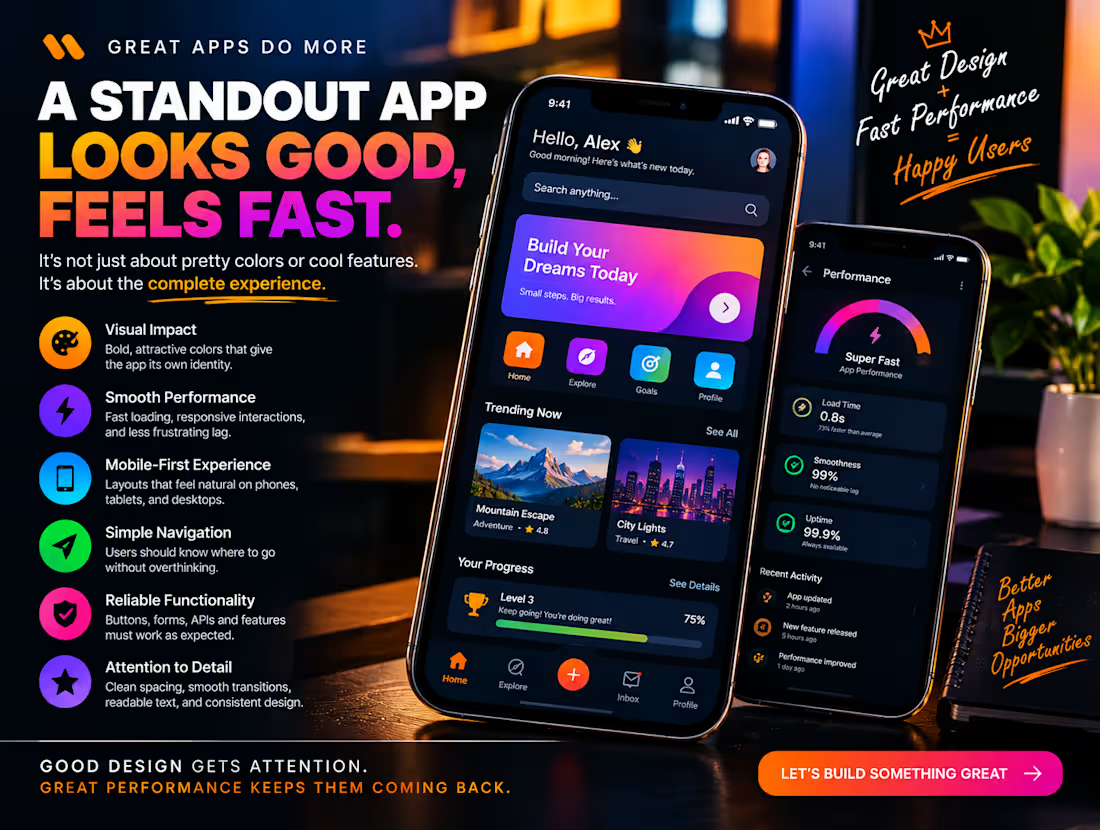
🚀 A BEAUTIFUL APP IS GOOD. A BEAUTIFUL APP THAT NEVER FEELS SLOW? EVEN BETTER. 📱🔥
Some apps catch your attention with their colors. Others impress you with their features. But the apps that truly stand out bring everything together.
When I think about building a great app, I focus on more than just making the interface look attractive.
🎨 Visual impact — bold, attractive colors that give the app its own identity.
⚡ Smooth performance — fast loading, responsive interactions, and less frustrating lag.
📱 Mobile-first experience — layouts that feel natural on phones, tablets, and desktops.
🧭 Simple navigation users should know where to go without having to think too hard.
🛠️ Reliable functionality — buttons, forms, APIs, and features must work as expected.
✨ Attention to detail — clean spacing, smooth transitions, readable text, and consistent design.
Here’s the real lesson: great design gets attention, but great performance and usability keep people coming back.
An app shouldn't force users to choose between looking good and working well. It should deliver both.
That’s the standard I want to bring to every product I build: attractive on the outside, reliable on the inside. 🚀
👇 What makes you fall in love with an app first: its design, its speed, or its features?
#AppDevelopment #UIUX #WebDevelopment #SoftwareEngineering #ProductDesign #FrontendDevelopment #BuildInPublic
2
72

A great website is more than just a beautiful design.It needs to look good, feel intuitive, and work smoothly for the people using it.When I build a website, I focus on:🎨 Clean & modern UI🧭 Simple navigation📱 Responsive design⚡ Fast performance👥 User-focused experience🔐 Reliable development📊 Clear calls to action The goal is simple: create a website that users enjoy interacting with and businesses can actually use to achieve their goals.If you're planning a website or want to improve an existing one, send me a message. Let's build something that looks great and works even better.
1
33
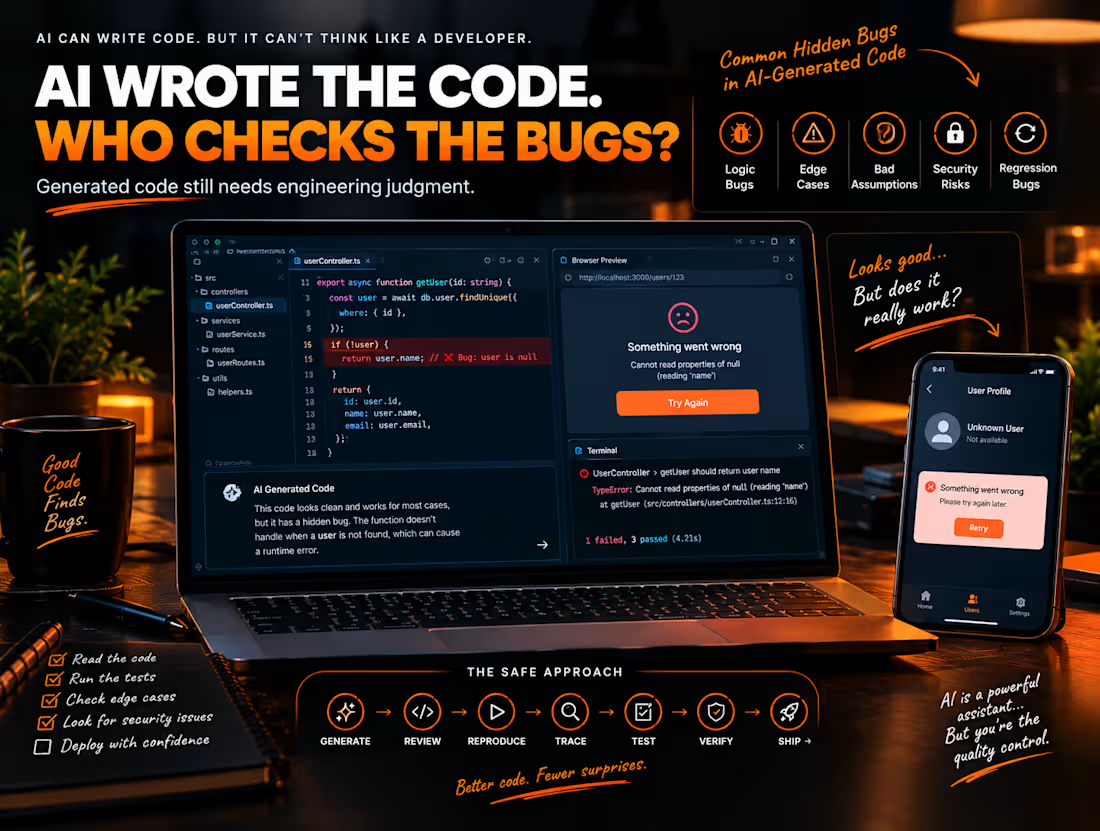
AI WROTE THE CODE. WHO CHECKS THE BUGS?
AI can generate a working-looking feature in seconds but “it runs” doesn't automatically mean “it's correct.”
One of the biggest lessons I’m learning with AI-assisted development is that the hardest bugs aren't always obvious. They can hide in:
🐛 Edge cases the original prompt never mentioned
🧠 Incorrect assumptions about how the application should behave
🔐 Security issues that don't appear during normal testing
🔄 Regression bugs that break something that previously worked
⚠️ Poor error handling when real users do unexpected things
🗄️ Data/API problems that only appear under different conditions
That’s why I don't treat AI-generated code as the final answer.
My workflow is:
GENERATE → REVIEW → REPRODUCE → TRACE → TEST → VERIFY → SHIP
First, I understand what the code is actually doing.
Then I test the happy path and the paths the AI may not have considered.
I check the stack trace, inspect the data flow, test edge cases, review dependencies and security-sensitive areas, and verify that the fix doesn't introduce another problem.
This is becoming even more important as coding agents take on larger development tasks. GitHub's current tooling, for example, combines code review, testing, dependency checks, secret scanning, and security analysis around agent-generated changes.
The lesson isn't “don't use AI to code.
2
1
46