The network for creativity
Join 1.25M professional creatives like you
Connect with clients, get discovered, and run your business 100% commission-free
Creatives on Contra have earned over $150M and we are just getting started
Back to feedPost
AI WROTE THE CODE. WHO CHECKS THE BUGS?
AI can generate a working-looking feature in seconds but “it runs” doesn't automatically mean “it's correct.”
One of the biggest lessons I’m learning with AI-assisted development is that the hardest bugs aren't always obvious. They can hide in:
🐛 Edge cases the original prompt never mentioned
🧠 Incorrect assumptions about how the application should behave
🔐 Security issues that don't appear during normal testing
🔄 Regression bugs that break something that previously worked
⚠️ Poor error handling when real users do unexpected things
🗄️ Data/API problems that only appear under different conditions
That’s why I don't treat AI-generated code as the final answer.
My workflow is:
GENERATE → REVIEW → REPRODUCE → TRACE → TEST → VERIFY → SHIP
First, I understand what the code is actually doing.
Then I test the happy path and the paths the AI may not have considered.
I check the stack trace, inspect the data flow, test edge cases, review dependencies and security-sensitive areas, and verify that the fix doesn't introduce another problem.
This is becoming even more important as coding agents take on larger development tasks. GitHub's current tooling, for example, combines code review, testing, dependency checks, secret scanning, and security analysis around agent-generated changes.
The lesson isn't “don't use AI to code.


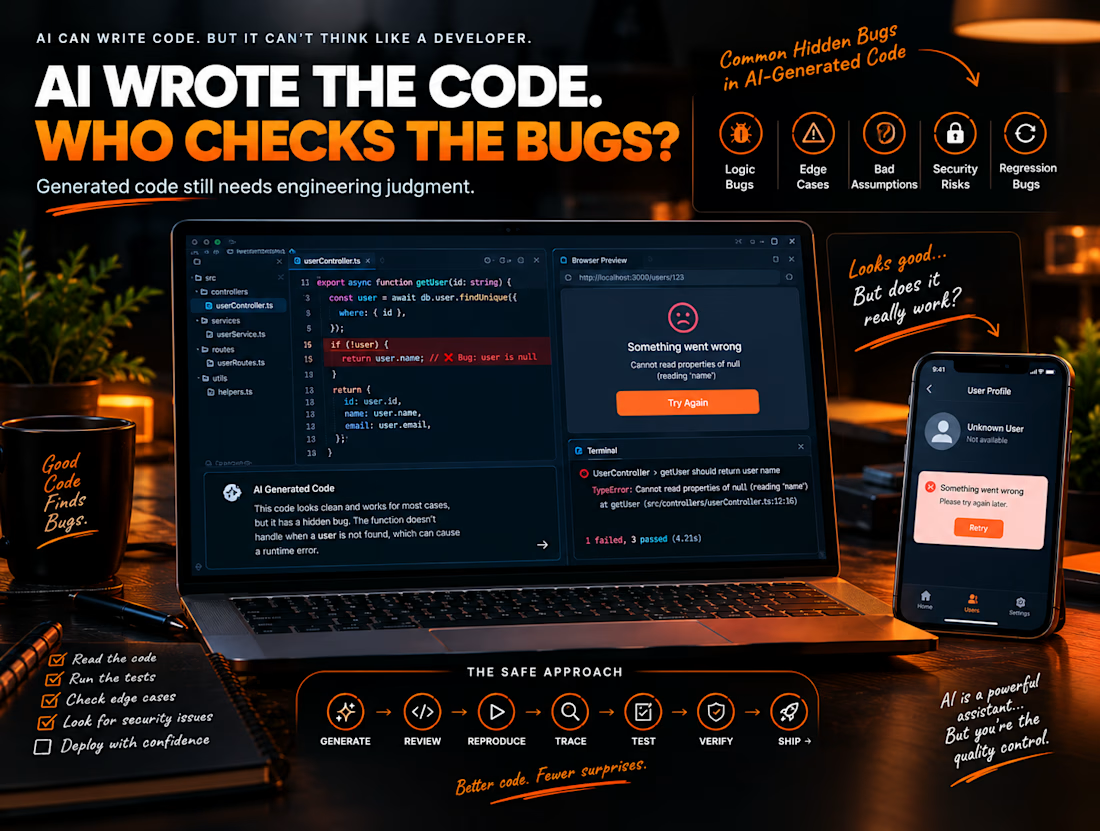

“It runs” vs “it’s correct” is the gap — AI-generated features need the same edge-case passes you’d do on junior dev output, just faster to produce.

Am curious to know more
The network for creativity
Join 1.25M professional creatives like you
Connect with clients, get discovered, and run your business 100% commission-free
Creatives on Contra have earned over $150M and we are just getting started





Related posts

Automated LinkedIn Hiring Signal & AI Outbound Engine
Overview:
Designed and deployed an autonomous outbound lead generation system using n8n. The workflow captures hiring intent signals from LinkedIn, identifies relevant executive buyers, enriches verified contact data, and drafts contextualized sales copy through an integrated LLM.
Tech Stack:
n8n • Apify • SearchLeads API • OpenRouter (Nemotron LLM) • Google Sheets API • Telegram Bot API • JavaScript
Core Deliverables:
Automated Signal Scraping: Continuous monitoring of fresh job posts across target industries.
Granular Data Filtering: Exclusion logic for staffing agencies, company headcounts over 250, and unverified domains.
Multi-Source Enrichment: Automated discovery of decision-makers (C-Level, VP, Director) with validated work emails.
Context-Aware Email Generation: Custom prompting architecture that maps the open role's requirements directly into a tailored value proposition.
Data Synchronization & Alerts: Bi-directional sync with Google Sheets and real-time push alerts via Telegram.
Impact:
Replaces 10+ hours of weekly manual SDR prospecting with a continuous background process that delivers high-intent, enriched leads directly to the sales inbox.


Contra and Lovable just ran a challenge: build an appointment business where "can I book?" turns into "you're booked" with as little work for the owner as possible.
We liked the brief because it makes you design both sides at once: what the customer sees, and what the owner has to do afterwards.
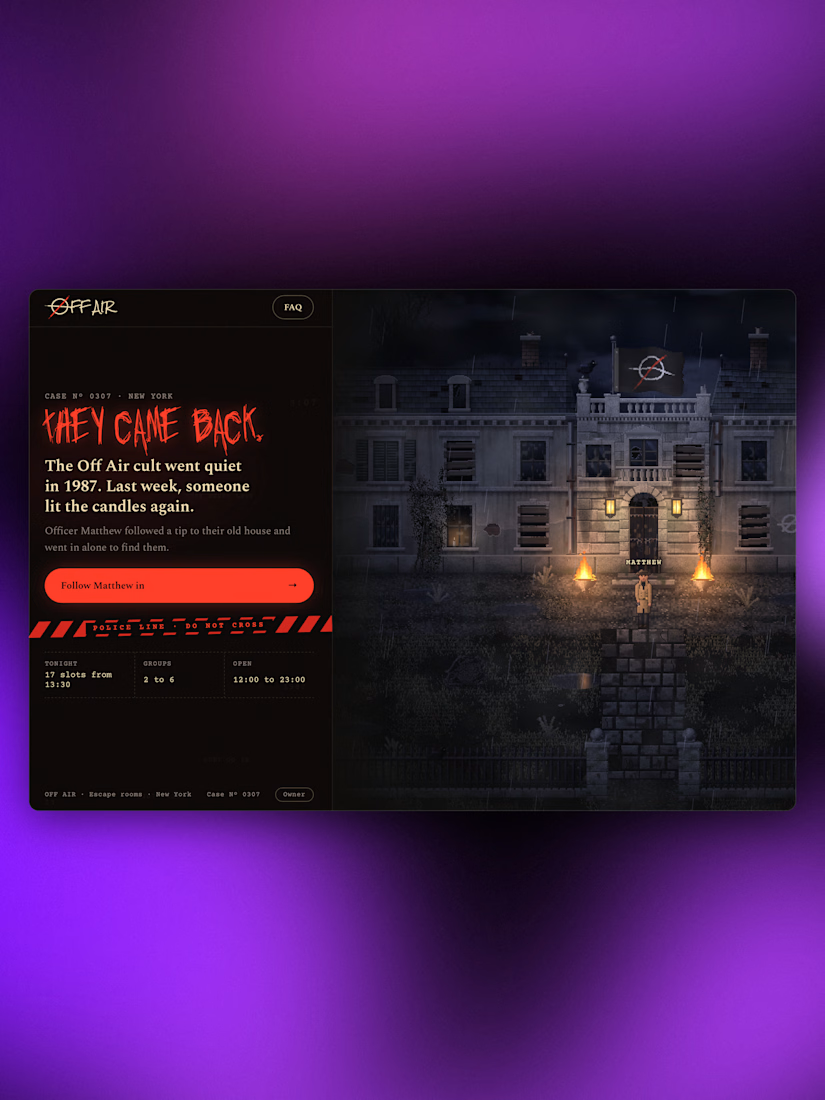
Our entry was a horror escape room in New York. The site is a small pixel game that ends in a booking, and behind it the owner gets bookings, a waitlist for sold-out slots and a dashboard, all running on Lovable Cloud.
Take a look: offair.lovable.app
Horizon Symmetry, a studio for brand, web, software and content. Built with @Lovable

Testing my app! 🧰🚀 Everything is finally coming along.
I’ve been working on this project for a little over two weeks. Initially it was just me working with one AI agent, but I was still manually coding most of it, so I was moving like a turtle 🐢very slow.
Then I decided to implement Codex into my project to automate more of the development and it has been amazing. Now I can focus more on prompting, testing, reviewing the code and making the technical decisions instead of manually coding everything.
I also created my own AGENTS.md bible with all my project rules and instructions to make sure Codex follows them as the final authority when working on my code.
The idea is simple: create one useful and intuitive ecosystem of tools that Shopify merchants can add to their stores to help customers make purchasing decisions faster and with more confidence.
Still testing, building and adding more tools. Let’s see where this goes! 🚀
And if anyone finds the idea interesting. I’m definitely open to collaborations, ideas or partnerships. Feel free to reach out!


Seeing you shift from hand coding to Codex and let the agent handle the grunt work really speeds up iteration.