Elvaretta Angelina
UI/UX Designer
Ready for work
Elvaretta is ready for their next project!


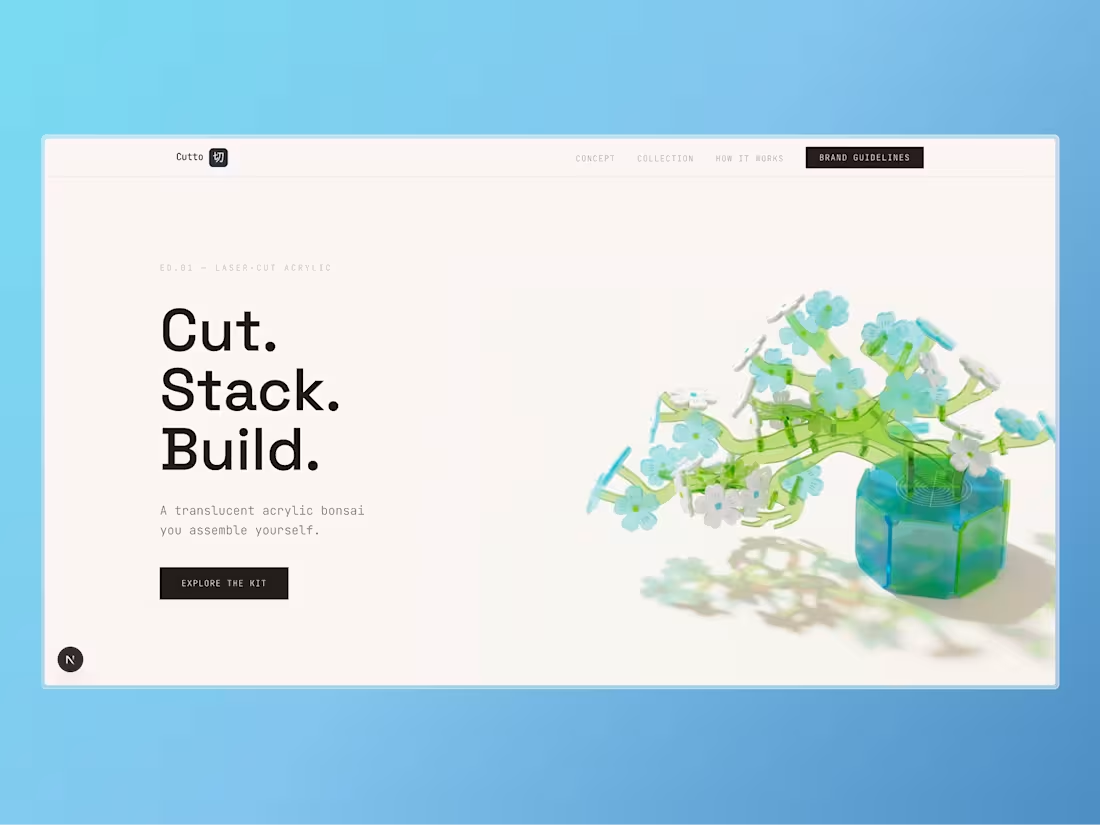
Meet Cutto — CapCut, reimagined as a translucent acrylic bonsai kit you assemble by hand. 🌿
For the #CapCutDesignStudio challenge, I started from one idea: CapCut is built on the cut. So I turned that into something physical — laser-cut acrylic pieces you stack into a tree that catches the light. Cut. Stack. Build.
Everything — the concept, the seasonal collection, posters, and even the landing-page layout — was built in CapCut Design Studio. As a designer, the biggest surprise was how familiar the tools felt; the learning curve almost disappeared.
Full brand + live site here
https://cutto.netlify.app/
2
1
167
I tried turning a design canvas into a Japanese tutor.
/hisensei → deck shows up
drag cards → ✅ or ❌
/done → it checks what you missed and builds a review round
No buttons, no submit. It just reads what you do on the canvas.
Most Paper projects use the canvas as output—this one listens instead ((cuz why not :))
すごい! when you get them all right.
Built with Paper MCP + Claude Code + Notion MCP
2
223
I made Omakase — a chef-first dining app where you follow chefs and claim seats at limited drops
Dining apps are built around venues. Omakase is built around the people cooking. Follow chefs, claim seats at limited drops, and experience dining as culture, not a transaction.
I studied two things on Mobbin:
1. Booking and experience flows — to understand the decision architecture. This gave me the functional structure.
2. Cultural platforms — to understand how editorial layout and restrained copywriting can make commerce feel like culture.
The design question became:
What if you took the functional architecture of a booking app and wrapped it in the emotional language of a cultural platform?
Take a look at the project here (https://omakase.figma.site/)
2
212
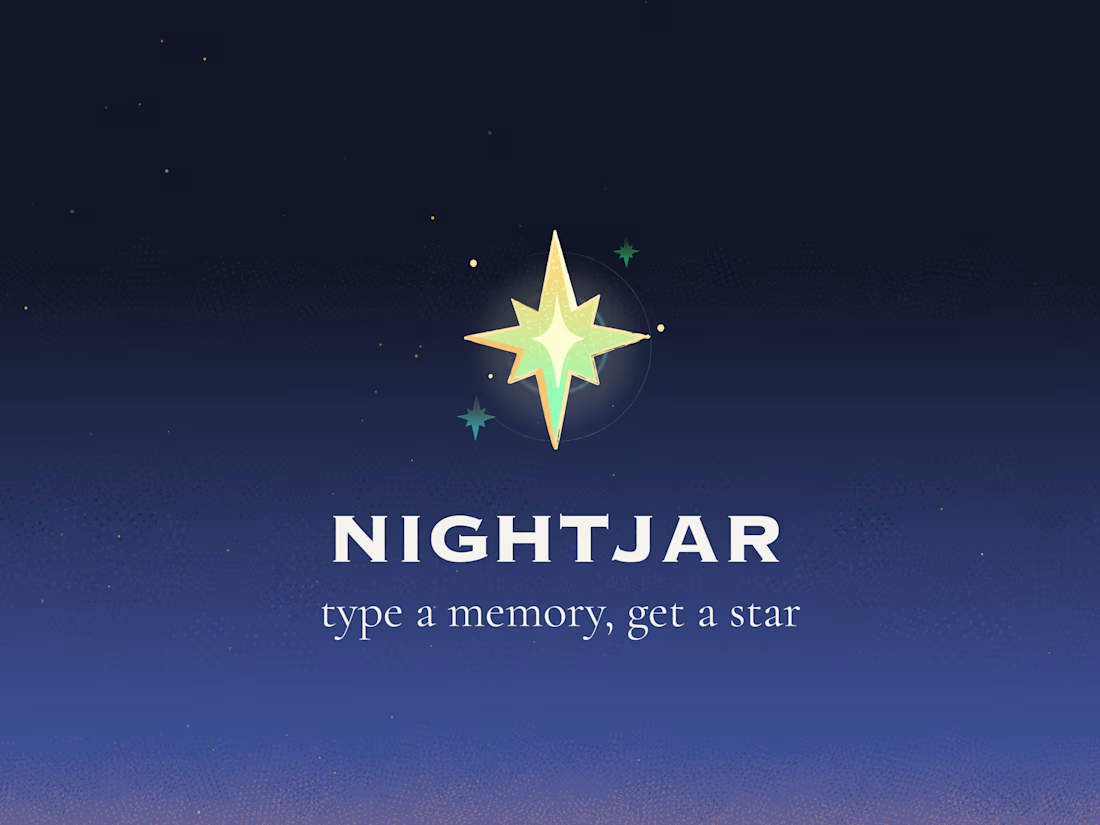
started with the visuals and worked backwards
🌟 Nightjar for #FigmaMakeathon — a memory album in the sky.
type a memory. get your own star.
try it here (https://nightjar.figma.site)
been obsessing over the star illustrations more than i should have probably.
4
2
241