Divya Kotarya
Book Writer • Fiction Writer • Ghostwriter | Turning ideas
New to Contra
Divya is ready for their next project!


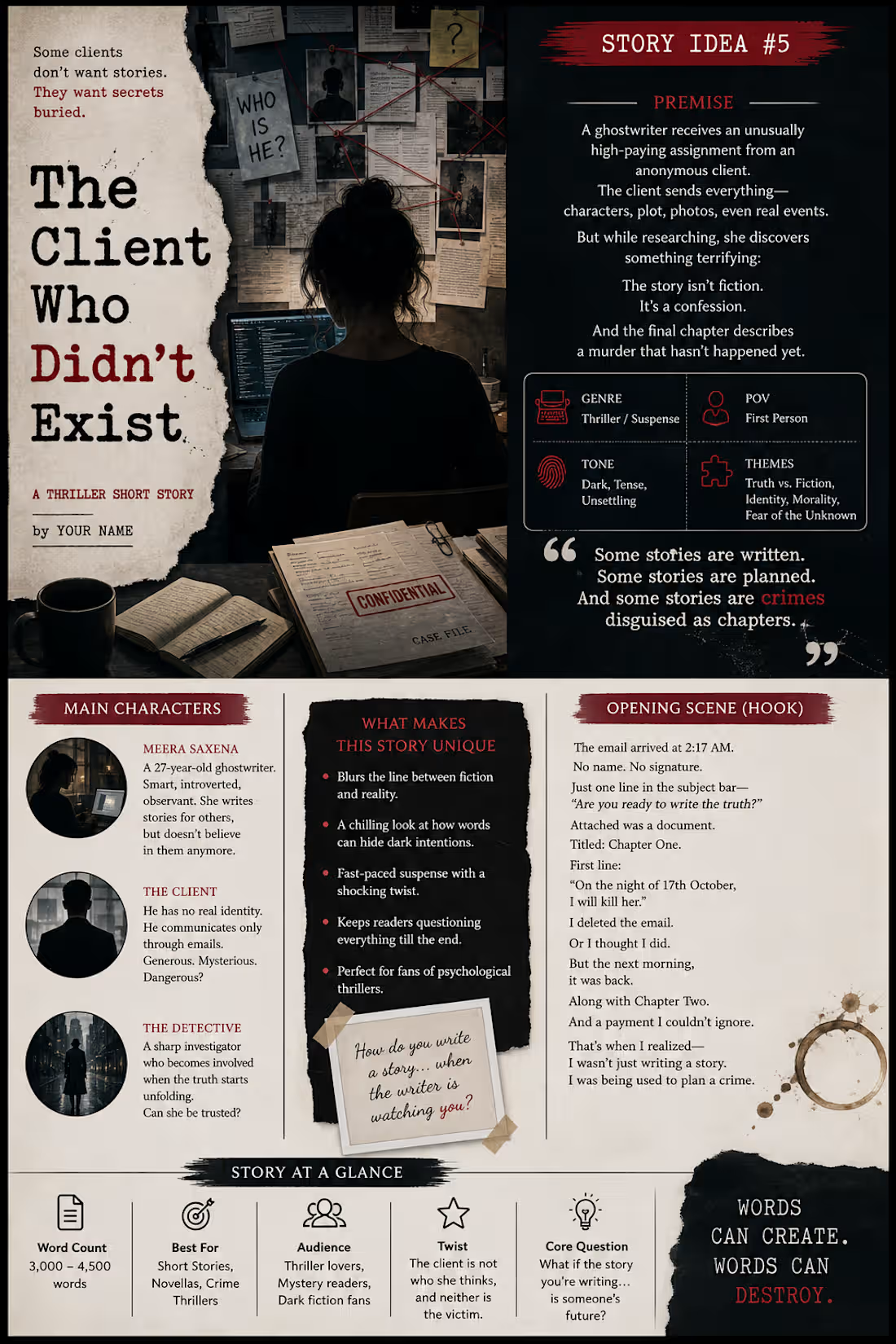
The Client Who Didn’t Exist —
The email arrived at 2:17 a.m. No name. No signature. Just one sentence in the subject line: “Are you ready to write the truth?” I almost deleted it. I was a ghostwriter, and mysterious clients weren't unusual, but something about this email felt different. Maybe it was the payment offered. Ten times my usual rate. Maybe it was the attachment. A document titled simply, “Chapter One.” I opened it. The first line read: “On the night of October 17th, I will kill her.” I stared at the screen. Then I closed the document. I deleted the email. I went to bed. At 8:03 the next morning, the email was back. Same subject.
Same attachment. Same first line. But this time there was a second chapter. I should have ignored it. Instead, I opened it. The story was about a woman named Elena. Twenty-eight years old. Writer. Lived alone. Drank coffee without sugar. Took the same route home every evening. None of it was particularly strange until I reached the final paragraph.
“At 6:40 p.m., Elena will stop at the bookstore on Willow Street. She will buy a blue notebook. She will leave at 7:05.” I checked the date. October 14th. Three days before the date mentioned in the first chapter. I told myself it was fiction. It had to be. That's what I did for a living. I wrote fiction for people who didn't want their names on it. So I accepted the assignment. The client sent another email. “Finish the story before October 17th.
Do not change the ending.” I replied with one question: “Who are you?” The answer came thirty seconds later. “Someone who knows what happens next.” I spent the next two days researching Elena.
I found the bookstore. I found her social media. I found photographs of her apartment building. Everything in the manuscript was real. Too real. On October 14th, I went to Willow Street.
I told myself I was only curious. At 6:38 p.m., Elena entered the bookstore. She was wearing a grey coat. At 6:40, she picked up a blue notebook. My stomach tightened. At 7:05, she walked out. I watched from across the street.
The manuscript had predicted everything. I returned home and found Chapter Three waiting in my inbox. “She knows someone is watching her.”
I stopped breathing. The next sentence appeared on the screen. “The ghostwriter is watching too.”
I looked around my apartment. The curtains were closed. The door was locked. My phone was on the table. Nothing moved. Then I heard three knocks. I froze. Nobody knew I was working on the story. Nobody except the client. I walked to the door and looked through the peephole. No one was there. When I opened it, an envelope lay on the floor. Inside was a photograph of me sitting at my desk.
It had been taken from inside my apartment. On the back, someone had written, “Keep writing.” I didn't sleep that night. The next morning, I contacted the police.
They told me there wasn't enough evidence to investigate. A photograph didn't prove someone had entered my apartment. The email could be a prank. The manuscript could be fictional. They suggested I stop responding to the sender.
I wanted to listen. Instead, I opened Chapter Four. It began with a sentence that made my hands go cold: “She will go to the police at 10:15 a.m.” I looked at the clock. 10:14. My phone rang. Unknown number. I answered. Nobody spoke.
Then I heard a man's voice. “You're very close.” The call ended. I threw my phone across the room. I wanted to quit. I wanted to burn every page. But something kept bothering me. If the client wanted to scare me, why pay me so much? Why send me information about Elena? And why was the story being written before the events happened? I searched the name Elena across every database I could access. Eventually, I found something. Her full name was Elena Verma.
She had disappeared five years earlier. Her body had never been found. I stared at the screen. The woman I had seen at the bookstore wasn't Elena.
She was someone else. The client had given me a name that belonged to a missing woman. I opened the manuscript again. Chapter Five was already there. “Her name isn't Elena.” Beneath it was a photograph.
The woman from the bookstore. I zoomed in. I recognized her. She was a journalist who had written an investigation about a wealthy businessman named Adrian Vale. Adrian had been accused of corruption, fraud, and several disappearances. None of the cases had ever been proven.
I kept reading. The manuscript described how the journalist had discovered evidence linking Adrian to Elena's disappearance. It also explained why someone wanted her dead. Then I reached the final paragraph. “The murder will happen on October 17th.” I checked the date. October 16th. One day left. I called the journalist and told her everything. She didn't believe me at first. Then I mentioned Elena's name. There was silence. “Where did you hear that?” she asked. “From a manuscript.” “Who sent it?” “I don't know.” She whispered, “Then you need to stop reading.” The line went dead. Ten minutes later, another email arrived. Chapter Six. “You told her.” I stared at the screen. The next line appeared beneath it. “Now she will die tomorrow.” I finally understood. The client wasn't writing a story about a murder. The client was planning one.
And I had unknowingly become part of the plan. Every chapter was a record of what had already been arranged. The characters were real. The locations were real. The dates were real. The manuscript wasn't fiction. It was a confession disguised as a story. I forwarded everything to the police. This time, they took it seriously.
They traced the emails. The account belonged to a dead man. Adrian Vale had supposedly died two years earlier. But the investigation uncovered something else. Someone had been using his identity. Someone who knew details that only Adrian could have known.
The police warned me to stay home. I didn't. I went to the journalist's apartment. Her door was open. “Hello?” No answer. I stepped inside. Papers were scattered across the floor. Her laptop was open.
On the screen was the same manuscript. Chapter Seven. I read the first sentence. “She is too late.” A sound came from behind me. I turned.
The journalist was standing in the doorway, holding a gun. “Don't move,” she said. “Who are you?” I asked. “The person who hired you.” My blood ran cold. She lowered the gun. “Adrian Vale didn't die two years ago.”
“Then who are you?” She looked at the manuscript. “Elena.” I couldn't speak. She told me everything. Five years ago, she had discovered that Adrian wasn't working alone. She had disappeared and created a new identity to stay alive. But someone had continued searching for her. Someone who knew she would eventually come back. She had created the manuscript as bait. She needed someone outside her world to publish it without knowing what it really was. Someone whose involvement couldn't be traced back to her. Me. “You used me,” I said.
“I needed someone who could write.” “You could have told me.” “Would you have helped?” I didn't answer. She continued, “The story needed to look real. The police needed evidence. I needed Adrian to believe he was controlling the story.”
I looked at the manuscript. “So the murder...” “Was never supposed to happen.” “Then why write it?” Elena smiled sadly. “Because people reveal themselves when they think they know the ending.”
The police arrived minutes later. Adrian Vale was arrested that night. The manuscript became evidence. The emails became evidence. The photographs became evidence. And I became the ghostwriter who had accidentally helped expose a man who had spent years hiding behind other people's stories. Three months later, I received one final email. No subject. No attachment. Just one sentence: “Thank you for finishing the story.” I stared at it for a long time before replying. “Was any of it real?” The answer came almost immediately. “Every word.” I closed my laptop. For the first time in months, I didn't want to write. Then I looked at the empty document on my screen.
I smiled and began typing. Not about Elena. Not about Adrian. Not about the murder that never happened. I wrote about a ghostwriter who thought she was writing someone else's story until she discovered that she had become part of it. And this time, I made sure nobody else could write the ending for me.
The End.
1
31
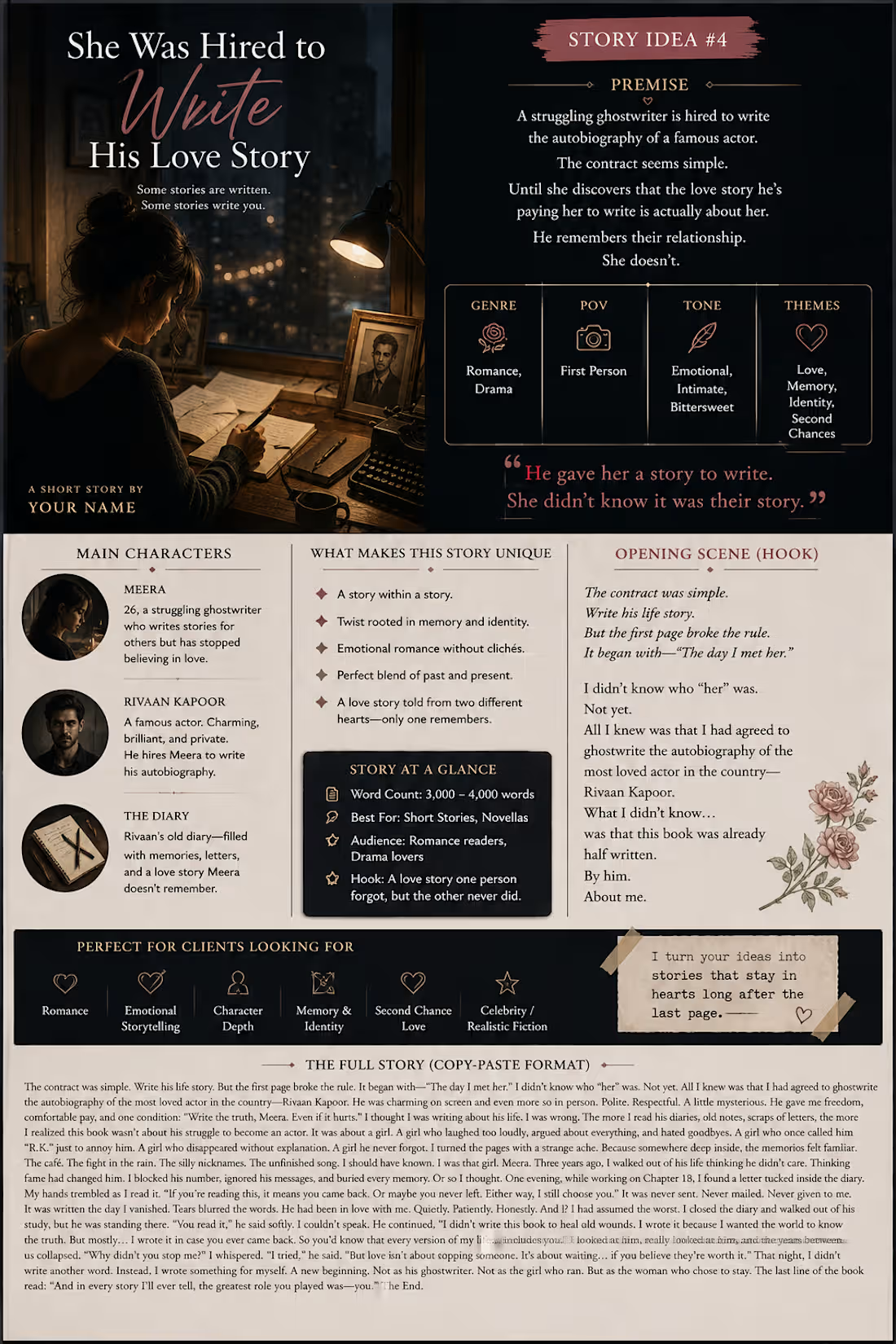
She Was Hired to Write His Love Story —
The contract was simple:
write his life story. The first page was supposed to begin with,
“The day I met her.” I stared at the sentence for almost five minutes. I didn't know who “her” was. Not yet. All I knew was that I had agreed to ghostwrite the autobiography of the most famous actor in the country—Rivaan Kapoor.
He was charming on screen, even more charming in person, and frustratingly private.
“Write the truth,” he had told me during our first meeting. “Even the parts people won't like.” I had smiled. “Then you'll have to tell me everything.” He looked at me for a moment longer than necessary.
“I will.” I thought I was writing about his career. His childhood. His rise to fame. The films that made him famous. The scandals that almost destroyed him. But three days into the project,
I realized something was wrong. The more I read his old diaries, the more familiar the story became. There was a girl he wrote about constantly. A girl who laughed too loudly, argued about everything, and hated saying goodbye.
A girl he called “R.K.” for no reason other than the fact that she once told him his name sounded boring. I smiled when I read that part. Then I stopped. I knew that girl.
I knew her because she was me. The diary described places I remembered. A bookstore with a broken blue door. A café where we used to sit for hours.
A rainy evening when someone gave me his jacket. Memories I had spent years trying to forget. Memories I had convinced myself belonged to someone else.
I closed the diary and stared at Rivaan's photograph on my desk. He had remembered everything. I hadn't. Not properly.
I remembered fragments. A boy. A summer. A friendship that became something more. A fight. Then nothing. “Why didn't you tell me?”
I asked him when he came to my apartment that evening. He didn't pretend not to understand.
“Because you wouldn't have taken the job.” “You're right.” He looked down. “I wanted you to hear our story before you decided whether you wanted to remember it.”
I hated him for that. I hated him for bringing back feelings I had buried. And I hated myself for noticing that he still looked at me the same way.
“Why did you choose me as your ghostwriter?” I asked. “Because you knew how to write me before you knew how to write professionally.”
I didn't understand. He opened an old box and took out a photograph. It was of the two of us at seventeen. I was laughing. He was looking at me instead of the camera. On the back, in my handwriting, were four words:
“We'll write it someday.”
I remembered. Not everything. Just enough. We had once promised to write a book together. We would write about our lives, our dreams, everything we were too afraid to say aloud. Then his family moved away. We lost contact. Years passed. He became an actor. I became a writer. And somehow, without either of us planning it, we had both kept the promise. I finished the first draft six weeks later. The final chapter was the hardest. I wrote about the night we lost each other.
About the misunderstanding that separated us. About the years we spent pretending we didn't miss each other. Then I reached the final page. I couldn't write it.
Rivaan came into the room and saw the blank screen.
“What's wrong?”
“I don't know how your story ends.”
He smiled softly. “Neither do I.”
“Then what am I supposed to write?”
He sat beside me. “Write what happens next.”
I looked at him. “That's not how autobiographies work.” “Maybe this one isn't an autobiography.” “Then what is it?”
He took the keyboard from me and typed one sentence. “A love story written by two people who finally stopped running from it.” I stared at the words.
“You planned this.” “No.” He smiled. “I hoped for it.” I closed the laptop.
“You know I'm still angry with you.” “I know.” “And I don't forgive you yet.” “I know.”
“And I don't know if I can love you again.”
His expression softened. “You don't have to.” He stood up and walked toward the door.
“But if you ever want to find out, I'll be here.” He left. I sat alone in front of the unfinished manuscript.
For the first time, I wasn't writing as his ghostwriter. I was writing for myself. I opened a new page and typed the title: “The Story We Never Finished.” Then I began with the truth.
The day I met him, I didn't know he would become the most important chapter of my life. I didn't know I'd lose him. I didn't know I'd find him again.
And I certainly didn't know that one day, he'd hire me to write his love story. I paused. Then I smiled. Because some stories are written from memory. Some are written from imagination.
And some stories find their way back to you, no matter how many years you spend trying to forget them. I saved the document.
Then I picked up my phone and typed one message. “Rivaan?” Three dots appeared almost immediately.
“Yes?” I smiled at the screen. “I think we have another chapter to write.”
The End.
1
64
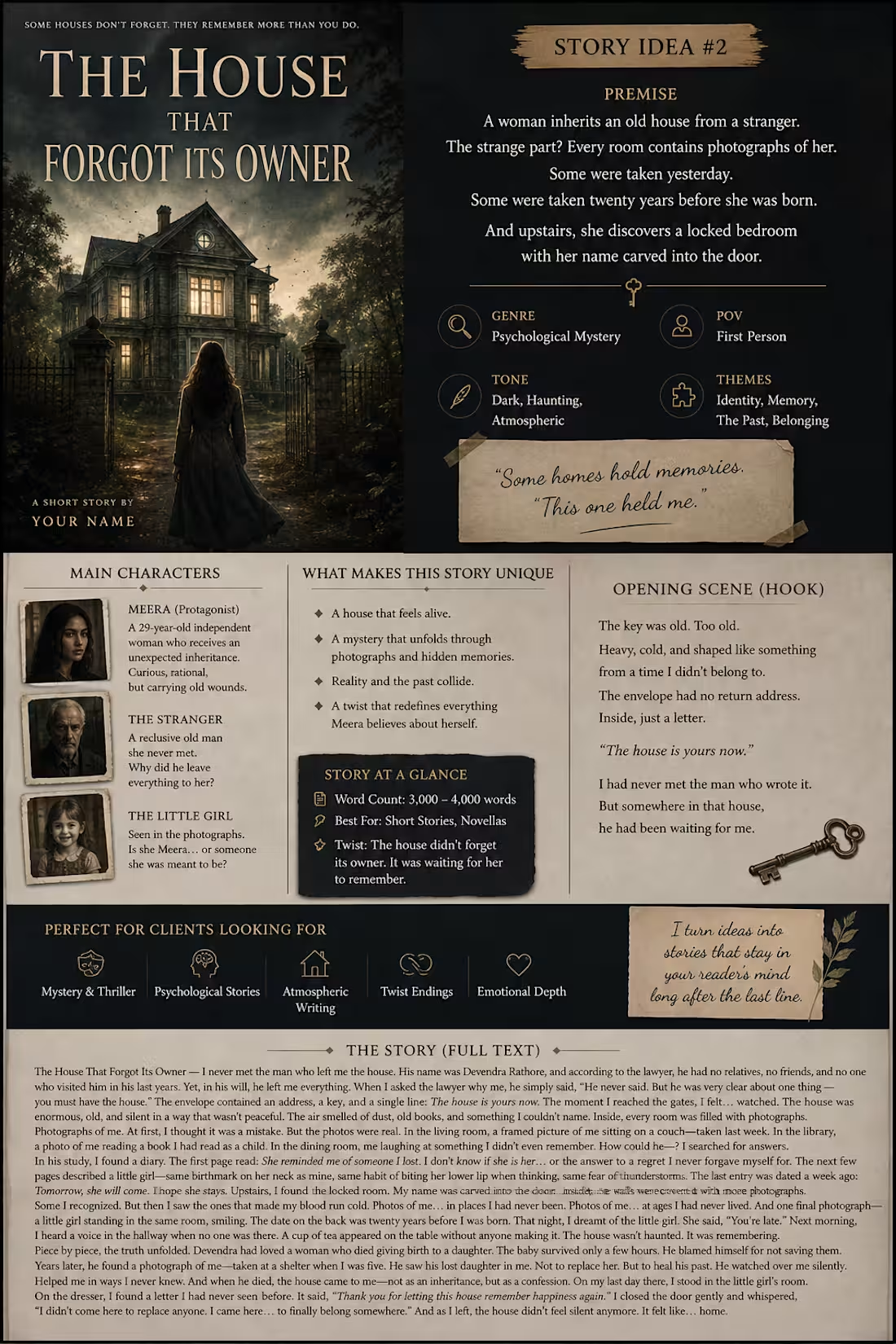
The House That Forgot Its Owner —
The key was old. Too old, perhaps, for a house I had never seen before.
It was heavy and cold in my palm, its edges worn smooth by years of use. The envelope had no return address. Inside was only a letter: “The house is yours now.” I read the sentence three times. I had never heard of the man who had sent it. I had never met him.
Yet somehow, he had left me a house. His name was Devendra Rathore, and according to the lawyer sitting across from me, he had no wife, no children, no siblings, and no one close enough to inherit his estate.
“Why me?” I asked. The lawyer adjusted his glasses. “He didn't say.” “There must be a reason.” He looked at the key on the table. “He only said you must have the house.”
I almost laughed. The whole thing sounded like the beginning of a bad ghost story. But three days later, I stood outside the iron gates of the house.
It was enormous. Dark stone walls climbed beneath twisted trees, and ivy covered most of the windows. The garden had been left wild, but there was something strangely beautiful about it. I pushed the gate open. It groaned as if it had been waiting for me.
The front door opened with the key. Inside, the air smelled of dust, old books, and something faintly sweet I couldn't identify. I stepped into the hallway. My footsteps echoed. On the wall hung dozens of photographs. At first, I barely looked at them.
Then I stopped. One photograph showed a little girl sitting beside a window.
She was wearing a yellow dress and holding a stuffed rabbit. I knew that girl. I was looking at myself. I was eight years old.
I had the same crooked fringe, the same small scar beneath my chin. But the photograph had been taken inside this house. A house I had never seen before. I pulled the frame from the wall. My hands were shaking.
There was a date written on the back. Twenty-one years ago. I was seven when the photograph had supposedly been taken. I searched through the other photographs. There were more.
Me reading a book in the library. Me sleeping on a sofa. Me standing in the garden. Me staring out of an upstairs window. Some photographs were old and faded.
Others looked impossibly recent. One had been taken only a week earlier. I was sitting in my apartment, drinking coffee. I dropped the photograph.
For a moment, I couldn't breathe. Someone had been watching me. Someone had been taking pictures of me. I ran through every room, checking windows and doors.
Nothing. No footprints. No signs of forced entry. No hidden cameras. Just photographs. Hundreds of them. I spent the night in a hotel.
The next morning, I returned with a locksmith and two friends. But when I opened the front door, something had changed.
The photographs were gone. Every single one. The walls were empty. My friends thought I was imagining things. I didn't argue. Instead, I went upstairs.
There were six bedrooms. Five doors opened easily. The sixth was locked. I tried the key from the envelope. It didn't fit. I tried every other key in the house.
Nothing. Then I noticed something carved into the wooden door. A name. My name. **Meera.** I touched the letters. They were deep and uneven, as if someone had carved them in a hurry. “What is this place?” I whispered.
The house answered with a sound from behind me. A soft knock. I turned. The hallway was empty. Another knock came from inside the locked room.
I stepped closer. “Hello?” Silence. Then a child's voice whispered, “You're late.” I froze. The voice sounded exactly like mine. I didn't open the door.
Instead, I ran downstairs and searched through the library until I found an old diary. It belonged to Devendra Rathore. Most of the pages were ordinary—expenses, names, dates, notes about repairs. Then, halfway through the book, I found my name.
**Meera Anand.** The entry was dated twenty-three years ago. “Today, she came again.” My hands went cold. The next page said, “She doesn't remember.” Then, “She never remembers.” I kept reading. “The house remembers for her.”
I closed the diary. Somewhere upstairs, a door slammed. I went back to the locked room. This time, the key from the envelope fit. Inside was a small bedroom. A child's bedroom. Yellow curtains. A wooden bed. A shelf full of old storybooks. And on the wall, another photograph. This one showed Devendra sitting beside a little girl. Me.
I stared at the photograph until my eyes burned. Then I saw something I hadn't noticed before.
The little girl wasn't looking at the camera. She was looking at Devendra. And Devendra was looking at her as if he loved her. Beneath the photograph was a note. “She was my daughter.”
I stopped breathing. I searched the diary again. The truth came slowly, painfully. Devendra had once had a daughter. Her name was Ananya. She had died when she was seven years old. He had never recovered.
Years later, he found a little girl at a children's shelter who looked exactly like her. That girl was me. He began visiting me. He brought books. He took photographs. He watched me grow. But he never told me who he was. When I was eight, my parents moved to another city.
I forgot him. Or perhaps I was made to forget him. The diary contained one final confession. “I wanted to tell her. But every time she remembered this house, she became frightened.
So I let her forget. I thought there would always be time.” There wasn't. Devendra died alone. But before he died, he left instructions with his lawyer. The house was to belong to me. Not because I was his daughter. I wasn't.
Not because I was family. I wasn't. He left it to me because he wanted me to have the one place where someone had remembered me when I couldn't remember myself.
I sat on the floor of the child's bedroom and cried. Then I heard a sound behind me. A small laugh.
I turned. The room was empty. But the photograph on the wall had changed. The little girl was no longer looking at Devendra. She was looking directly at me.
And beside her, written in fresh black ink, were four words: **You remembered me.** I left the room and went downstairs.
For the first time, the house didn't feel frightening. It felt quiet. Almost relieved. I walked through the hallway again, touching the walls, the old photographs, the furniture covered in white sheets. Then I understood something.
The house hadn't forgotten its owner. It had forgotten that it wasn't supposed to be mine. I stayed. Months passed. I repaired the garden.
Opened the curtains. Filled the empty rooms with books and music.
I turned the child's bedroom into a small library and kept Devendra's diary on the shelf. Sometimes, late at night, I heard footsteps upstairs. Sometimes I heard a child laughing in the hallway.
I stopped being afraid. Because some houses are haunted by ghosts.
Some are haunted by memories. And some simply spend years waiting for someone to come home.
The house had been waiting for me. It just took me twenty-three years to remember that I had already been there.
The End.
2
135
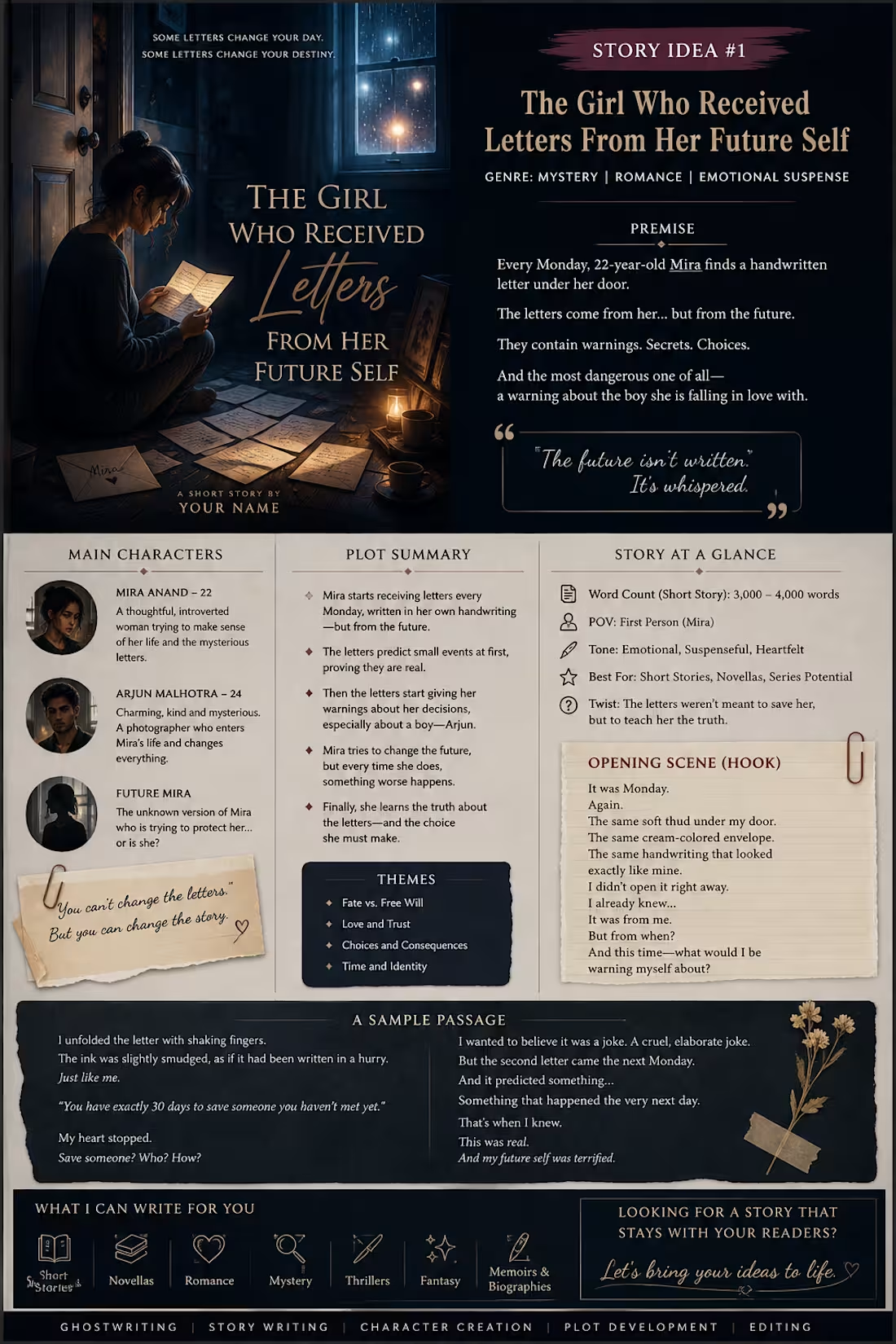
The Girl Who Received Letters From Her Future Self — It was Monday.
Again.
The envelope was waiting beneath my door. Cream-colored. Unmarked. My name written across the front in black ink.
Mira. I stared at it for a long time before picking it up. That was the first mistake I made. The second was opening it. Inside was a single sheet of paper. The handwriting made my stomach twist. I knew those letters. The way the capital M leaned slightly to the left. The tiny pause before the dot above every i. The almost invisible pressure at the end of each sentence. It was my handwriting.
But the words weren't mine.
“You have exactly thirty days to save someone you haven't met yet.”
I read the sentence twice. Then I laughed. Not because it was funny. Because sometimes laughter is the body's last defense against fear. I turned the paper over. Nothing. No signature. No explanation. Just one final sentence at the bottom.
“Don't fall in love with him.”
I didn't know who him was. I wouldn't meet him until Thursday. By Thursday afternoon, I'd almost convinced myself the letter had been some elaborate prank. Almost. Then I walked into the little coffee shop near my apartment and saw him. He was standing beside the window with a camera hanging around his neck. Dark hair. Grey shirt. A small scar above his eyebrow. And eyes that looked strangely familiar.
He smiled when I accidentally bumped into his table. “Sorry,” I said. “You look like you just saw a ghost.” “I might have.” He laughed. His name was Arjun. Twenty-four. Photographer.
Terrible at remembering people's coffee orders. And, according to the letter, the person I absolutely wasn't supposed to fall in love with. So naturally, I spent the next three weeks doing exactly that.
The letters kept coming. Every Monday. Same envelope. Same handwriting. The first few predicted harmless things.
“Don't take the blue umbrella.”
I ignored it. The blue umbrella broke in the middle of a storm. “You'll miss the 8:10 train. Take the 8:25.” I took the 8:25.
The 8:10 was delayed because of an accident. Then the letters became frightening.
“Don't let Arjun photograph you on Saturday.”
I asked him not to. He looked disappointed but didn't question me. The next letter arrived Sunday morning. This time, there were only six words. “You saved him. For now.” I stopped sleeping. I stopped laughing. And eventually, I stopped trying to convince myself that the letters weren't real.
Because there was one thing I couldn't explain. Every letter contained details that only I could know.
Memories I had never told anyone. Fears I'd buried years ago. Things I hadn't even admitted to myself.
Someone wasn't just watching me. Someone was me. On the twenty-ninth day, I received the final letter. It was thicker than the others. My hands were shaking before I even opened it.
Inside was a photograph. Arjun. Standing on the roof of my apartment building. His face was turned toward the city. On the back, in my handwriting:
“Tomorrow, he dies.” My world went silent. The next line was worse. “And if you save him, I will disappear.” I didn't understand. Until I found the date printed beneath the photograph.
October 17, 2042. Twenty years from now. My knees gave out. I sat on the floor, staring at the photograph. Twenty years. The letters weren't coming from some mysterious stranger.
They were coming from me. Older. Changed. Terrified. But why would my future self want me to let Arjun die? And why would saving him make her disappear?
I found Arjun on the roof the next evening. Exactly where the photograph had shown him. Rain fell between us. “Mira,” he said softly. “What are you doing here?” “I know what happens tonight.” His expression changed. “What?” “You die.” He stared at me. Then, unexpectedly, he smiled. Not because he thought I was joking. Because he knew. “I was wondering when you'd figure it out.” My heart stopped. “You knew?” For a moment, he said nothing.
Then he reached inside his jacket and pulled out an envelope. Cream-colored. My name on the front. But this time, the handwriting wasn't mine.
It was his. Inside was a letter. “If you're reading this, she's finally ready to know.” I looked at him. “Who is she?” Arjun's eyes filled with tears. “Your future self.” The world seemed to tilt.
He told me everything. Twenty years ago, he had been diagnosed with a rare heart condition. There had been an operation. A risky one. He was supposed to die that night. But my future self had found a way to send one message backward through time. Not to save him.
To give us a choice. Because she'd spent twenty years believing she had made the wrong one. She hadn't. The letters weren't trying to change the past. They were trying to make sure I understood it.
I looked at the final photograph again. The one showing Arjun on the roof. There was something I hadn't noticed. In the corner of the photograph stood a woman. Older. Grey streaks in her hair.
A familiar scar above her eyebrow. She was holding a camera. And she was smiling. Arjun survived. The surgery was successful. Barely. Years passed. We got married. We fought over stupid things. We traveled. We grew older. We lost people.
We gained people. We lived. And every Monday, for years afterward, I waited for another letter. None came. Until I turned forty-two. One morning, an envelope appeared beneath my door. Cream-colored. My name written across the front. My hands trembled as I opened it. There was only one sentence. “Some futures aren't meant to be changed.” I smiled.
Then I understood. The letters had never been warnings. They had been invitations. Invitations to make choices. To take chances.
To love someone even when the future was frightening. I took out a fresh sheet of paper and began writing. Not a warning. Not a prediction. Just a message for the girl I used to be. I wrote, “You don't need to be afraid of the future. You only need to be brave enough to live it.” I folded the letter, placed it inside a cream-colored envelope, and slid it beneath my own front door.
For the first time, I understood why my handwriting had always looked slightly different. It wasn't because I had changed. It was because I was writing from a future I hadn't lived yet.
And somewhere, twenty years earlier, a frightened girl was about to find it.
The End......
_Divya kotarya
1
78