
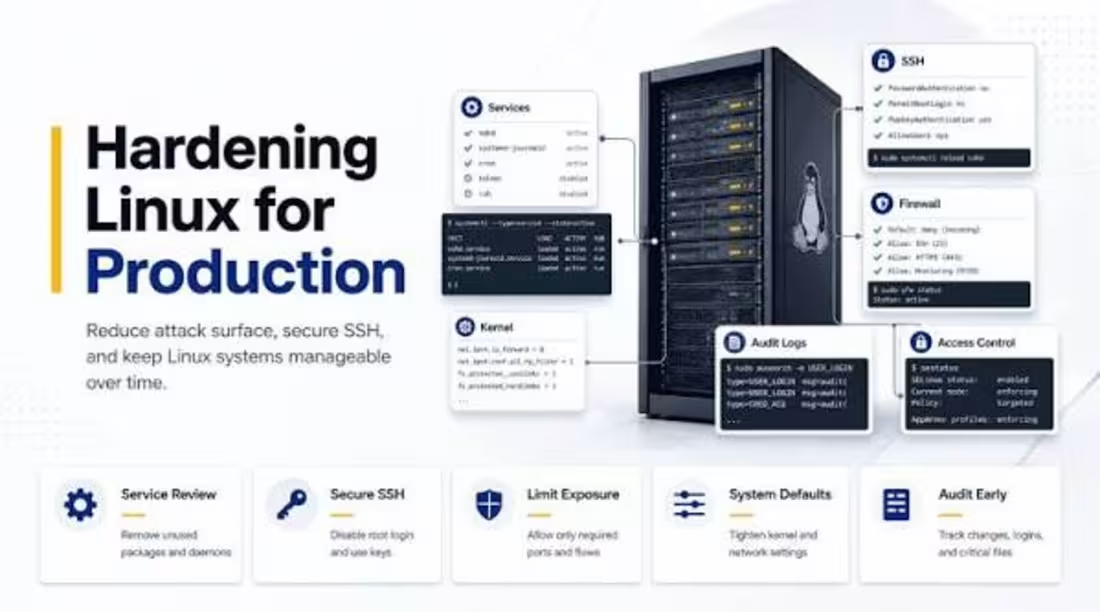
A high-traffic SaaS client required a comprehensive security overhaul of their production infrastructure. The goal was to systematically reduce the attack surface, mitigate vulnerabilities, and enforce strict access controls without disrupting live system performance. This project involved a top-to-bottom audit and the implementation of robust hardening techniques across the network, OS, and application layers to ensure resilience against zero-day exploits and unauthorized access
0
91
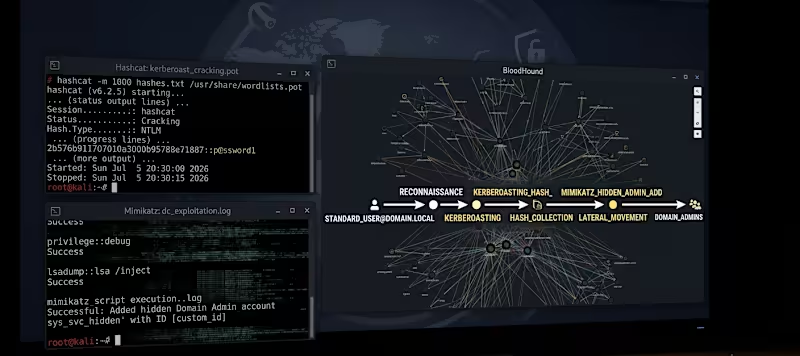
I simulated a real-world Active Directory (AD) attack to identify and exploit misconfigurations within a Windows domain environment. The goal was to practice enumeration techniques, escalate privileges to domain admin, and establish persistent access.
I started with LDAP enumeration using ldapsearch to map domain users and groups. Using BloodHound, I visualized attack paths and identified a Kerberoastable service account — a weak SPN tied to an outdated service. I extracted the hash using GetUserSPNs.py (http://GetUserSPNs.py) and cracked it with Hashcat, revealing the cleartext password. I then used Pass-the-Hash to authenticate as a domain admin using PsExec. To maintain persistence, I added a domain admin backdoor account using Mimikatz. Finally, I cleared event logs to avoid detection and exported a full attack report for remediation.
Tools Used: ldapsearch, BloodHound, Hashcat, GetUserSPNs.py (http://GetUserSPNs.py), PsExec, Mimikatz, eventlog (for cleanup)
Deliverable: Full attack timeline with screenshots, enumeration outputs, and security recommendations.
0
36
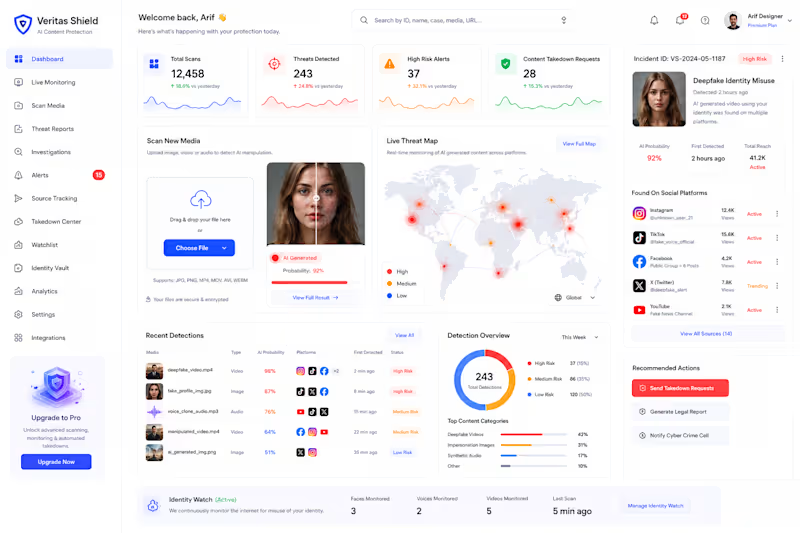


I conducted a complete web application security assessment on Damn Vulnerable Web Application (DVWA) using manual and automated testing techniques. The goal was to identify and exploit OWASP Top 10 vulnerabilities.
I mapped the application using Burp Suite and discovered multiple injection points. I exploited SQL Injection to bypass authentication and extract sensitive data from the database using sqlmap. I also tested for Cross-Site Scripting (XSS) with custom payloads and successfully hijacked session cookies using document.cookie injection. I chained a file upload vulnerability with a PHP reverse shell to gain remote access to the server. All findings were documented with proof-of-concept screenshots and step-by-step remediation guidance.
Tools Used: Burp Suite, sqlmap, OWASP ZAP, curl, custom payloads
Deliverable: A detailed report including vulnerability exploitation steps, proof-of-concept, and mitigation strategies.
0
151


I performed a complete network penetration test on a deliberately vulnerable Linux machine (Metasploitable2) to simulate a real-world attacker scenario. The objective was to identify exploitable services, gain initial access, escalate privileges to root, and extract sensitive data.
I started with reconnaissance using nmap to discover open ports and services. I identified outdated and vulnerable services including vsftpd 2.3.4 and Samba 3.0.20. Using Metasploit, I exploited the vsftpd backdoor to gain initial shell access. I then used shell_to_meterpreter to upgrade my session to a Meterpreter shell, giving me greater control. I dumped password hashes from /etc/shadow and cracked them using John the Ripper. Finally, I escalated privileges to root using the Samba usermap_script exploit and documented the entire process with screenshots.
Tools Used: nmap, Metasploit, Meterpreter, John the Ripper, searchsploit
Deliverable: A comprehensive report including attack timeline, exploited CVEs, and remediation recommendations.
0
357
