Freelancers using MeliusFreelancers using MeliusThe Smart Shoulder Drone for Motorcycle Passengers
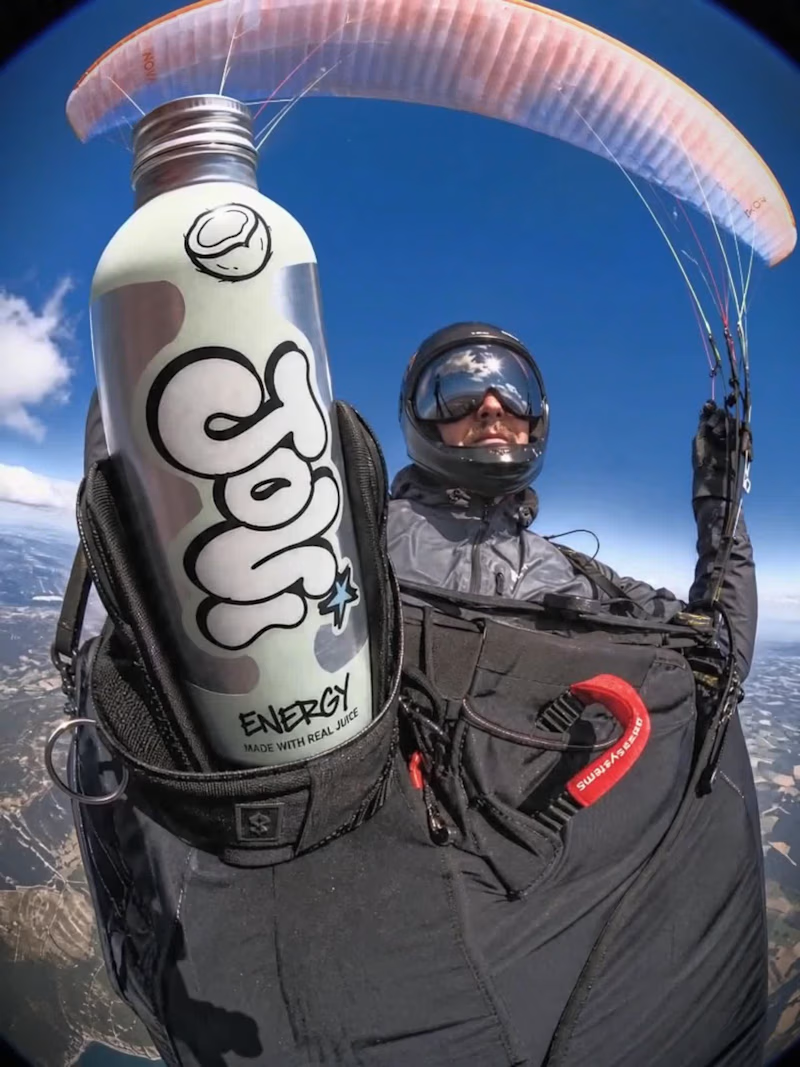
After over 100,000 kilometers traveling as a passenger on a heavy Harley-Davidson, I desperately wanted a way to capture the journey without sacrificing safety or the sheer joy of the ride. Holding a phone or a heavy camera at highway speeds is dangerous and exhausting.
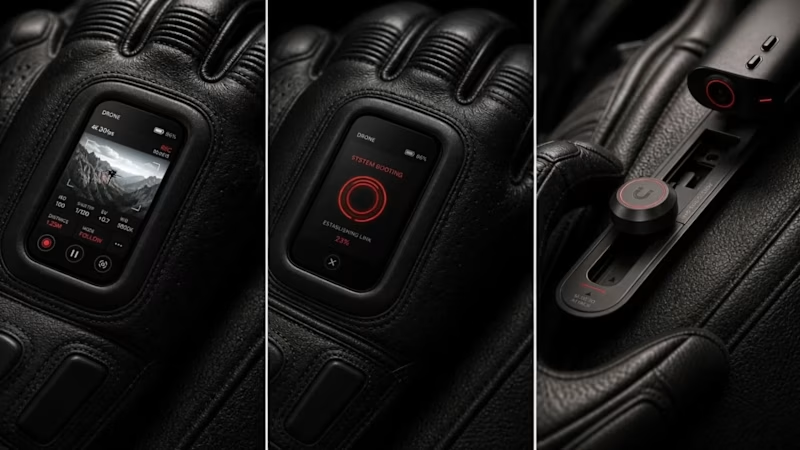
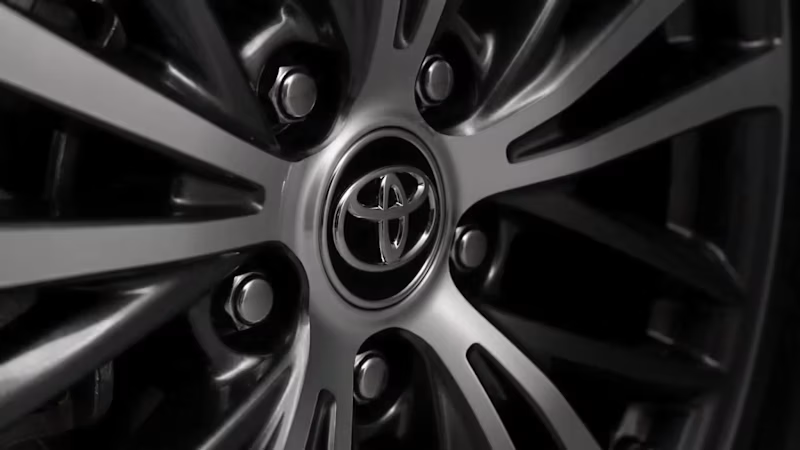
It’s a compact, magnetic shoulder-mounted drone controlled by a smart leather glove with an embedded micro-OLED screen.
My Melius Workflow:
I utilized the Melius agent not just to prompt, but to architect a complete production studio on the canvas.
Stage 1: Hardware Lock (The Source of Truth). I briefed the agent to generate studio-quality master shots of the drone and the smart glove. I then instructed the agent to hard-wire these specific nodes as global visual references (Image-to-Image/ControlNet) for the rest of the canvas to prevent the model from hallucinating new designs.
Stage 2: Storyboarding. The agent built a storyboard branch, placing the locked product designs into realistic environments (highway, golden hour) using precise text nodes to establish the narrative.
Stage 3 & 4: Commercial & UGC Video Pipelines. I tasked the agent to build complex Image-to-Video branches. For the promo video, the agent generated sequential keyframes (First, Mid, Last) showing UI interactions and mechanical sliding, which were then routed into video nodes. For the UGC branch, the agent completely shifted the aesthetic to raw, vertical smartphone footage while maintaining the exact hardware design.
Stage 5: Assembly. Text nodes were used as a director's script on the canvas to dictate the exact sound design and features (USPs) being highlighted before final video generation.
Feedback:
As a UI/UX designer, the node-based canvas feels incredibly intuitive. Generative AI usually feels like a chaotic slot machine, but Melius turns it into a structured, production-ready pipeline. The ability to converse with the agent, ask it to build branches based on specific logic, and literally see the "wires" connecting a master reference to a final video output gives an unprecedented level of creative control. It allowed me to act as an Art Director rather than just a prompt engineer.
Project flow: https://app.melius.com/projects/b3edd6cc-ec50-49fa-b861-80fbe443ef97/canvas/2aefaa54-3d08-4265-b21b-83233c694be2
X Post: https://x.com/KrisAnfalova/status/2056718110682489214?s=20
Travel more and ride safely!
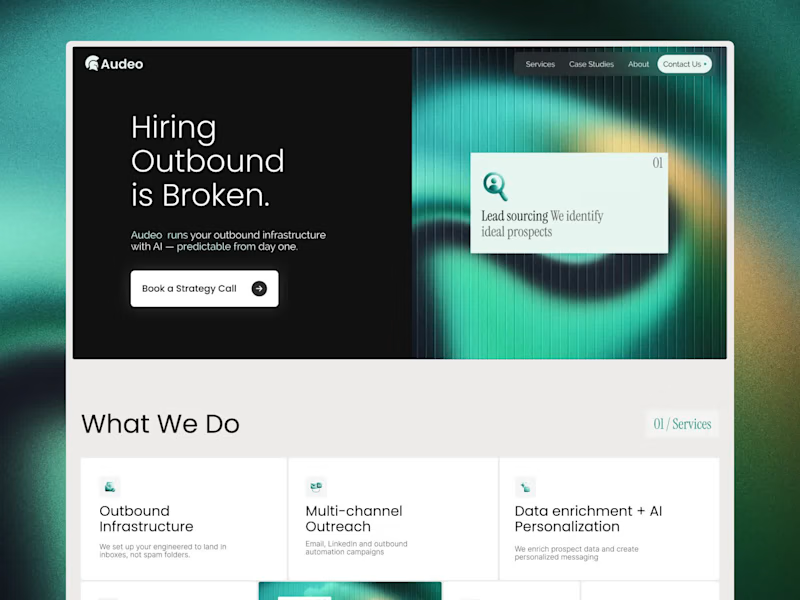
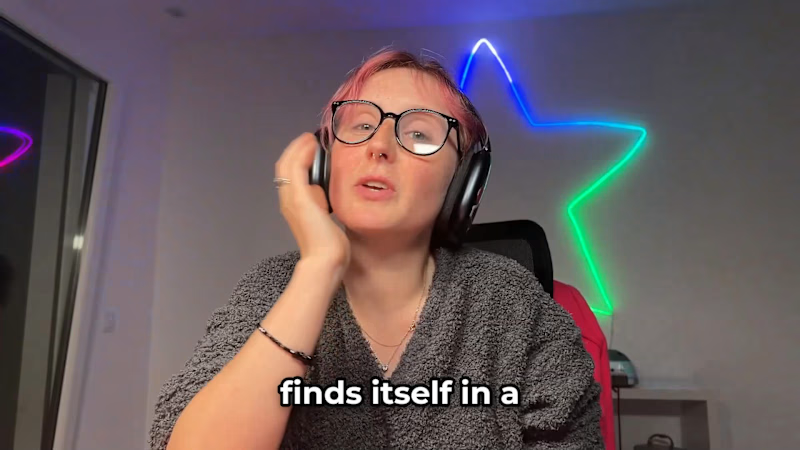
As creative freelancers, our best work often finds itself buried in a desktop portfolio folder because we are simply too busy - or too tired - to do outreach and pitch ourselves (please tell me I'm not alone in this!)
The Momentum Machine changes that.
Built entirely on Melius, this interactive, multi-agent workspace takes your raw, messy project assets (images, videos, text, or analytics screenshots) and instantly transforms them into a compounding business development ecosystem. Instead of tackling projects individually, it builds a "snowball effect" where one client effortlessly generates the next.
🔗 Melius Project Link: https://app.melius.com/projects/8d06081b-be00-4f6d-9bb9-dff7d2fe9120/canvas/68c66aba-2fa1-48b9-a594-44bfd48c9c58
You can watch the video to see how it works in the backend and the thought process behind it, but essentially it goes like this:
⭐ The freelancer drops their project files (e.g., product photos, a text testimonial, or a cropped screenshot of analytics).
⭐ Node A uses advanced data extraction and OCR to scan the uploads, extracting any key metrics or features of your work.
⭐ Node B infers the creative style and outputs 5 to 10 complementary, non-competing industries that could be a good fit for you.
⭐ Node C weaves the raw data into a high-conversion marketing narrative structure: Hook ➔ Struggle ➔ Aha! Moment ➔ Hero Stat ➔ Closed Loop.
⭐ And then the final outputs: a case study, cold email pitch draft (to pitch those complementary industries we identified in node B), a Contra portfolio entry, and a video script to promote your work. PLUS a bonus Contra portfolio cover and a b-roll video in case you don't feel like being on camera for any reason.
PS: building this on Melius was incredibly intuitive - my favorite feature by far being how the agents interact with you in chat during the creative build - instead of just giving a generic output, they prompted me with intelligent follow-up questions with multiple choice answers to fill in the strategic blanks. It genuinely feels like collaborating with a sharp creative partner rather than just using a tool. PROJECT NAME
AION PYR — The Aitherioi
PROJECT LINK
https://app.melius.com/projects/029a5c7f-3a2a-4c7b-a24c-e25f36815d91/canvas/98b87dac-fcc4-411b-8695-83b7dc318726
CONCEPT / PROJECT DESCRIPTION
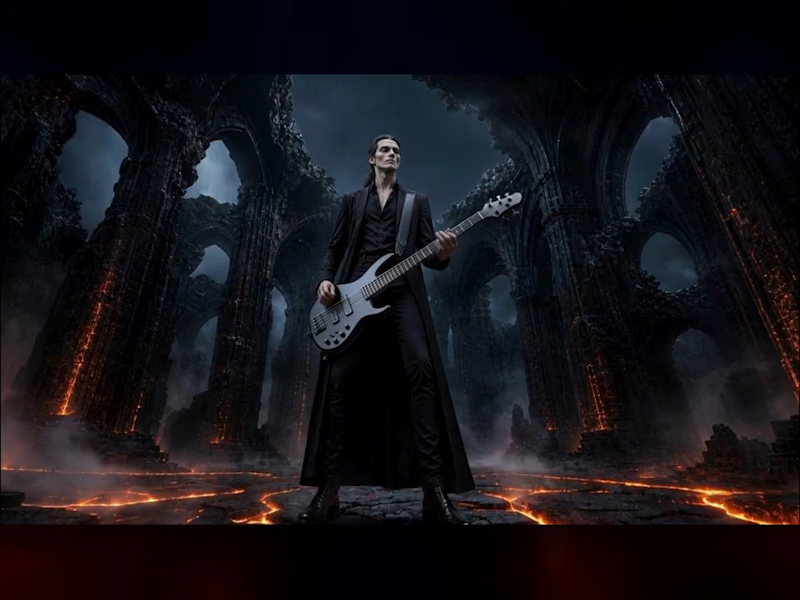
AION PYR is a one-minute instrumental progressive-rock film by The Aitherioi, a fictional trio of pale pre-terrestrial beings older than Earth.
They were here when the planet was born from heat, basalt, and lava, and they remain calm as that world dissolves into stardust. The film follows them performing inside a collapsing volcanic cathedral while lava, steam, lightning, and stone slowly give way to void.
The music is built only from guitar, bass, and drums: slow, heavy, repetitive, bass-led, and cathartic.
PROCESS
I started by defining The Aitherioi: a fictional pre-terrestrial trio with a shared visual identity, pale ethereal bodies, severe faces, long dark hair, and calm expressions.
Then I built the visual system around contrast: fossil-dark basalt, living lava, white steam, lightning, and their stillness inside collapse.
I created character assets, face studies, wardrobe references, instrument references, environment plates, keyframes, and individual video scenes.
The music was built first as a strict one-minute instrumental progressive-rock track using only guitar, bass, and drums. The video was then structured to follow the track: bass opening, wide trio, basalt corridor, guitar catharsis, drummer pulse, matter dissolution, and final void.
Finally, I stitched the scenes together with clean cuts so the film follows the music without extra transitions or title cards.
FEEDBACK ON BUILDING WITH MELIUS
Melius worked best as a production canvas rather than a single-prompt generator.
The node-based workflow made it possible to build the project in layers: character identity, environments, audio, keyframes, video clips, and final assembly. That helped keep the concept coherent while still allowing corrections when individual shots needed refinement.
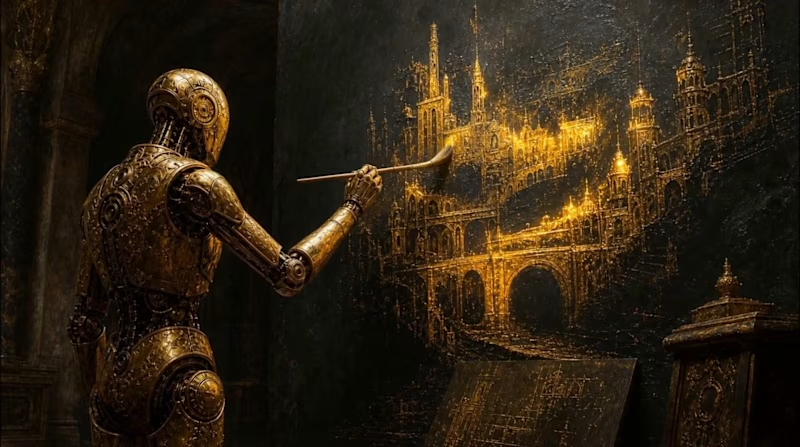
The biggest challenge was visual continuity, especially keeping The Aitherioi consistent across scenes. The most useful approach was creating strict reference assets first, then using them as anchors for keyframes and video generation. The Painter of Cities is a Melius-built cinematic short about an impossible gilded automaton that paints a living city onto a monumental black wall. From the city he creates, a female droid briefly appears within the painted surface. They reach toward each other, almost touching, before she is reclaimed by the wall.
It is a quiet story about creation, longing, and the tragedy of making something beautiful that cannot fully enter your world.
https://app.melius.com/projects/23546fb0-e3a3-4074-925f-676dfe384aad/canvas/f96fdb6f-cf03-40cd-ba59-f1ddd40a23a6
PROCESS STEPS
The project began with the challenge theme: create something that should exist, but doesn’t.
The core concept became The Painter of Cities: an impossible gilded automaton that paints a living city onto a monumental black wall.
Melius was used to generate sequential image keyframes for the story: the city being painted, the female droid appearing inside the wall, their near-touch, and her return to the painted surface.
The prompts were refined through several iterations to preserve visual continuity across the male droid, female droid, city wall, studio, palette, and old-master oil-paint aesthetic.
Short silent video scenes were generated from the keyframes, then adjusted to control pacing, motion, transitions, and emotional tone.
The video scenes were stitched into a final silent film. An original instrumental music cue was generated to match the final timing and emotional arc of the film.
FEEDBACK ON USING MELIUS
Melius worked best as a visual production canvas rather than a one-shot generator. The node-based workflow made it possible to build the project step by step: image keyframes, video scenes, stitching, music, and final assets.The strongest part was being able to iterate visually and preserve the creative process inside the canvas.The hardest part was controlling motion continuity between generated video clips. Some transitions and character movements required very precise prompting, especially when preserving the same droid designs and painterly world across multiple nodes. Title
Brand DNA Engine — ÆTHER
A workflow-native creative direction system for building coherent luxury brand ecosystems with AI.
Brand DNA Engine is an AI-native creative direction system built entirely in Melius that transforms vague startup ideas into coherent, launch-ready luxury brand ecosystems.
Using connected AI workflows and multiple node types, the system analyzes positioning, emotional tone, visual language, and audience intent before generating unified identity systems, UI concepts, campaign visuals, messaging systems, and cinematic brand outputs.
The workflow emphasizes collaborative refinement between human creative direction and AI orchestration, allowing the entire ecosystem to evolve coherently through iterative feedback loops.
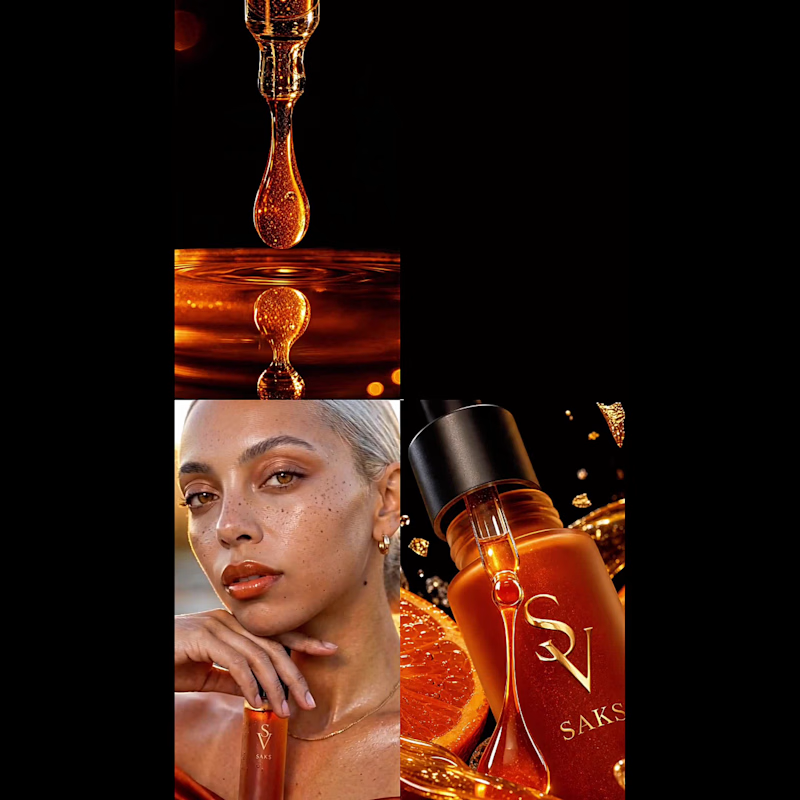
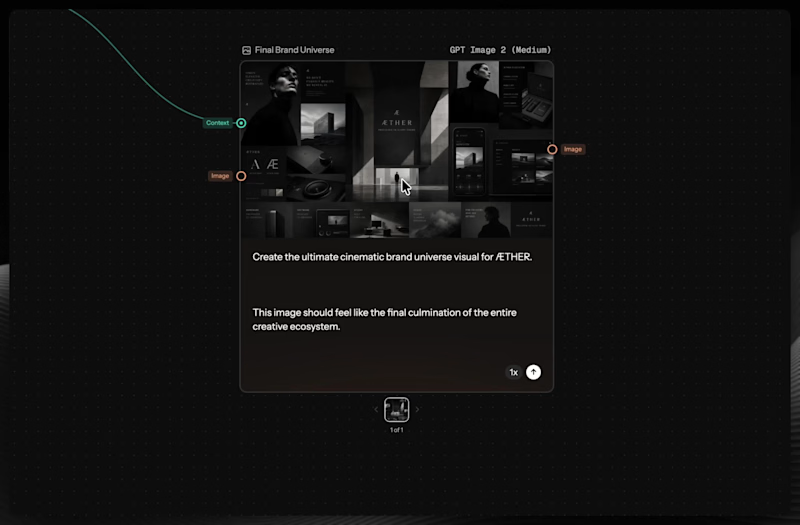
For this project, I created ÆTHER, a fictional luxury AI wellness intelligence brand designed for high-performing creatives.
Process Overview
Creative Briefing Inputs
I began by creating structured input nodes for the startup concept, audience, emotional tone, and visual direction of the fictional brand ÆTHER.
AI Analysis Layer
Using Melius AI agents, I created workflow nodes that analyzed:
emotional positioning
visual language
luxury references
campaign tone
typography direction
architectural/editorial aesthetics
Brand DNA Synthesis
The workflow then synthesized these analyses into a central “Brand DNA” system that acted as the creative intelligence layer for all downstream outputs.
Parallel Creative Generation
From the Brand DNA system, the workflow branched into multiple generation systems:
Identity System
UI System
Campaign System
Messaging System
Refinement Loops
The most important stage was collaborative refinement. I introduced creative direction shifts such as:
“Push the system toward brutalist editorial luxury.”
The workflow then evolved the entire ecosystem coherently across campaigns, UI, typography, messaging, and visual tone.
Final Outputs
The final workflow generated cinematic launch posters, editorial campaigns, luxury landing page concepts, and a final “Brand Universe” visual, all designed to feel part of the same cohesive creative world.
Building with Melius
What stood out most while building this project was how naturally Melius supports workflow-native creative thinking instead of isolated prompting.
The visual canvas made it possible to structure creative direction as a connected system rather than generating disconnected outputs. The ability to branch workflows, connect reasoning layers, and iterate through refinement loops made the experience feel much closer to a real creative agency process.
The strongest part of the platform for me was the ability to visually orchestrate AI collaboration. Instead of a single prompt leading to a final result, the workflow became a living creative system where positioning, visual language, campaigns, UI, and messaging could evolve together coherently.
I also found the visual nature of the workflow particularly useful for storytelling and presentation. Seeing the progression from briefing > analysis > synthesis > refinement made the creative process feel much more transparent and intentional.
https://app.melius.com/projects/2148b6f0-ee80-4557-be48-7c60c624284a/canvas/6b9717c7-8034-4102-8812-400f7a63778b